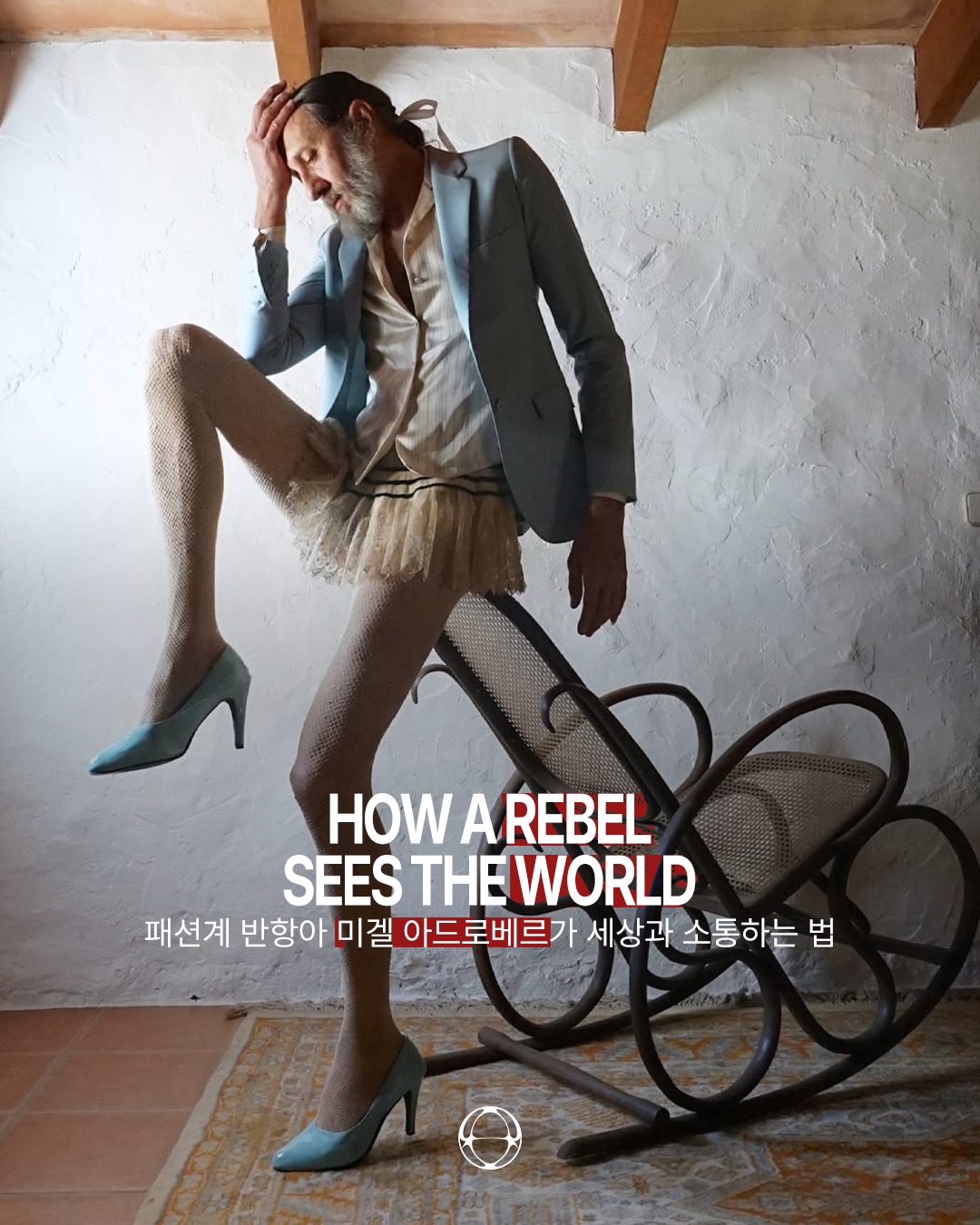
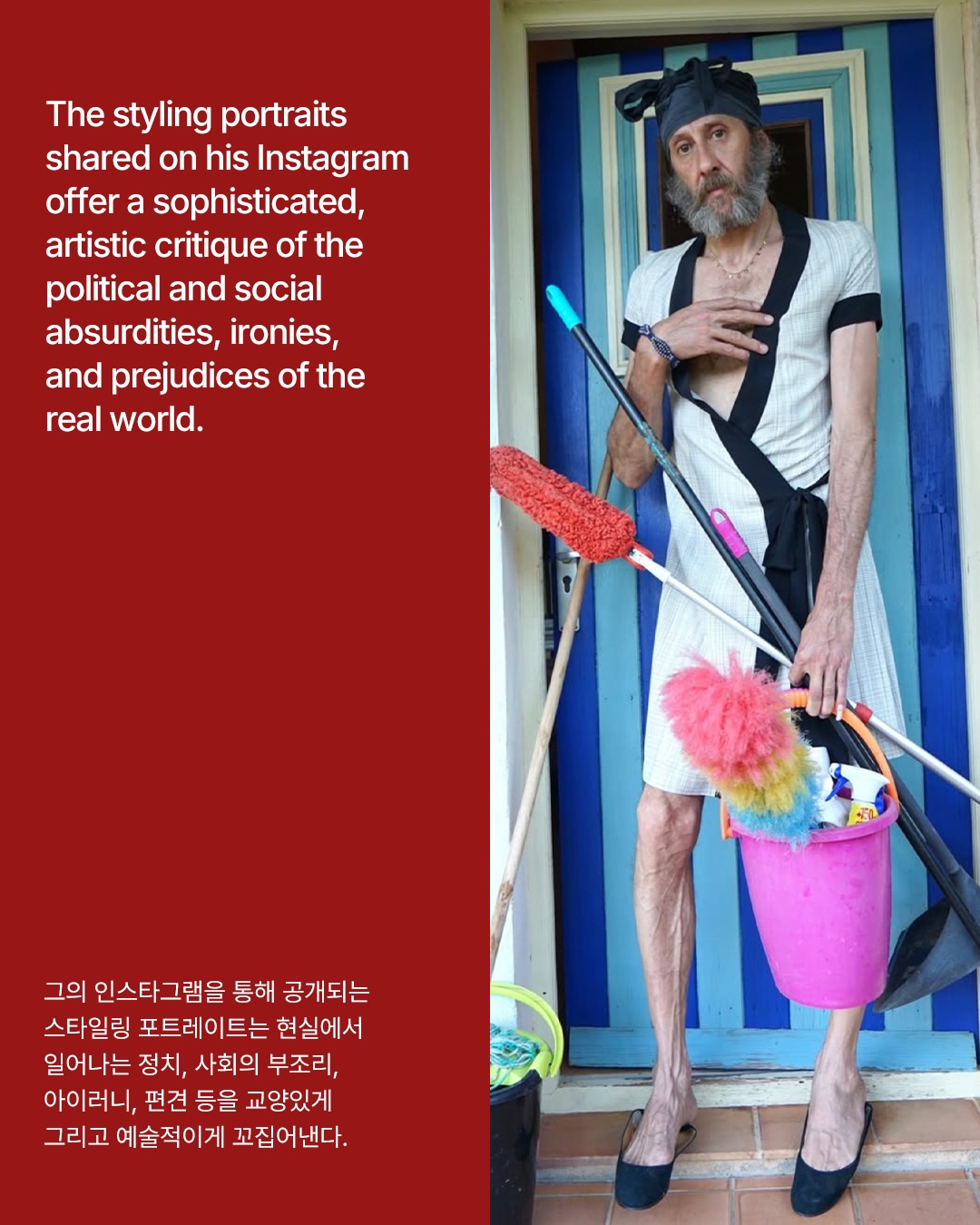
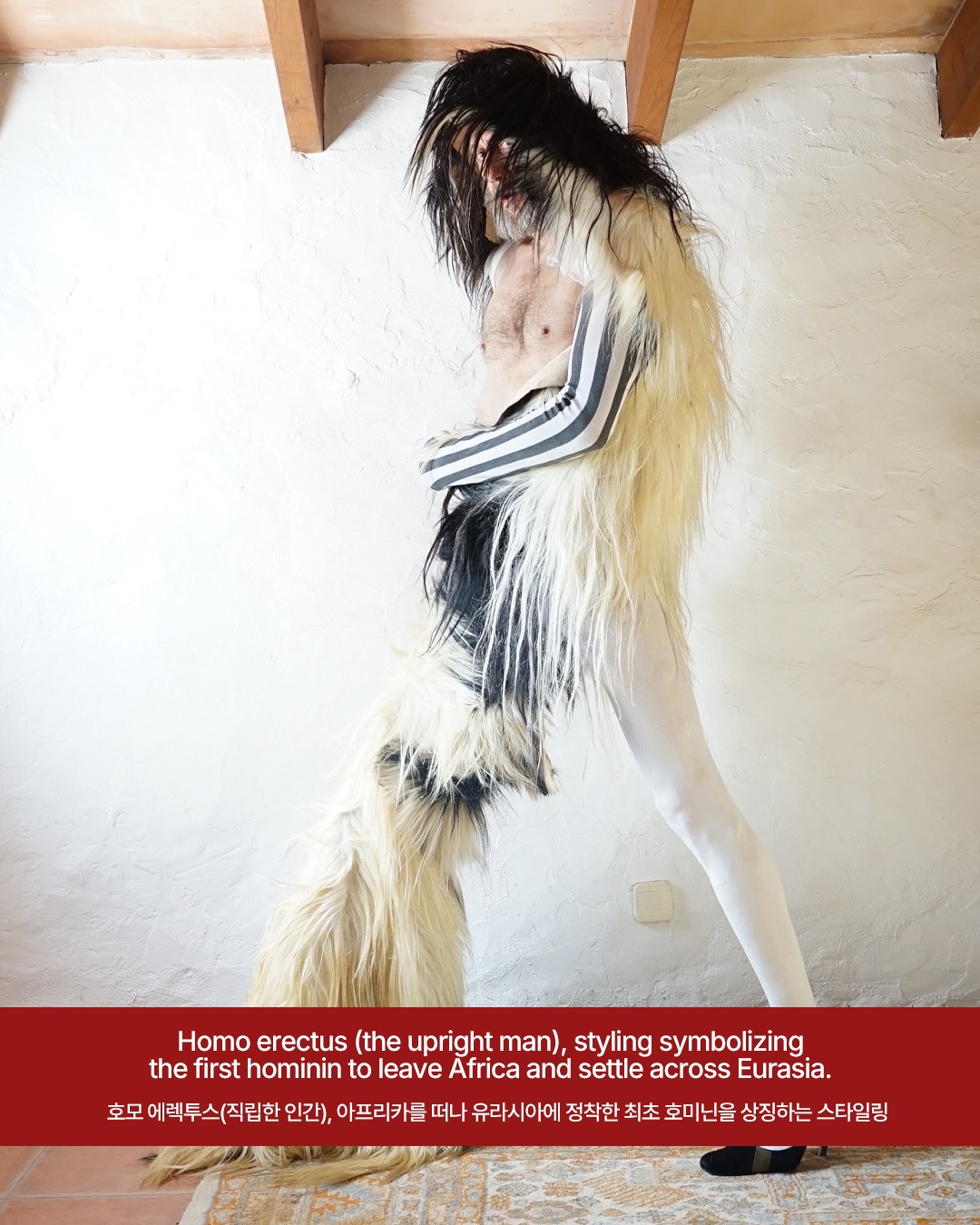
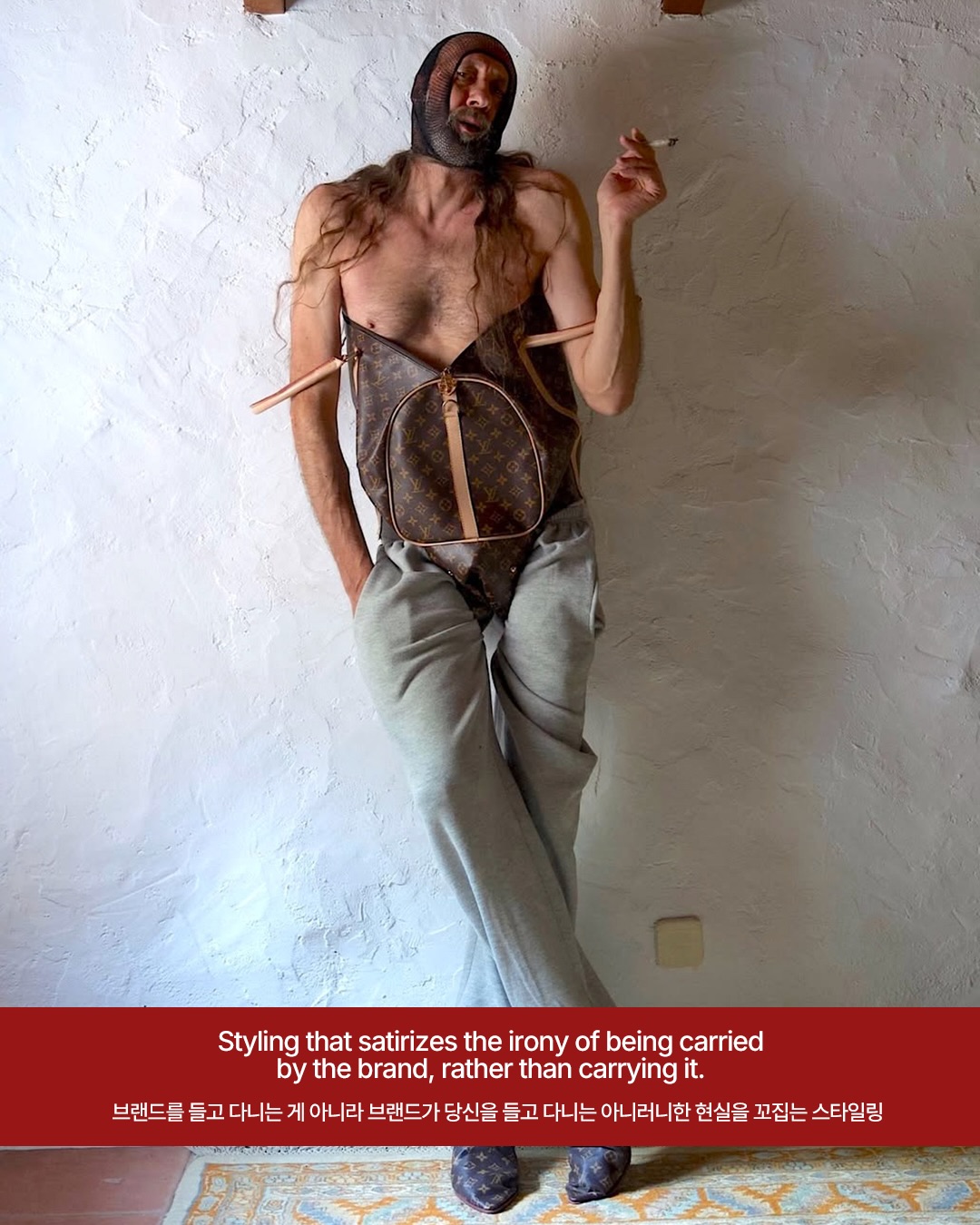
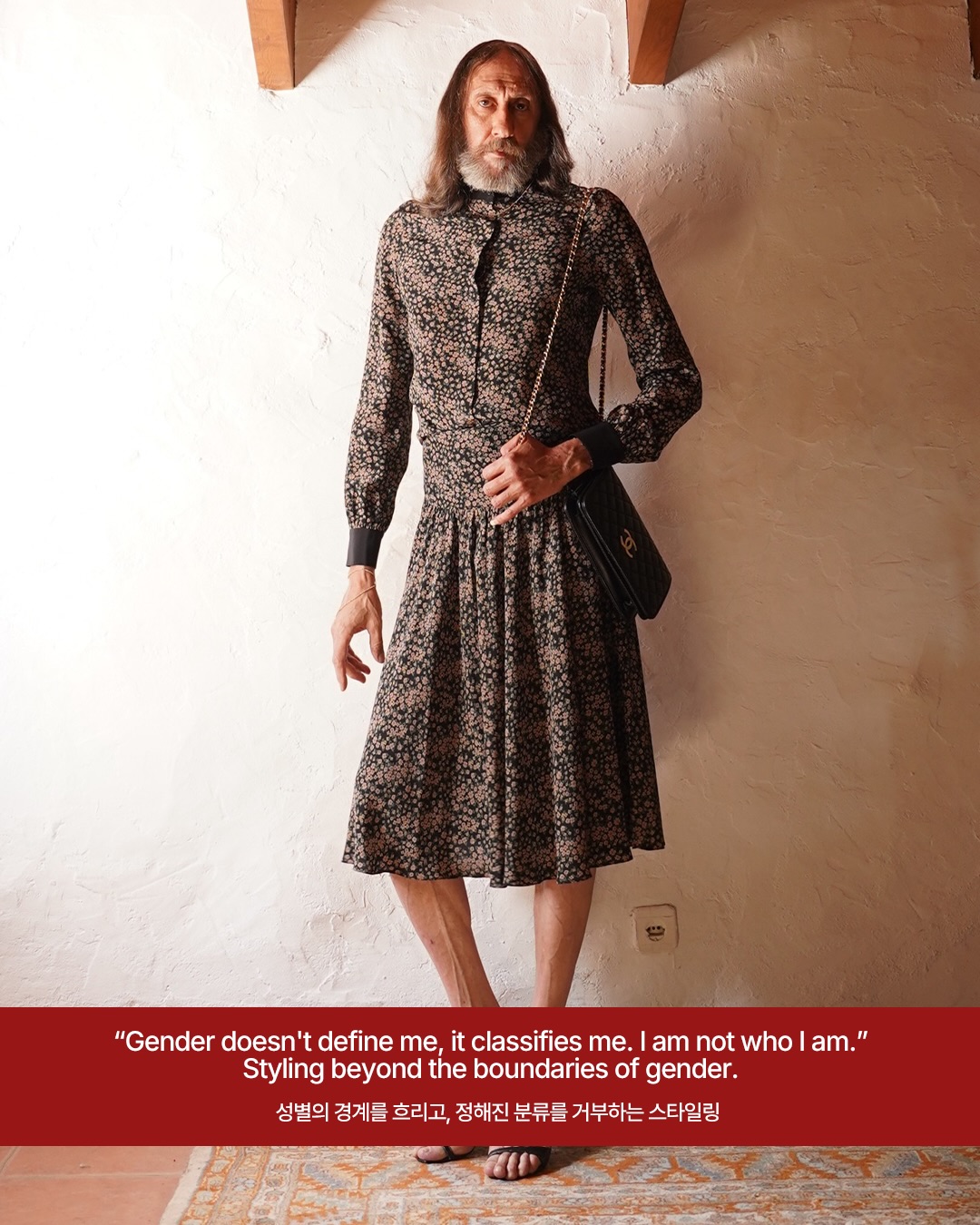
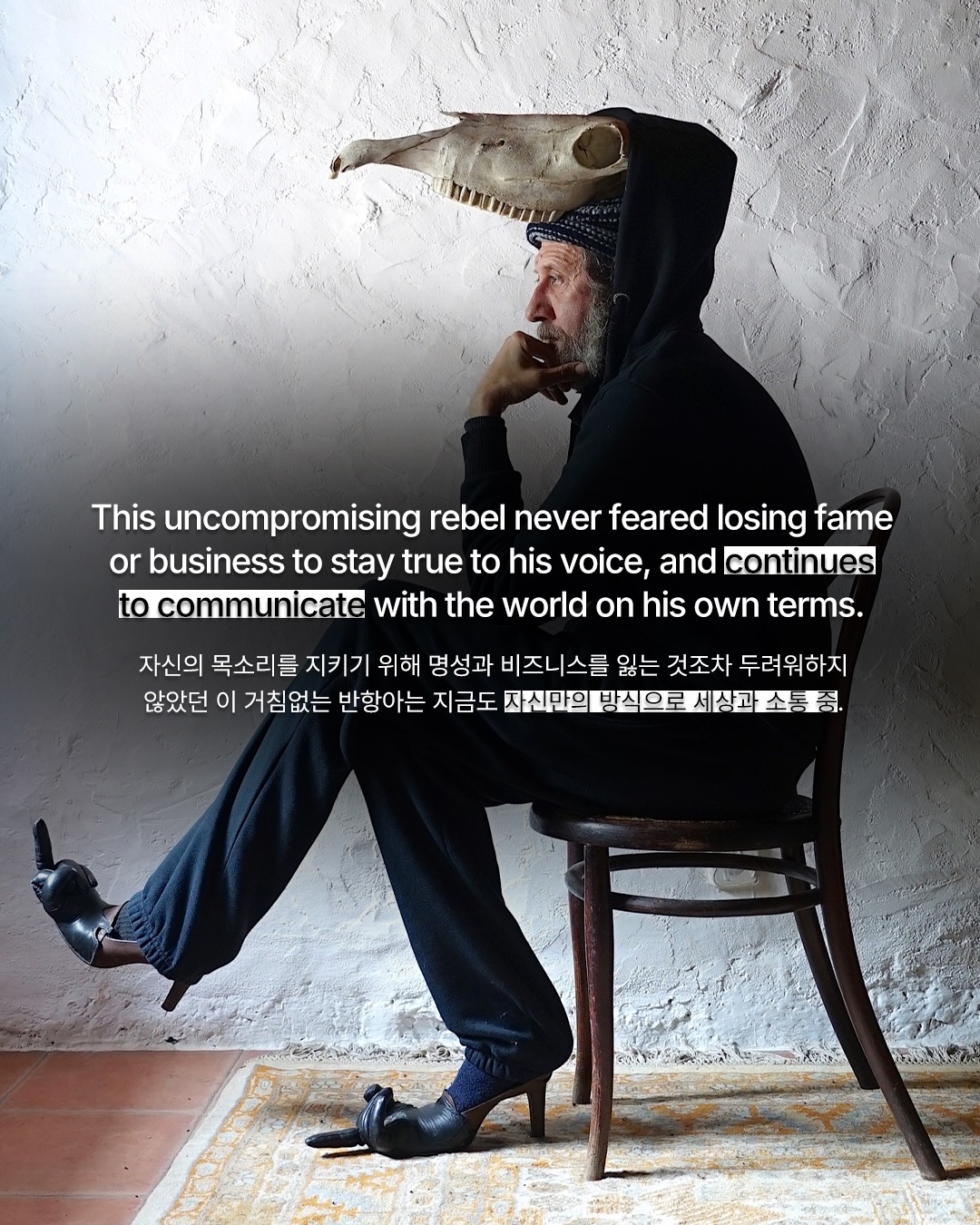
He continues to communicate with the world on his own terms. The styling portraits filling his Instagram lately are nothing short of extraordinary. He sits in a rocking chair wearing a ballet tutu, blazer, and high heels, or stands in the doorway with cleaning tools, clad in women's shoes and black heels. He twists the grammar of fashion to critique the ironies of politics and society.
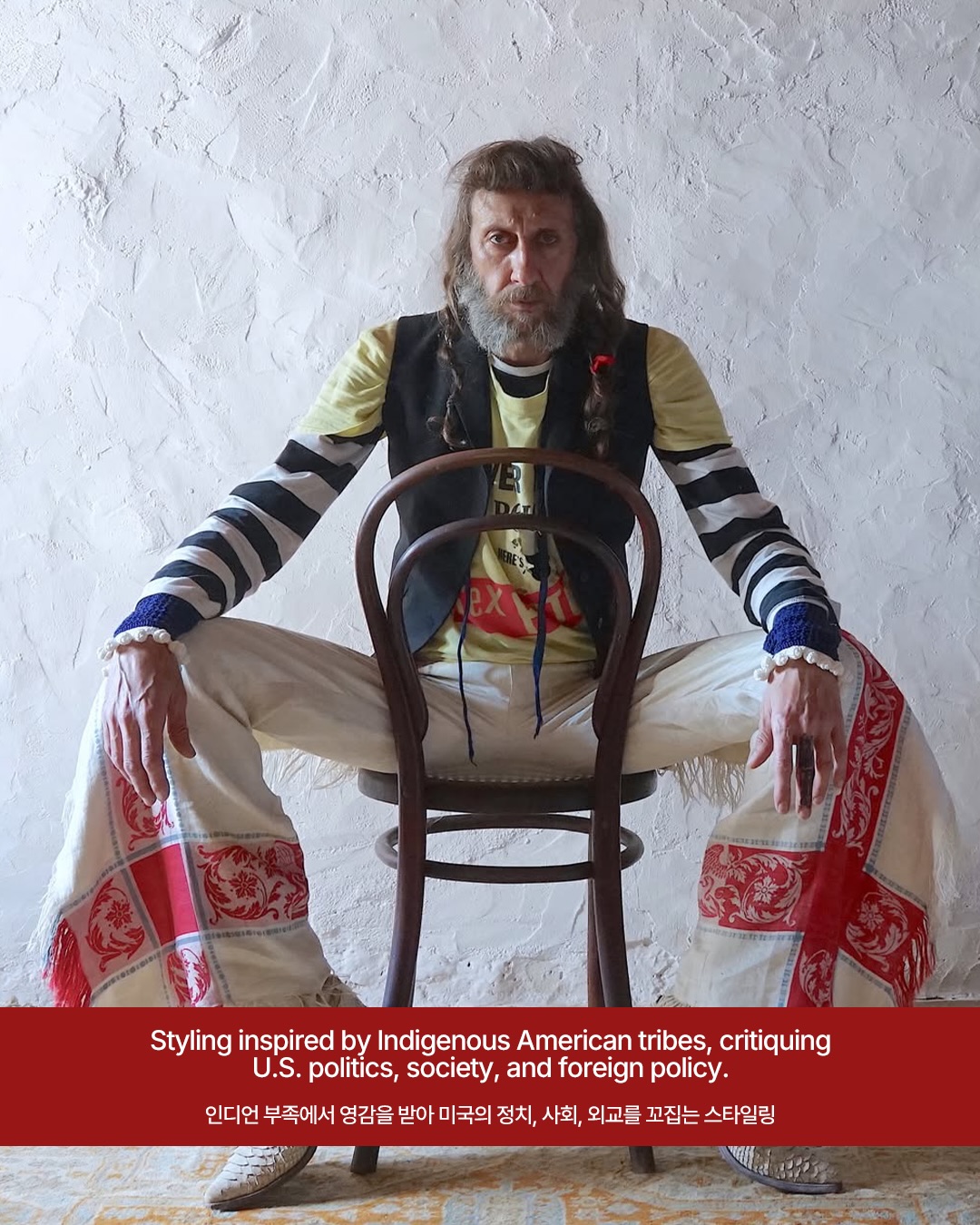
He also continues work inspired by Indigenous American tribal styles to criticize U.S. politics, society, and foreign policy. A look layered with checkered pants, a yellow t-shirt, and a vest, posed sitting backward on a chair, succinctly reveals his stance on convention. All these images are self-portraits he directs and shoots himself.
Miguel Adrover's work proves that fashion can go beyond the act of dressing to become a tool for reading and speaking to the world. His styling is both meticulous direction and sharp criticism. Against the merciless ironies unfolding across the globe, his gaze remains as incisive as ever. Do you agree with his rebellion?
FAQ
Who is Miguel Adrover?
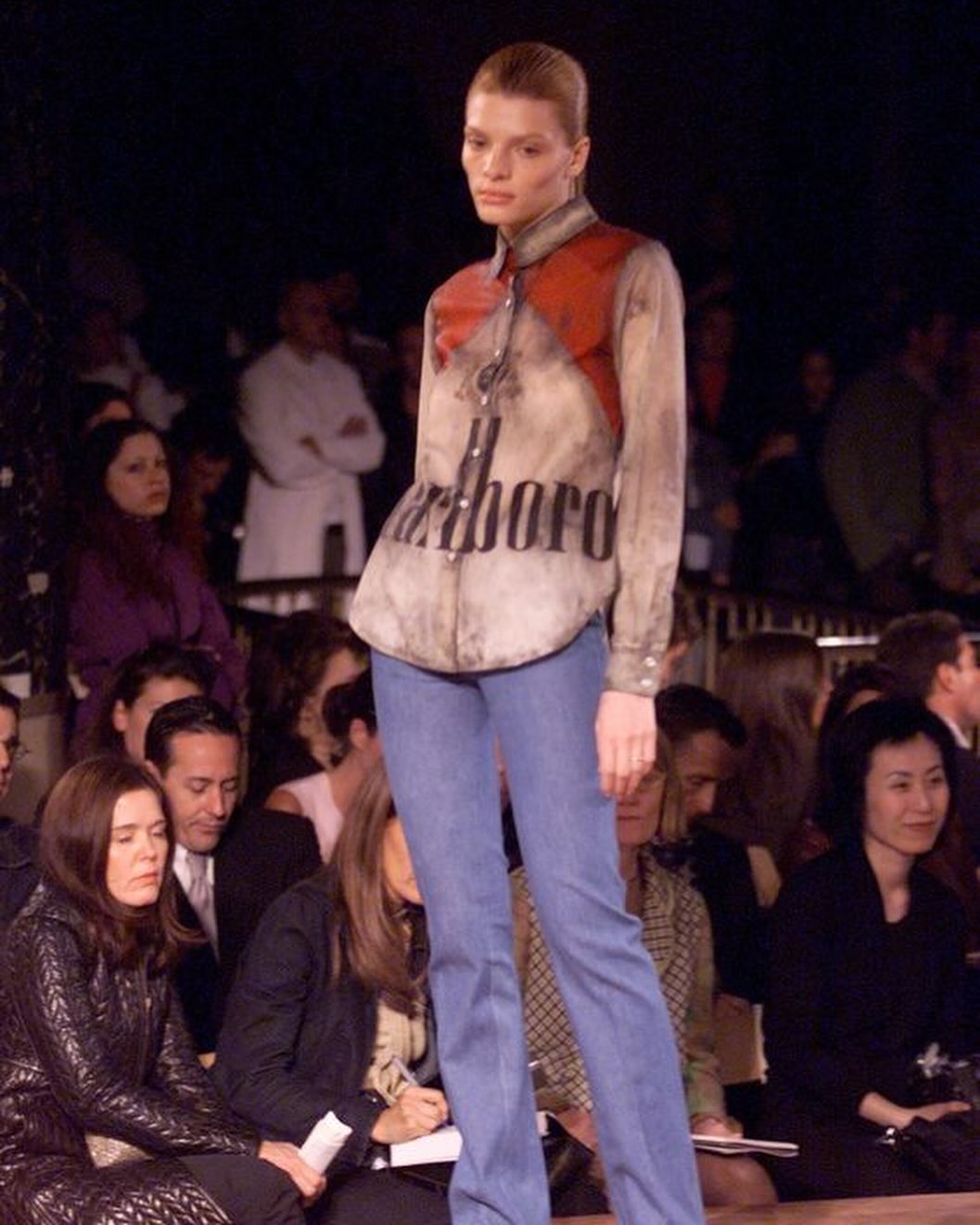
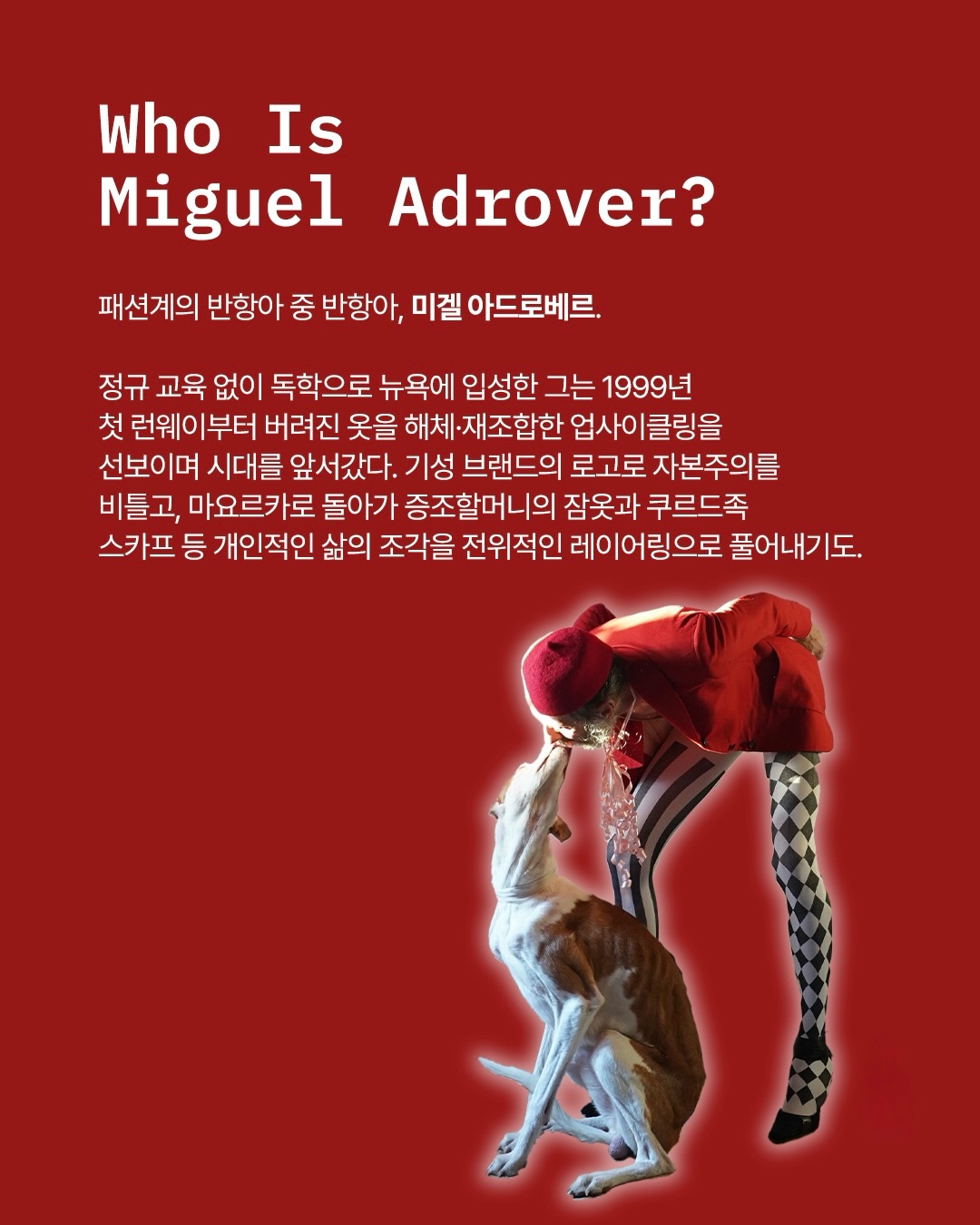
Miguel Adrover is a self-taught designer who broke into New York without formal fashion training. At his 1999 debut runway show, he presented upcycled garments made from discarded clothes, earning him a reputation as fashion's rebel. He critiqued capitalism by appropriating established brand logos and created avant-garde collections woven from deeply personal fragments of his life instead of relying on investors.
What was Miguel Adrover's 2012 collection about?
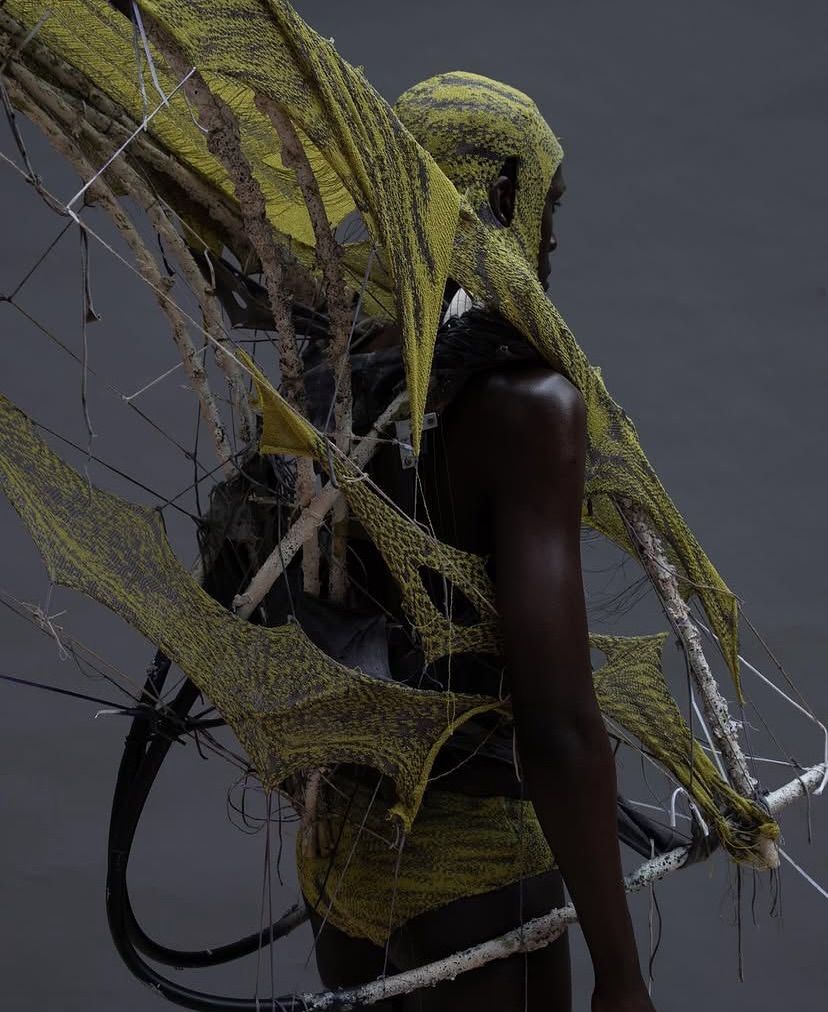
In his 2012 collection, Miguel Adrover returned to his hometown Mallorca and rejected investor dependency, weaving together deeply personal fragments—his great-grandmother's nightgown, Kurdish scarves—through avant-garde layering. It was his way of preserving his own voice over fame and commerce.
What is Miguel Adrover doing now?
Miguel Adrover currently communicates with the world by posting wildly imaginative styling portraits on Instagram. He continues his self-portrait work critiquing political and social ironies by twisting fashion grammar—wearing heels with ballet costumes or women's shoes while holding cleaning tools.