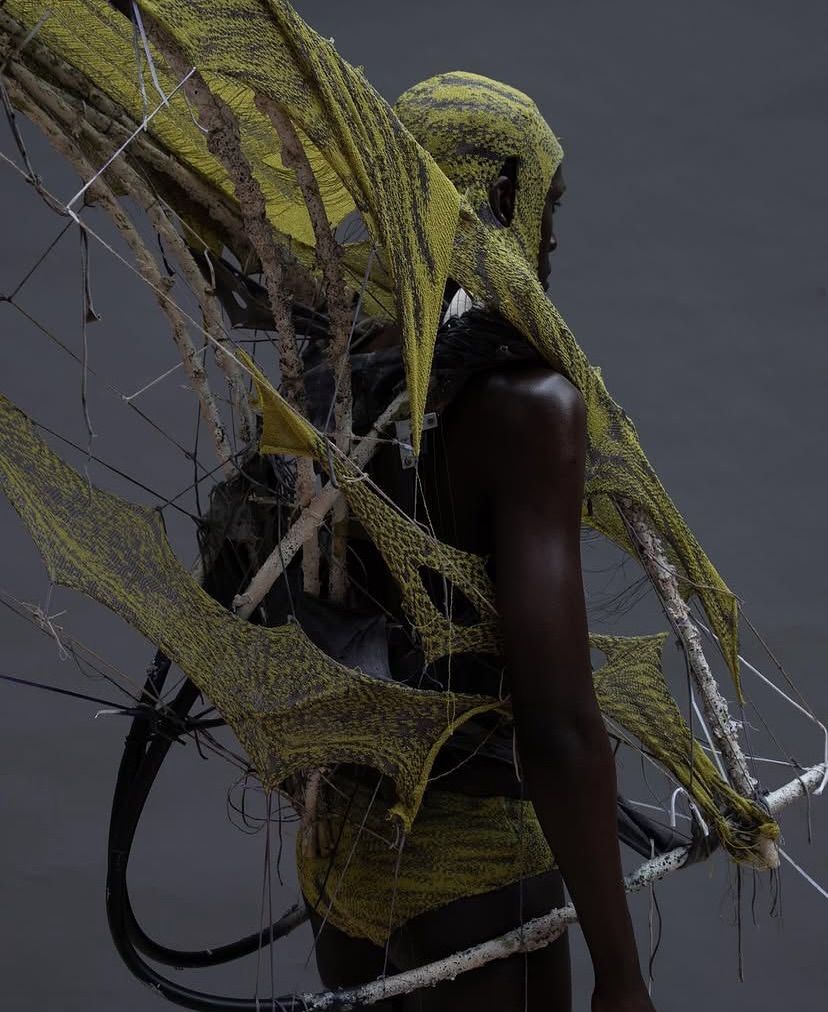
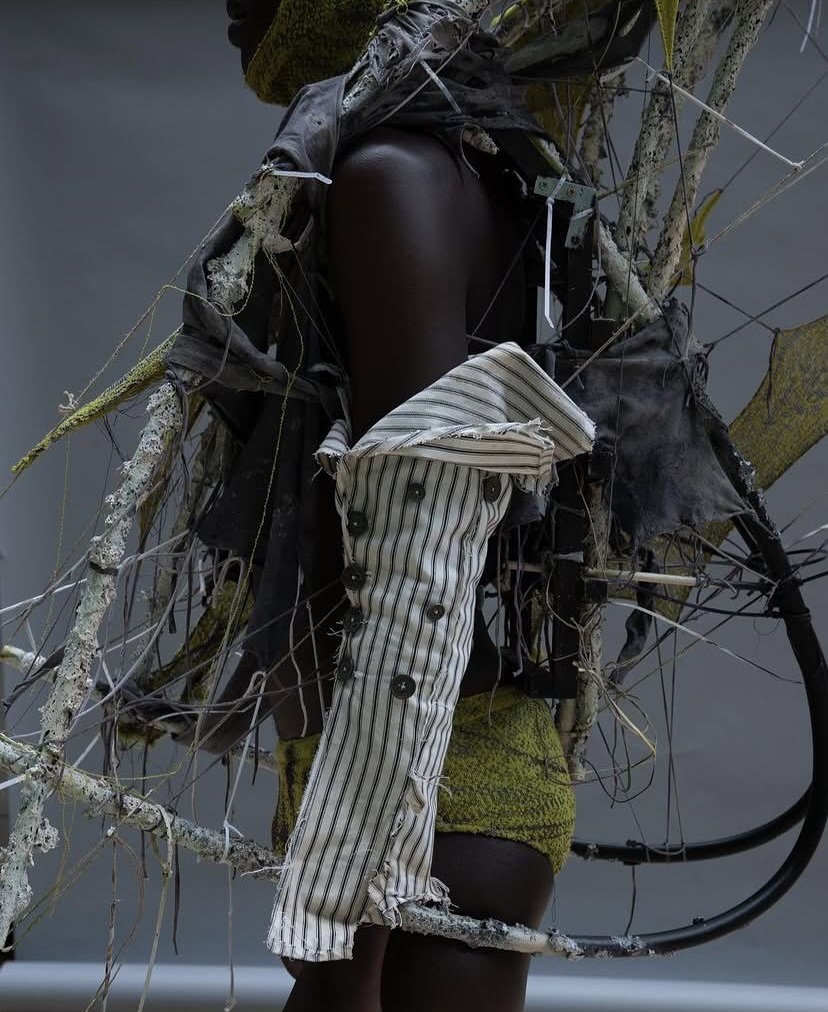
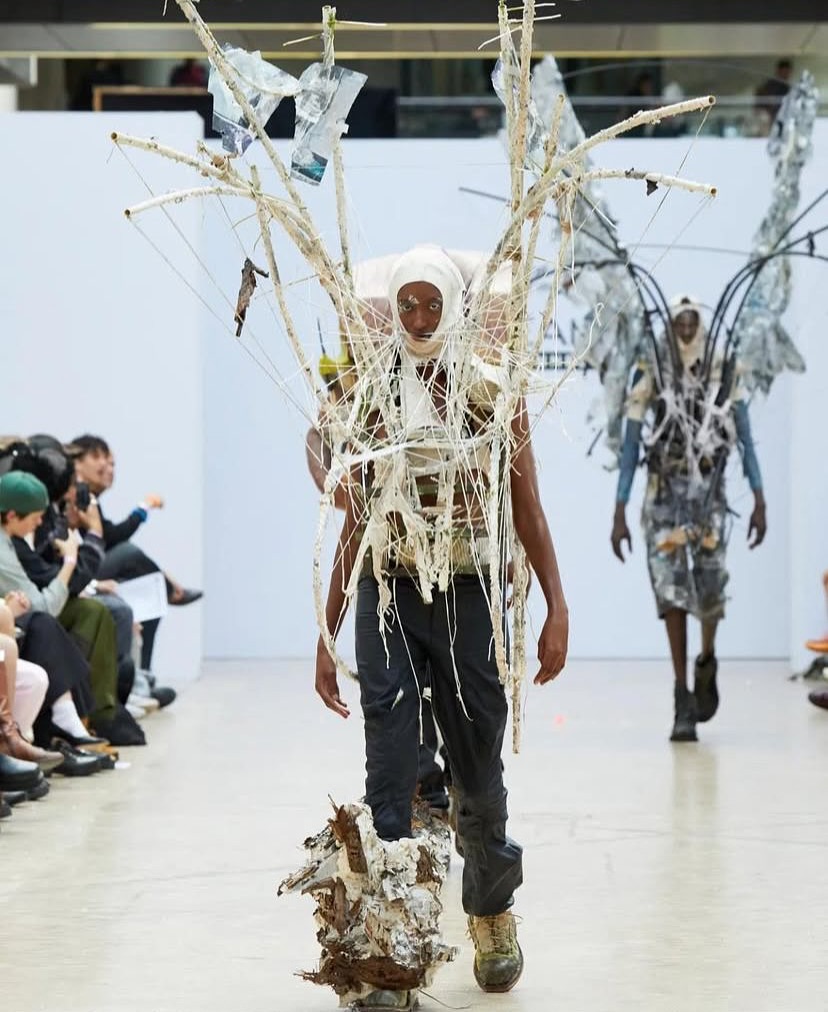
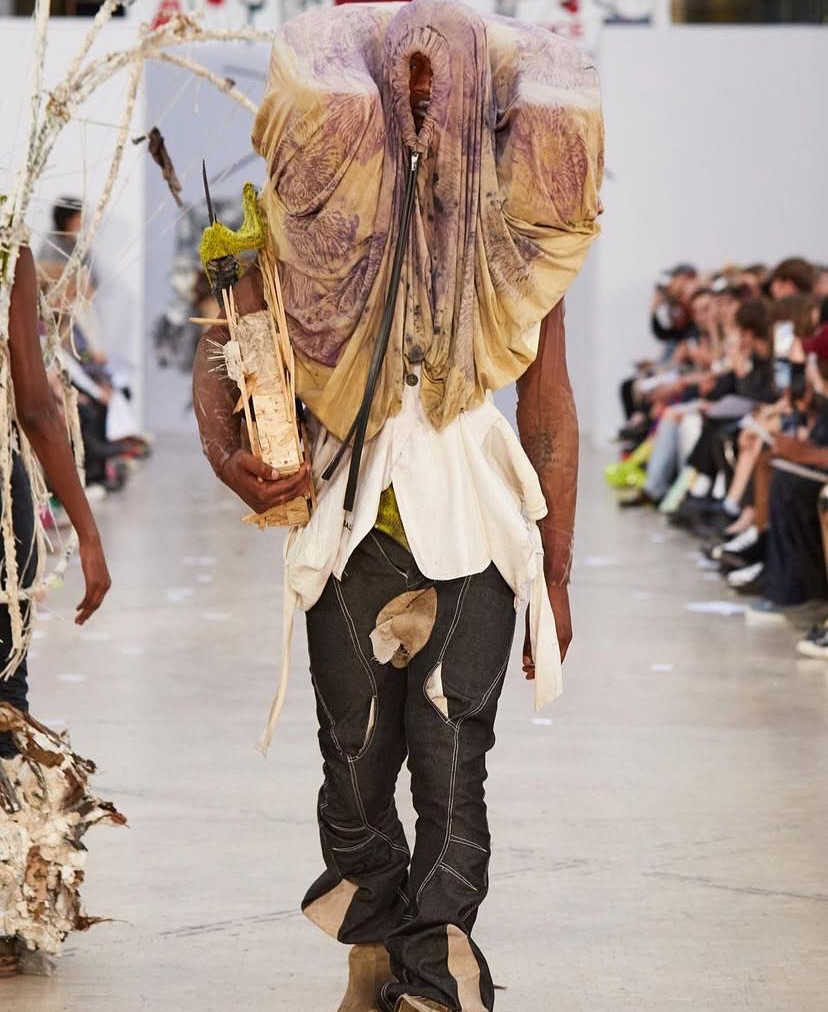
Marquel's collection presents a chimerical universe where 'angels' with wings made from waste materials parade down the runway. The garments worn by models appear deconstructed, unstitched, and unfinished in perfect grunge style, resembling costumes from a dystopian or fantasy film. These clothes are integrated with enormous wing-like structures crafted from all kinds of waste materials—paper, aluminum, ruined fabrics, and weathered wooden branches.
This collection goes beyond simple recycling fashion, offering a new perspective on discarded materials. The negative image of trash is reborn as fantastical, surreal beauty through the designer's creativity. Marquel's work demonstrates how sustainability and artistry can coexist while dramatically revealing fashion's transformative power.
The young designer's bold approach raises important questions about the direction the fashion industry should take. What role should fashion play in the cycle of consumption and disposal? Marquel's chimerical universe serves as a starting point for this exploration, challenging us to rethink our relationship with waste, beauty, and the future of fashion itself.
FAQ
What materials were used in Yodea Markel's graduation collection?
Yodea Markel's graduation collection features massive wing structures created from various waste materials including paper, aluminum, damaged fabrics, and branches. The garments themselves are designed in a deconstructed, unfinished grunge style that combines with these waste wings to achieve a dystopian yet fantastical aesthetic.
Which school does Yodea Markel attend?
Yodea Markel is a student at CMI (Central Martin Institute), where she recently presented an angel-wing series using waste materials for her graduation collection. As an emerging designer, she's gaining attention for work combining sustainability with avant-garde aesthetics.
What is the main concept of Markel's collection?
The core concept of Markel's collection is the message that 'trash can become fashion.' It demonstrates fashion's transformative power to convert everyday waste into art, presenting a new aesthetic perspective on discarded materials through angel wings made from refuse.