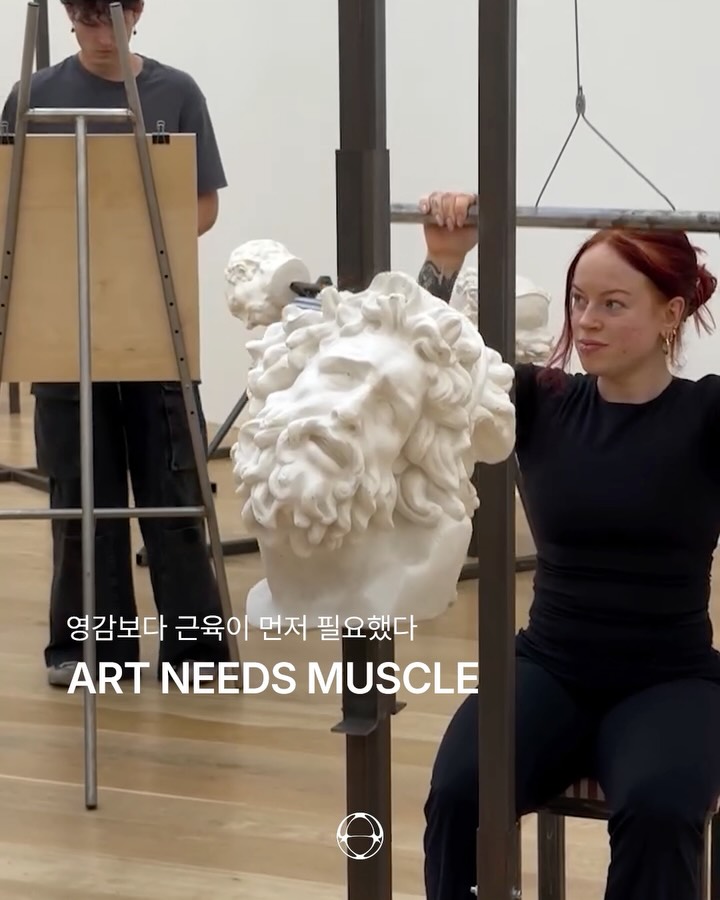
His installation
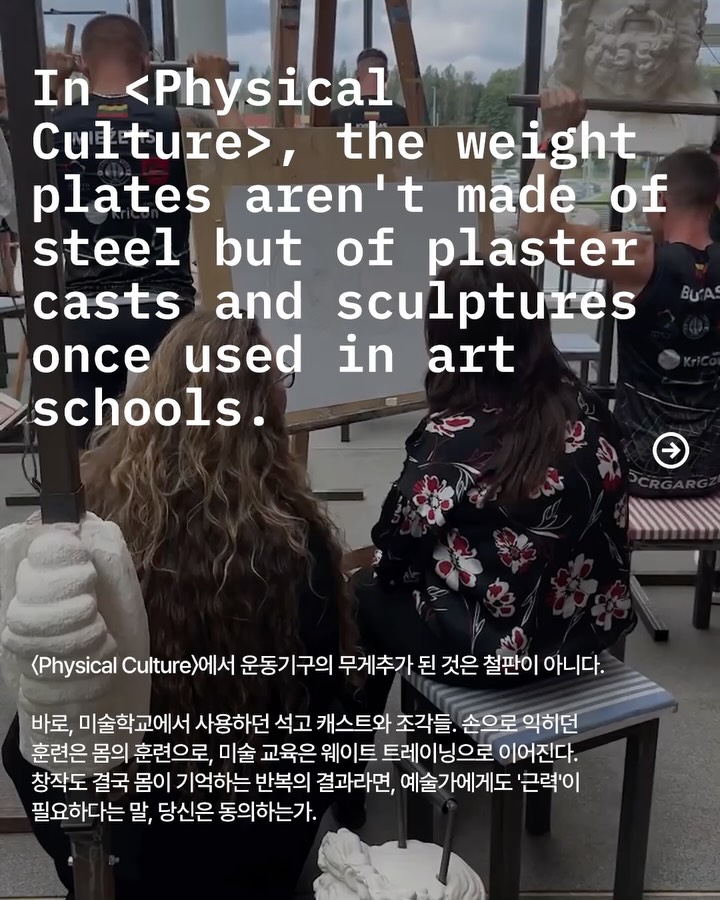
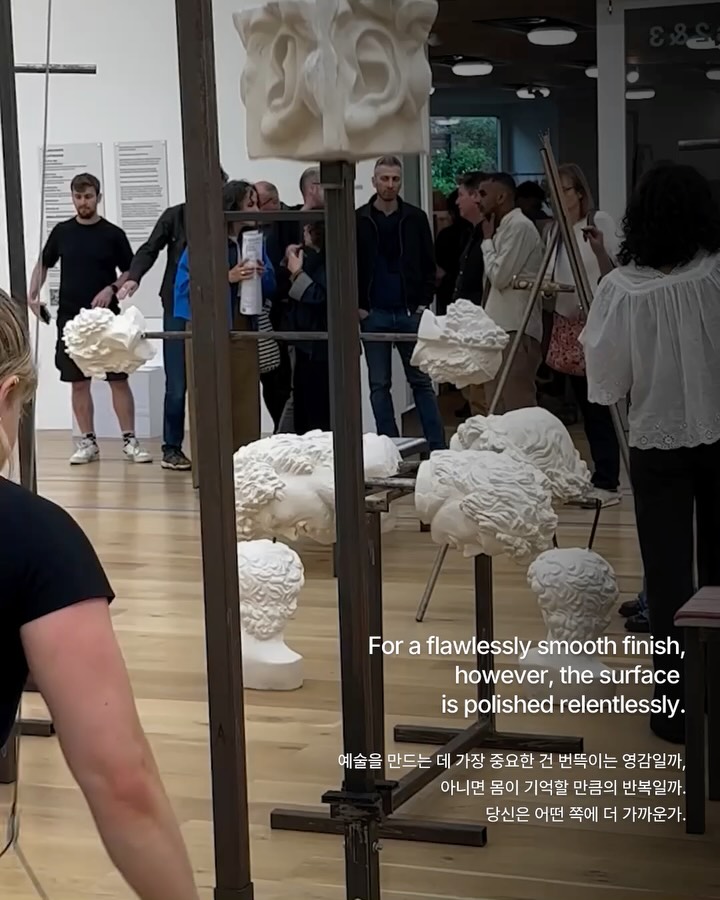
Serapinas argues that creativity, too, is the result of what the body remembers through repetition. What matters more than genius inspiration is the persistence of showing up in the studio every day, the endurance to withstand failure, and the 'strength' to carve out form. His work demystifies art, pulling it down from the realm of the sacred into the territory of trainable skill. In doing so, he returns the figure of the artist to something more human, more physical.
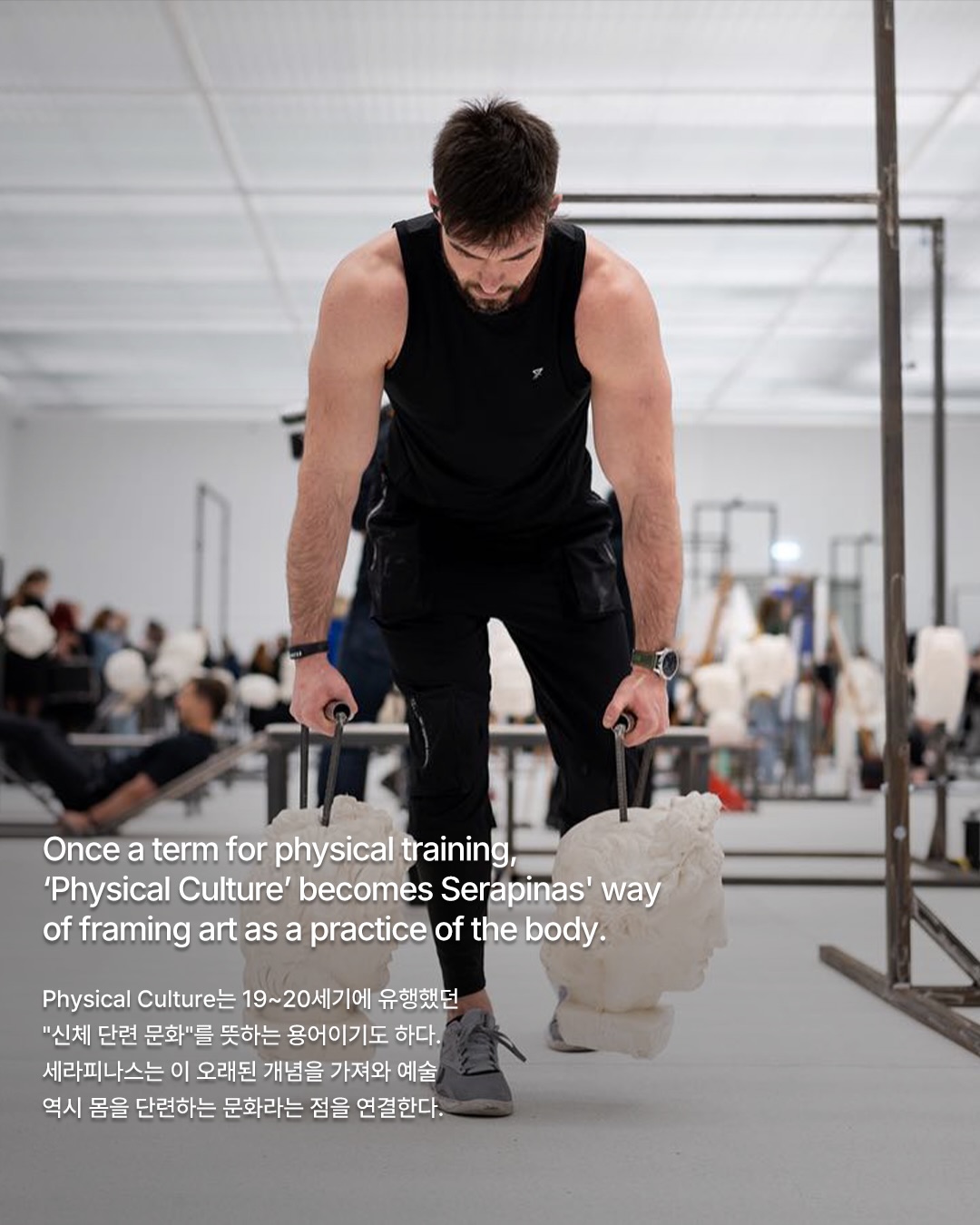
His message—that artists need 'muscle' too—may not be metaphorical at all, but literal truth. Creativity might not be about eureka moments but repetition, not talent but training, not inspiration but muscle memory.
FAQ
What is Augustas Serapinas's Physical Culture?
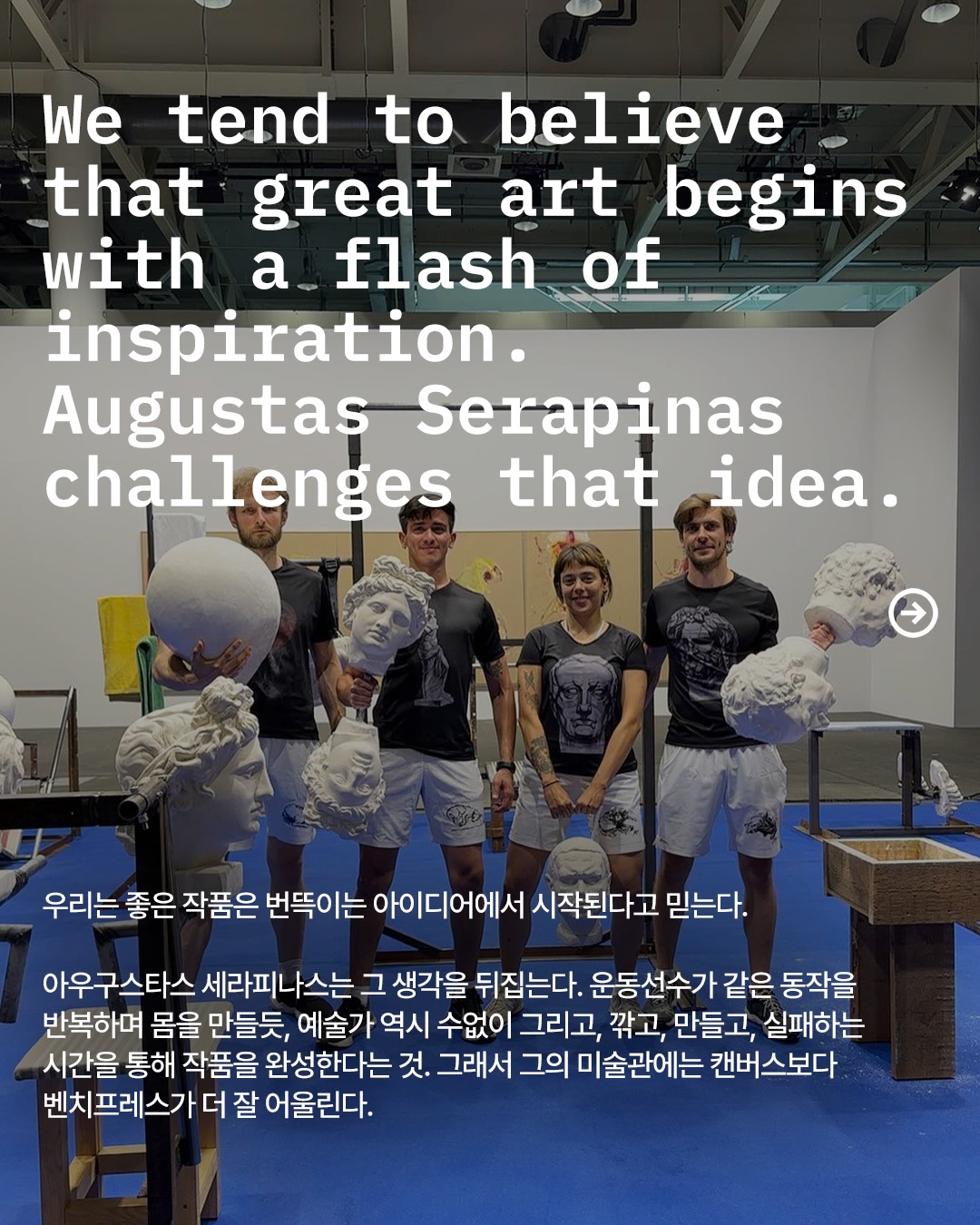
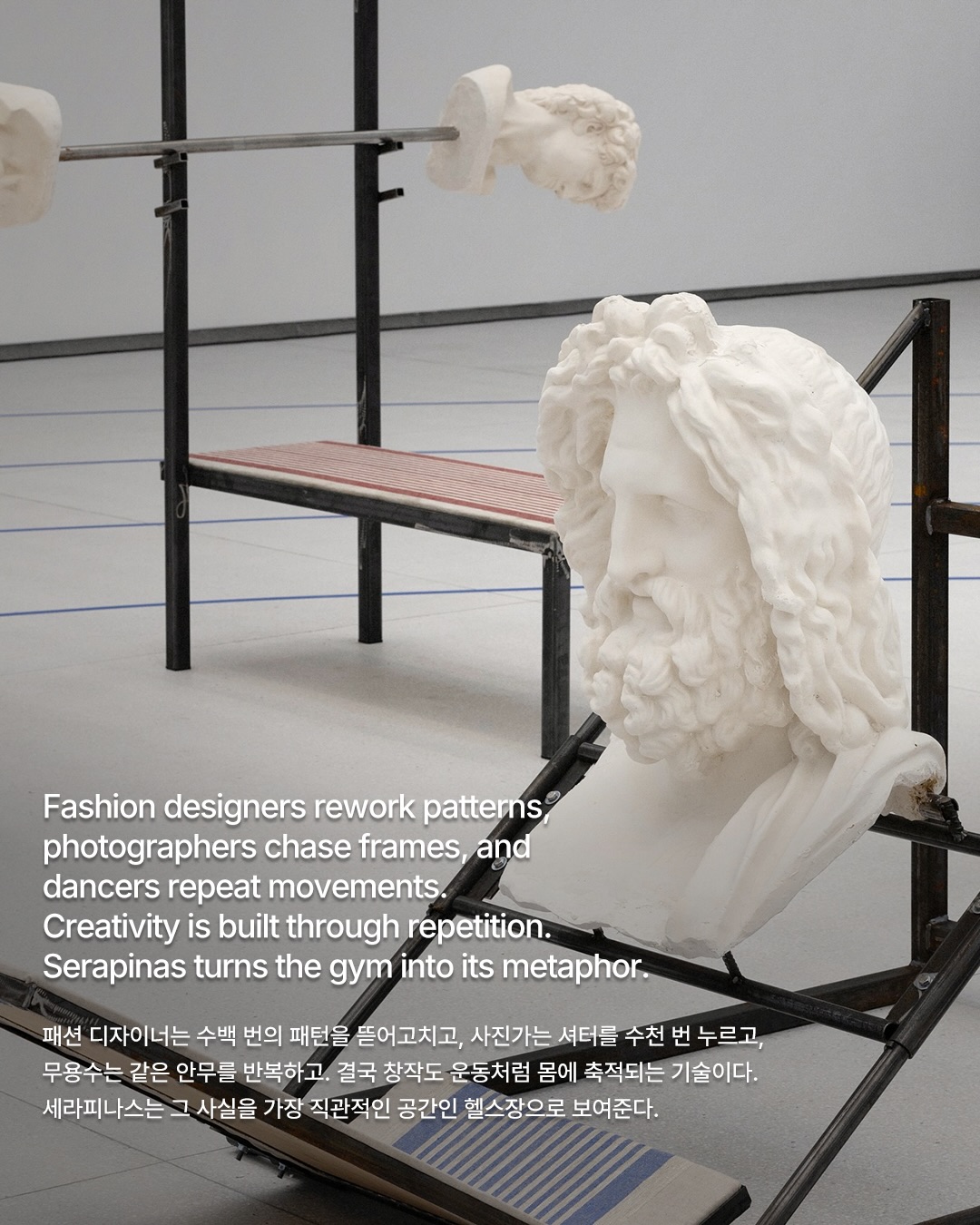
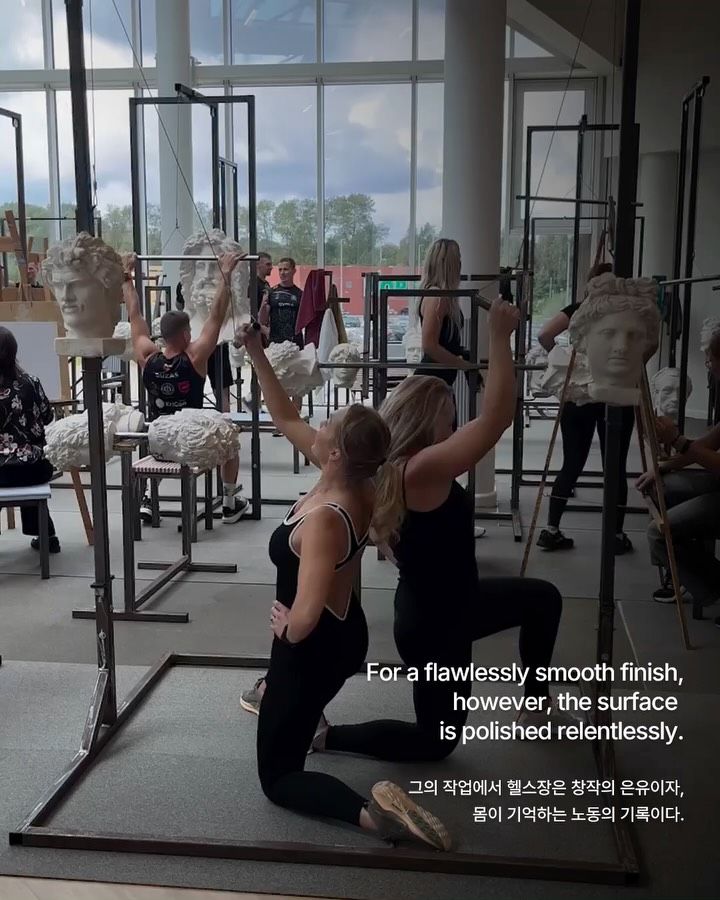
Physical Culture is an installation that uses plaster casts and sculpture fragments from art school as weights for exercise equipment. Through this, Serapinas explores the relationship between art education and physical training, creation and repetition, conveying that artists also need 'strength.'
Who is Augustas Serapinas?
Augustas Serapinas is a Lithuanian contemporary artist who views art as the result of repetition and training rather than inspiration. His work explores the relationship between art education, physicality, and labor, redefining art as a trainable skill rather than mystifying it.
Why are repetition and training important in artistic creation?
Serapinas argues that creation comes from the persistence of moving your hands in the studio daily and the endurance to withstand failure, rather than sudden inspiration. Like athletes building their bodies through repetitive training, artists complete works through repetitive practice—it's a matter of muscle memory, according to his philosophy.