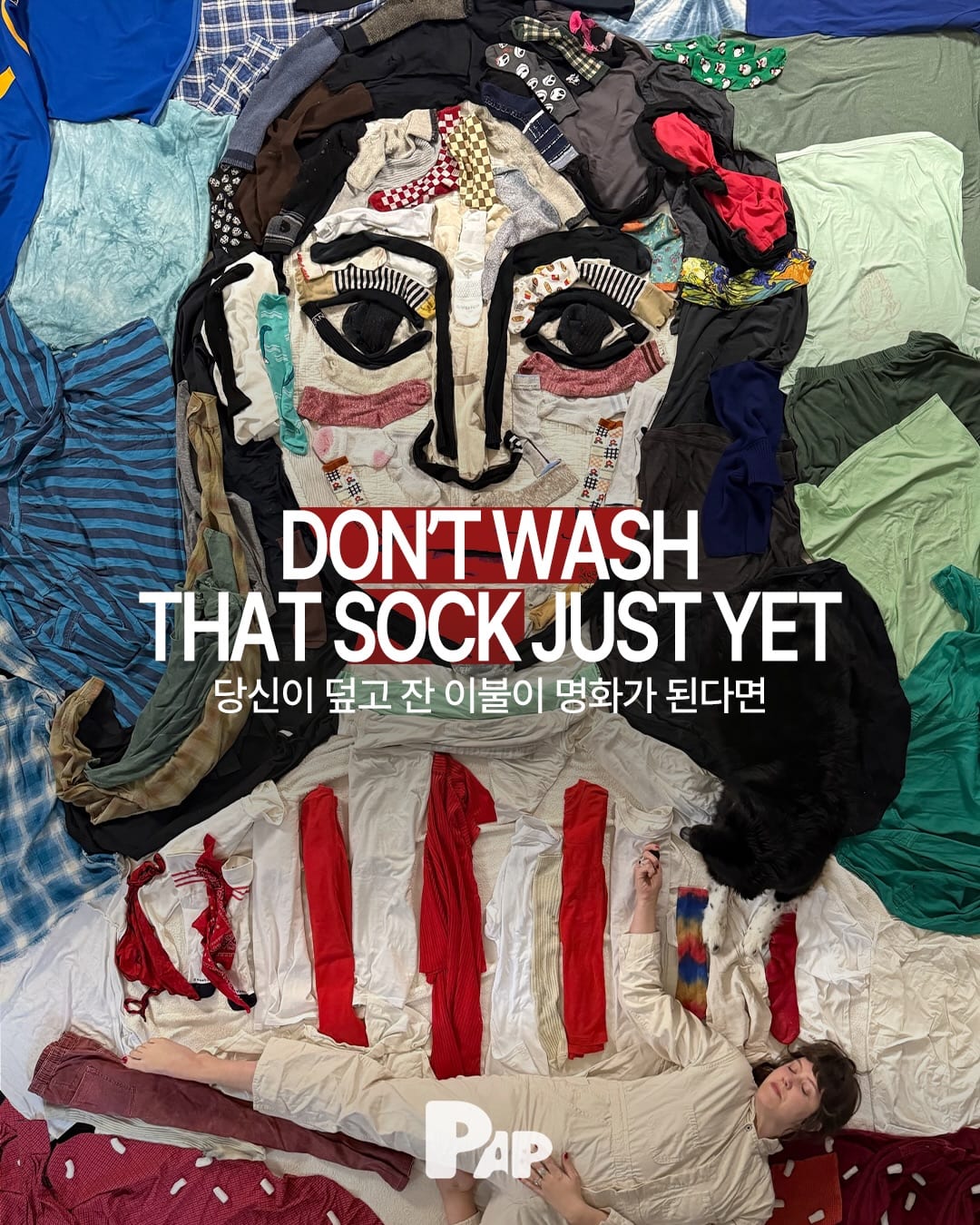
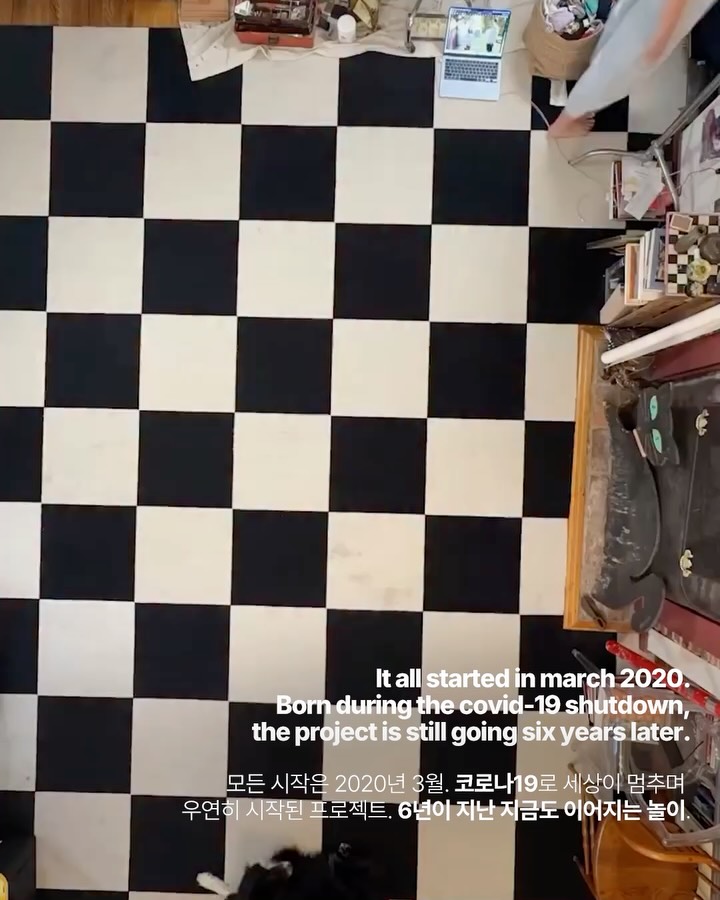
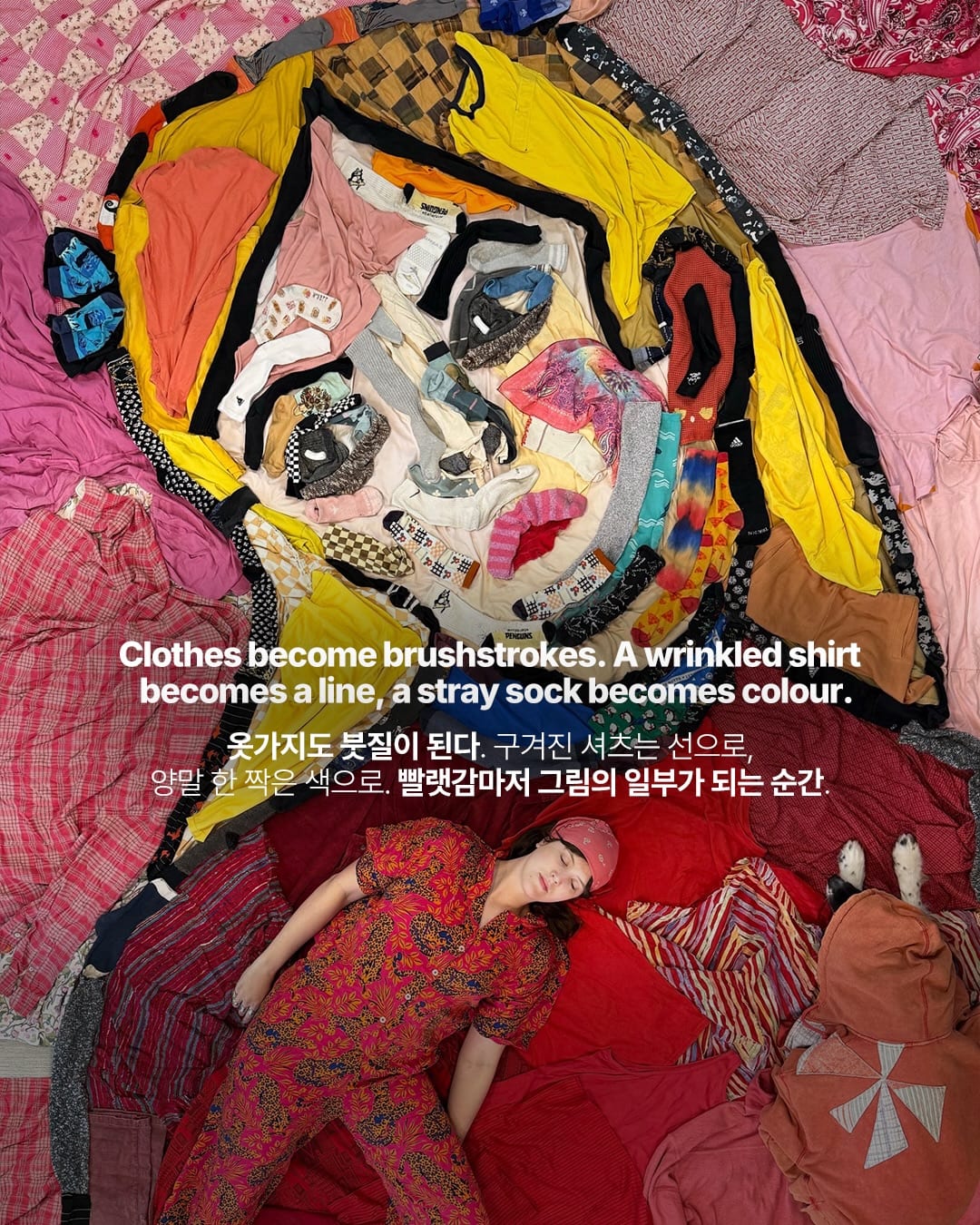
Eliza Reinhardt recreates masterpieces using blankets and shirts. She piles clothes and fabric scraps on her bed, pulling flat canvas images into three-dimensional reality. The project began in March 2020 during the COVID-19 shutdown and continues six years later. Crumpled blankets, socks, and checkered fabric substitute for brushstrokes.
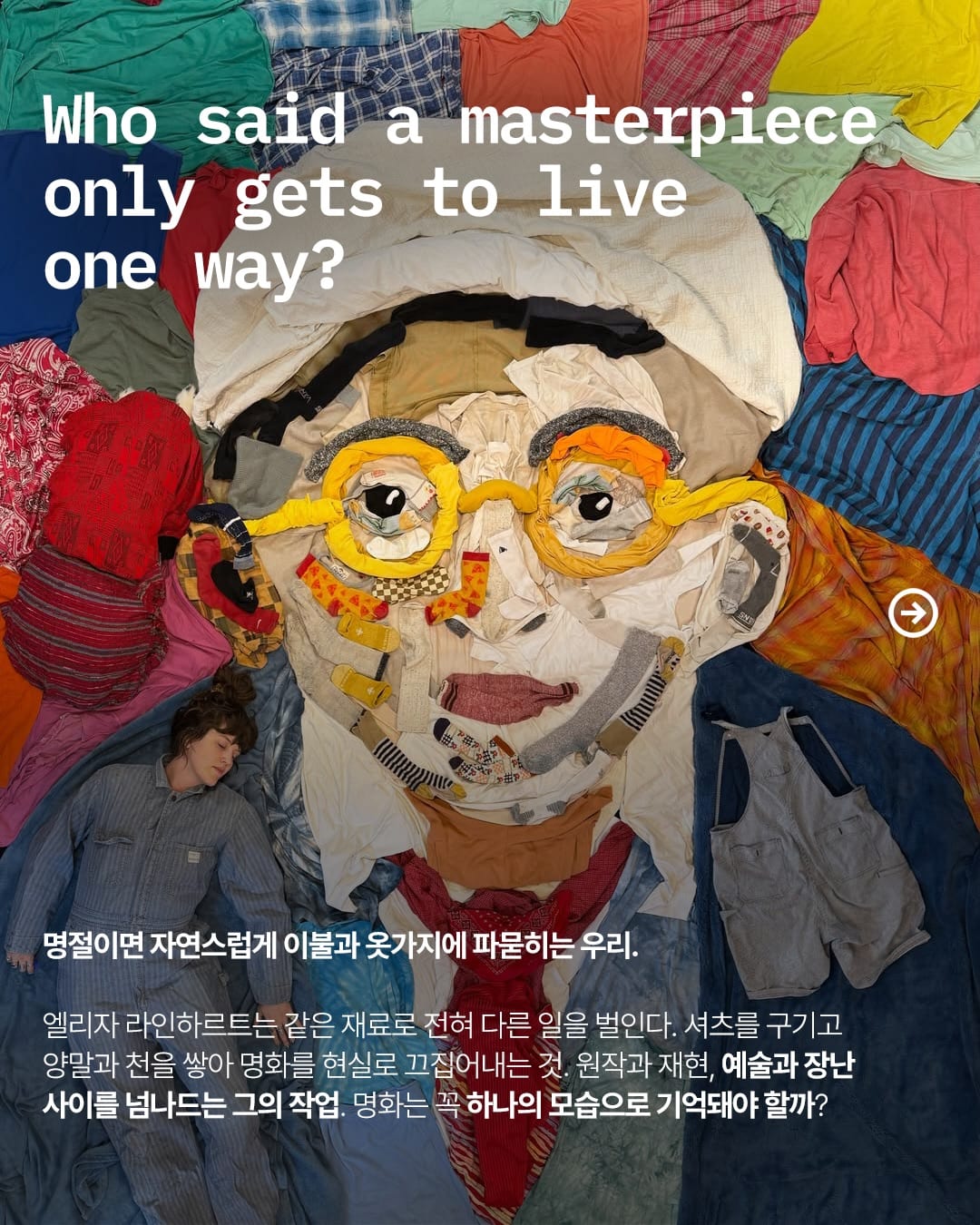
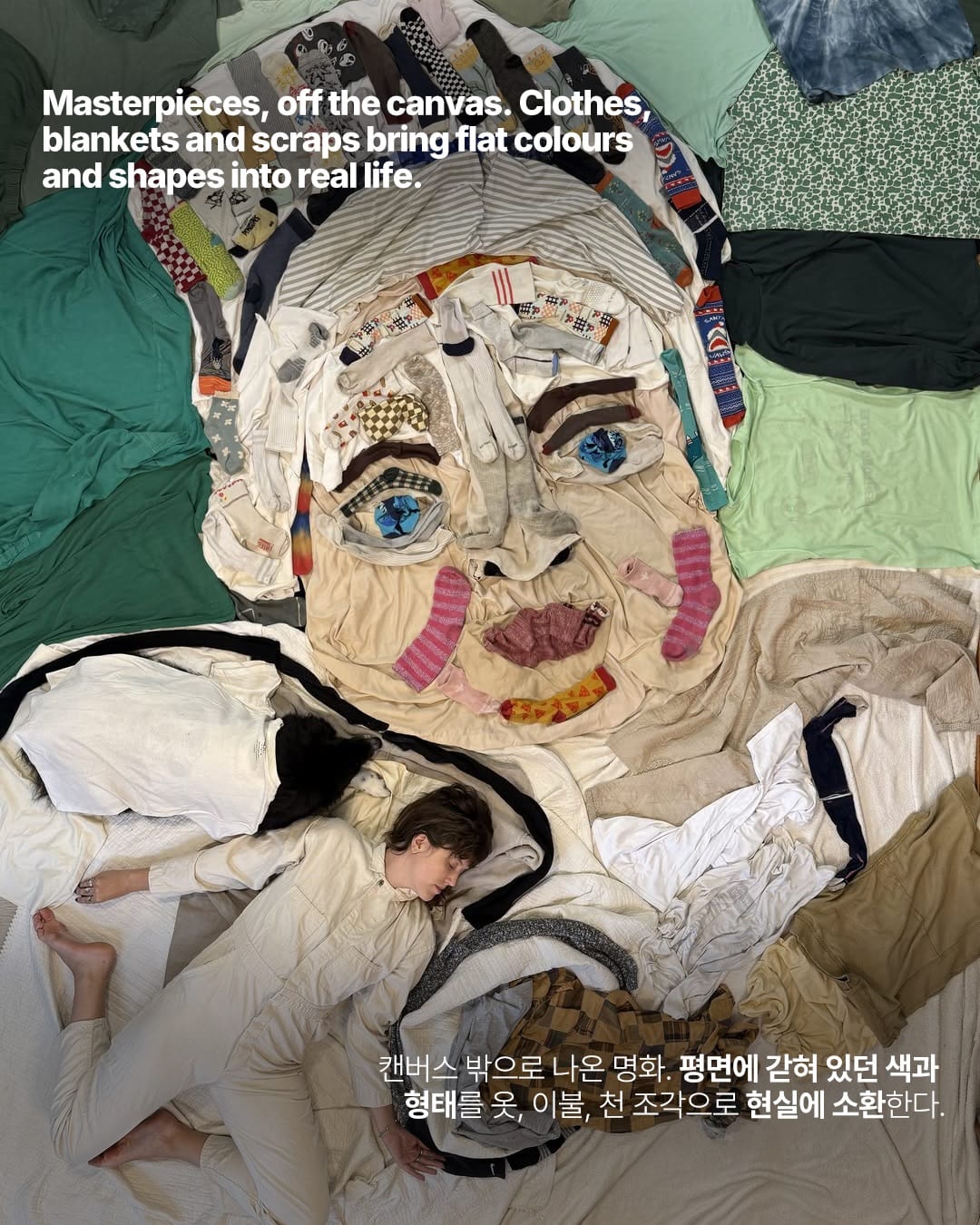
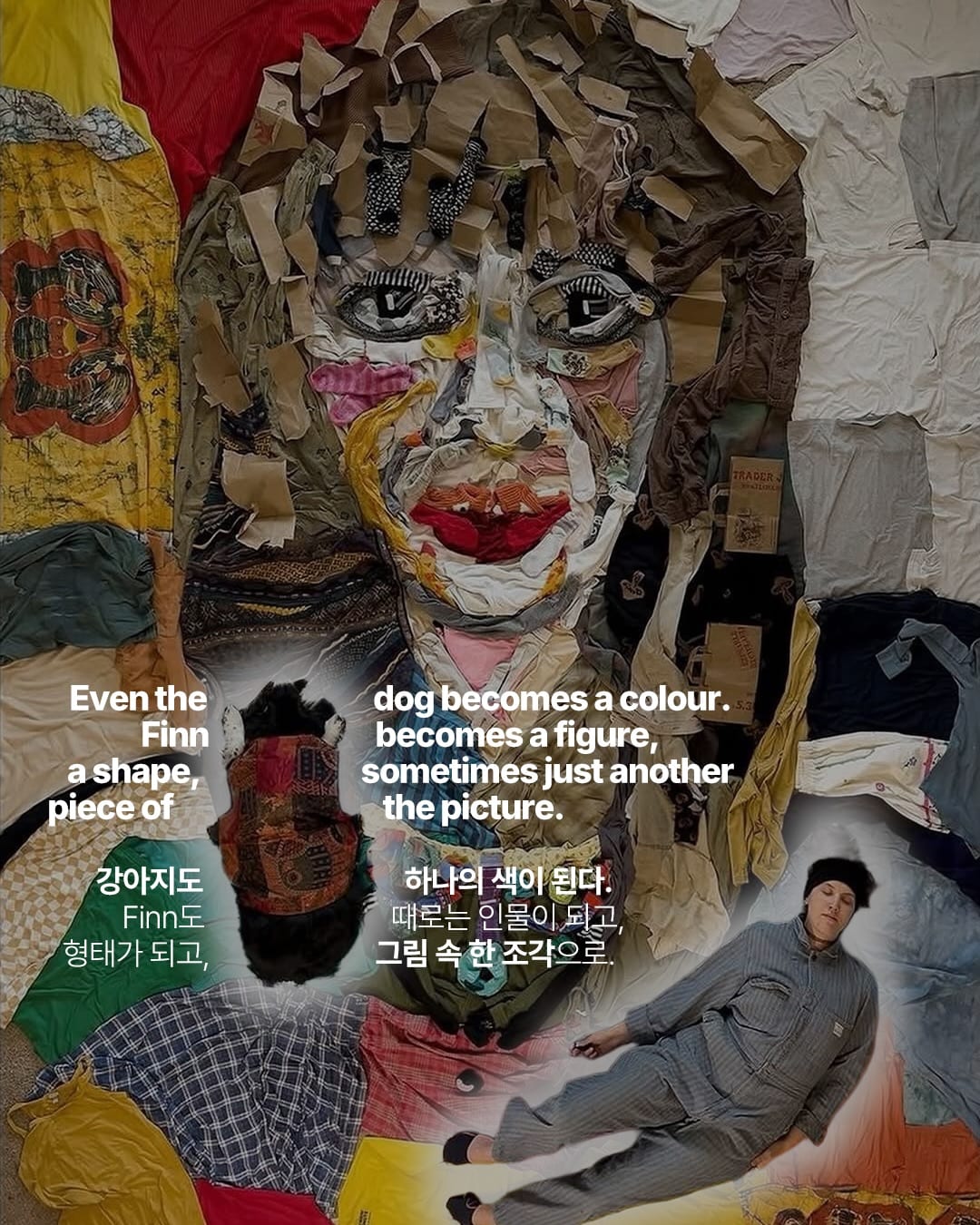
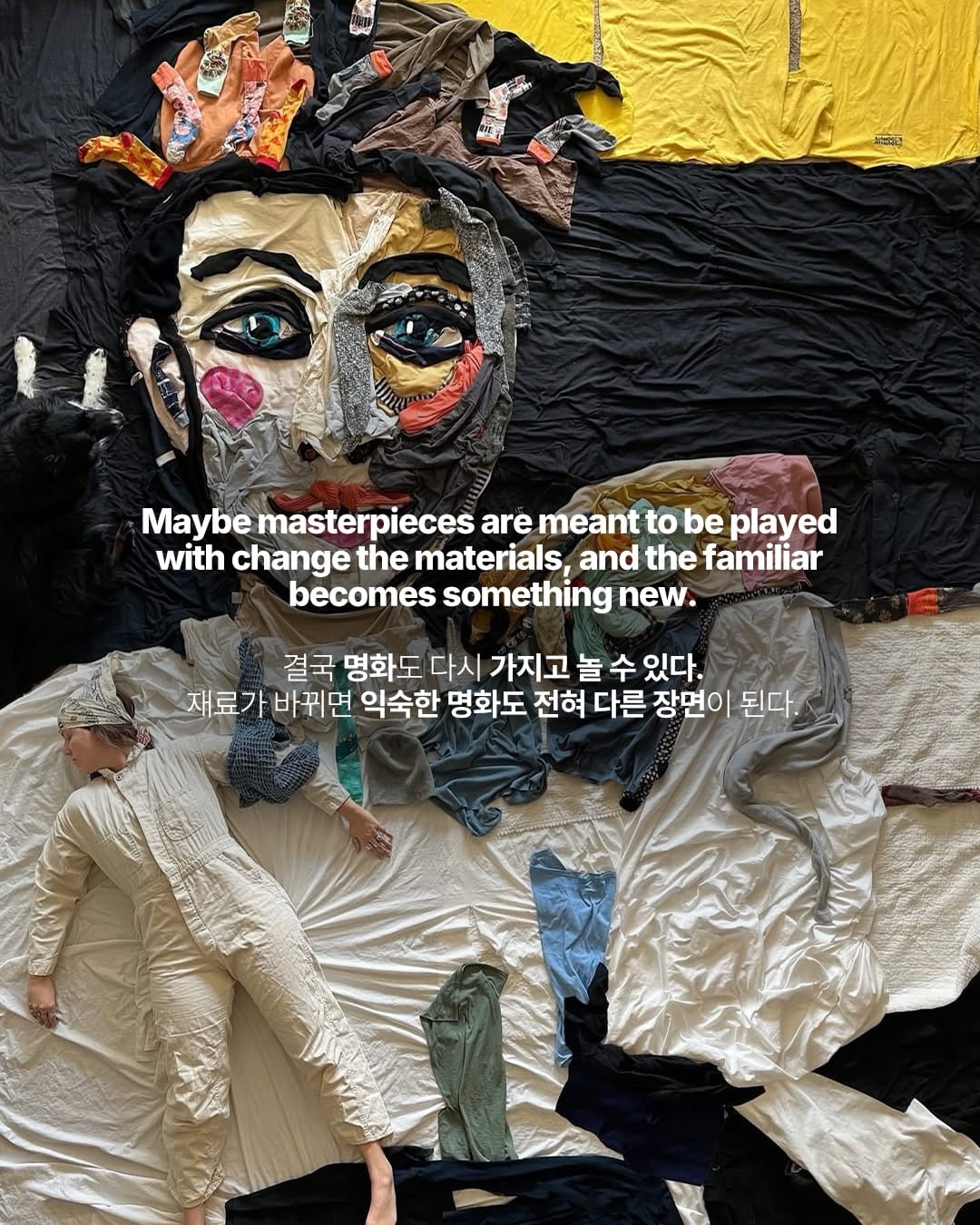
Reinhardt's work translates everyday materials into the language of art. Bed sheets become canvases, red T-shirts turn into lips. Striped socks serve as beards, yellow eyeglass frames as borders. She faithfully translates the original's colors and shapes into fabric and blankets while adding texture and volume impossible on a flat surface. The flat masterpiece begins to breathe on the bed.
She incorporates her own body into the work. In the photographs, Reinhardt lies among the clothes, becoming part of the painting. Viewers encounter the piece from above, looking down. This composition creates an experience unlike museum wall hangings—you're peering down at a work spread on the floor. The masterpiece no longer hangs in a distant place but enters everyday space.
Reinhardt's recreations don't aim for perfect replication. Instead, they reveal the distance between original and remake, the boundary between art and play. Fabric and clothes can always return to their everyday purpose. The masterpiece lingers briefly on the bed before vanishing, leaving only photographs behind. Temporary, imperfect materials add humor and intimacy to the work.
There's no single way to remember a masterpiece. Oil on canvas or blankets on a bed can both hold the same image. How would you choose to remember one?
Reinhardt's work translates everyday materials into the language of art. Bed sheets become canvases, red T-shirts turn into lips. Striped socks serve as beards, yellow eyeglass frames as borders. She faithfully translates the original's colors and shapes into fabric and blankets while adding texture and volume impossible on a flat surface. The flat masterpiece begins to breathe on the bed.
She incorporates her own body into the work. In the photographs, Reinhardt lies among the clothes, becoming part of the painting. Viewers encounter the piece from above, looking down. This composition creates an experience unlike museum wall hangings—you're peering down at a work spread on the floor. The masterpiece no longer hangs in a distant place but enters everyday space.
Reinhardt's recreations don't aim for perfect replication. Instead, they reveal the distance between original and remake, the boundary between art and play. Fabric and clothes can always return to their everyday purpose. The masterpiece lingers briefly on the bed before vanishing, leaving only photographs behind. Temporary, imperfect materials add humor and intimacy to the work.
There's no single way to remember a masterpiece. Oil on canvas or blankets on a bed can both hold the same image. How would you choose to remember one?
FAQ
What materials does Eliza Reinhardt use to recreate masterpieces?
Eliza Reinhardt recreates famous paintings using everyday fabrics like quilts, shirts, socks, bed sheets, and checkered cloth. Launched in March 2020, the project transforms flat paintings into three-dimensional installations by stacking garments on her bed.
When did Eliza Reinhardt's project begin?
The project began in March 2020 during the COVID-19 shutdown. It started as an experiment in making art from everyday materials when the world stood still, and continues six years later.
What distinguishes Eliza Reinhardt's work?
Reinhardt's work explores the boundaries between original and reproduction, art and play. Using temporary, imperfect fabric materials, she recreates masterpieces without aiming for exact replication, incorporating her own body and employing a distinctive bird's-eye-view composition.