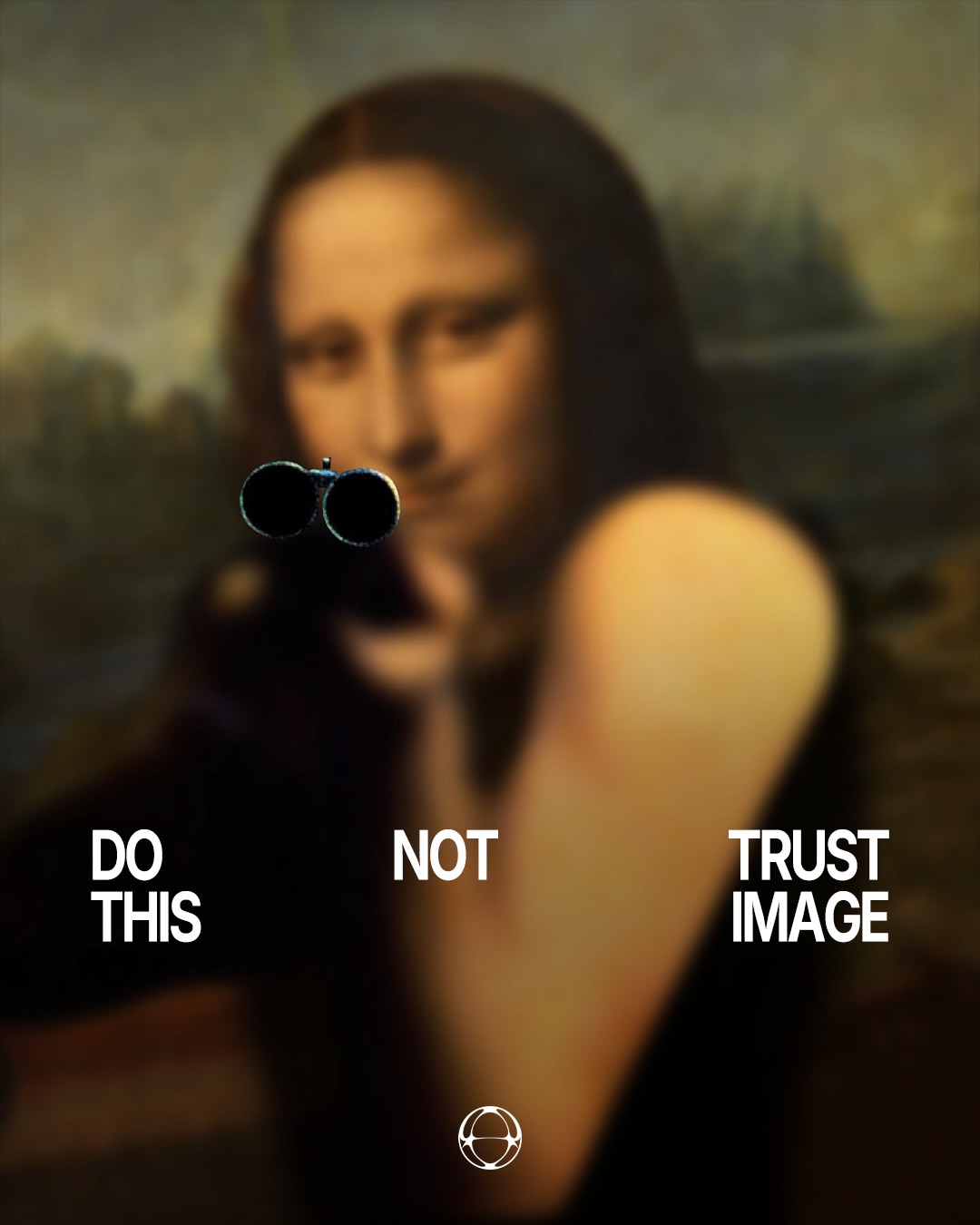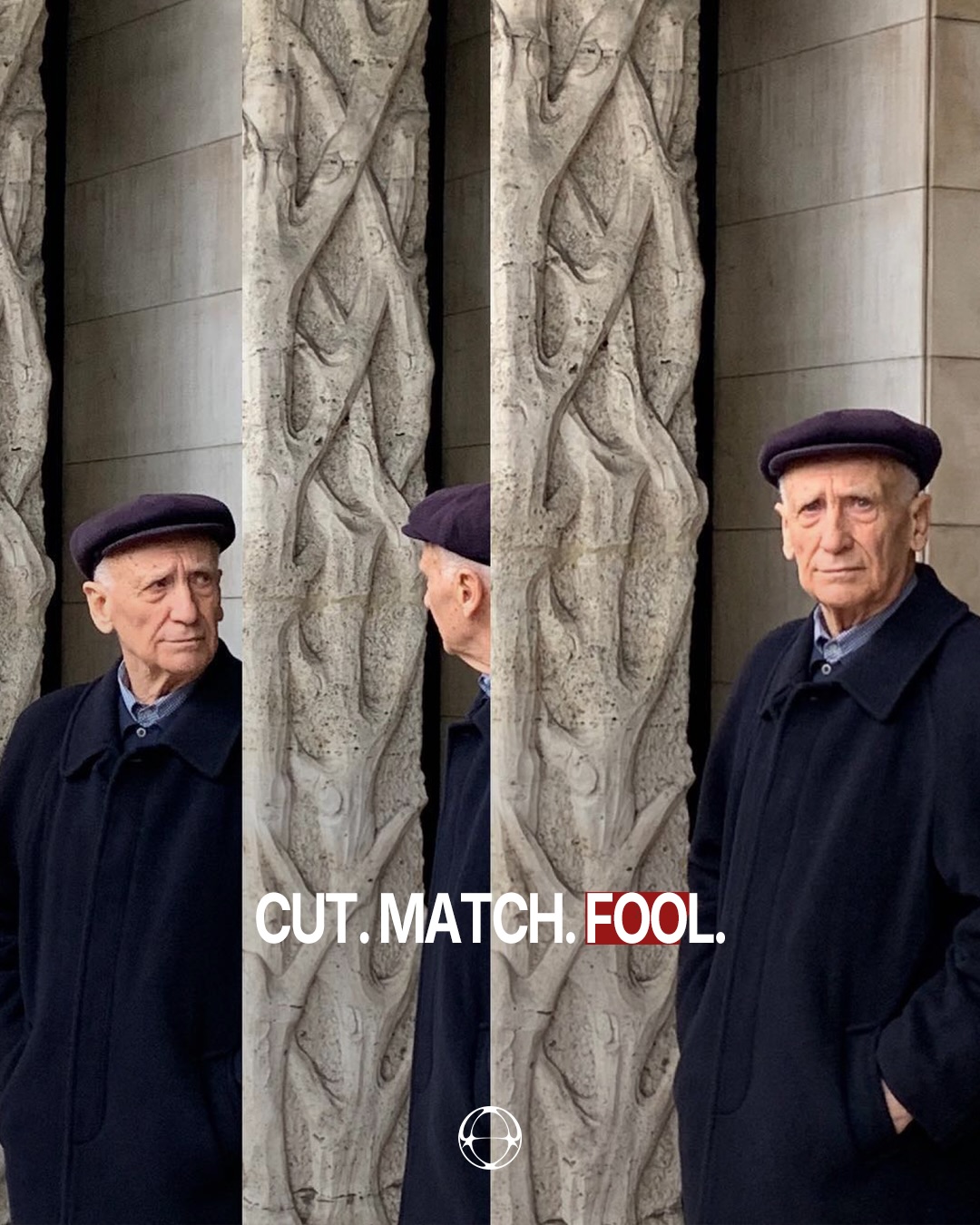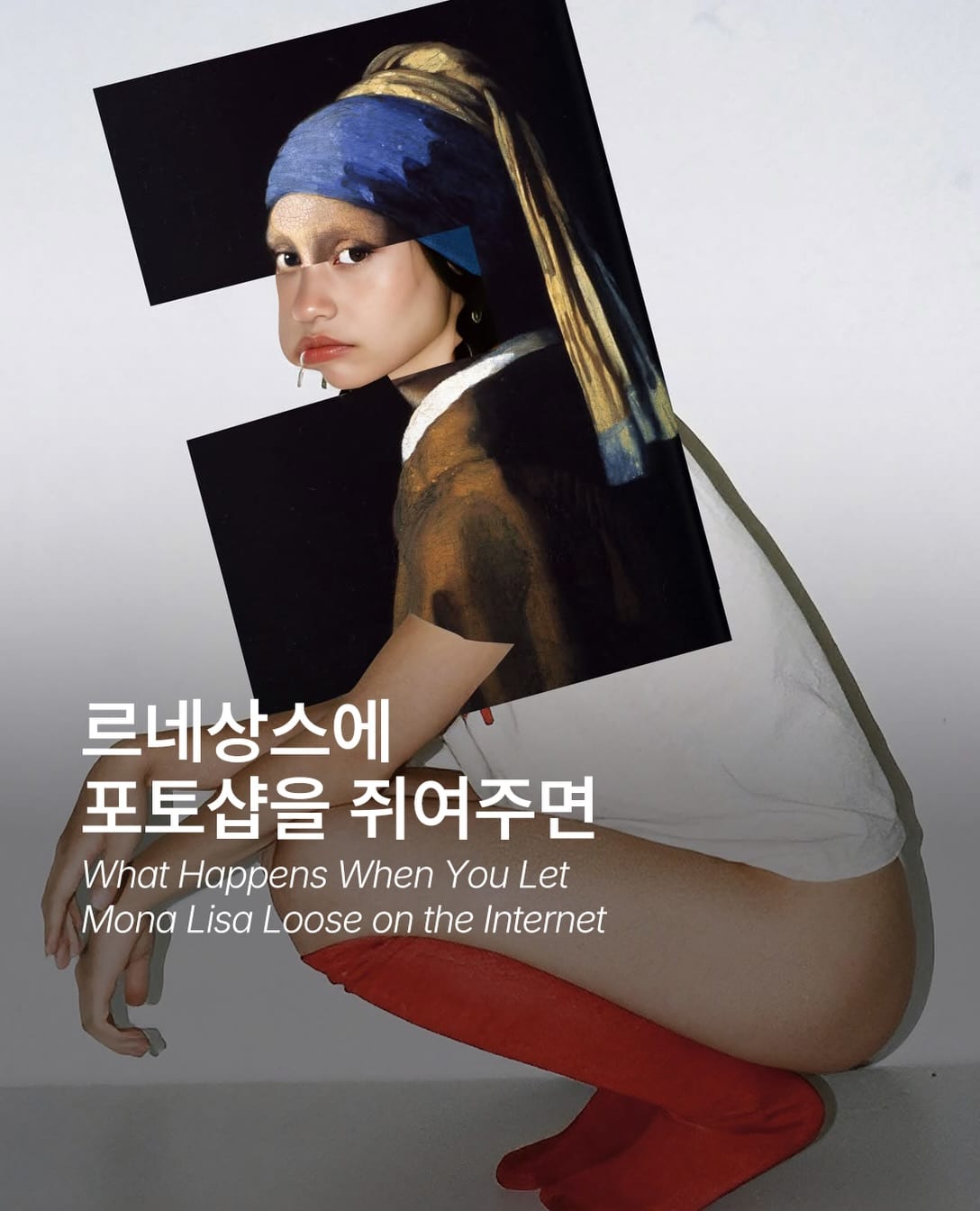
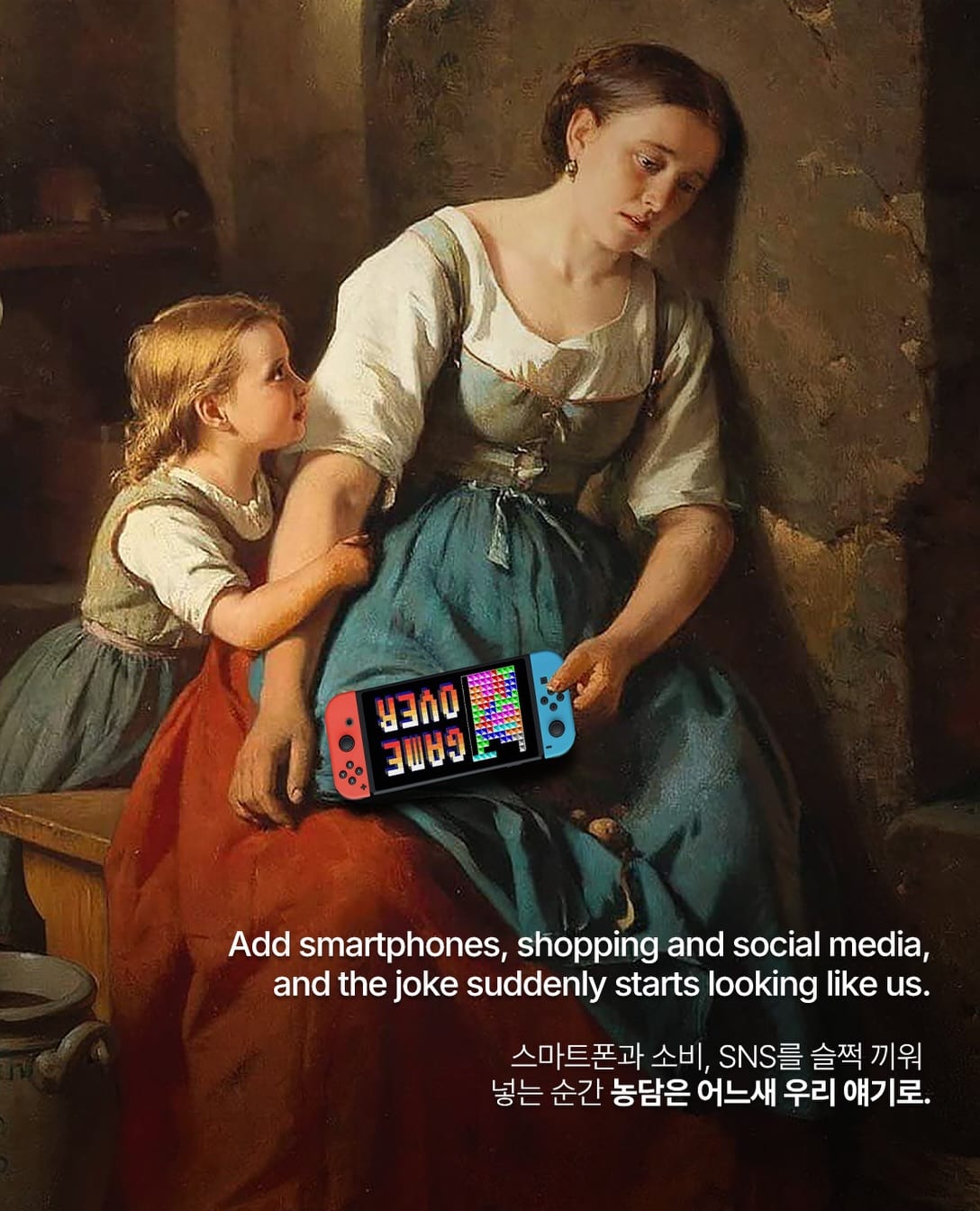
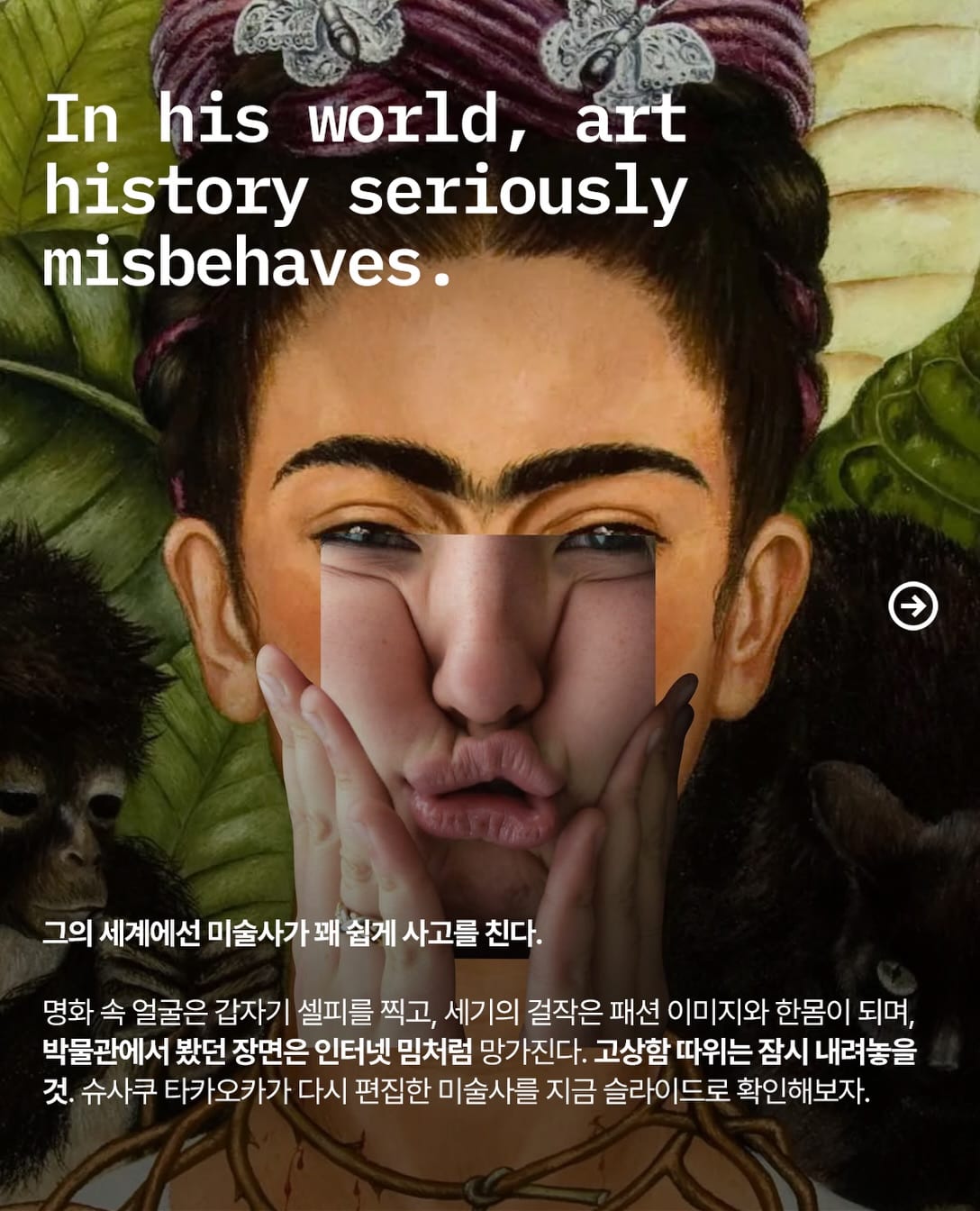
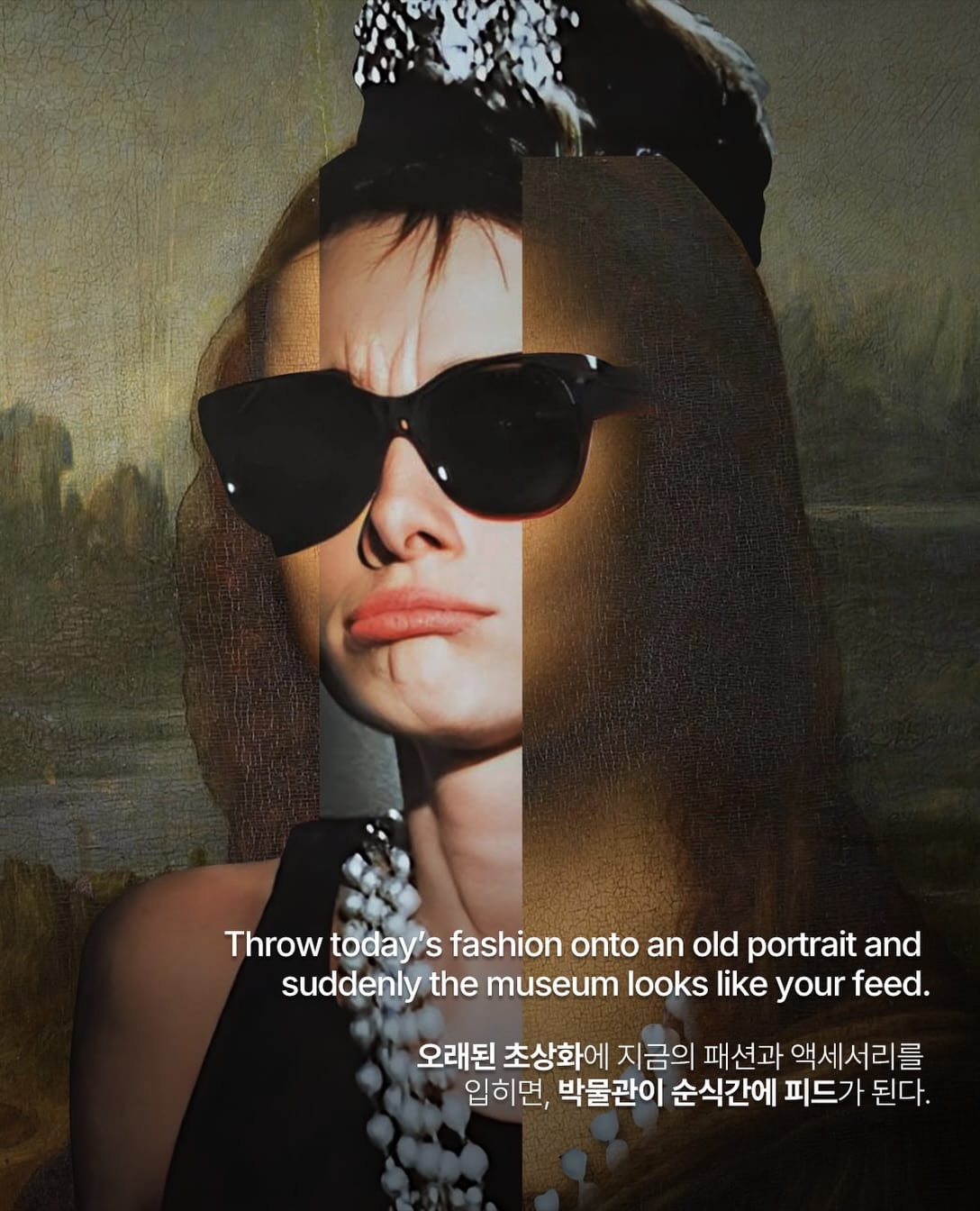
In his world, art history seriously misbehaves. Old masters take selfies, iconic paintings merge with fashion imagery, and museum treasures turn into internet jokes. The authority of classical painting offers no protection here. He doesn't handle masterpieces carefully. Instead, he cuts and twists them roughly, shoving them into the visual language of the 21st century.
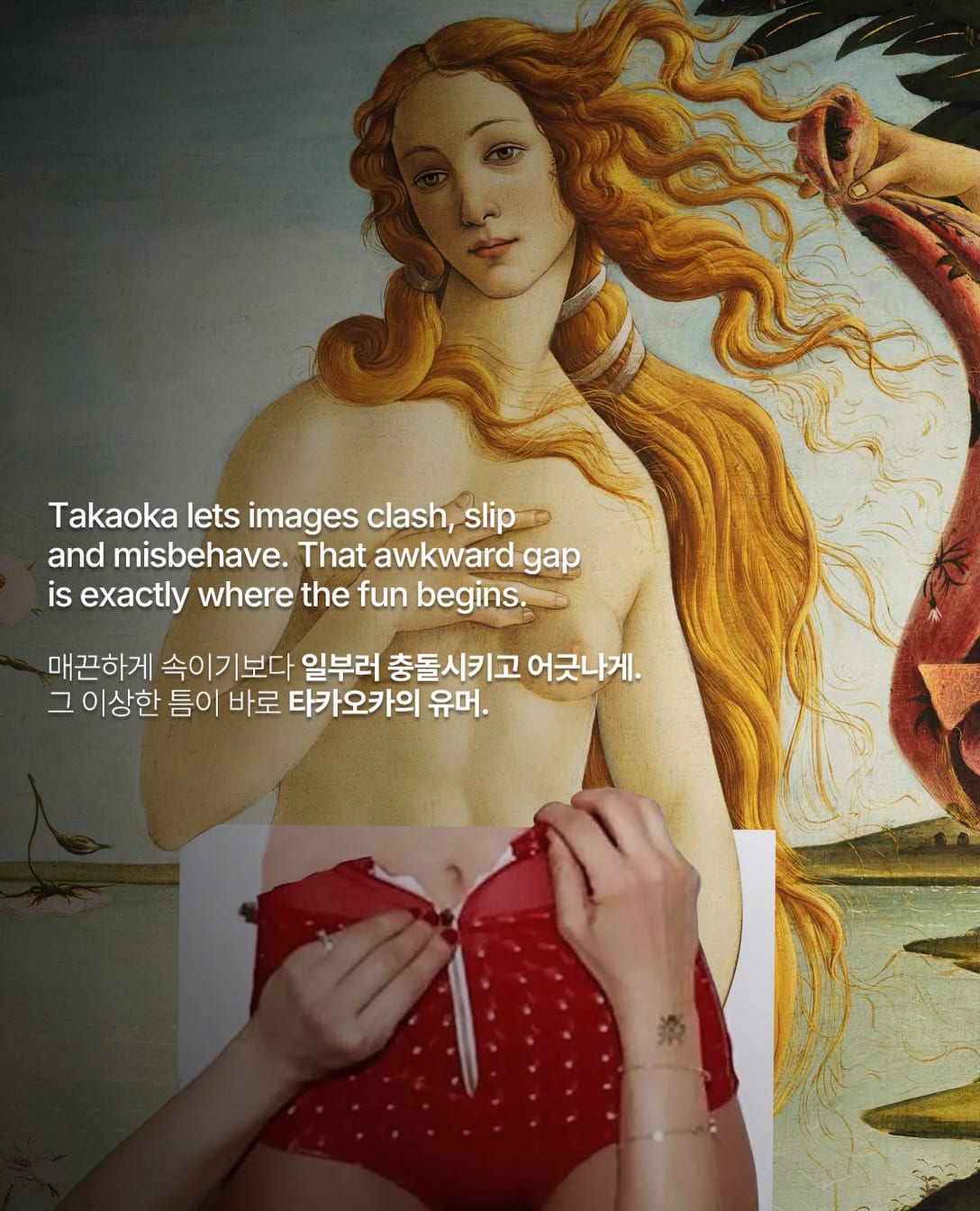
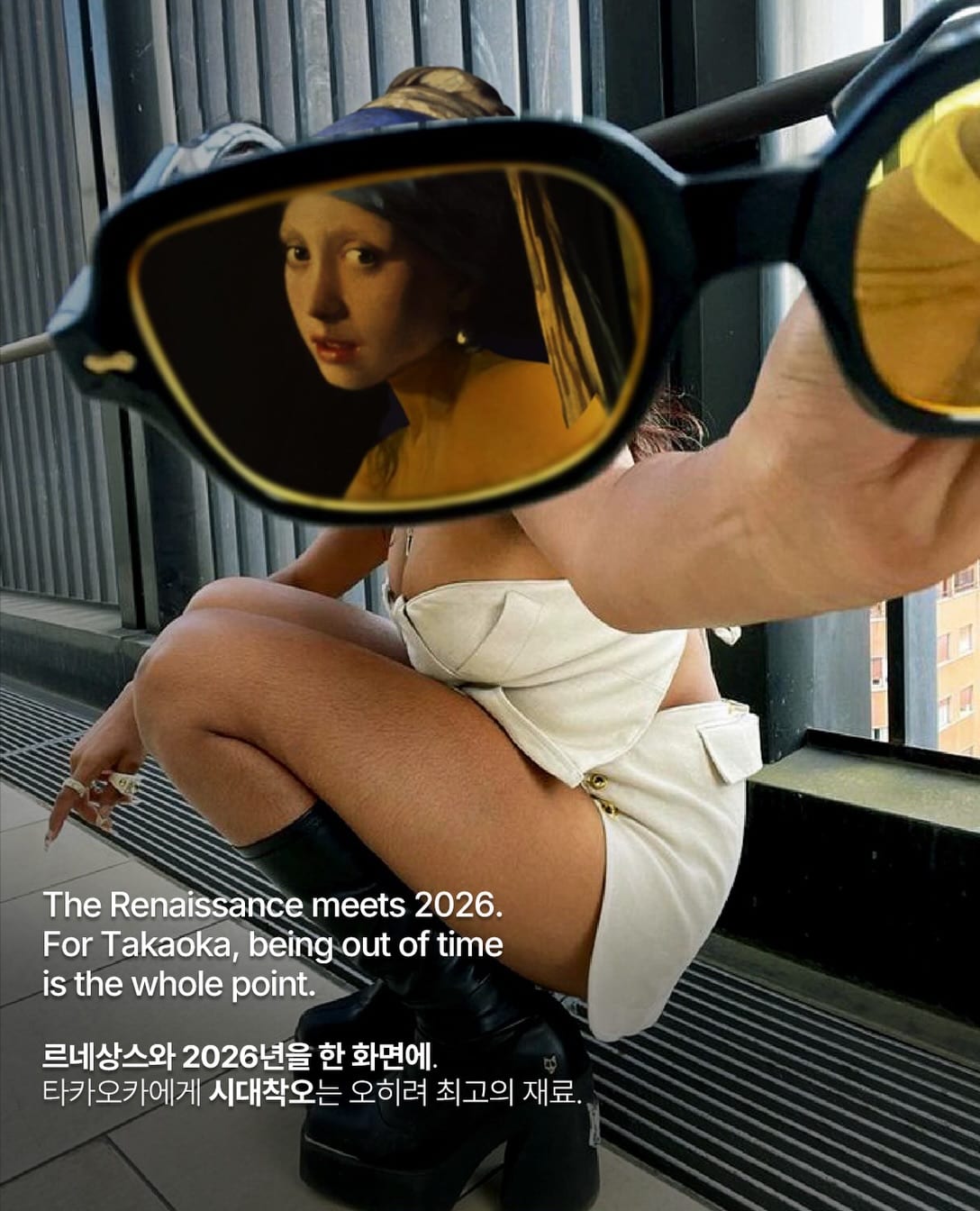
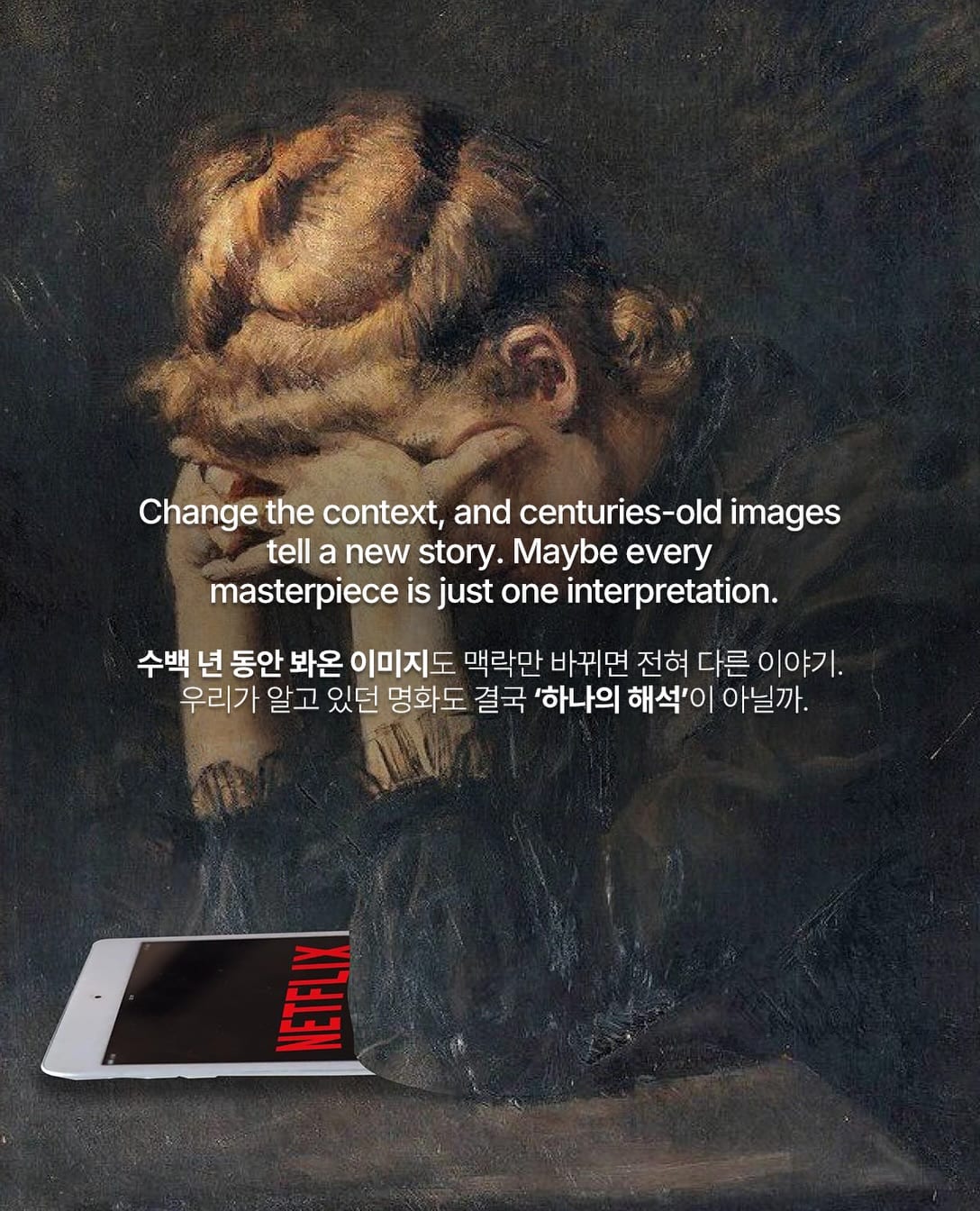
Takaoka's method is simple. He layers two or more eras in a single frame and leaves the awkward gap untouched. That gap is the source of both humor and discomfort. Rather than smoothing things over, he deliberately makes them clash and misalign. Images interfere with each other, and that interference is his humor. Viewers recognize the familiar painting while feeling unsettled by the alien context.
His work moves fast on social media, but it carries a clear question. Why should masterpieces stay locked in museums? Why can't classical images mix with today's visual culture? Takaoka ignores that boundary and crams history and present into one screen. The result is irreverent but honest. We already consume images this way. Do you find this treatment of masterpieces uncomfortable, or refreshingly honest?
FAQ
Who is Shusaku Takaoka?
Shusaku Takaoka is a Japanese visual artist who collages classical masterpieces with contemporary imagery, pulling them into internet culture. He blends works by Vermeer, Michelangelo, and Botticelli with fashion, advertising, and memes to create humorous and dissonant pieces.
What kind of work does Shusaku Takaoka do?
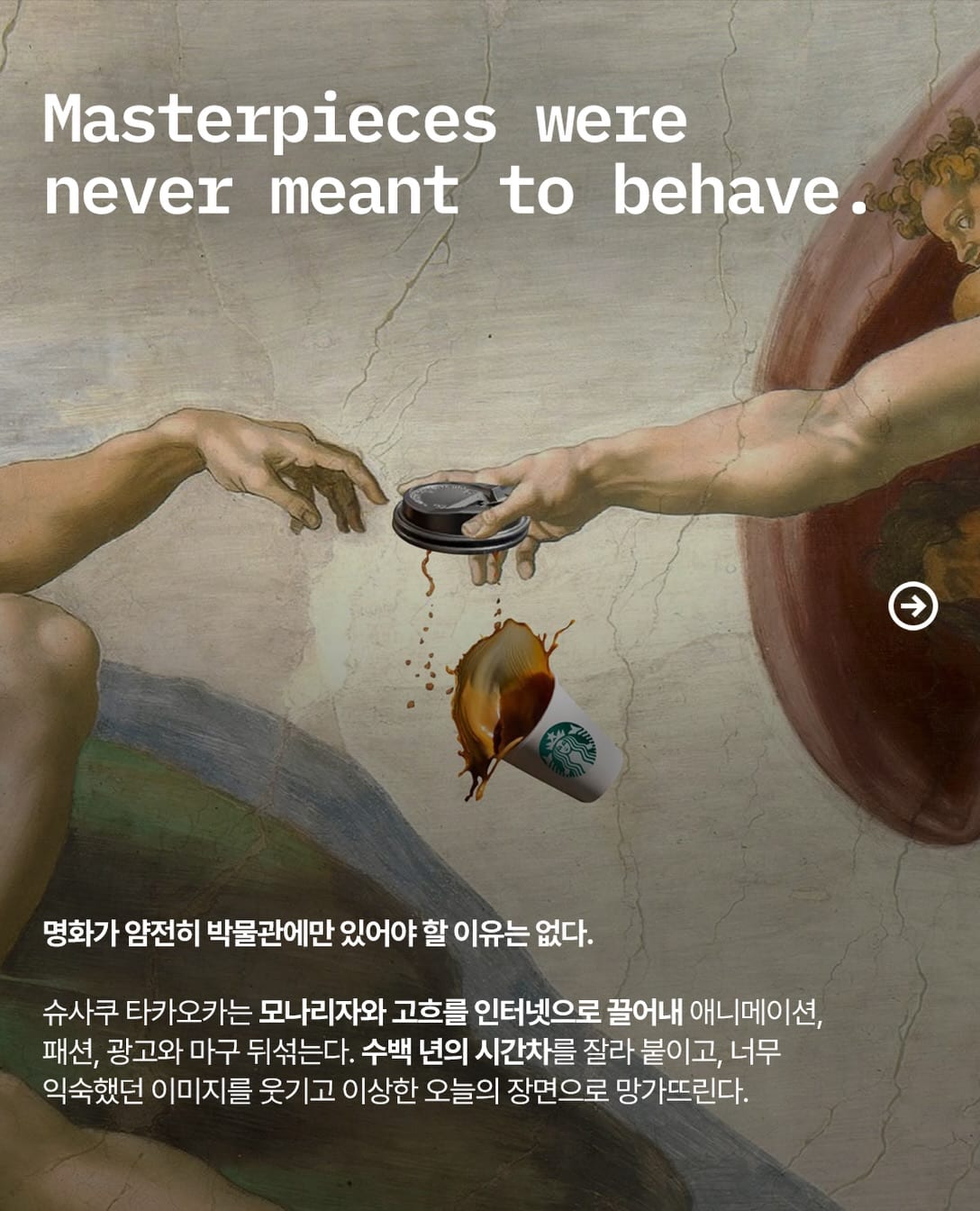
He creates digital collages that layer and clash centuries-old masterpieces with modern visual imagery in a single frame. For example, he overlaps Vermeer's 'Girl with a Pearl Earring' with contemporary fashion models, or inserts a Starbucks cup into Michelangelo's 'Creation of Adam.'
What characterizes Shusaku Takaoka's work?
His work deliberately clashes and misaligns rather than seamlessly blending. He leaves awkward gaps intact to provoke both laughter and dissonance, disregarding the authority of masterpieces and reinterpreting them through the visual language of the internet age.