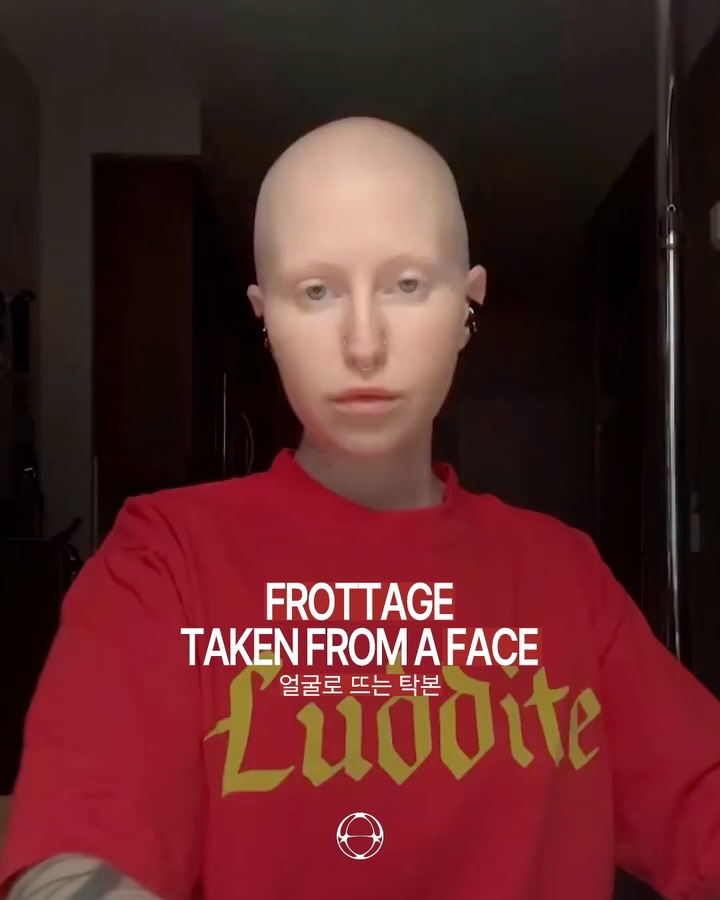
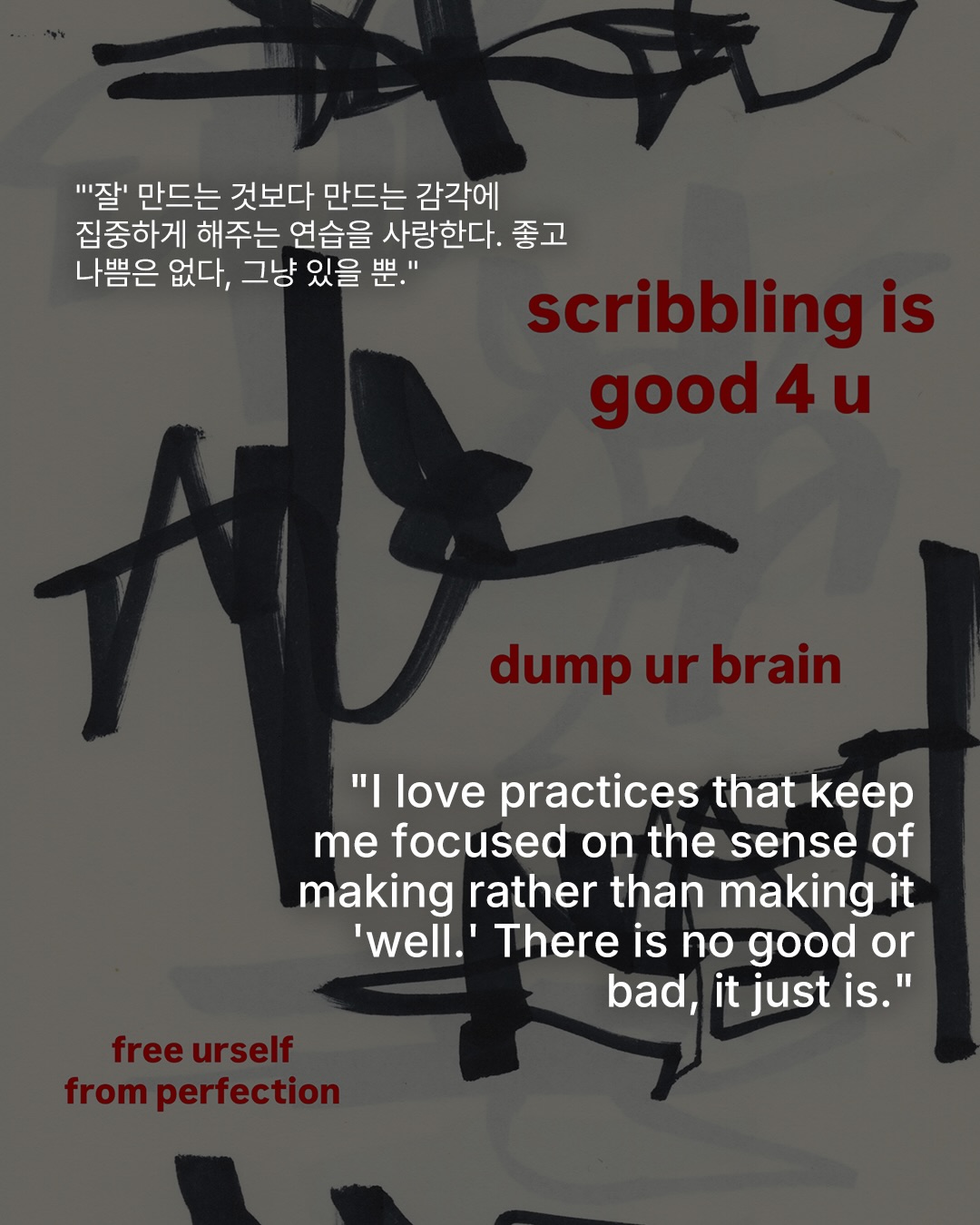
She was originally a hyperrealist graphite portraitist, the kind who drew in every last strand of hair. Now she fills her sketchbook with blind contours drawn eyes closed, with doodles, with rubbings of her own face. She writes: "I love practices that keep me focused on the sense of making rather than making it 'well.' There is no good or bad, it just is." Erasing perfection, keeping process.
The reel Dori uploaded carries one more short caption: "fuck AI." In an age when artificial intelligence learns from hundreds of millions of images and generates flawless faces in seconds, she creases paper and stamps her own. Through touch, not data; through the pressure of hands, not algorithms. She deliberately preserves the very imperfection technology tries to erase.
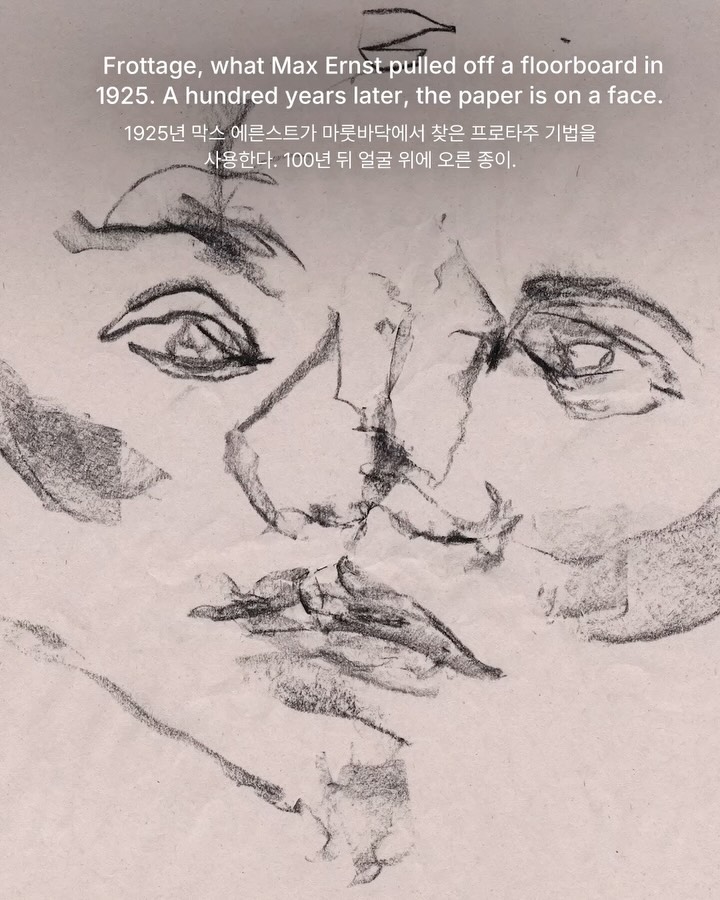
Frottage was always a technique of accepting chance. Whether wood grain or the crack in a wall, the unpredictable texture of a surface determined the image. Dori places her own body in the place of that chance. The contours of a face that shifts slightly each day are imprinted on paper and become that day's self-portrait. What is the first thing you want to erase when you draw?
FAQ
What is the frottage technique?
Frottage is a Surrealist technique developed by Max Ernst in 1925. You place paper over a textured surface and rub charcoal or pencil across it to transfer the grain. It captures unpredictable textures like wood grain or cracked walls. Dori applies this method directly to her own face to create self-portraits.
How does Dori create her self-portraits?
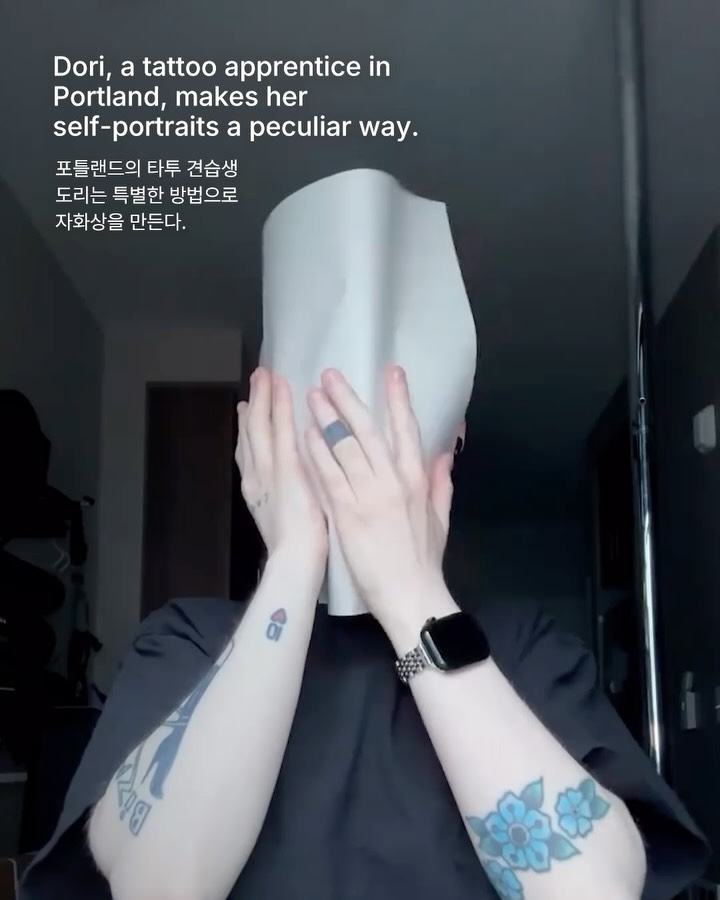
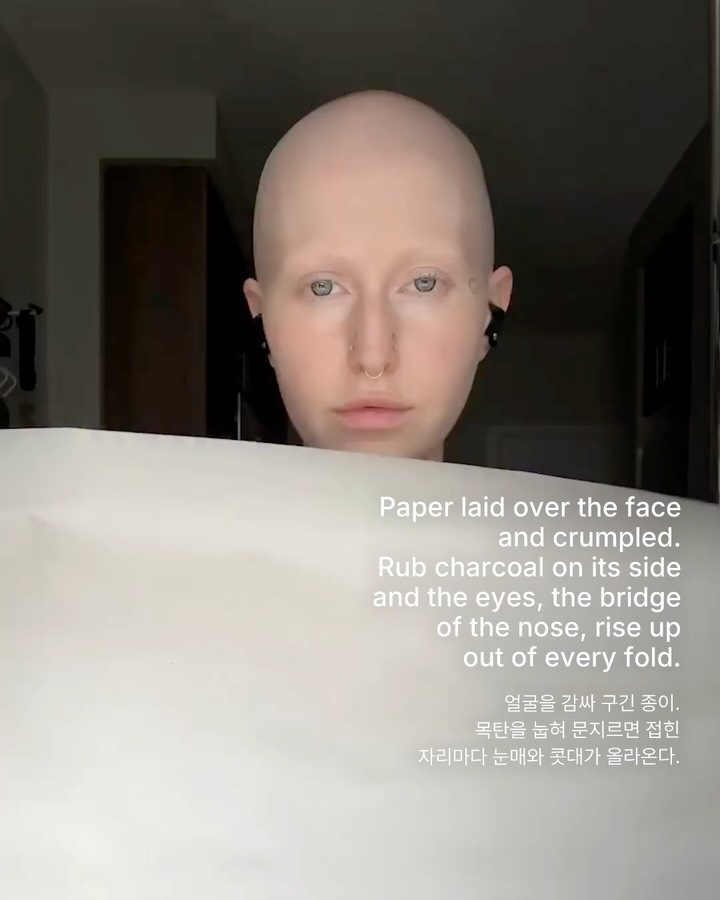
Instead of using a mirror, Dori covers her face with paper, presses it with both hands to trace her features, then rubs charcoal across the creases. Her eyes, nose, and cheekbones emerge through the folds. It's a tactile drawing method using frottage on her own body.
Why did Dori write 'fuck AI'?
In an era when AI generates flawless images instantly, Dori deliberately makes imperfect self-portraits through touch and hand pressure, not data. She preserves the accident and incompleteness that technology erases, asserting a process-driven, analog practice.