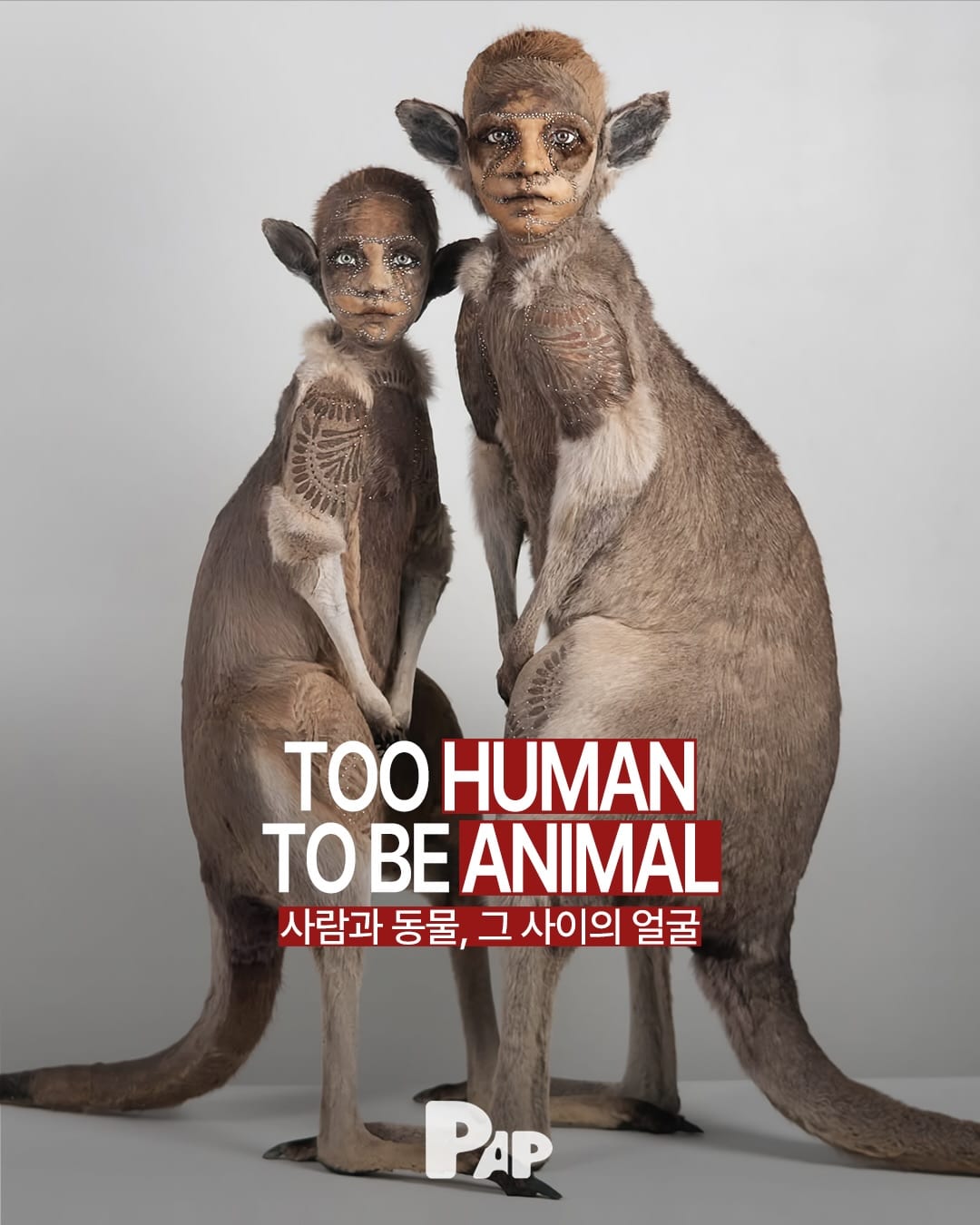
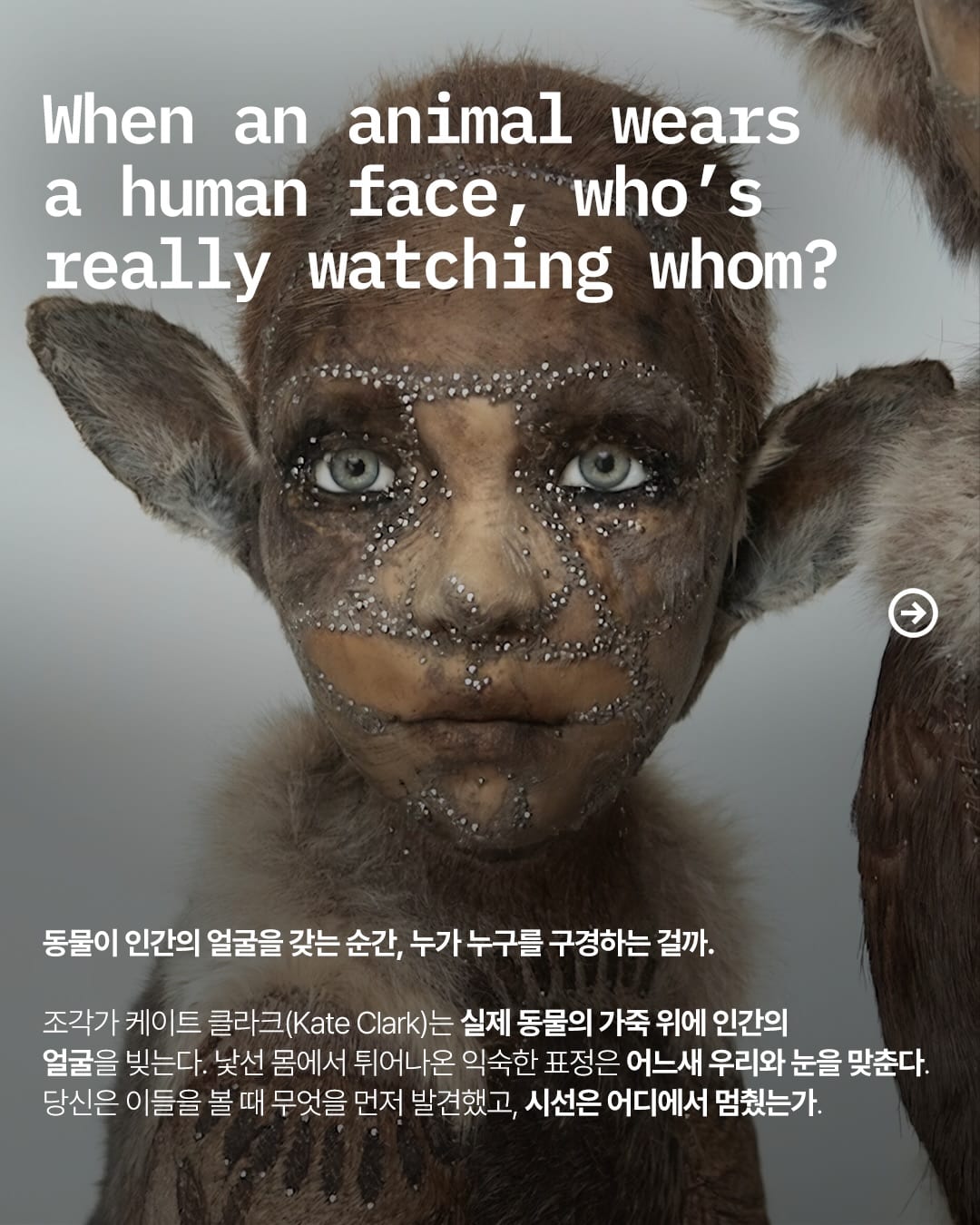
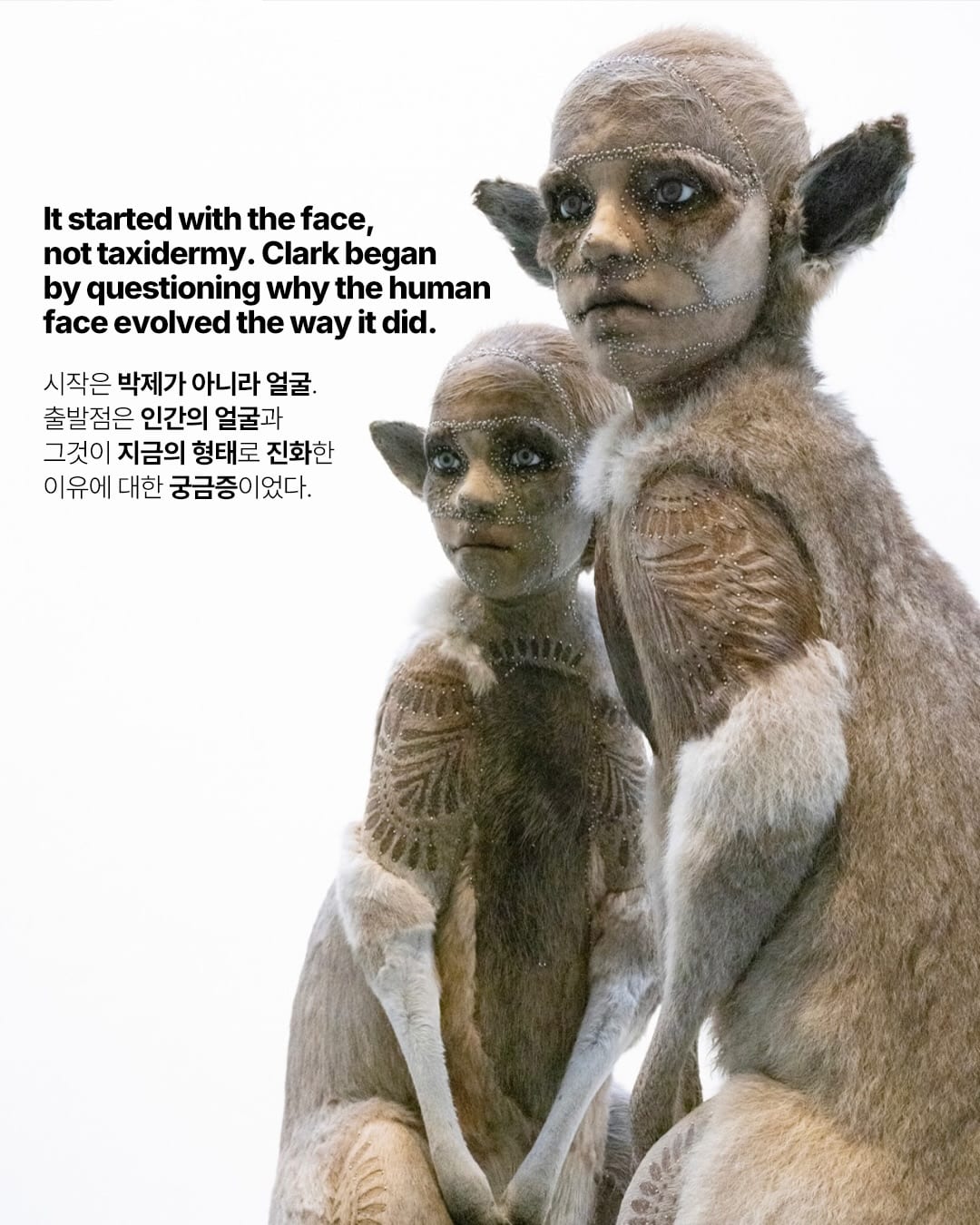
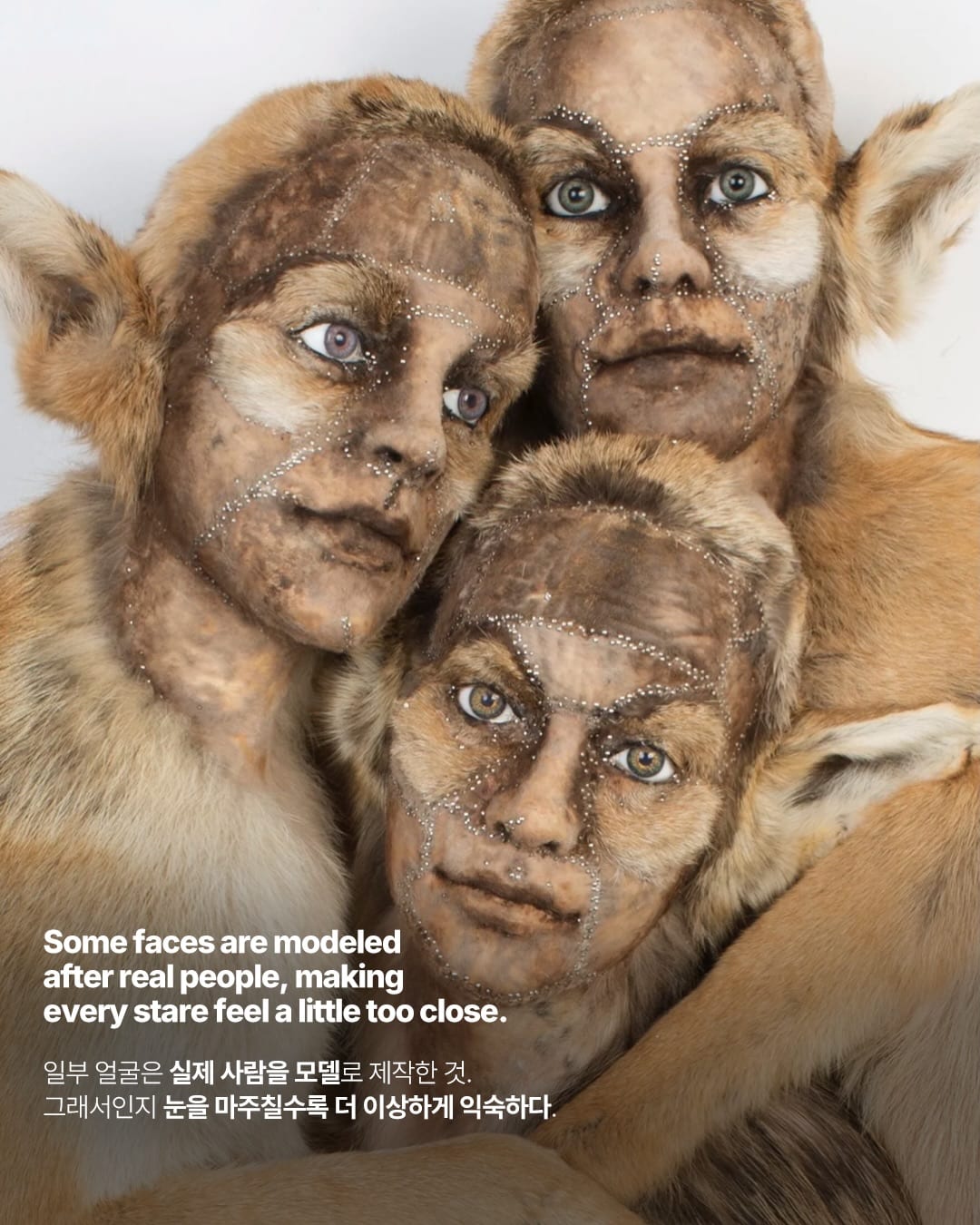
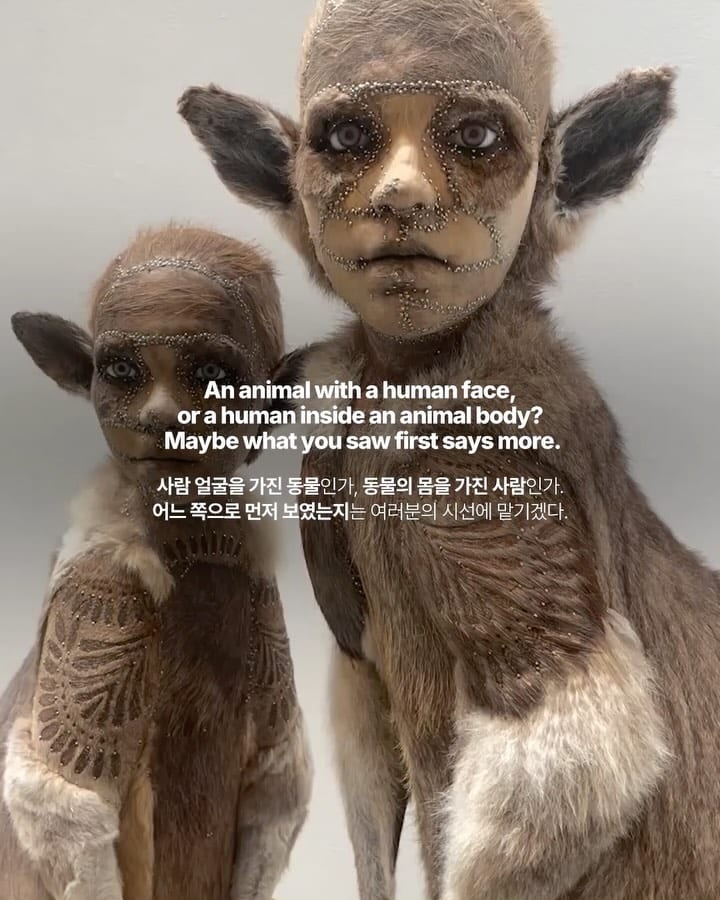
Clark's obsession was never taxidermy, but the human face. Move that familiar language of emotion and recognition onto an animal body, and something unsettlingly human emerges. The collision between human form and animal form reveals something deeper. Perhaps we recognize others as human only when we see a face.
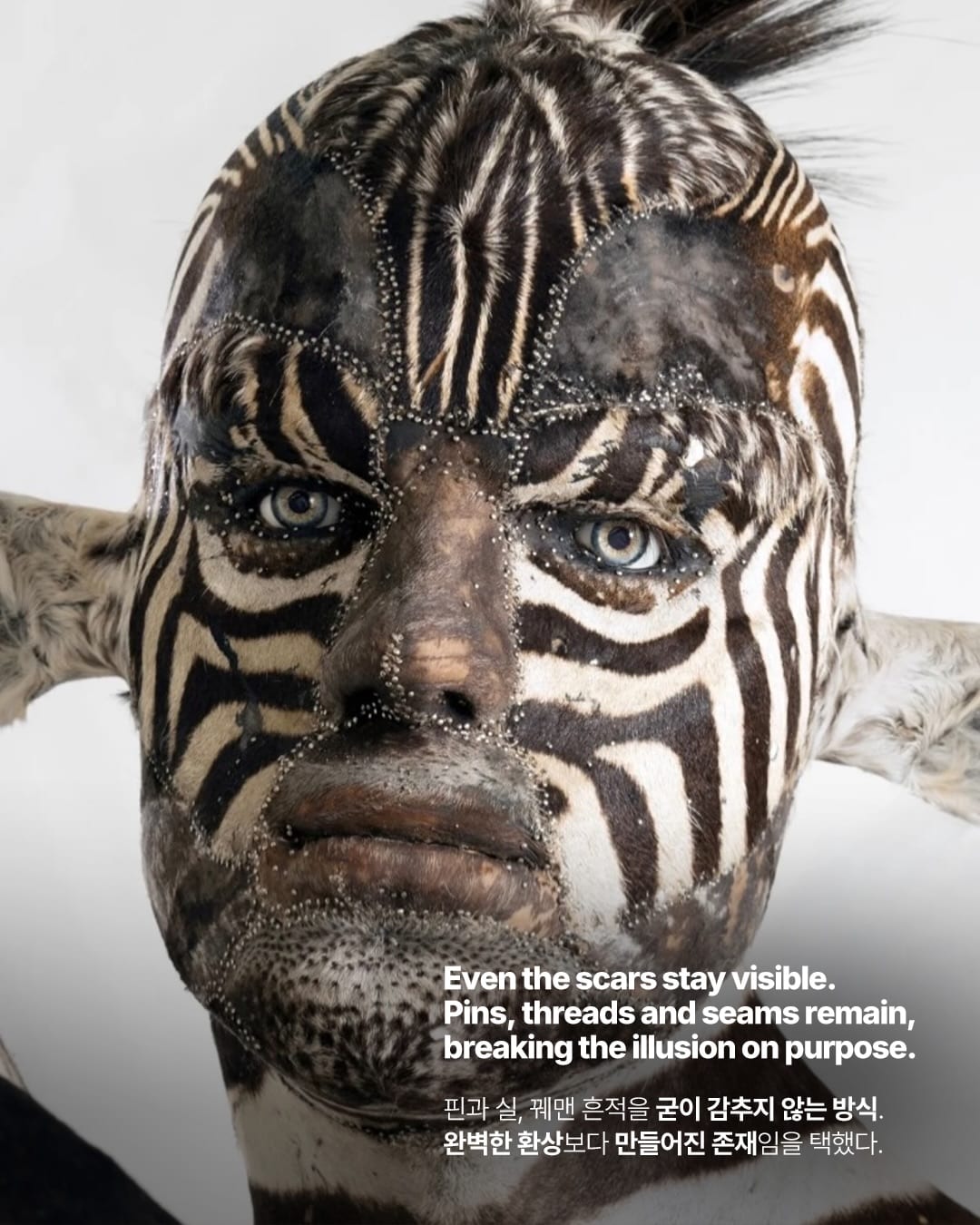
Pins, threads and seams remain deliberately visible in her work. By refusing to erase the marks of making, Clark chooses presence over illusion. An imperfect presence can be more powerful than a perfect illusion. This is a method that reveals strangeness instead of hiding it.
So what do you notice first? The animal body or the human face? A taxidermied specimen or a living presence? The caption's question returns. Did you see the face first, or the body? And where did your eyes stop?
FAQ
What kind of work does Kate Clark do?
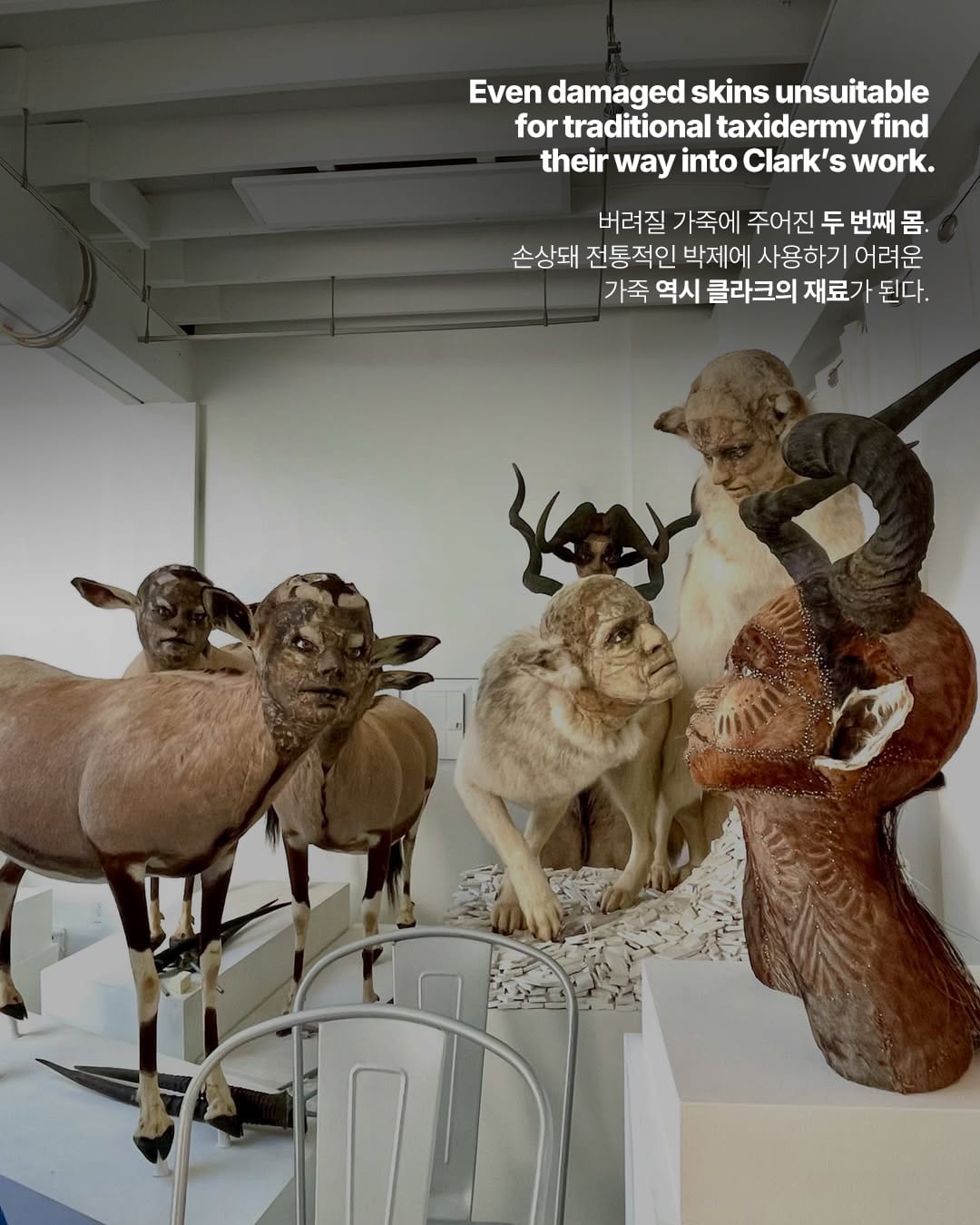
Kate Clark sculpts human faces onto the hides of real animals. She grafts familiar eyes and mouths onto the bodies of deer, zebras, and kudus, creating works where taxidermy collides with human form. Pins, thread, and seams are deliberately left visible, emphasizing presence over illusion.
What characterizes Kate Clark's work?
Kate Clark's work combines human faces with animal bodies, creating simultaneous feelings of strangeness and familiarity. By leaving visible traces of the making process—pins, thread, seams—she chooses imperfect presence over perfect illusion, which defines her distinctive approach.
Why does Kate Clark put human faces on animals?
Kate Clark became interested in how human faces allow us to read emotion and recognize one another. When she transplanted those faces onto animal bodies, strangely familiar expressions emerged from unfamiliar forms, prompting questions about what we perceive first.