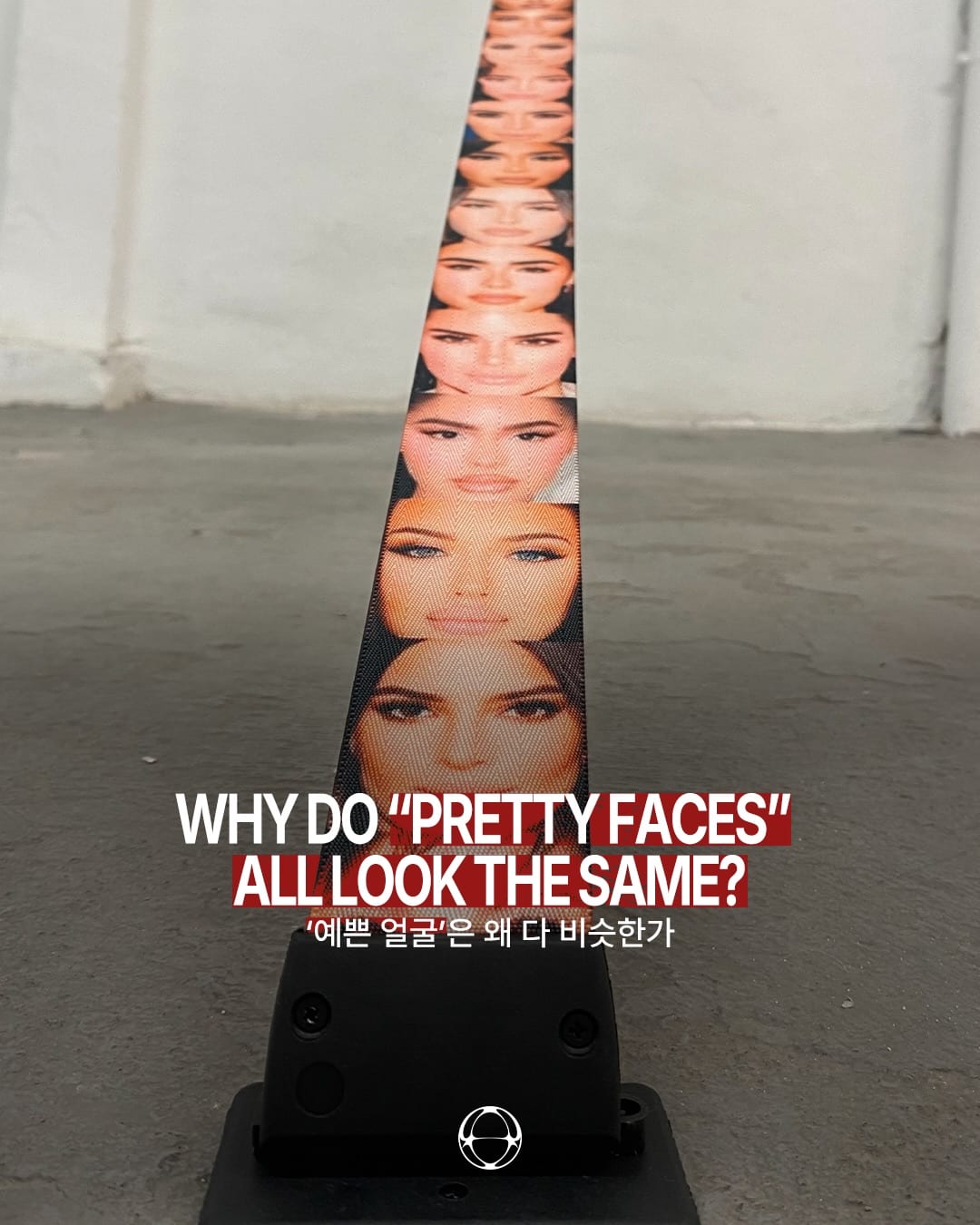
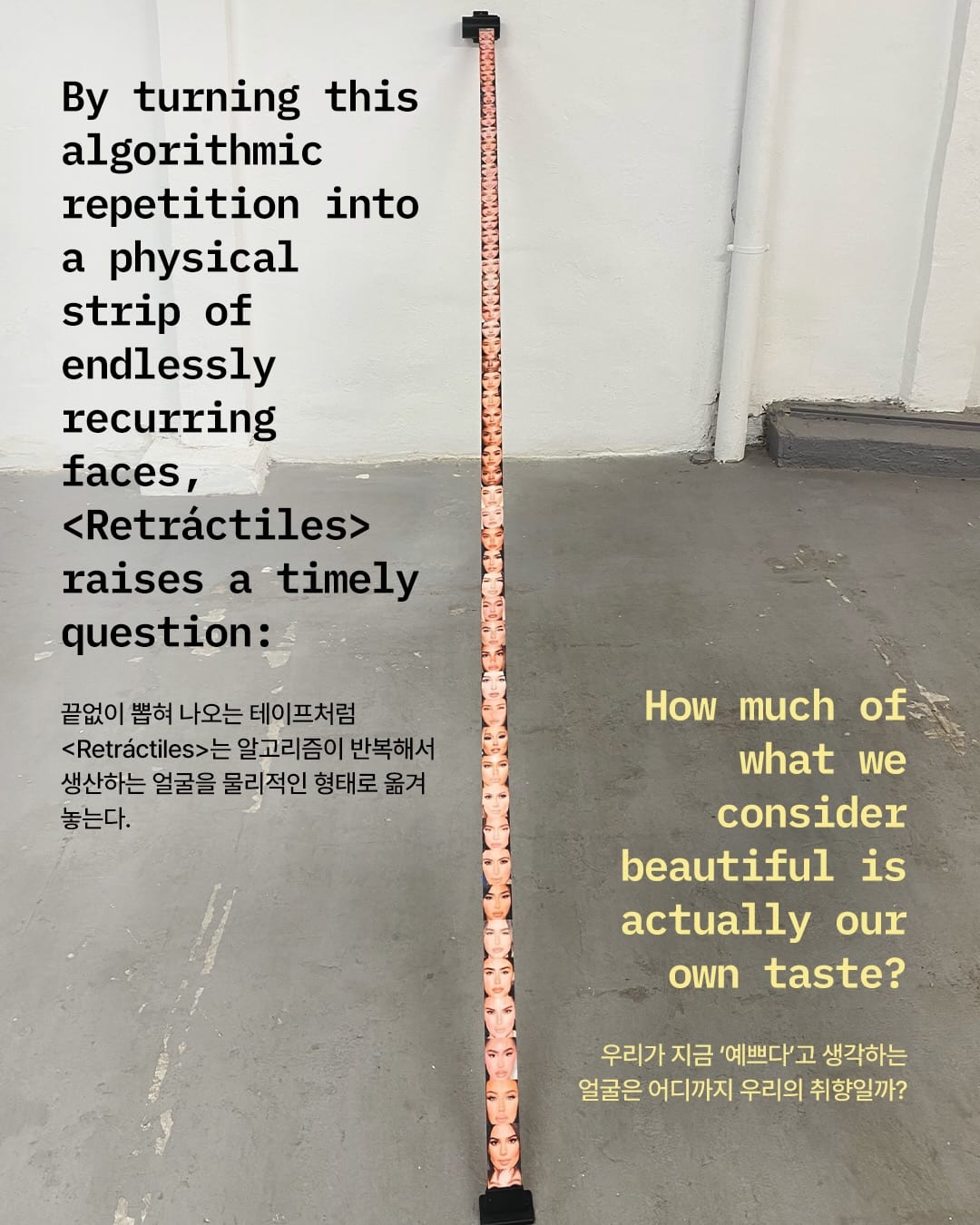
A face that feels strangely familiar repeats endlessly. Spanish artist Teresa Díez Izco's Retráctiles presents similar female faces printed continuously on a long strip of polyester tape. The artist shared the work alongside the phrase "They don't eat, they don't sleep." It addresses the AI-fication of faces within algorithmic loops and the phenomenon of neoteny—the idealization of youthful features as a beauty standard.
What makes this compelling is that AI does not invent entirely new standards of beauty. Instead, it learns from faces and images already accumulated online, reproducing the features we have long favored. Similar faces are generated, gain more exposure, and then shape our preferences in turn. Like a tape spooling out endlessly, Retráctiles translates algorithmic repetition into physical form.
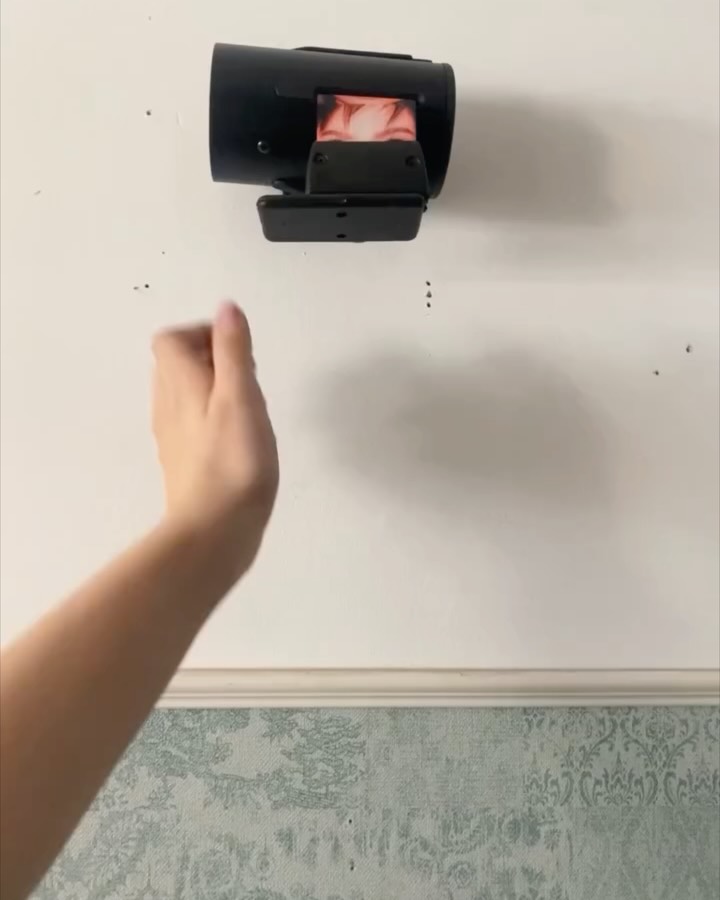
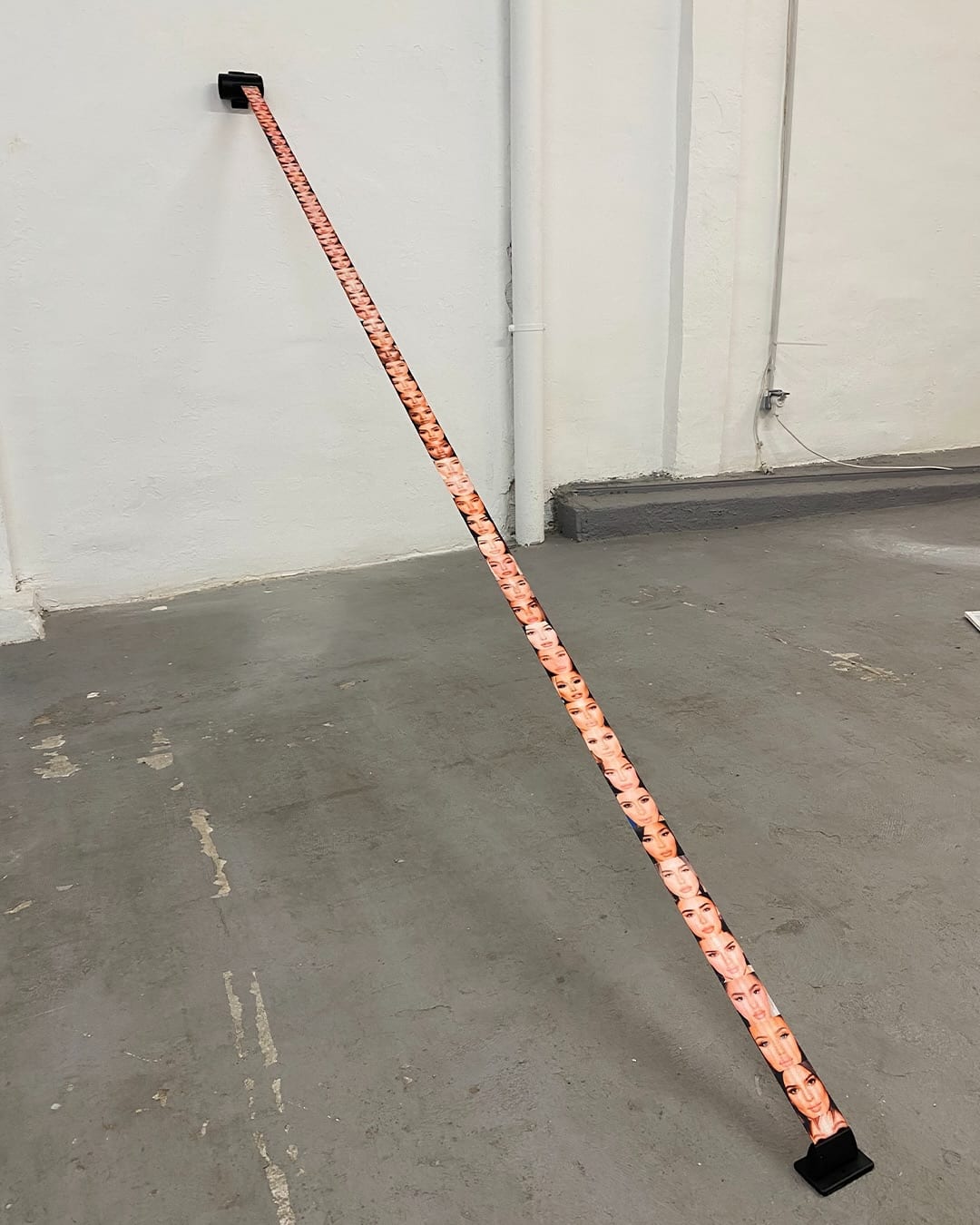
The installation begins at a reel device, extends across the floor, and climbs the wall. Viewers can wind or unwind the tape with their hands. Faces keep appearing—subtly different yet fundamentally the same. How much of what we consider beautiful today is our own taste? And how much is simply algorithmic echo?
Teresa Díez Izco has long explored the relationship between technology and aesthetics. This work makes that question more visible than ever. It asks whether the face you prefer is truly your choice, or whether it is already a learned output.
What makes this compelling is that AI does not invent entirely new standards of beauty. Instead, it learns from faces and images already accumulated online, reproducing the features we have long favored. Similar faces are generated, gain more exposure, and then shape our preferences in turn. Like a tape spooling out endlessly, Retráctiles translates algorithmic repetition into physical form.
The installation begins at a reel device, extends across the floor, and climbs the wall. Viewers can wind or unwind the tape with their hands. Faces keep appearing—subtly different yet fundamentally the same. How much of what we consider beautiful today is our own taste? And how much is simply algorithmic echo?
Teresa Díez Izco has long explored the relationship between technology and aesthetics. This work makes that question more visible than ever. It asks whether the face you prefer is truly your choice, or whether it is already a learned output.
FAQ
What is Teresa Díaz Isco's <Retráctiles>?
<Retráctiles> is an installation that endlessly prints similar-looking female faces onto long polyester tape. It physically visualizes how algorithms learn, reproduce, and standardize faces through AI and the phenomenon of neoteny.
What is neoteny?
Neoteny refers to the phenomenon where youthful features become idealized as aesthetic standards. AI algorithms learn from preferred online images, then repeatedly generate and reinforce these characteristics.
What question does Teresa Díaz Isco ask through this work?
The artist asks whether the faces we find 'beautiful' today truly reflect our own taste, or are results manufactured through algorithmic repetition. She emphasizes that AI doesn't invent beauty standards—it reproduces existing preferences.