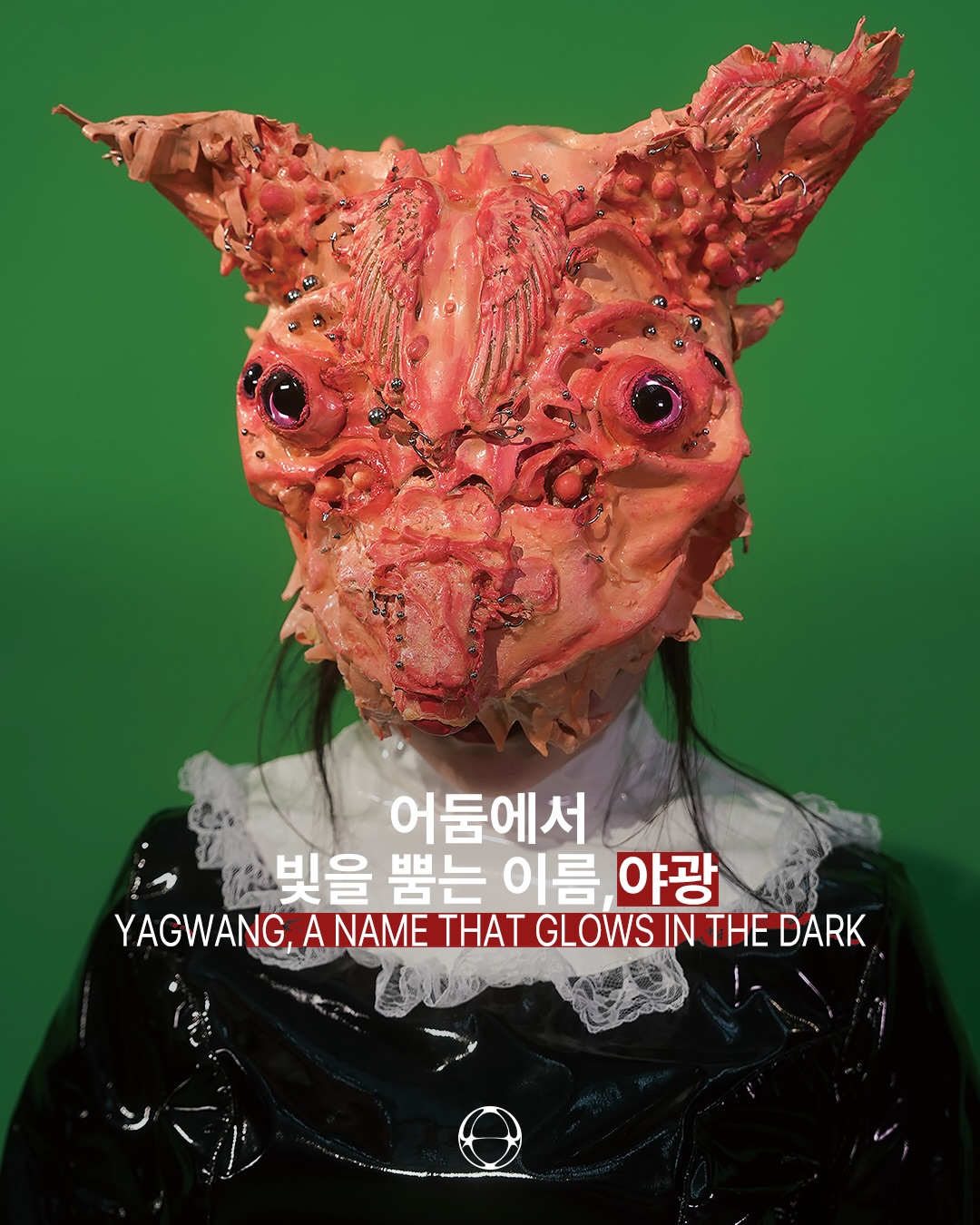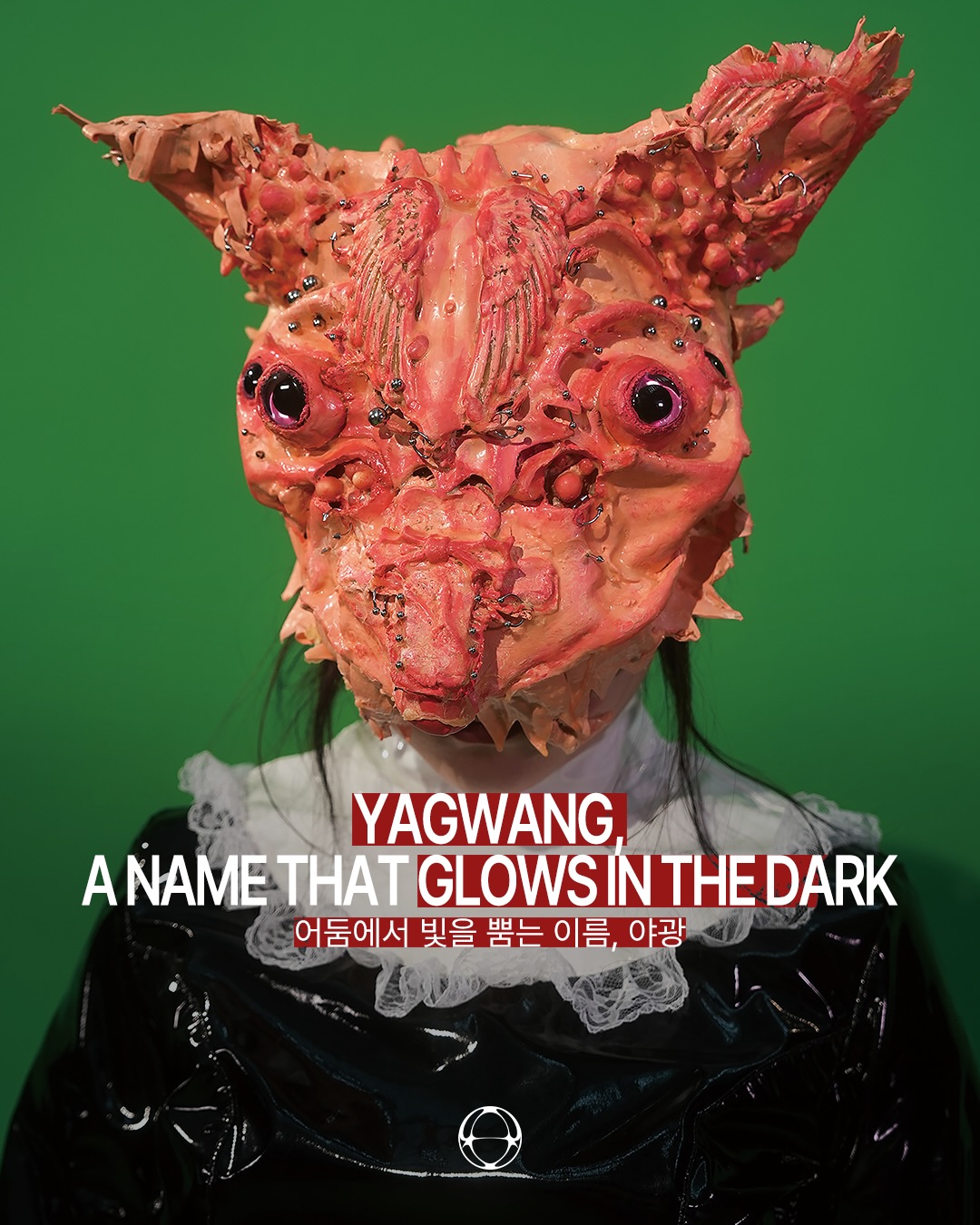
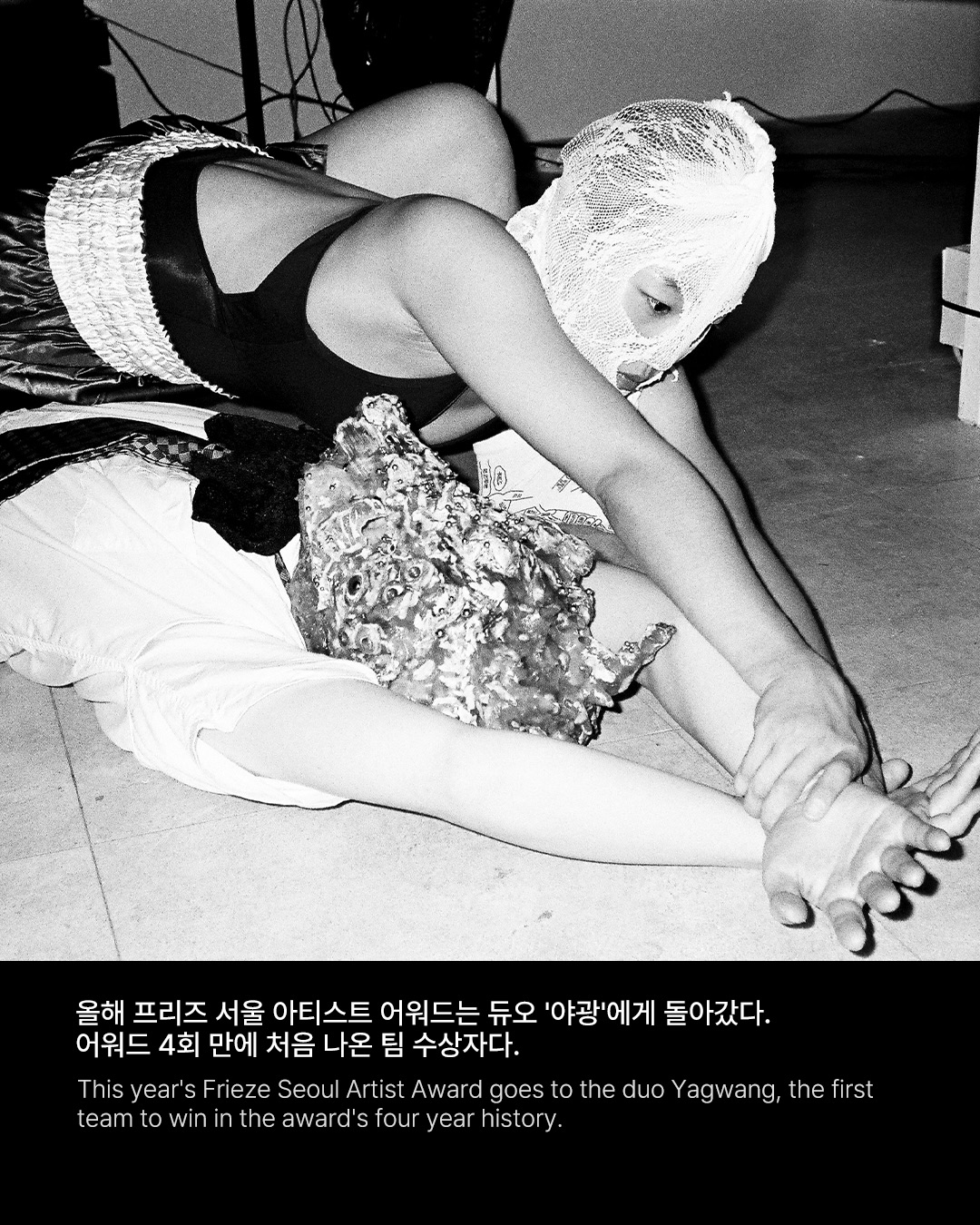
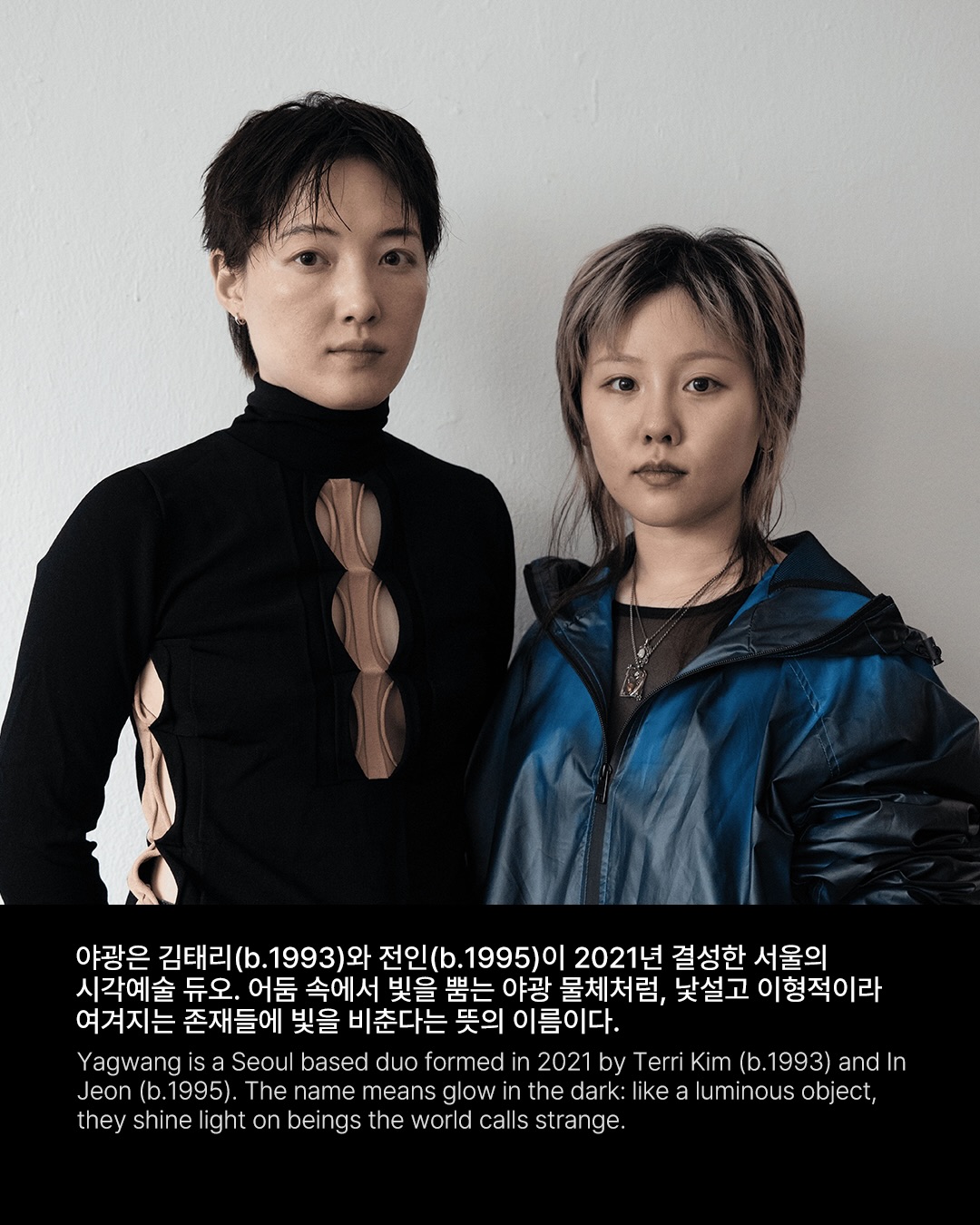
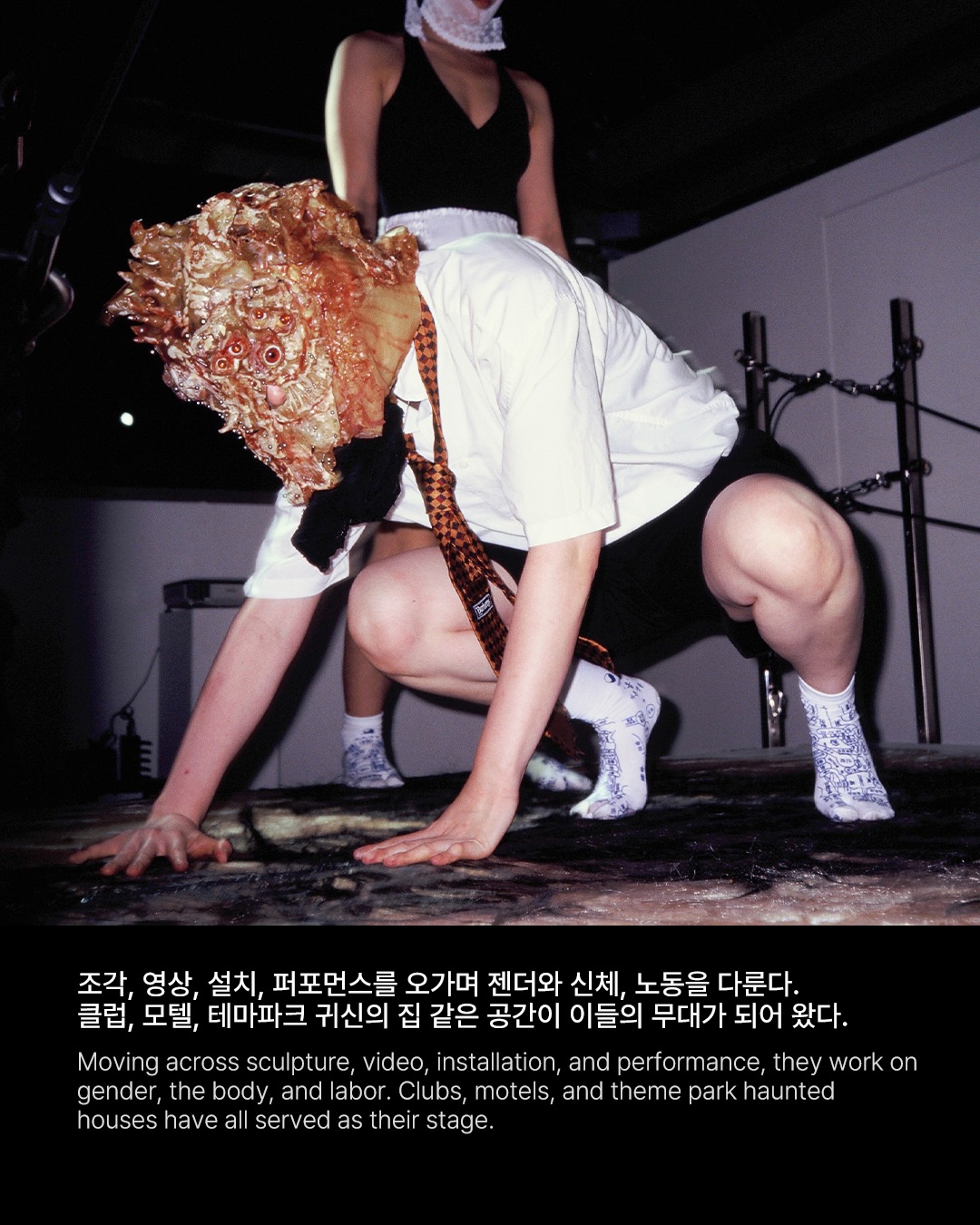
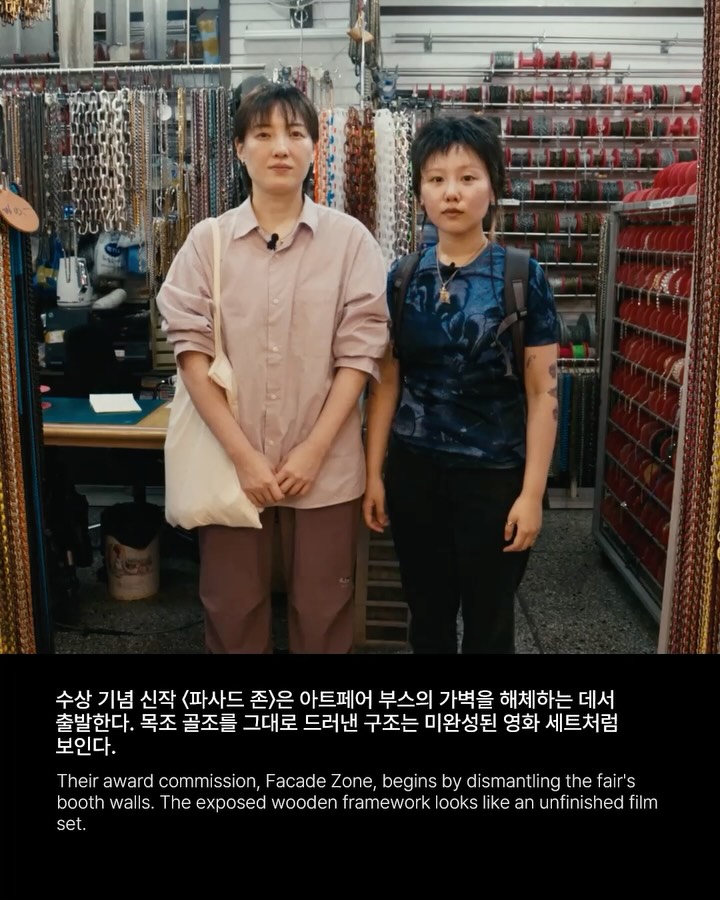
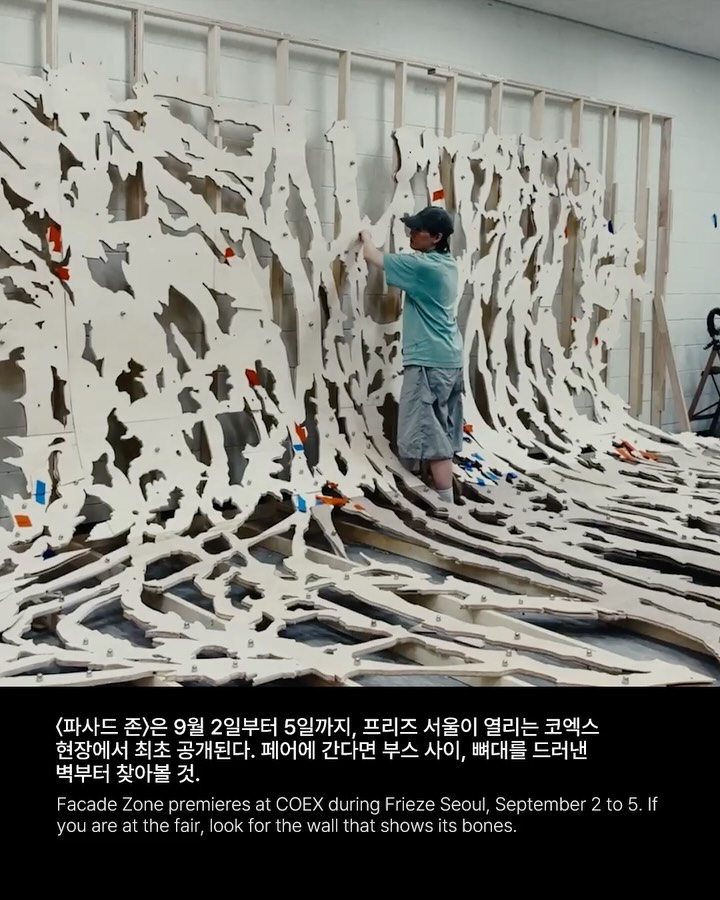
In the middle of Frieze Seoul at COEX stands a booth with its walls torn out and only the wooden framework left. The structure, which looks like an unfinished film set, is the work of Yagwang, the visual art collective that won this year's Frieze Seoul Artist Award. They are the first team to take the prize in its four-year history. Formed in 2021 by Terri Kim and In Jeon, the collective takes its name from the Korean word for glow in the dark: like a luminous object, they shine light on beings the world calls strange. Moving across sculpture, video, installation, and performance, they work on gender, the body, and labor.
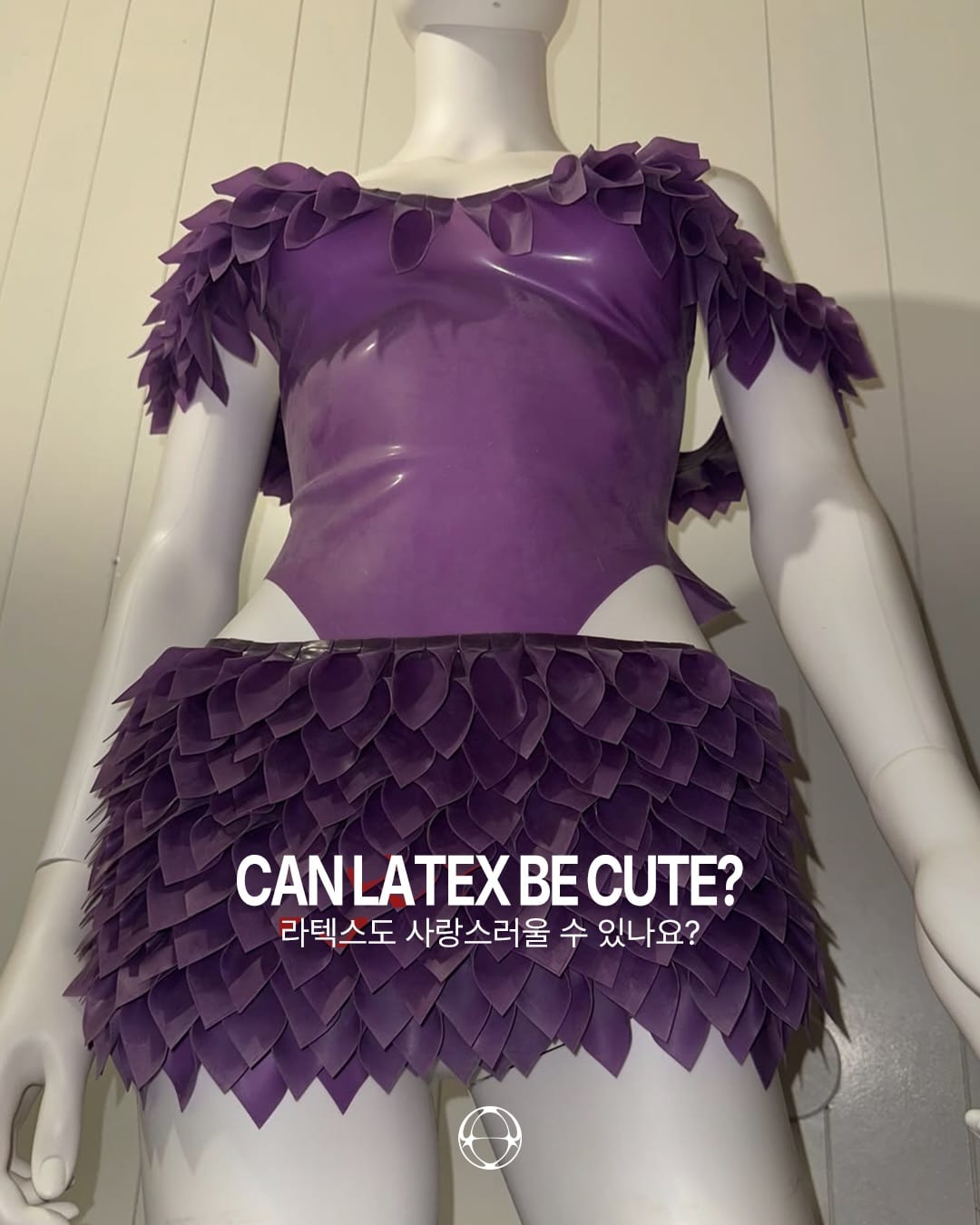
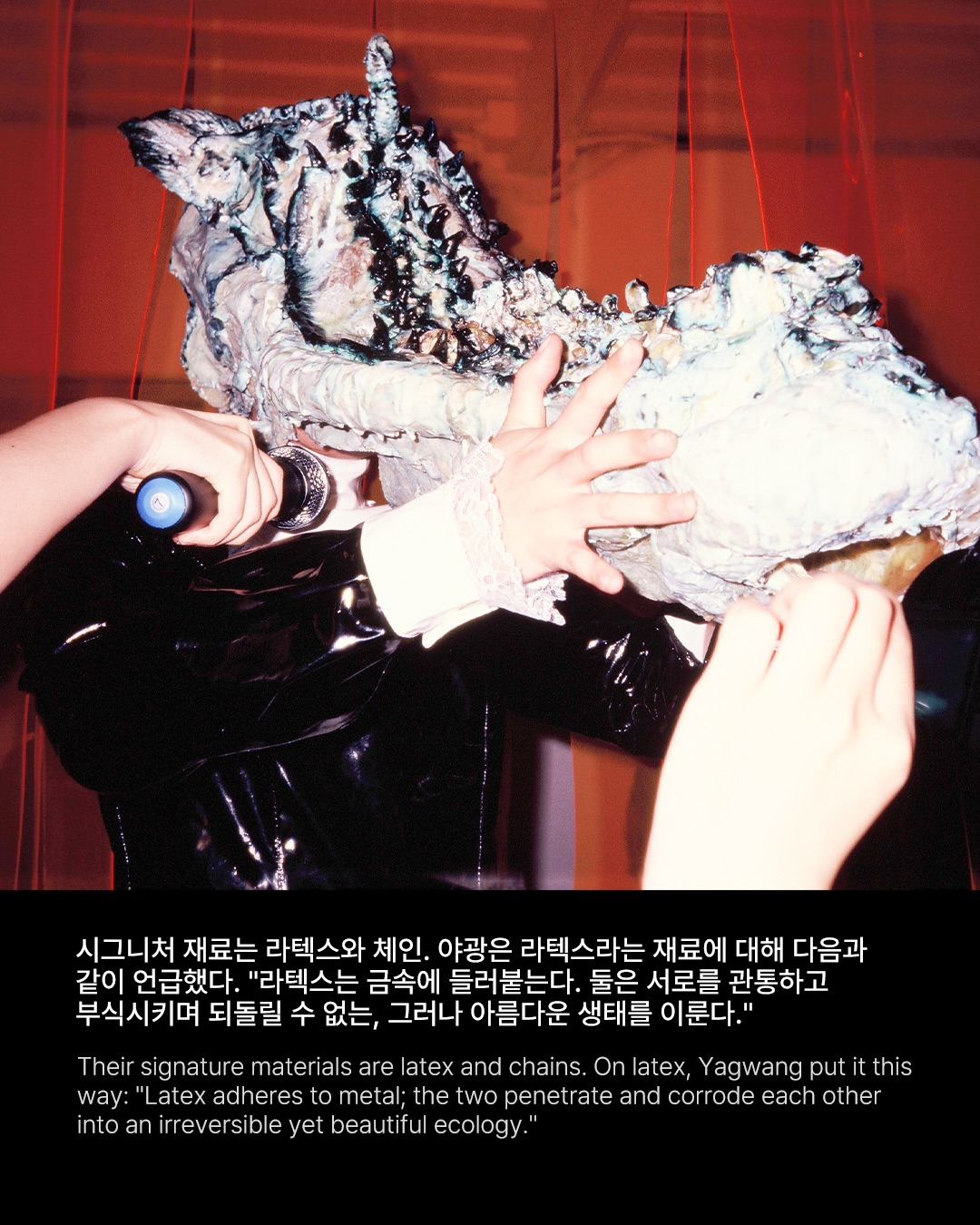
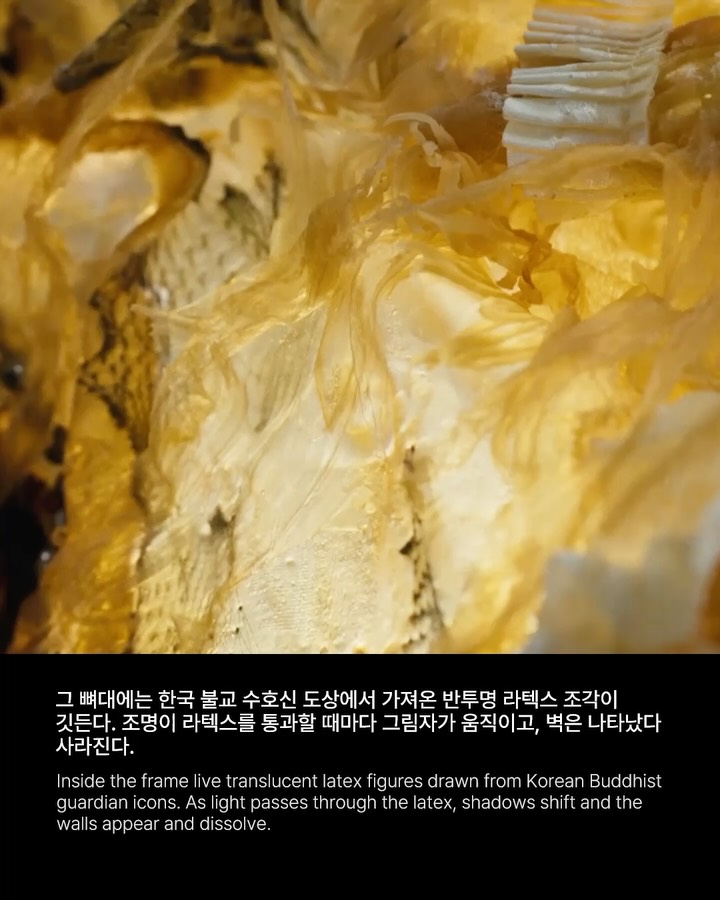
Yagwang's signature materials are latex and chains. Inside the frame of their award commission, Facade Zone (2026), sit sculptures in latex and metal drawn from the garments, chains, and armor of figures in Korean Buddhist paintings. Lights flicker on and off at irregular intervals, passing through the translucent latex to cast shadows across the floor and walls. On latex, Yagwang put it this way: "Latex adheres to metal; the two penetrate and corrode each other into an irreversible yet beautiful ecology."
Clubs, motels, and theme park haunted houses have all served as their stage. Their work intervenes in the flow of time that marginalized bodies and identities pass through. The way to shine light on beings the world calls strange. The name Yagwang is itself the methodology of the work.
Facade Zone is on view at COEX through September 5. Yagwang is the first team to win the Frieze Seoul Artist Award, and the first to choose tearing down walls instead of putting them up. Where will the light they shine point next?
Yagwang's signature materials are latex and chains. Inside the frame of their award commission, Facade Zone (2026), sit sculptures in latex and metal drawn from the garments, chains, and armor of figures in Korean Buddhist paintings. Lights flicker on and off at irregular intervals, passing through the translucent latex to cast shadows across the floor and walls. On latex, Yagwang put it this way: "Latex adheres to metal; the two penetrate and corrode each other into an irreversible yet beautiful ecology."
Clubs, motels, and theme park haunted houses have all served as their stage. Their work intervenes in the flow of time that marginalized bodies and identities pass through. The way to shine light on beings the world calls strange. The name Yagwang is itself the methodology of the work.
Facade Zone is on view at COEX through September 5. Yagwang is the first team to win the Frieze Seoul Artist Award, and the first to choose tearing down walls instead of putting them up. Where will the light they shine point next?
FAQ
In which year did Yagwang become the first team to win the Frieze Seoul Artists Award?
Yagwang became the first team winner in the award's fourth edition. The visual art collective, formed in 2021 by Kim Taeri and Jeon In, presents their commissioned work *Facade Zone* (2026) at COEX through September 5.
What are Yagwang's signature materials?
Yagwang's signature materials are latex and chain. Latex clings to metal, creating an irreversible ecology in which the two penetrate and corrode each other—a process Yagwang considers beautiful. Their new work reinterprets garments, chains, and armor from Korean Buddhist paintings using latex and metal.
What does the name Yagwang mean?
Yagwang means to illuminate beings considered strange or othered, much like glow-in-the-dark objects emit light in darkness. The name itself reflects their practice of engaging with marginalized bodies and identities.