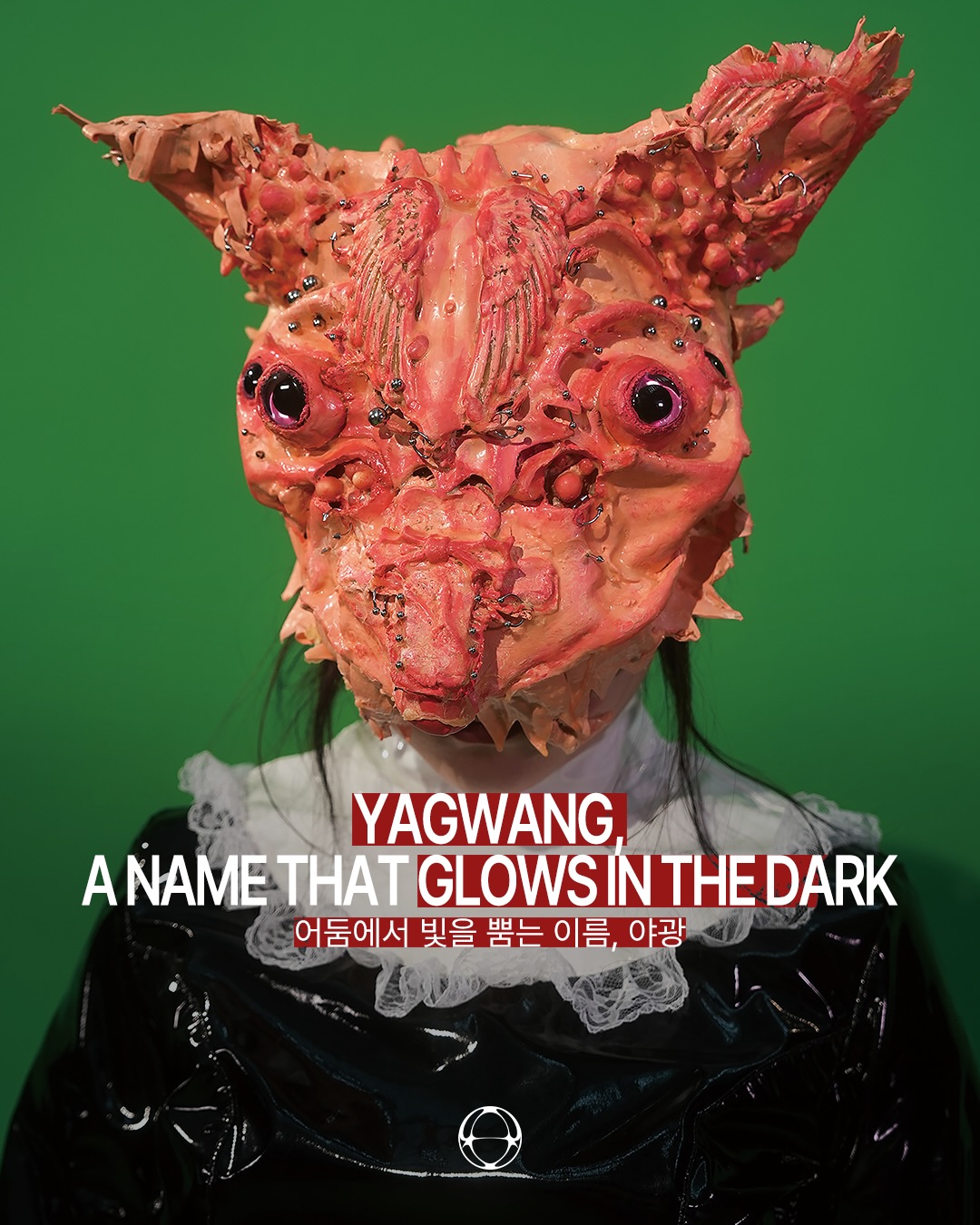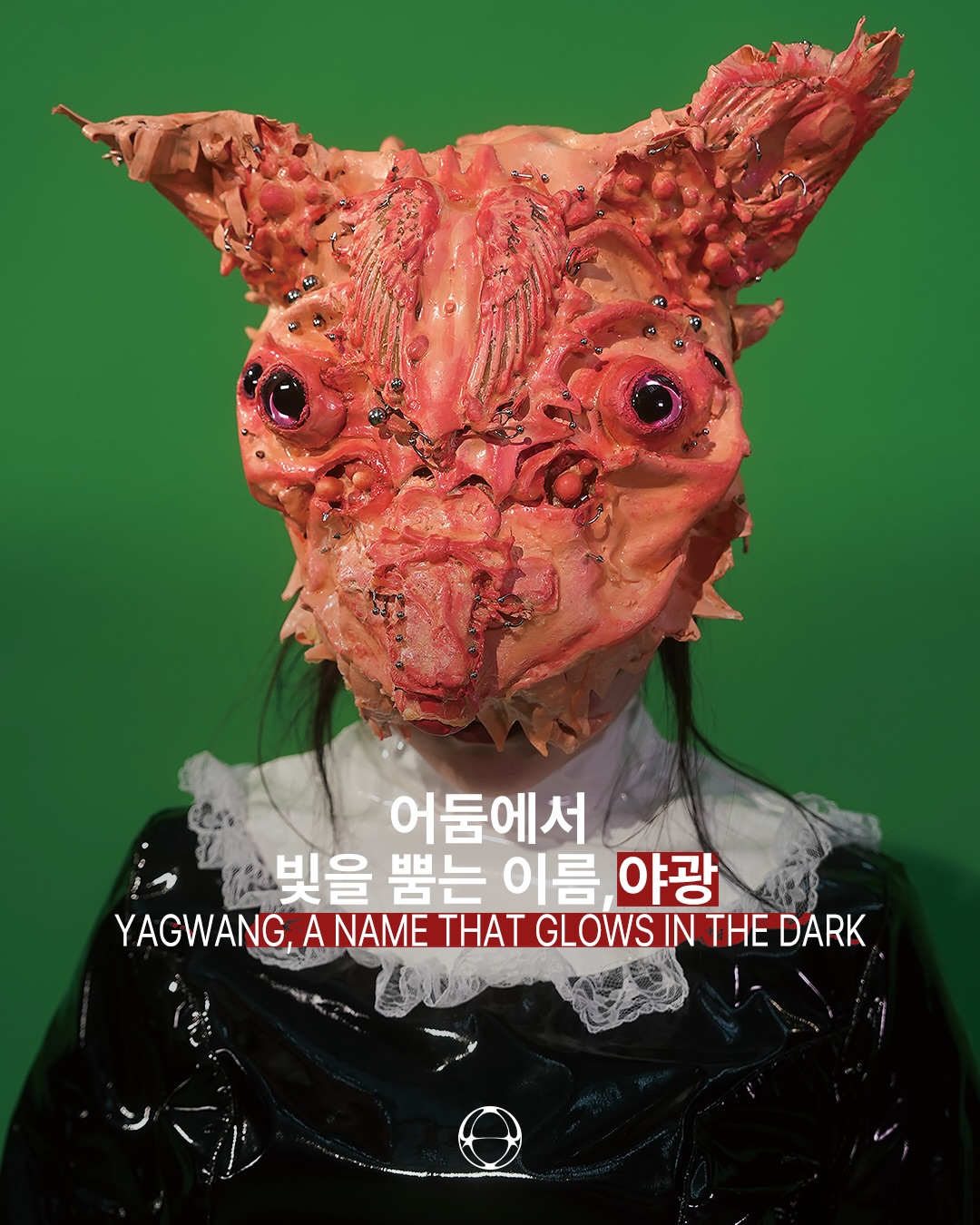
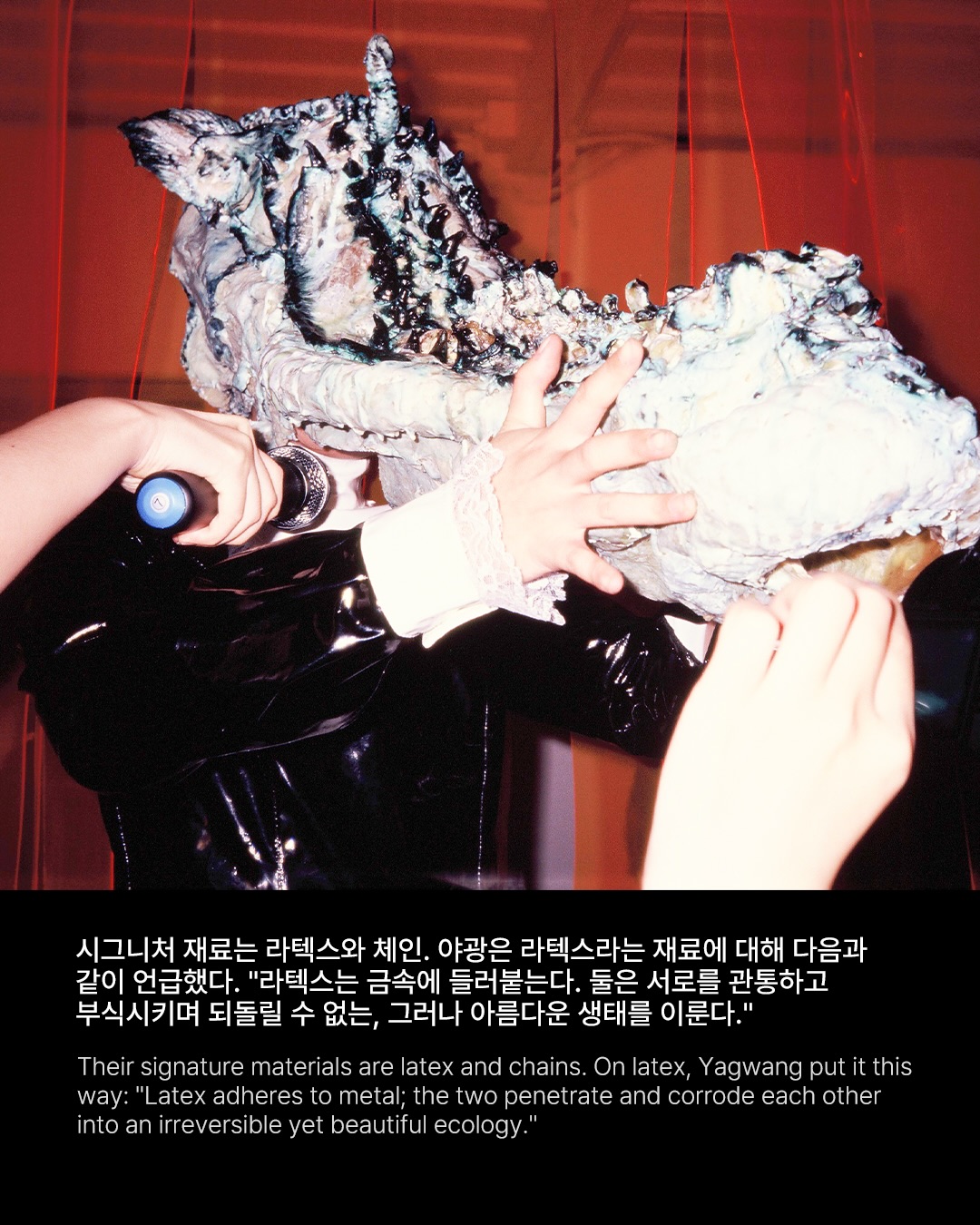
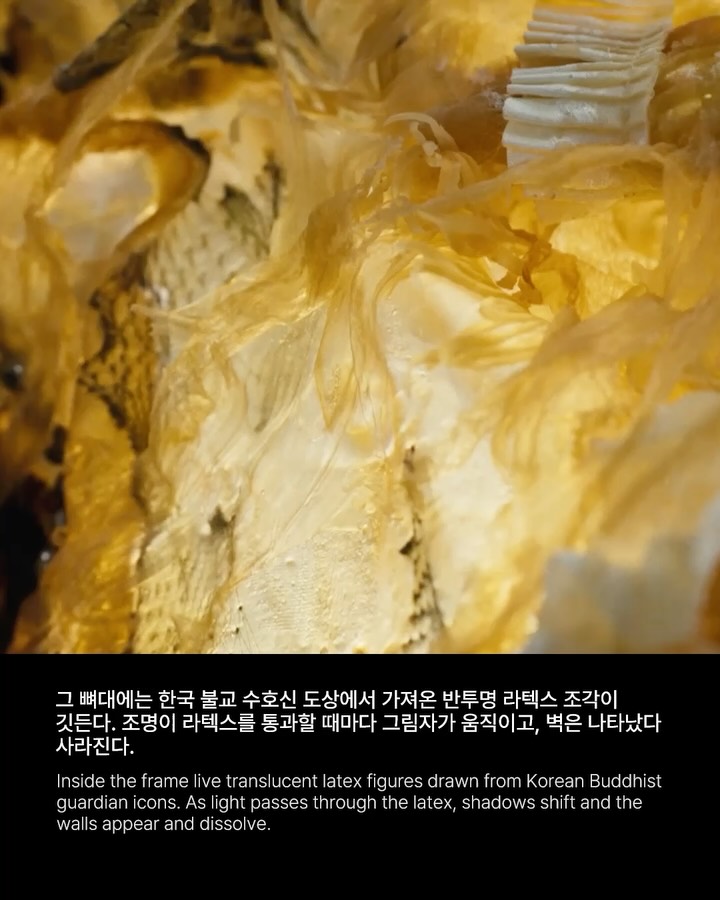
Their signature materials are latex and chains. Latex adheres to metal. The two penetrate and corrode each other into an irreversible yet beautiful ecology, Yagwang explains. The relationship the materials create is itself the subject of the work.
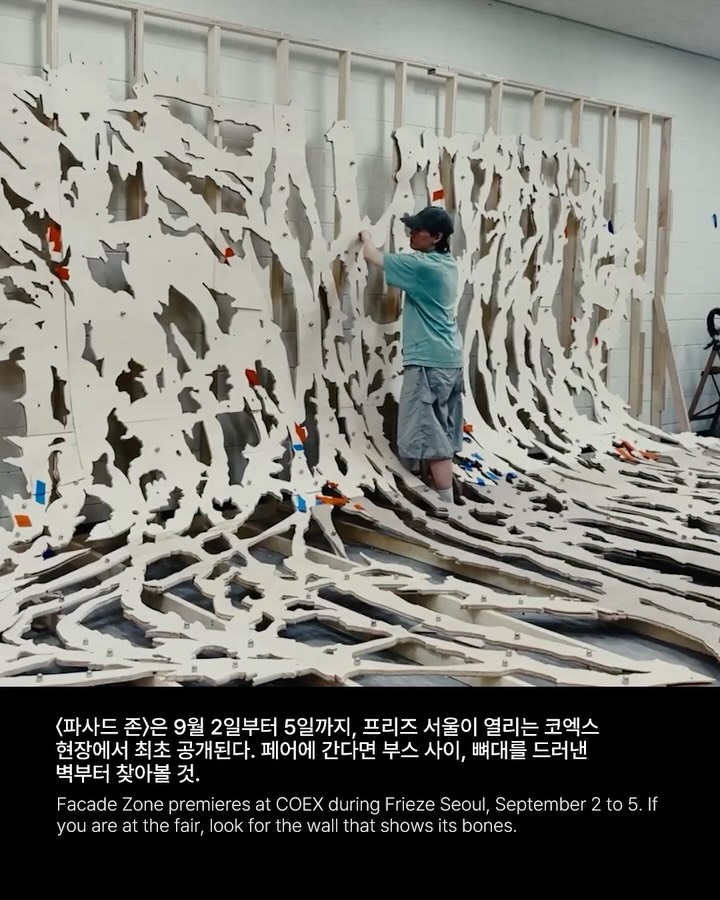
Inside the frame of their award commission, Facade Zone (2026), sit sculptures in latex and metal drawn from the garments, chains, and armor of figures in Korean Buddhist paintings. Lights flicker on and off at irregular intervals, passing through the translucent latex to cast shadows across the floor and walls. It is a scene where light and shadow, matter and time overlap.
Facade Zone is on view at COEX through September 5. Their work intervenes in the flow of time that marginalized bodies and identities pass through. Have you ever seen a being that glows in the dark?
FAQ
Who won the Frieze Seoul Artists Award 2026?
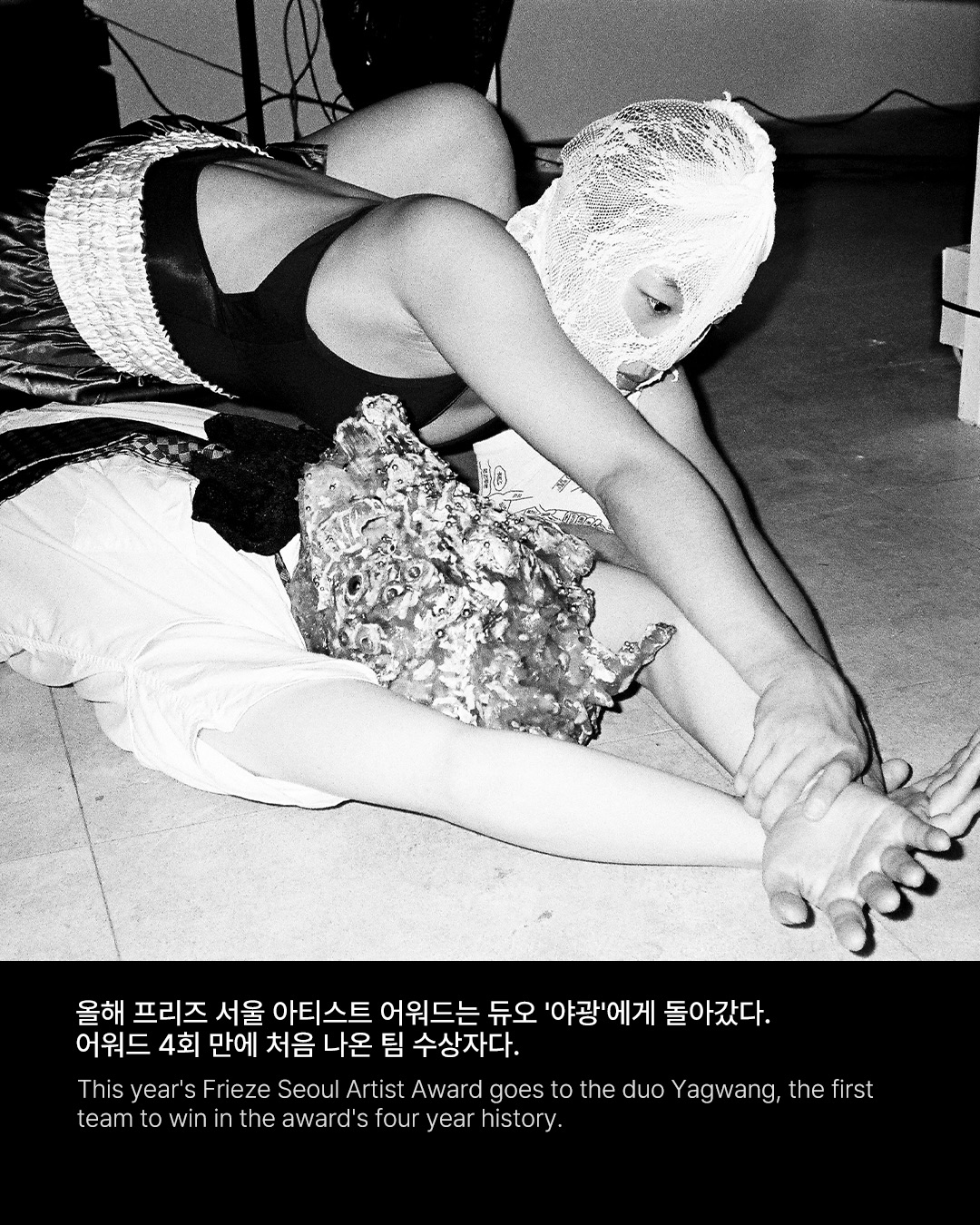
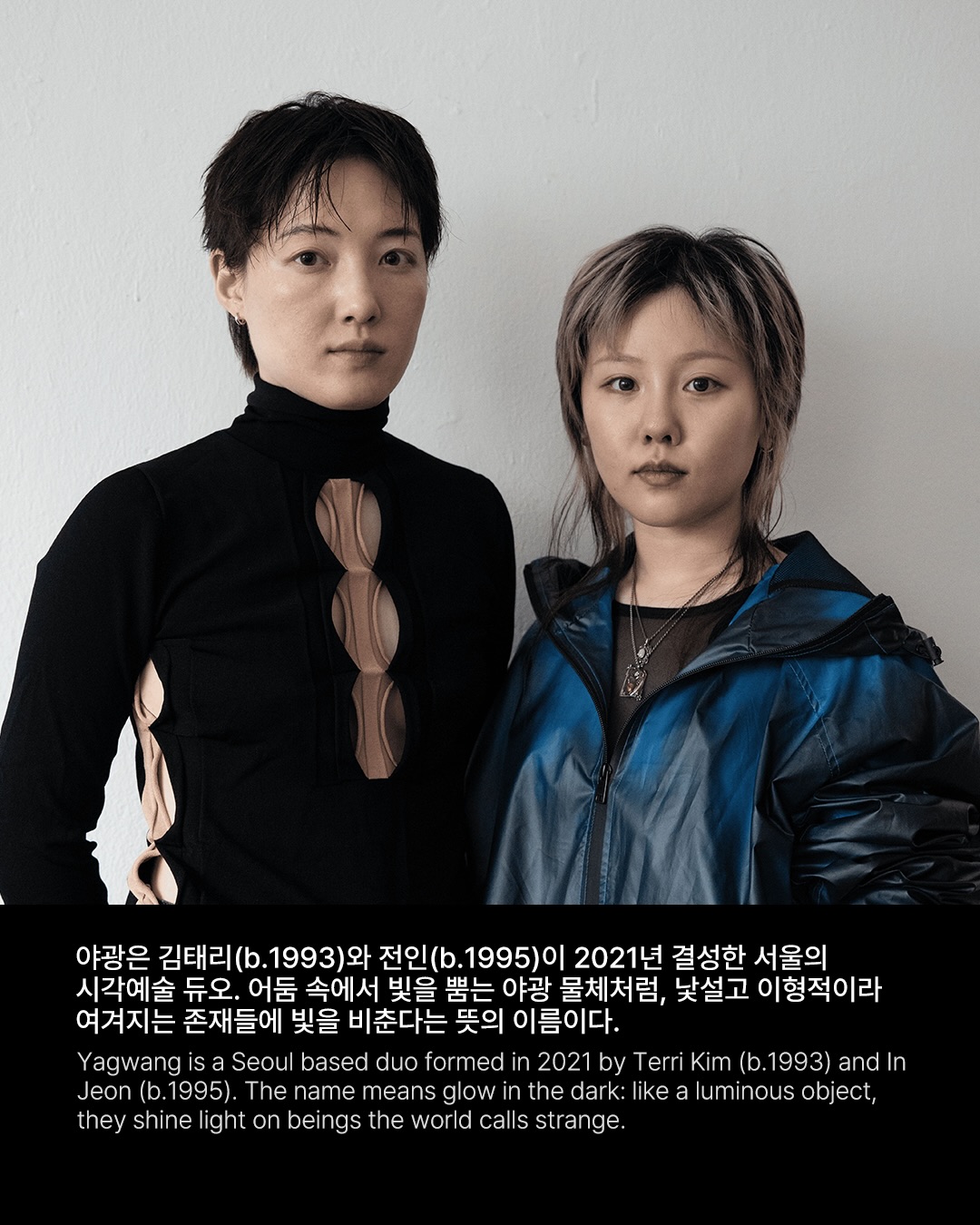
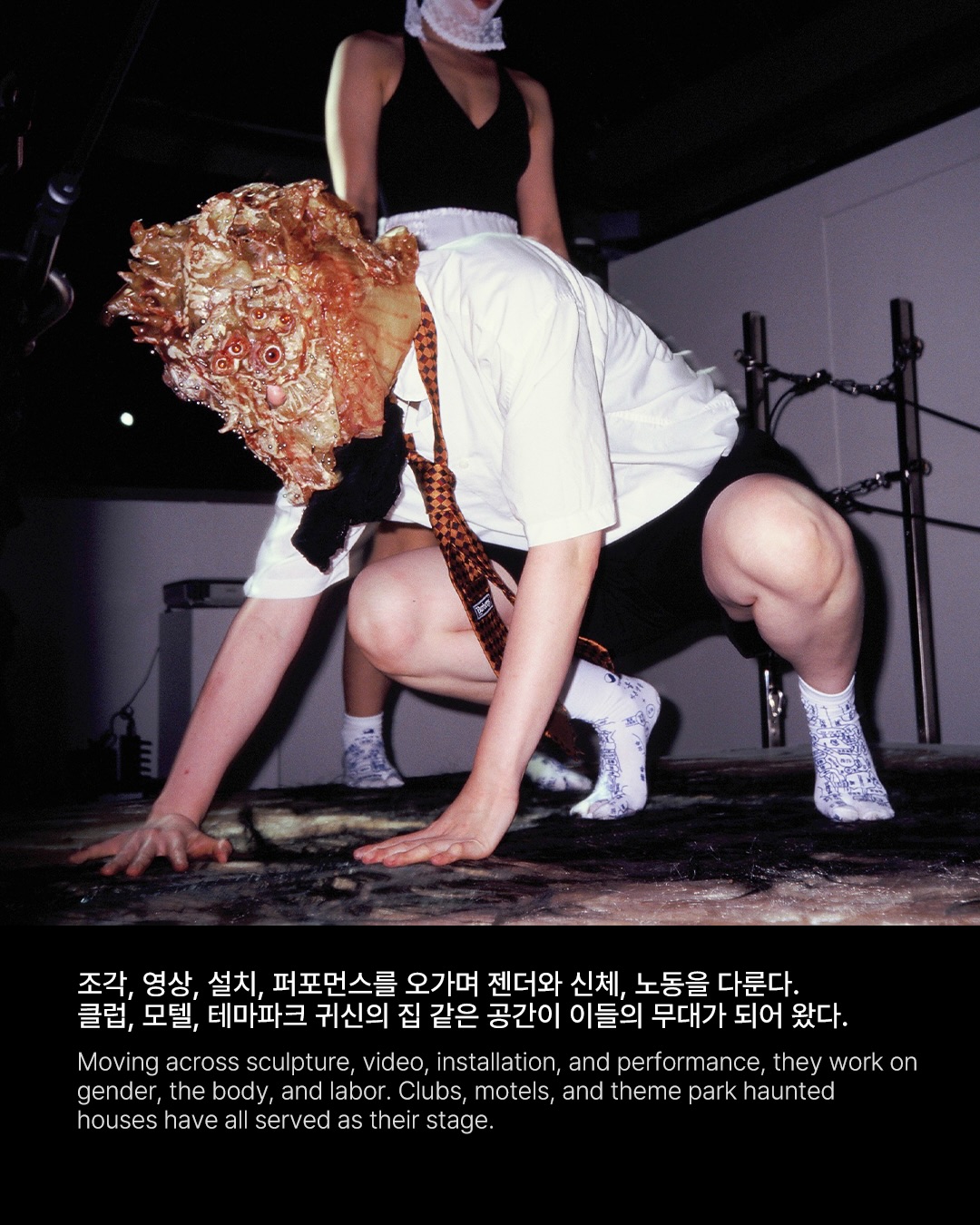
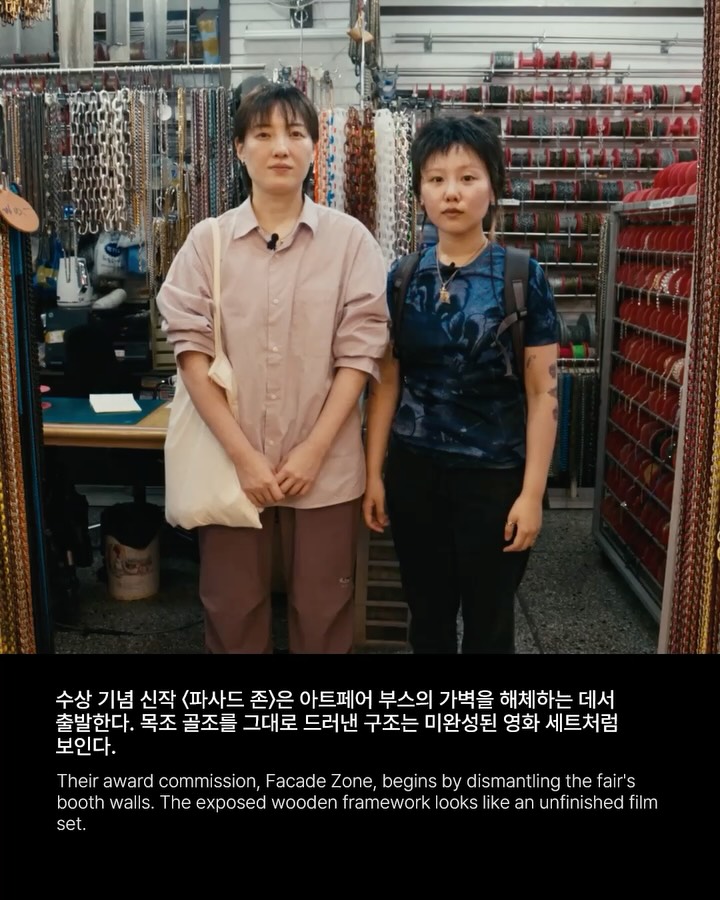
This year's Frieze Seoul Artists Award went to visual art collective Yagwang. Formed in 2021 by Kim Taeri and Jeon In, they're the first team to win in the award's four-year history, working across sculpture, video, installation, and performance to address gender, the body, and labor.
Where can I see Yagwang's winning work Facade Zone?
Yagwang's commissioned work *Facade Zone* (2026) is on view at COEX through September 5. Latex and metal sculptures reinterpreting robes, chains, and armor from Korean Buddhist painting populate the scaffolding, while irregularly timed lights cast shadows across floor and walls through the translucent latex.
What materials does the Yagwang collective primarily use?
Yagwang's signature materials are latex and chain. Latex adheres to metal, and the two penetrate and corrode each other in an irreversible yet beautiful ecology, according to the artists. The relationship these materials create is itself the subject of their work.