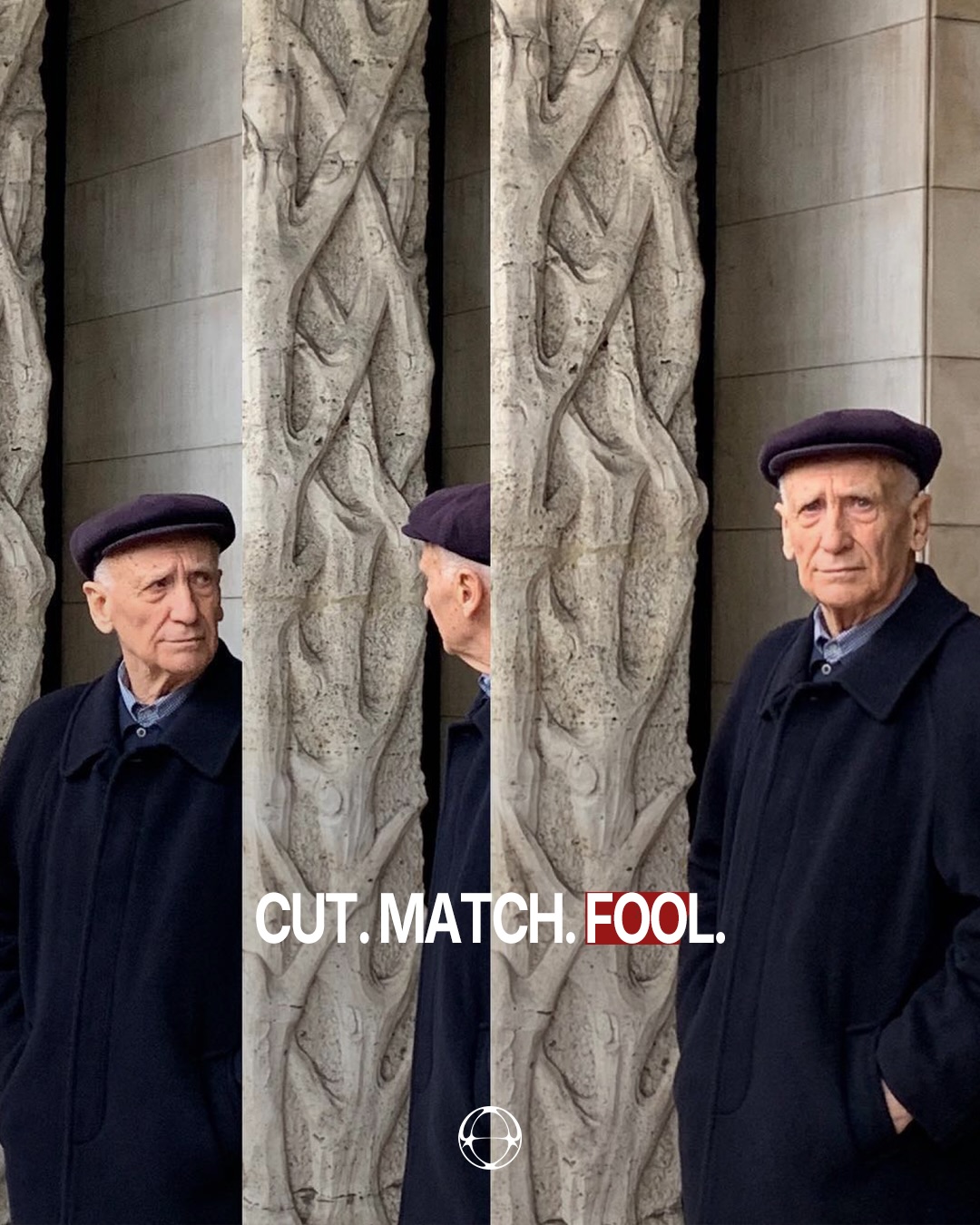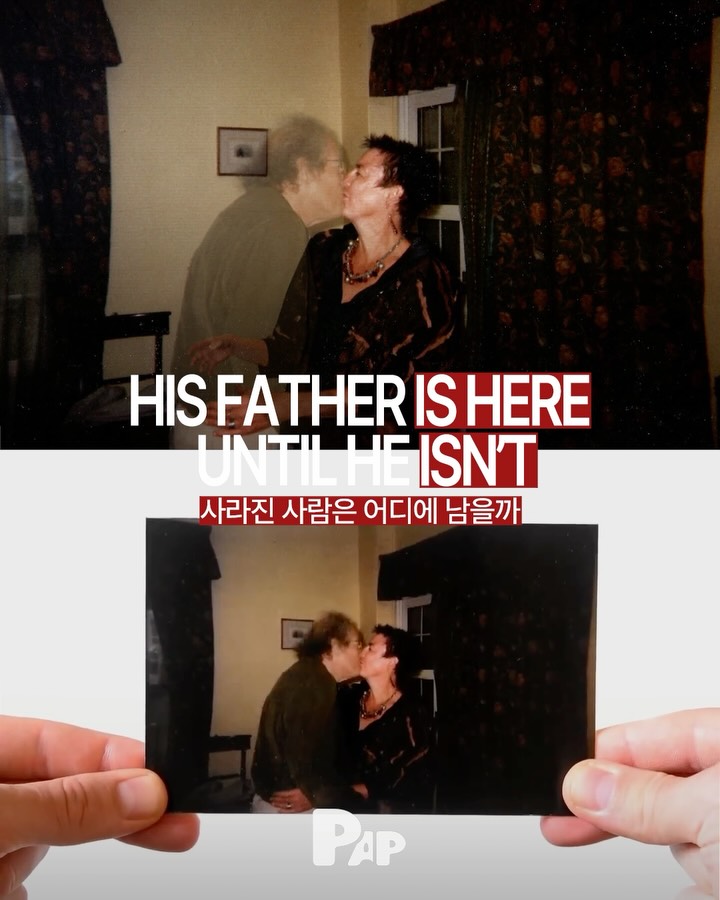
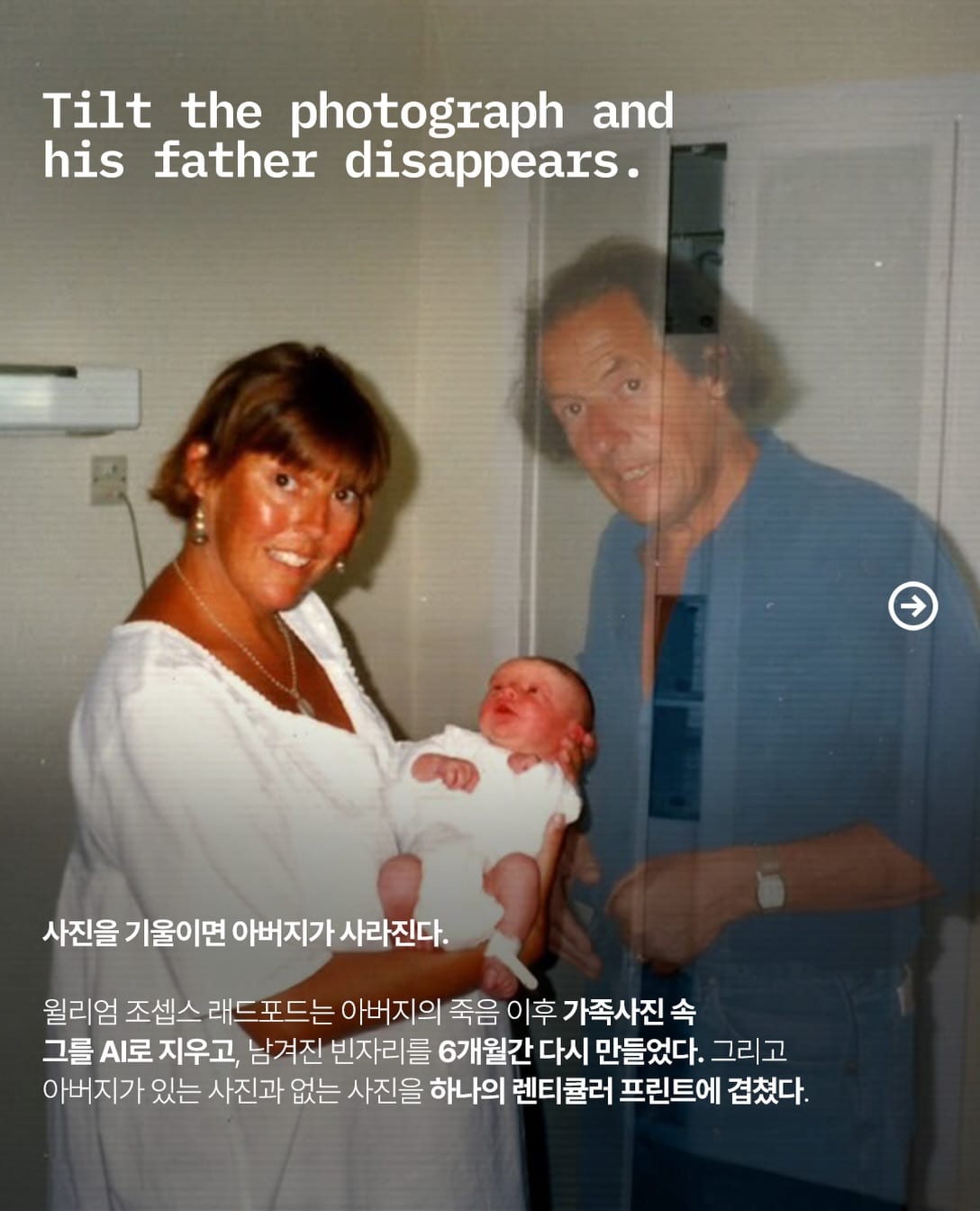
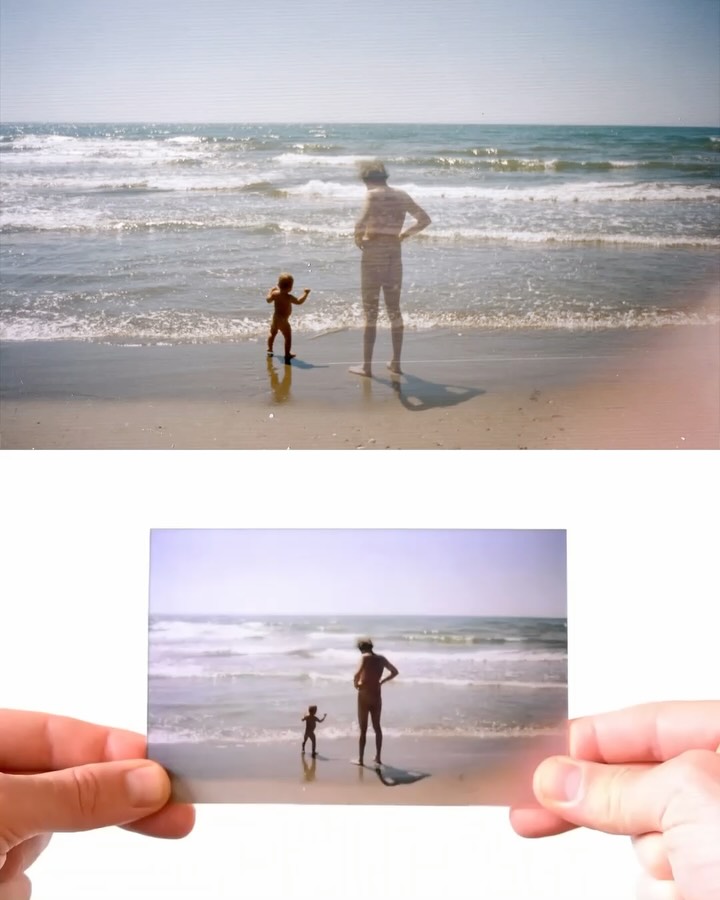
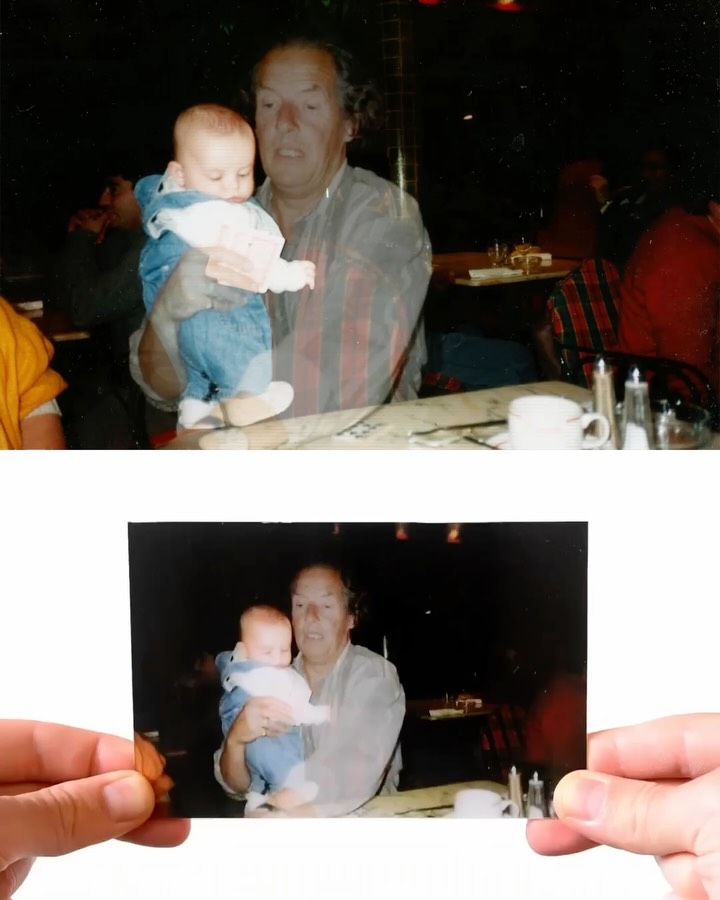
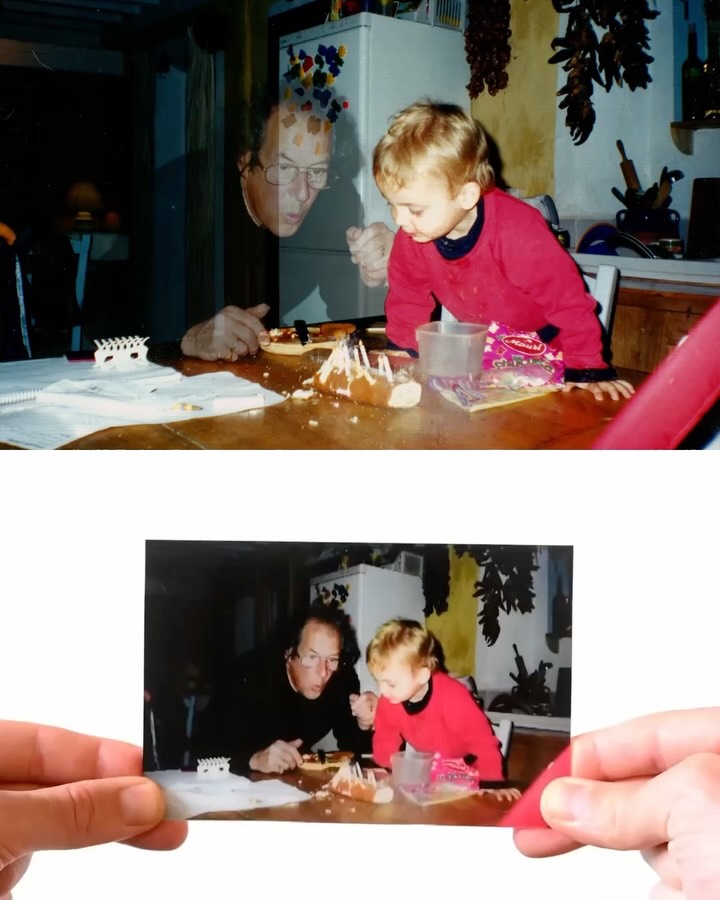
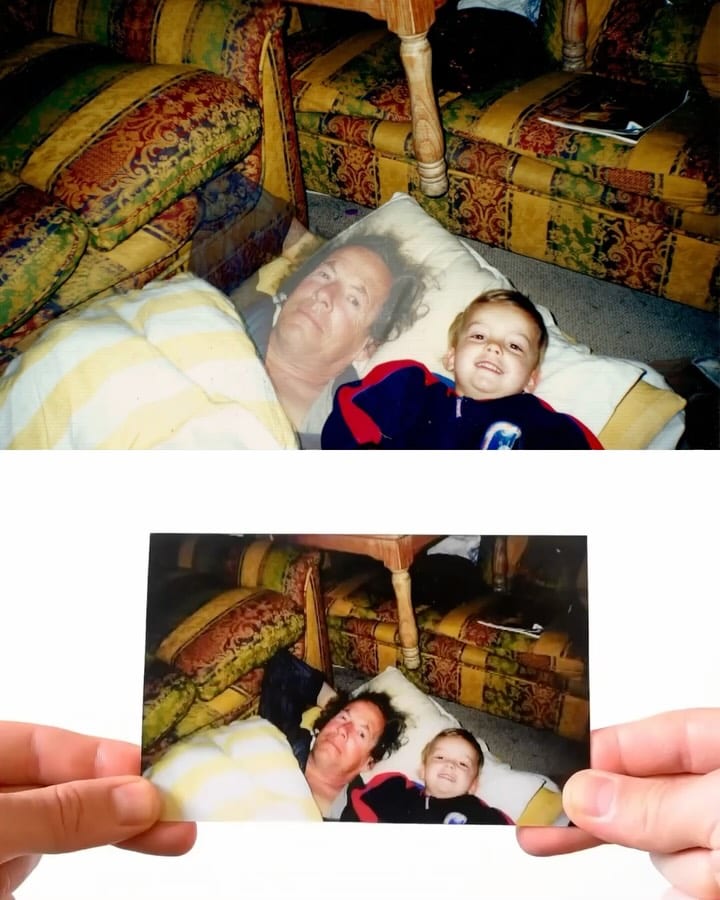
Tilt the photograph and his father disappears. After his father's death, artist William Josephs Radford used AI to remove him from family photographs, spending six months rebuilding the spaces left behind. He then layered his presence and absence within a single lenticular print. The work is titled . It presents two realities that shift depending on the viewing angle.
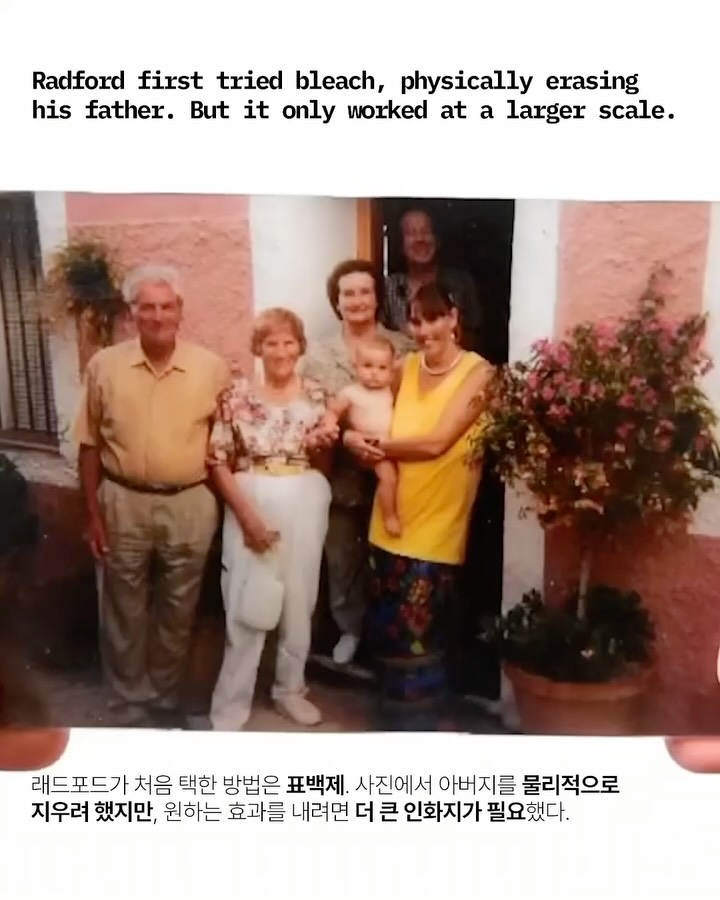
Radford first tried bleach. He attempted to physically erase his father from the prints, but the method only worked at a larger scale. Eventually he turned to AI, erasing his father digitally, yet full impact required something more. With a slight tilt of the wrist, his father returns, then disappears again.
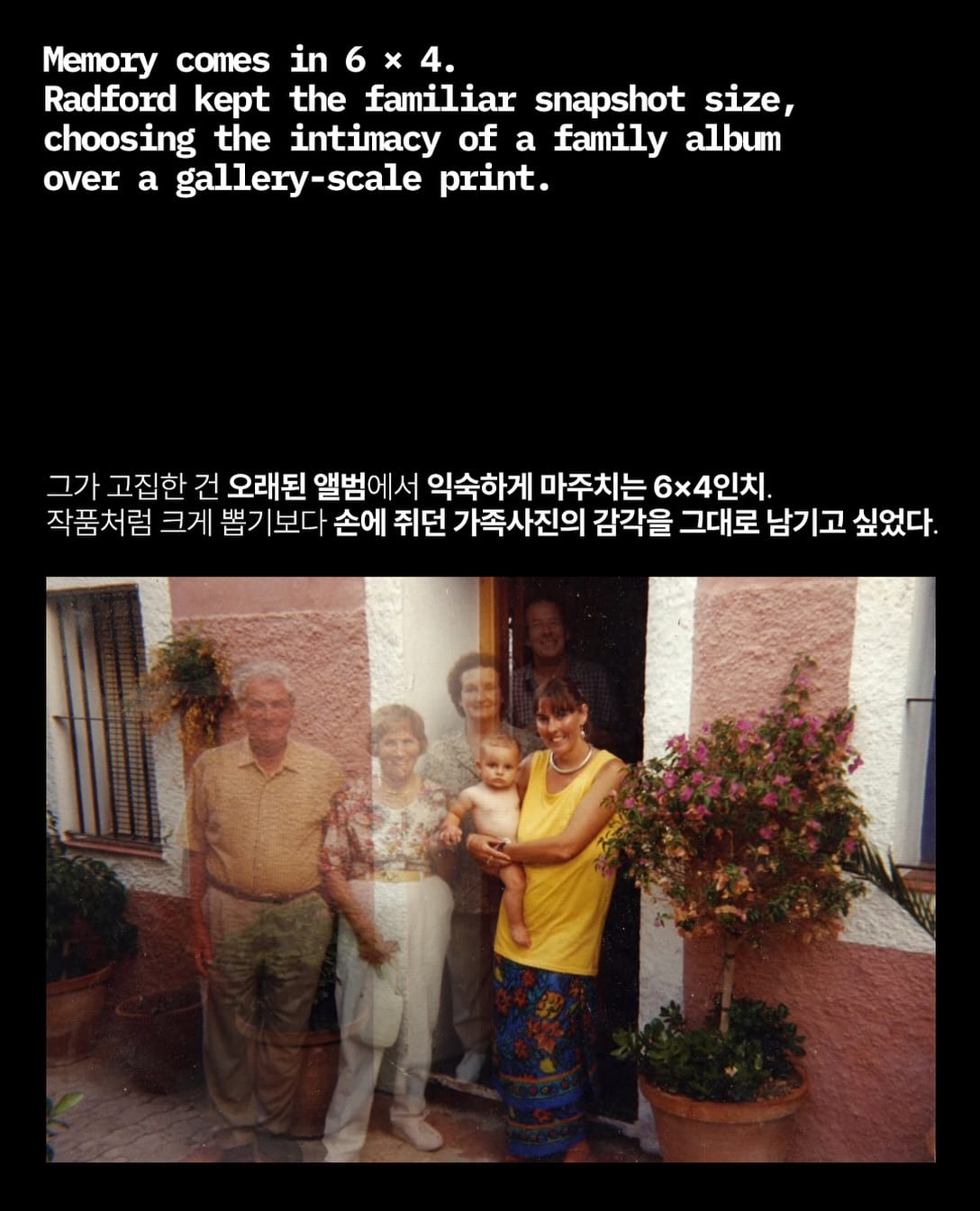
Lenticular printing is a technique that changes the image as the viewing angle shifts. Radford kept the familiar 6×4 inch snapshot size, the one we know from old albums. Instead of scaling up for gallery walls, he chose the intimacy of a family album over spectacle. Memory, after all, lives at the scale of our hands.
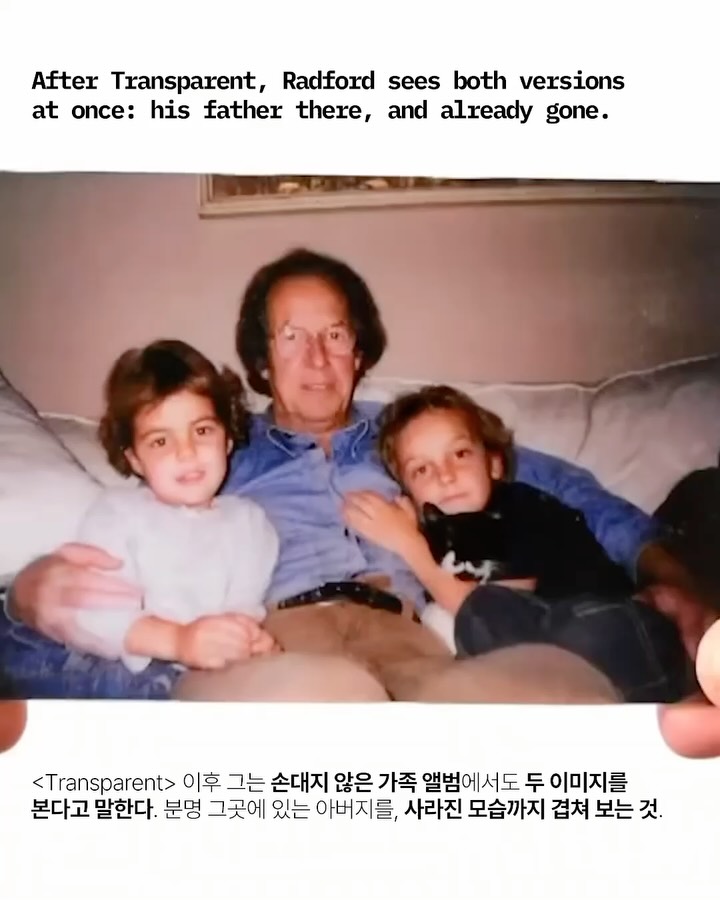
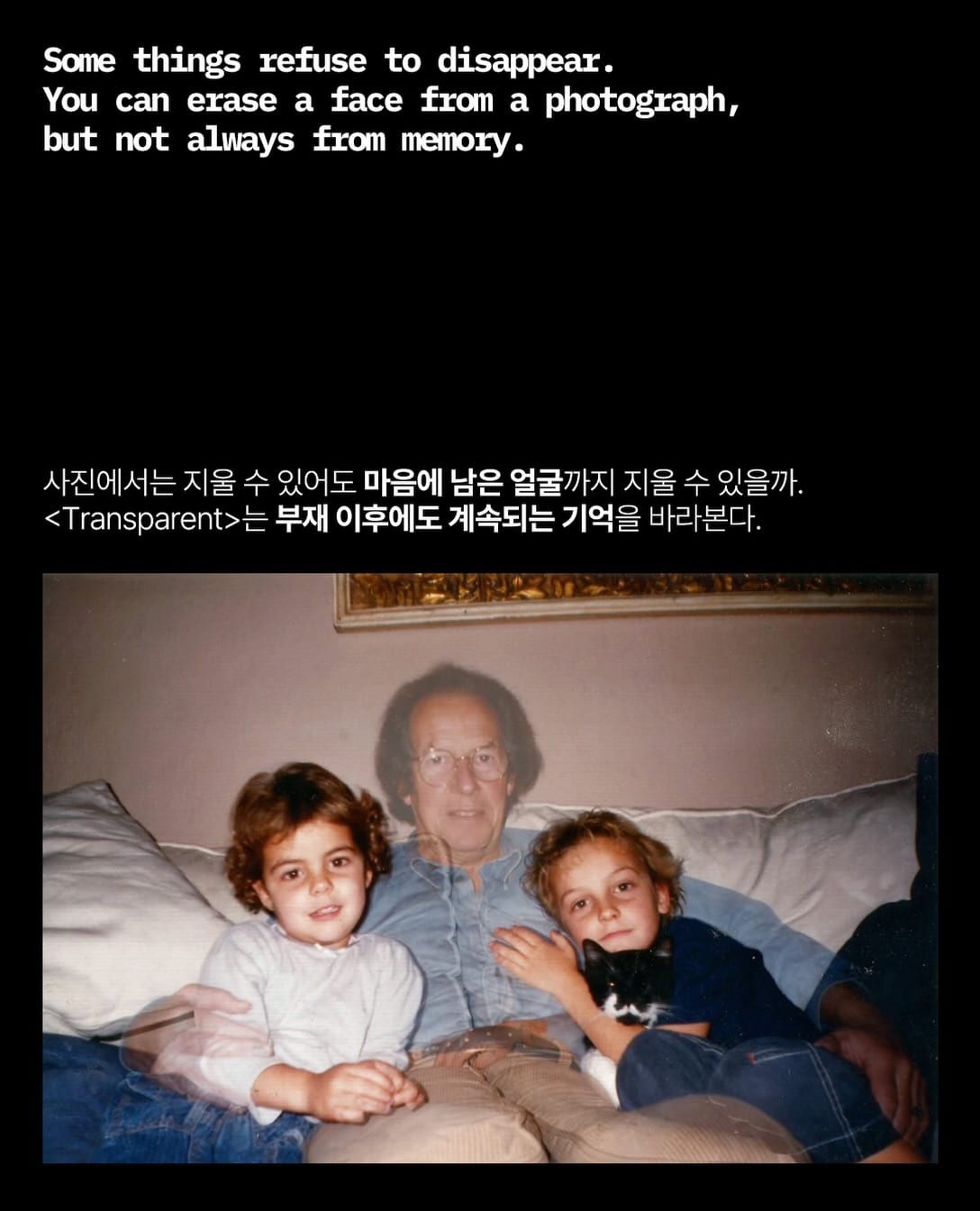
After, Radford says he began seeing both versions even in the original albums. His father is there in the photograph, yet also not there. The act of erasure made absence more vivid. Does a photograph remember someone, or does it teach us to see their absence?
What remains in the photographs you tilt?
Radford first tried bleach. He attempted to physically erase his father from the prints, but the method only worked at a larger scale. Eventually he turned to AI, erasing his father digitally, yet full impact required something more. With a slight tilt of the wrist, his father returns, then disappears again.
Lenticular printing is a technique that changes the image as the viewing angle shifts. Radford kept the familiar 6×4 inch snapshot size, the one we know from old albums. Instead of scaling up for gallery walls, he chose the intimacy of a family album over spectacle. Memory, after all, lives at the scale of our hands.
After
What remains in the photographs you tilt?
FAQ
How was William Joseph Radford's work 〈Transparent〉 created?
After his father's death, Radford used AI to erase him from family photos, spent six months reconstructing the empty spaces, then layered the original and altered images into a single lenticular print. His father appears and disappears depending on the viewing angle.
What is lenticular printing?
Lenticular printing is a technique that changes the image depending on the viewing angle. Radford kept the familiar 6×4 inch size of a family album to preserve the tactile feeling of holding a photograph in your hand.
Why did Radford initially try bleaching?
Radford first attempted to physically erase his father from photographic prints using bleach, but found that method only worked at larger scales. He ultimately chose to use AI for digital erasure instead.