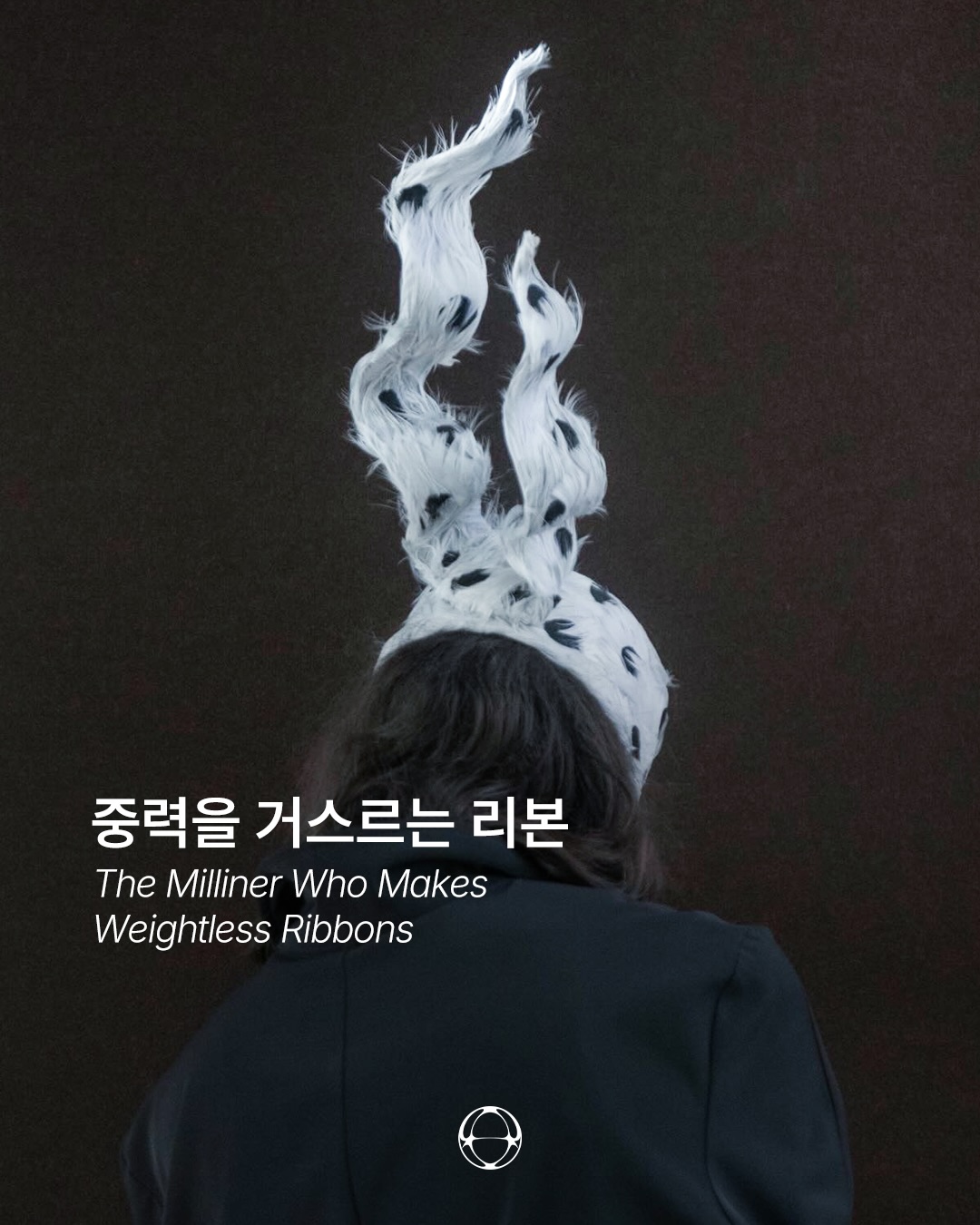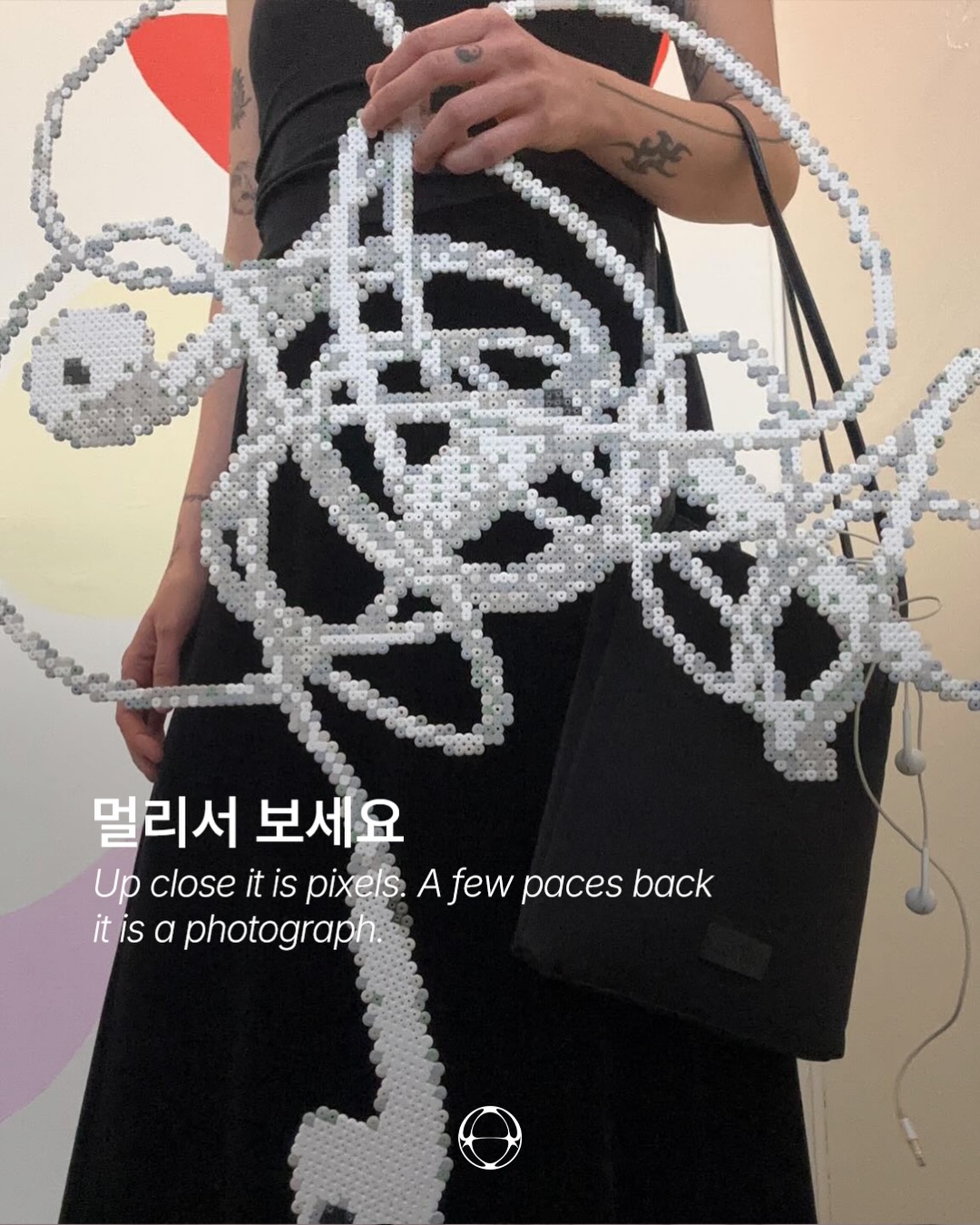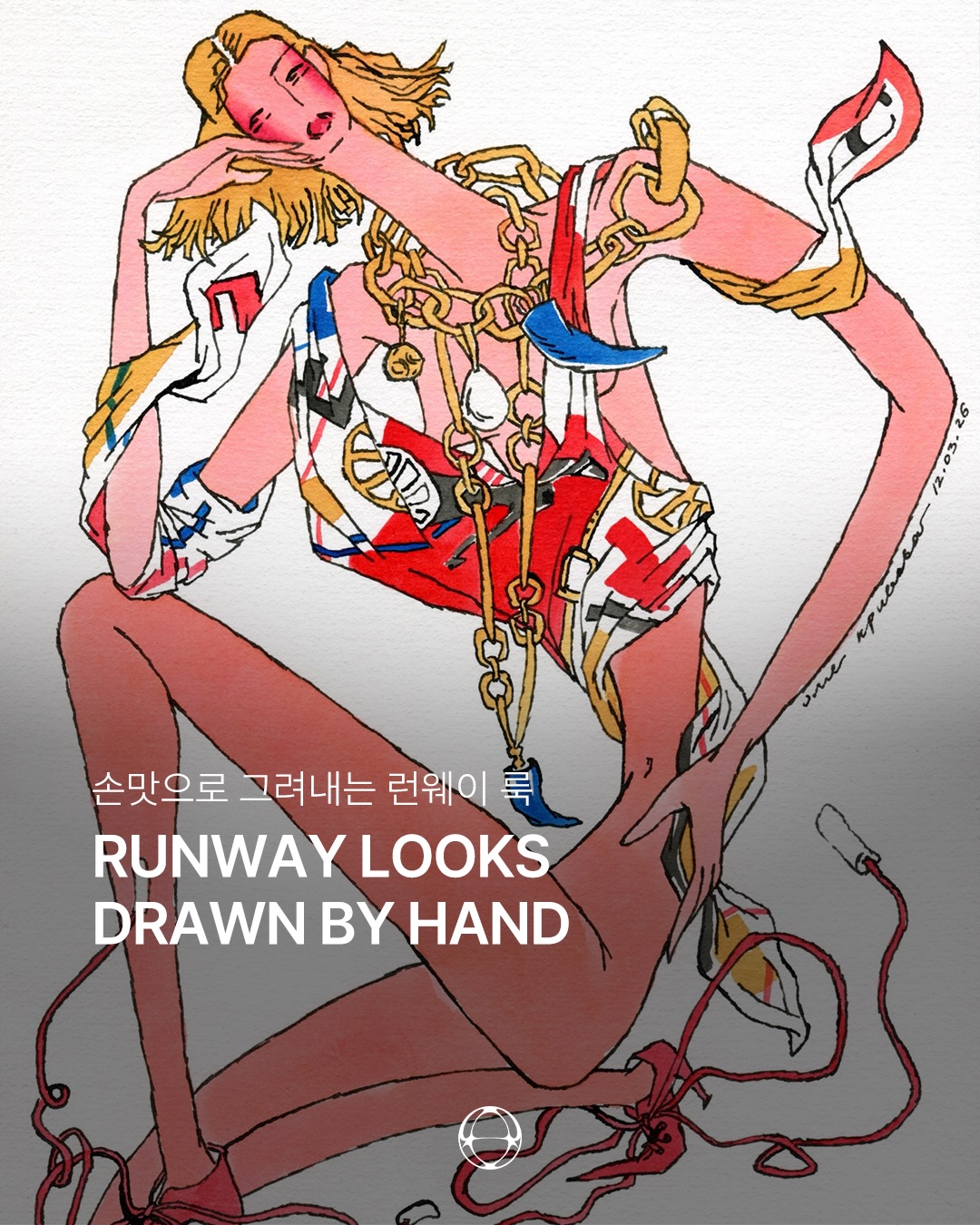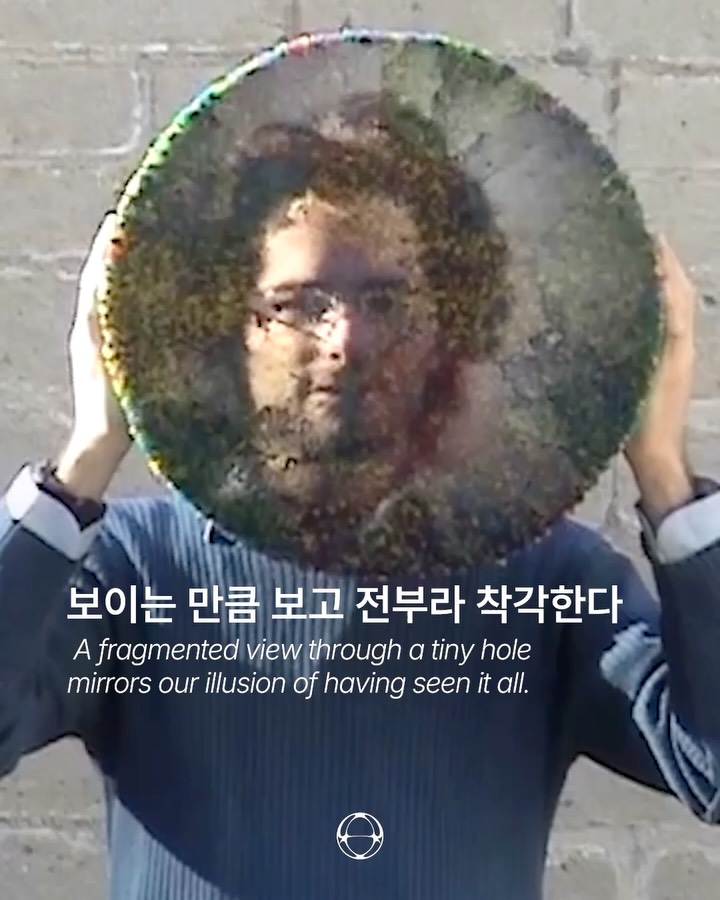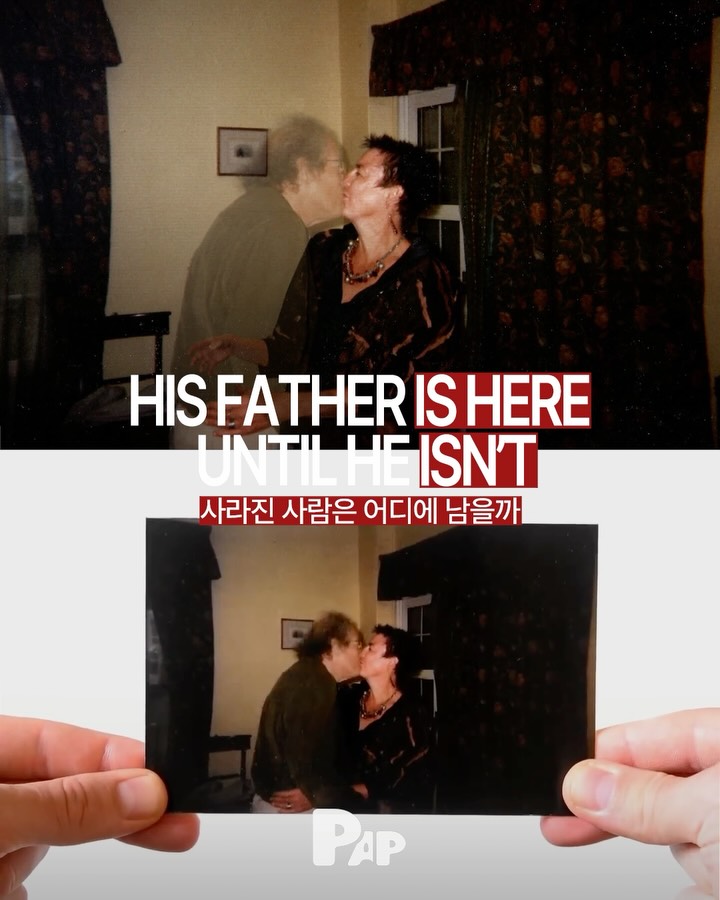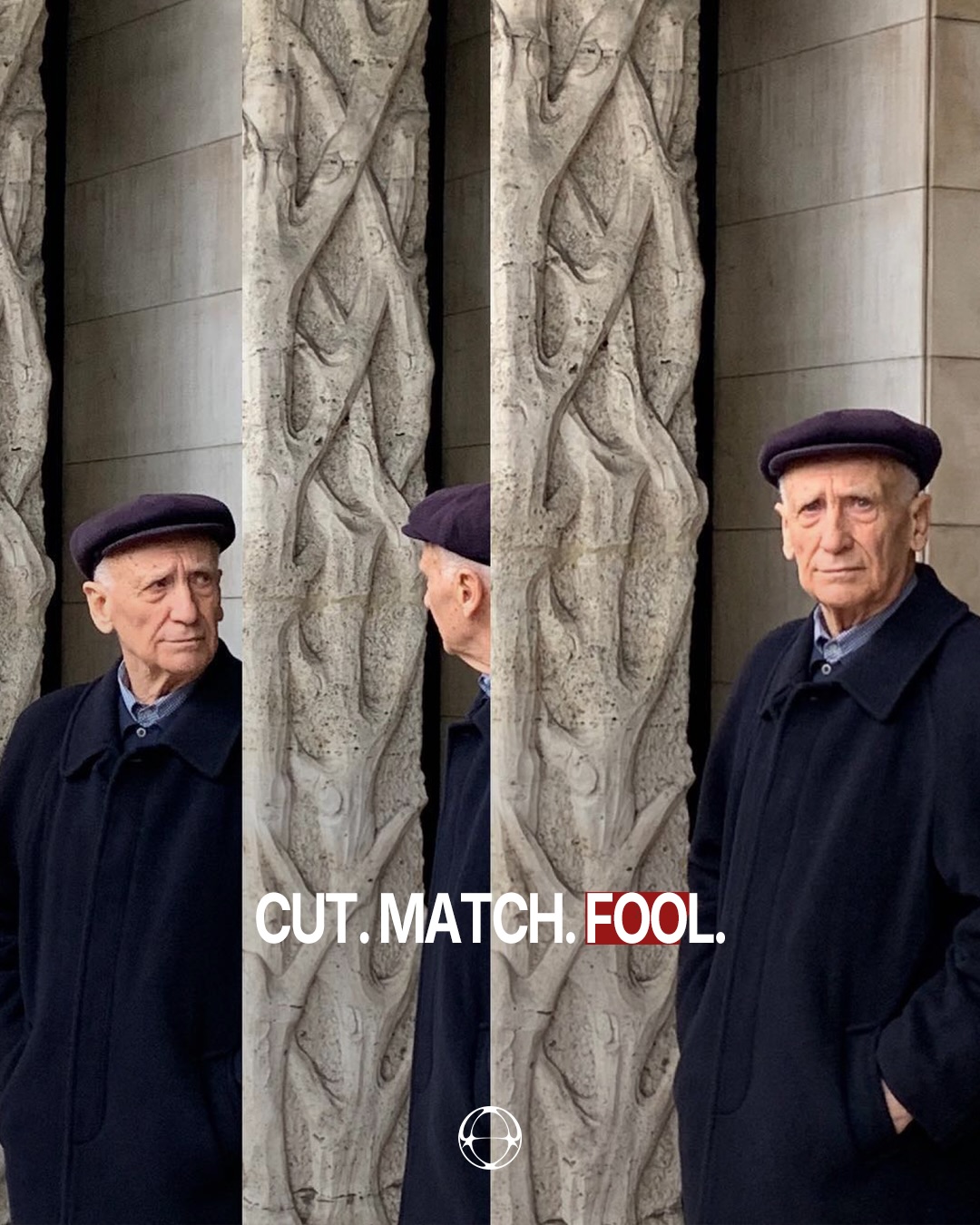
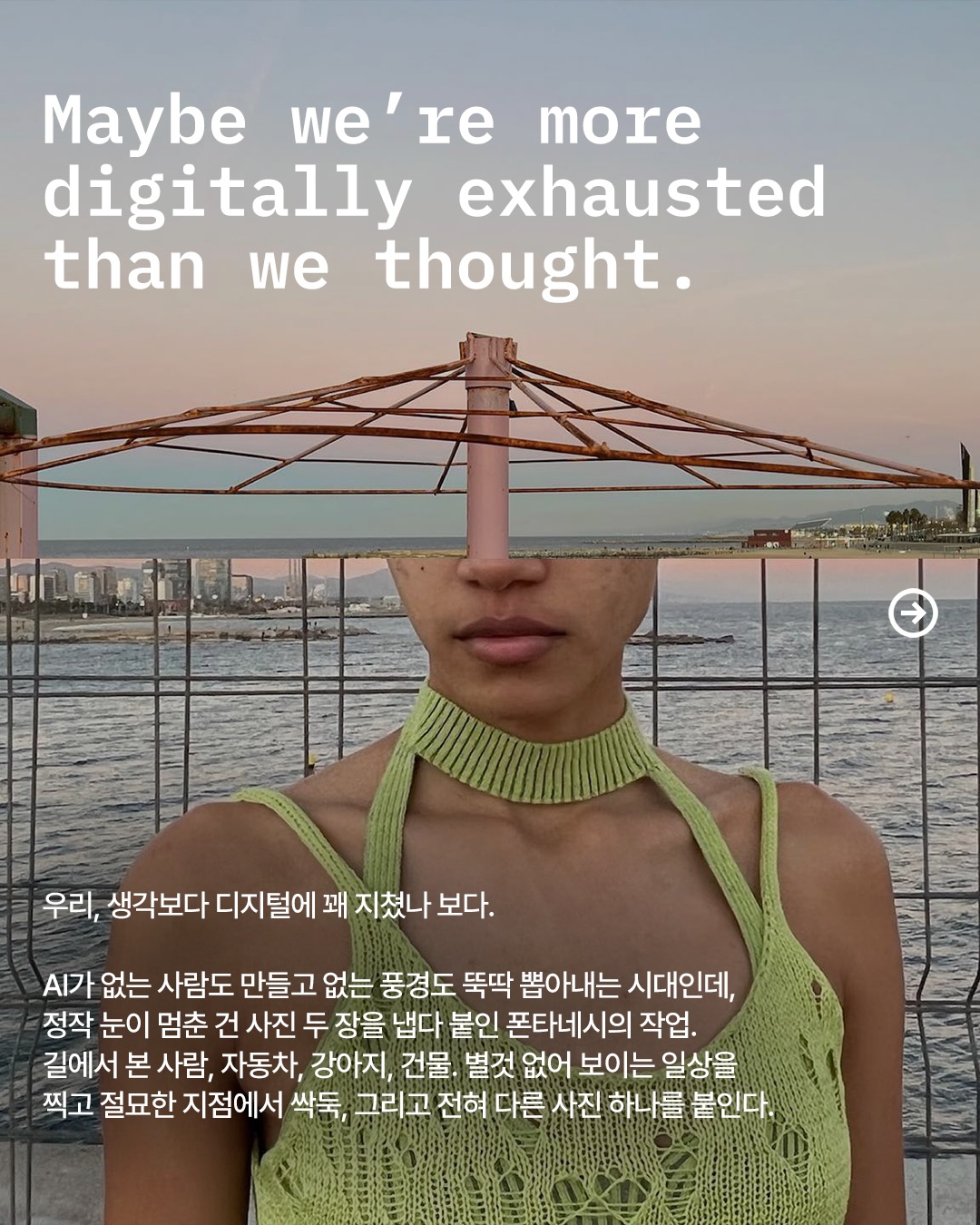
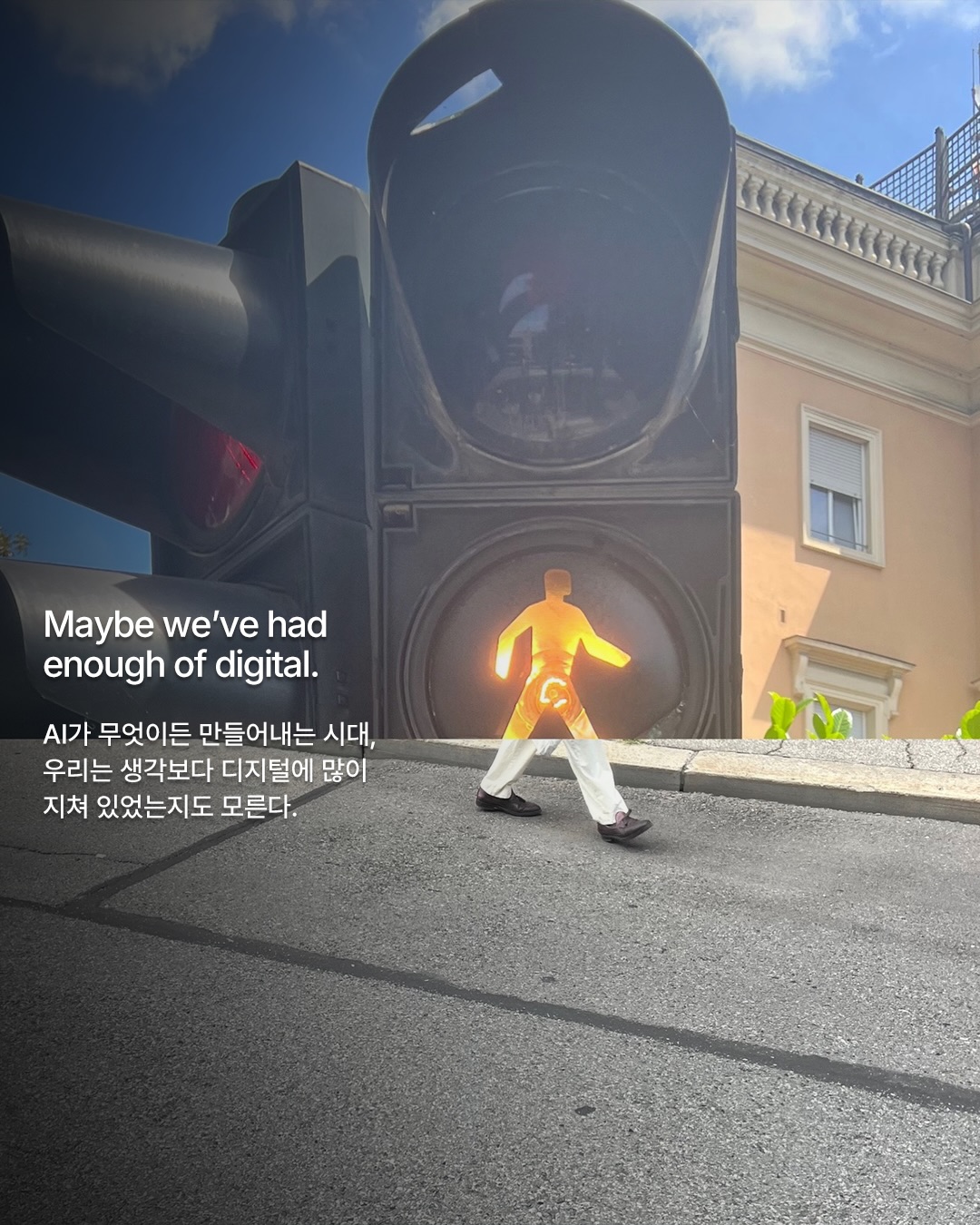
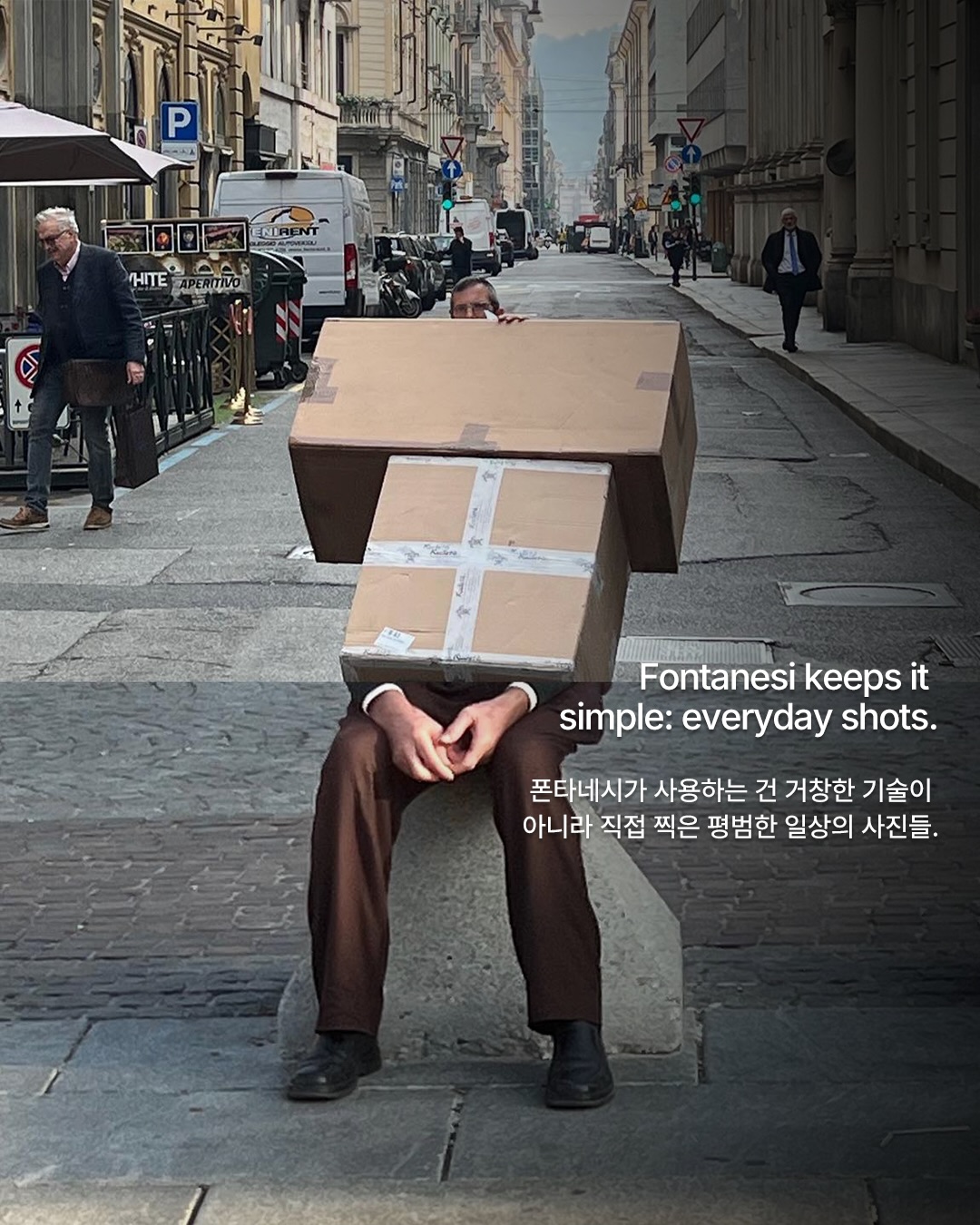
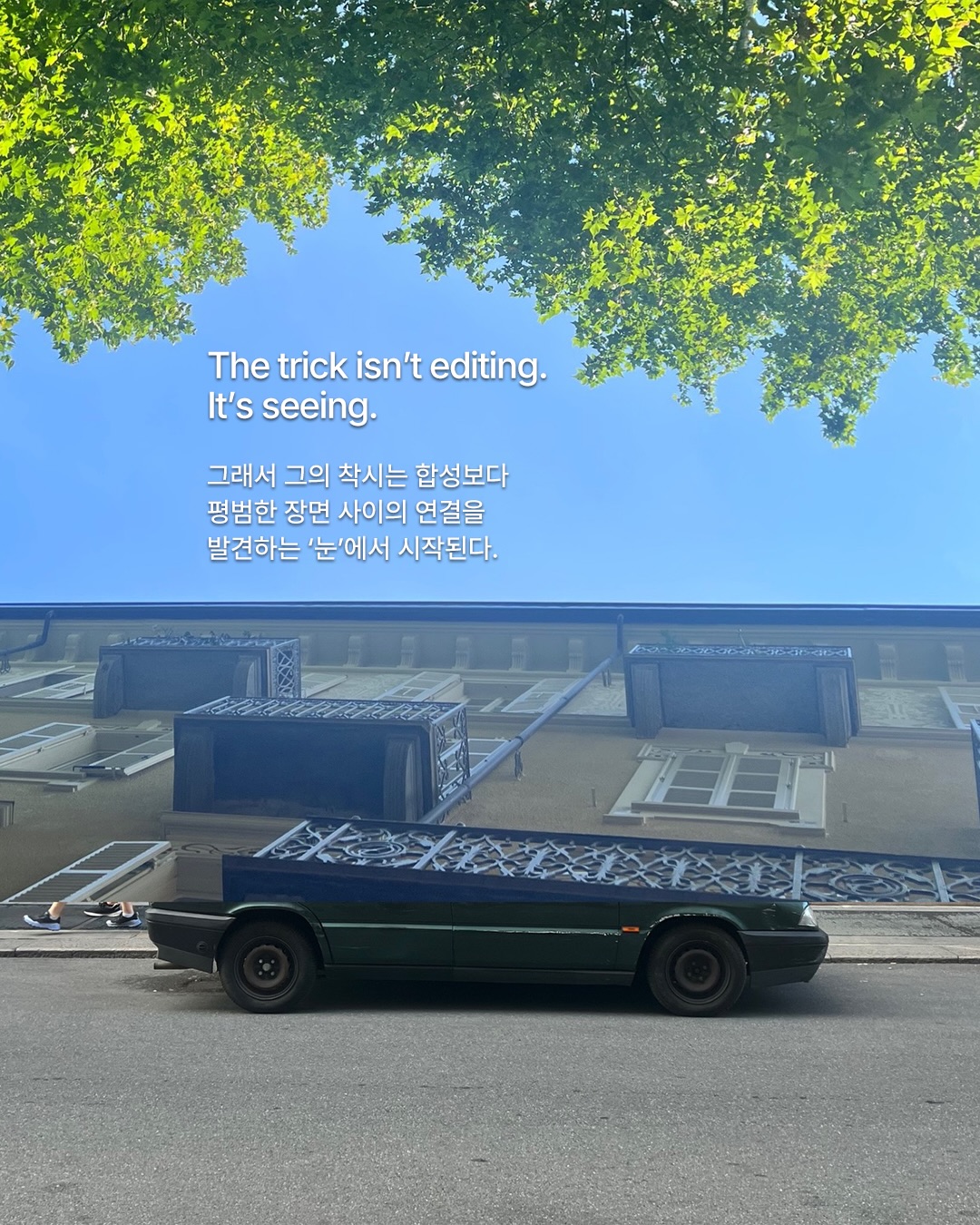
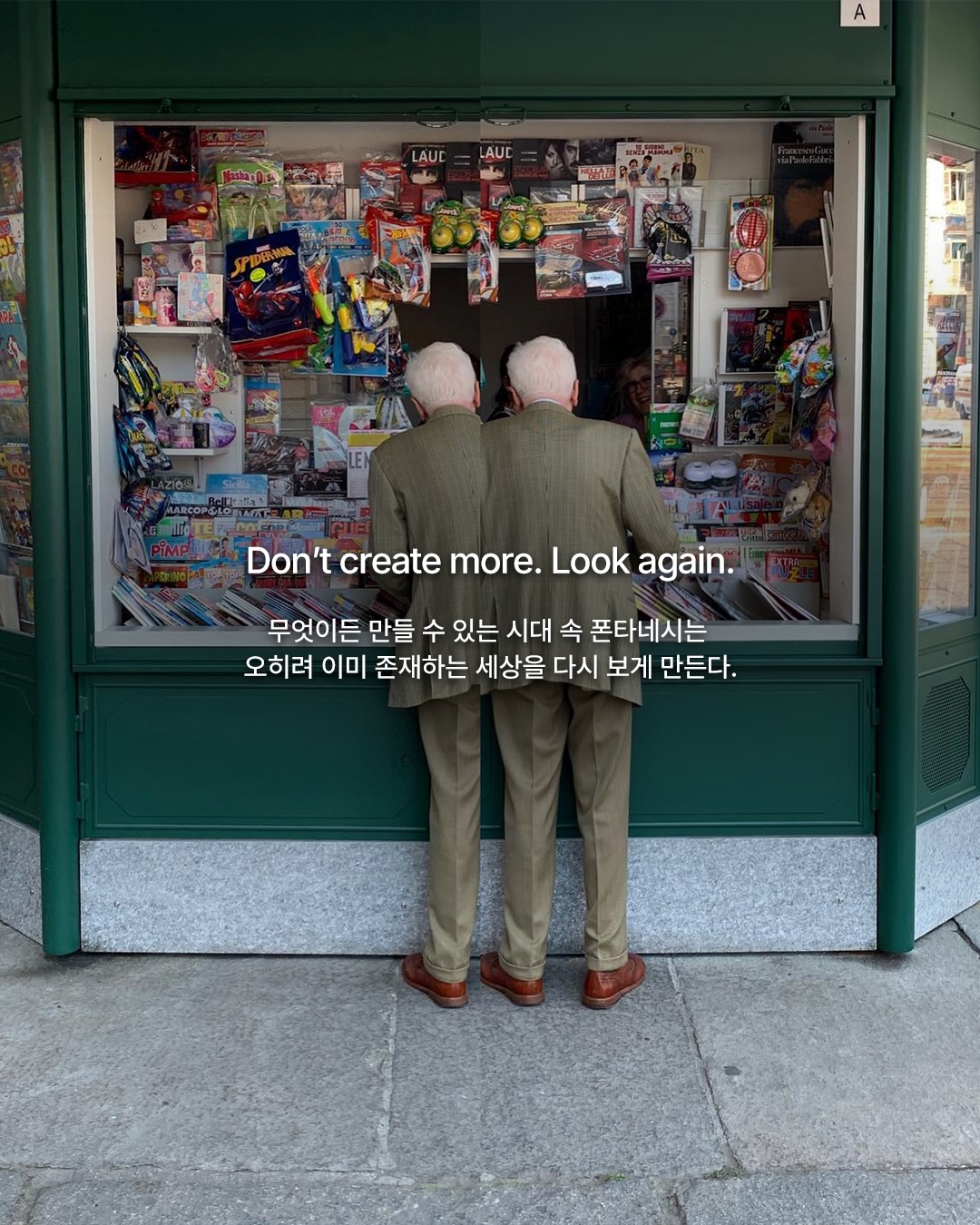
Maybe we're more digitally exhausted than we thought. In an age where AI creates people and places that never existed, somehow Fontanesi's simple two-photo trick makes us stop scrolling. People, cars, dogs, buildings. He shoots the everyday, makes one perfect cut, then pairs it with something completely unrelated. There's a reason your eyes fall for it. When lines, shapes and perspectives align, your brain fills the gaps and turns two images into one.
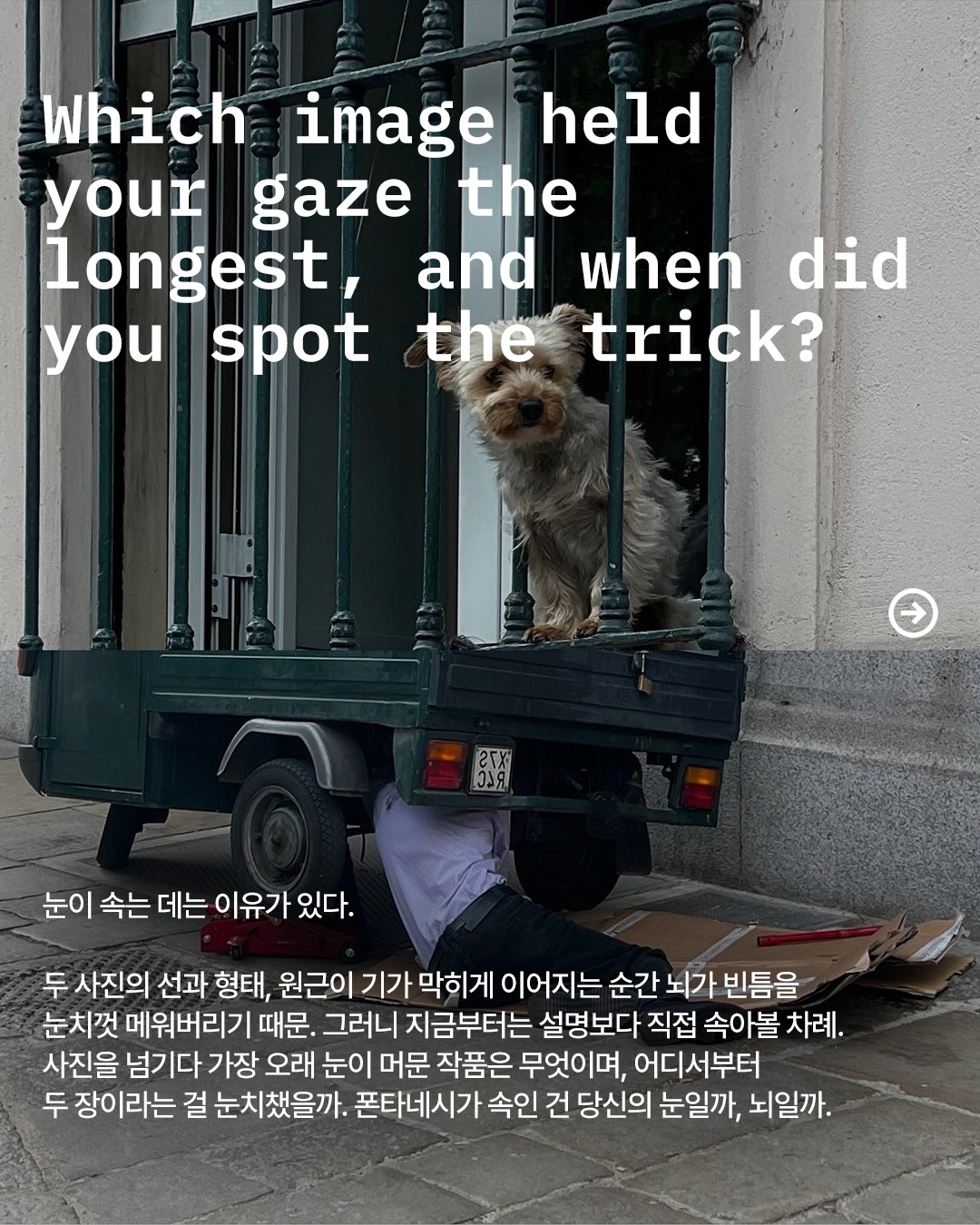
So enough explaining. Start swiping and let yourself be fooled. Which image held your gaze the longest, and when did you spot the trick? What did Fontanesi fool first: your eyes or your brain?
So enough explaining. Start swiping and let yourself be fooled. Which image held your gaze the longest, and when did you spot the trick? What did Fontanesi fool first: your eyes or your brain?
FAQ
What is Fontanesi's working method?
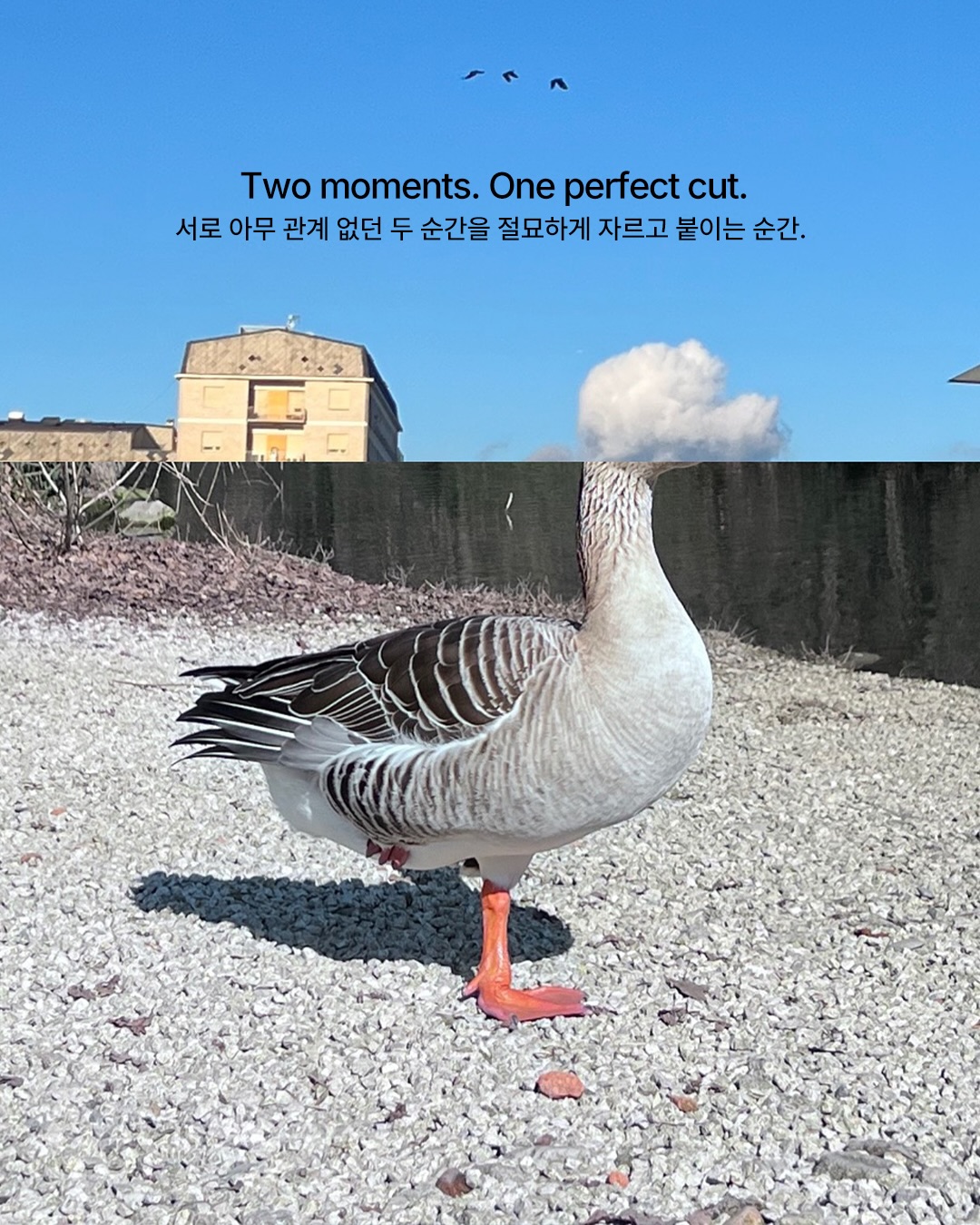
Fontanesi cuts and joins two photographs from everyday life at precise points, making lines, shapes, and perspectives seamlessly continue. He creates visual illusions through analog techniques, not AI.
Why do Fontanesi's photos deceive the eye?
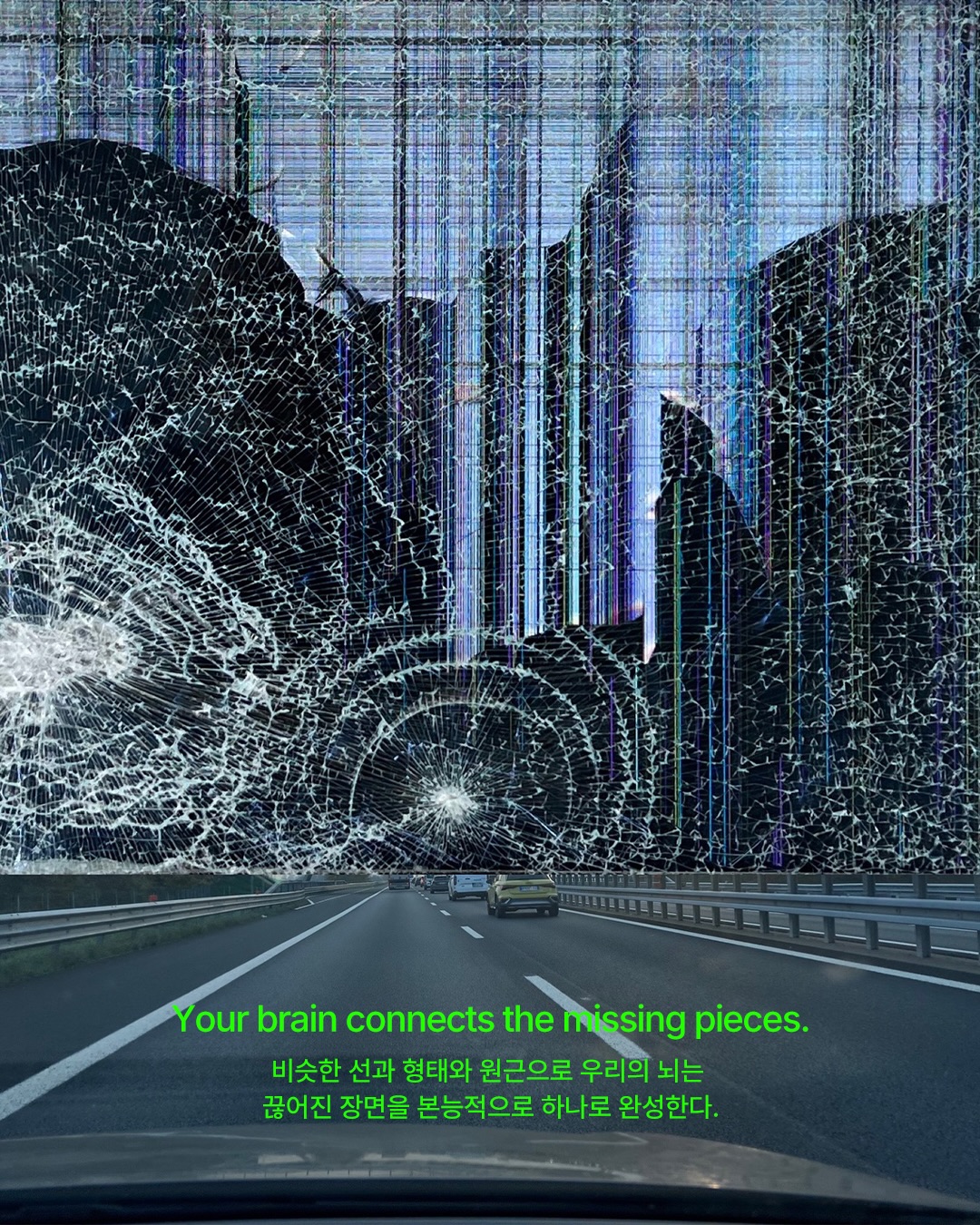
When lines, shapes, and perspectives from two photos connect brilliantly, the brain automatically fills the gaps. Visual continuity tricks the brain into perceiving two separate photographs as one unified image.
What subjects does Fontanesi primarily use?
Fontanesi primarily uses everyday subjects encountered on the street: people, cars, dogs, buildings. His signature lies in capturing seemingly unremarkable, ordinary moments and transforming them into optical illusions.