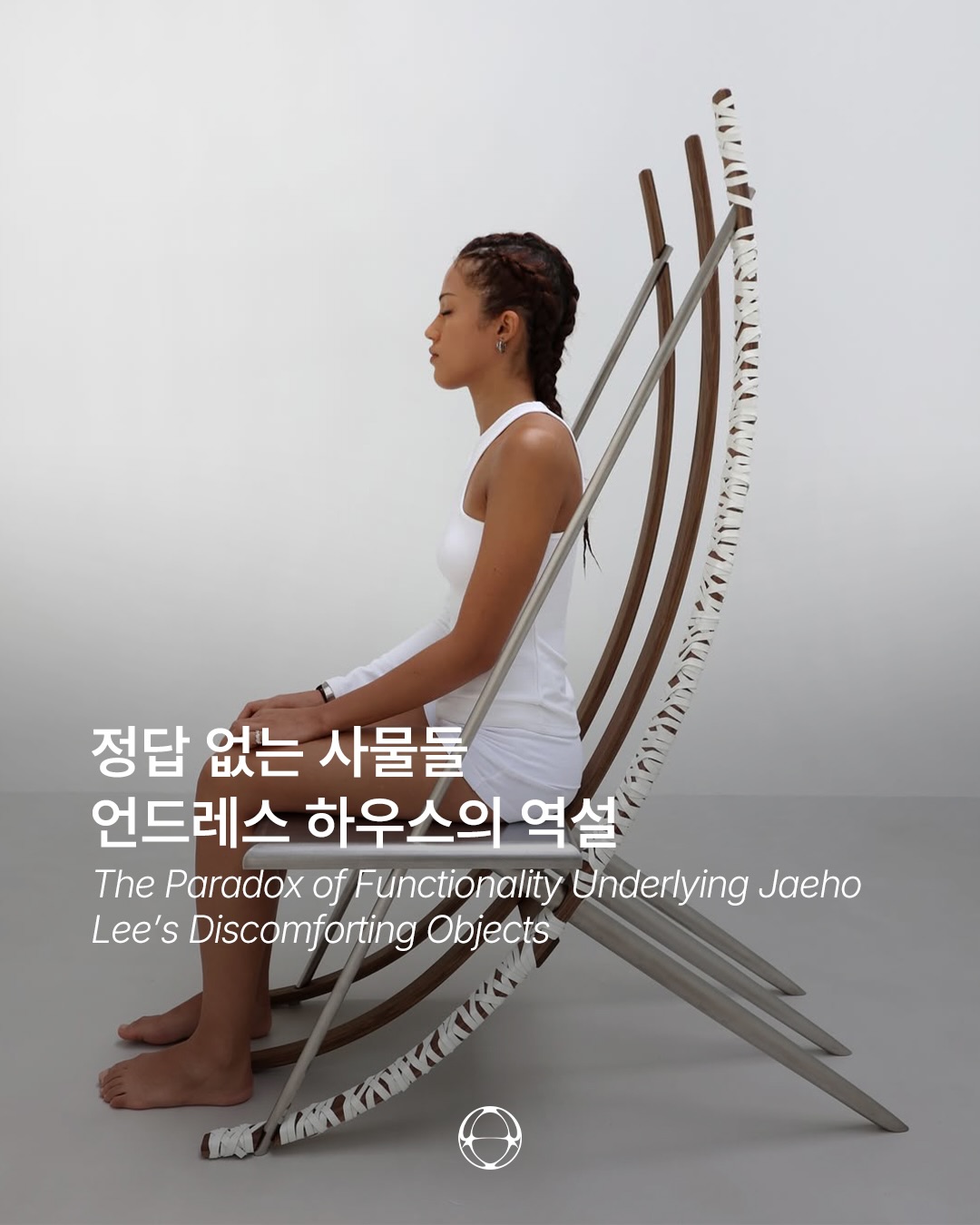
One signature piece, 'Chapel Bin,' likens the act of discarding trash to religious confession by combining a stained-glass structure with a waste receptacle. By layering everyday gestures with sacred symbolism, Lee re-examines the psychological weight of disposal. 'The Bow Chair' transforms a medieval longbow—an instrument designed to harm—into a seat for rest, redefining violence as repose.
Undress House's works do not offer neat conclusions. Instead, they provoke subtle discomfort and estrangement that challenge our ingrained assumptions about objects. By unpacking multilayered themes—weaponry, religion, human relationships—through the medium of furniture, Lee demonstrates that design can transcend mere function to become an object of contemplation. His practice of uncovering hidden narratives within everyday objects points to a compelling direction for contemporary design.


FAQ
What kind of design studio is UNDRESS HOUSE?
UNDRESS HOUSE is a Korean design studio run by designer Lee Jae-ho, exploring contradictions and wit hidden in object functionality while maintaining furniture's practical purpose. It's gaining attention for conceptual furniture design that challenges preconceptions by adding unfamiliar contexts to everyday objects like weapons and religion.
What is Chapel Bin?
Chapel Bin is UNDRESS HOUSE's signature work combining stained glass with a trash bin. It compares the everyday act of discarding garbage to religious confession, layering religious symbolism to reexamine the psychological weight of disposal.
What is the design concept of The Bow Chair?
The Bow Chair reinterprets a war bow meant to harm into furniture for rest. By converting a tool of violence into an object of repose, containing opposing concepts within one form, it challenges our preconceptions about objects.