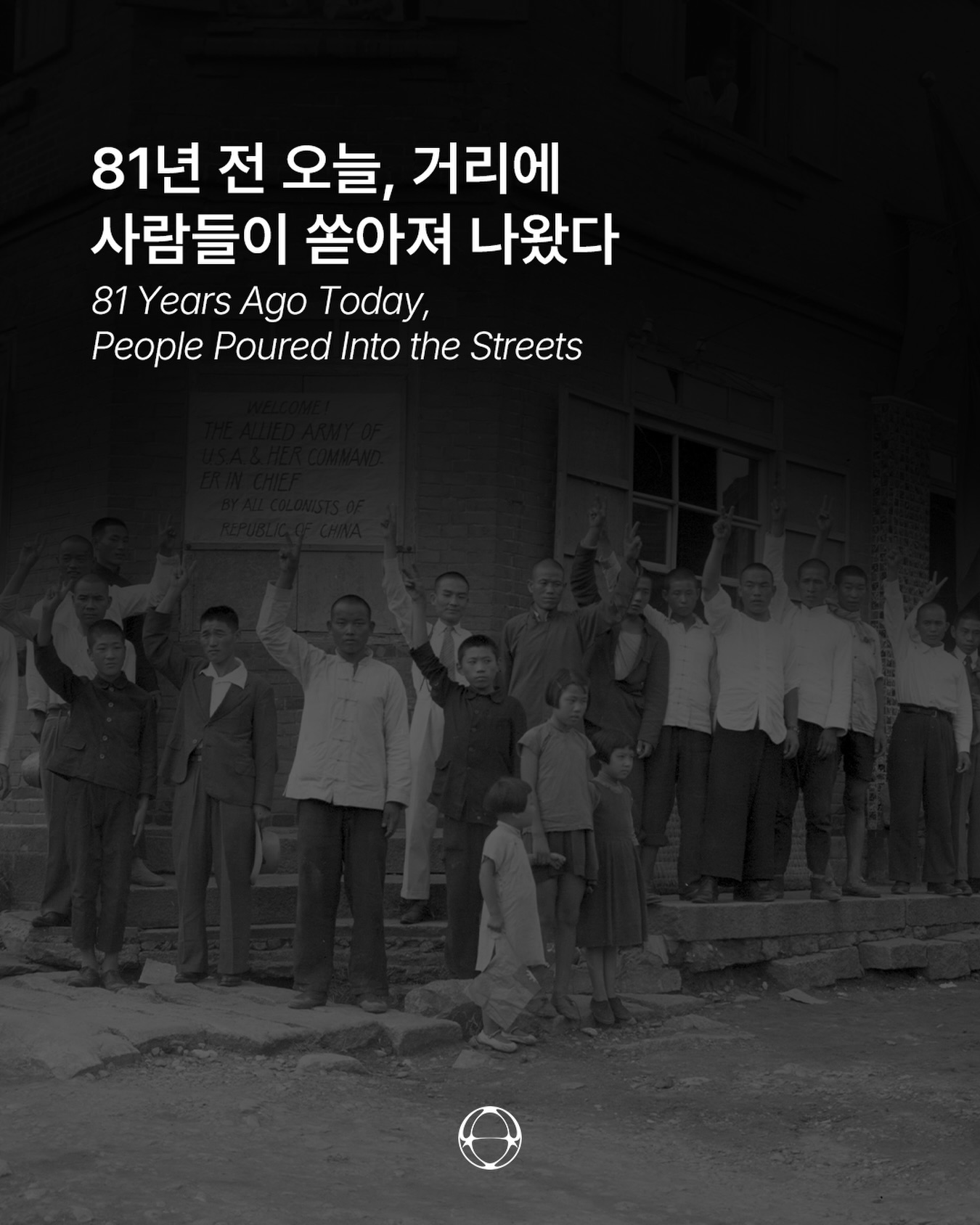
Today marks the 81st anniversary of Korea's Liberation Day. The word gwangbok literally means the restoration of light. When Japan surrendered in 1945, ending 35 years of colonial rule, people poured into the streets waving the Korean flag and shouting manse. News of liberation spread quickly. Imprisoned independence activists and political prisoners were released. Crowds filled cities across the country. Countless people had fought in their own ways to protect the language, names, and culture we use today.
Behind the everyday freedoms we take for granted lies a history of struggle. We remember the faces that filled the streets 81 years ago. The gestures of those who fought to reclaim what was taken. The light they restored. What does liberation mean to you?
Behind the everyday freedoms we take for granted lies a history of struggle. We remember the faces that filled the streets 81 years ago. The gestures of those who fought to reclaim what was taken. The light they restored. What does liberation mean to you?
FAQ
What does Liberation Day commemorate?
Liberation Day marks August 15, 1945, when Korea was freed from 35 years of Japanese colonial rule following Japan's surrender. Gwangbok means 'reclaiming the light.' On that day, Koreans poured into the streets waving Taegeukgi flags and shouting for independence.
What happened in Korea during the 1945 liberation?
When news of liberation spread in 1945, imprisoned independence activists and political prisoners were released. Countless people flooded the streets across cities, waving Taegeukgi flags and shouting in celebration of Korea's newfound freedom.
What did Koreans fight to preserve during Japanese colonial rule?
During Japanese occupation, Koreans fought for independence in their own ways to protect the Korean language, Korean names, and Korean culture. Thanks to their struggle, we now enjoy the everyday freedoms we take for granted.