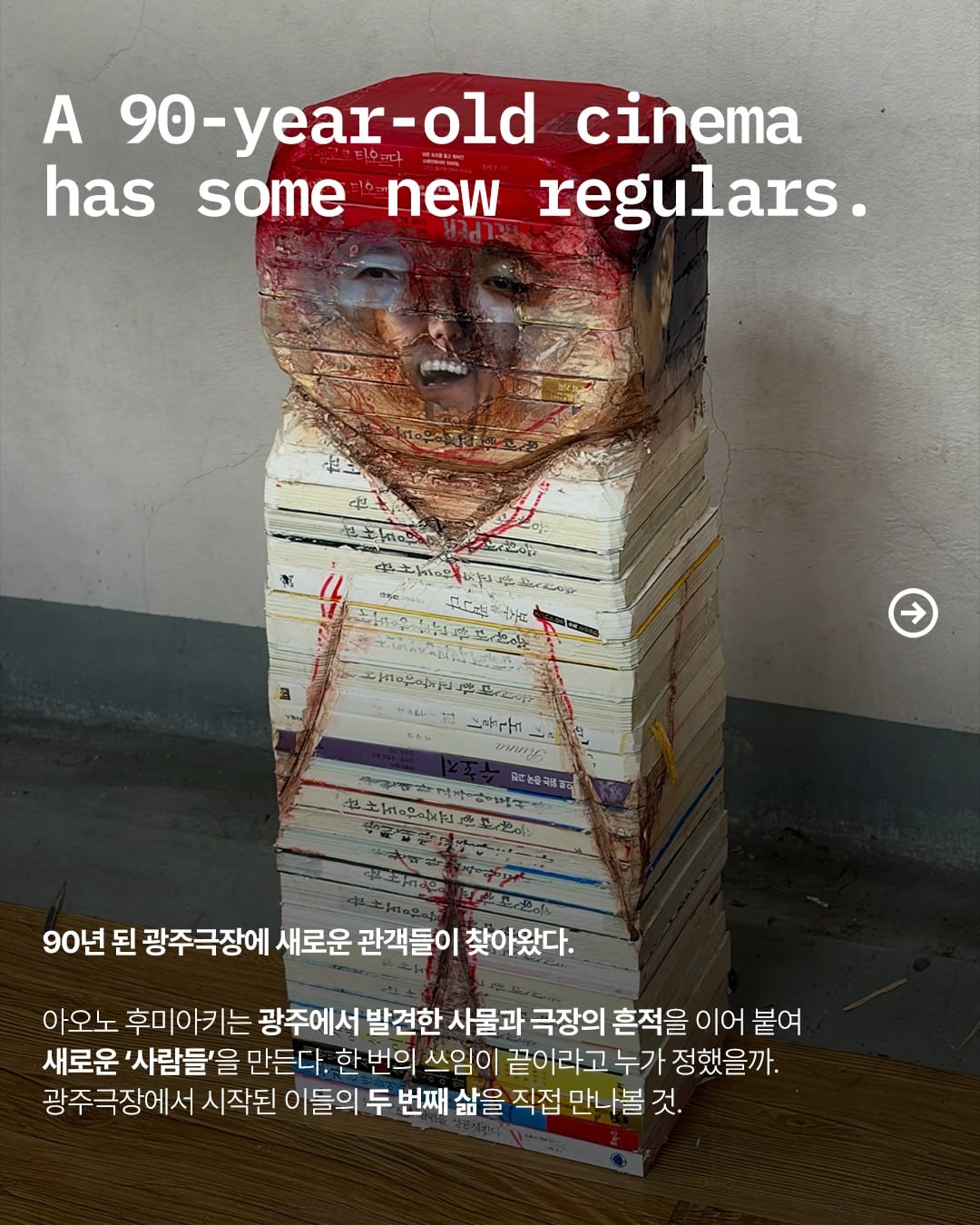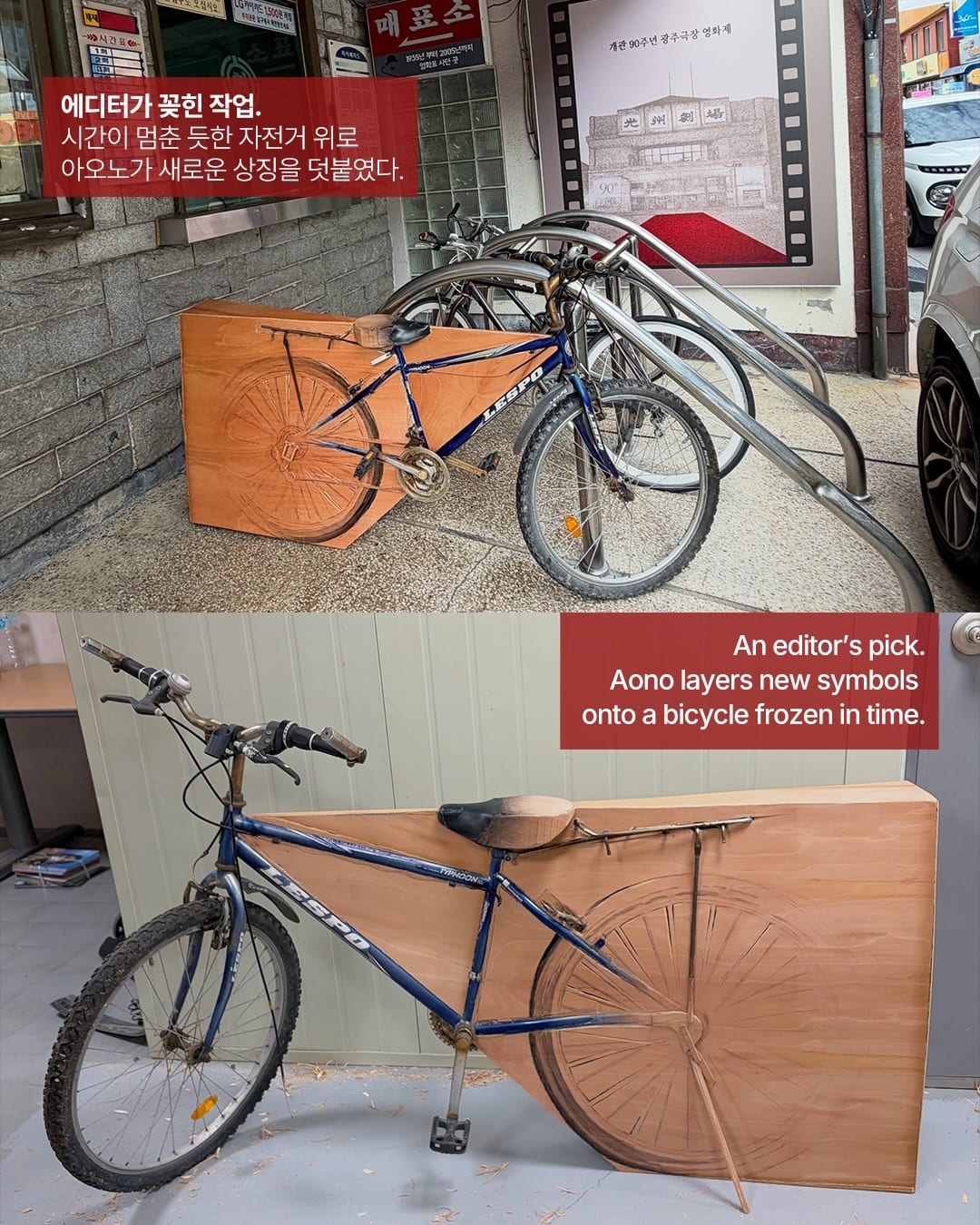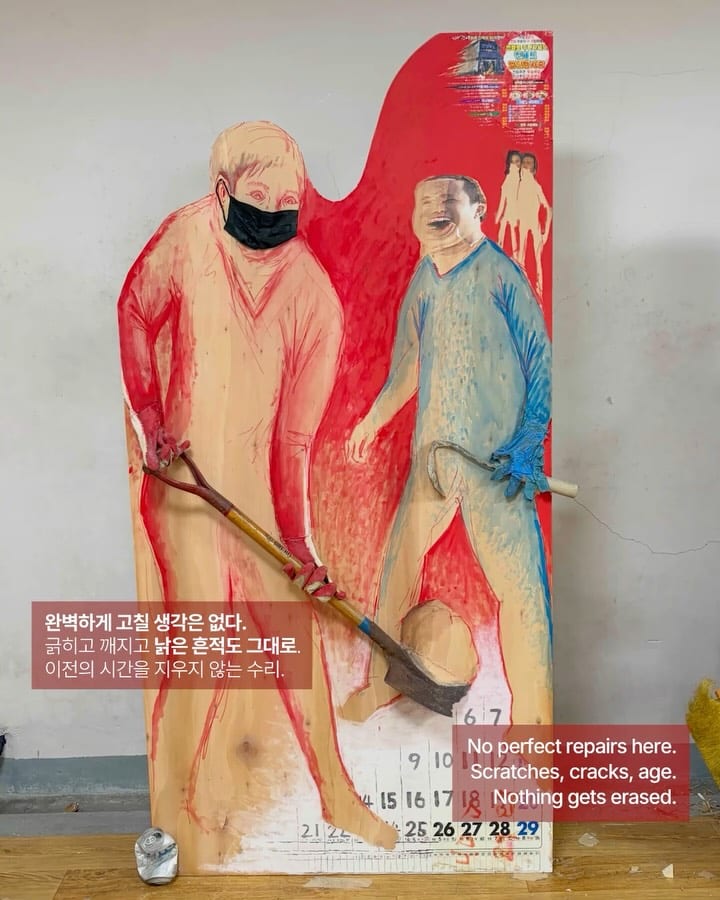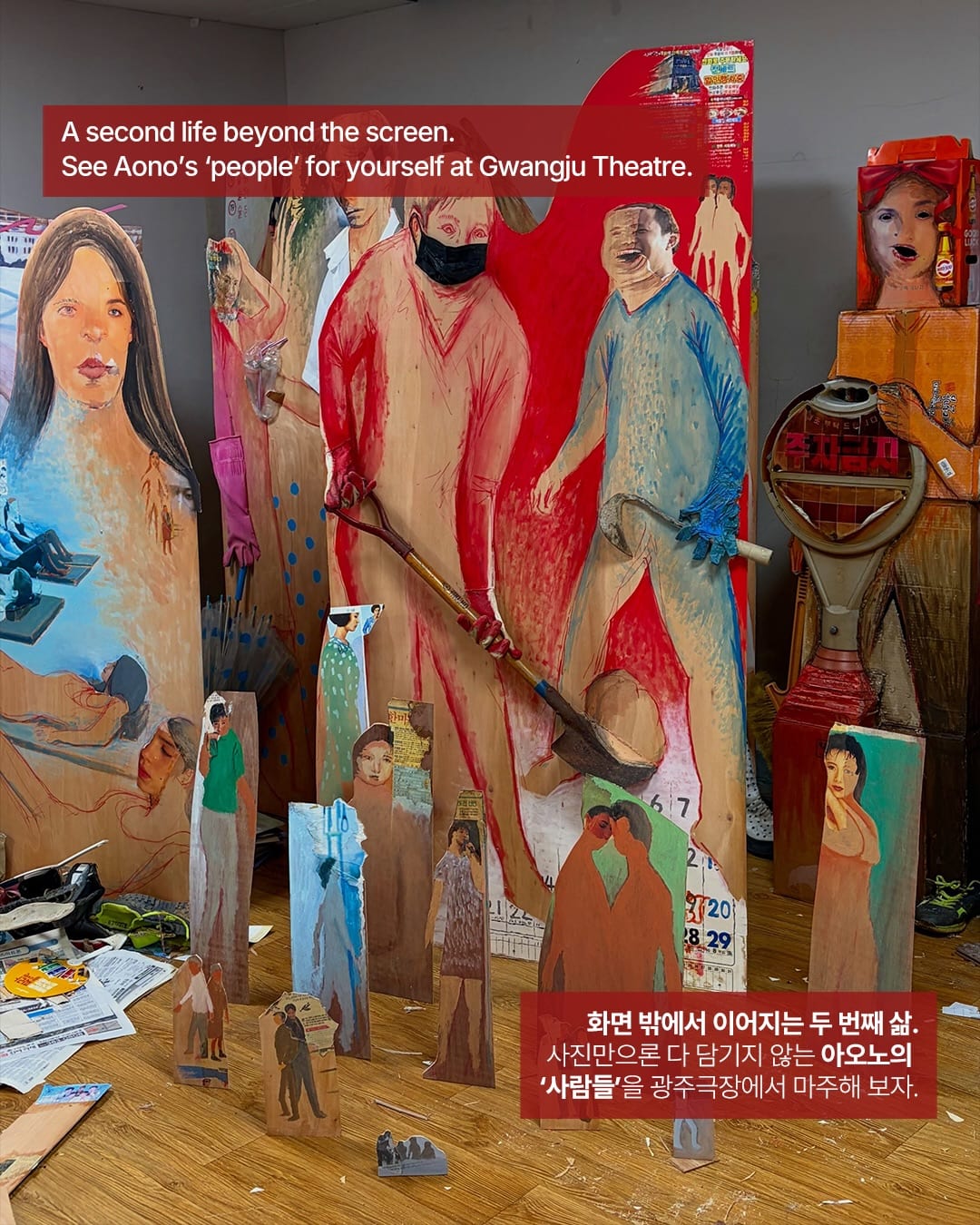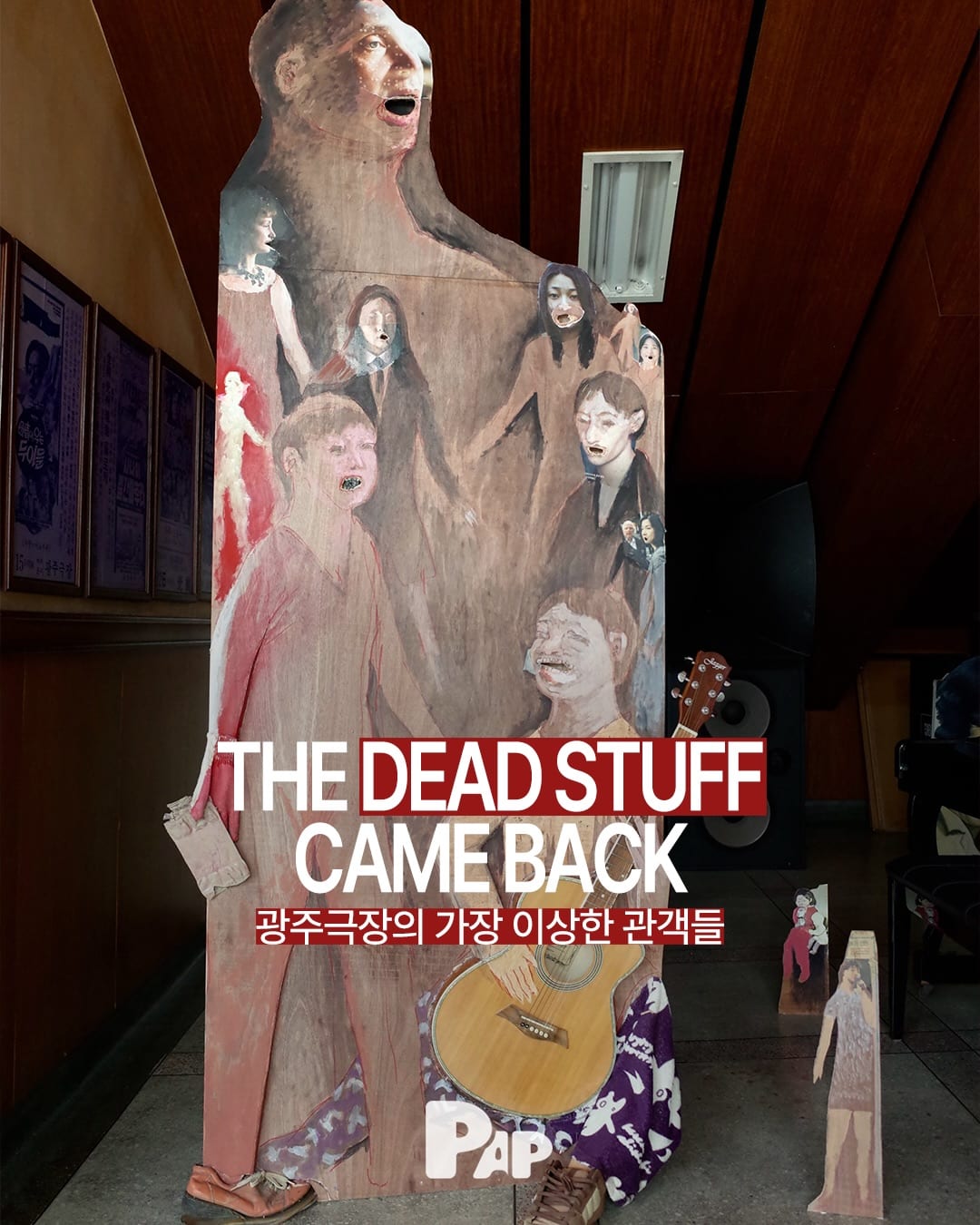
A 90-year-old cinema has some new regulars. Aono Fumiaki installed People of the Gwangju Theatre, 1935–2026 at Gwangju Theatre, which opened in 1935. Found objects and cinematic leftovers—old books, discarded film canisters, forgotten odds and ends—came together, growing arms, legs, and becoming 'people.' Trash turned into audience members.
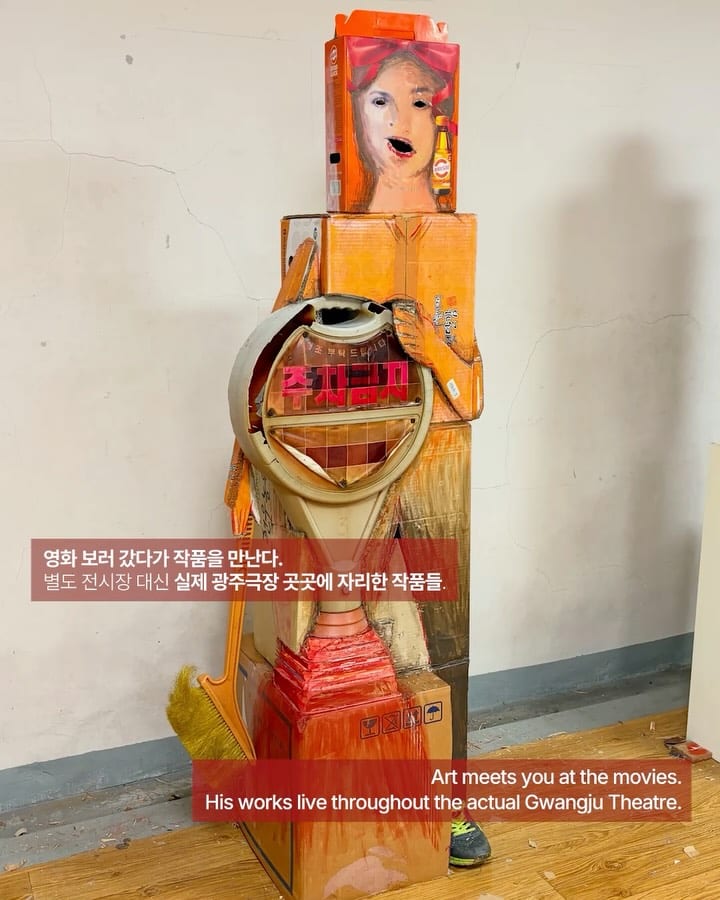
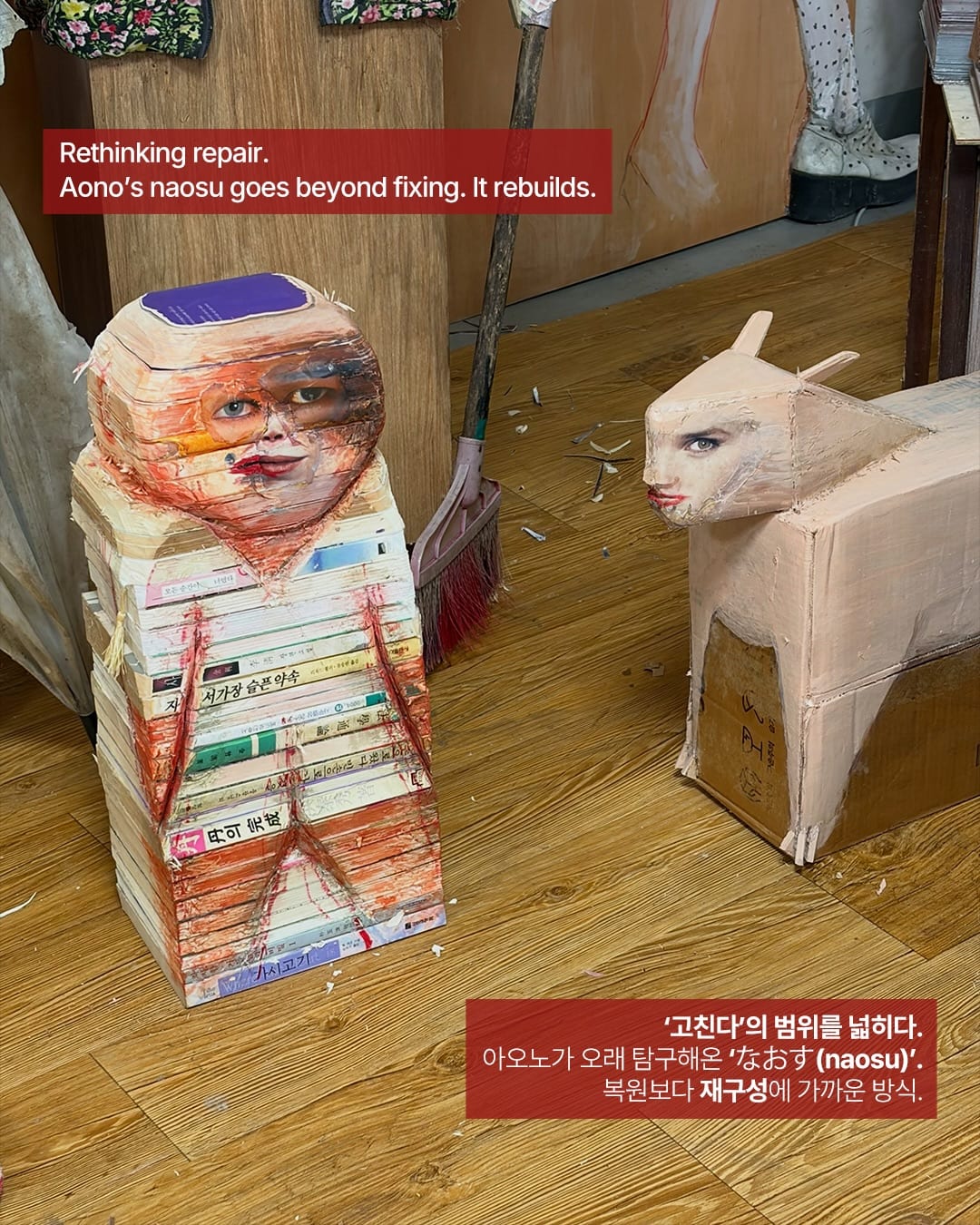
For Aono, repair isn't about going back. His 'naosu' (なおす) leans closer to rebuilding than restoration. Fragments meet, and bodies emerge that never existed before. One piece stacks dozens of worn books into a human shape, a painted face staring straight at visitors. Another combines orange film canisters and wiring scraps into a torso, with an old theatre sign embedded in its chest.
What's striking is how naturally these 'people' blend in with real moviegoers. They stand in lobby corners, sit by stairways, and wait along corridors. Audiences walking to their screening pause mid-step, noticing them. A book-person stands beside a wooden animal as if both are waiting for the show to start. Who decided one life was the limit?
Their second act, begun at Gwangju Theatre, continues today. Aono's works aren't exhibited—they inhabit the space. Visitors buy tickets, grab popcorn, and encounter these 'people' along the way. Can you witness the moment trash becomes audience?
For Aono, repair isn't about going back. His 'naosu' (なおす) leans closer to rebuilding than restoration. Fragments meet, and bodies emerge that never existed before. One piece stacks dozens of worn books into a human shape, a painted face staring straight at visitors. Another combines orange film canisters and wiring scraps into a torso, with an old theatre sign embedded in its chest.
What's striking is how naturally these 'people' blend in with real moviegoers. They stand in lobby corners, sit by stairways, and wait along corridors. Audiences walking to their screening pause mid-step, noticing them. A book-person stands beside a wooden animal as if both are waiting for the show to start. Who decided one life was the limit?
Their second act, begun at Gwangju Theatre, continues today. Aono's works aren't exhibited—they inhabit the space. Visitors buy tickets, grab popcorn, and encounter these 'people' along the way. Can you witness the moment trash becomes audience?