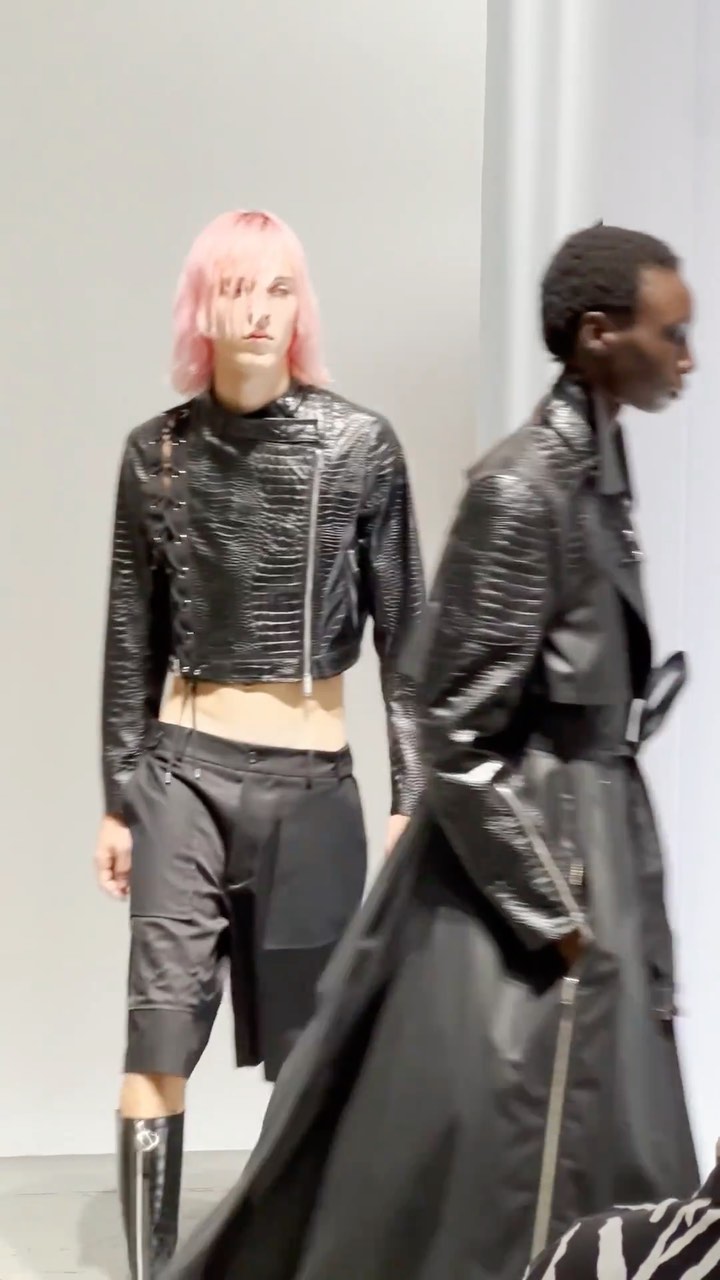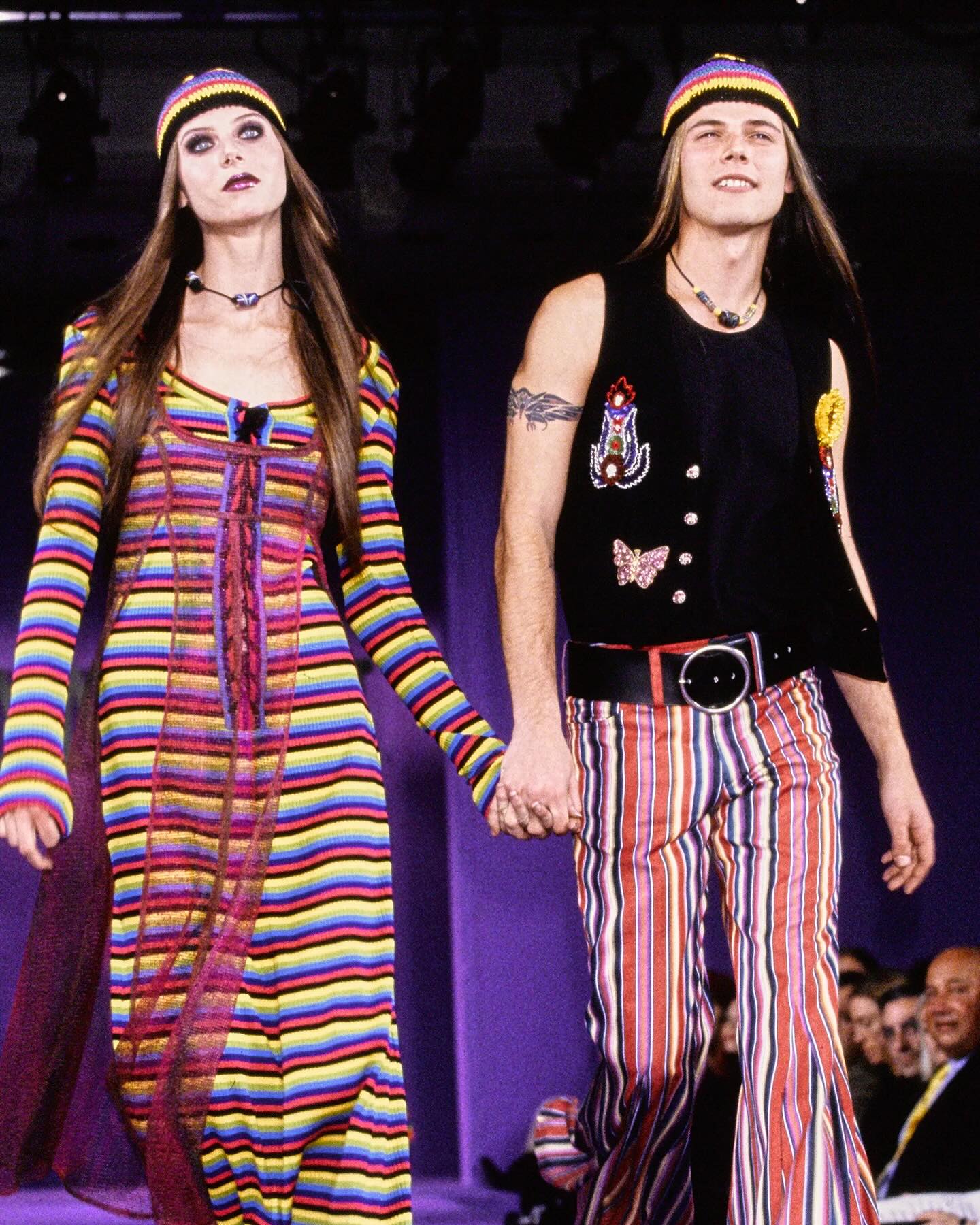
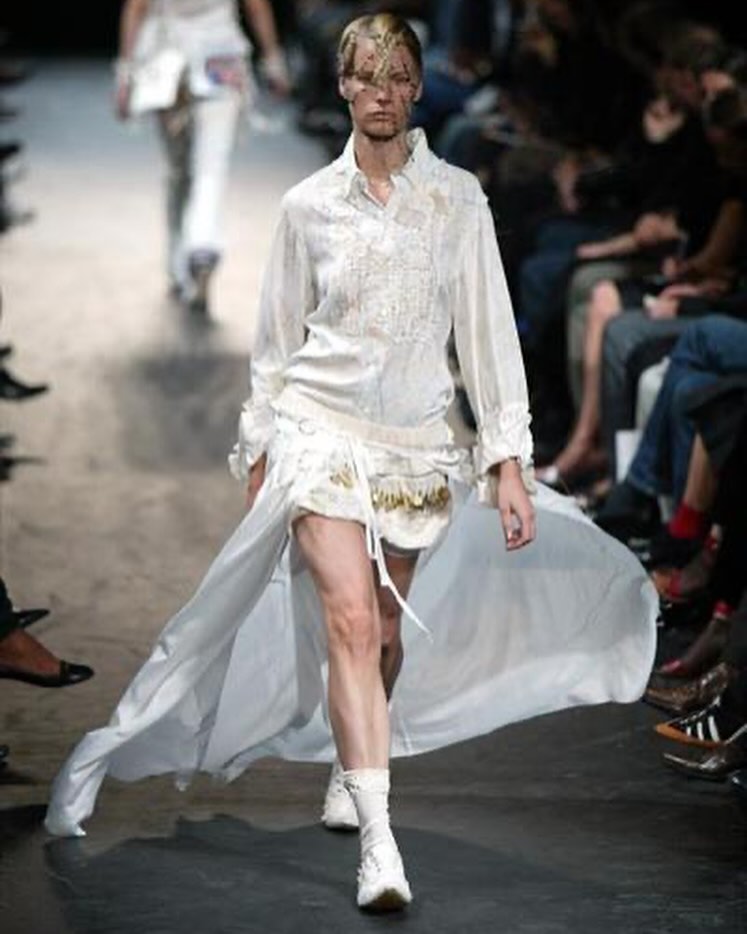
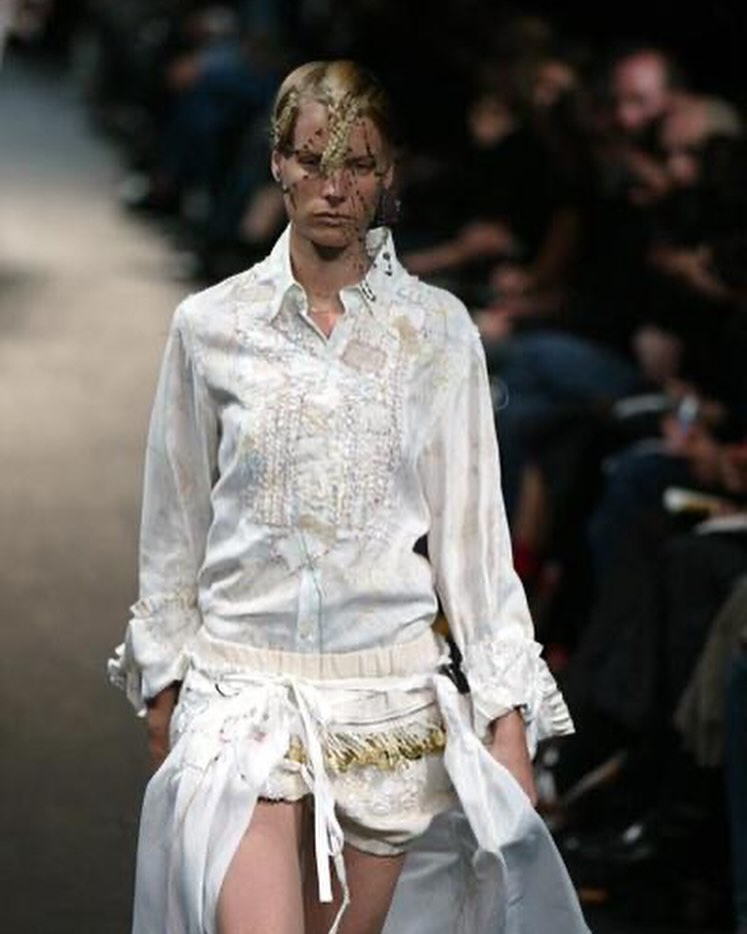
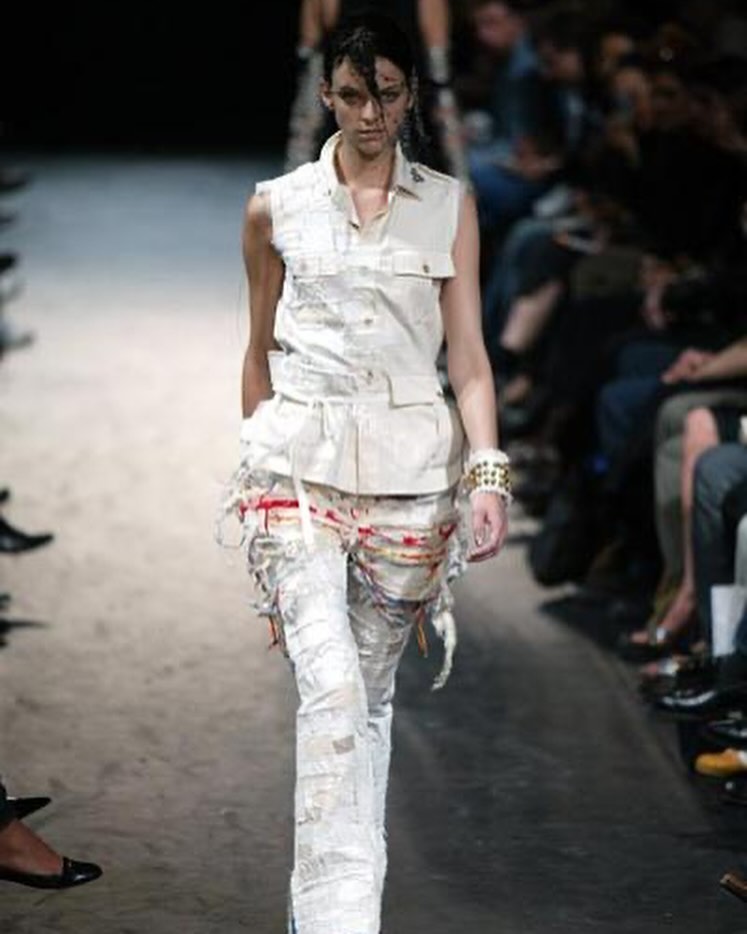
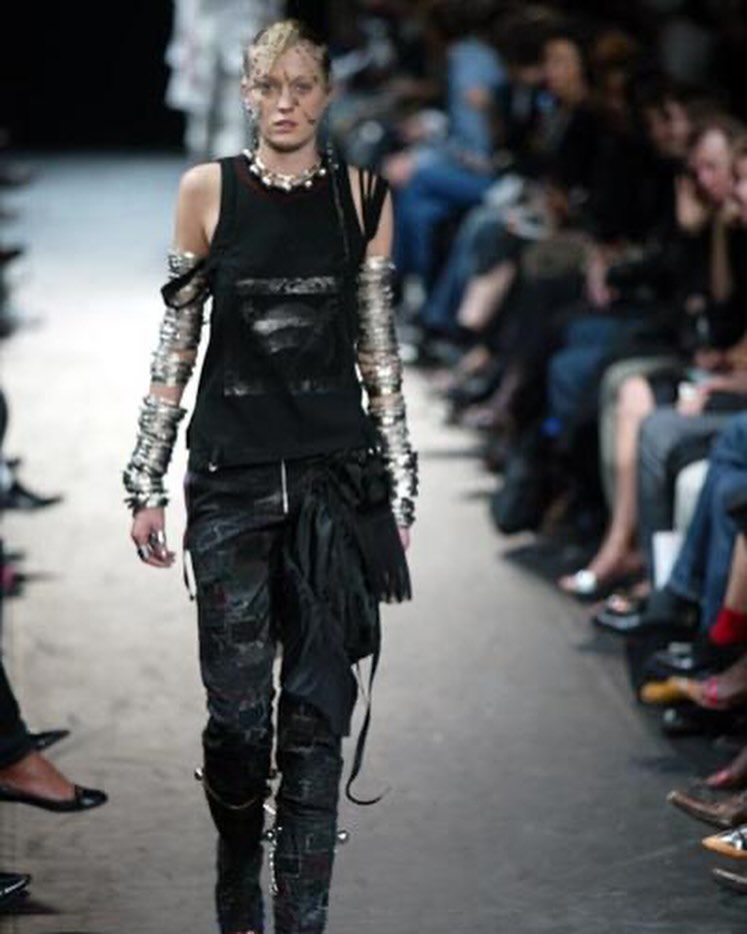
Undercover's Spring/Summer 2003 collection is widely regarded as one of the most avant-garde shows in the brand's history. Designer Jun Takahashi delivered a fresh shock to the fashion world by boldly merging intense rock funk spirit with ethnic mood, creating a collection that defied conventional boundaries.
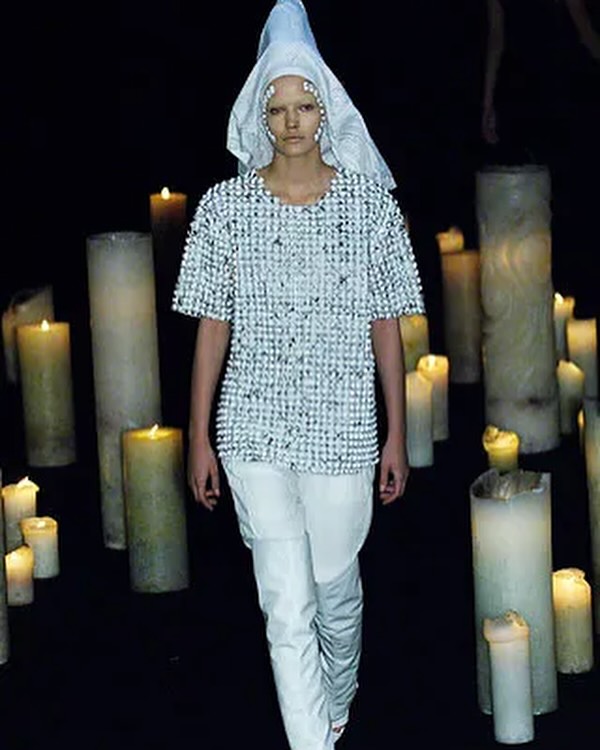
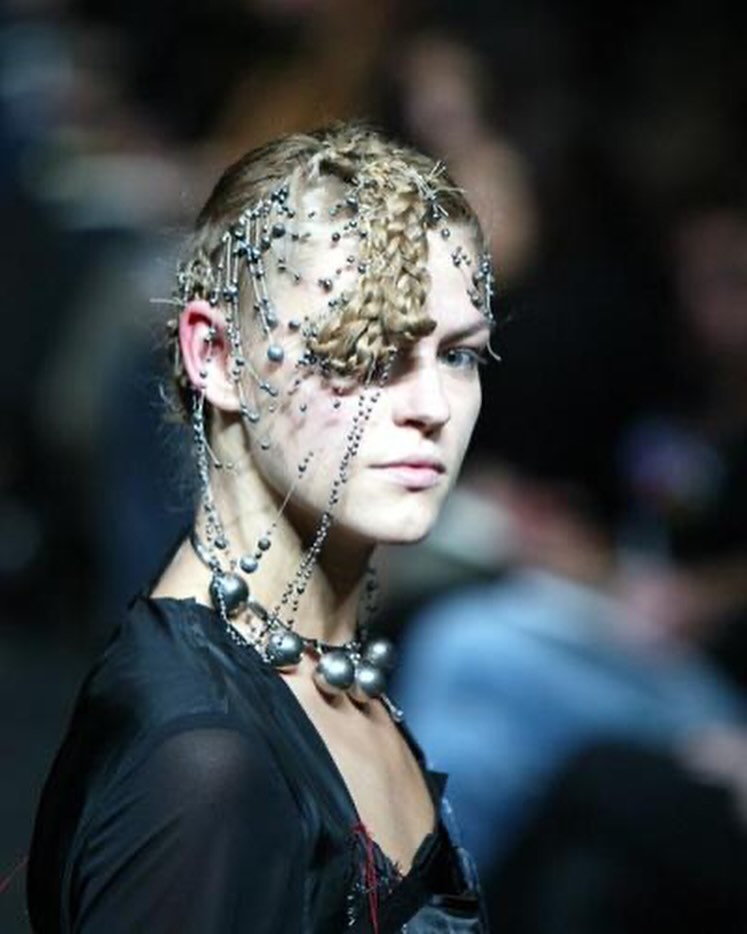
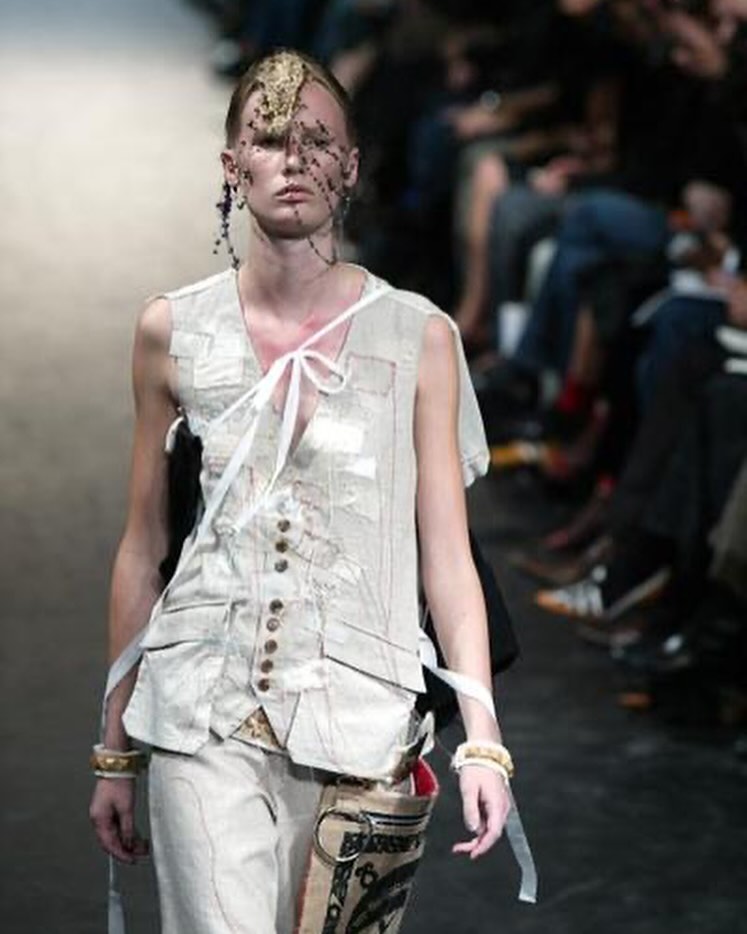
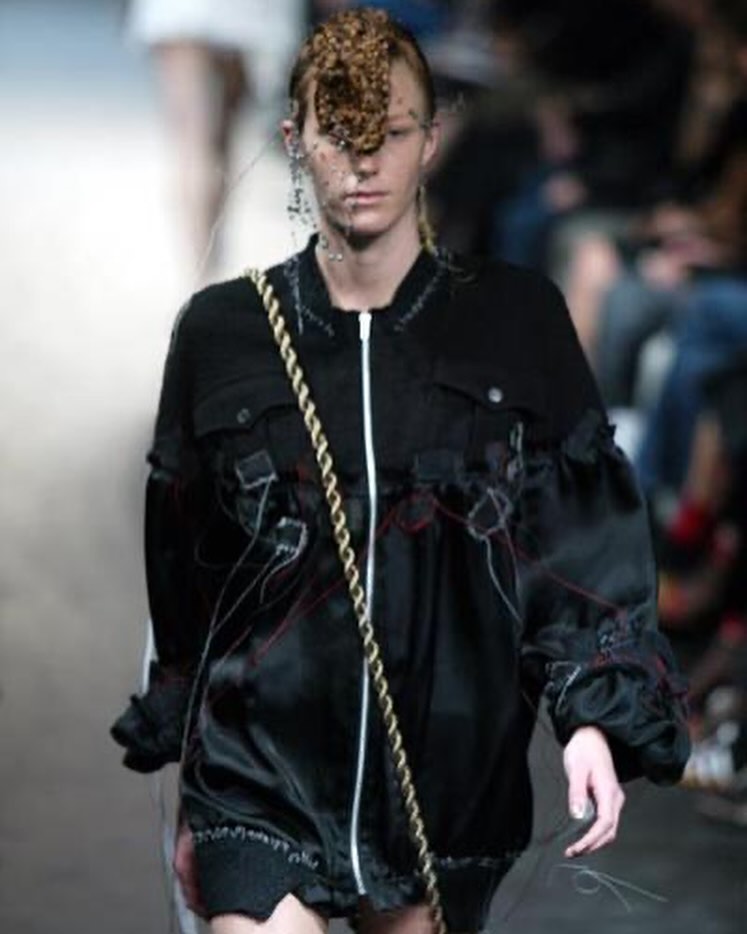
The most striking element of the collection was the bead-adorned headpieces. Encasing models' faces and heads like armor, the beaded ornaments transformed the wearer while expressing a dual nature that was both primitive and futuristic. These extreme accessories became iconic symbols of Undercover's experimental ethos and fearless design philosophy.
Takahashi received acclaim for harmoniously fusing complex styles by infusing rebellious rock funk energy with ethnic details throughout the collection. This wasn't merely clothing—it functioned as a cultural statement and a work of wearable art, serving as a pivotal moment that introduced the world to the creative power of early 2000s Japanese fashion.
Two decades later, Undercover's 2003 SS collection continues to be discussed among archive enthusiasts and fashion scholars, remaining a textbook example of avant-garde fashion that pushed boundaries and redefined what runway shows could communicate.
The most striking element of the collection was the bead-adorned headpieces. Encasing models' faces and heads like armor, the beaded ornaments transformed the wearer while expressing a dual nature that was both primitive and futuristic. These extreme accessories became iconic symbols of Undercover's experimental ethos and fearless design philosophy.
Takahashi received acclaim for harmoniously fusing complex styles by infusing rebellious rock funk energy with ethnic details throughout the collection. This wasn't merely clothing—it functioned as a cultural statement and a work of wearable art, serving as a pivotal moment that introduced the world to the creative power of early 2000s Japanese fashion.
Two decades later, Undercover's 2003 SS collection continues to be discussed among archive enthusiasts and fashion scholars, remaining a textbook example of avant-garde fashion that pushed boundaries and redefined what runway shows could communicate.
FAQ
What is the most distinctive design element of Undercover's 2003 Spring/Summer collection?
The beaded headpieces are most distinctive. Bead decorations wrapping models' faces and heads transform wearers like armor, expressing duality between primitive and futuristic aesthetics, representing Undercover's signature experimental spirit.
What styles did the Undercover 2003 SS collection combine?
It boldly combined intense rock-punk spirit with ethnic moods. Designer Jun Takahashi earned praise for harmoniously fusing complex styles by placing ethnic details throughout the rebellious energy of rock-punk.
Why is the Undercover 2003 SS collection important in fashion history?
It's regarded as the brand's most avant-garde show, becoming a catalyst for introducing early-2000s Japanese fashion creativity worldwide. Even twenty years later, it's cited among archive enthusiasts and fashion researchers as a textbook example of avant-garde fashion.