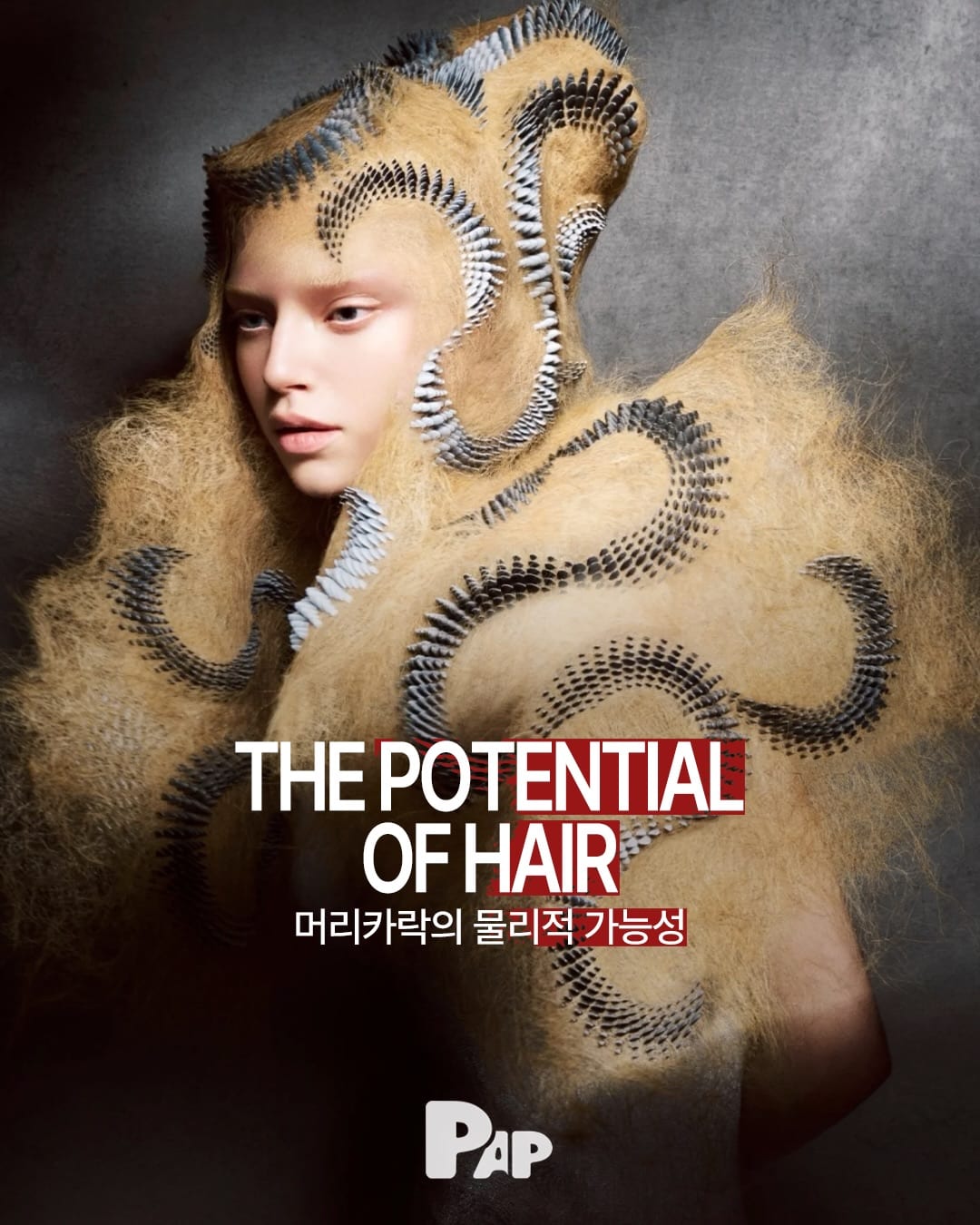
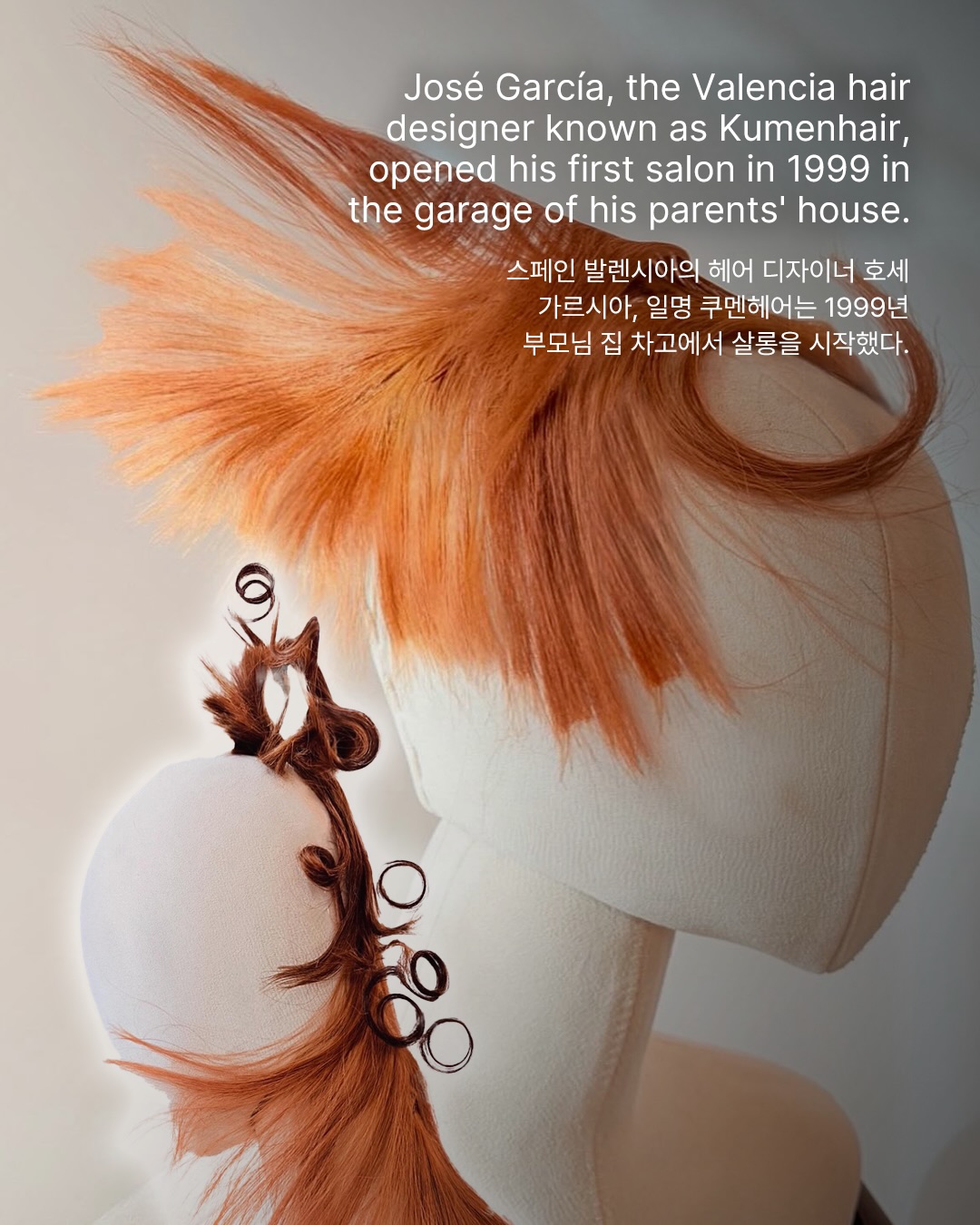
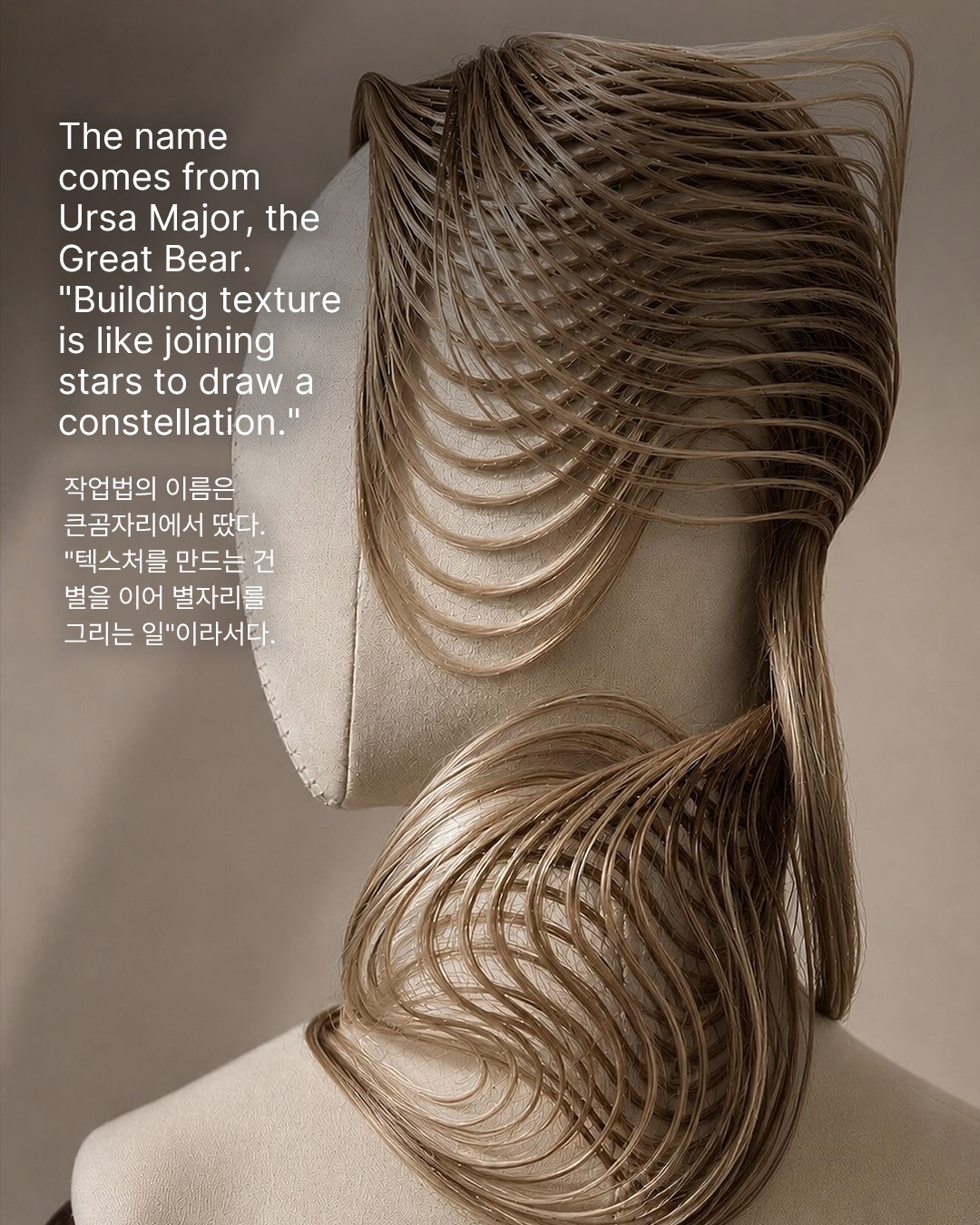
José García, the Valencia hair designer known as Kumenhair, opened his salon in 1999 in the garage of his parents' house. He has won the Avant-Garde category of Spain's Figaro Awards two years running, and taken the Visionary Award at London's Alternative Hair Show. His technique UMA, which sets hair rigid and builds it into geometric forms, was perfected late at night in the salon, making the tools by hand with his partner. The name comes from Ursa Major, the Great Bear.
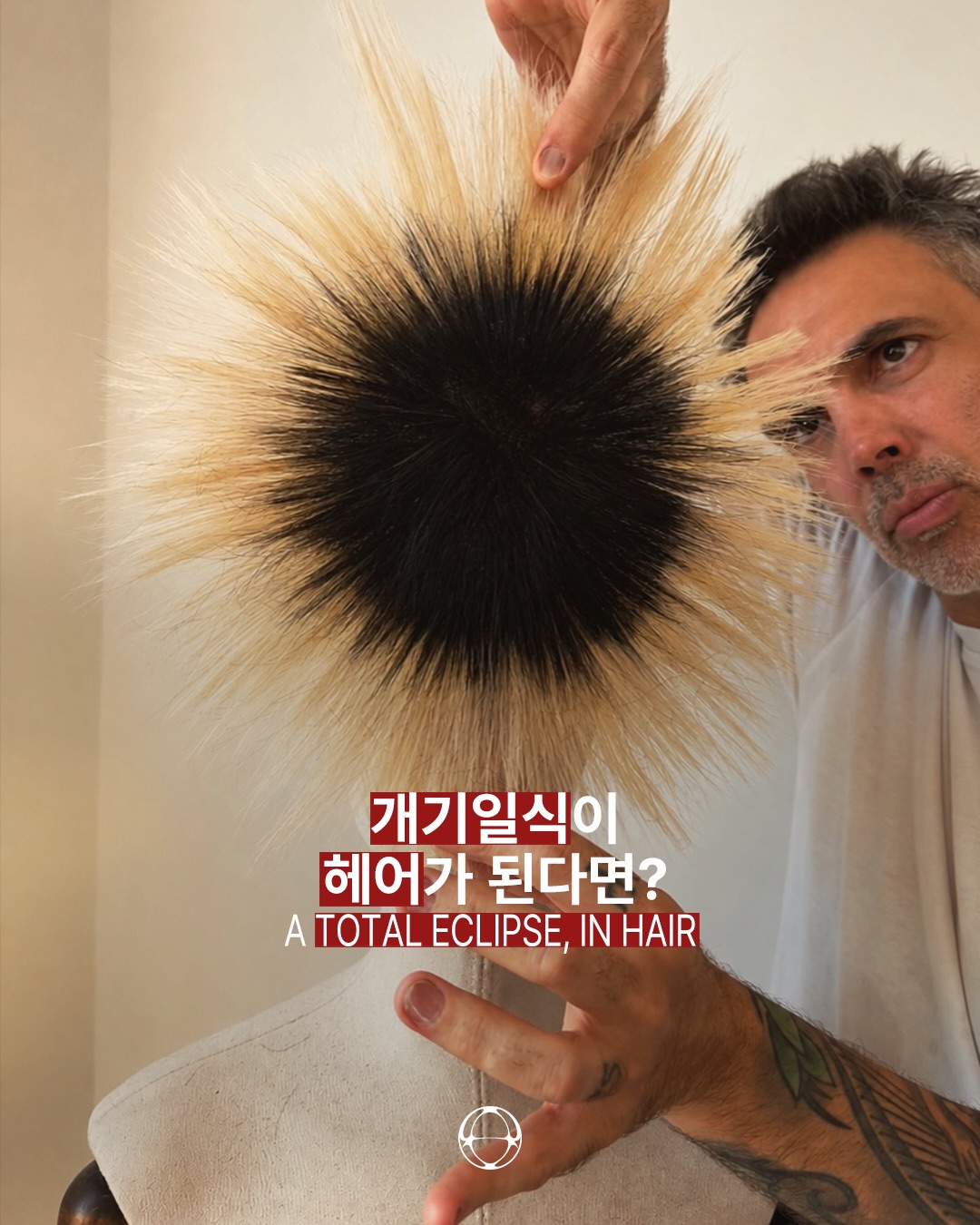
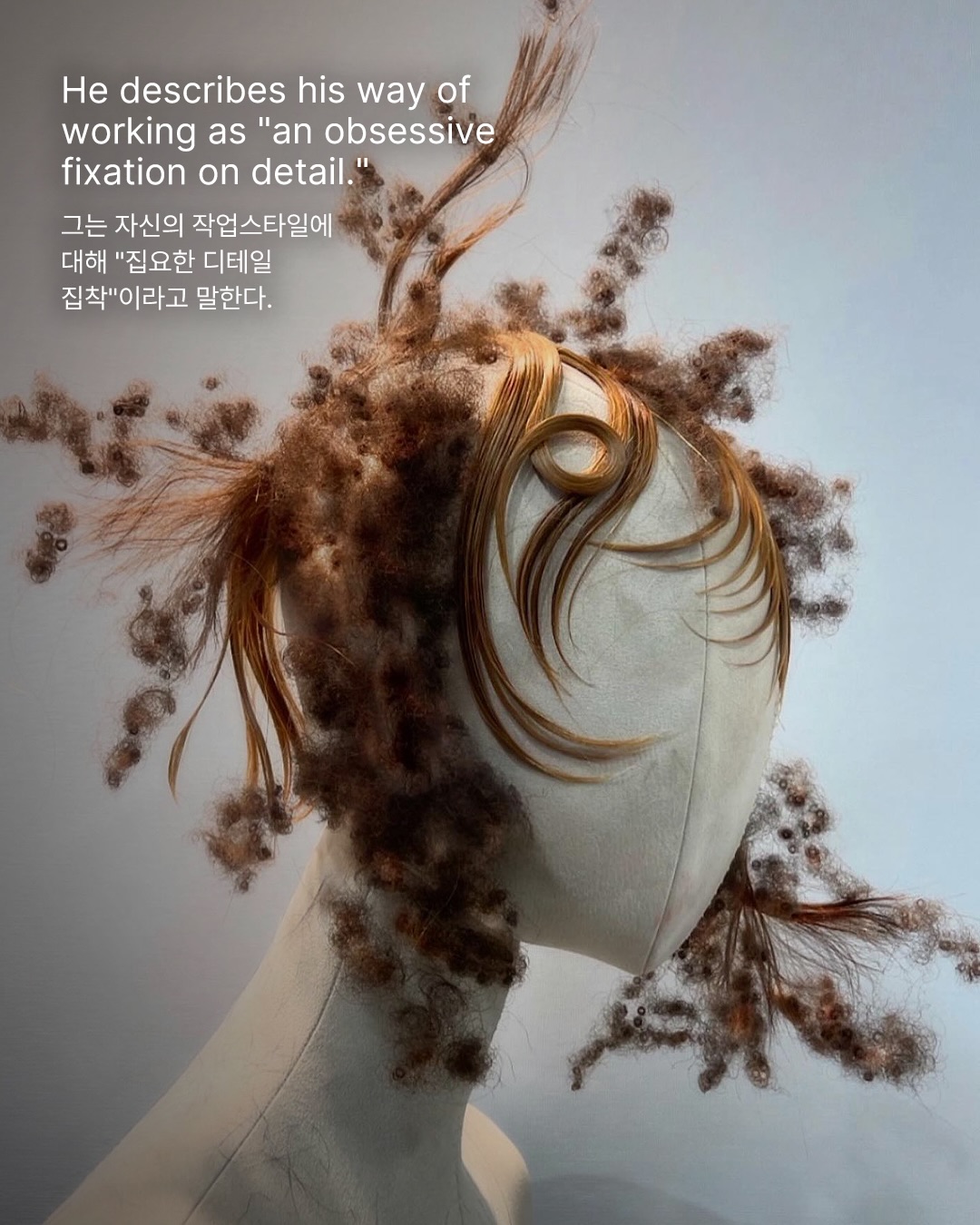
In the first image, blonde strands radiate from a black centre like the corona of a total solar eclipse. Building texture, he says, is like joining stars to draw a constellation. The second slide shows an orange-to-brown gradient work in which tones of hair wrap in layers, forming an organic sculpture. Each strand is fixed, yet the whole looks alive.
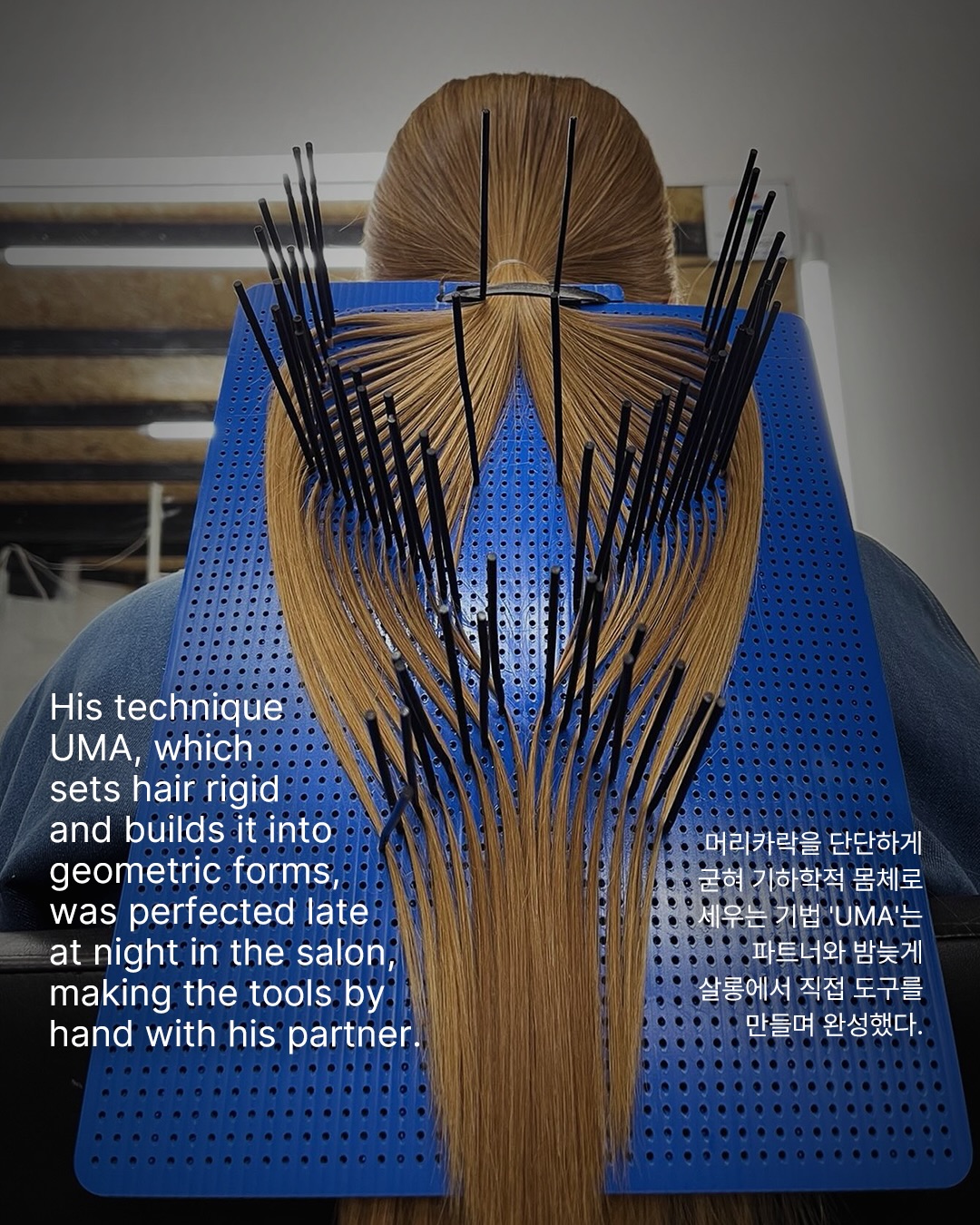
The third image reveals the UMA process. On a blue perforated board, long blonde hair is spread in a fan, black pins driven in at radiating angles. The hair is bound tight at the centre, each strand fanned at a set degree and set stiff. This framework becomes the skeleton of the final piece. Not a treatment but a sculptural procedure.
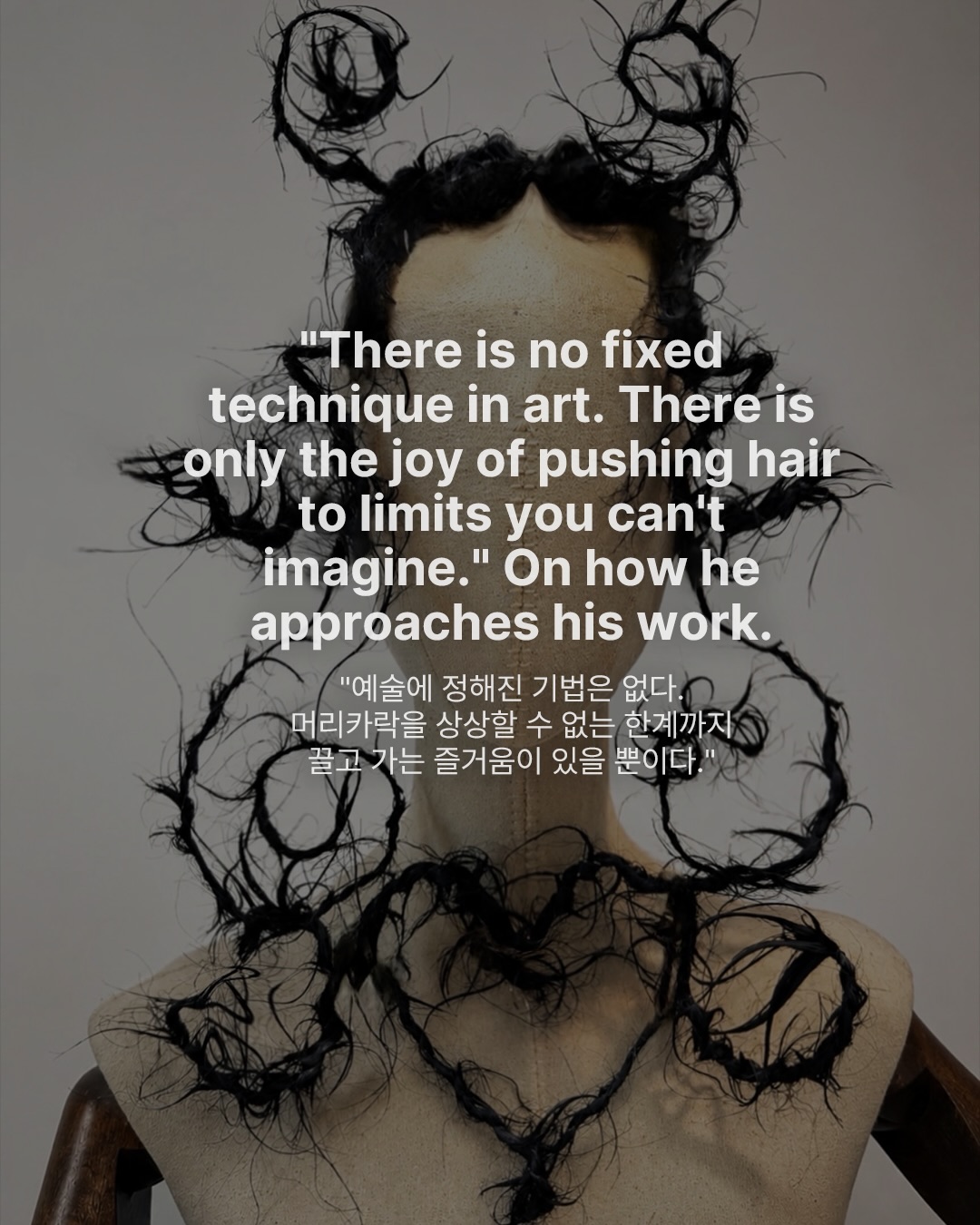
He describes his way of working as "an obsessive fixation on detail." Asked for his secret, the answer runs the same way. "Work, consistency, and sometimes a pathological perfectionism. Not stopping until the idea in my head is standing in front of me." Yet there is no set method. "There is no fixed technique in art. There is only the joy of pushing hair to limits you can't imagine."
The fourth slide shows layered waves of brown hair, like contour lines on a map or the rings of a tree, building depth through repetition. Not hair but sculpture; not head but form. How far do you think hair can be pushed.
In the first image, blonde strands radiate from a black centre like the corona of a total solar eclipse. Building texture, he says, is like joining stars to draw a constellation. The second slide shows an orange-to-brown gradient work in which tones of hair wrap in layers, forming an organic sculpture. Each strand is fixed, yet the whole looks alive.
The third image reveals the UMA process. On a blue perforated board, long blonde hair is spread in a fan, black pins driven in at radiating angles. The hair is bound tight at the centre, each strand fanned at a set degree and set stiff. This framework becomes the skeleton of the final piece. Not a treatment but a sculptural procedure.
He describes his way of working as "an obsessive fixation on detail." Asked for his secret, the answer runs the same way. "Work, consistency, and sometimes a pathological perfectionism. Not stopping until the idea in my head is standing in front of me." Yet there is no set method. "There is no fixed technique in art. There is only the joy of pushing hair to limits you can't imagine."
The fourth slide shows layered waves of brown hair, like contour lines on a map or the rings of a tree, building depth through repetition. Not hair but sculpture; not head but form. How far do you think hair can be pushed.
FAQ
What is Coomen Hair's UMA technique?
UMA is a technique that hardens hair into geometric, sculptural forms. Spanish hair designer José García from Valencia developed it late nights in his salon, crafting tools by hand with his partner. The name derives from Ursa Major.
What awards has José García won?
José García won Spain's Figaro Award in the Avant-Garde category two consecutive years and received the Visionary Award at London's Alternative Hair Show. He began his salon in his parents' garage in 1999 and became internationally acclaimed.
What characterizes Coomen Hair's work?
Coomen Hair treats hair like sculpture, creating geometric, three-dimensional forms. García describes his style as 'obsessive attention to detail', saying he doesn't stop until the idea in his head stands before his eyes.