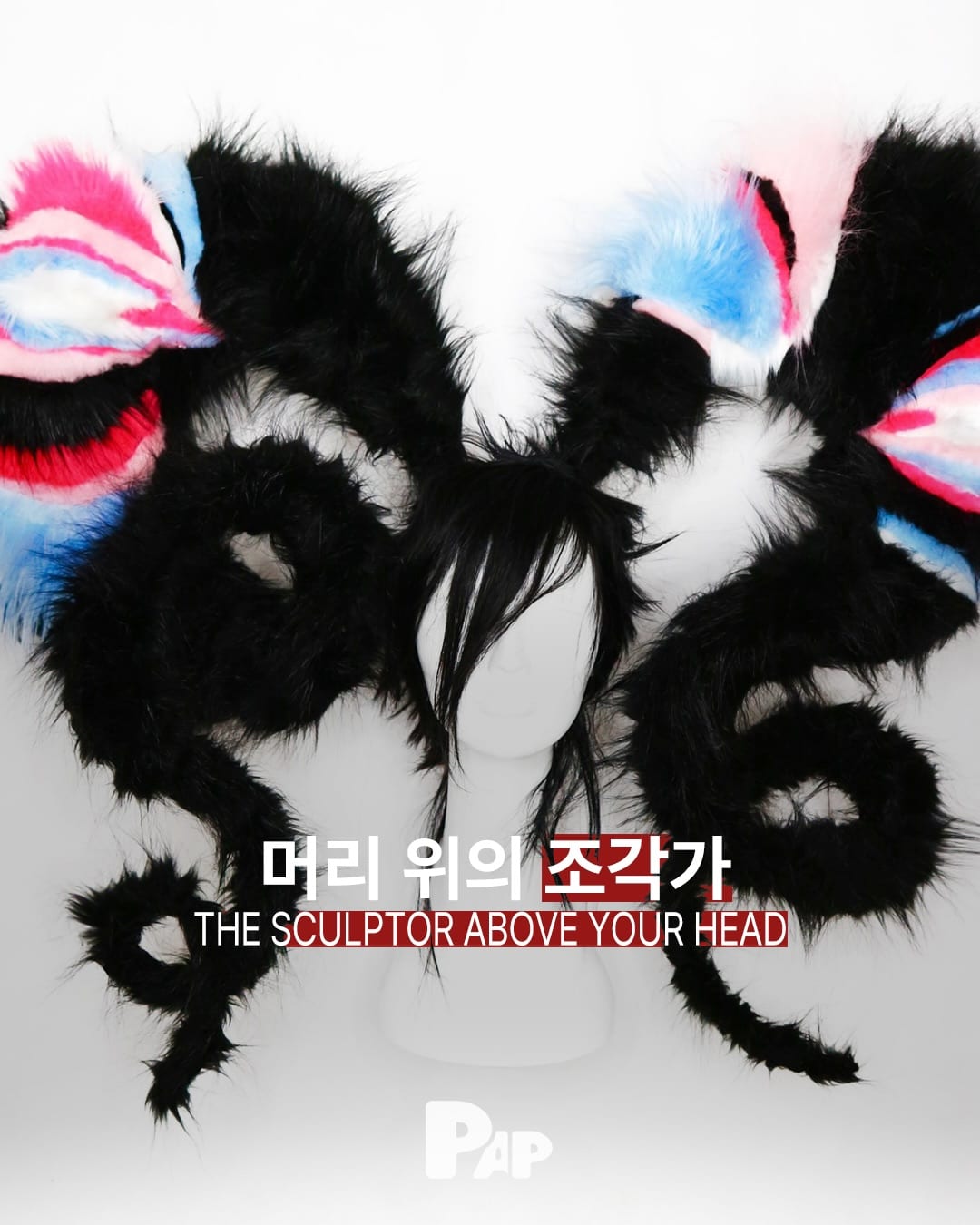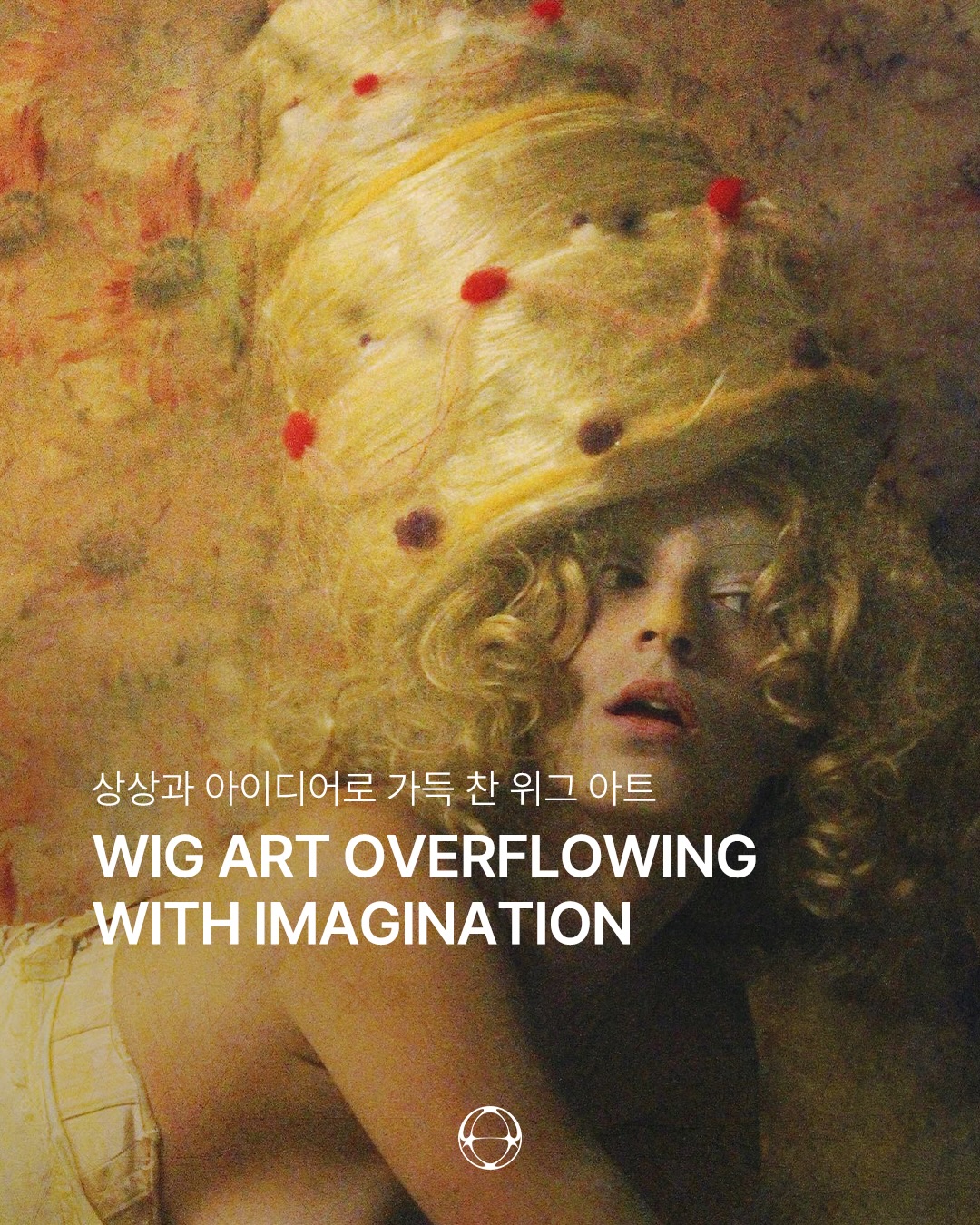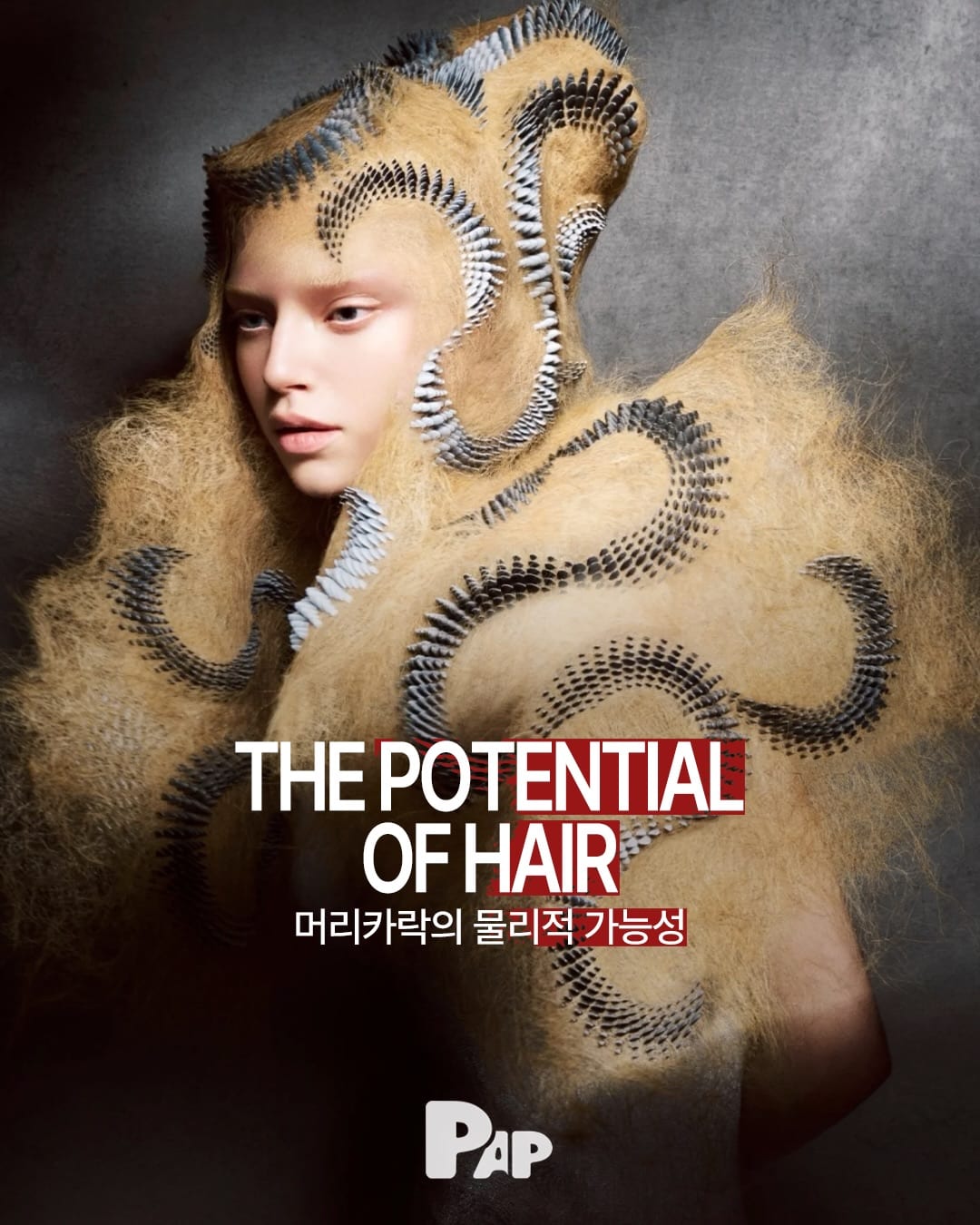
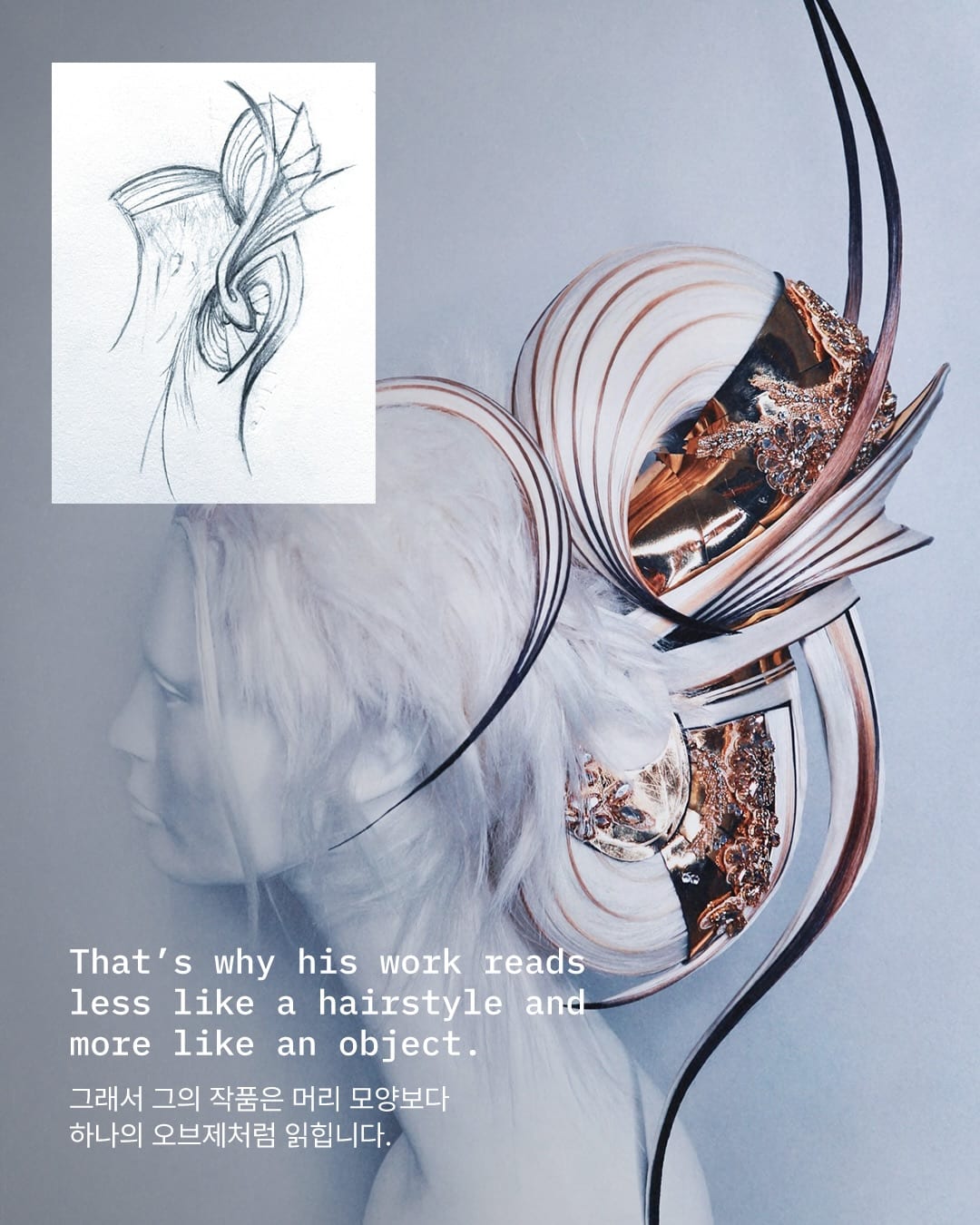
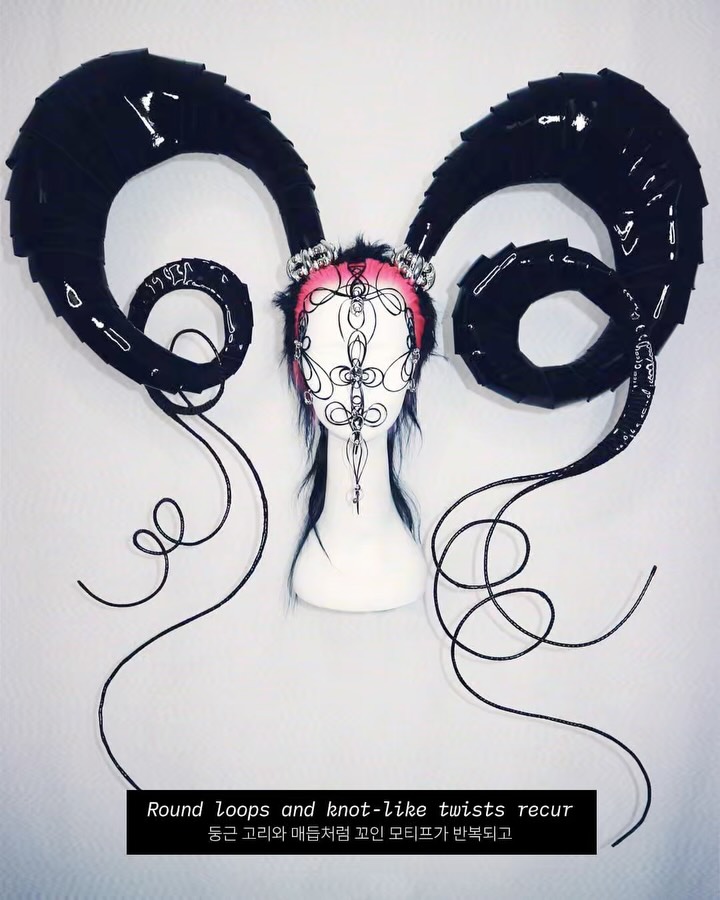
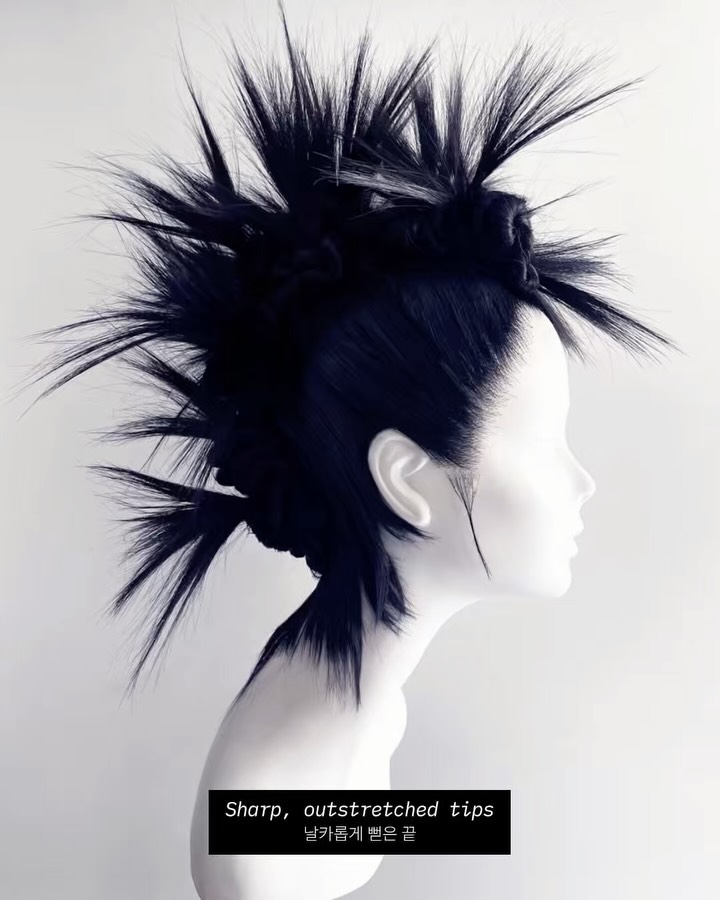
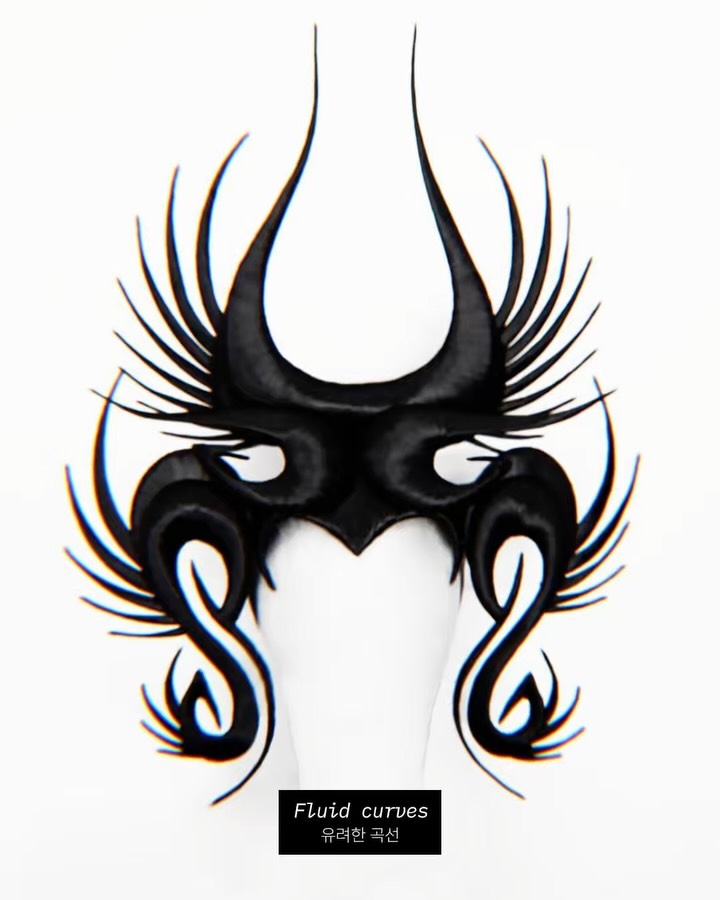
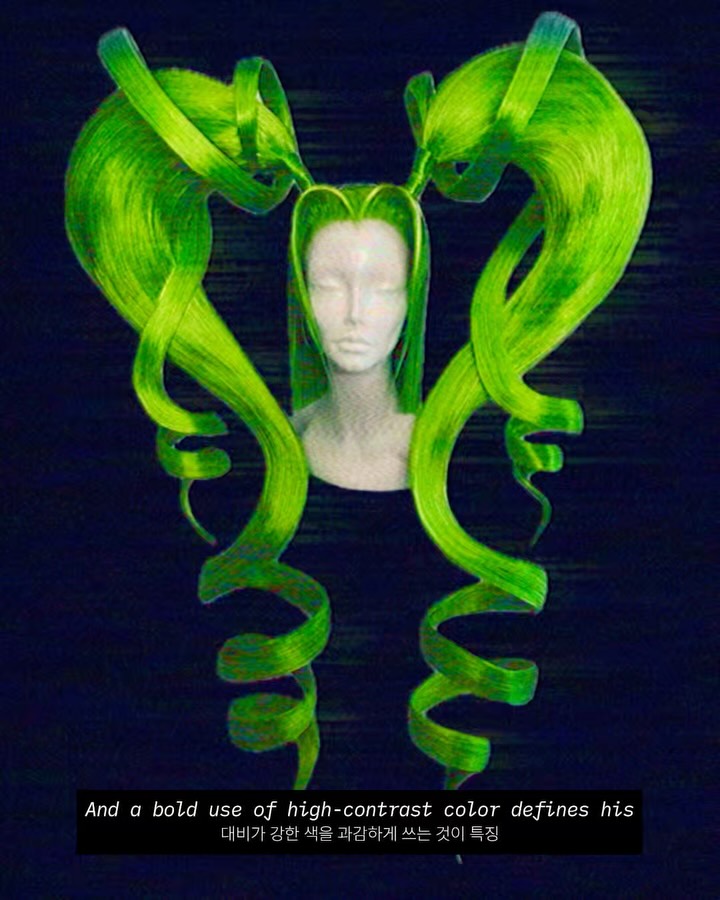
That's why his work reads less like a hairstyle and more like an object. Round loops and knot-like twists recur throughout. Sharp, outstretched tips collide with fluid curves within a single piece. Another hallmark is his bold use of high-contrast color, like hot pink with blonde or sky blue with black. Color and form take center stage.
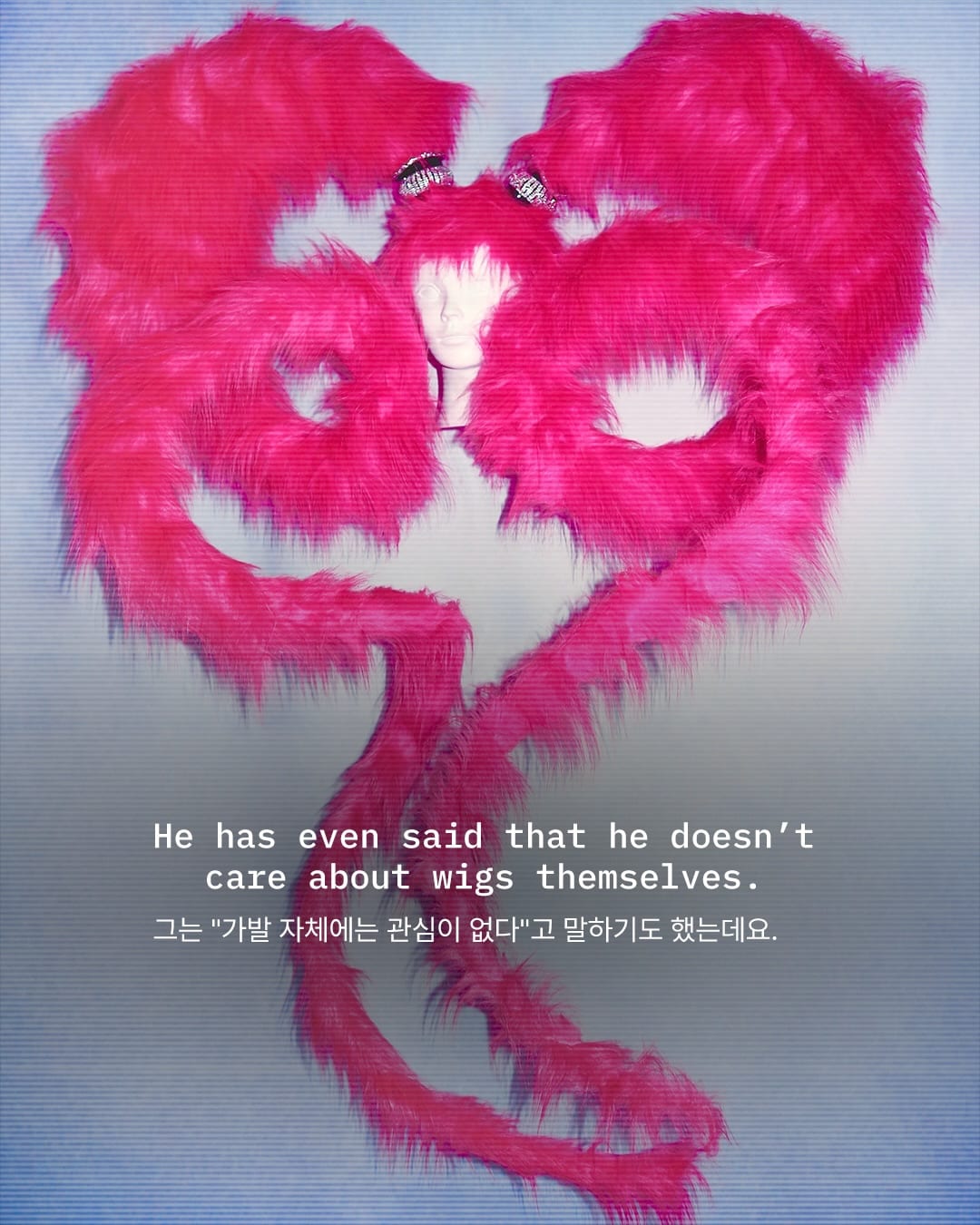
His work holds architectural structure. The wig in the first image features pink, blue, white and black feathers extending irregularly. The piece in the second image weaves a black structure, pink hair and orange tubes into a mechanical silhouette. The hot pink wig in the third image is arranged like a frame surrounding the face. Each piece is presented with a sketch, showing the process from conception to realization.
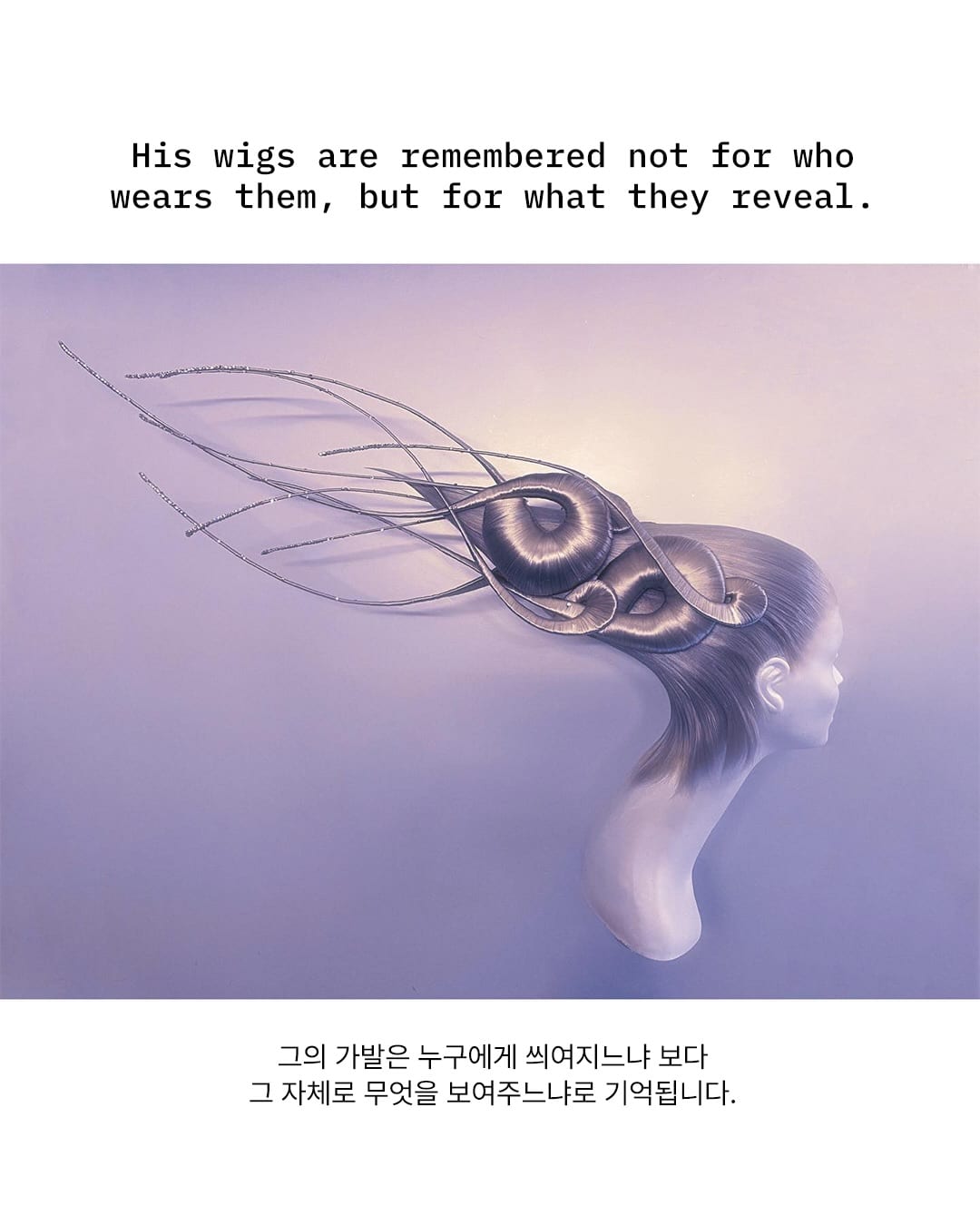
Santens's wigs are remembered not for who wears them, but for what they reveal. Because they are sculptures, not hairstyles. Hair becomes material, and wigs become canvas. Work where shape and color are the protagonists. How do you read these sculptures?
FAQ
Who is Jean-Baptiste Santens?
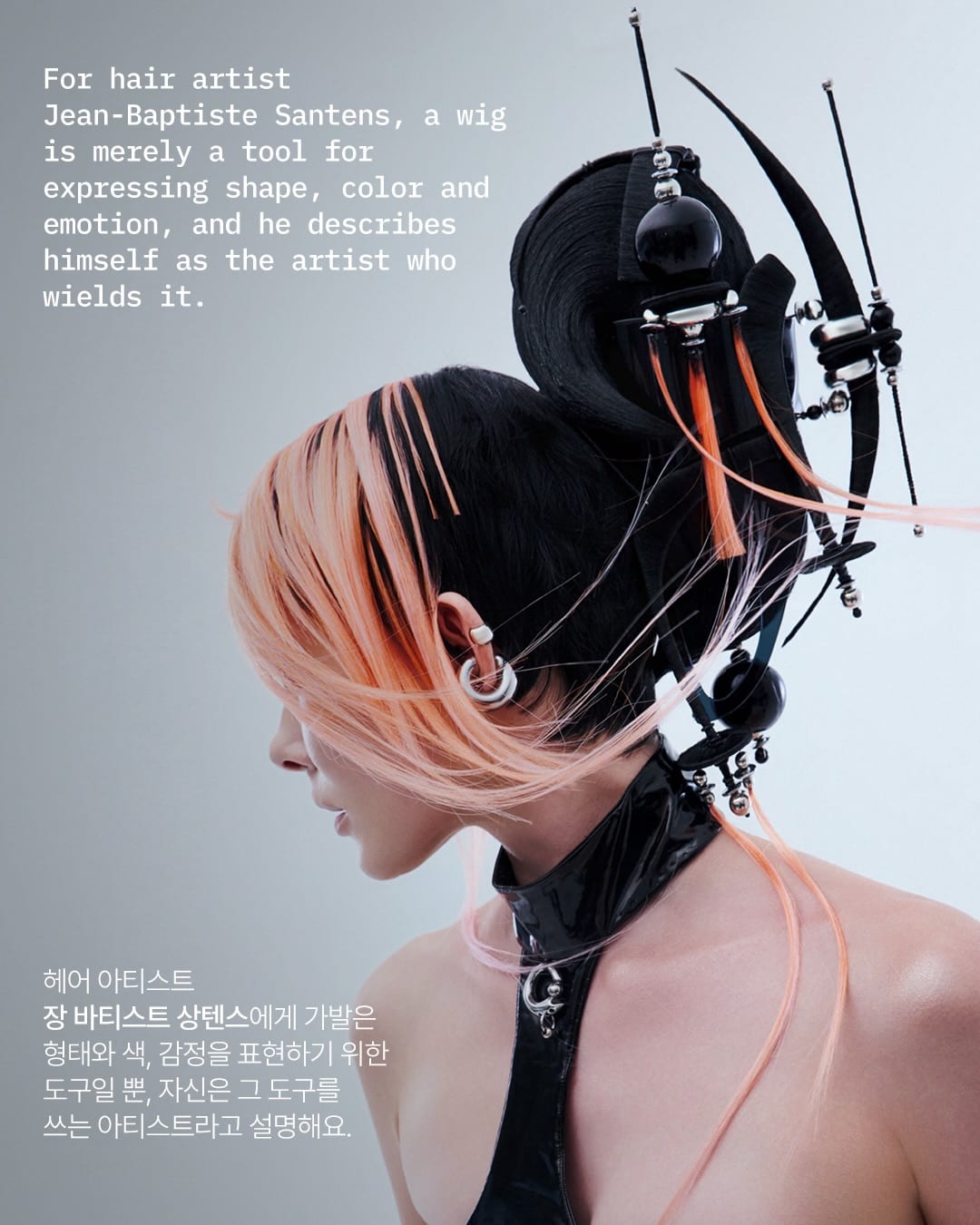
Jean-Baptiste Santens is a Paris-based hair artist who uses wigs as sculptural material to create works worn on the head. He views them as tools for expressing form, color, and emotion, featuring rounded loops, knotted motifs, and bold color contrasts like hot pink and black.
What characterizes Jean-Baptiste Santens' work?
His pieces lean closer to objet d'art than hairstyle. Rounded loops and twisted, knotted motifs recur, while sharp edges collide with flowing curves. He fearlessly deploys high-contrast palettes—hot pink and blonde, sky blue and black—resulting in architecturally structured sculptures.
How does Jean-Baptiste Santens view wigs?
He claims no interest in wigs themselves. Wigs are merely tools for expressing form, color, and emotion; he is the artist who wields them. His work is remembered for what it conveys, not who wears it.