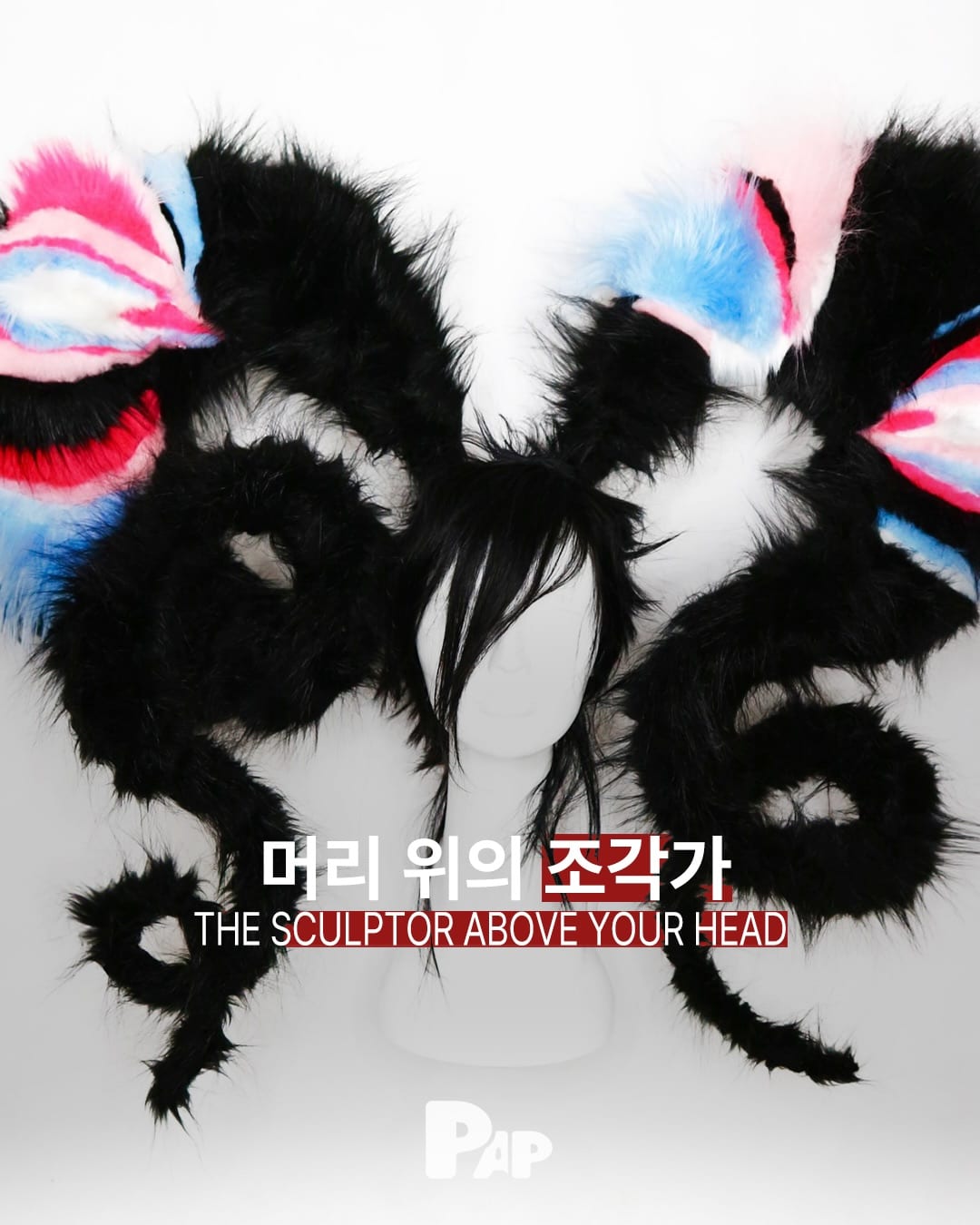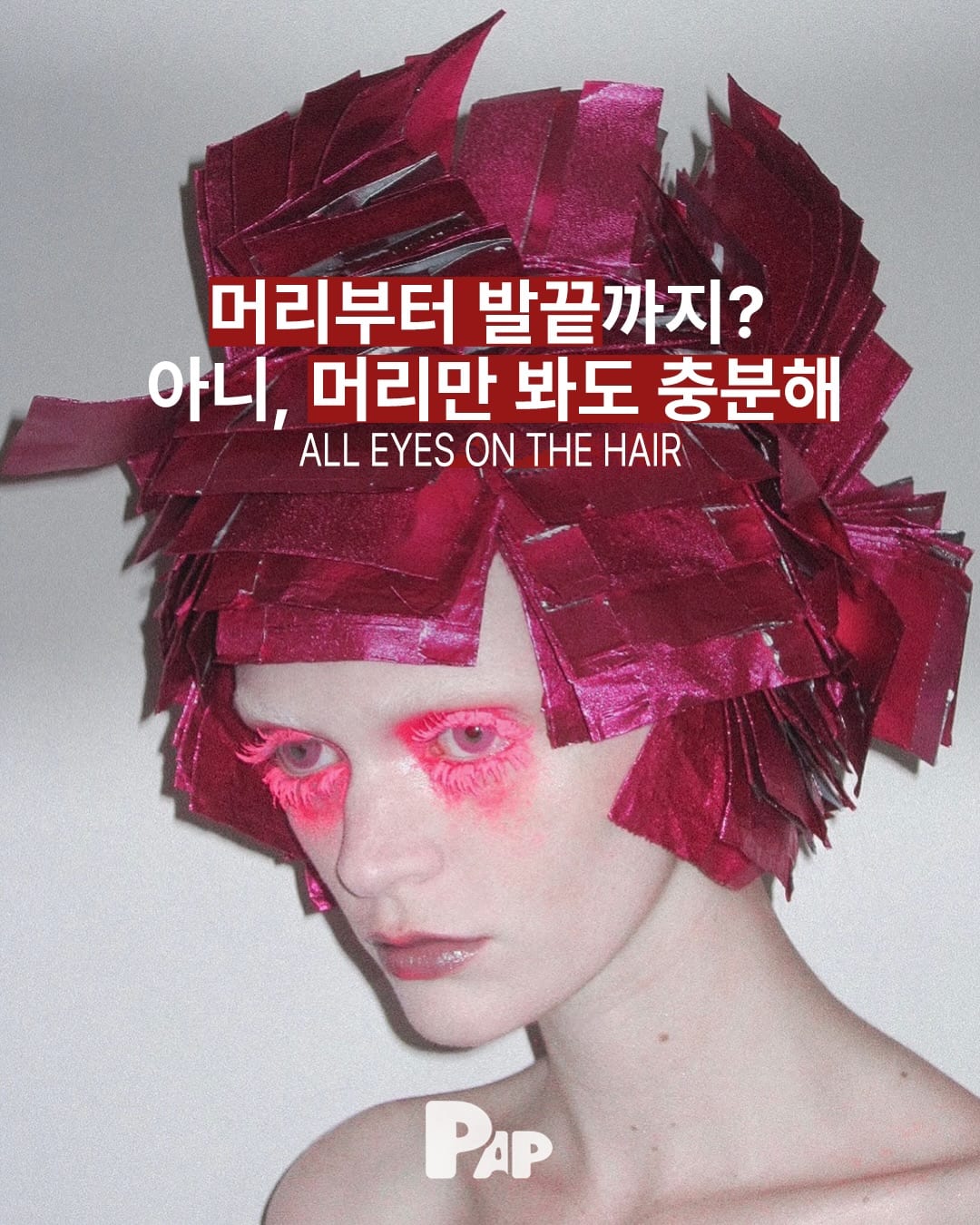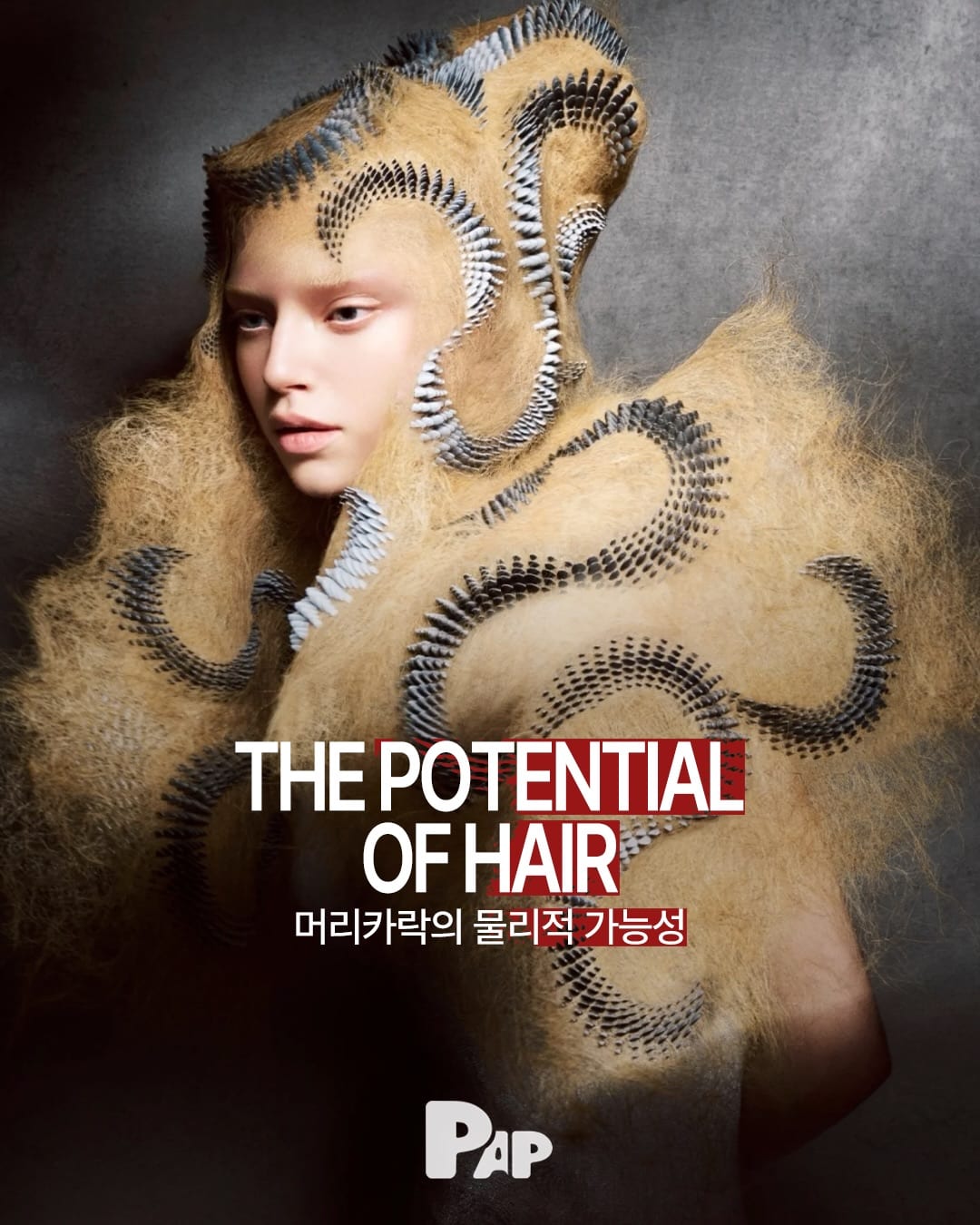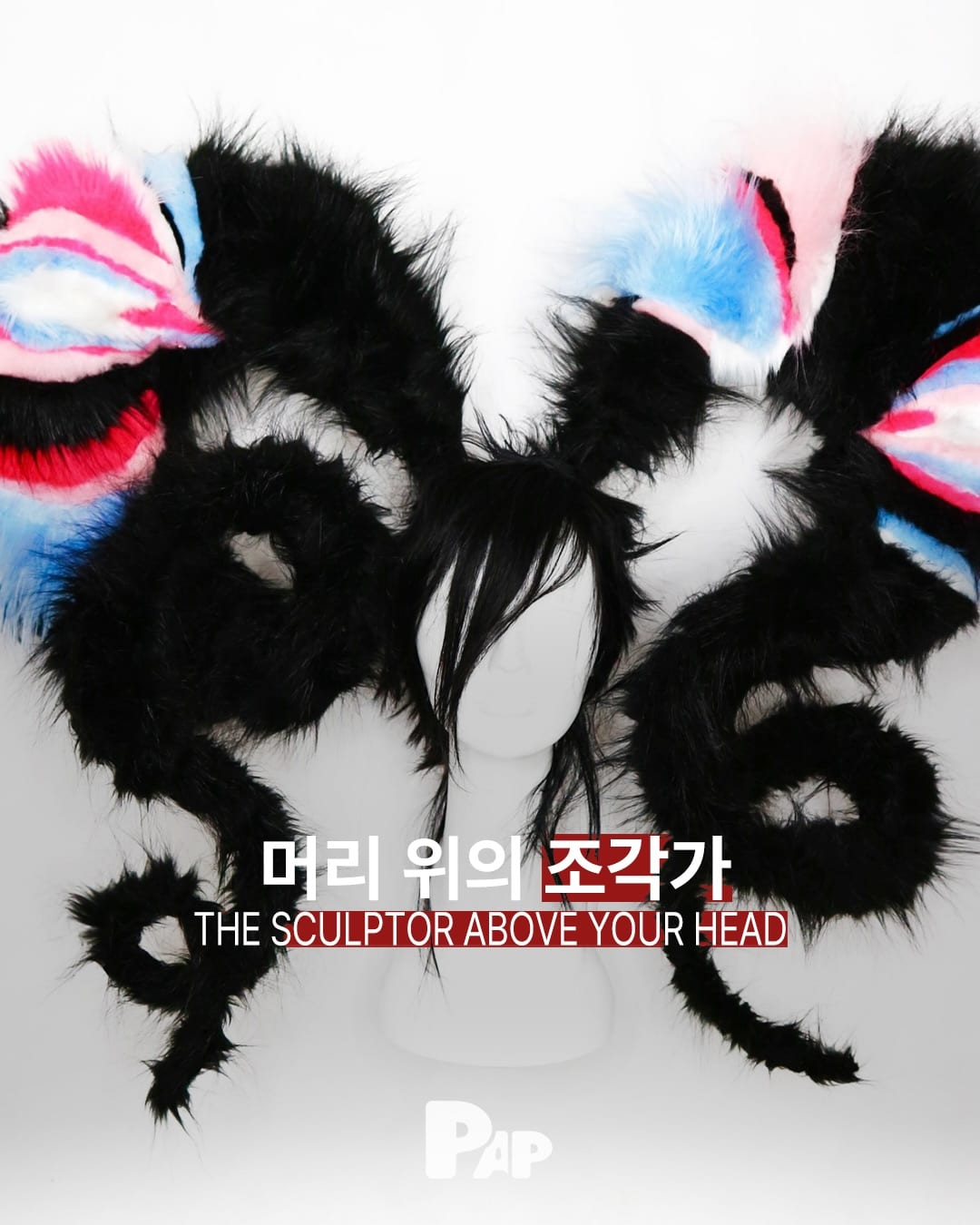
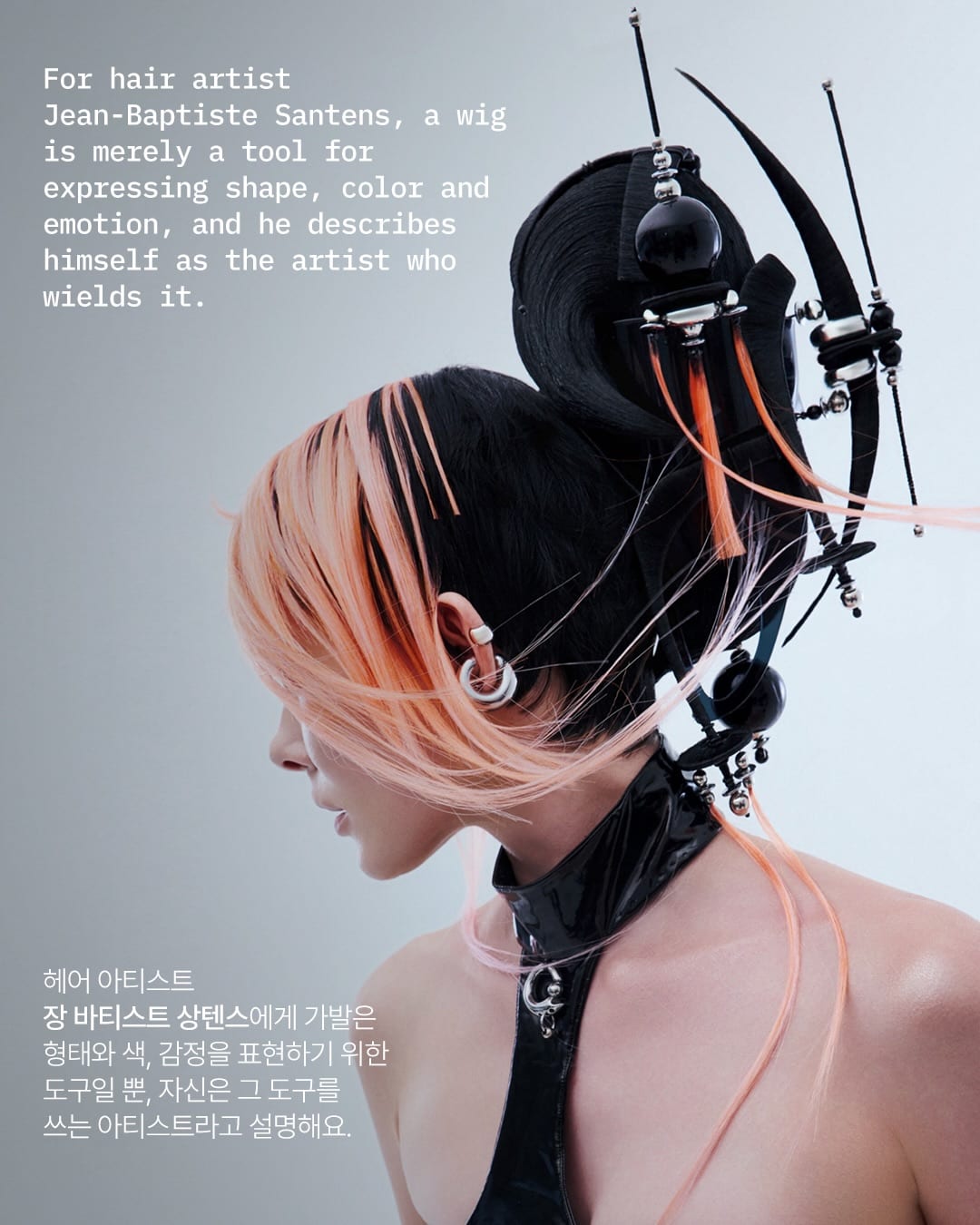
Paris-based hair artist Jean-Baptiste Santens treats hair as sculptural material. Loops curled like rings, silhouettes that defy gravity, graphics lifted from a checkerboard pattern unfold on his wigs. They are not the finishing touch of a styling session but works mounted atop the head. A wig is merely a tool for expressing shape, color and emotion, he says. He positions himself as the artist who wields that tool.
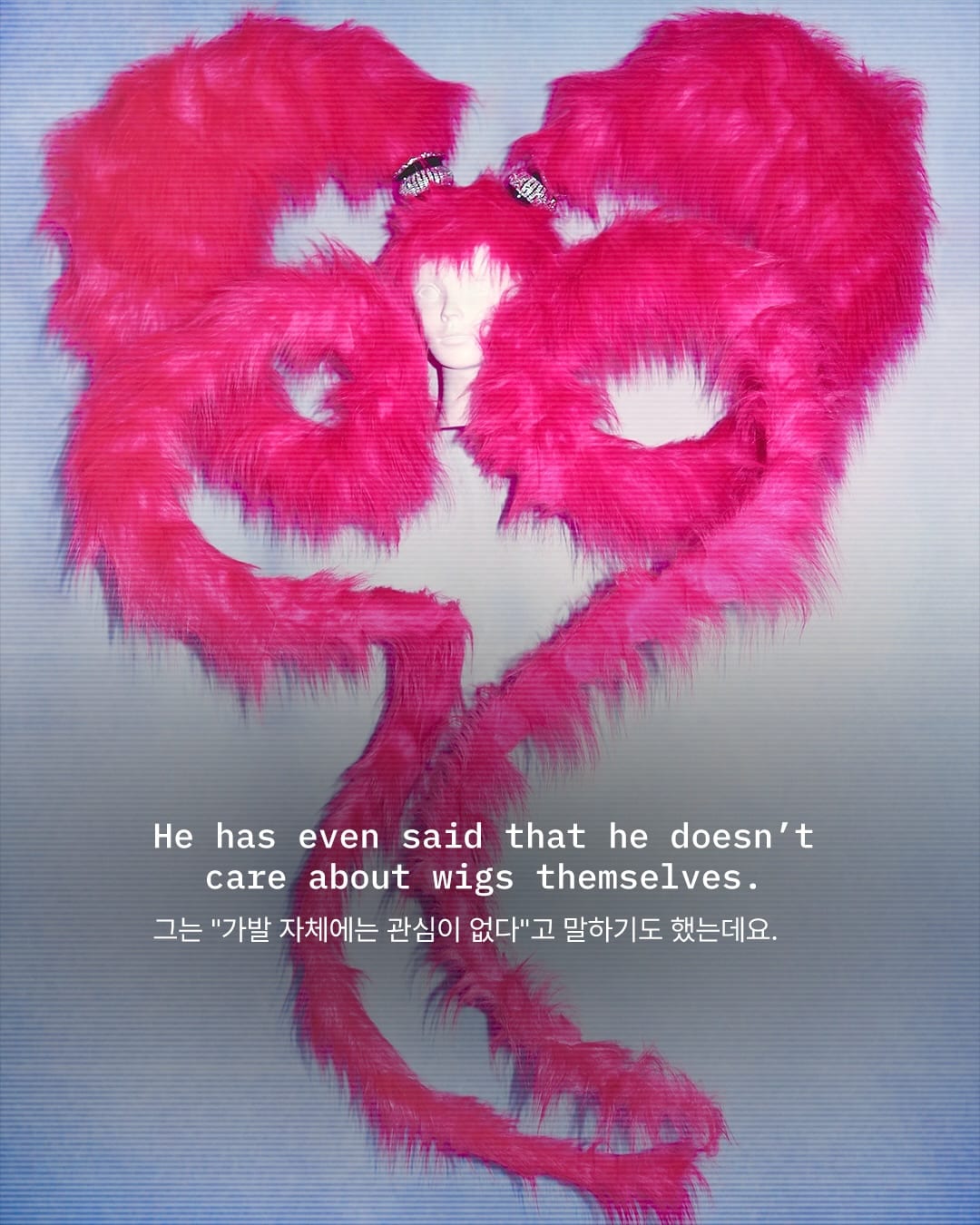
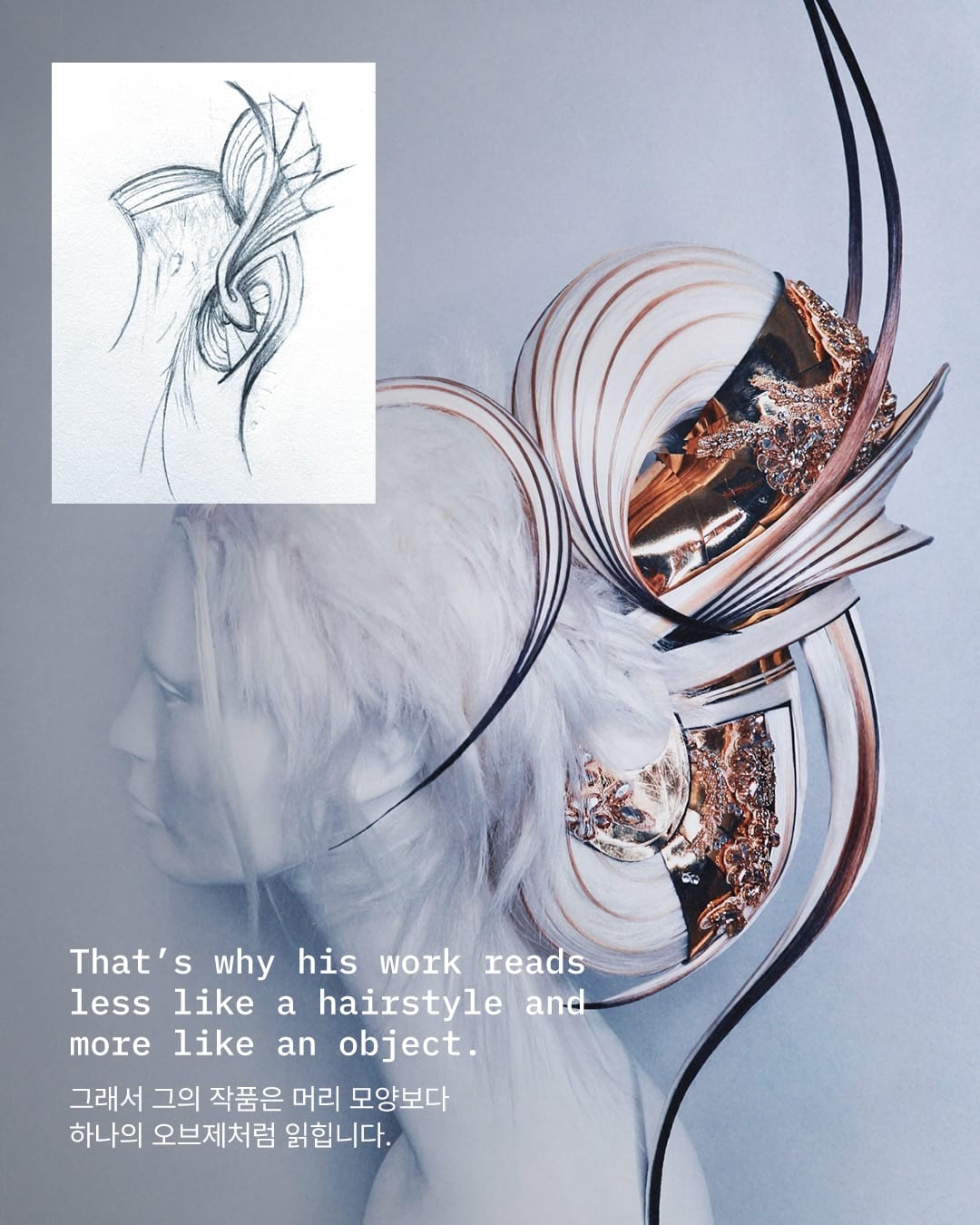
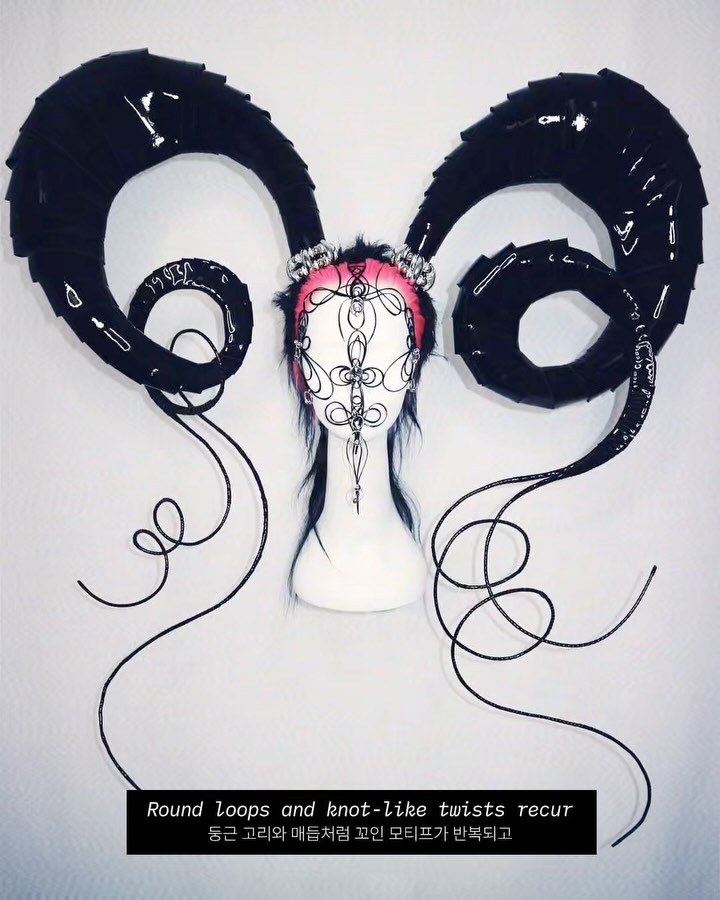
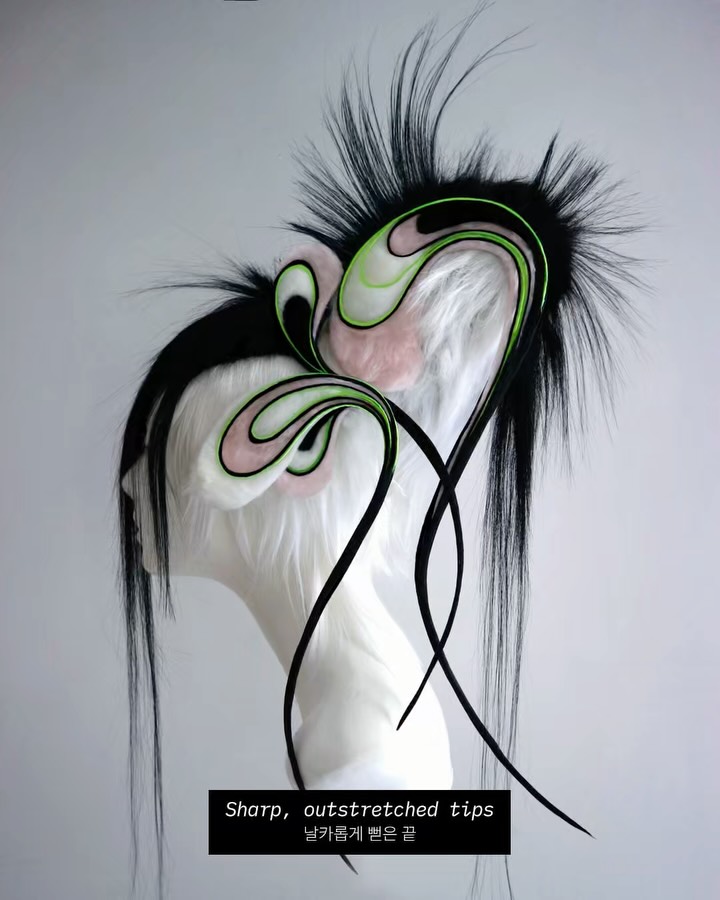
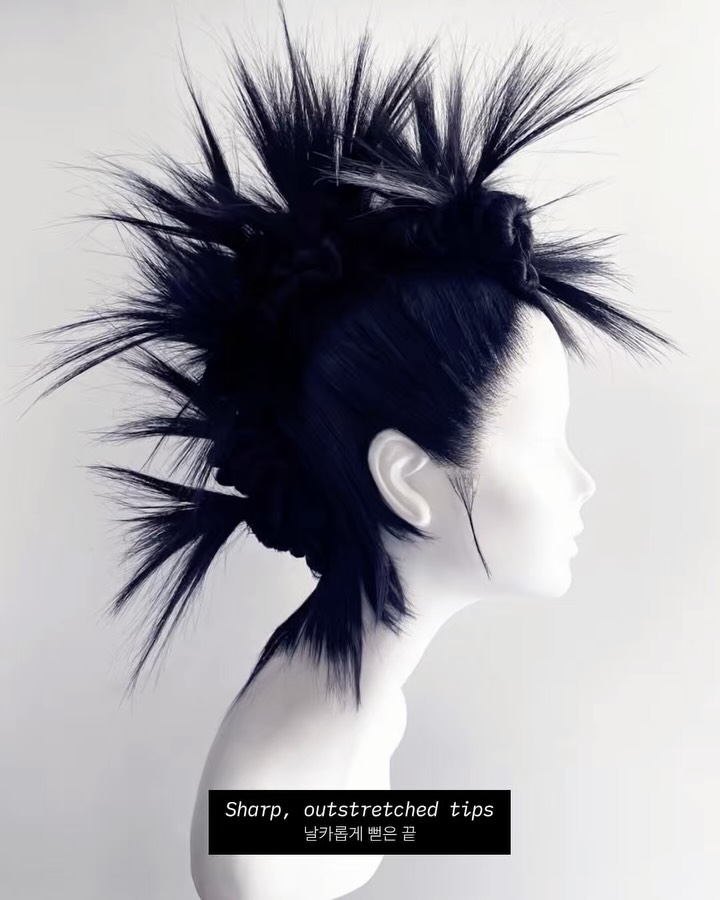
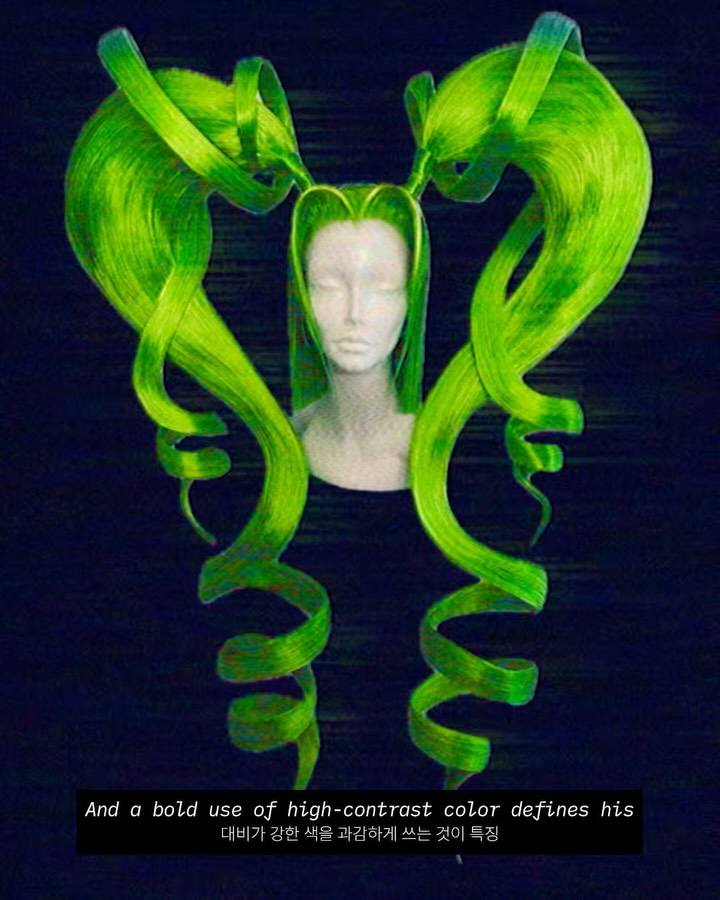
Round loops and knot-twisted motifs recur throughout his pieces, while sharp, outstretched tips collide with fluid curves within a single work. Another hallmark is his bold use of high-contrast color: hot pink with blonde, sky blue with black. The clash of color amplifies the tension in form. That is why his wigs read more as objects than hairstyles.
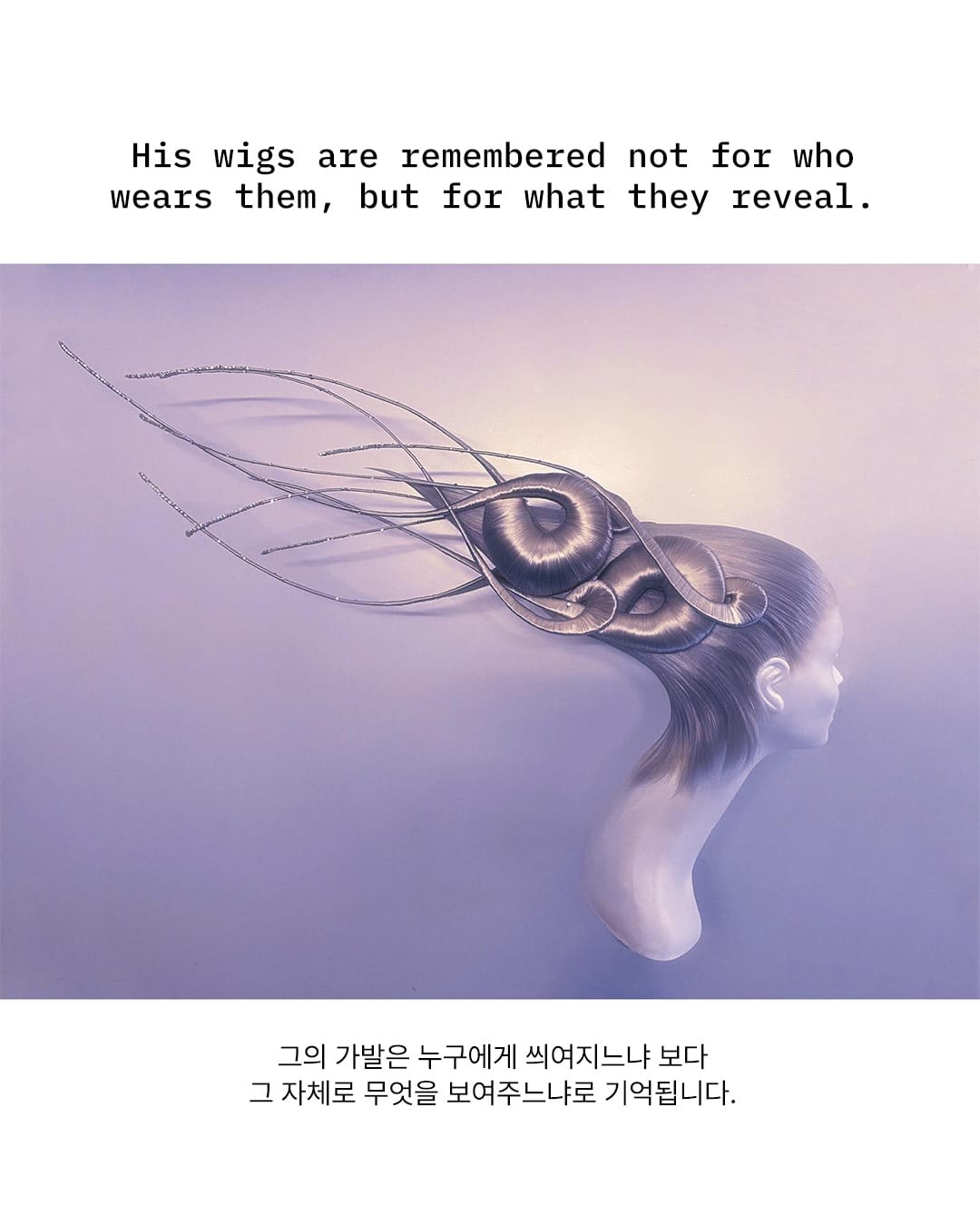
His claim that he does not care about wigs themselves is intriguing. He focuses not on the finished wig but on what it reveals. Who wears it matters less than what it expresses. This stance pushes his work out of the hairstyling realm and into the territory of sculpture.
Santens's wigs are remembered for their structural presence rather than the wearer's identity. Form comes first, the person follows. They are experiments in what hair can wear, in how far shape can be pushed. Where do you draw the line between hair and sculpture?
FAQ
Who is Jean-Baptiste Santens?
A hair artist based in Paris who treats hair as sculptural material, creating wigs like objet d'art. Rather than focusing on wigs themselves, he concentrates on form, color, and emotional expression, defining himself as an artist using these tools.
What characterizes Jean-Baptiste Santens's wig creations?
His work features circular loops, knotted twisted motifs, and clashing sharp extensions with flowing curves. He boldly uses high-contrast colors like hot pink with blonde or sky blue with black, making pieces read as objects rather than hairstyles.
How does Jean-Baptiste Santens view wigs?
He says he has no interest in wigs themselves. Wigs are tools for expressing form, color, and emotion, and he is the artist using those tools. His work centers on what is expressed rather than who wears it.