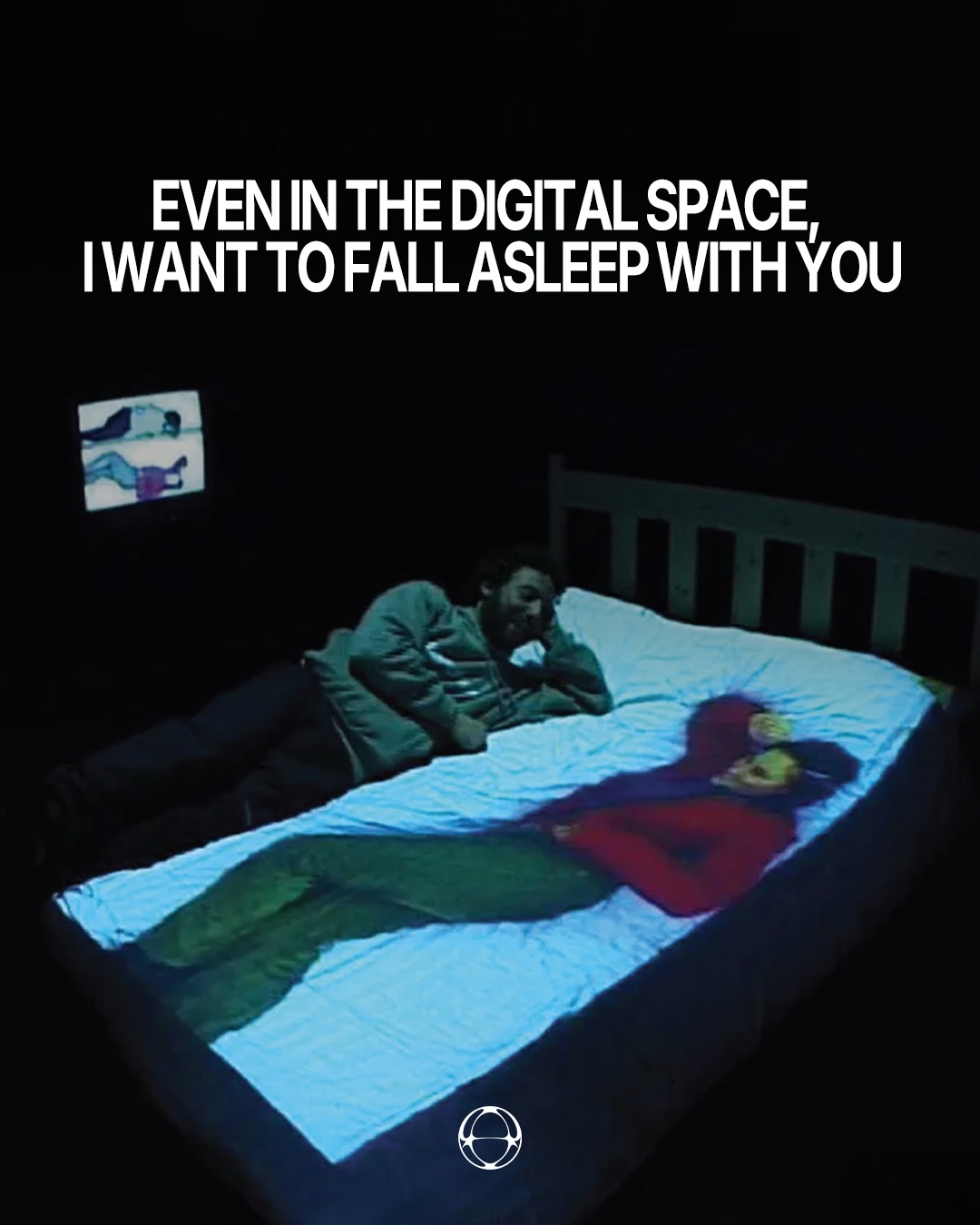
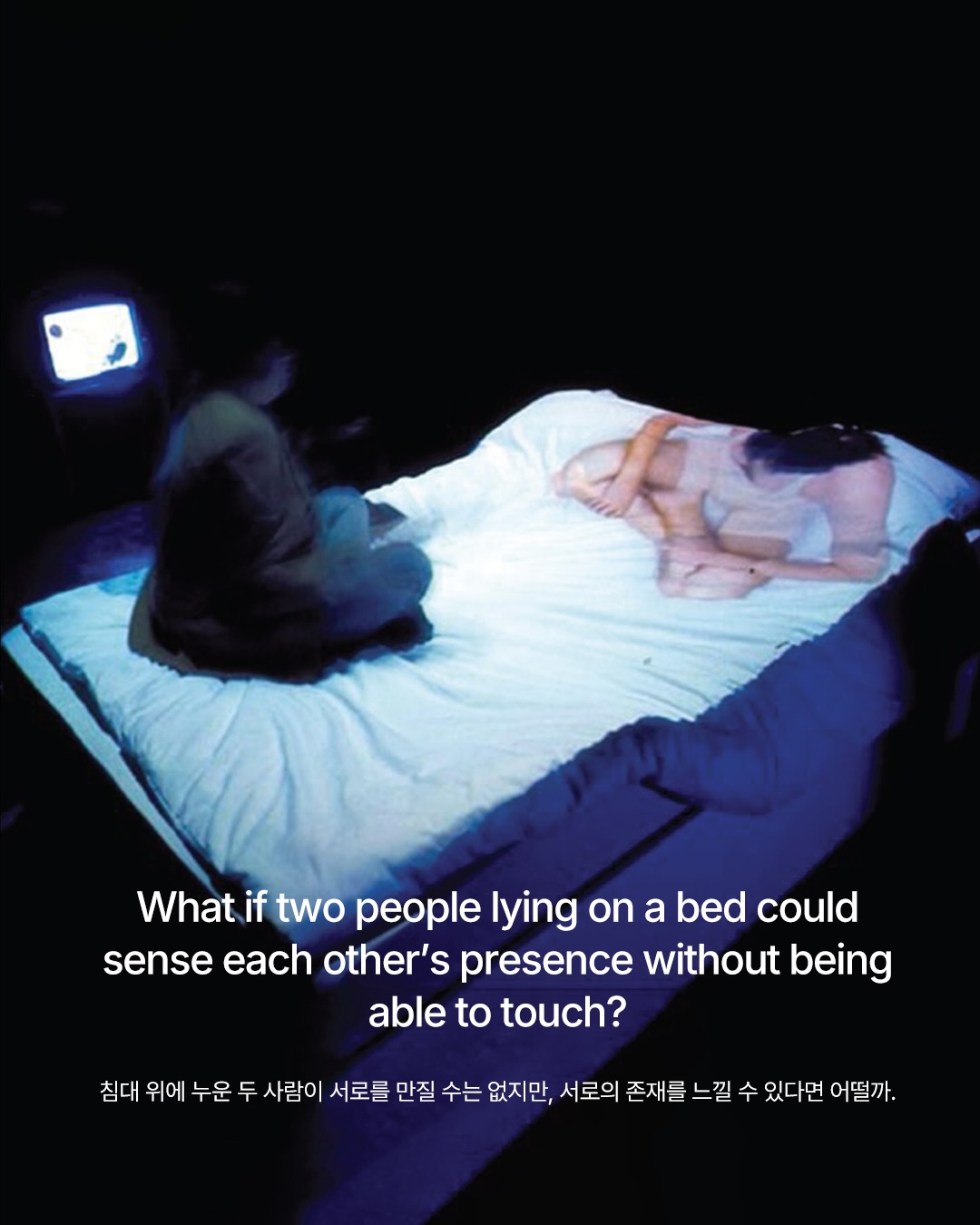
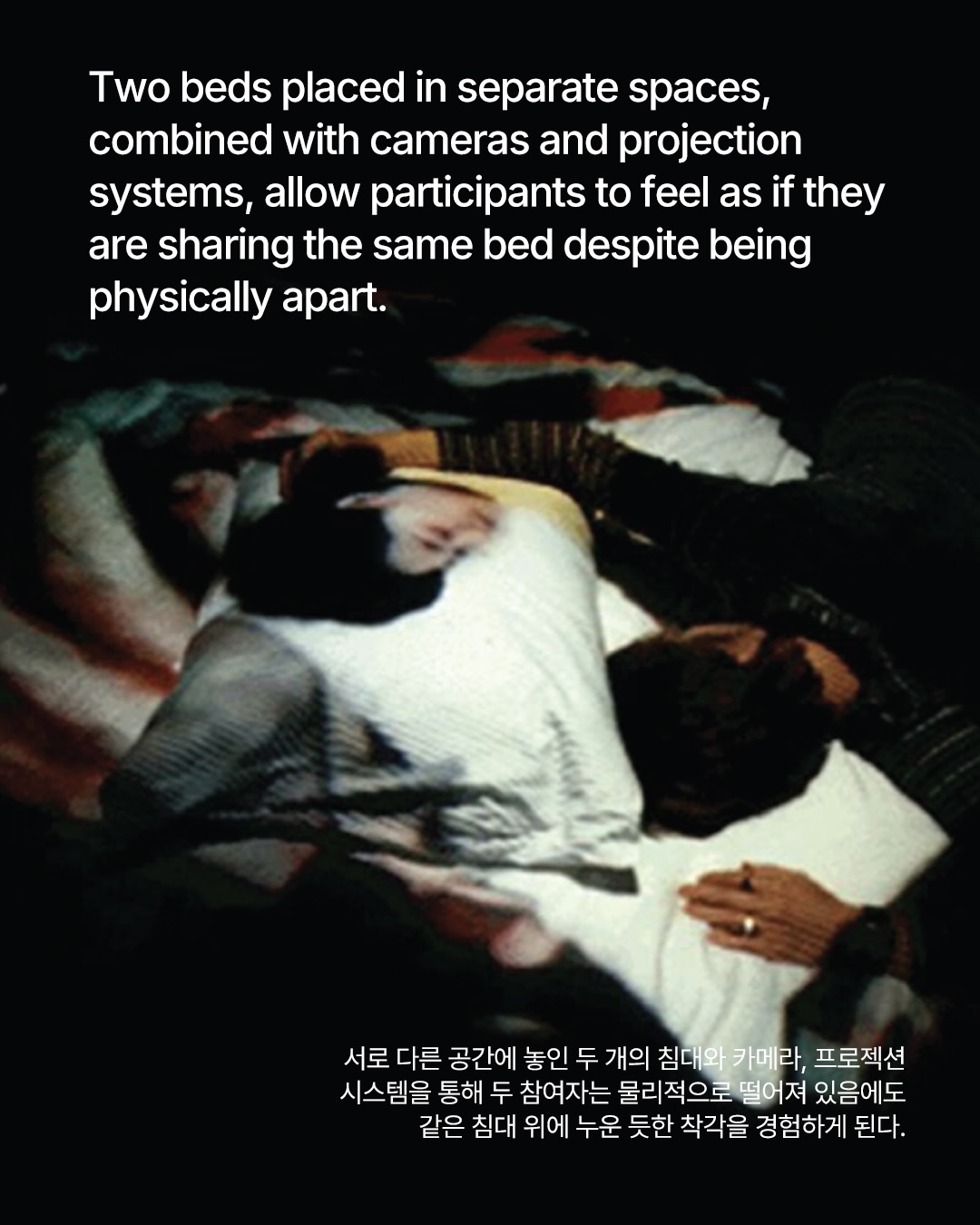
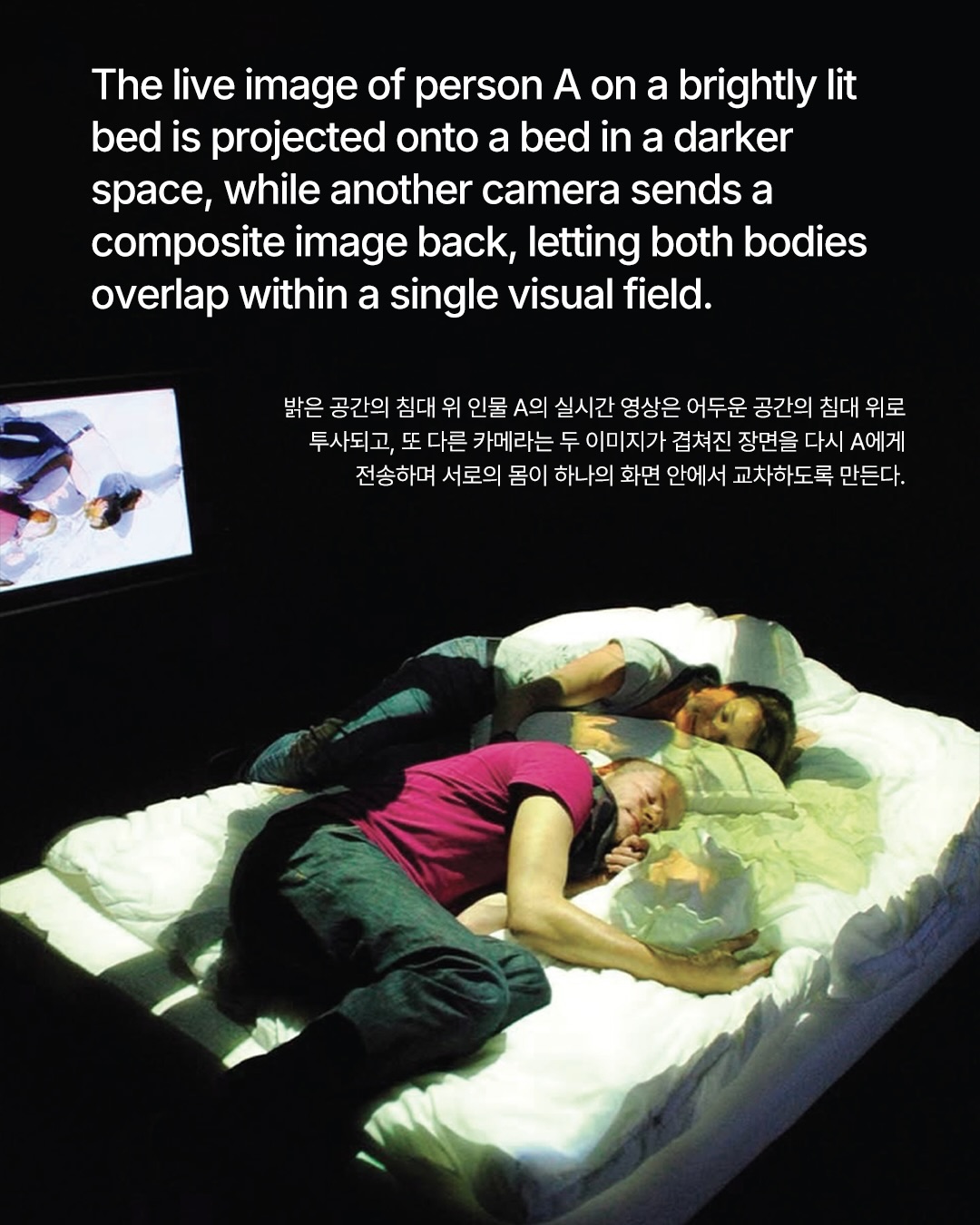
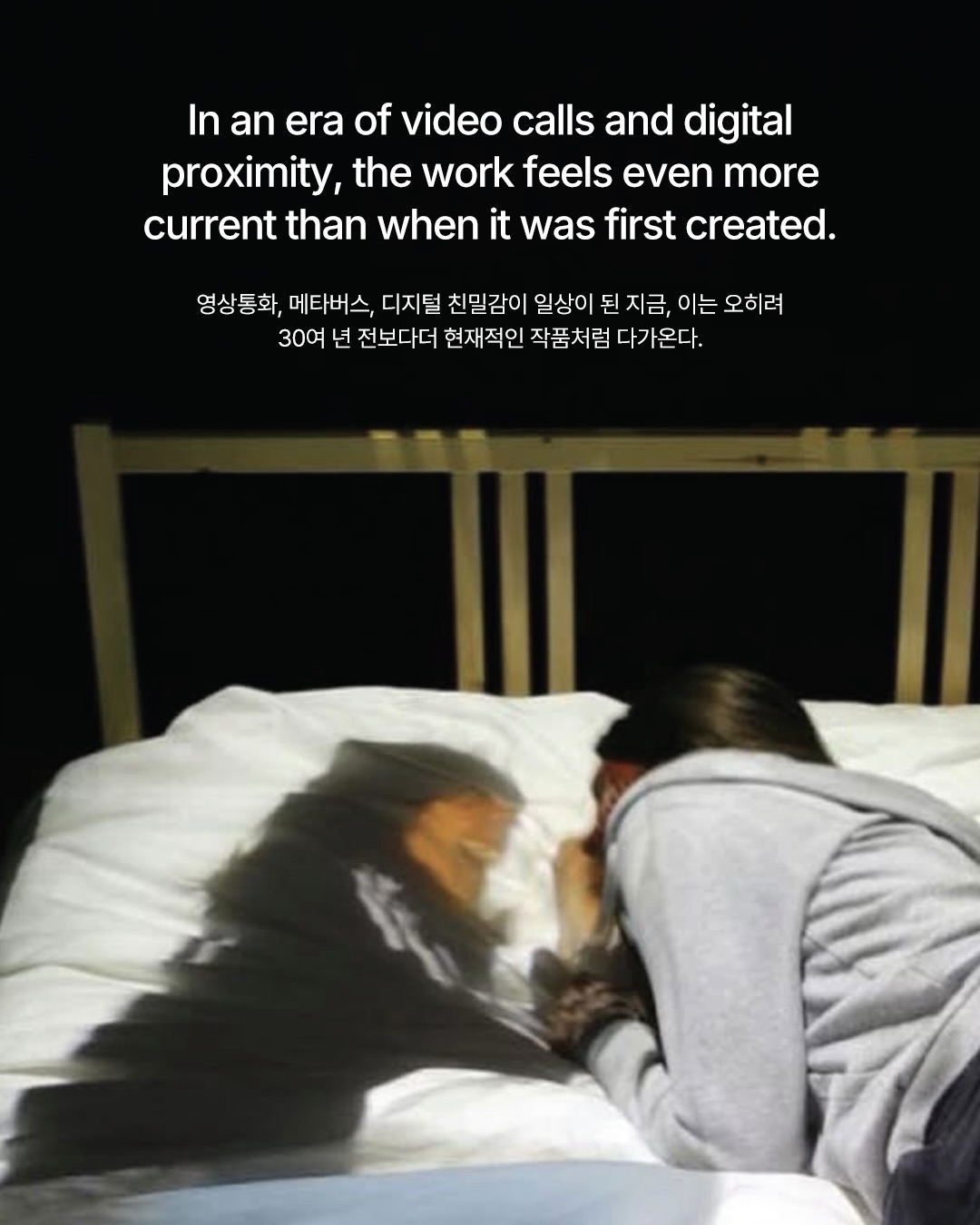
The setup is straightforward yet profound. Two beds placed in separate spaces, combined with cameras and projection systems, allow participants to experience the illusion of sharing the same bed despite being physically apart. The live image of person A on a brightly lit bed is projected onto a bed in a darker space, while another camera sends a composite image back to A, letting both bodies overlap within a single visual field.
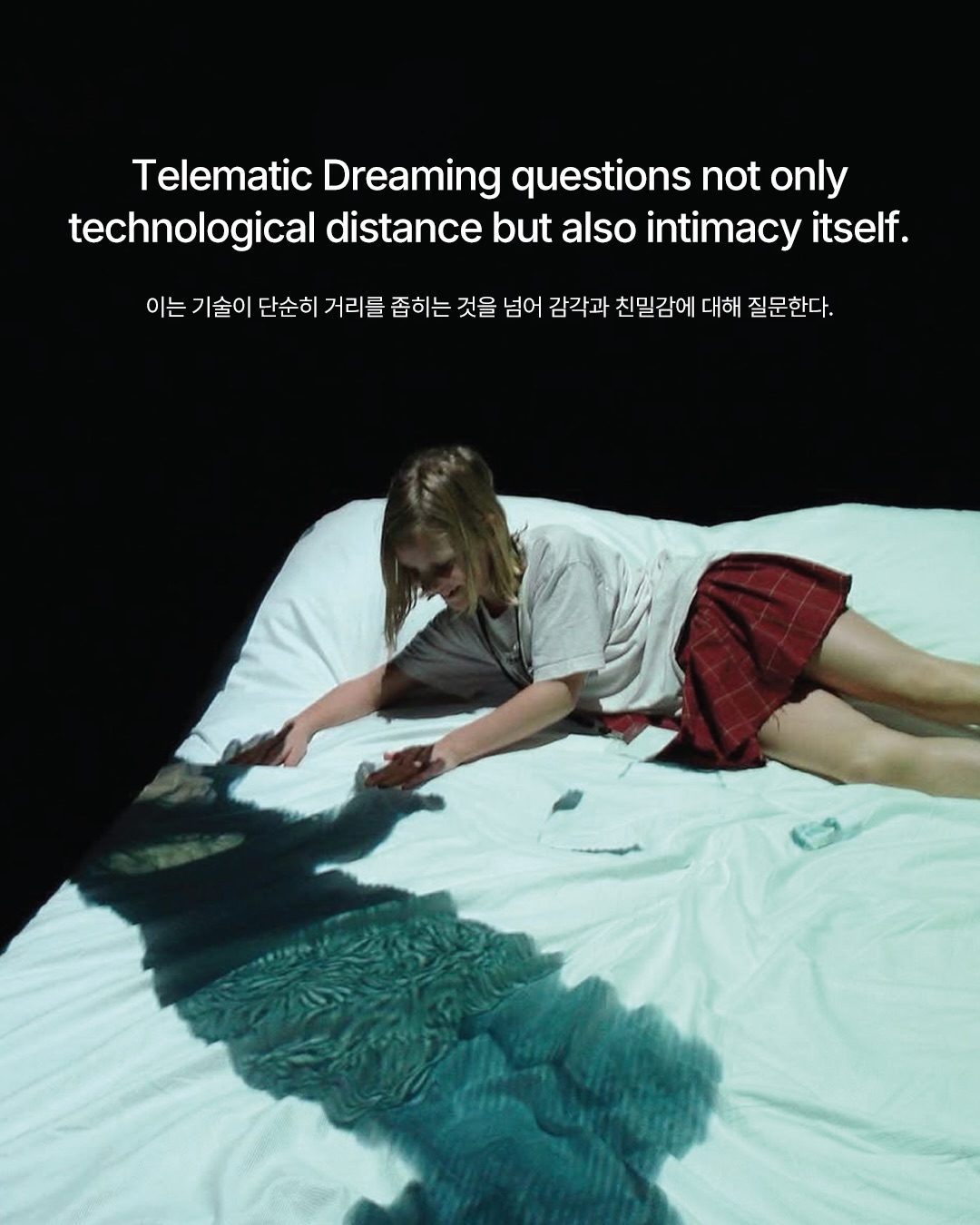
What makes this work significant is not its technological achievement in bridging distance, but its fundamental inquiry into sensation and intimacy. In an era where video calls are routine and the metaverse is materializing, Sermon's piece is being reevaluated as a pioneering exploration of how intimacy functions in digital space.
As technology advances, we connect with more people yet become acutely aware of the absence of physical touch. 'Telematic Dreaming' asks what we lose and gain in that gap, and what true intimacy really means. A work from 1992 resonates more urgently with us in 2025 for precisely this reason.
FAQ
What is Paul Sermon's 'Telematic Dreaming'?
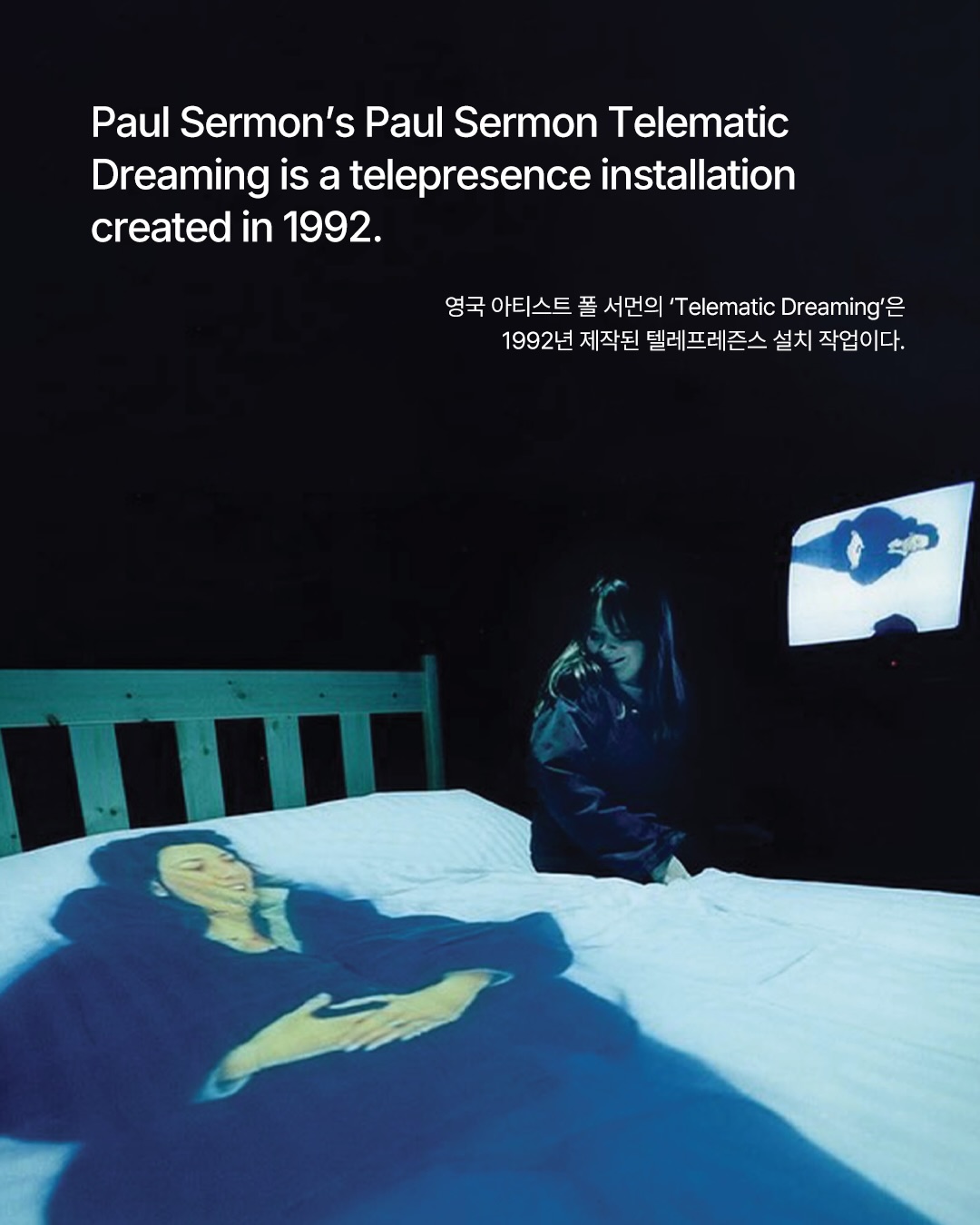
'Telematic Dreaming' is a telepresence installation created in 1992 by British artist Paul Sermon. Through two beds in separate spaces connected by cameras and projection systems, it creates the illusion of participants lying together despite physical distance, exploring intimacy in digital space.
What does telepresence art mean?
Telepresence art uses communication technology and video devices to give people in physically separate spaces the experience of sharing the same environment. Like Paul Sermon's 'Telematic Dreaming', it raises questions about distance, intimacy, and physicality through real-time video projection.
Why is this 1992 work gaining more attention now?
With video calls and the metaverse now commonplace, the questions 'Telematic Dreaming' raised about digital intimacy have become more urgent. The technological and sensory explorations presented three decades ago are being reevaluated as prophetic of today's digital culture.