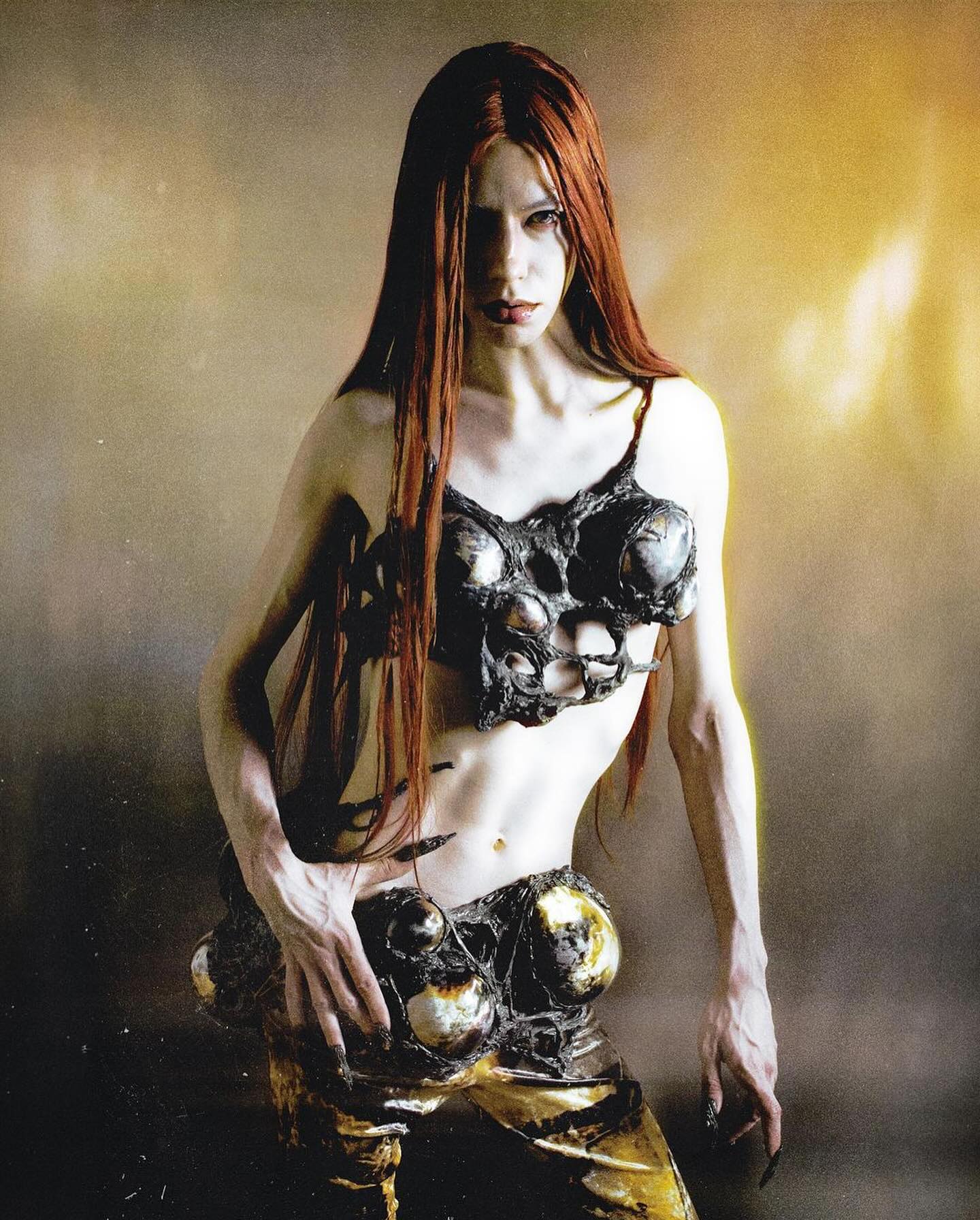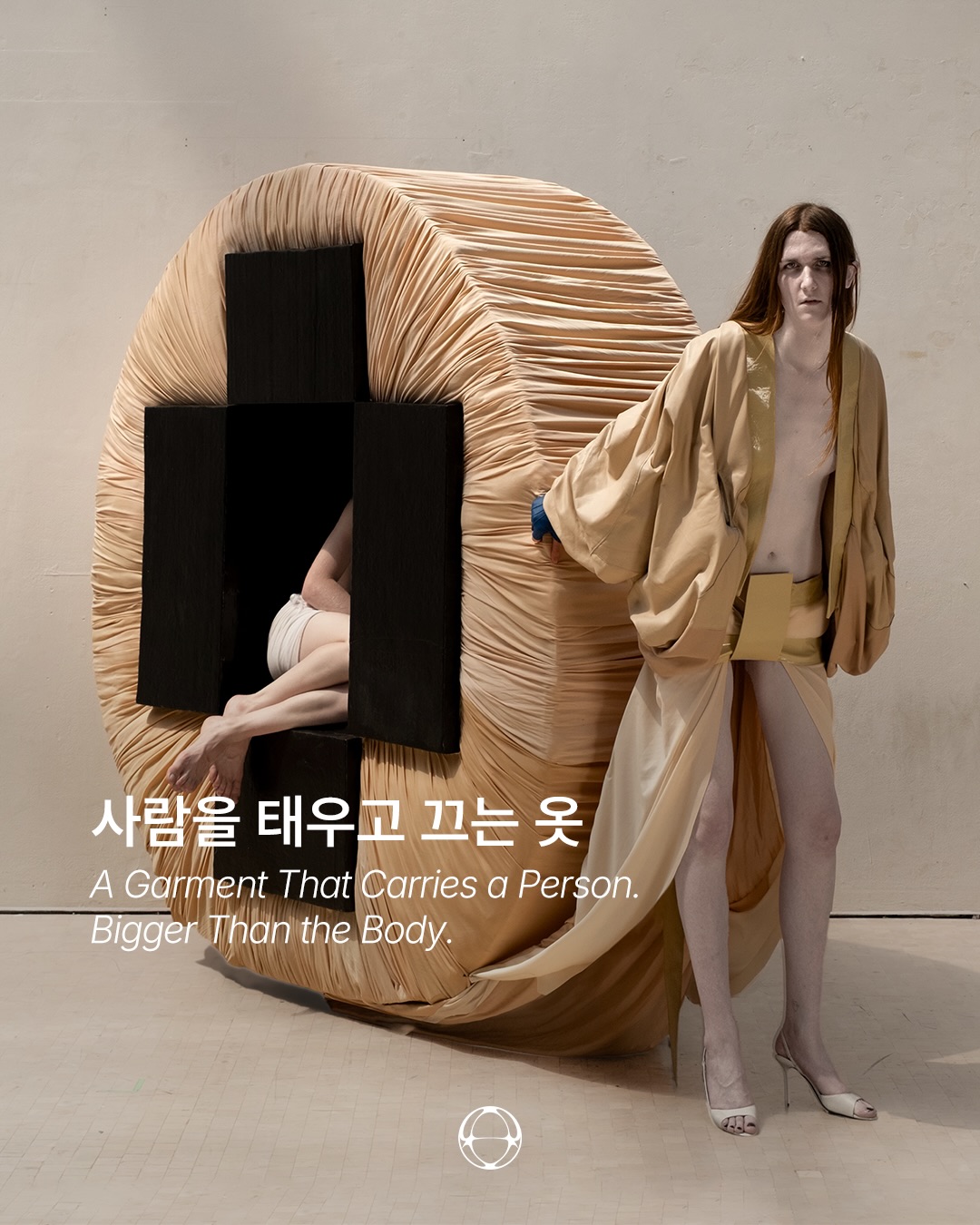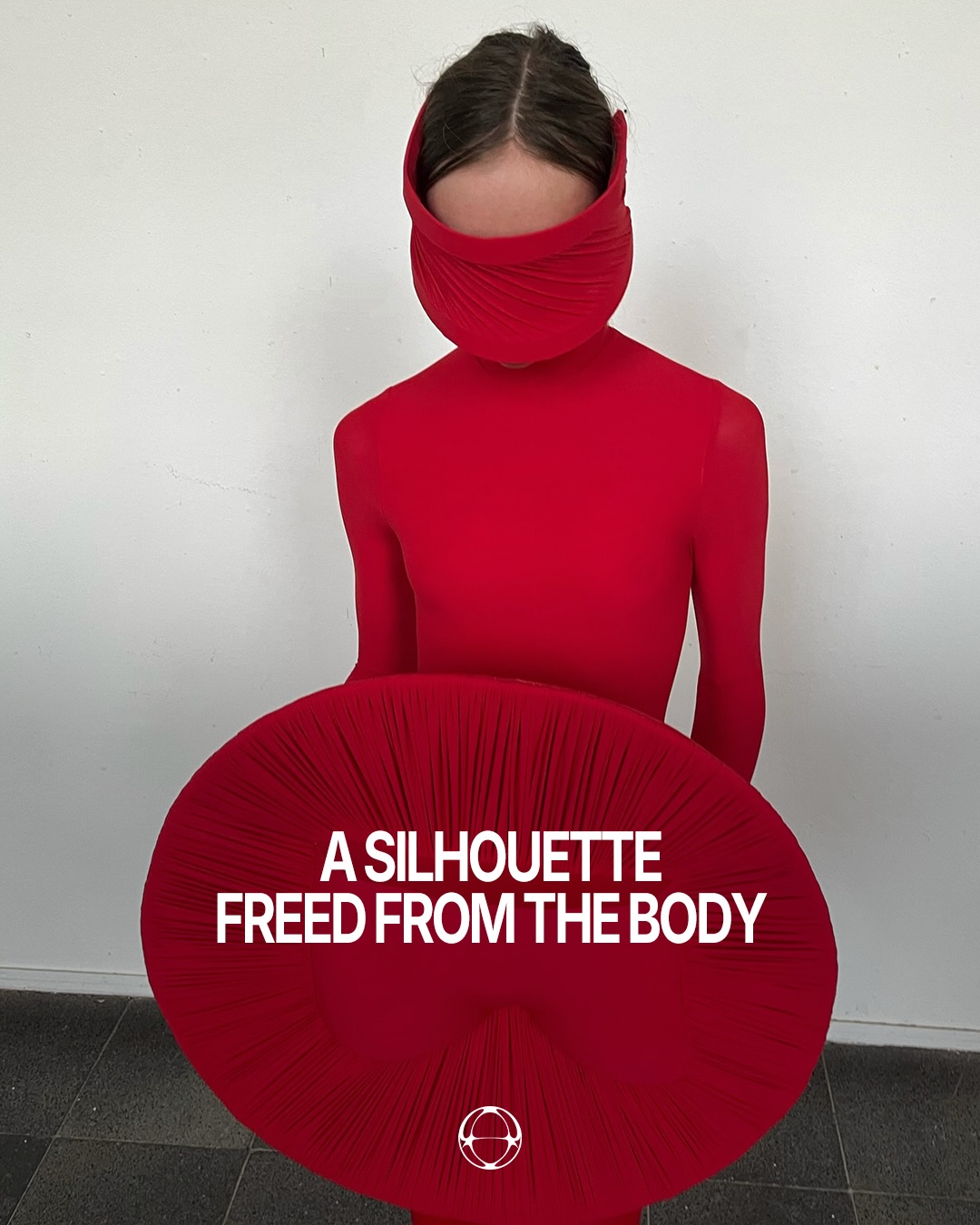
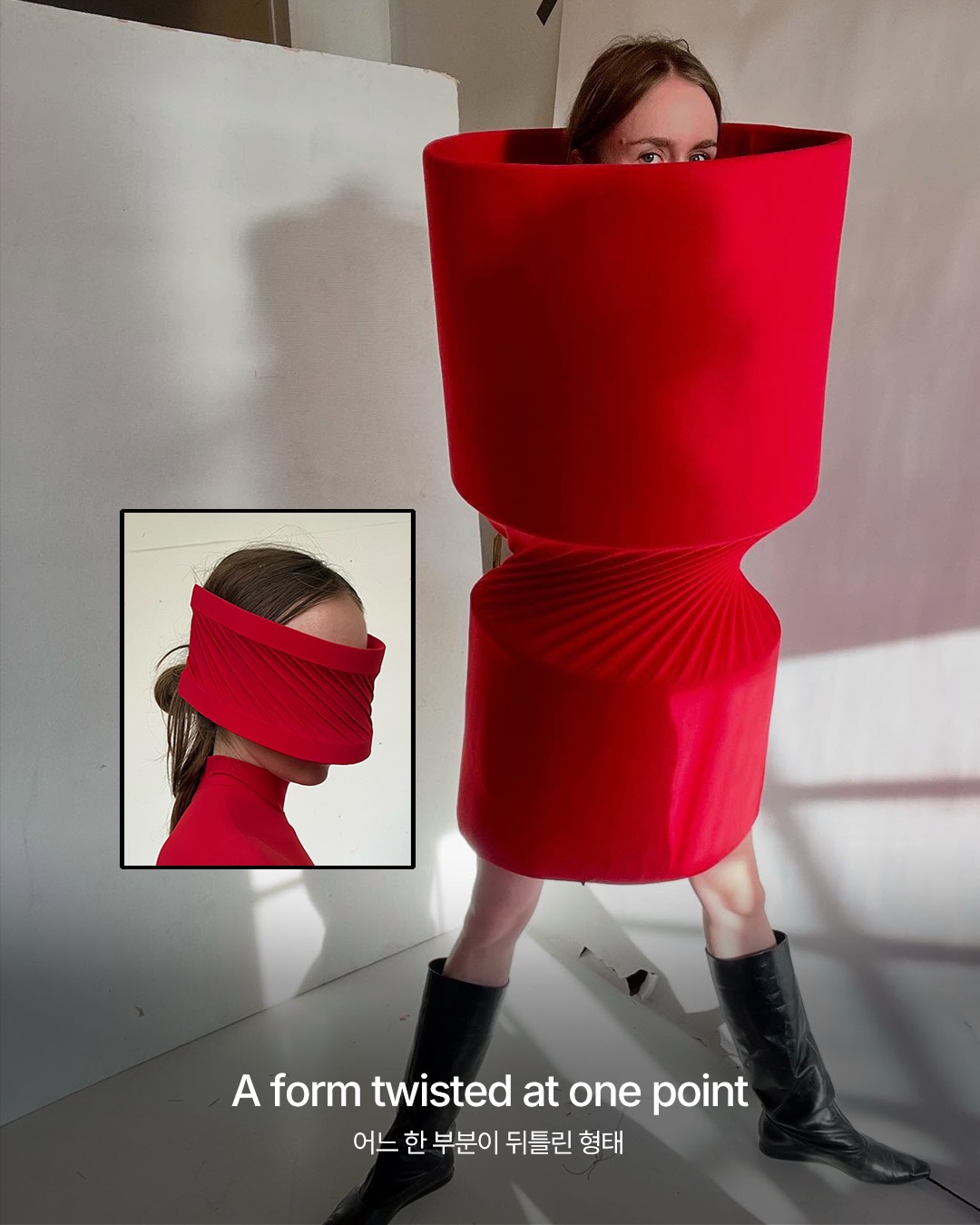
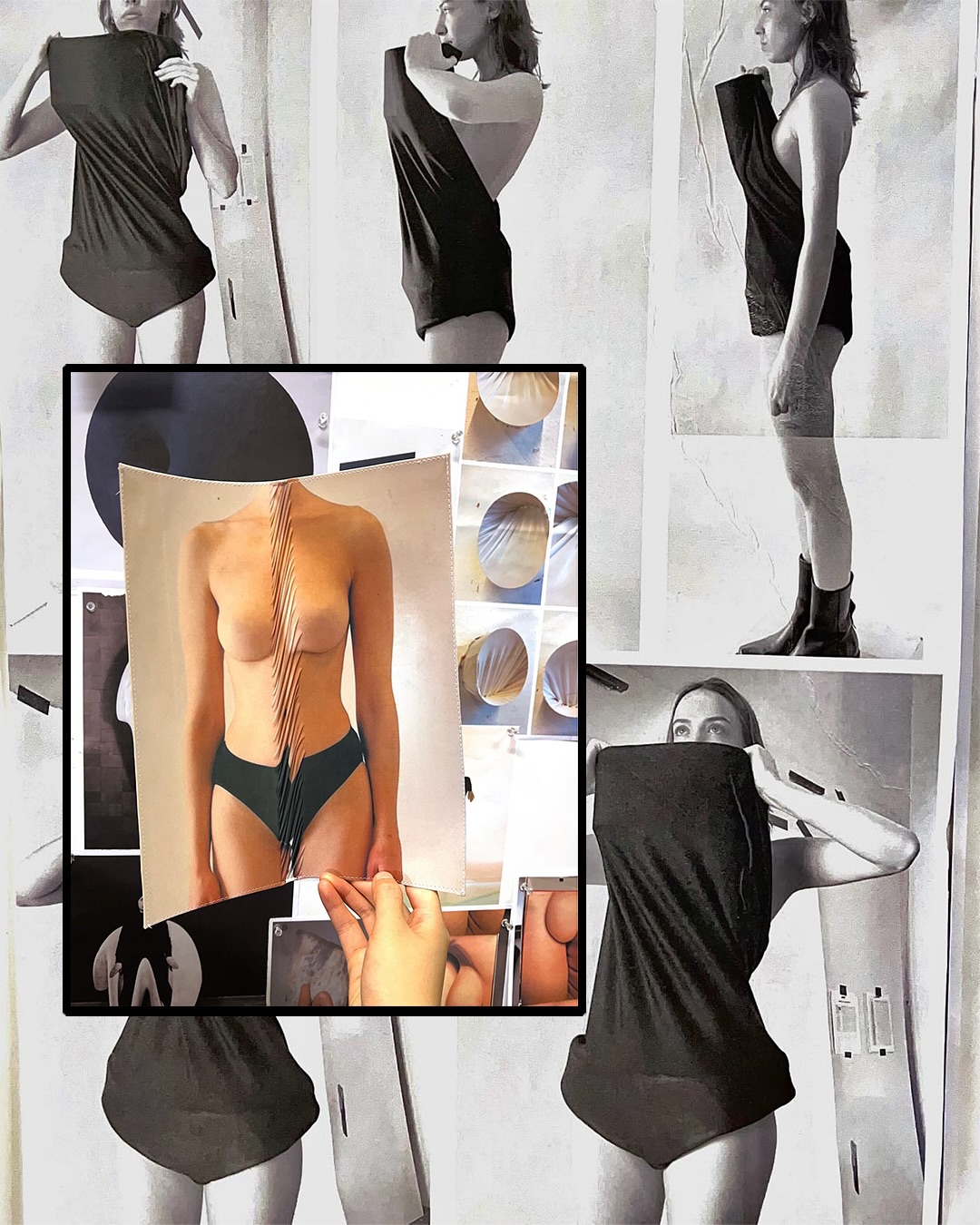
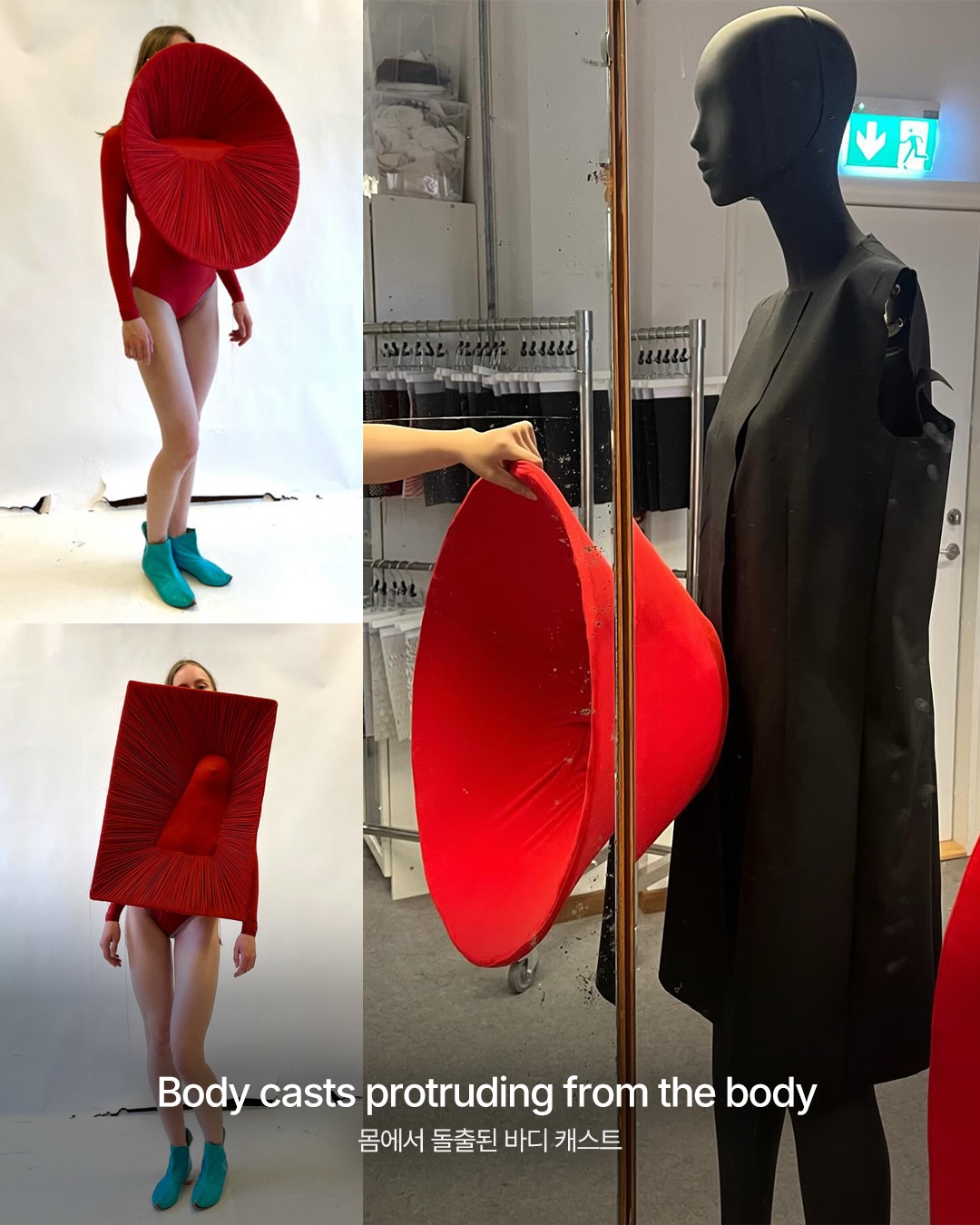
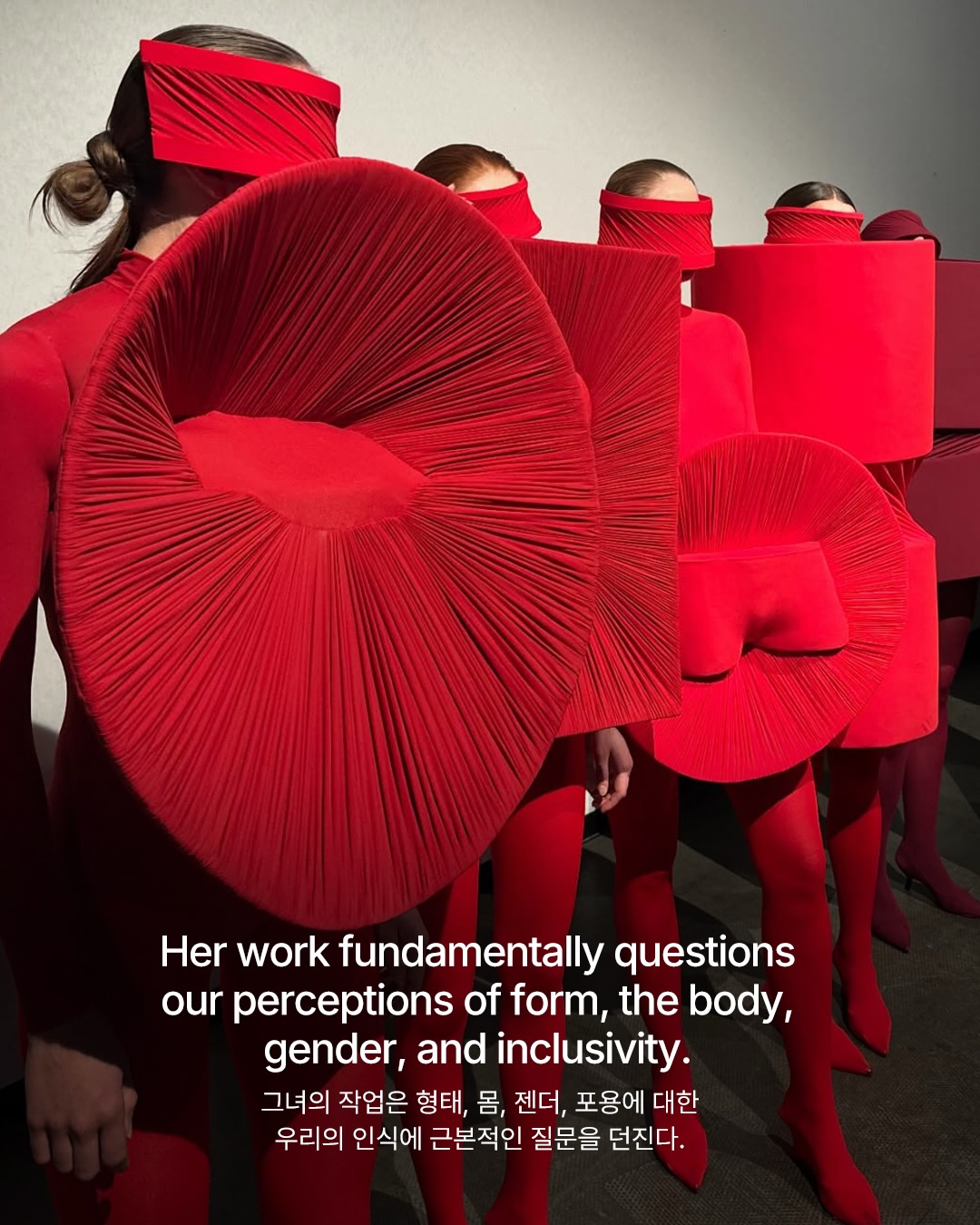
Twisted tubes and box shapes, along with body casts that protrude from the form, exist in space like sculptural works. These silhouettes depart from the traditional role of clothing—to protect or reveal the body—demonstrating that garments themselves can become autonomous structures. By granting clothing a free form liberated from the body, Hui proposes that fashion can be a medium that opens possibilities rather than controls the human form.
The fashion industry has already taken notice of Mengjie Hui's potential. She was named a finalist in the Balenciaga Transmissions competition hosted by the Cristóbal Balenciaga Museum, and her student work was featured in Acne Paper Golden, Issue 20. Her attempt to redefine the relationship between body and garment is a subversive question directed toward possibility rather than control, freedom rather than convention.
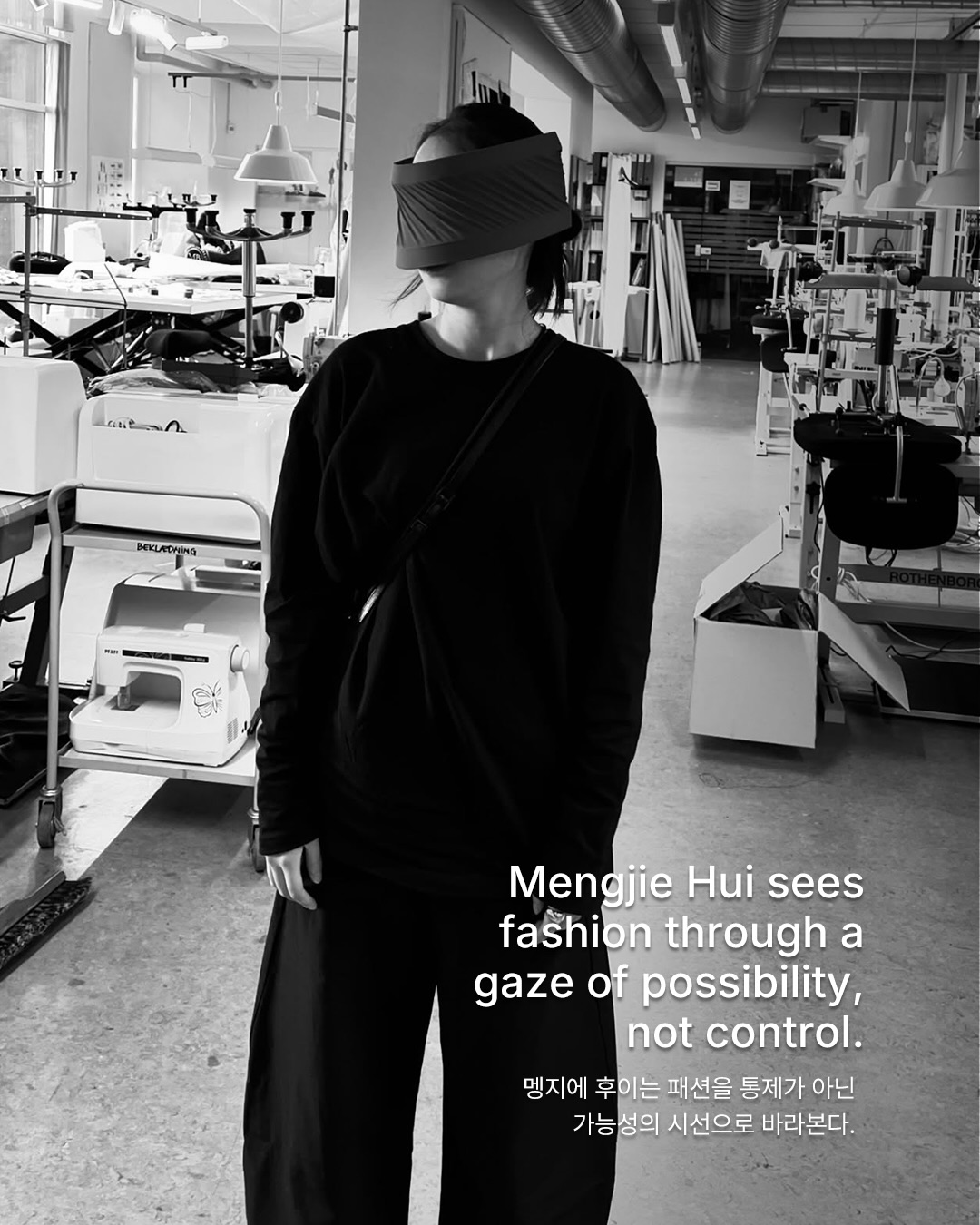
Mengjie Hui's work explores the possibility that fashion can be an independent art form rather than a subordinate to the body. Her sculptural approach presents a new way for clothing to engage with space, showcasing an original vision as a next-generation fashion designer.
FAQ
Where did Mengjie Hui study fashion?
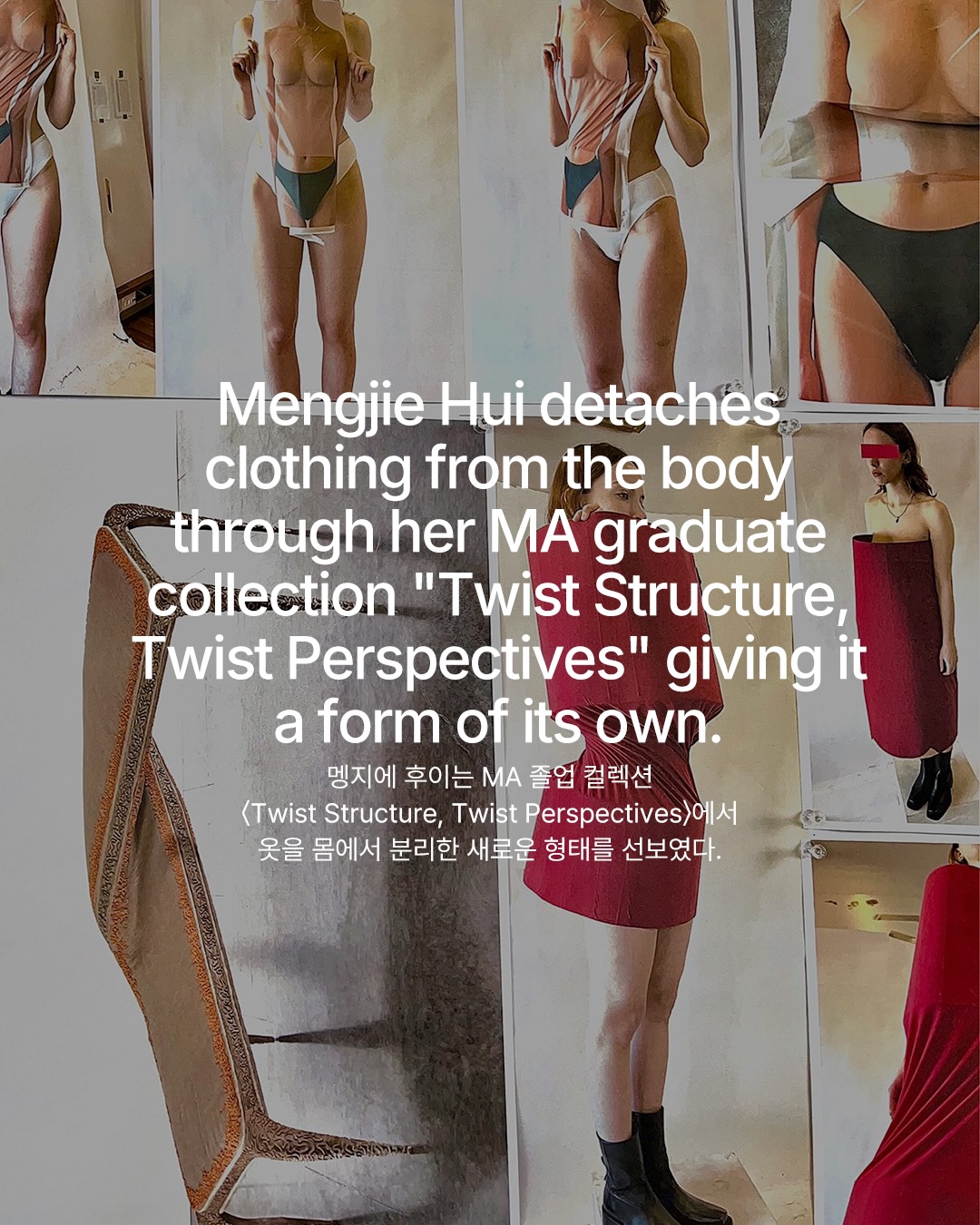
Mengjie Hui completed her master's degree in fashion design at the Royal Danish Academy of Fine Arts in Denmark. Her MA collection, Twist Structure, Twist Perspectives, was presented as her graduate work and features sculptural silhouettes that break away from the body.
What major recognition or awards has Mengjie Hui received?
Mengjie Hui was selected as a finalist for the Balenciaga Transmissions competition hosted by the Cristóbal Balenciaga Museum. Additionally, her work during her studies was featured in Acne Paper Golden, Issue 20, attracting attention from the fashion world.
What is Mengjie Hui's design philosophy?
Mengjie Hui proposes that clothing need not follow or control the body but can exist as independent forms detached from it. Through sculptural silhouettes, her work grants fashion liberating possibilities and poses subversive questions that redefine the relationship between body and garment.