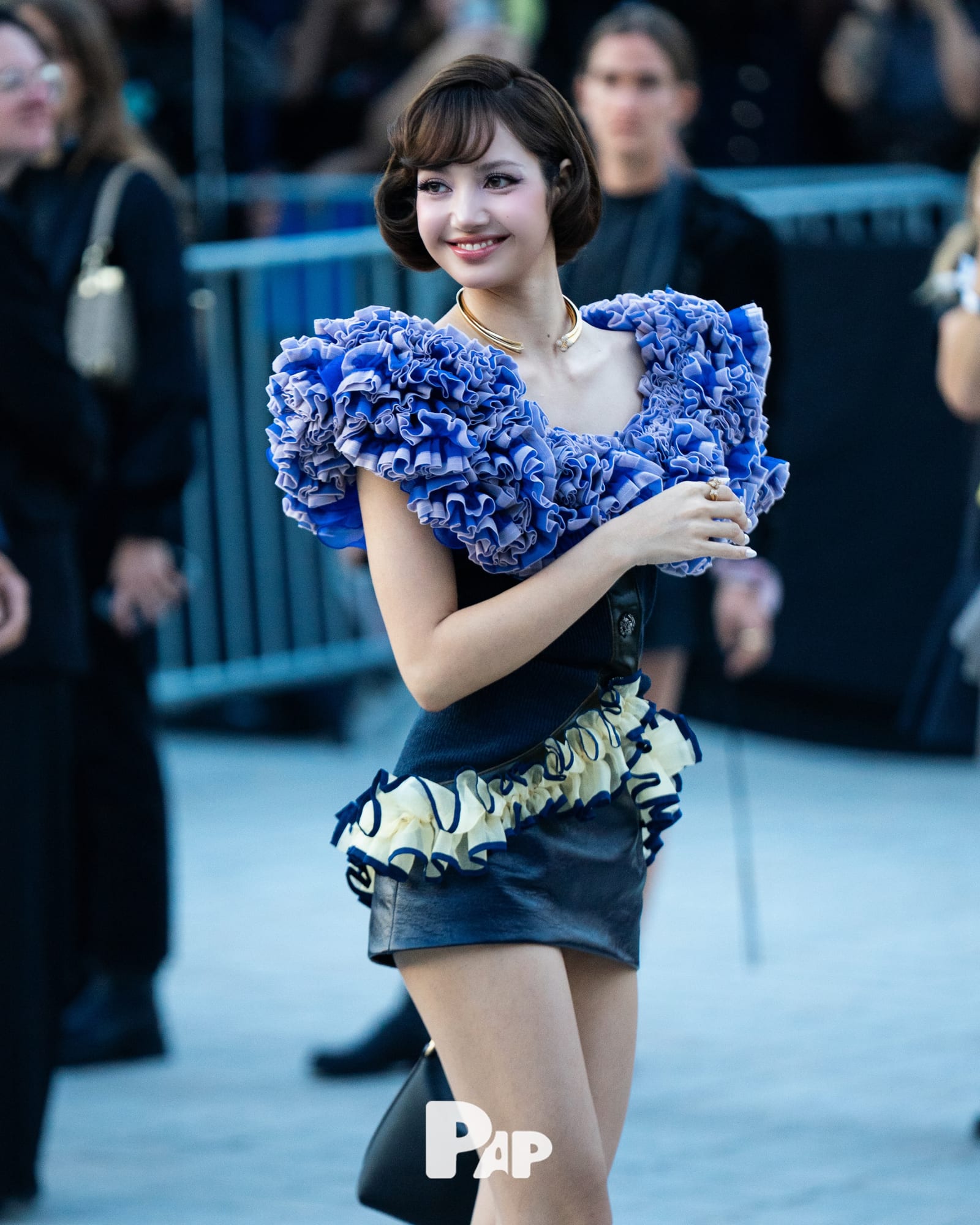
Chokers and ruffled details framing the neckline elevated the sense of refinement, while maintaining a taut balance between structural form and soft texture. Ghesquière demonstrated that clothing can transcend its function of merely covering the body, operating instead as a structure that shapes space and form.
Accessories played an equally essential role in the collection. Ultra-bold sunglasses, Mongolian-inspired fur hats, and cabin-shaped bags existed beyond utility, functioning as sculptural objects that extended the collection's playful imagination. These were not mere adornments but sculptural pieces that completed each look.
This Louis Vuitton collection explored the tension between texture and structure, and the new forms of beauty that emerge from that dialogue. Ghesquière once again proved that fashion is not simply worn—it is experienced as art.


FAQ
What are the main design features of Louis Vuitton's 2026 Fall/Winter collection?
Sculptural silhouettes were created through exaggerated shoulder volume and layered bodice structures, featuring textural contrast where wool and leather, jacquard and metallic ruffles intersect. Color block patchwork and fringe details, chokers and ruffles embracing the neckline emphasize luxuriousness.
What role do accessories play in Louis Vuitton's 26FW collection?
Super bold sunglasses, Mongolian-style fur hats, and wooden cabin-shaped bags function like objet d'art beyond practicality, expanding the collection's imagination. They function not as mere ornaments but as sculptural pieces completing the looks.
What did Nicolas Ghesquière aim to express in Louis Vuitton 26FW?
He explored the tension between texture and structure, and the new form of beauty born within it. Ghesquière showed that clothing can function as structures creating form in space beyond merely covering the body, presenting fashion as experiential art.