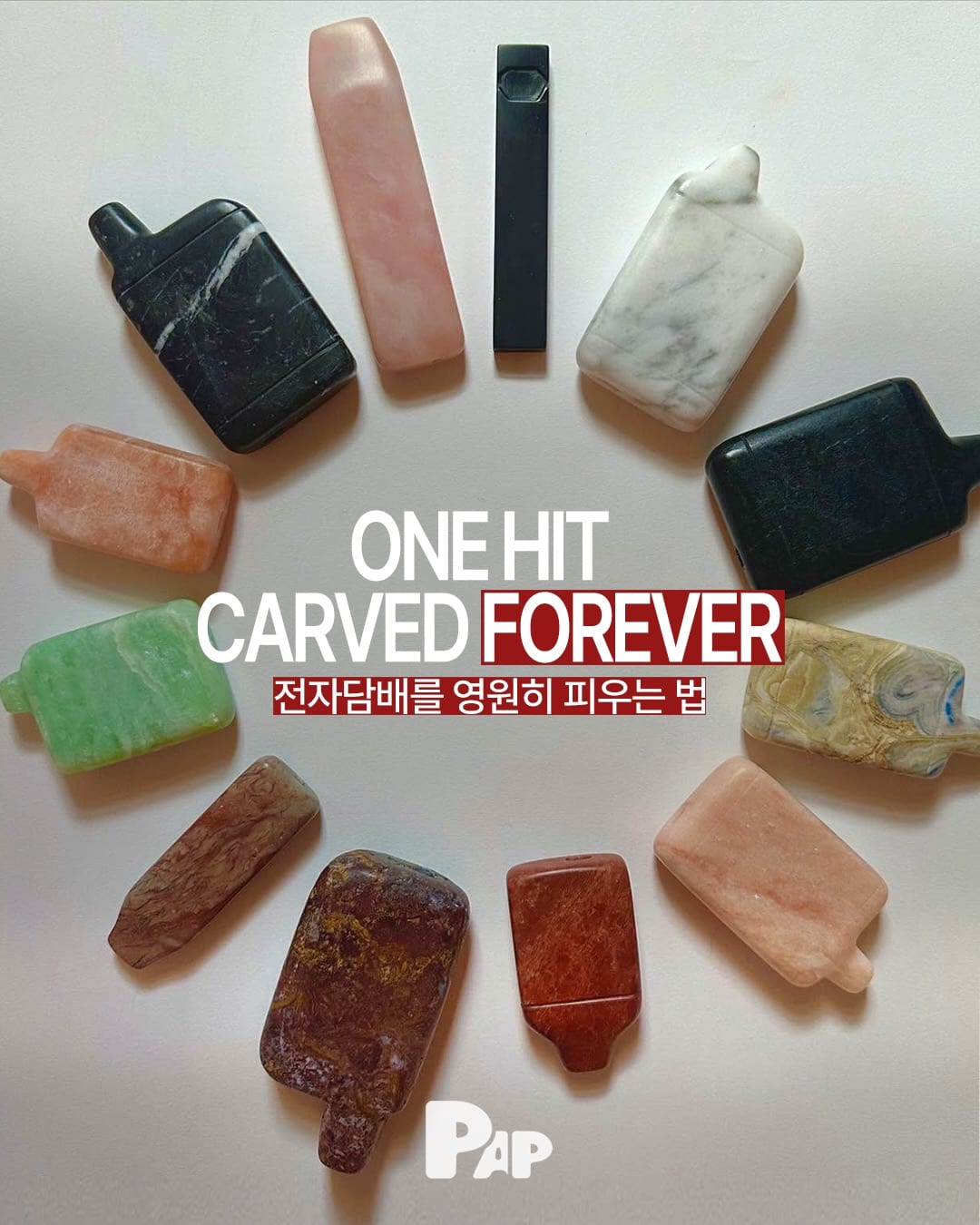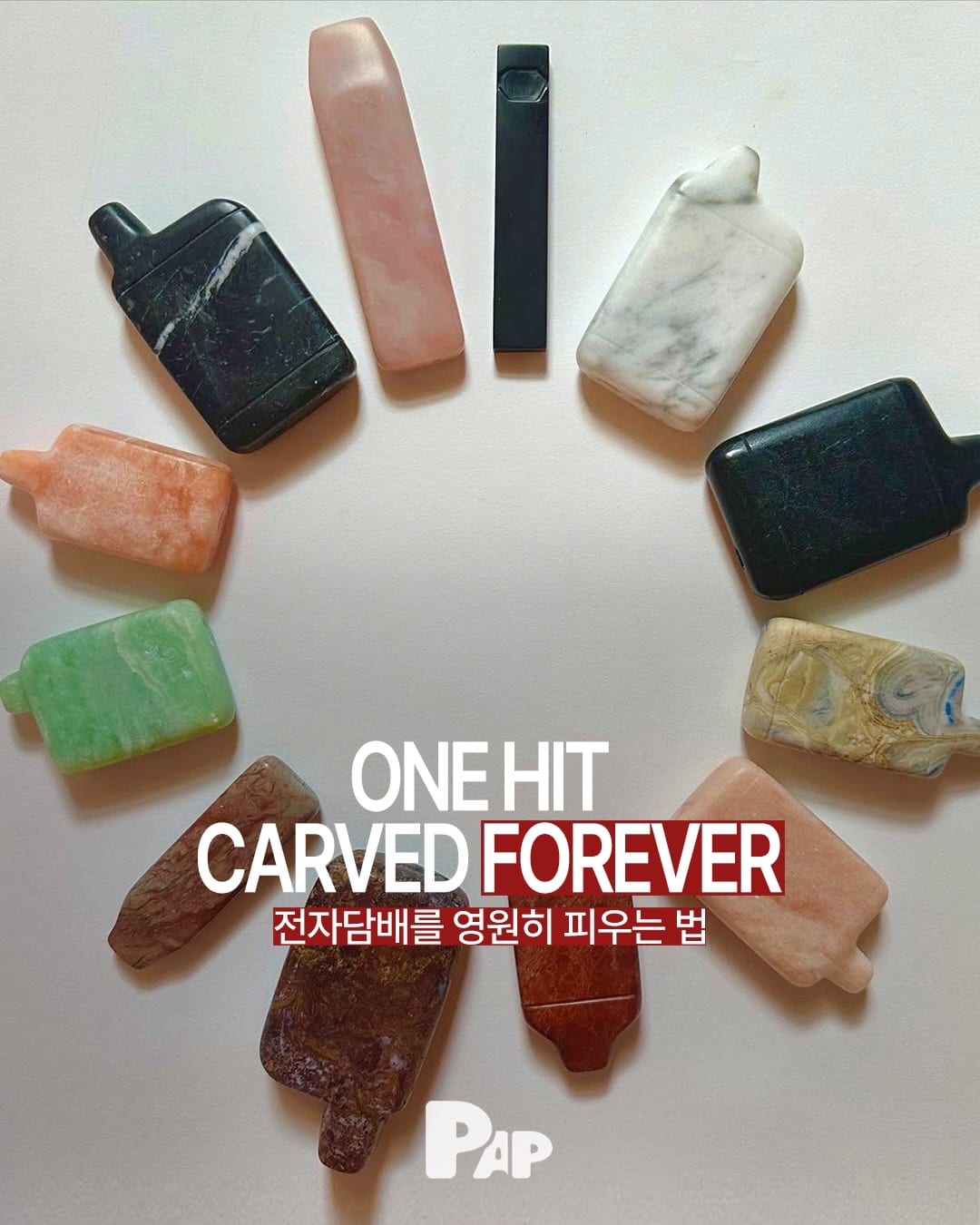
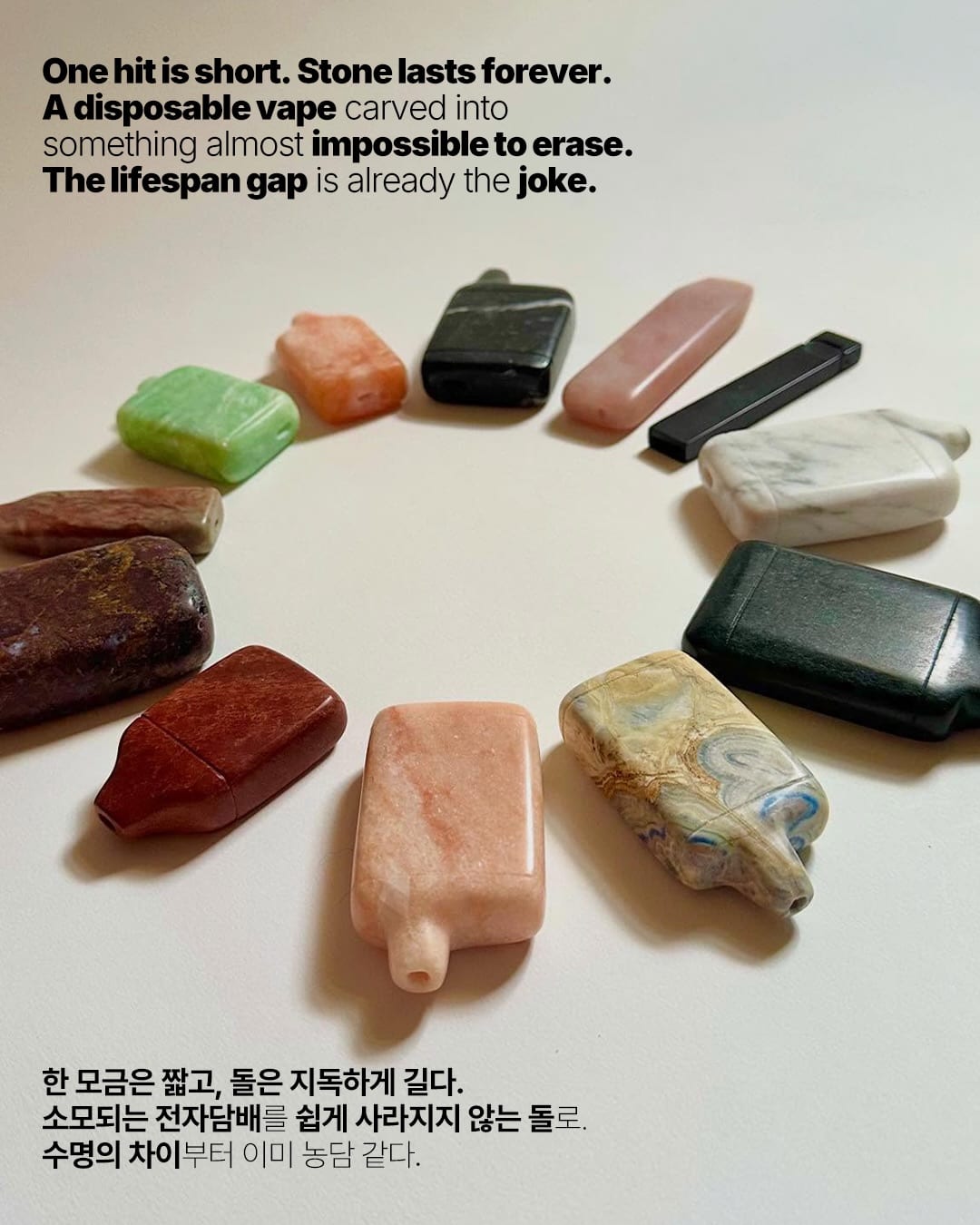
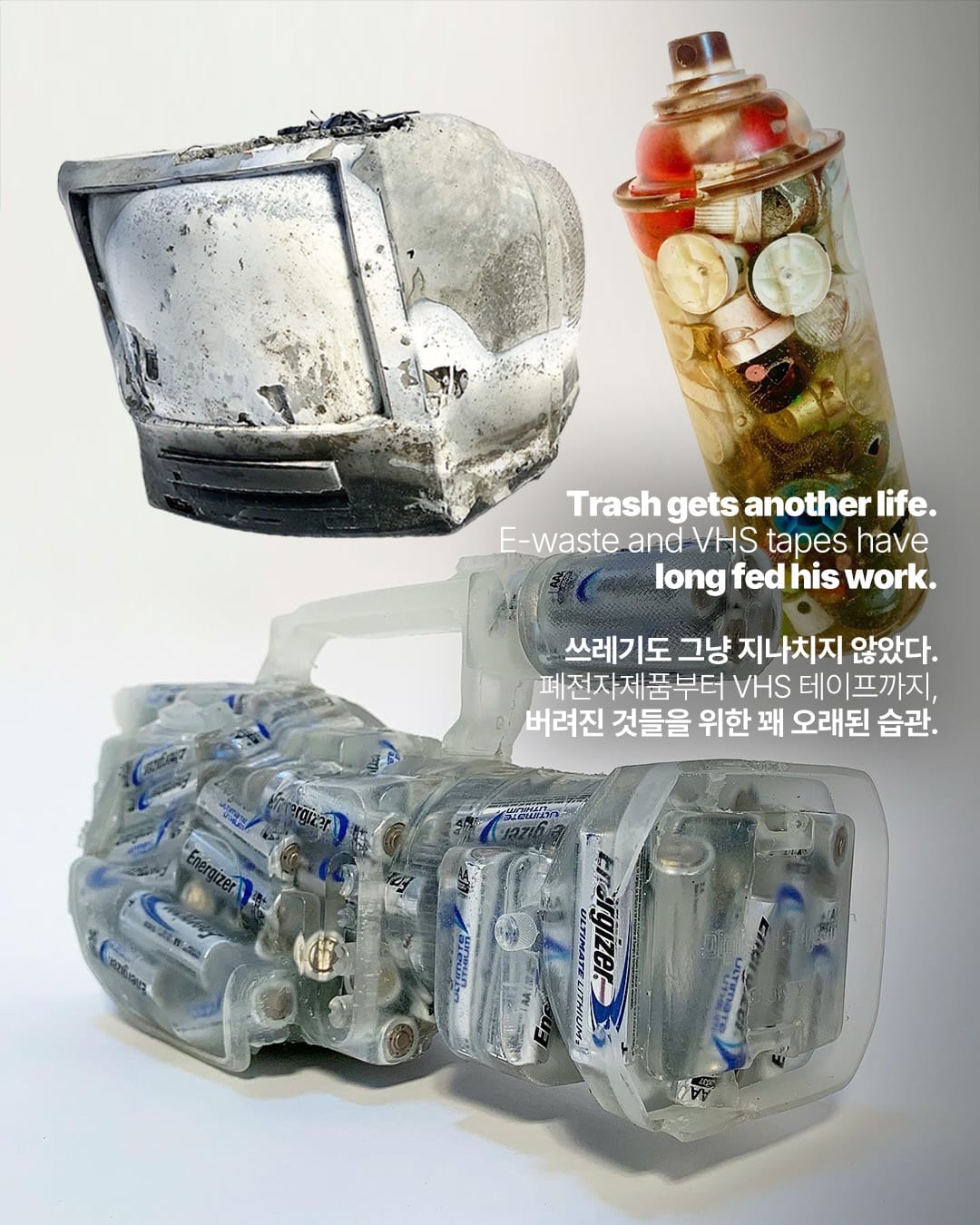
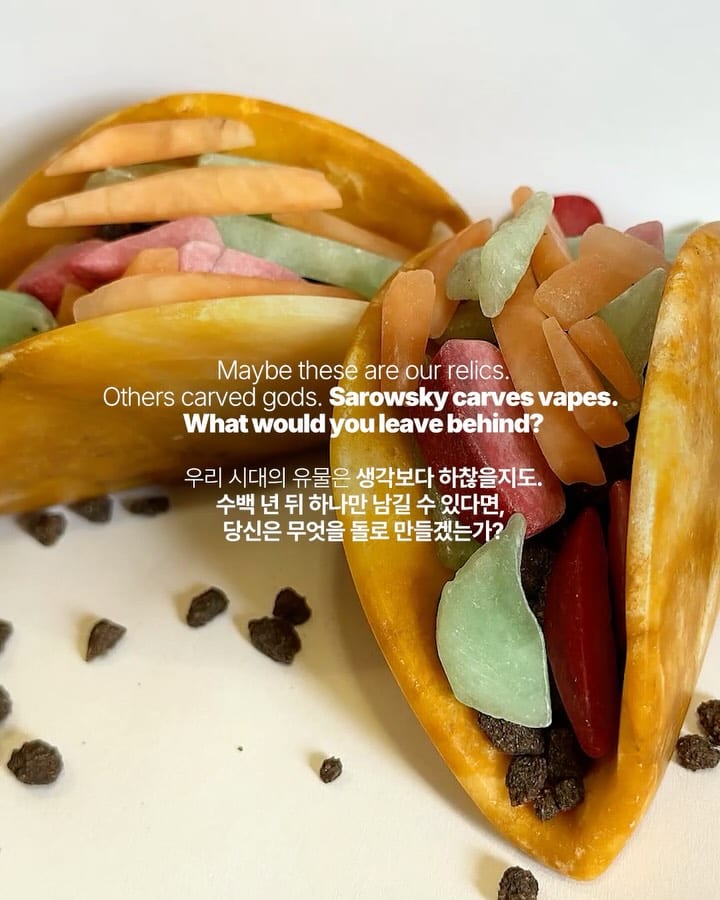
His stone keeps holding onto the ordinary. Hot dogs, ice cream, chocolate, sneakers, backpacks, even a Sony VX1000. Things consumed today and forgotten tomorrow are carved into unlikely monuments. Vapes and snacks survive instead of gods and heroes.
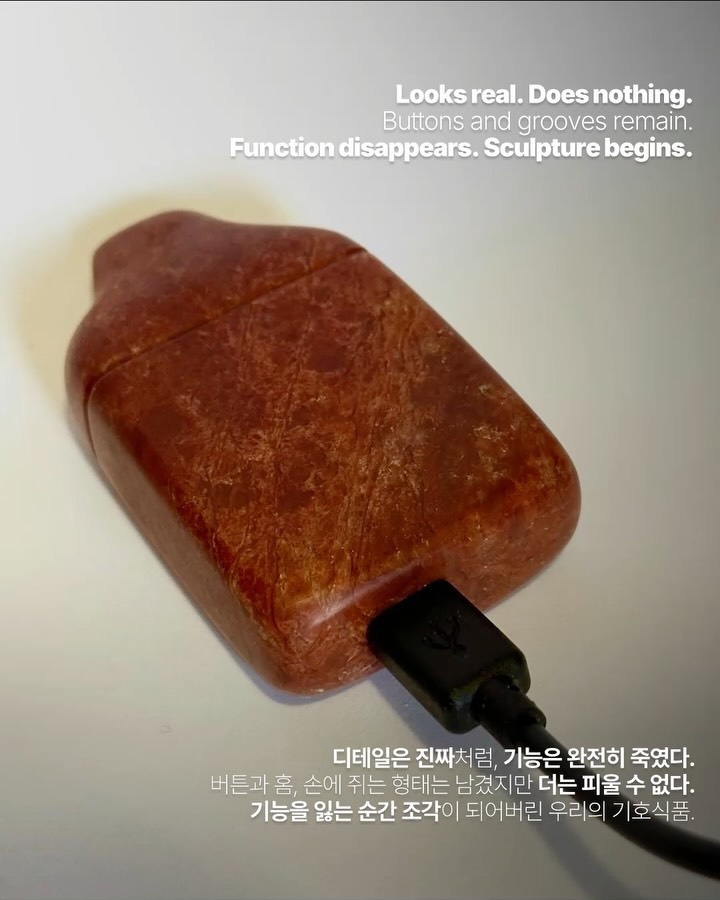
Materials range from marble to limestone and sandstone. Form follows reality but function disappears completely. A stone vape produces no smoke. Stone sneakers cannot be worn. They look like pointless replicas, but that's exactly why questions linger.
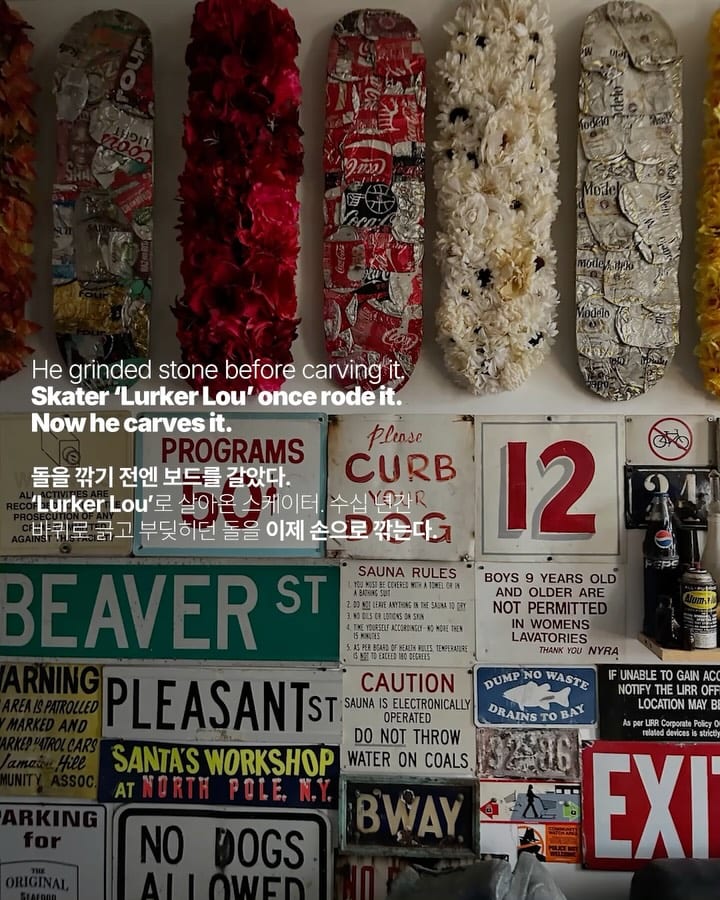
The artist was once a skateboarder. Someone who ground boards now grinds stone. A skater named Lurker Lou once rode the deck he now carves by hand. By turning past objects into sculpture, he preserves his own history as well.
What will people think our era looked like? Perhaps vapes, sneakers and hot dogs will be displayed like ancient relics. Which of the things you use and discard today do you think deserves to be carved into stone?
FAQ
What kind of work does Lewis Sarowski create?
Lewis Sarowski carves everyday disposables—vapes, sneakers, hot dogs—from marble, sandstone, and limestone. He replicates every button and groove with hyperrealism, but strips away all function, leaving permanent stone objects. His work grants centuries of longevity to things meant to be thrown away.
What objects does Lewis Sarowski carve in stone?
He sculpts disposable consumer goods: vapes, hot dogs, ice cream, chocolate, sneakers, backpacks, and Sony VX1000 video cameras. A former skater, Sarowski also carves the skateboards he used to ride, immortalizing his own history in stone alongside everyday ephemera.
What message does Lewis Sarowski's work convey?
By granting permanence to disposables, he questions contemporary consumer culture. If vapes and snacks replace gods and heroes as ancient artifacts, how will future generations remember us? The seemingly pointless replication becomes meaningful precisely because of its absurdity.