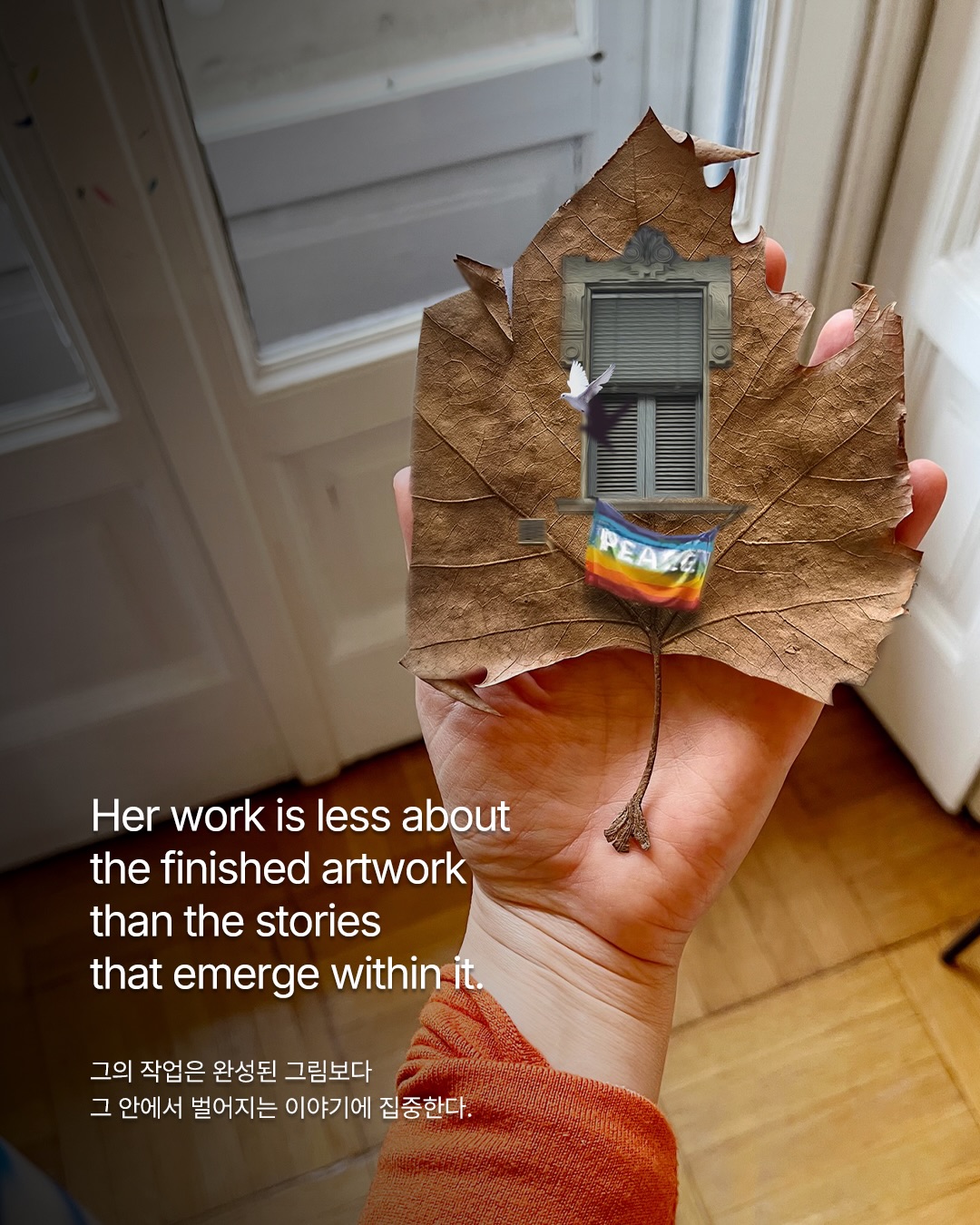
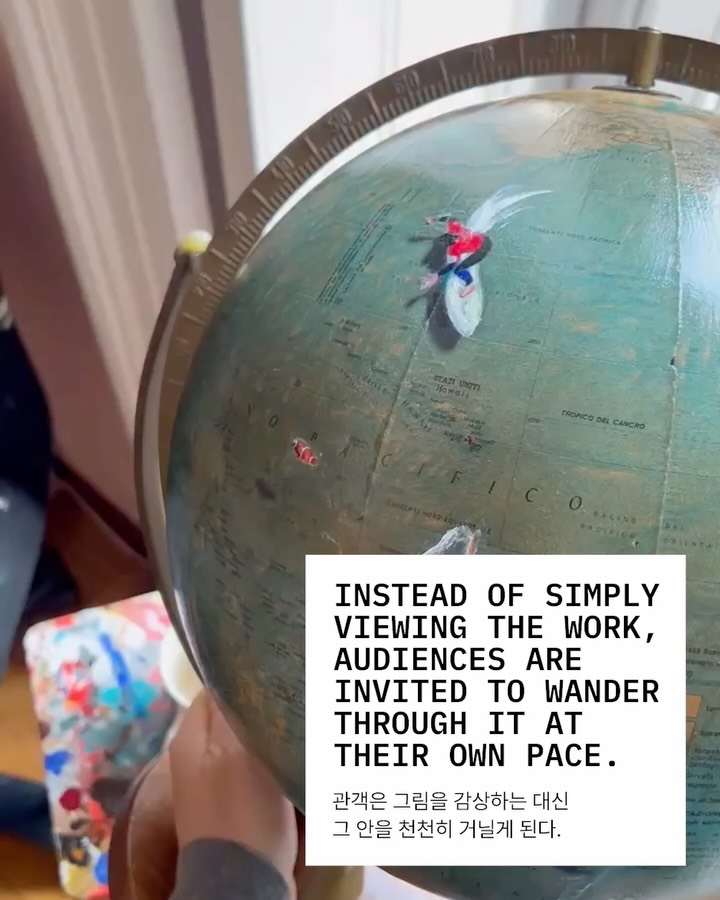
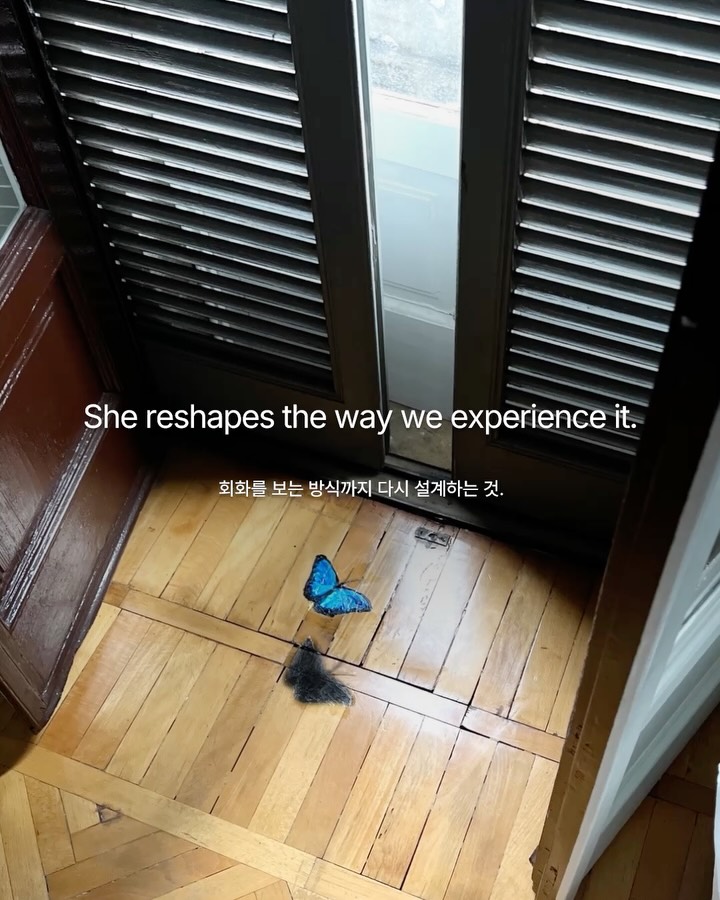
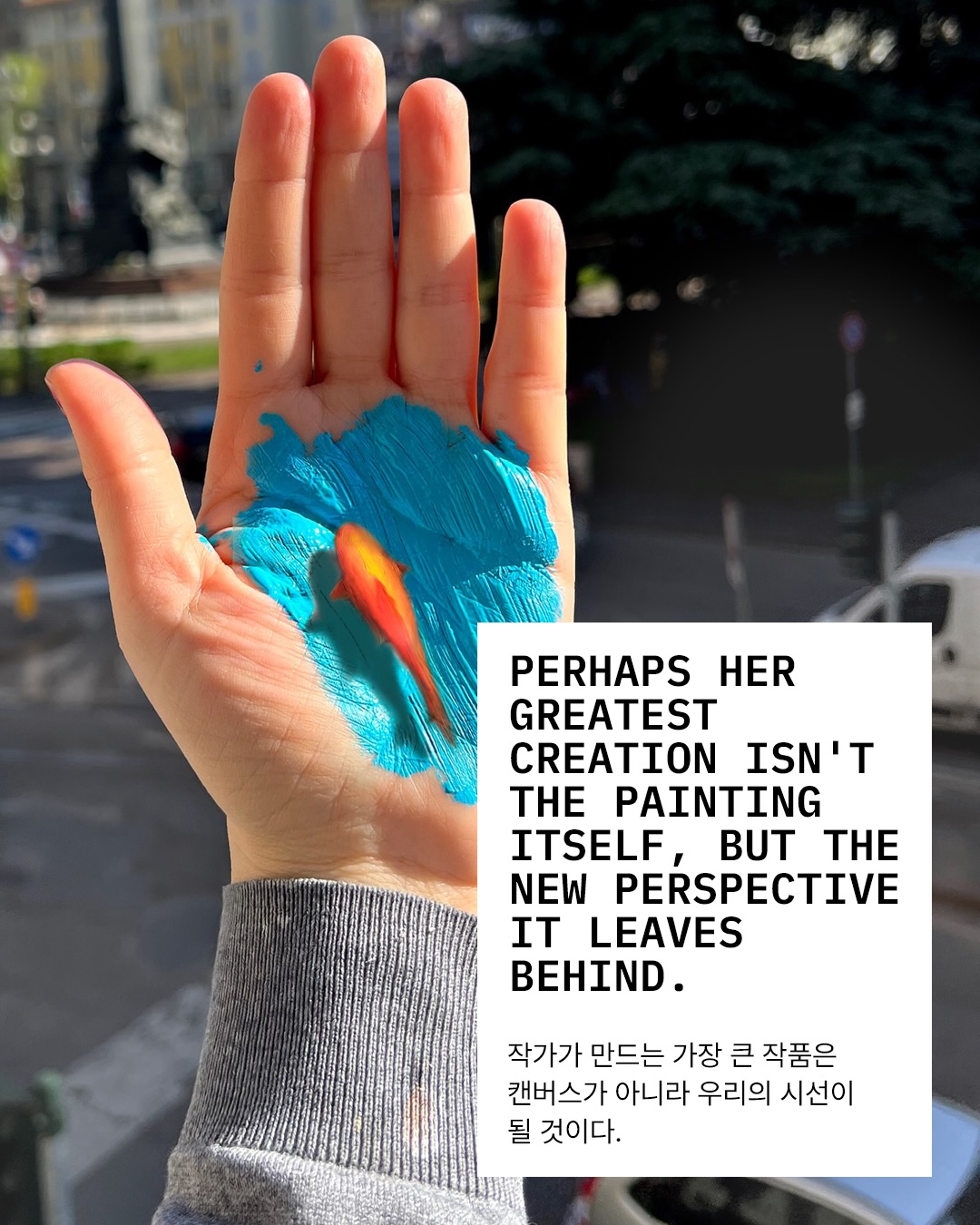
Standing before the work of Milan-based artist Golsa Golchini, viewers don't simply observe—they step inside. A stroke of blue paint becomes a swimming pool. A picture frame transforms into a staircase. The canvas is no longer a flat image but a stage where miniature lives quietly unfold.
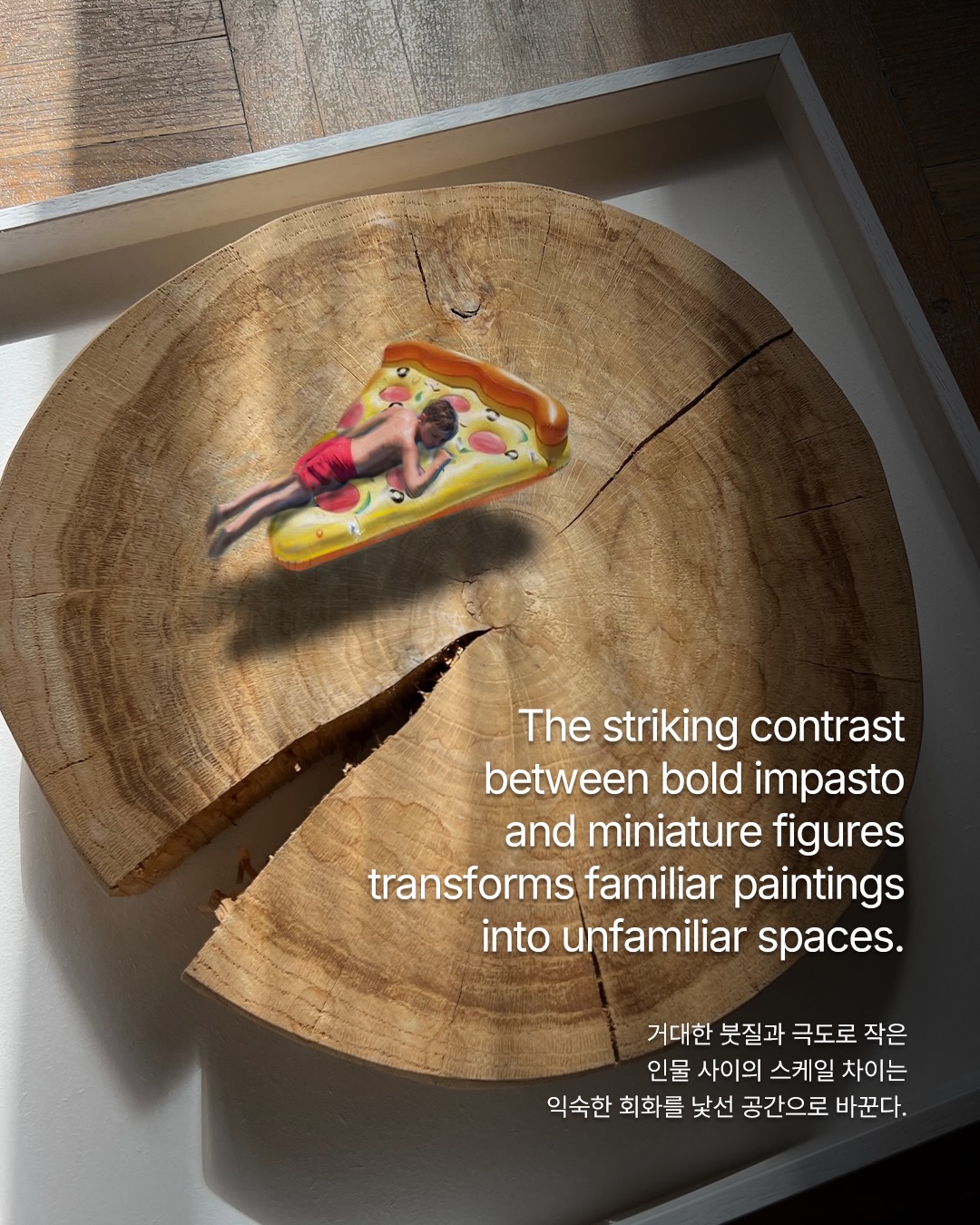
Golchini doesn't just paint; she builds worlds atop the paint itself. The dramatic contrast between heavy impasto brushstrokes and tiny figures transforms familiar paintings into uncanny spaces, inviting viewers to explore rather than passively look. Old paintings become new landscapes, and within them, miniature people carry on their daily routines.
Her work prioritizes the stories that emerge within the frame over the finished artwork itself. The juxtaposition of thick texture and delicate figures redesigns not just the canvas but the very way we see it. Perhaps Golchini's greatest creation isn't the painting at all—it's the new perspective it leaves behind. She doesn't repaint the canvas; she repaints how we experience it.

FAQ
Who is Golsa Golchini?
Golsa Golchini is a Milan-based contemporary artist known for placing miniature figures atop thick brushstrokes, transforming paintings into living stages. She reinterprets the canvas not as a flat image but as a space where people inhabit.
What distinguishes Golsa Golchini's work?
The defining feature is the scale contrast between monumental impasto brushwork and tiny figures. This tension transforms familiar painting into uncanny space, prompting viewers to explore rather than merely observe the work.
How does Golsa Golchini reinterpret painting?
Golchini builds worlds on top of paint rather than simply applying it. Blue paint becomes a swimming pool, frames turn into staircases, and canvases become stages where miniature figures live their daily lives, fundamentally redesigning how we experience painting.