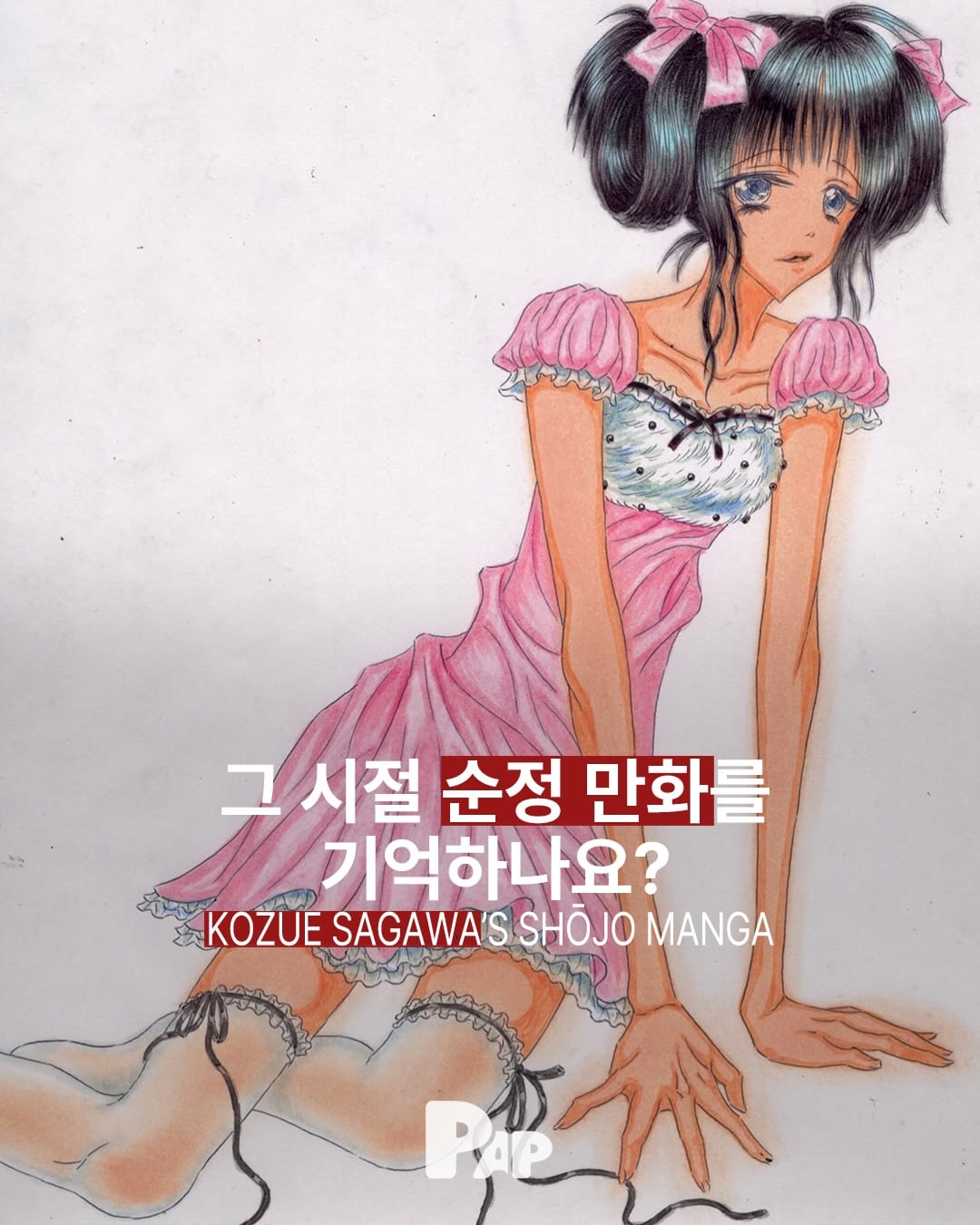
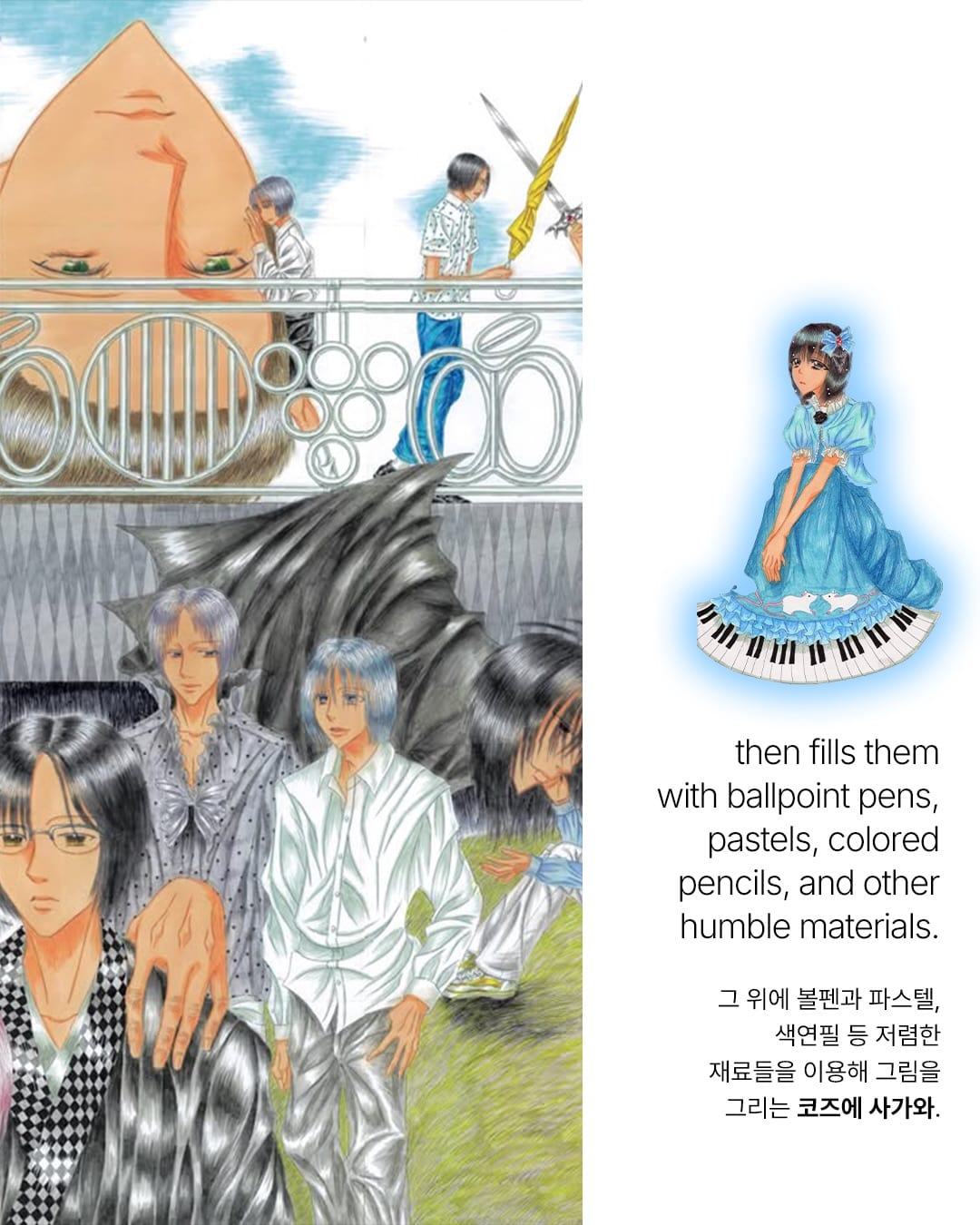
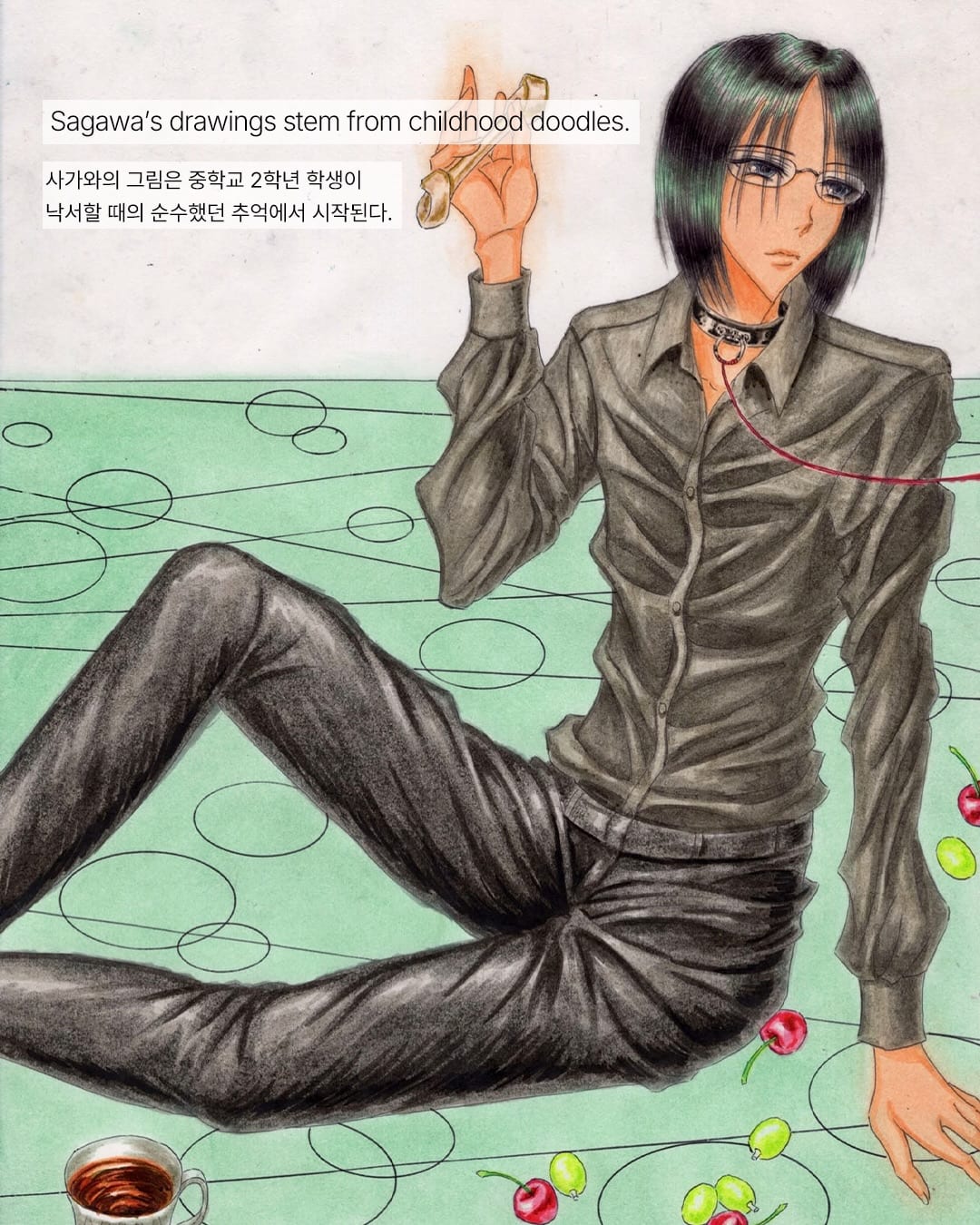
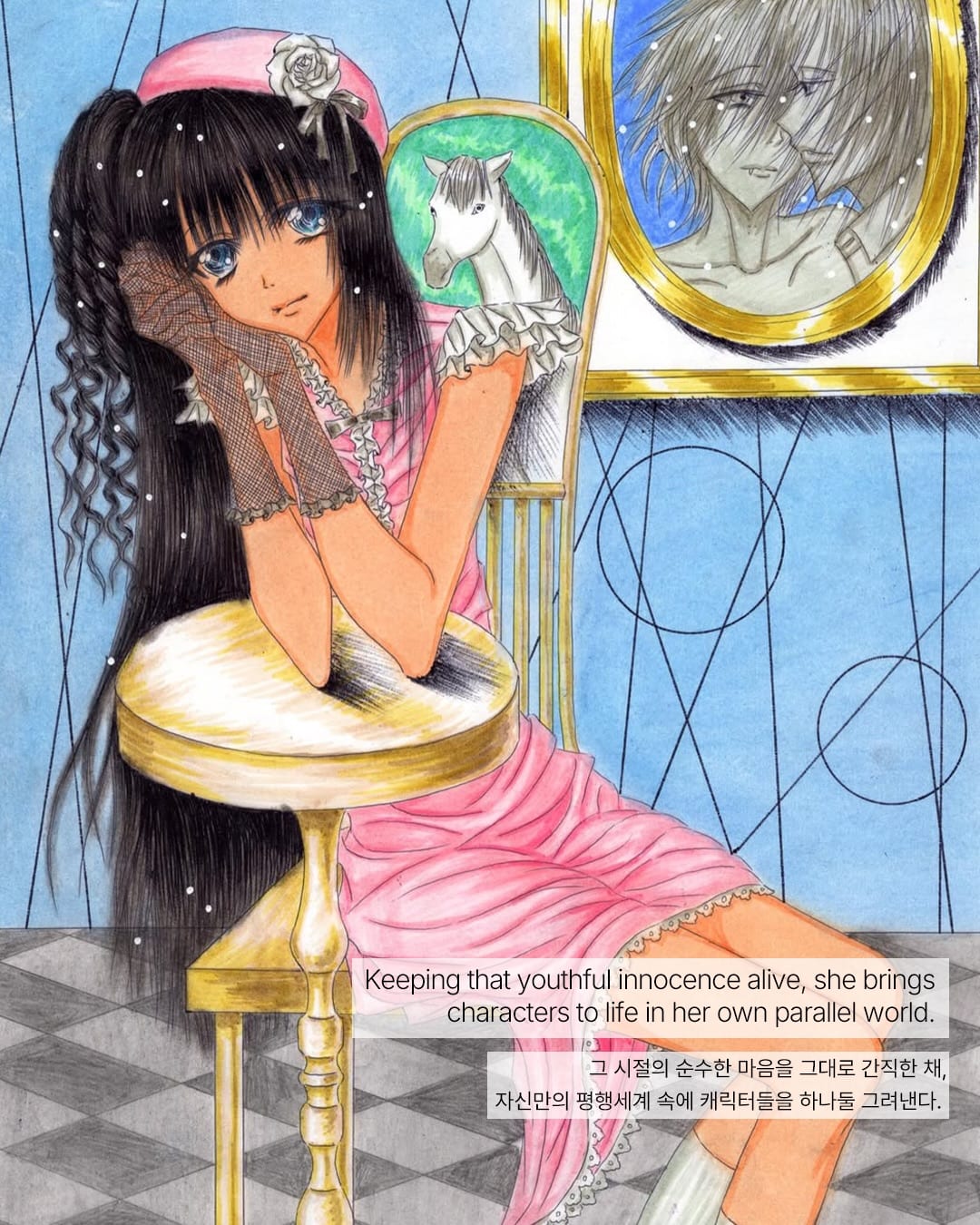
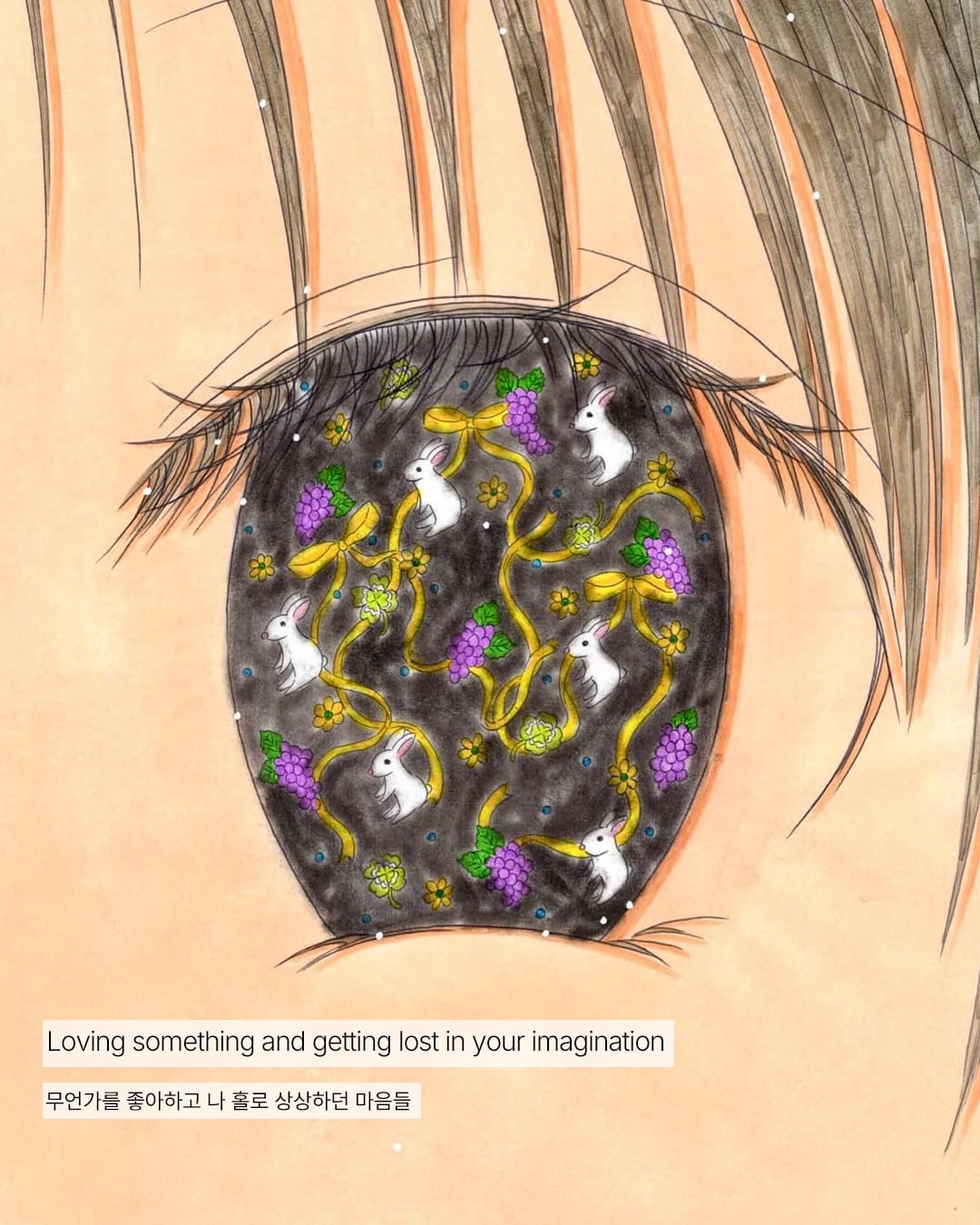
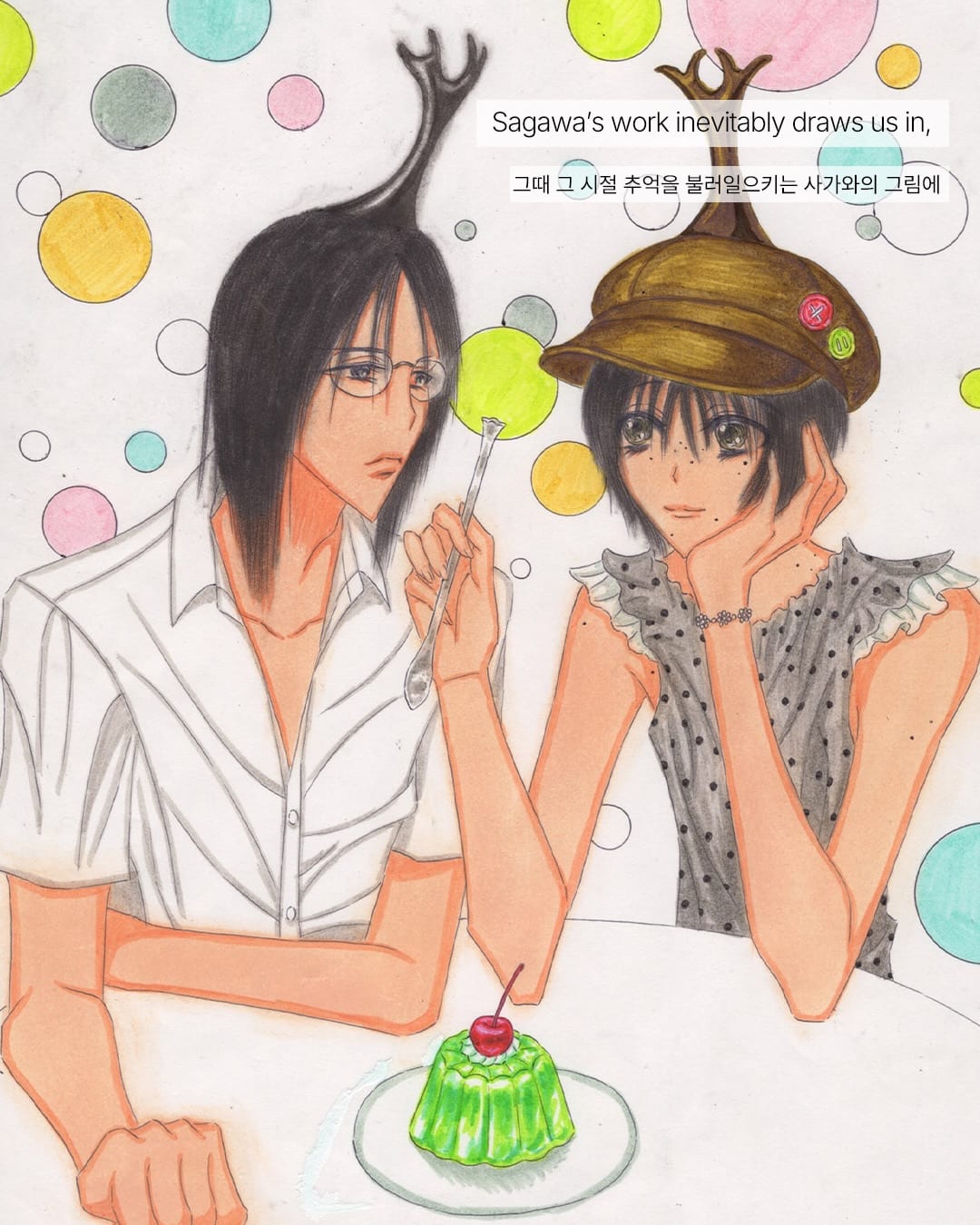
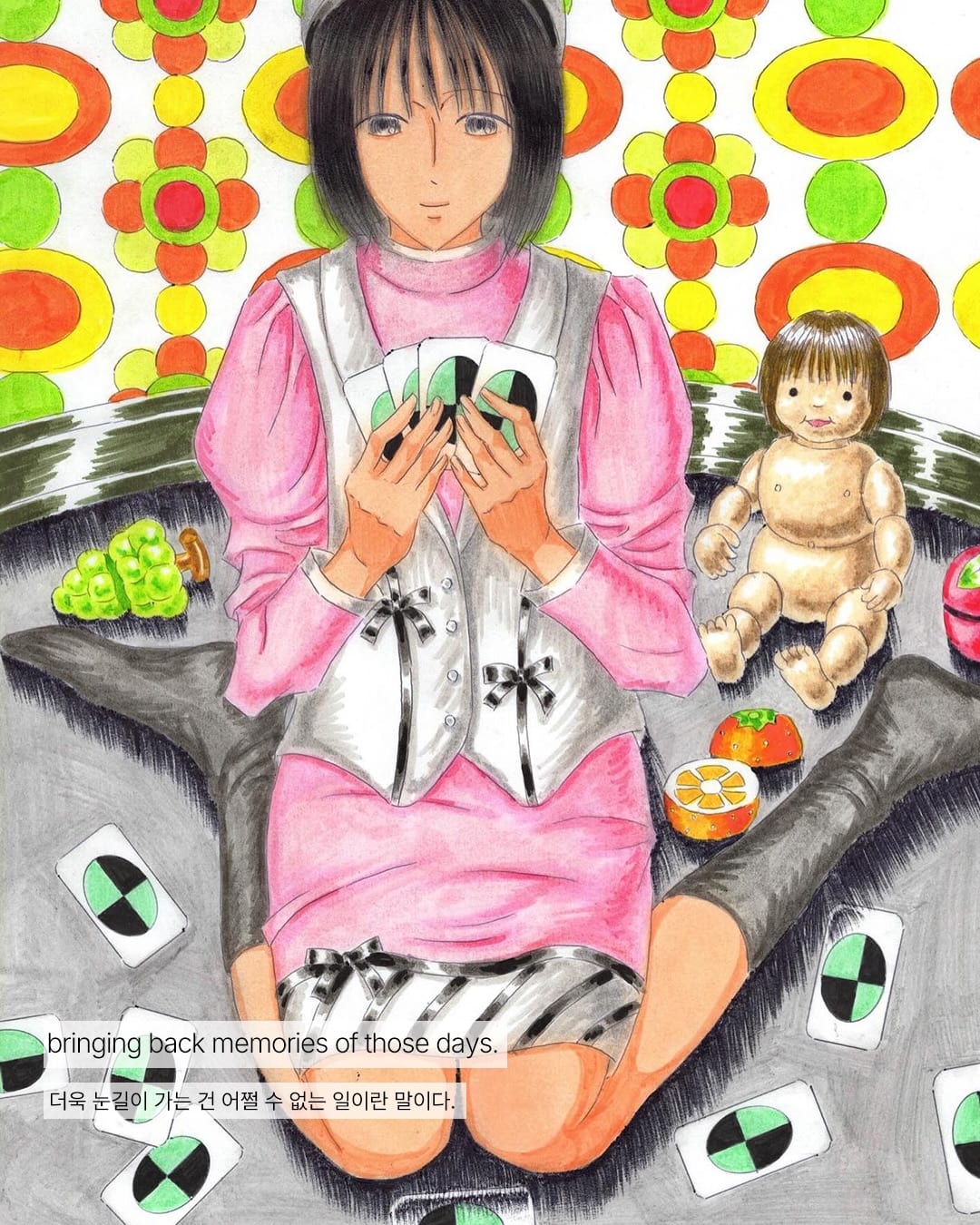
Sagawa preserves that innocent feeling from those days, drawing characters one by one into a parallel world of her own. The emotions of loving something and getting lost in solo imagination remain intact. Her humble materials might seem modest, but that very simplicity makes the work more powerful. The delicate lines and sentiment of Japanese shōjo manga are resurrected on A4 paper.
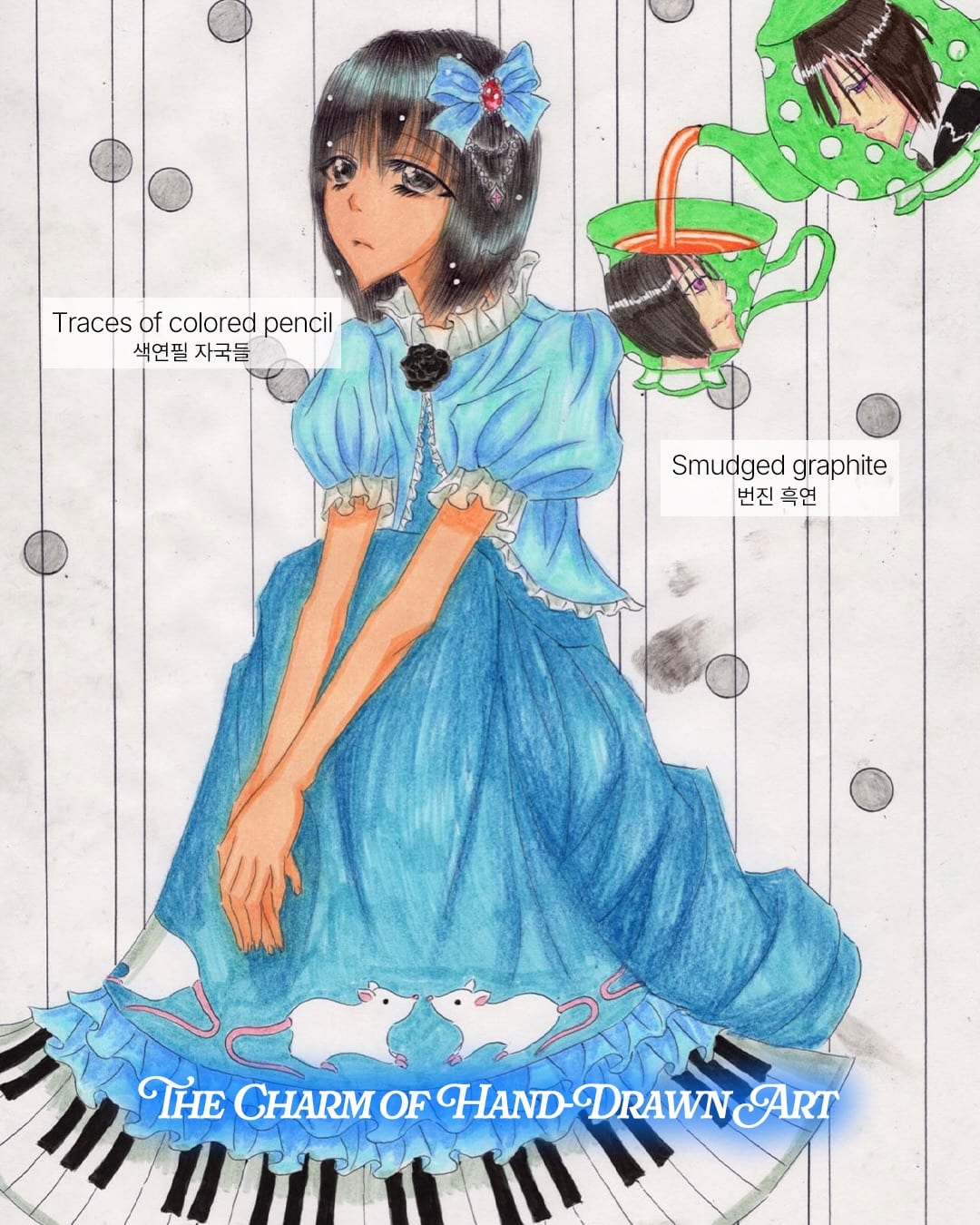
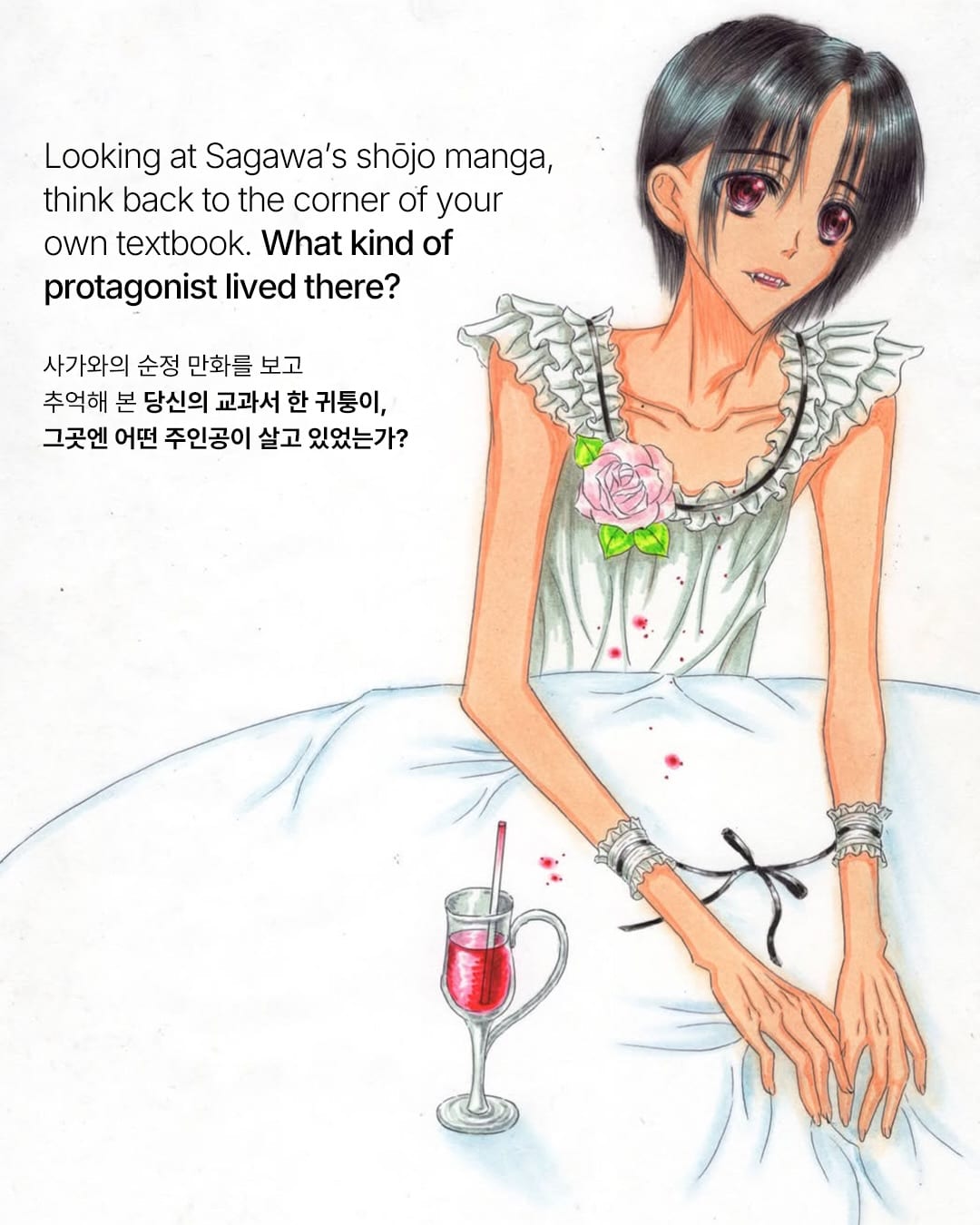
Sagawa's practice proves that art doesn't require expensive tools or grand canvases. Characters born on cellophane-taped paper become fully realized illustrations. Her Instagram features a range of figures: a girl in a pink dress, men in tailored suits, each seemingly holding their own story. Every character feels like it belongs to a narrative waiting to unfold.
They say there's no turning back once you fall for the charm of shōjo manga. Looking at Sagawa's drawings, that rings true. It's impossible not to recall the protagonists you secretly drew in the margins of your textbooks, the giggles shared with friends over those sketches. What kind of protagonist lived in the corner of your textbook?
FAQ
What materials does Kozue Sagawa use to create her drawings?
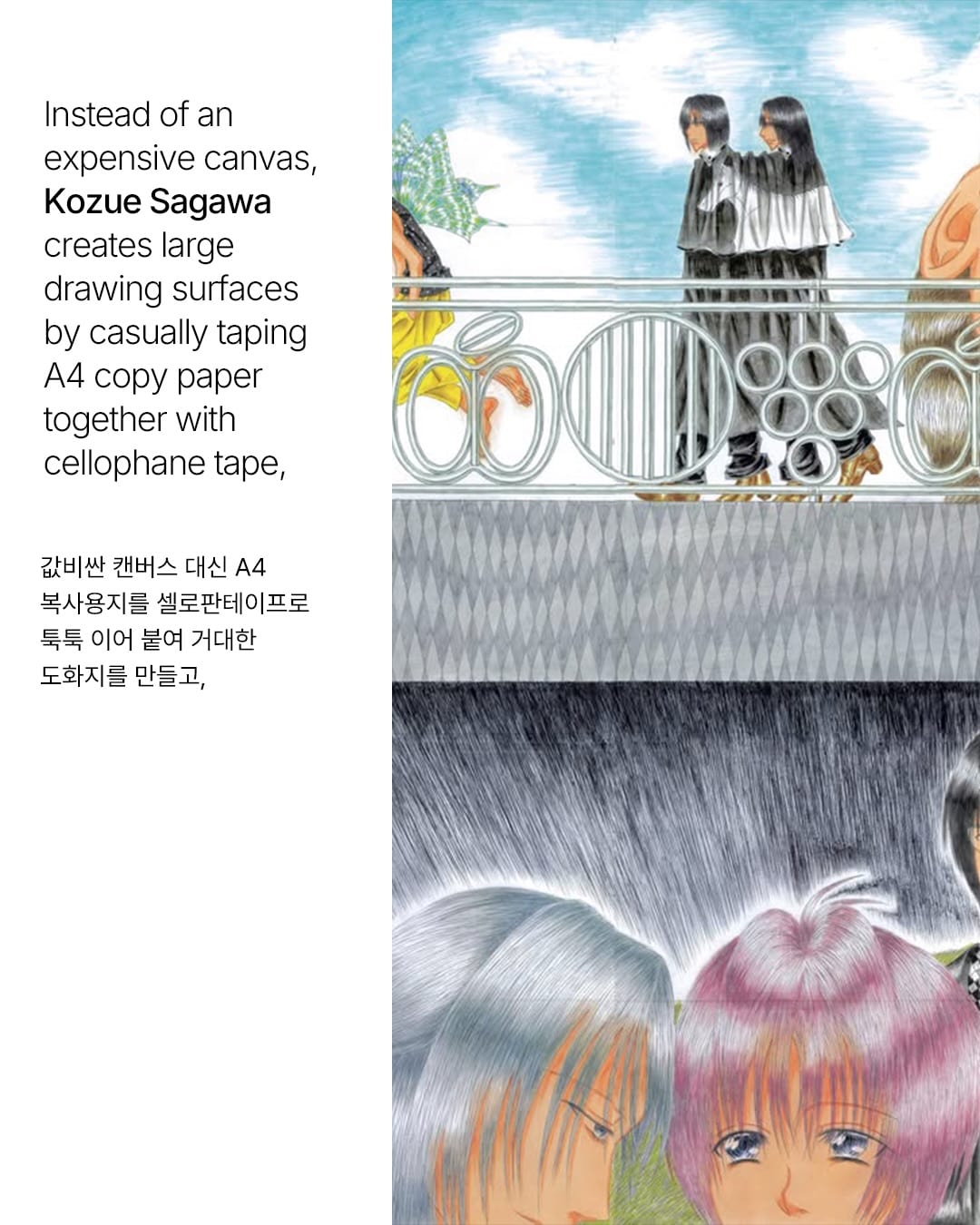
Kozue Sagawa works with A4 copy paper taped together as her canvas, using only inexpensive materials like ballpoint pens, pastels, and colored pencils. Rather than costly canvases or professional art supplies, she creates shojo manga-style illustrations with everyday tools.
Where does Sagawa find inspiration for her work?
Sagawa's work draws from the pure memory of doodling in the corners of textbooks during eighth-grade classes. She captures the delicate lines and sensibility of Japanese shojo manga while preserving the feeling of losing herself in imagination during those formative years.
What is shojo manga?
Shojo manga is a Japanese comic genre aimed primarily at teenage girls, centered on romance and emotional storytelling. Characterized by delicate linework, big-eyed characters, and expressive emotional direction, it gained immense popularity in Korea throughout the 1970s to 1990s.