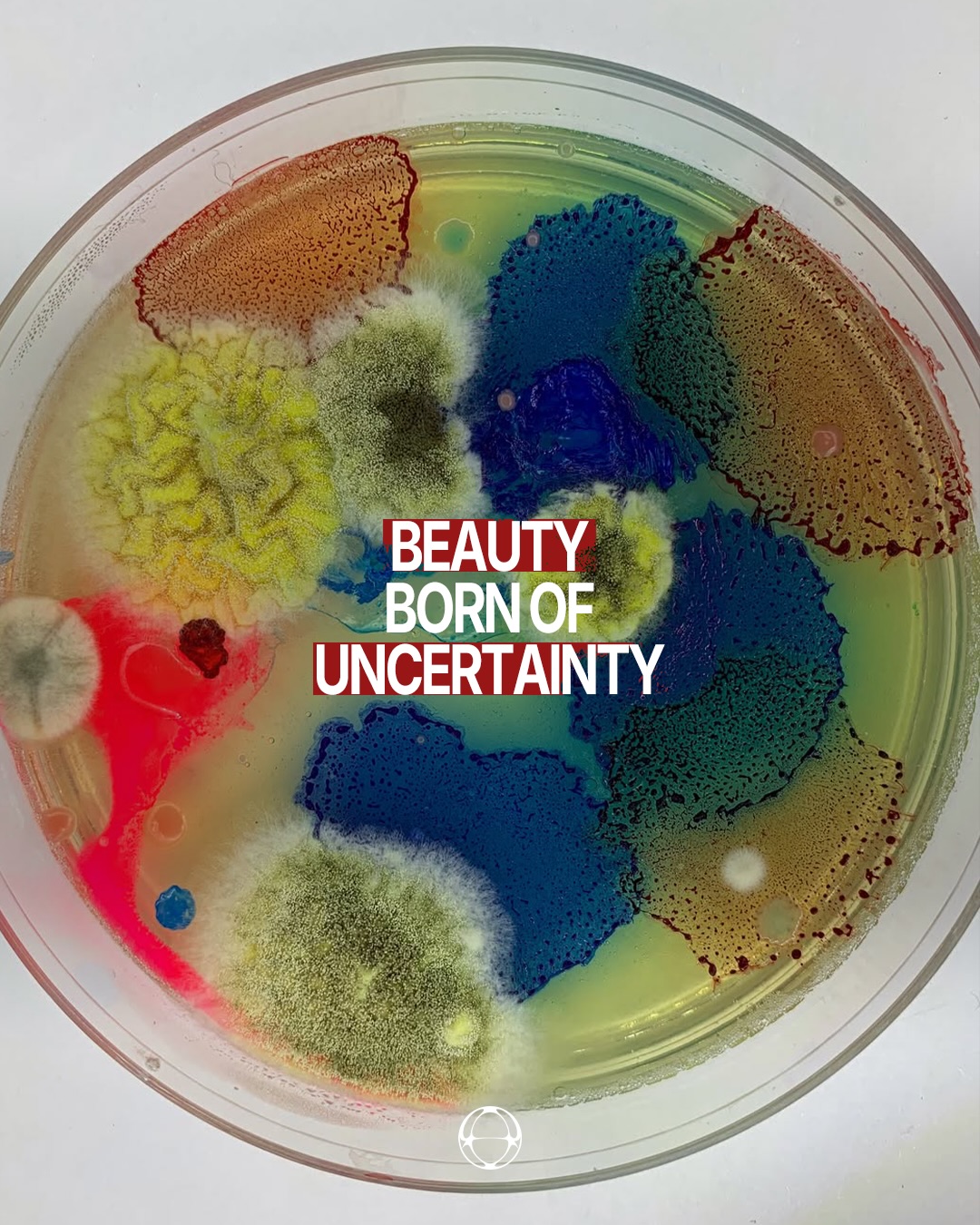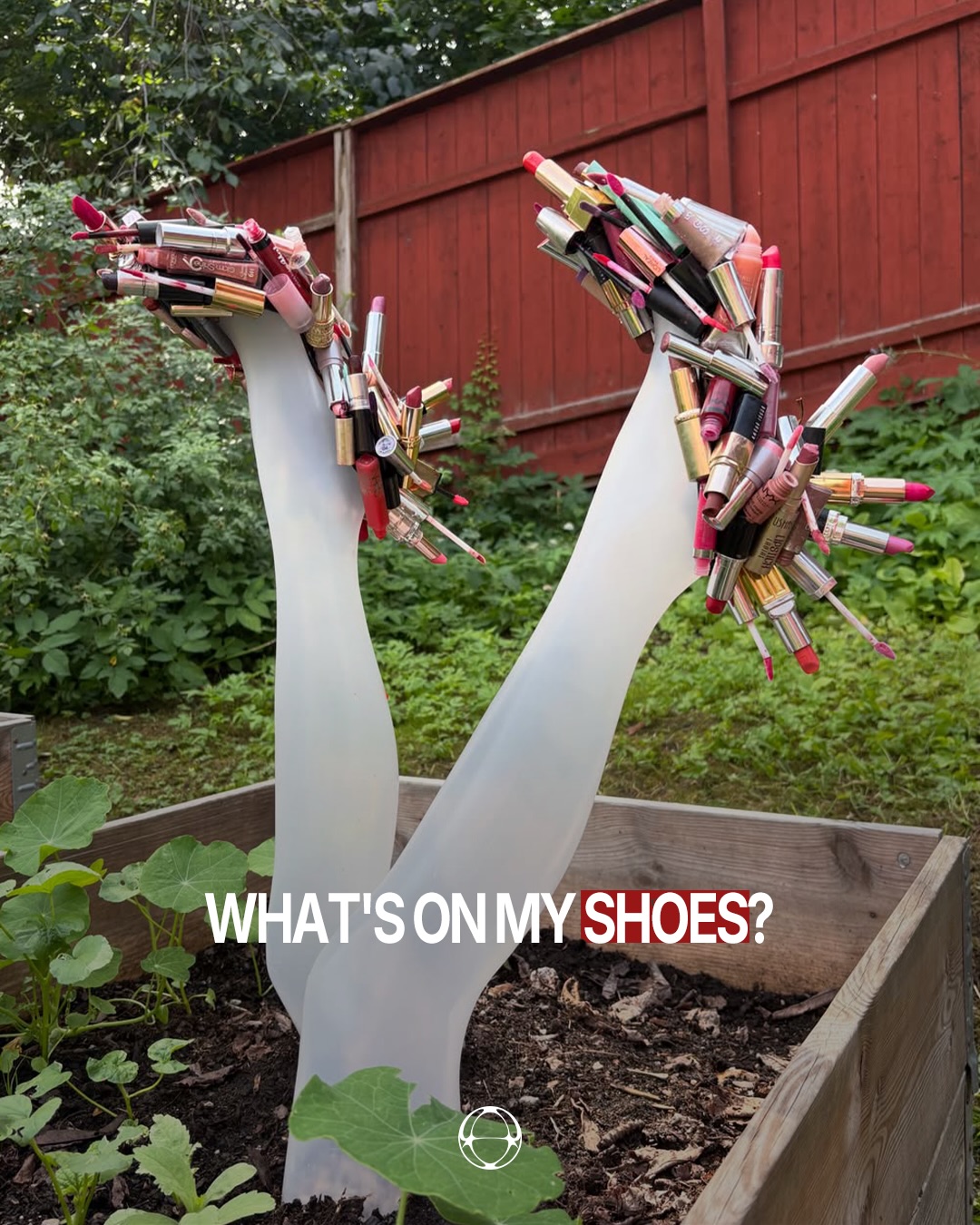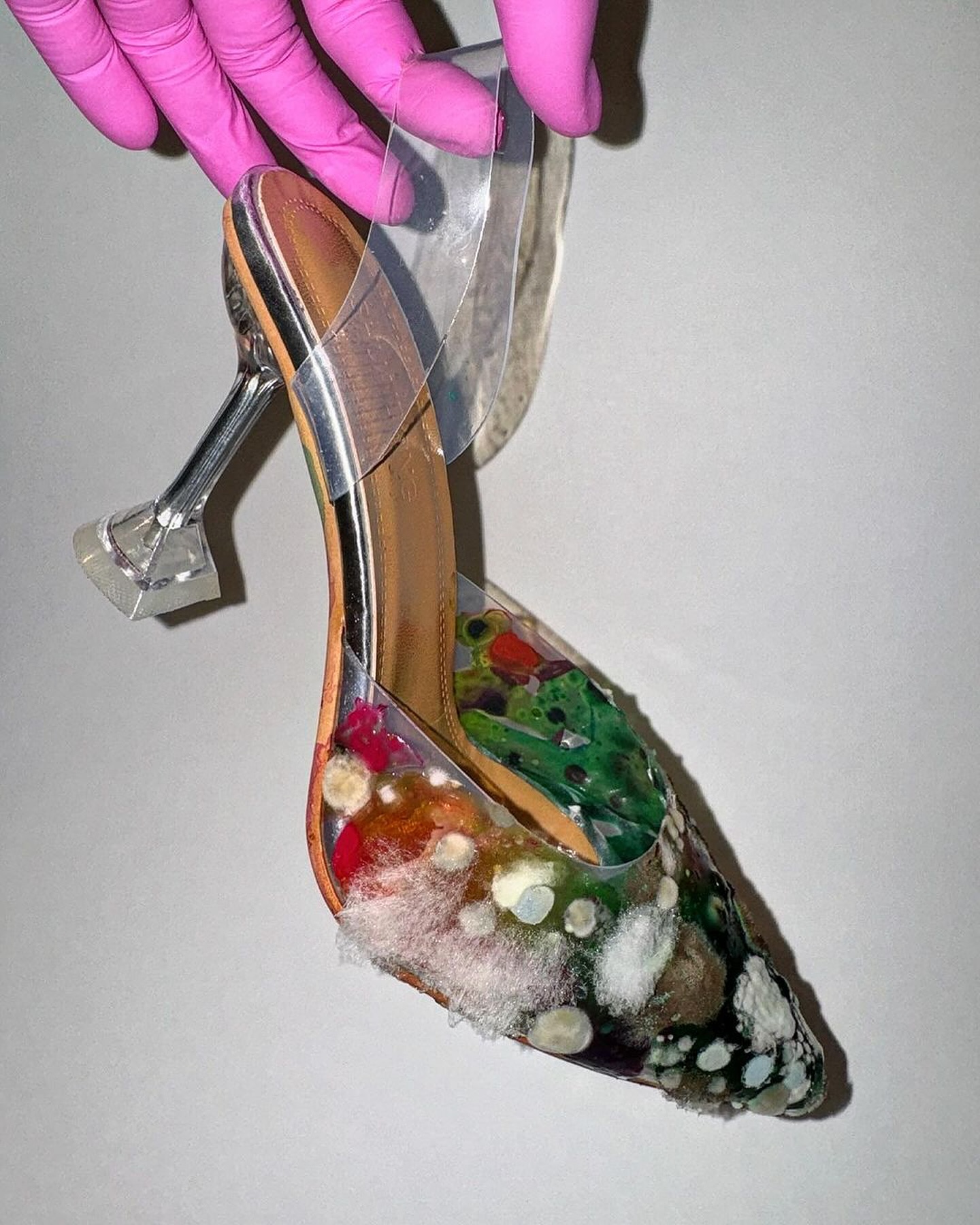
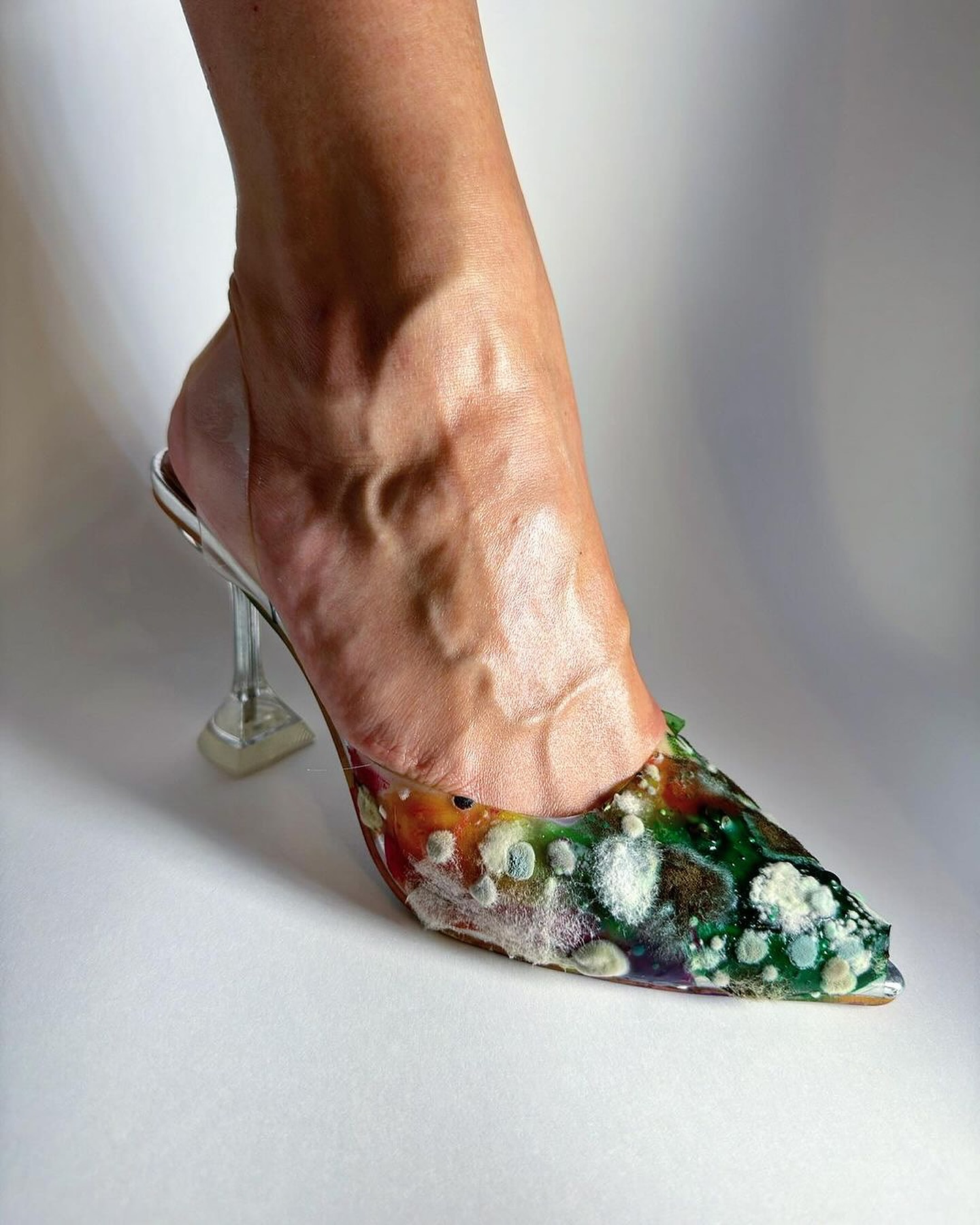
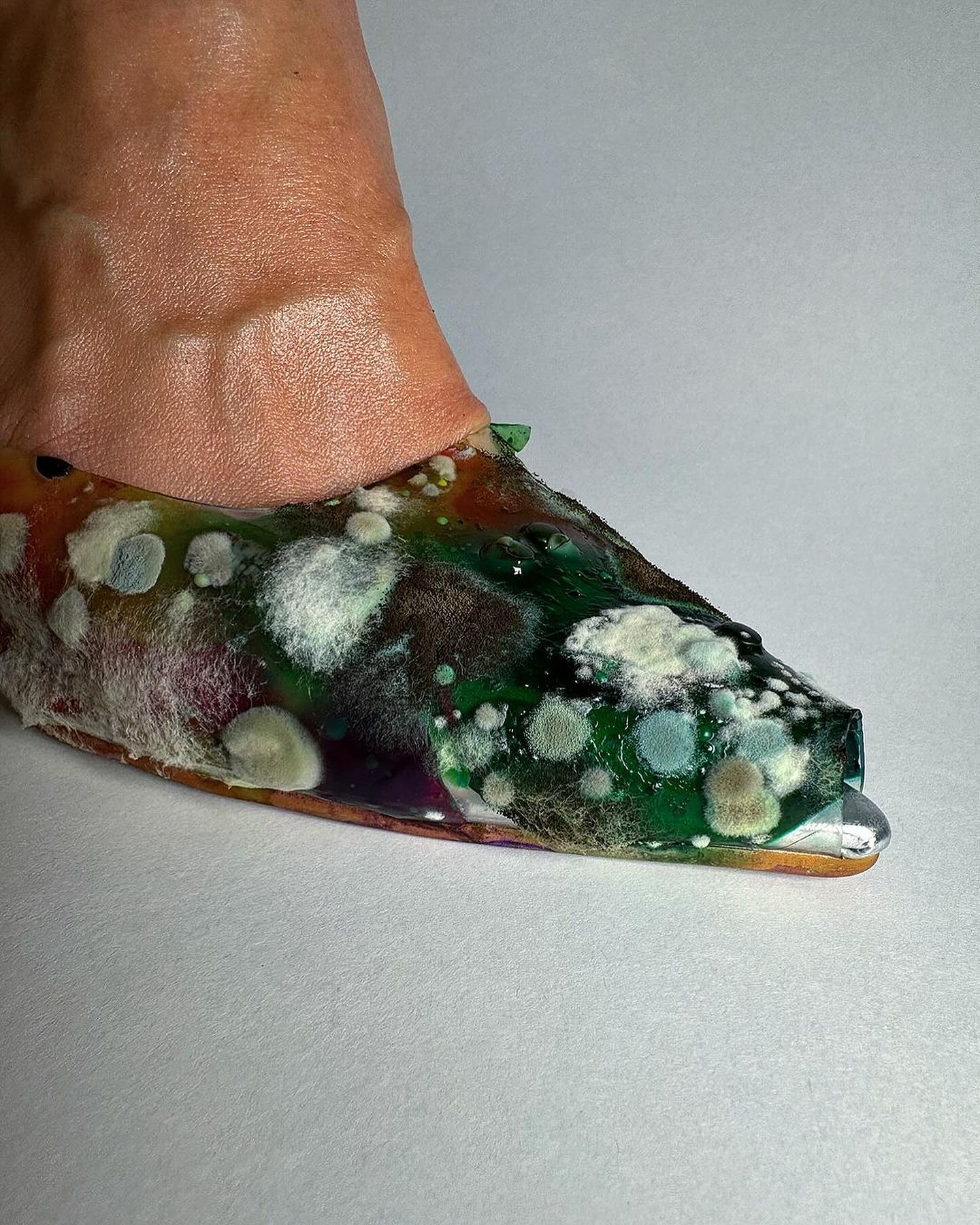
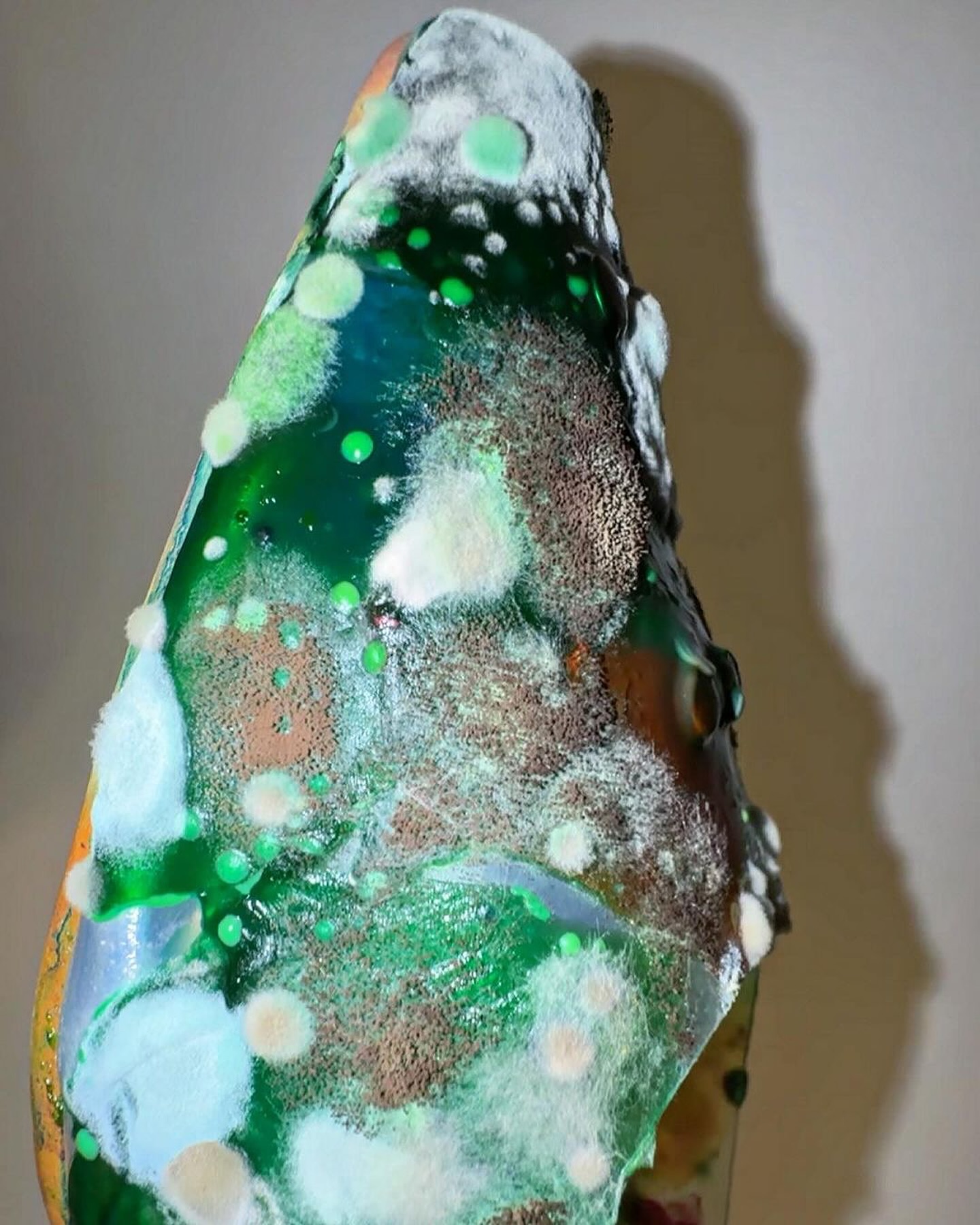
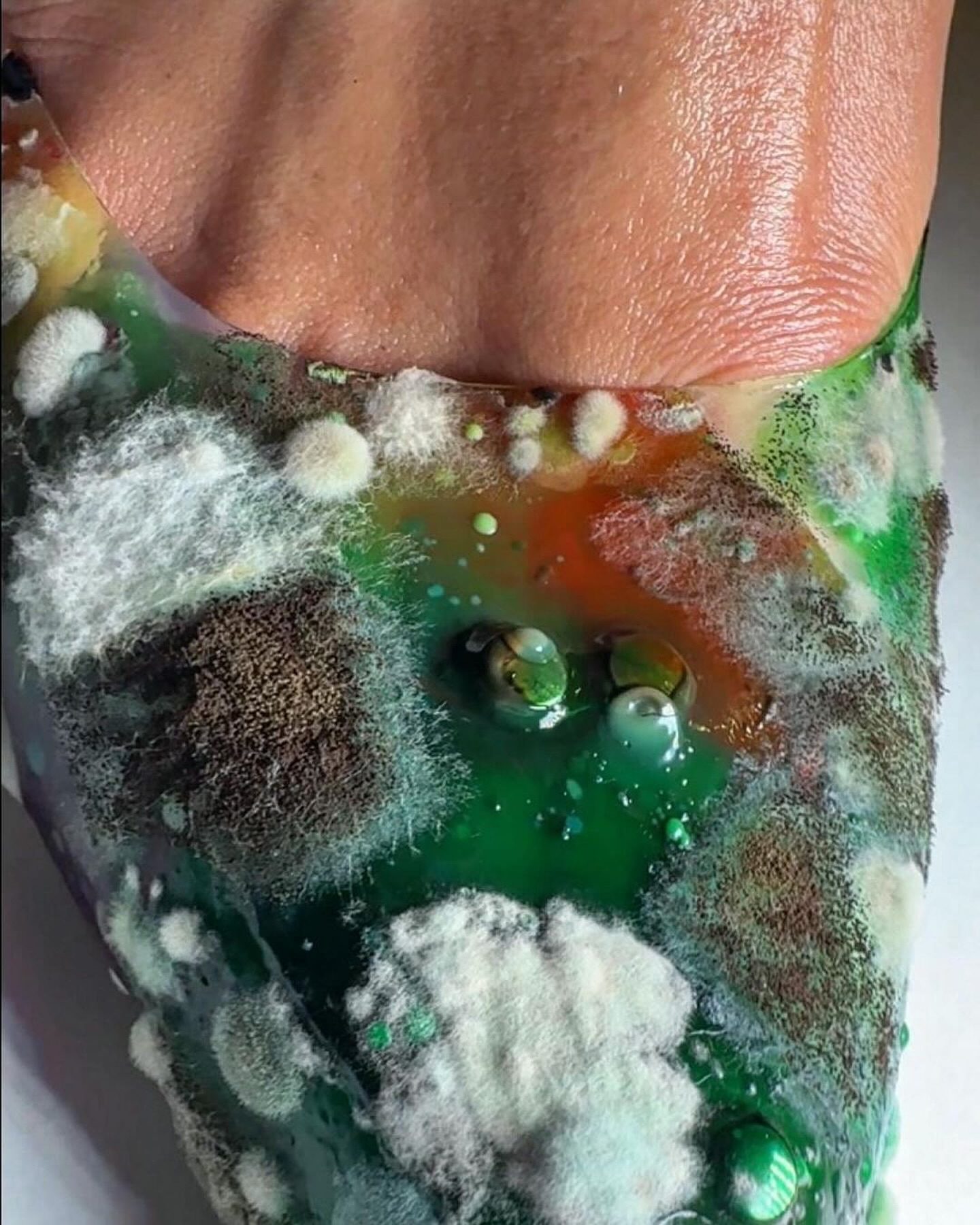
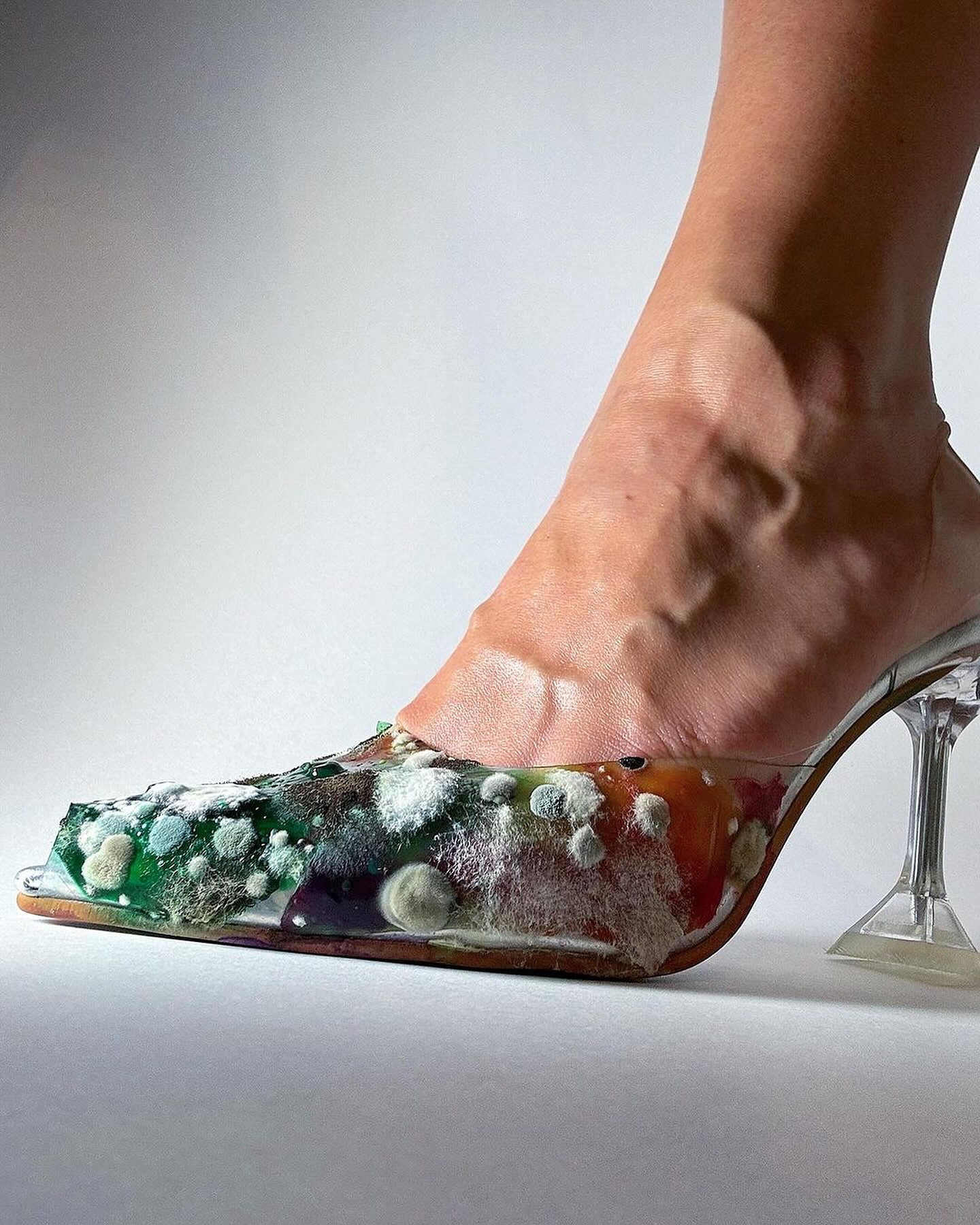
These heels embody the delicate balance between natural growth processes and human intervention. As the artwork grows and evolves over time, it questions our fixed ideas about aesthetics, particularly the dichotomy between beauty and decomposition. The vibrant microbial colonies sprawling across transparent heels visualize vitality and organicity, blurring the lines between the natural and the artificial in unexpected ways.
Plesen's practice explores the intersection of fashion, art, and biology. This is not simply a wearable product but a conceptual piece proving that living organisms can function as artistic media. It suggests that the future of fashion may extend beyond textiles and stitching, evolving through collaboration with living entities. The work proposes a radical reimagining of materiality in fashion design.
Positioned somewhere between repulsion and fascination, this piece poses a provocative question: Would you dare to walk in them? It invites us to reconsider what we accept as beautiful, wearable, and artful.
FAQ
How are Dasha Plesen's microbial high heels made?
Dasha Plesen cultivates microorganisms in Petri dishes, then combines them with pigment dyes to grow them on high heel surfaces. Through this process, spores invisible to the naked eye transform into visible patterns, and the work itself grows and evolves over time. This is experimental methodology converting natural life processes into art.
Can fashion works using microorganisms actually be worn?
Plesen's microbial high heels are conceptual art pieces rather than practical wearable products. Composed of living microorganisms, they change and may decompose over time, making them difficult to function as shoes in the traditional sense. Instead, they hold meaning as sculptural works exploring boundaries between fashion, biology, and art.
What is bio-fashion and why is it gaining attention?
Bio-fashion is an experimental field integrating biotechnology and living organisms into fashion design. With growing interest in sustainability, microorganism-based materials are gaining attention as alternatives to conventional chemical fibers and leather. Attempts like Plesen's work using life forms as artistic media present future possibilities for fashion and are evaluated as environmentally friendly alternatives.