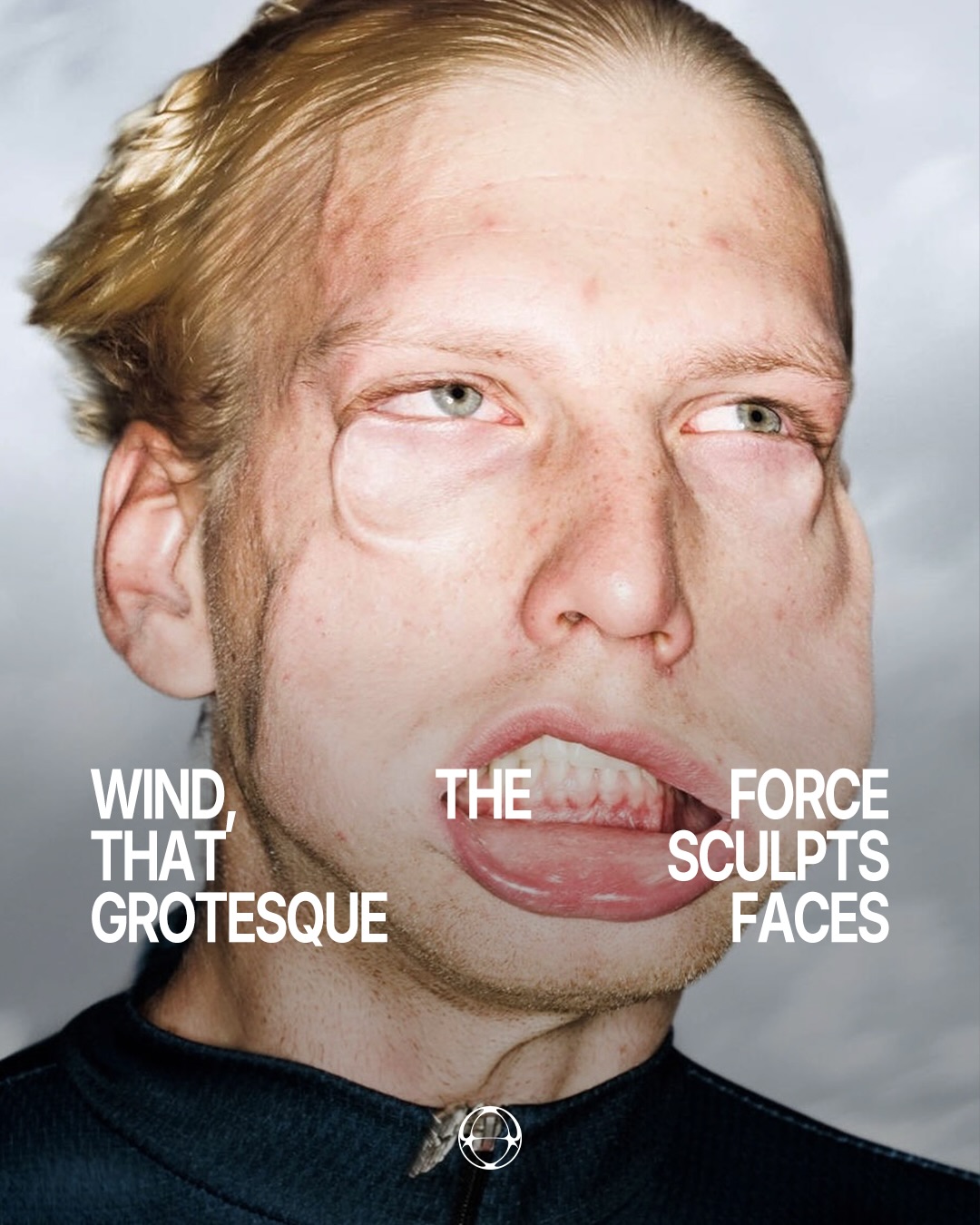
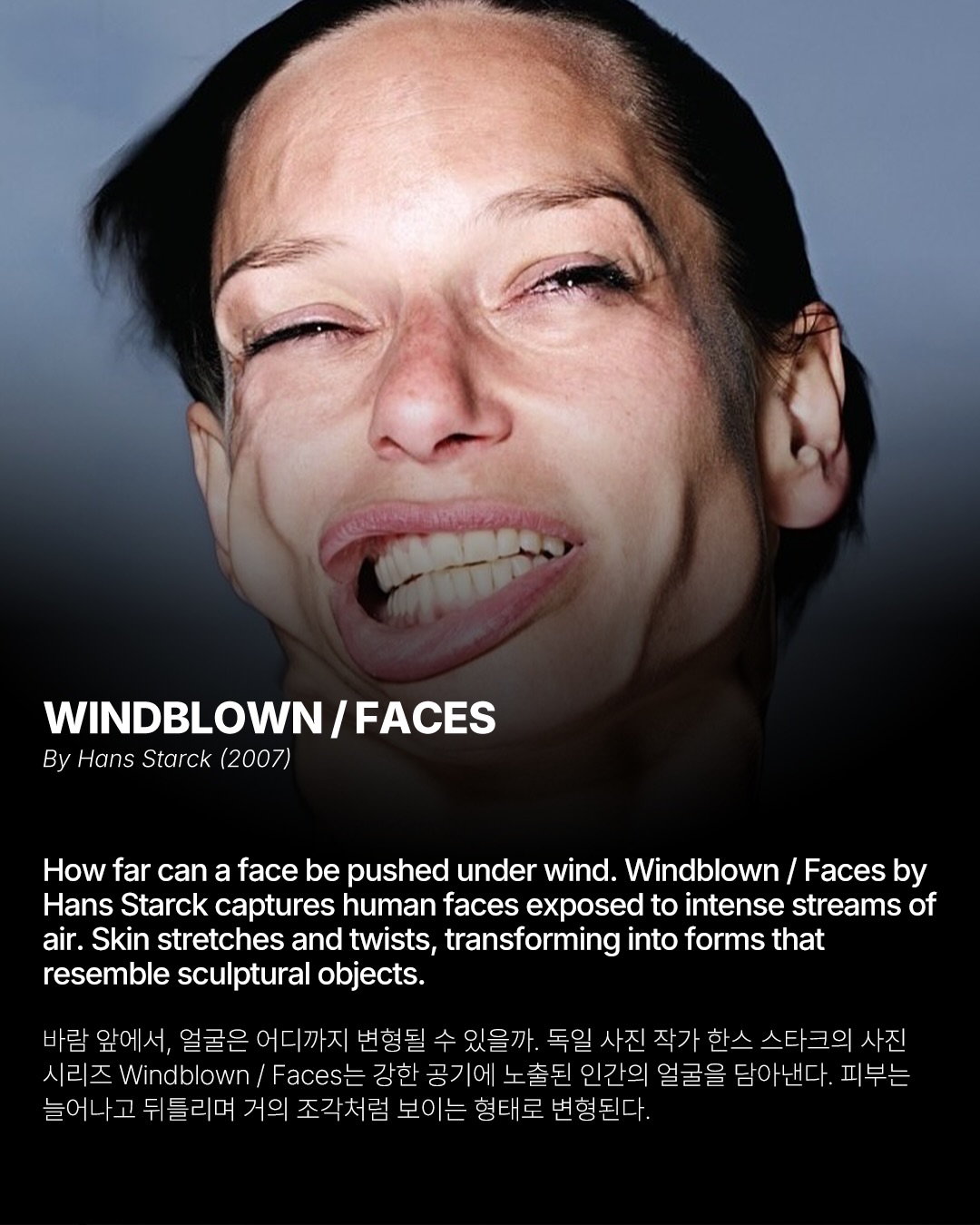
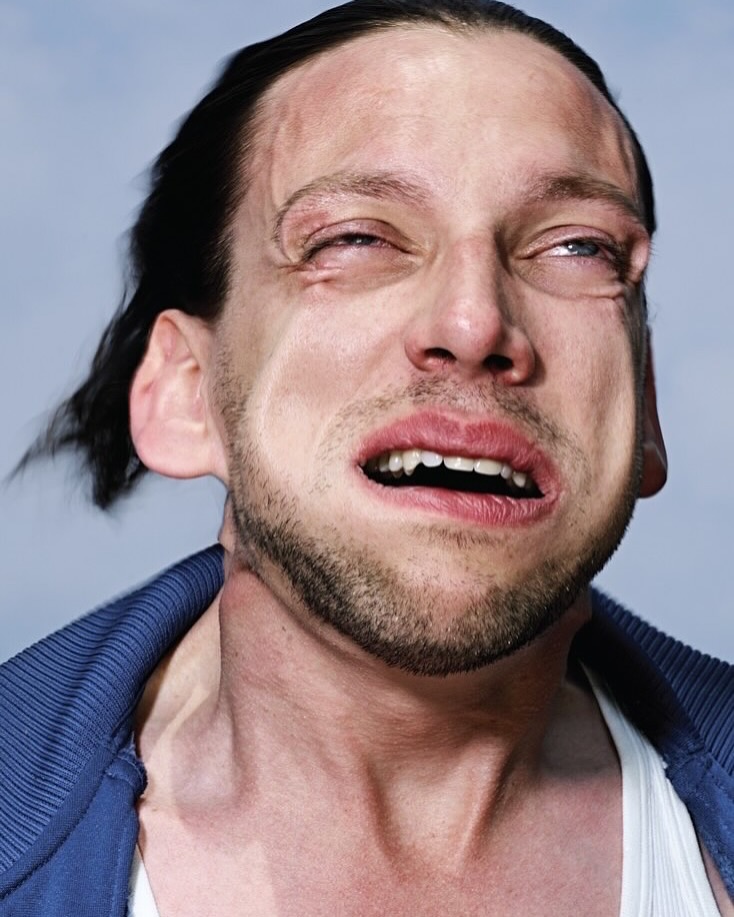
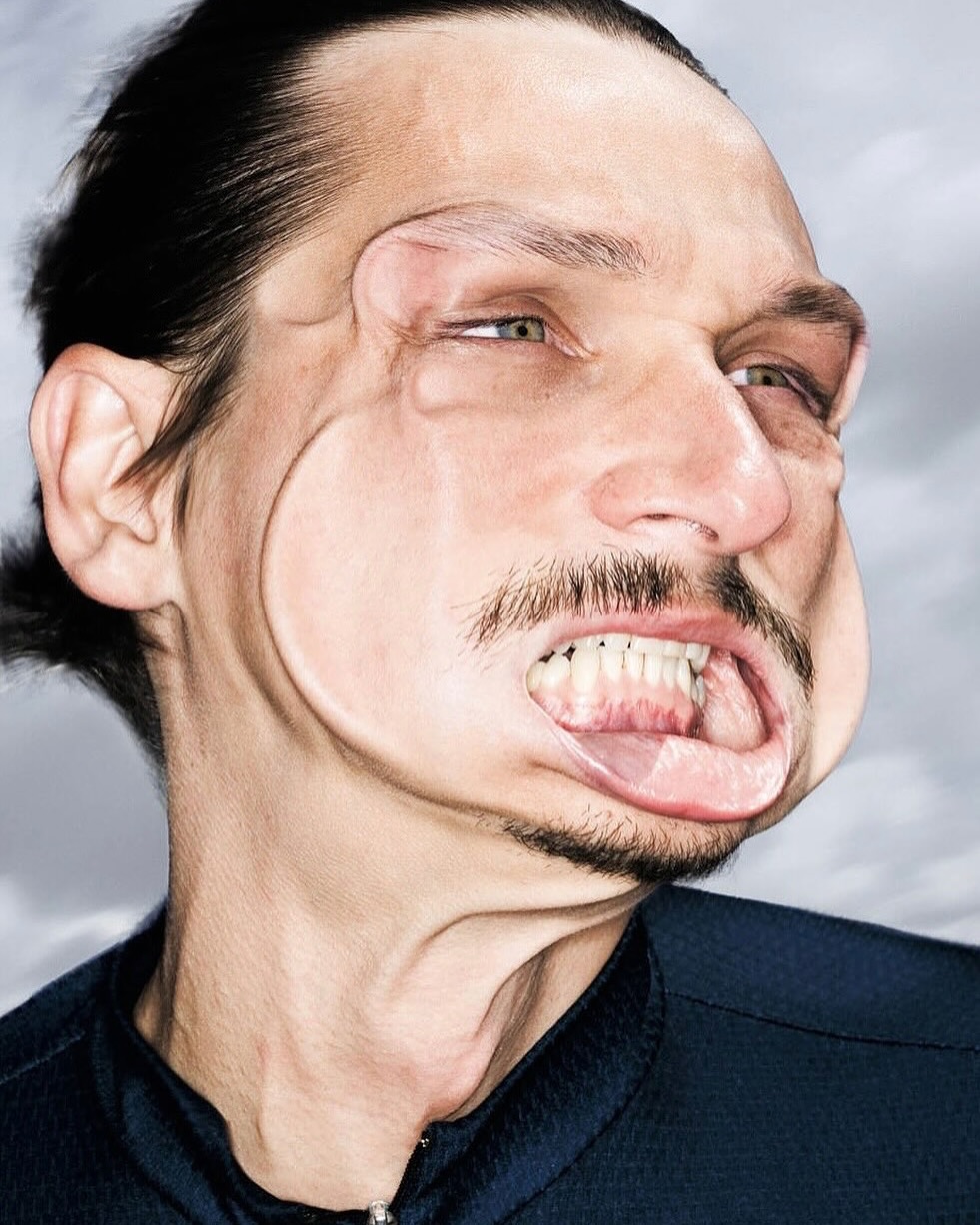
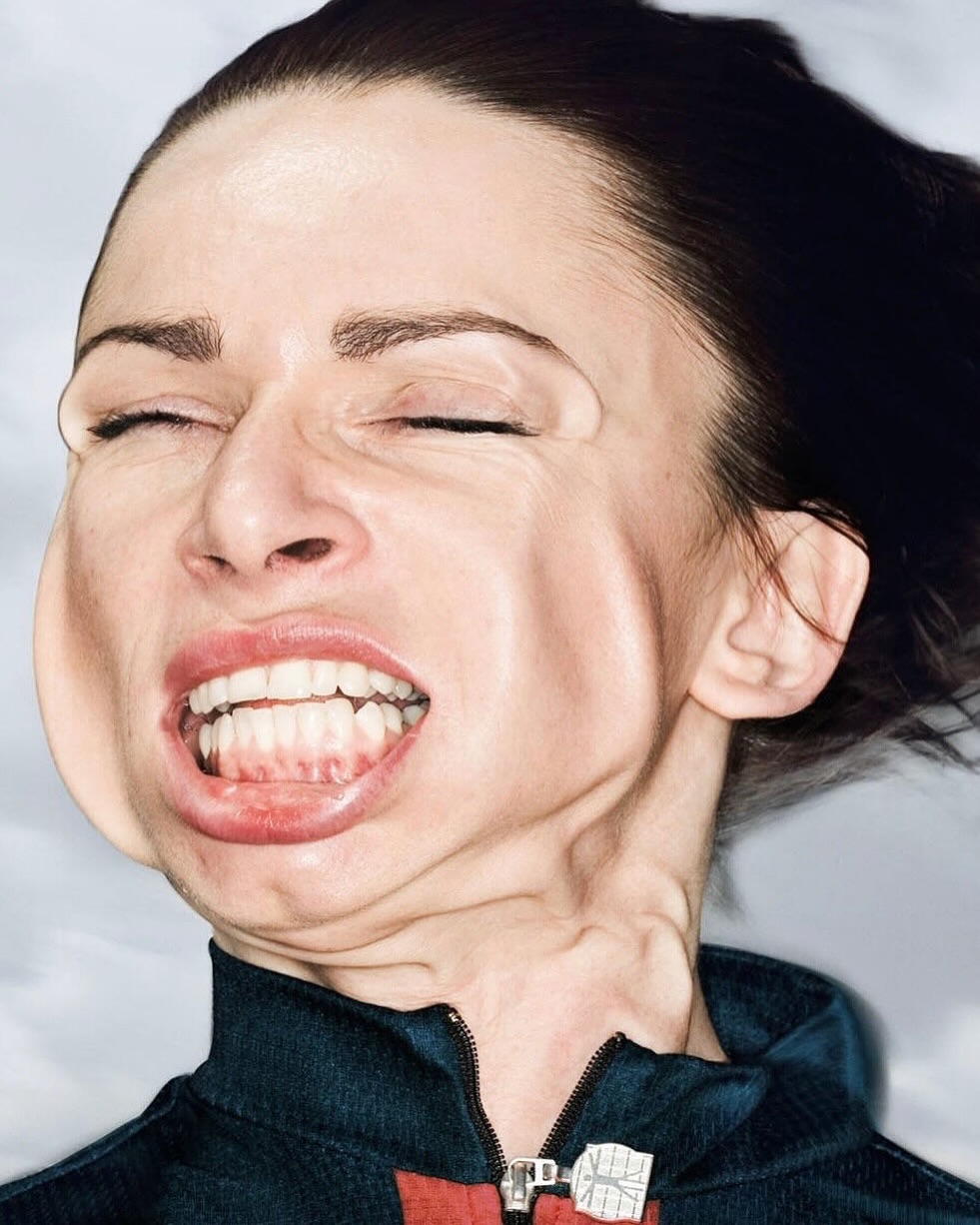
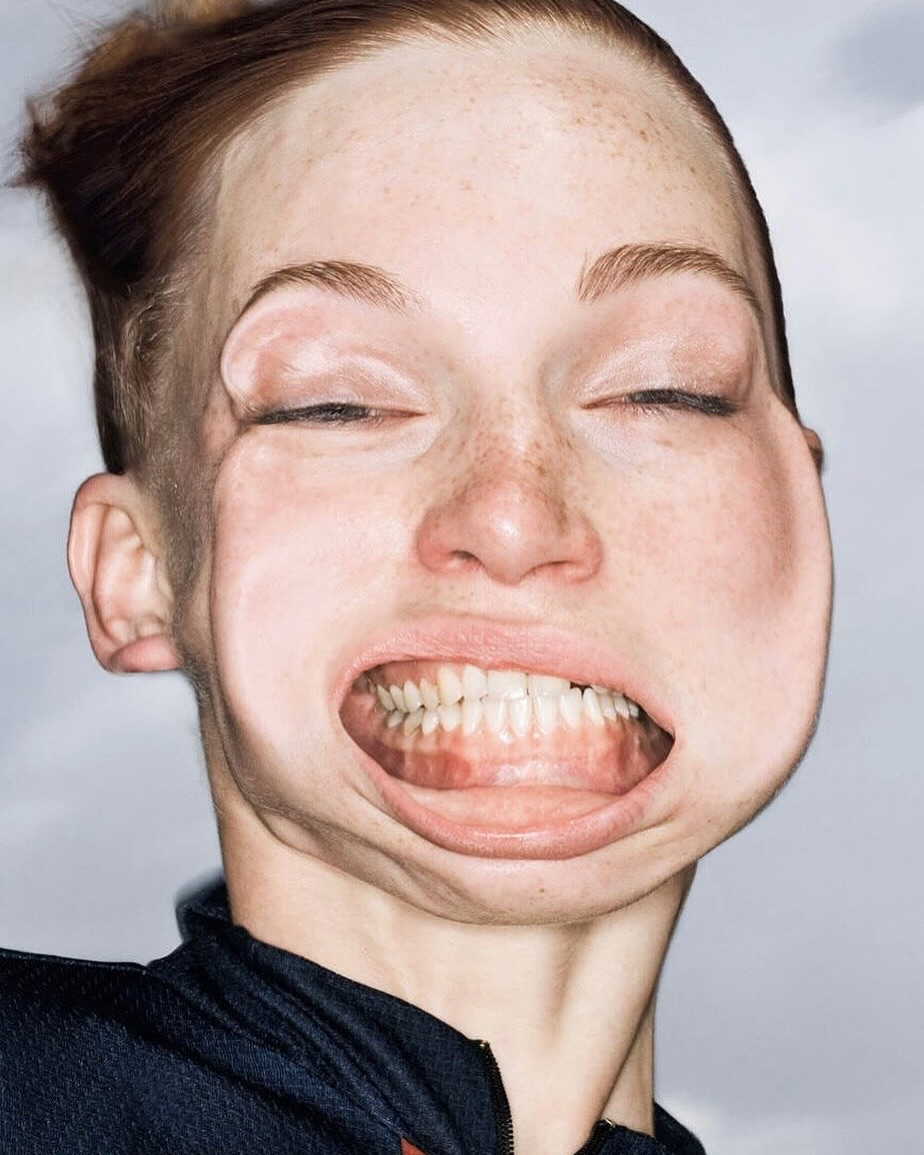
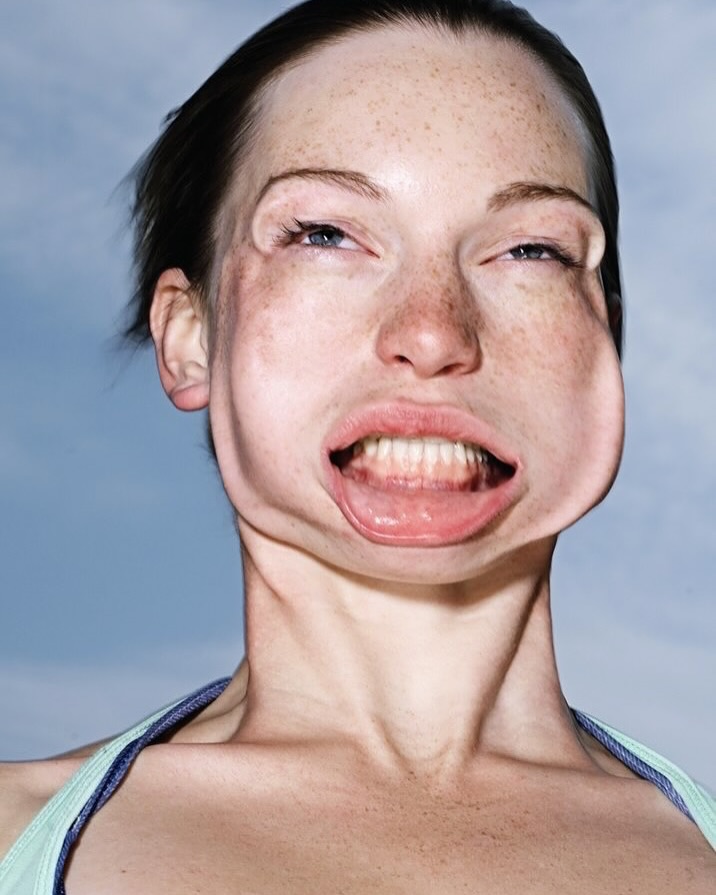
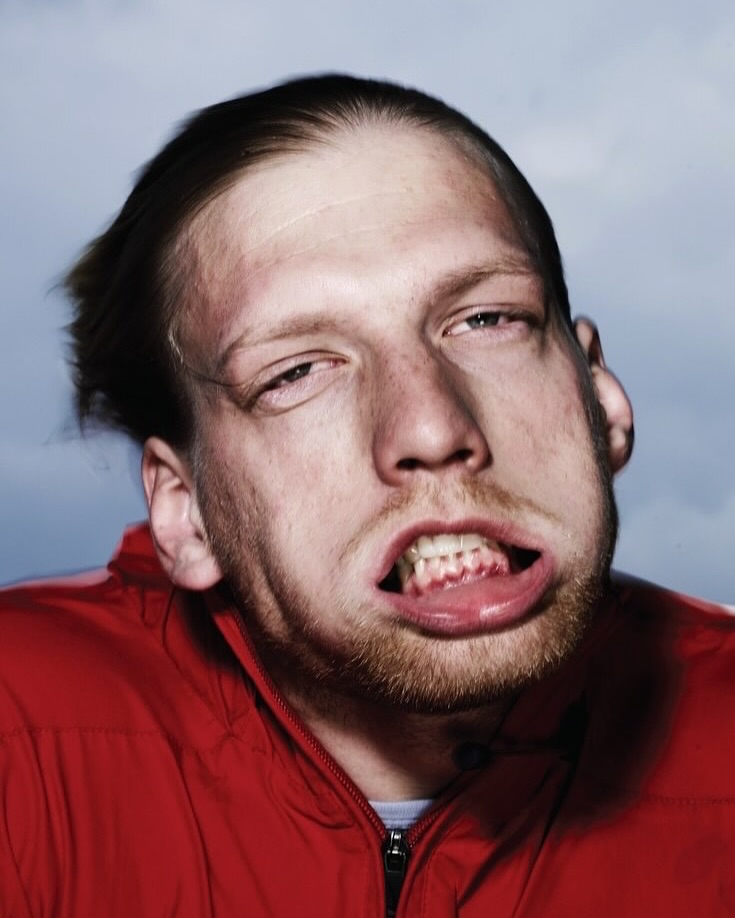
The face is the part of our body we control most carefully. Expression, makeup, angle—everything becomes a tool for self-presentation. But German photographer Hans Starck's series Windblown / Faces surrenders that control to the wind. Human faces exposed to intense streams of air are captured as skin stretches, twists, and transforms into almost sculptural forms.
The core of this work lies in deconstruction. Starck removes the social functions of the face—expression, performance, identity—and allows the wind, an invisible sculptor, to reshape the surface of skin. The result is grotesque yet mesmerizing, revealing how flexible and mutable the human face truly is as material.
Intriguingly, the series was repurposed in 2009 for a Berlin Inline Mail Service ad campaign, recontextualized around the concept of speed. In that moment, when grotesque imagery converts into commercial visual language, the boundary between art and advertising blurs. Starck's work reminds us that the face is not merely a marker of identity, but a fluid surface constantly reshaped by external forces.
FAQ
What is Hans Starck's Windblown / Faces series?
Hans Starck's Windblown / Faces is a photo series capturing human faces exposed to strong wind. Wind stretches and twists skin into sculptural forms, deconstructing concepts of control and identity in the face.
Has Hans Starck's work been used in advertising?
Yes, the Windblown / Faces series was used in a 2009 Berlin inline mail service advertising campaign. It's an instance where grotesque imagery was recontextualized as the concept of 'speed,' transforming into powerful commercial visual language.
What is the artistic significance of the Windblown / Faces series?
The series removes the face's social functions—expression and self-presentation—using wind as an invisible sculptor to reconstruct identity's surface. It shows the face not as fixed identity but as a fluid surface transformed by external forces.