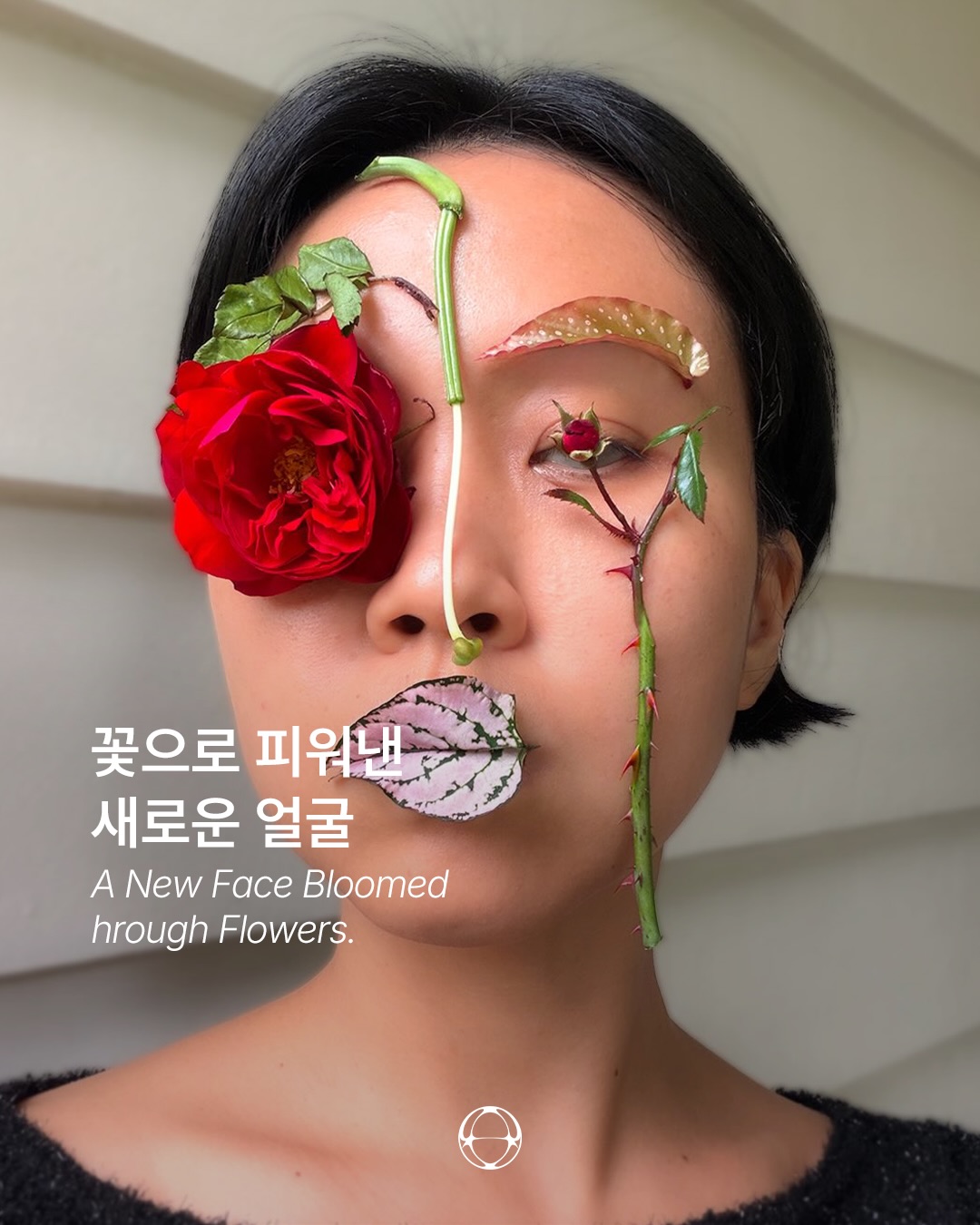
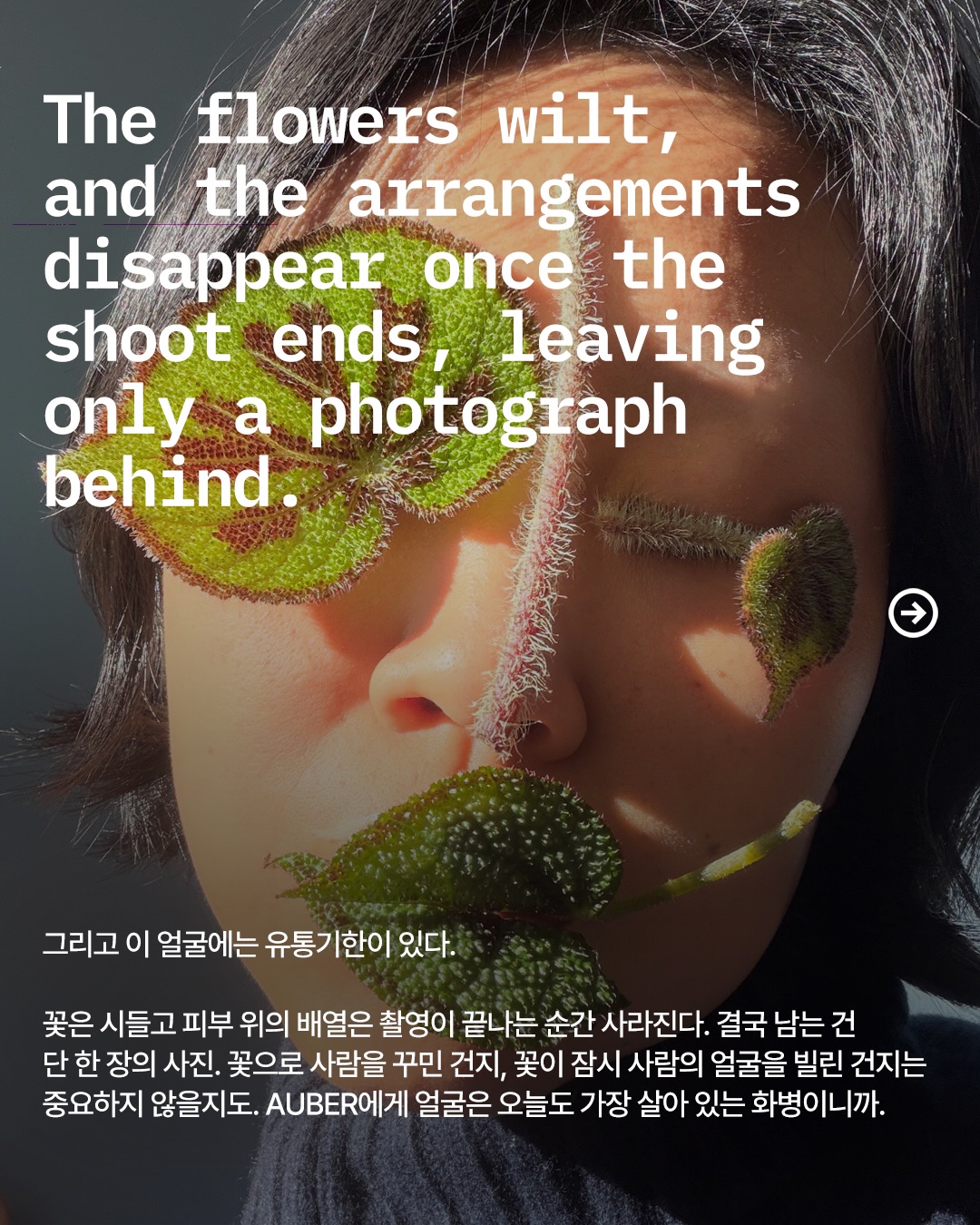
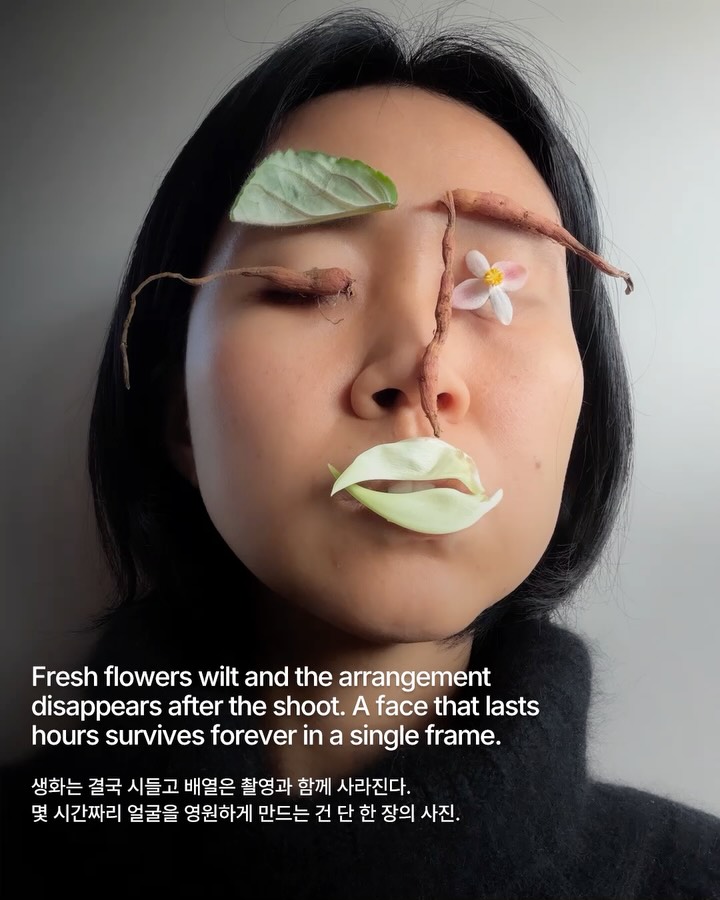
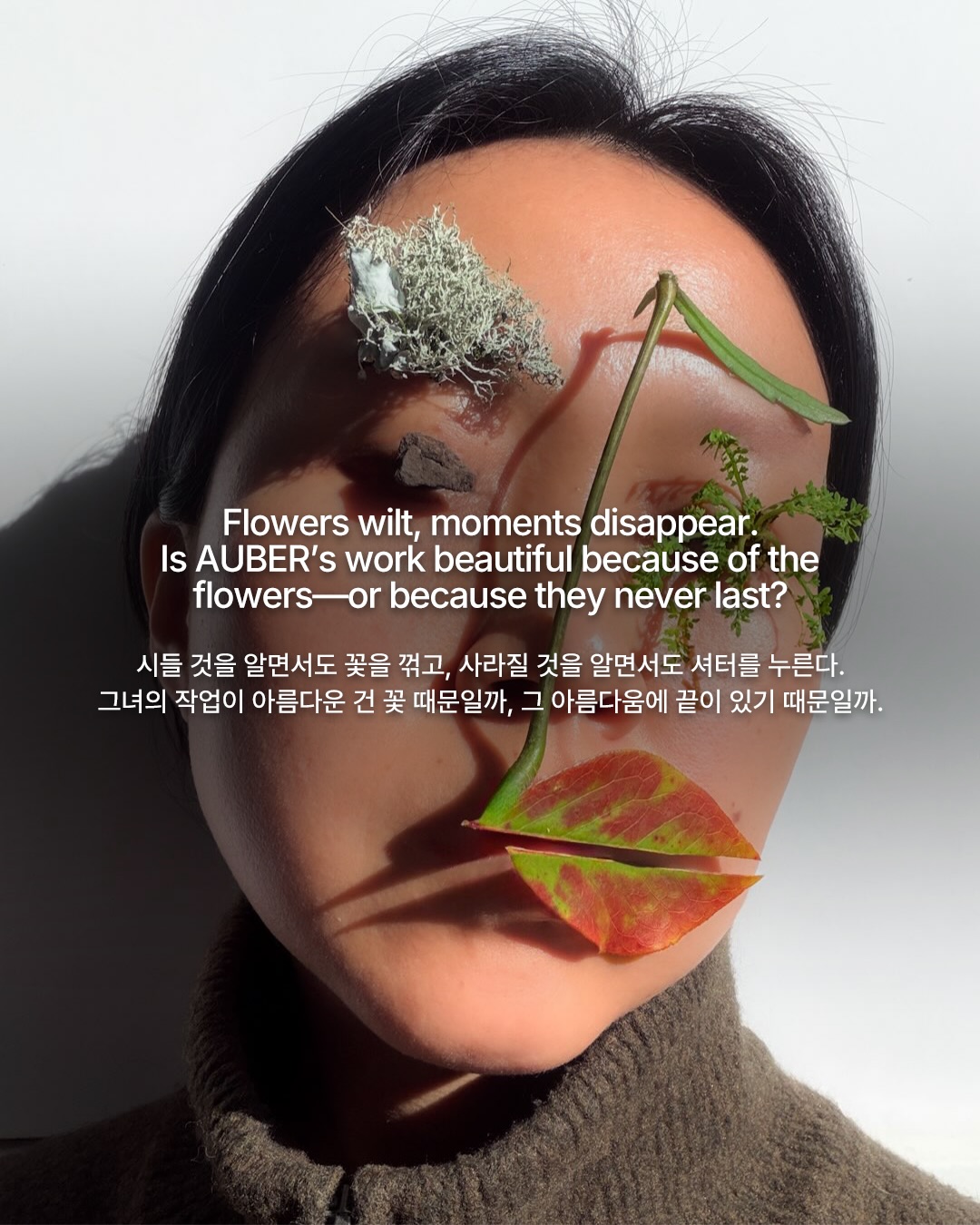
AUBER's work is less decoration and more a record of time. The flowers wilt, and the arrangements disappear once the shoot ends, leaving only a photograph behind. A fixed image is the only proof this moment existed. A face with an expiration date—here, that phrase works literally.
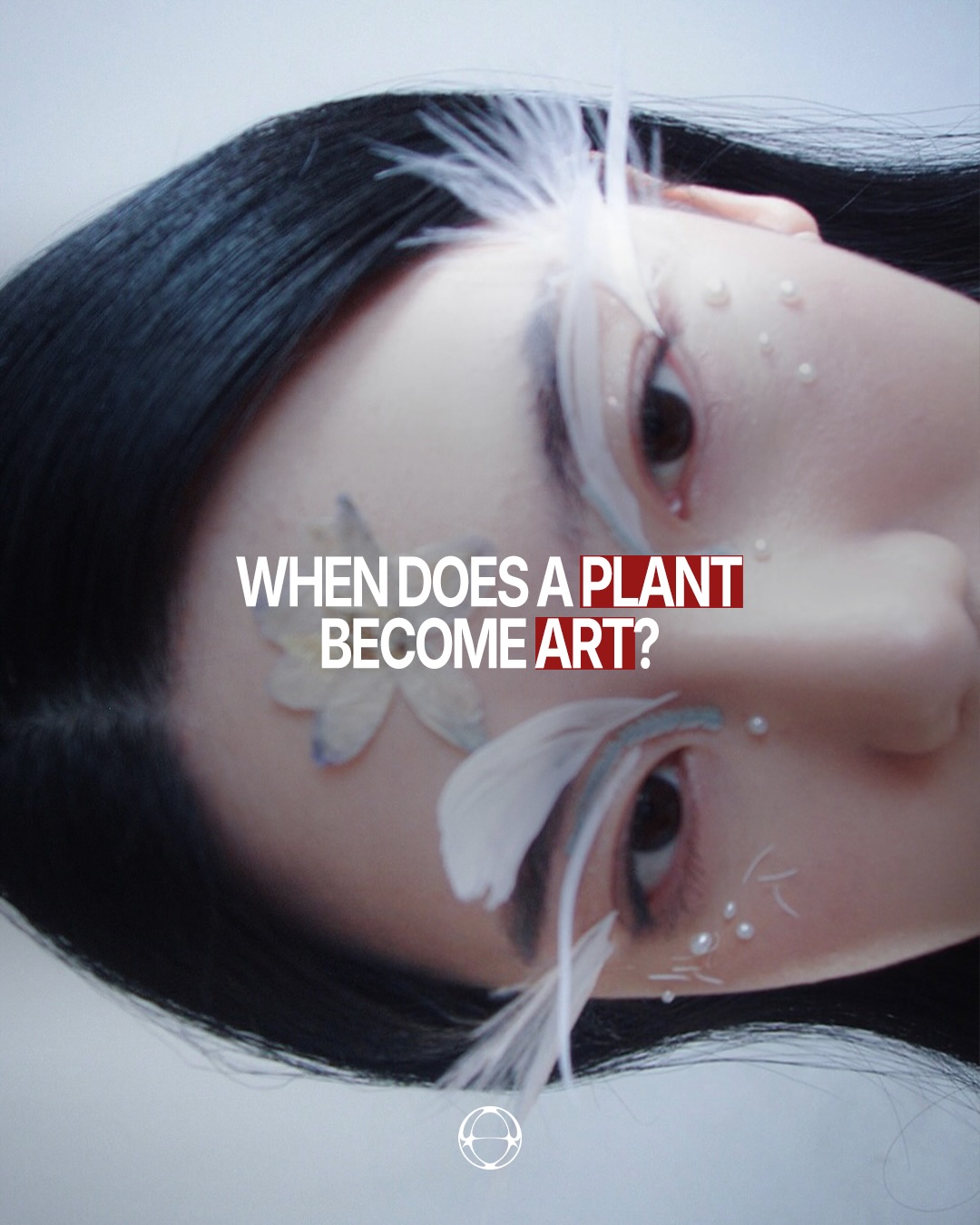
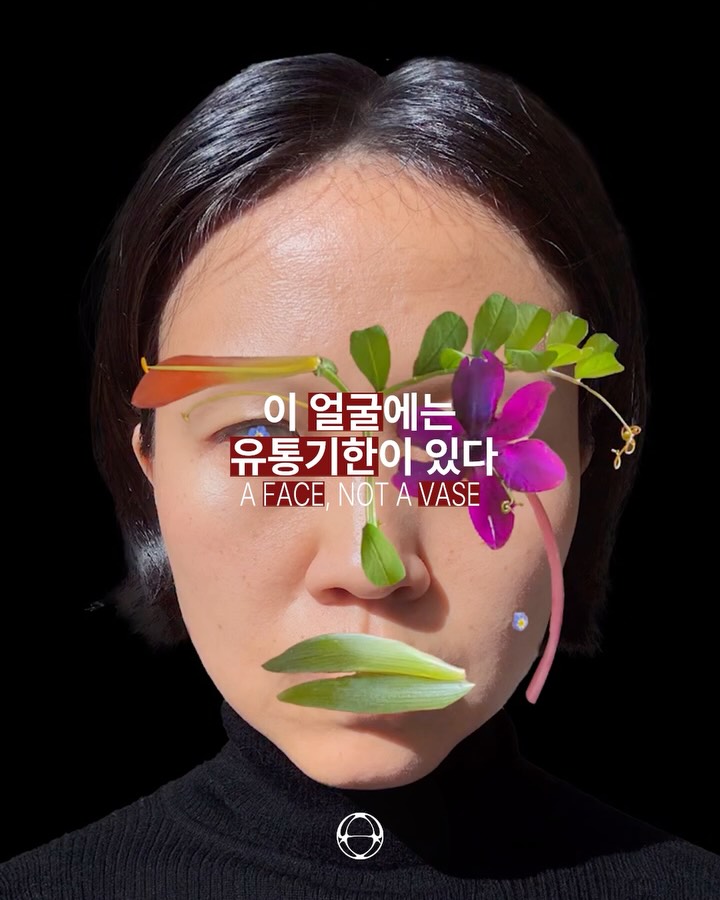
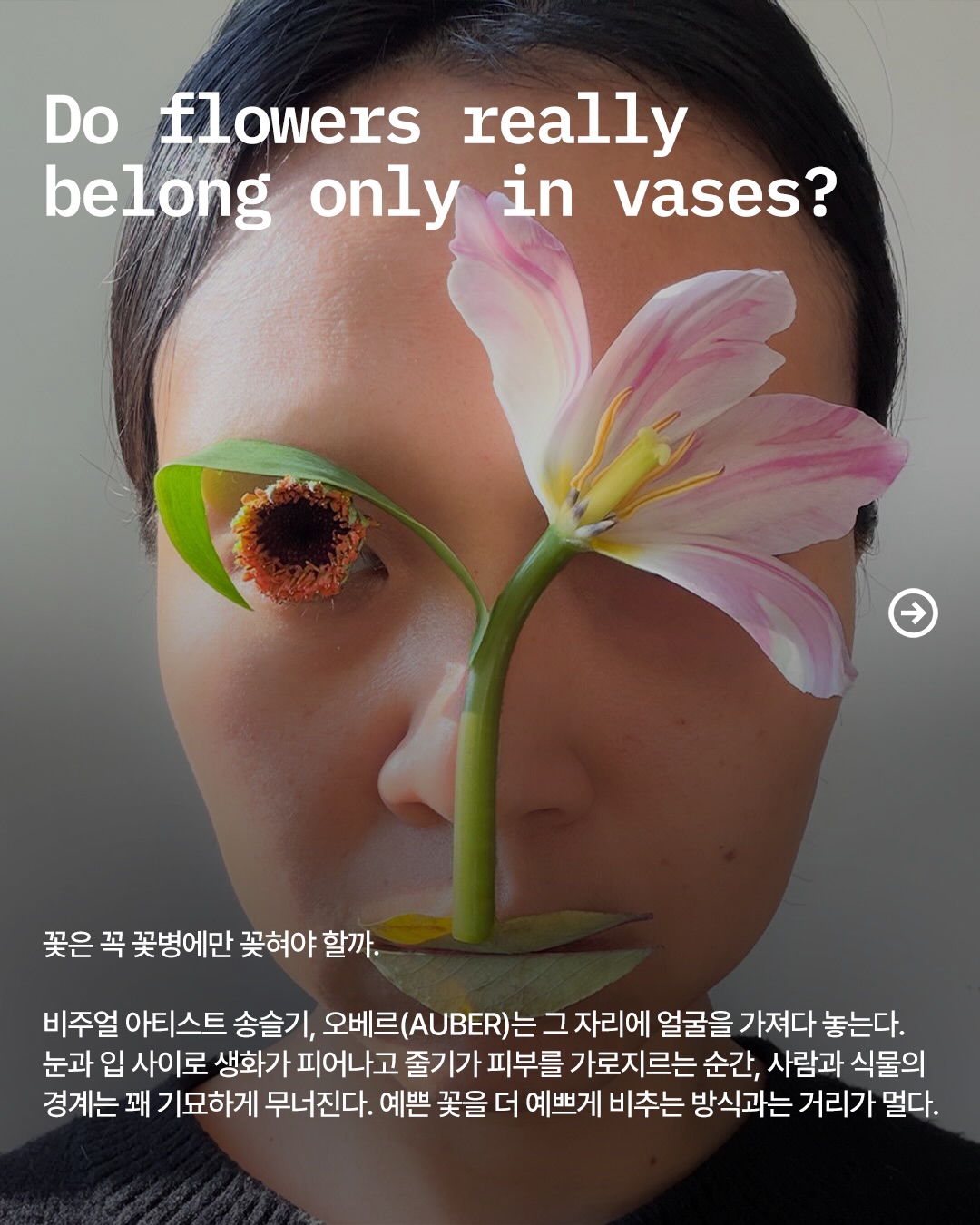
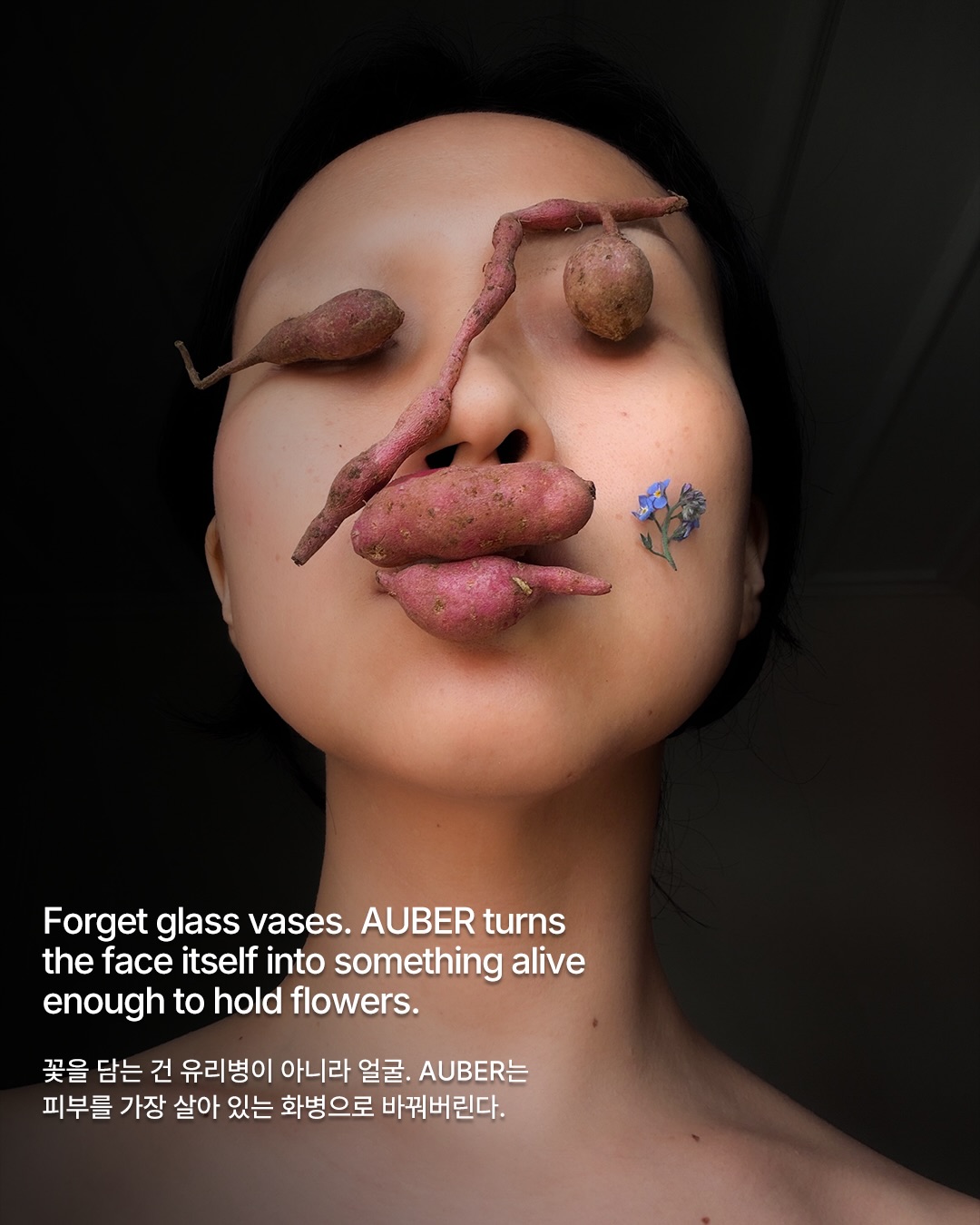
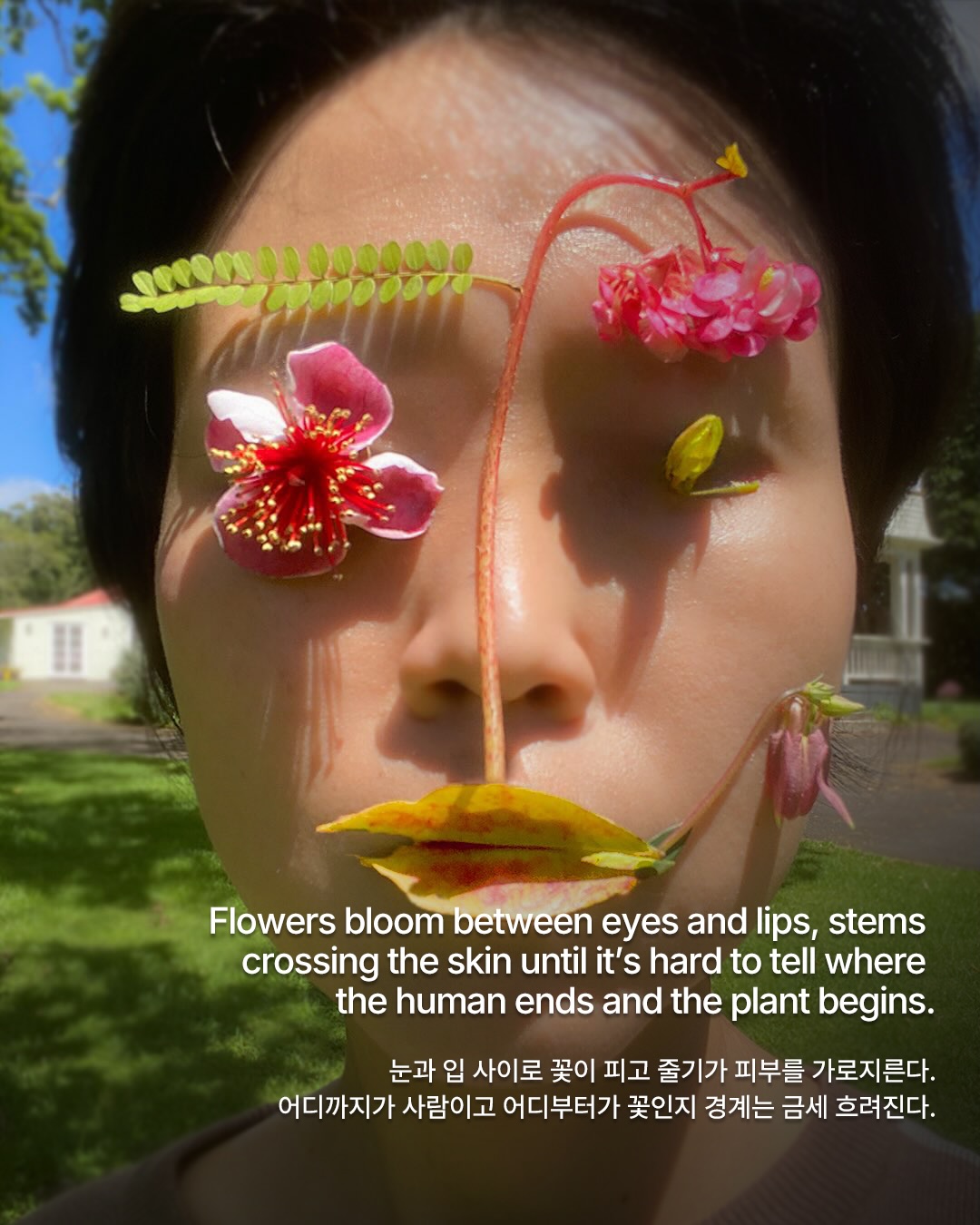
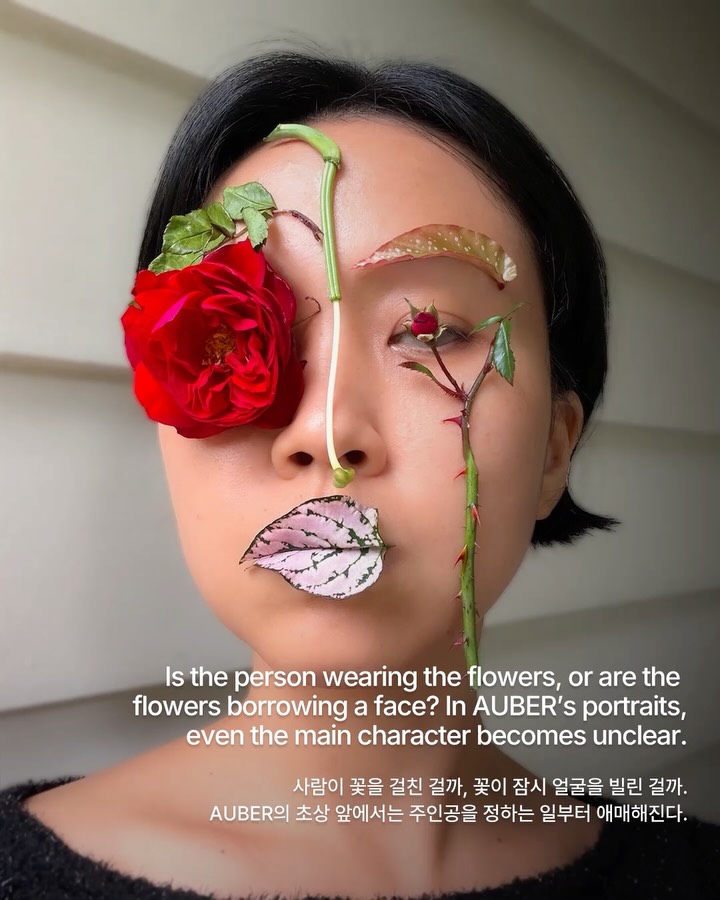
In the first image, purple petals and green leaves cross the face. The second slide shows a pink tulip covering the eye, its stem running down the nose. The third features a sweet potato and small blue-purple flowers resting on the skin. The fourth, shot outdoors in sunlight, has red blooms and green leaves covering the forehead and lips. The common thread: the plant is not the protagonist.
Whether flowers decorate the face or borrow it for a moment hardly matters. For AUBER, the face remains the most living vase of all. Skin holds temperature, expressions shift subtly. Here is a vitality that glass or ceramic cannot imitate.
How do you want to encounter flowers? Have you ever watched them wilt not behind glass, but directly on skin?
FAQ
What kind of work does AUBER Song Seulki create?
Visual artist Song Seulki, AUBER, arranges fresh flowers on human faces instead of vases. Blooms emerge between eyes and lips, stems traverse skin, and the boundary between person and plant dissolves. Once the shoot ends, the arrangement disappears, leaving only a photograph.
Why does AUBER's floral work have an expiration date?
The fresh flowers AUBER places on faces wilt, and the arrangements are immediately dismantled after shooting. Only a photograph remains, and that moment can never be recreated. Both flowers and faces are organisms affected by time, giving them an expiration date.
What characterizes AUBER Song Seulki's work?
Song Seulki AUBER uses faces like vases, arranging fresh flowers on them. Instead of glass or porcelain, skin temperature and subtle facial movements support the plants. The work is closer to recording time than decoration, eerily dissolving the boundary between human and plant.