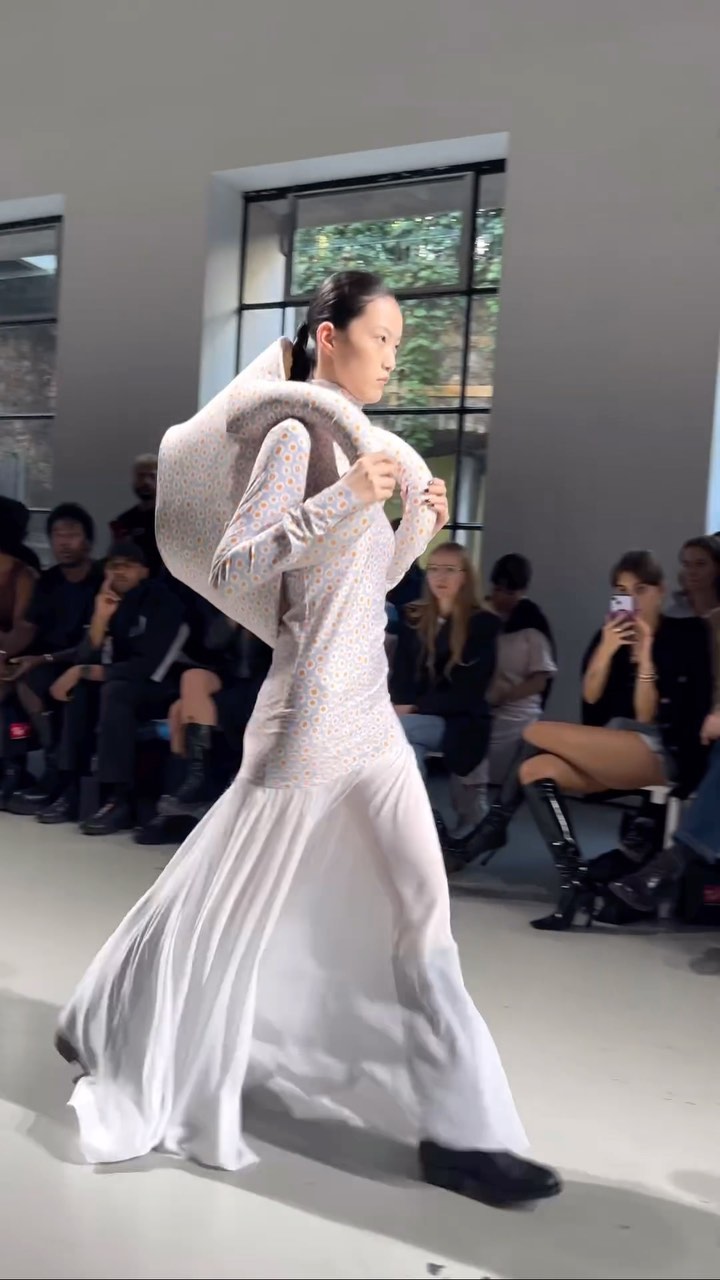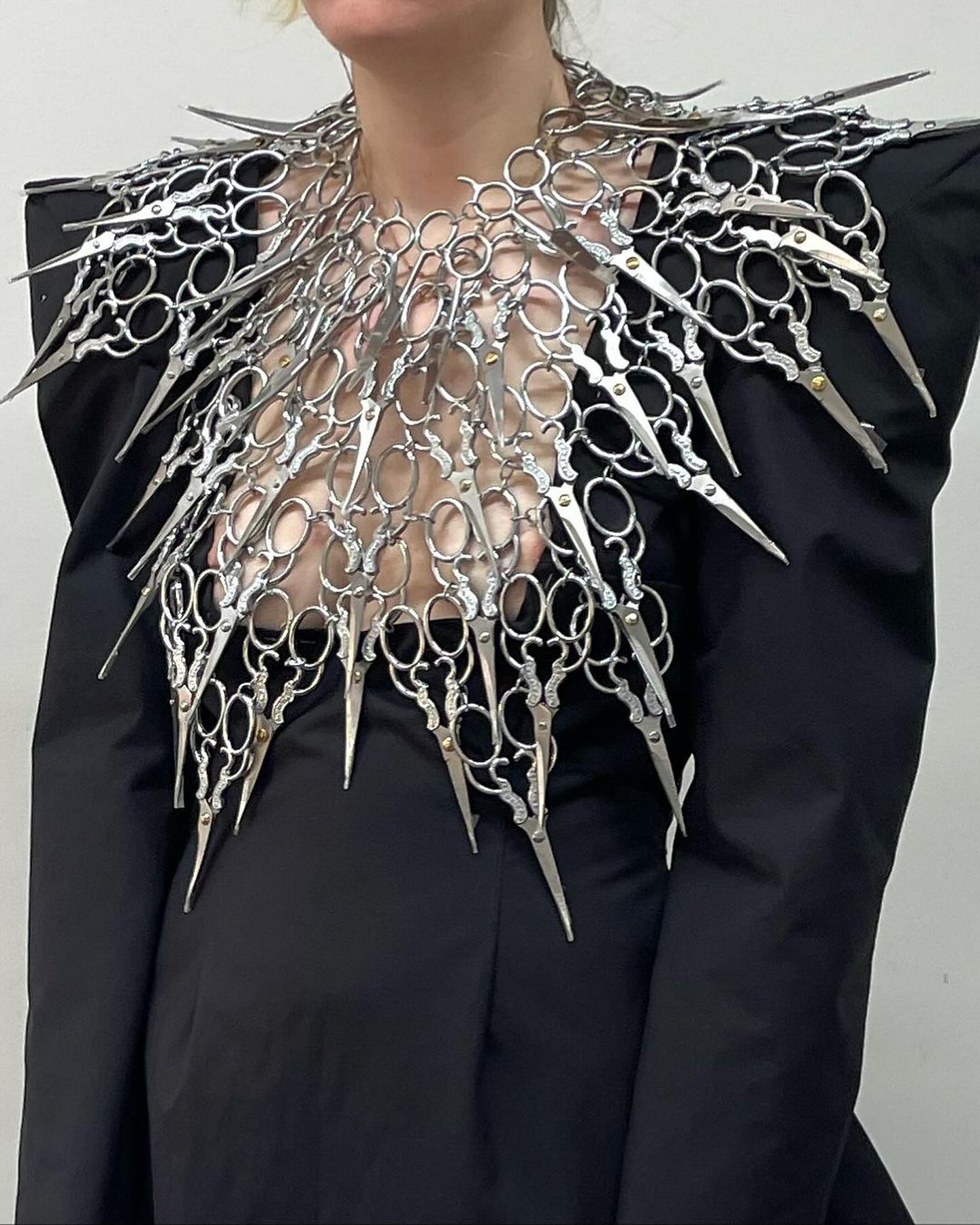
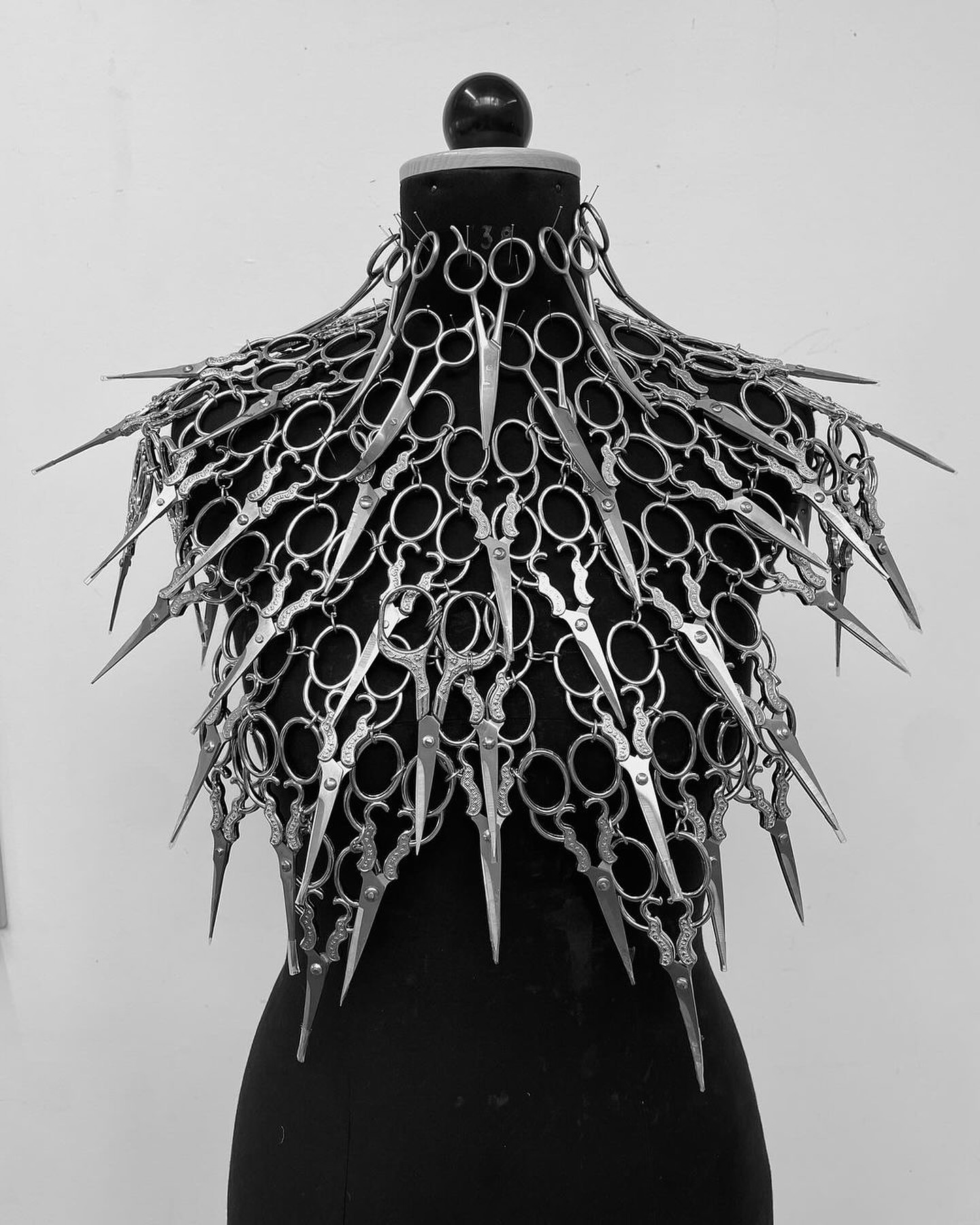
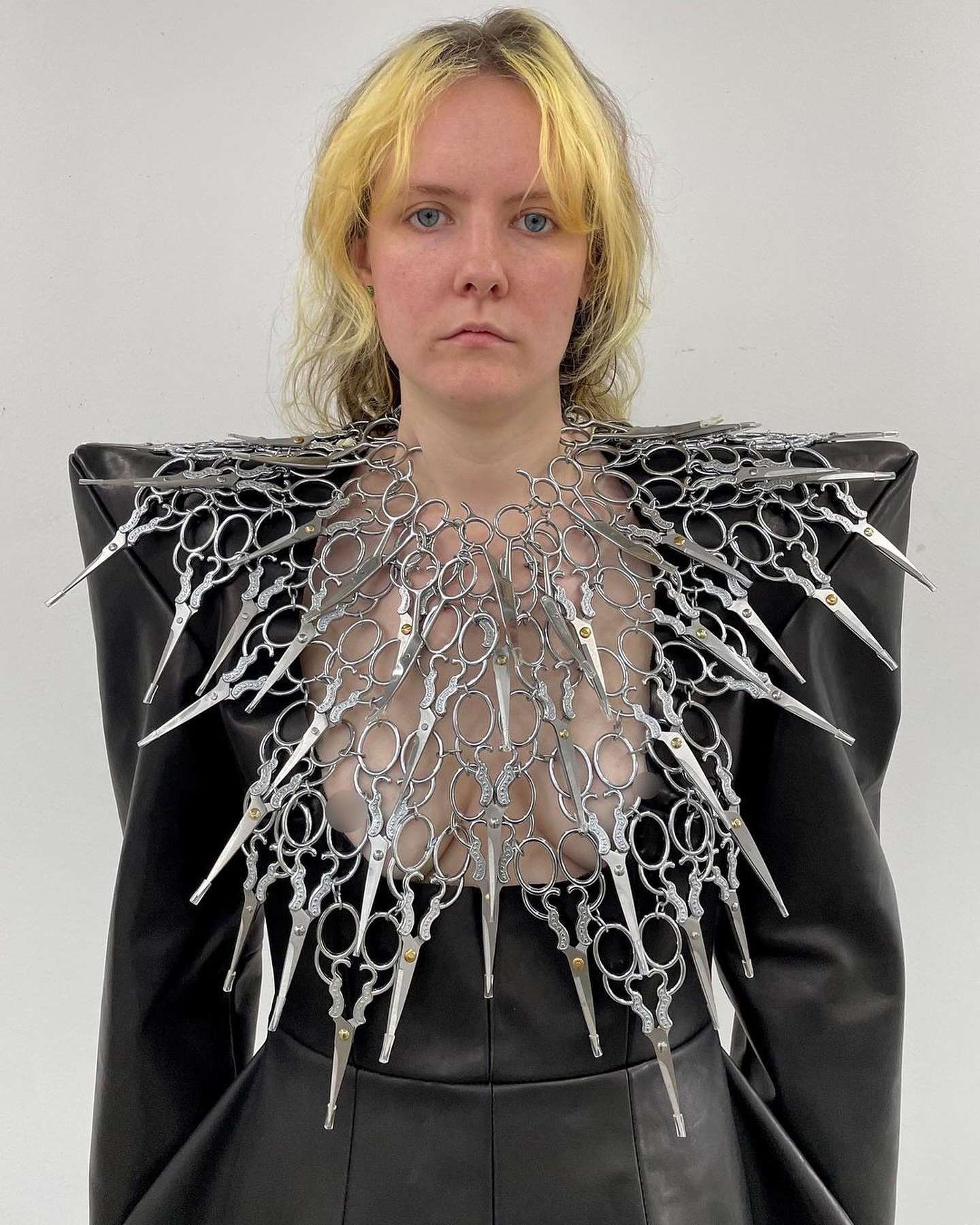
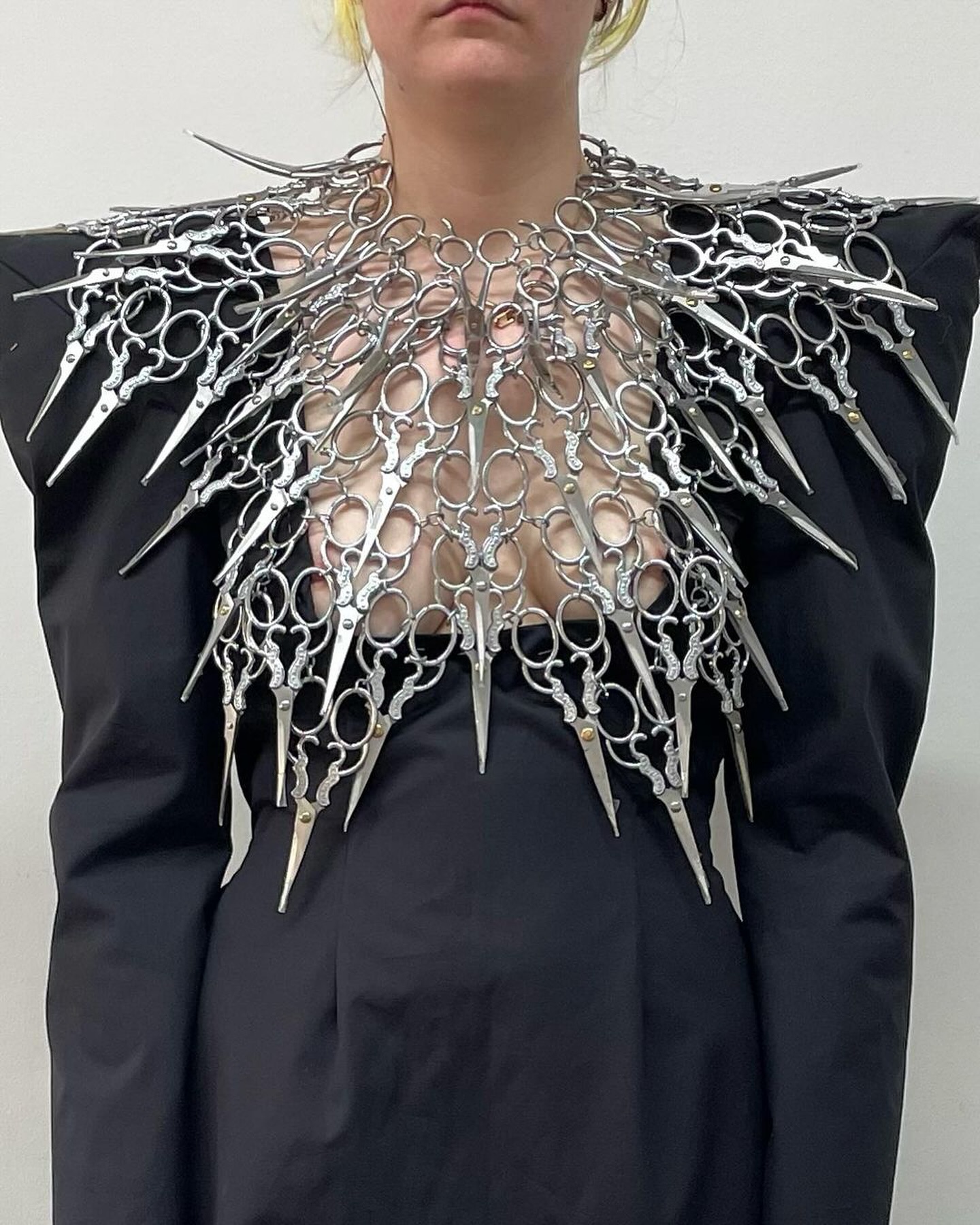
The centerpiece costume showcases hundreds of scissors, needles, buttons, and sewing tools intricately connected through metalwork to envelop the body. The sharp, protruding scissor blades and densely arranged tools visualize the danger and pain of factory labor while simultaneously symbolizing the strength forged through those experiences. Set against black fabric, the silver-toned metal structures maximize grunge and punk aesthetics, pushing the boundaries of fashion through an avant-garde approach.
'Made in Pakistan' centers on upcycling fashion philosophy and unconventional design methodology. By repurposing discarded and obsolete tools into objects of aesthetic value, Mandegar addresses both sustainability and social commentary. The designer's journey from child laborer to fashion creator proves that fashion can serve as a powerful medium for personal history and social issues, extending far beyond the pursuit of beauty alone.
This collection stands as both an experimental endeavor by an emerging designer and a courageous statement confronting the dark underbelly of the fashion industry. Mandegar's work demonstrates the transformative power of creative resilience, converting suffering into art while exploring the narrative potential of fashion to its extreme limits.
FAQ
What does Abay Mandegar's 'Made in Pakistan' collection address?
The collection addresses the pain and trauma of child labor the designer experienced in Pakistani factories from age ten. Sewing tools like scissors, needles, and buttons are reconstructed through metalwork, transforming labor's wounds into art while expressing the designer's transition through upcycling and grunge-punk aesthetics.
What materials were used for the 'Made in Pakistan' showpiece?
The showpiece was created using hundreds of actual sewing tools—scissors, needles, buttons—connected through metalwork techniques. Silver-toned sharp tools are arranged on black fabric, visualizing the danger and pain of factory labor while practicing sustainable upcycling philosophy.
When did designer Abay Mandegar start working in factories?
Mandegar began working as a child laborer in Pakistani production factories at age ten. The ongoing pain and trauma from those early years became the core inspiration for the 'Made in Pakistan' collection, chronicling the narrative of transformation from child laborer to designer.