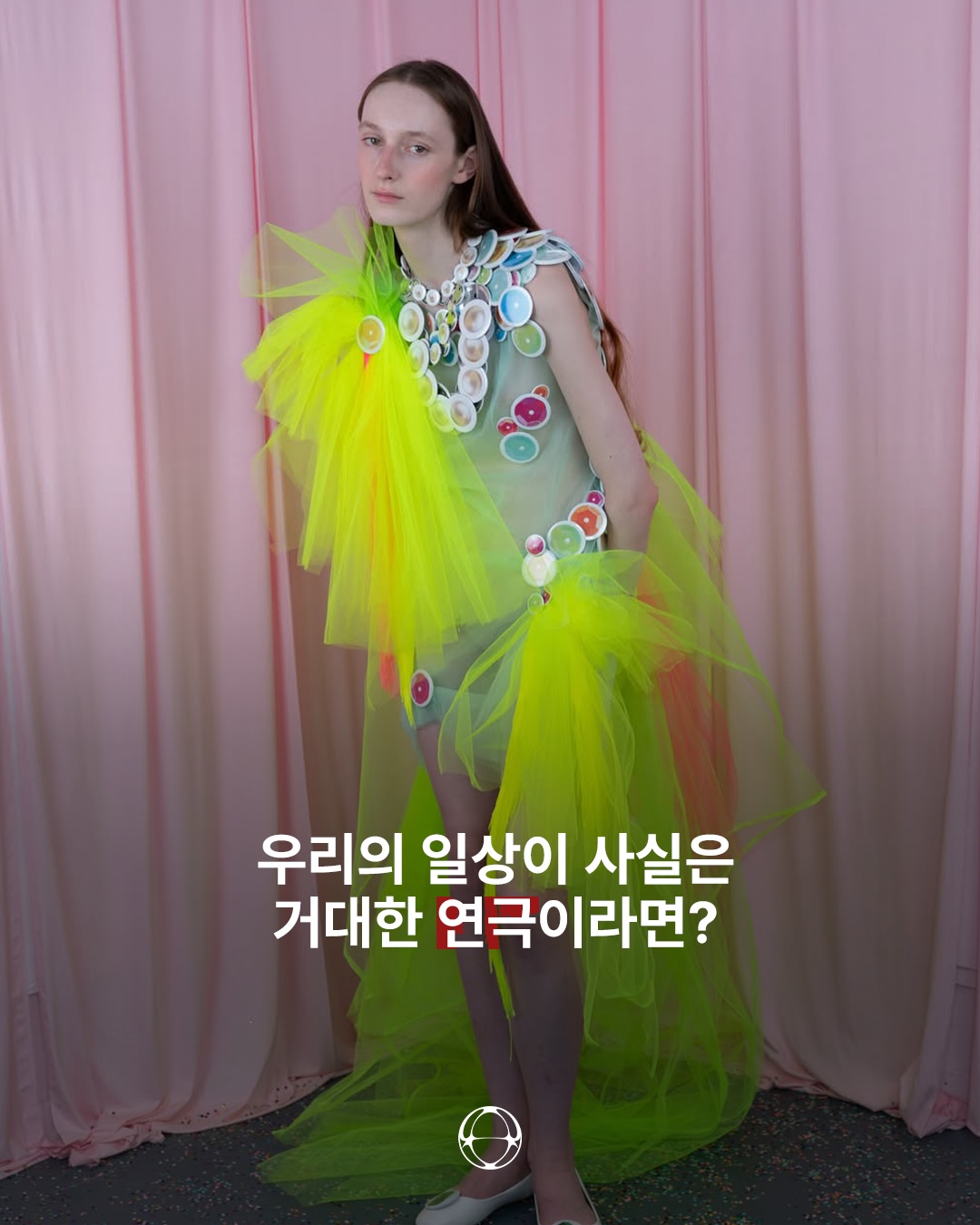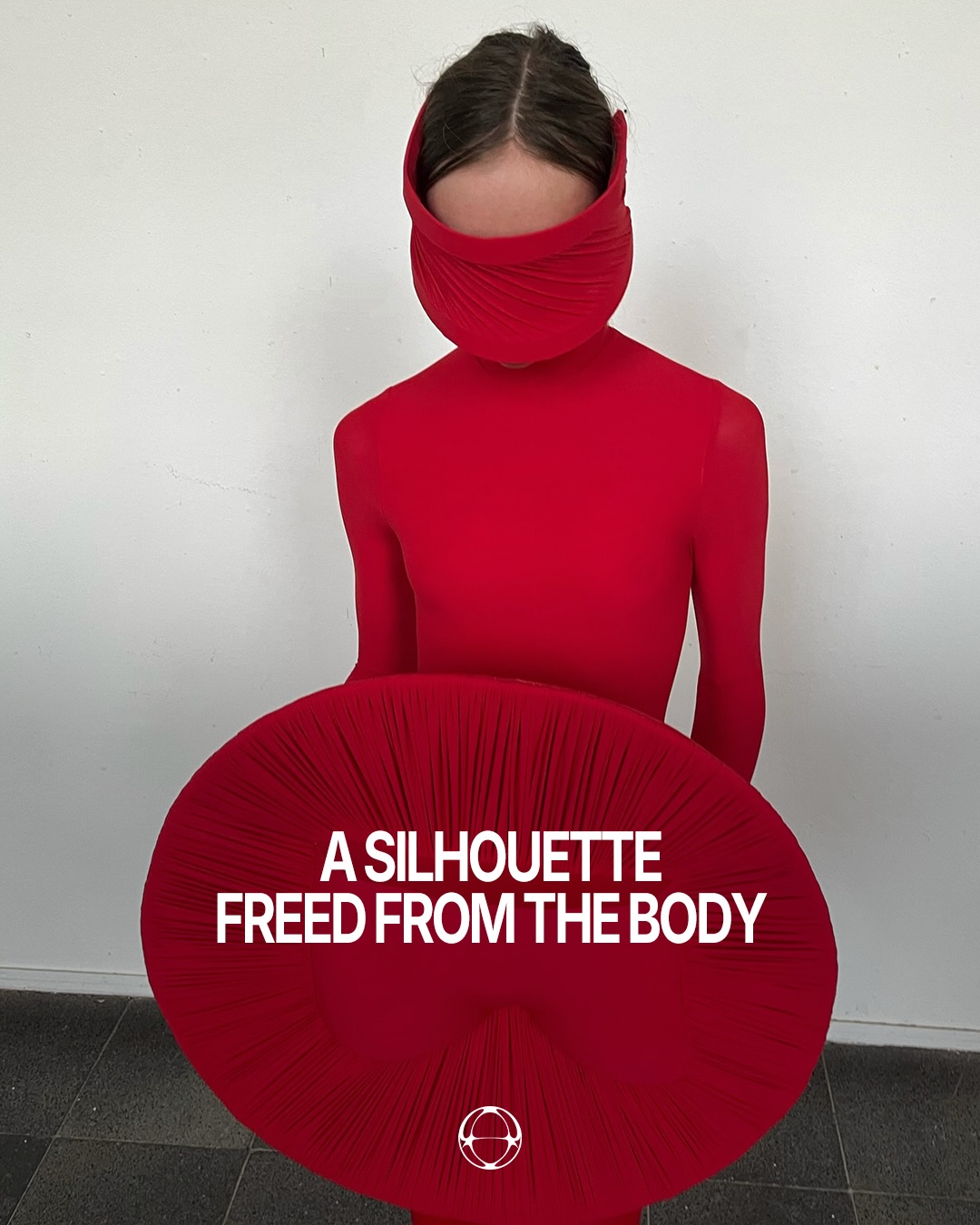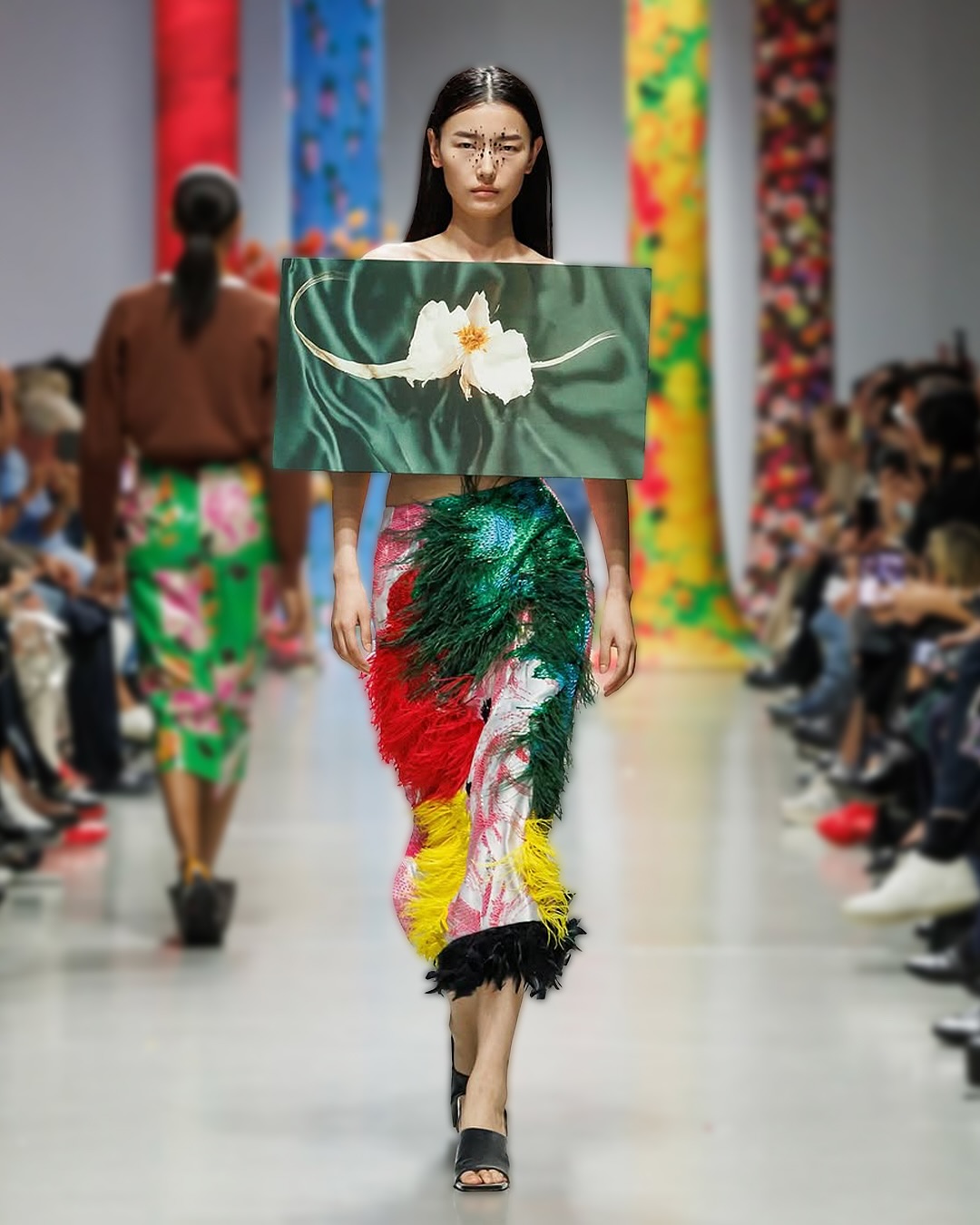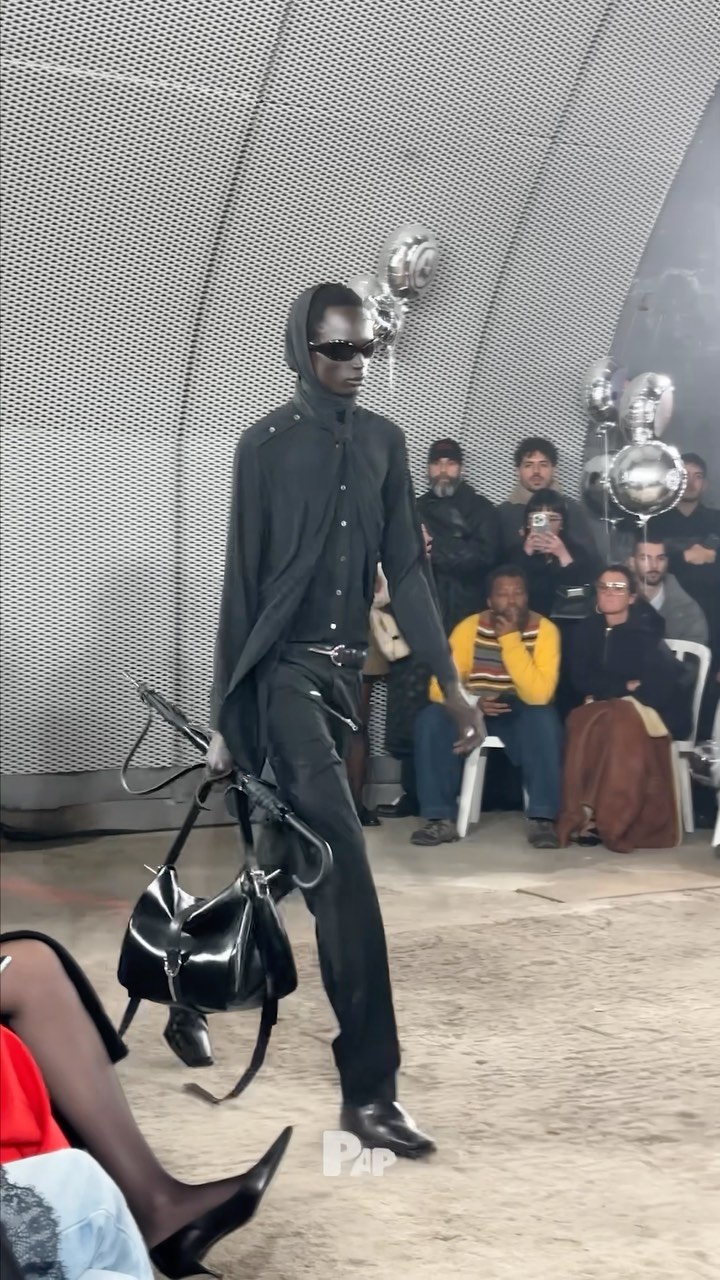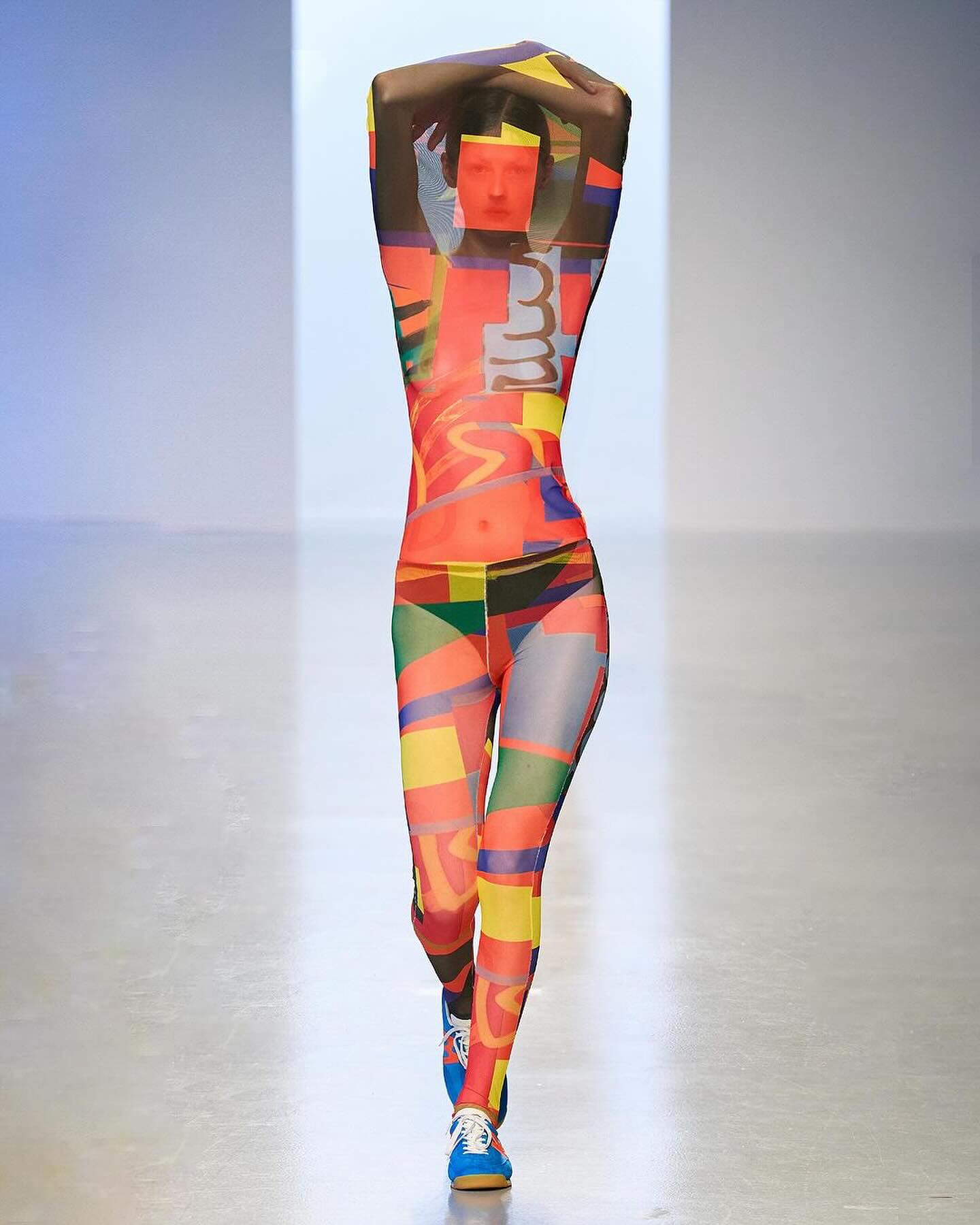
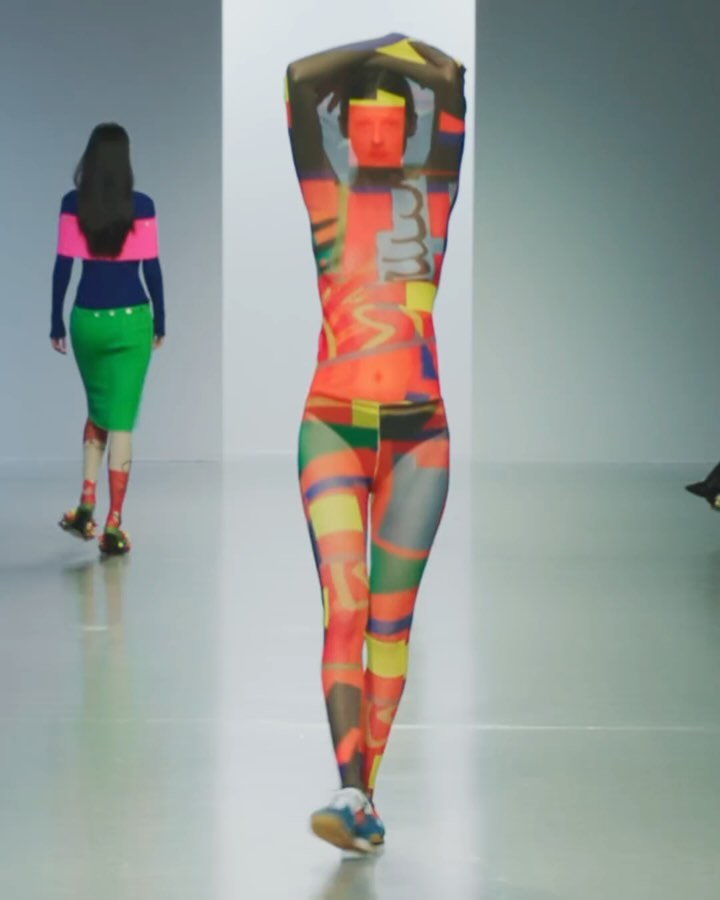
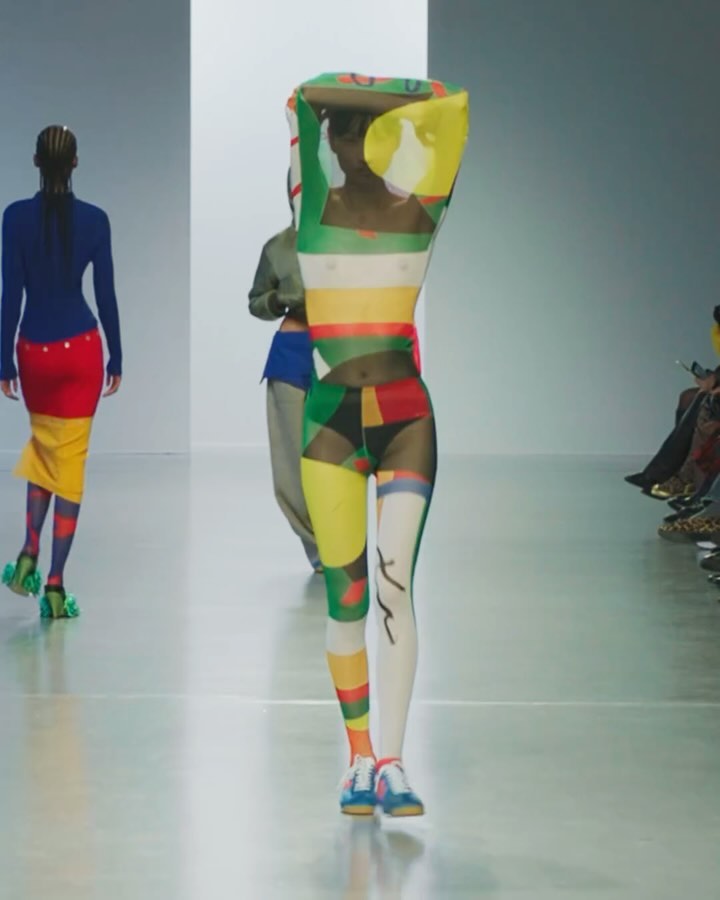
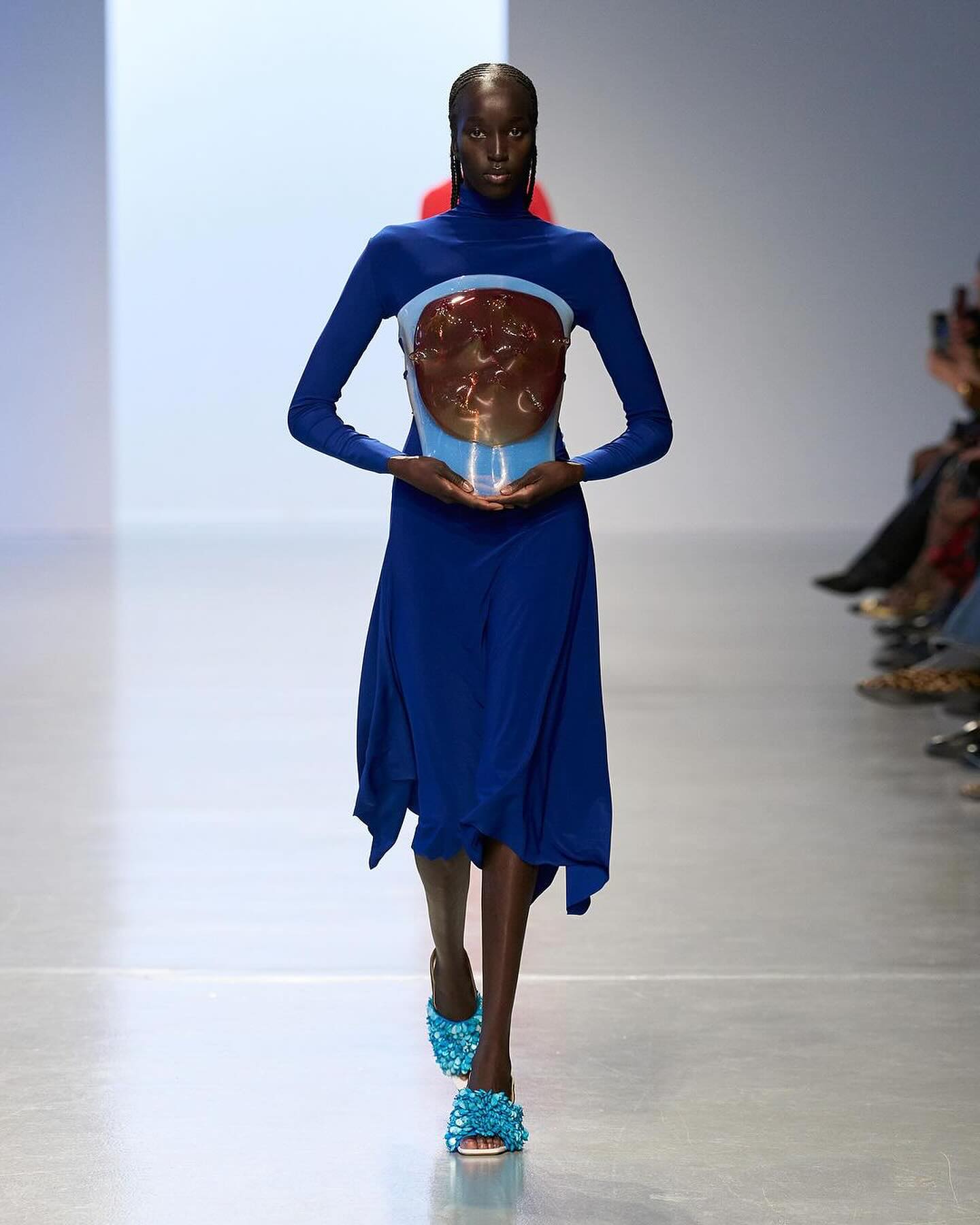
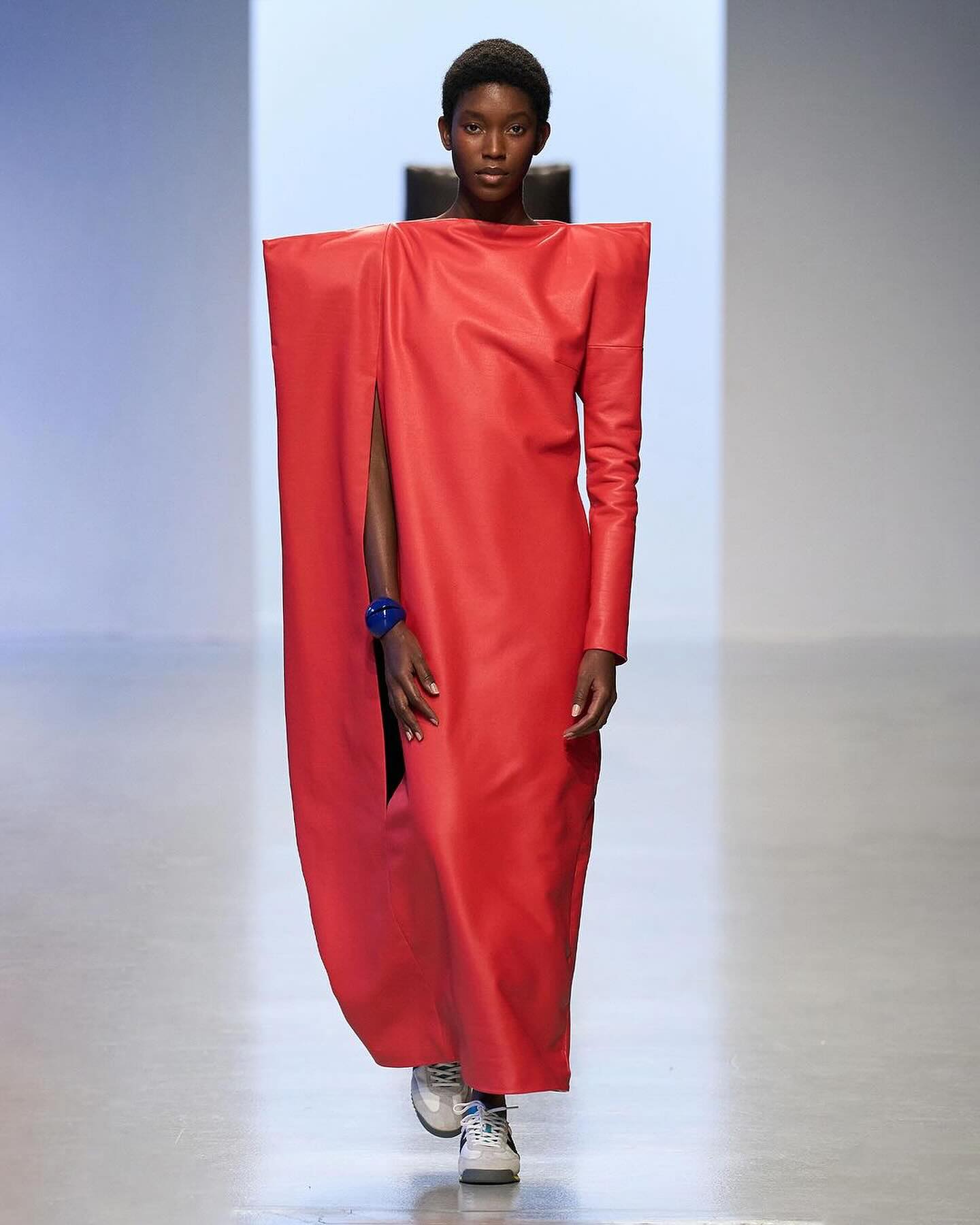
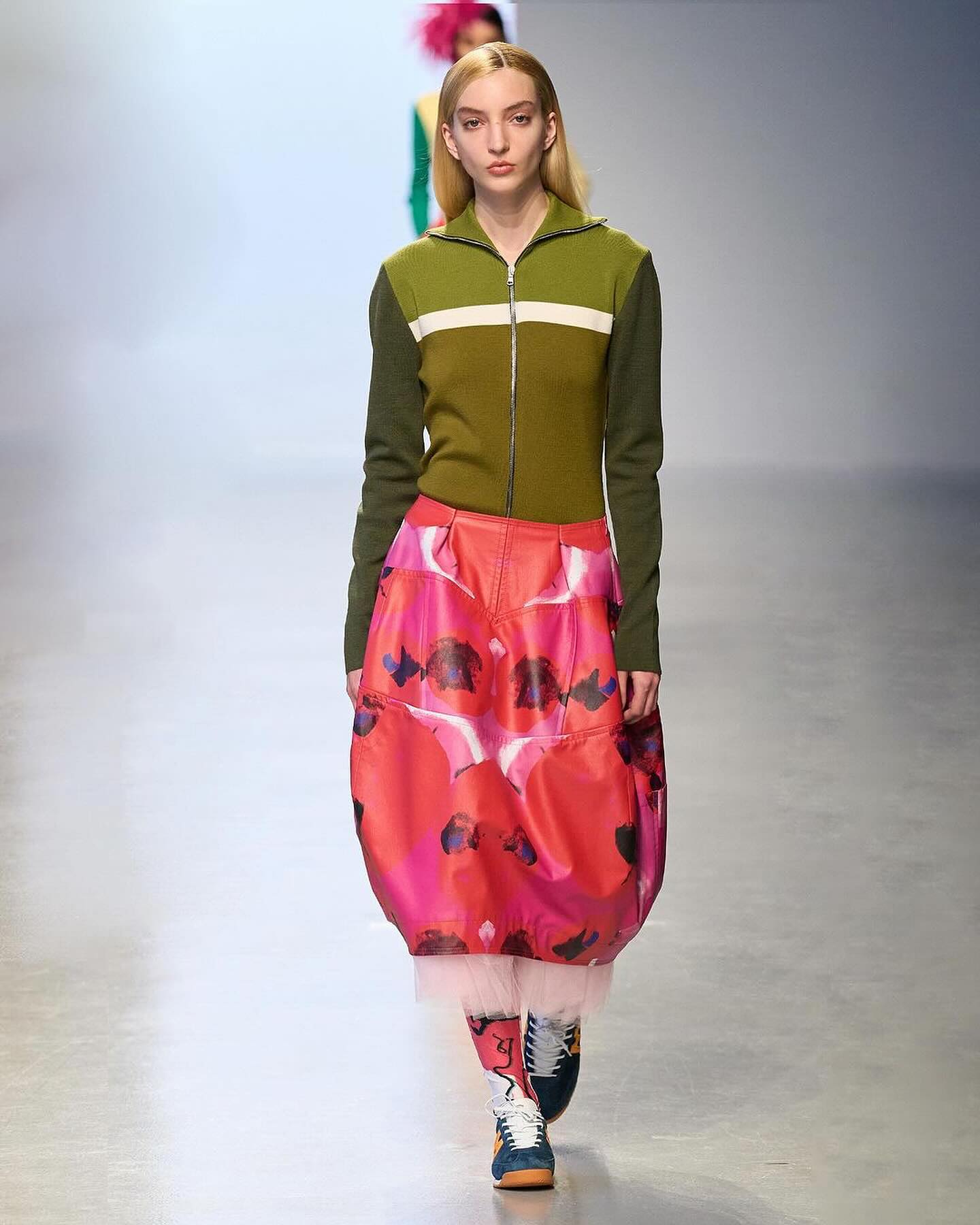
The collection's core concept revolves around balancing vibrant colors with subdued minimalism. Models walked the runway as living canvases, wearing geometric-patterned bodysuits that blend orange, yellow, blue, and green in striking arrangements. Each look achieves a unique aesthetic where three-dimensional forms coexist with flat graphics, with full-coverage designs extending over the face demonstrating the designer's intent to reimagine the human body as a complete art object. The interplay of translucent and opaque fabrics adds another layer of visual complexity, creating depth that shifts with movement.
Zomer's FW24 presentation transcends a typical fashion show to explore the possibilities of wearable art. Attendees reported feeling as though they were strolling through a gallery rather than watching a conventional runway, and the industry has taken note of this fresh approach that blurs boundaries between fashion and contemporary art. The collection successfully materializes every concept the brand aimed to communicate, solidifying Zomer's position as a next-generation designer label to watch. With this bold artistic vision, the brand proves that fashion can serve as a legitimate medium for abstract expression while remaining grounded in innovative construction techniques.
FAQ
What kind of brand is Zomer?
Zomer is an emerging New York-based fashion brand gaining attention for its Fall/Winter 2024 collection that merges contemporary art with fashion through original design. Utilizing color-block compositions and sculptural structures, it presents wearable art and is recognized as a next-generation designer brand.
What are the key features of Zomer's FW24 collection?
The collection balances vibrant color with restrained minimalism. Through geometric color-block patterns, full-coverage bodysuits extending to the face, and sculptural three-dimensional structures, the runway was staged like a contemporary art gallery, reinterpreting the human body as an artistic work.
Why is Zomer's runway compared to an art gallery?
Because the brand used structures reminiscent of abstract art and sculpture instead of traditional garments. The color-block arrangements, material harmonies, and coexistence of flat and dimensional design felt like contemporary artworks, with audiences describing the experience as strolling through a gallery rather than attending a fashion show.