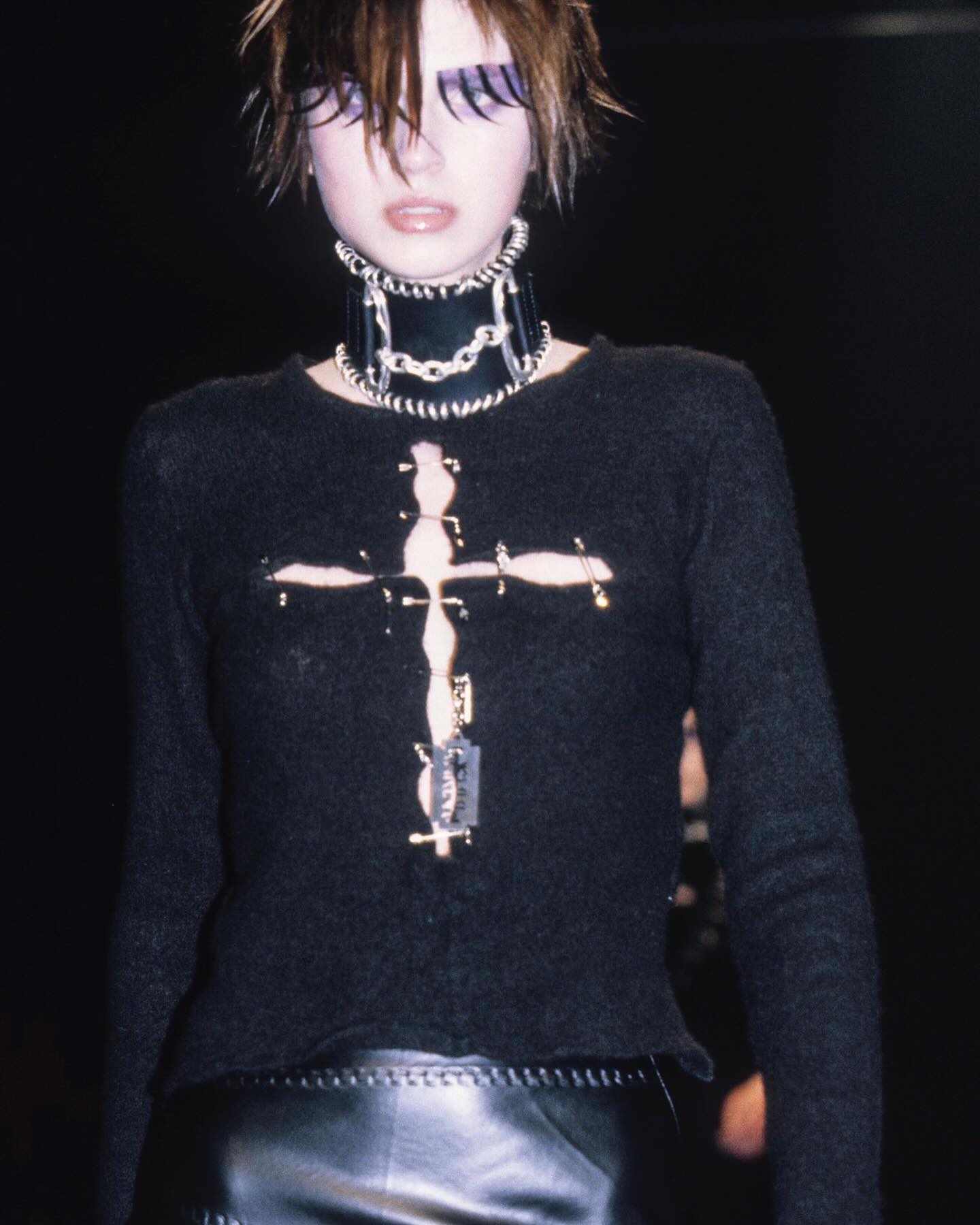
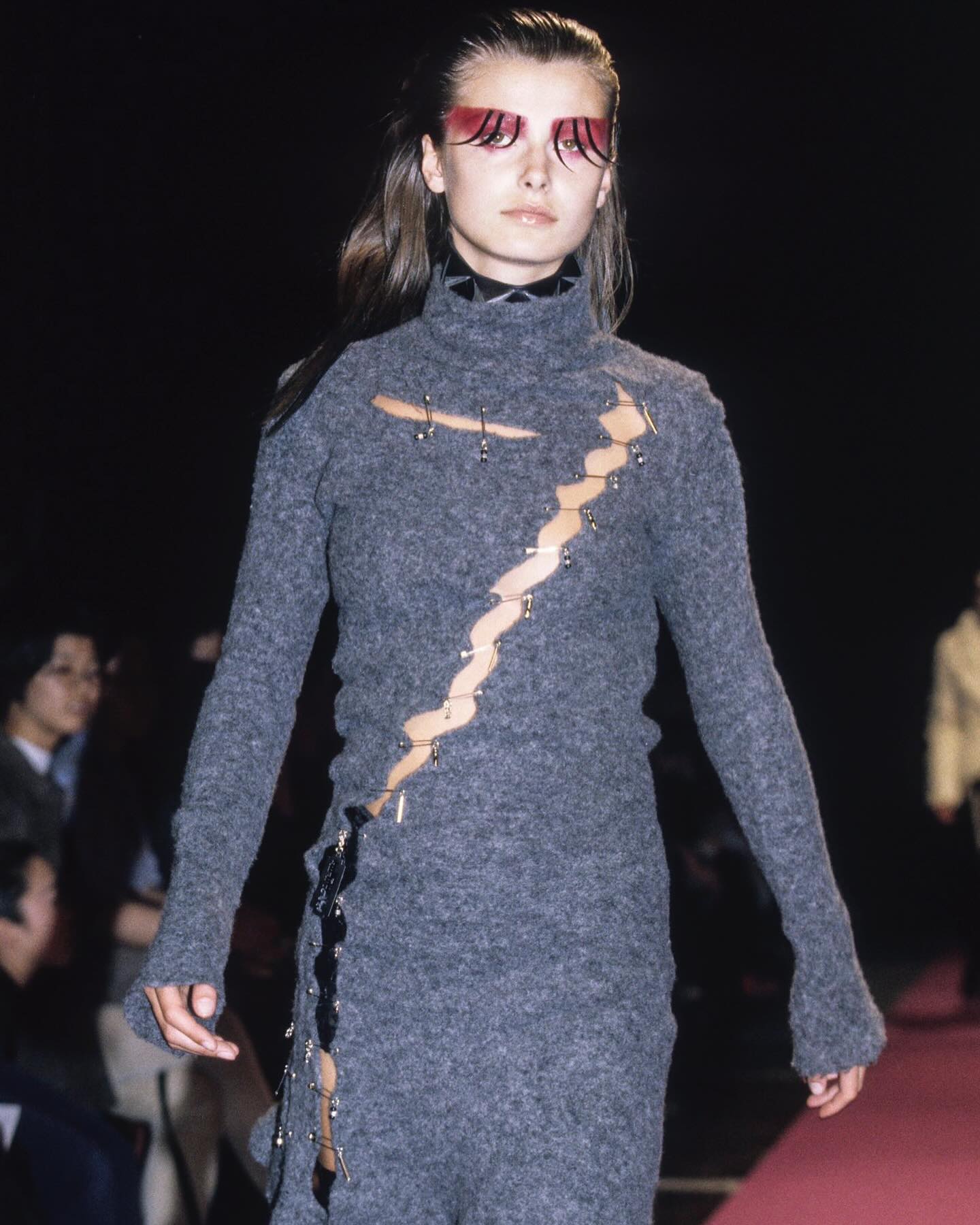
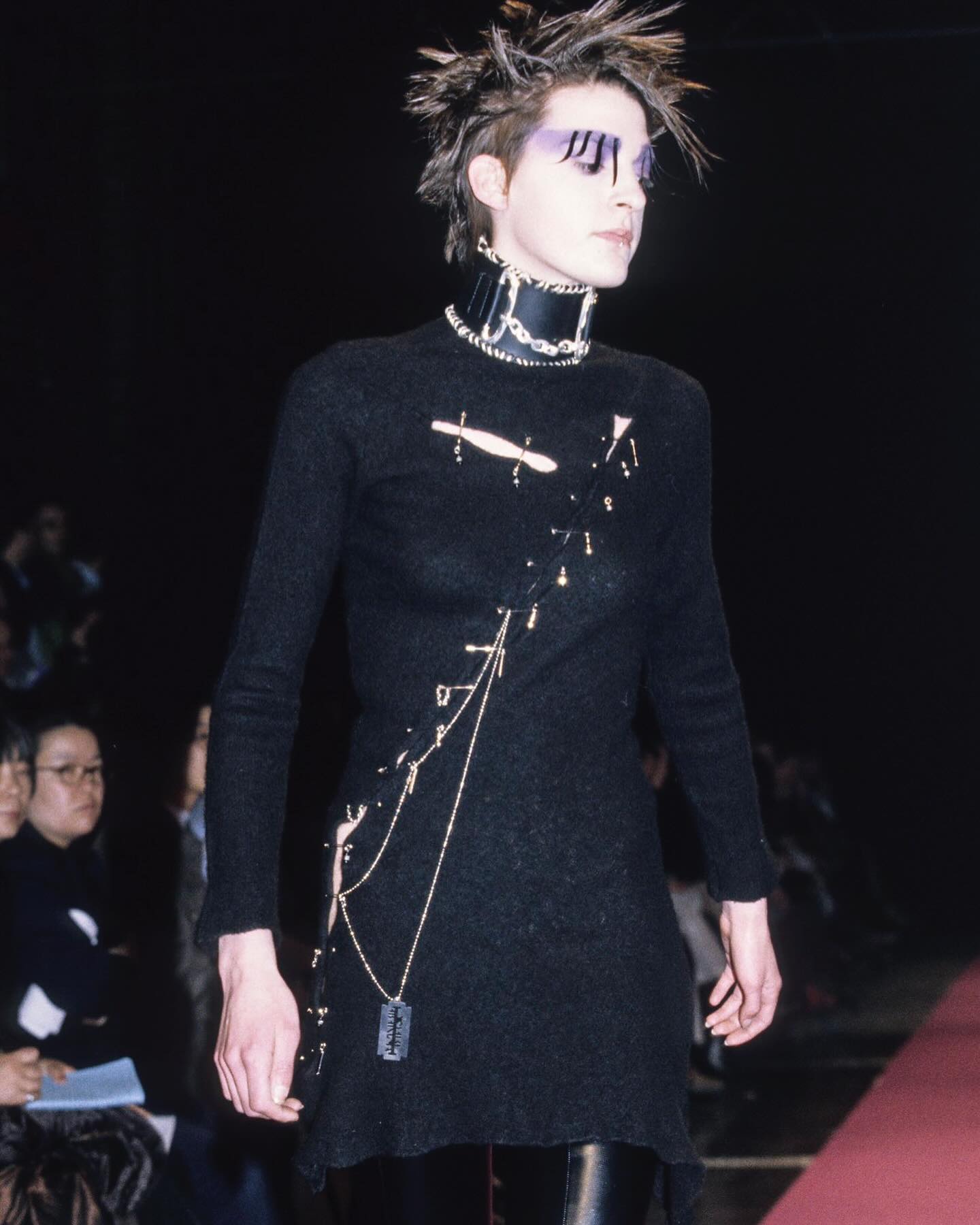
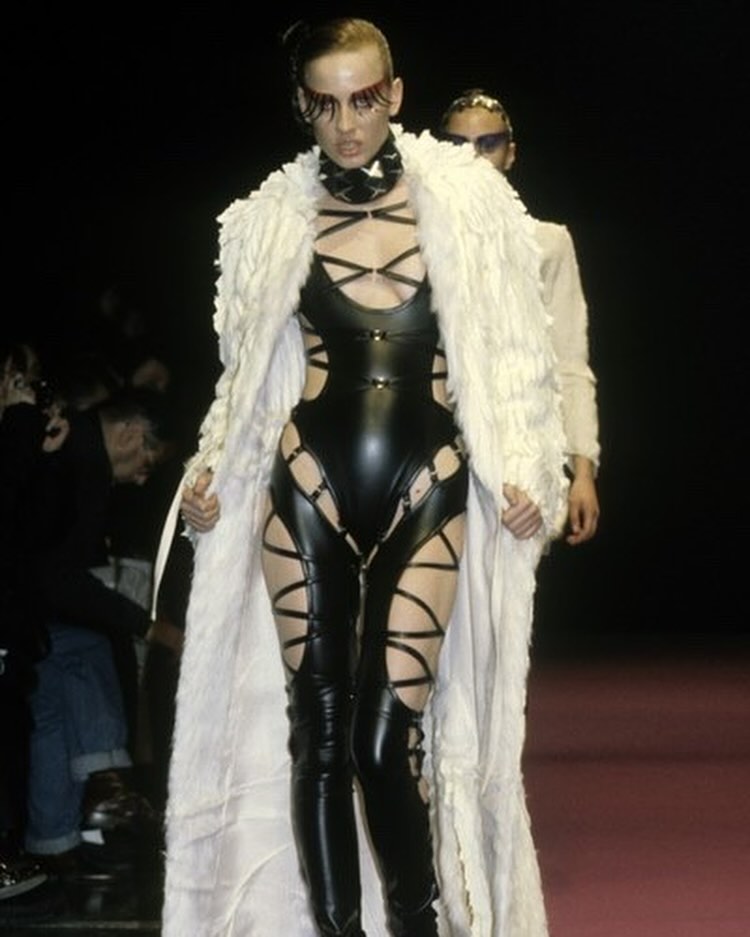
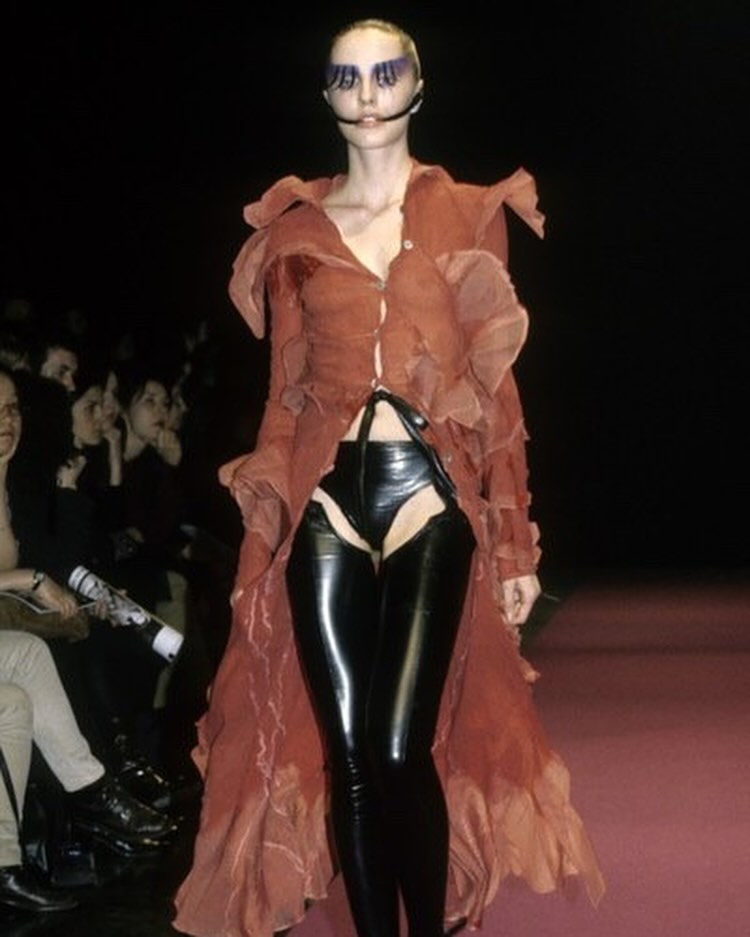
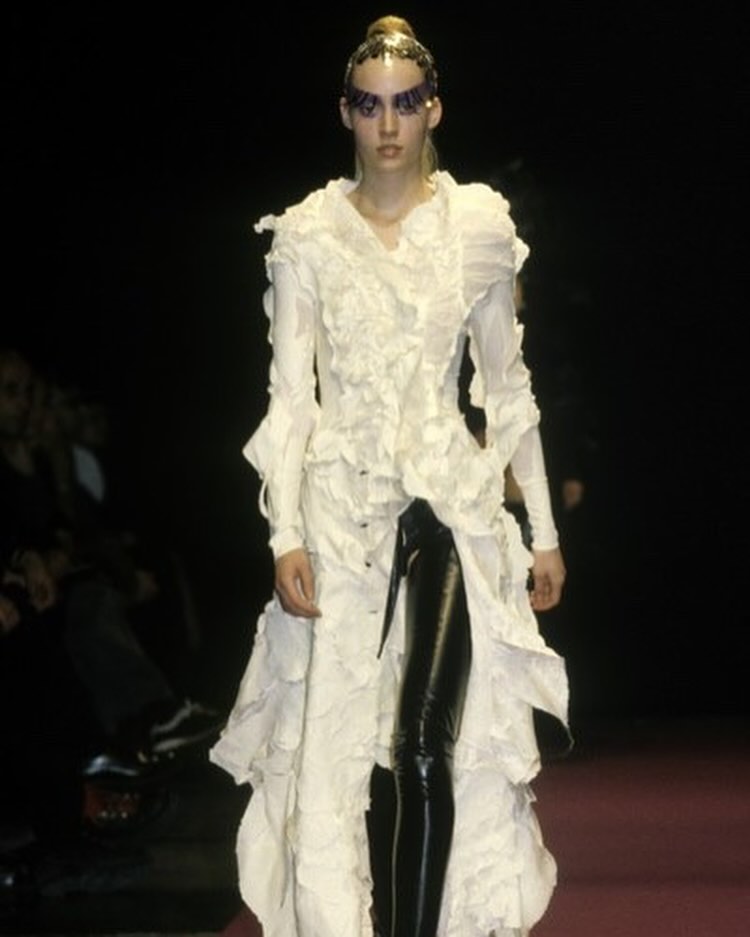
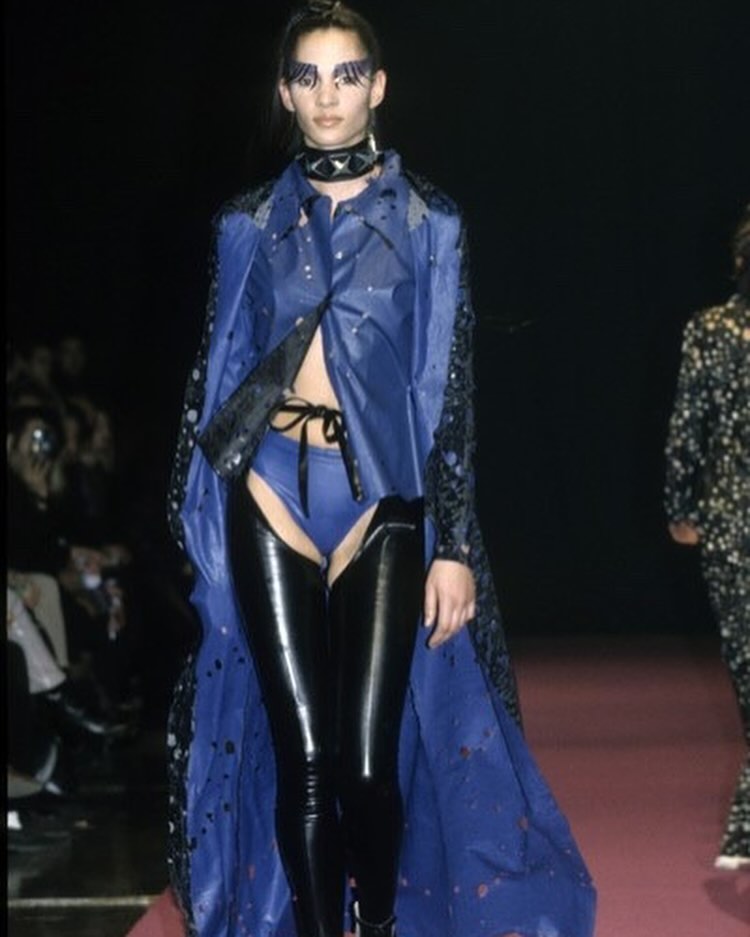
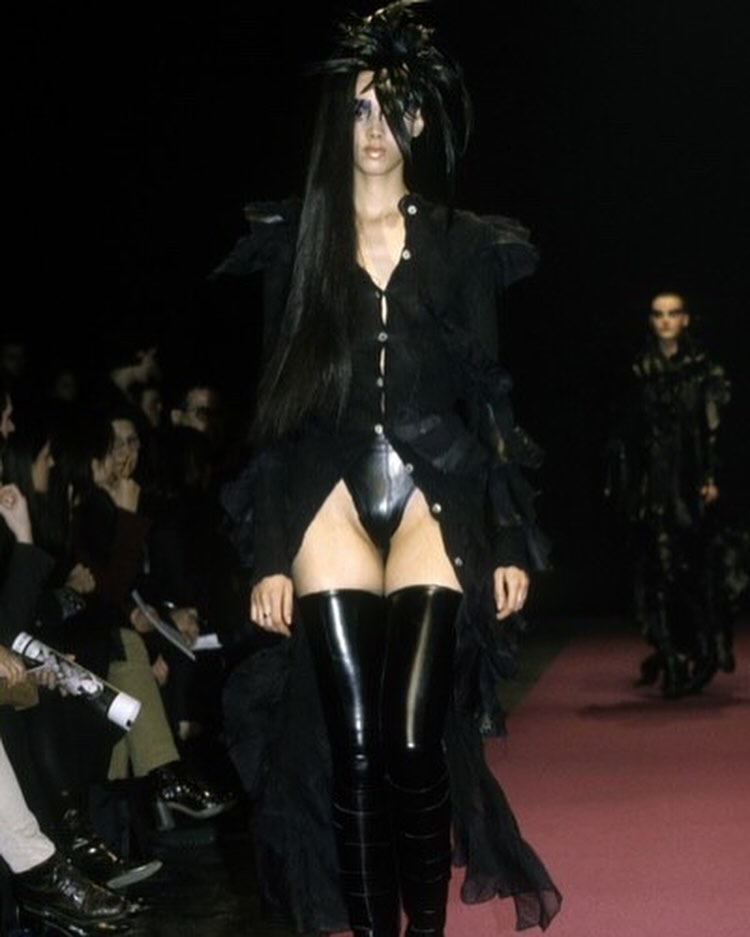
Dominating the runway were exaggerated eyelash makeup, ruffle details, latex materials, and bold cutouts. Hishinuma employed his signature technique of applying heat and chemical treatments to fabrics to create permanent pleats and textures, achieving a dynamism that made the garments appear alive and in motion. This proposed fashion not merely as clothing but as wearable art.
While the fashion world of 1997 was navigating between minimalism and grunge, Hishinuma presented a third path: a fusion of reinterpreted Japanese traditional techniques with Western punk culture. His work opened possibilities for textile innovation to countless subsequent designers, playing a pioneering role particularly in dissolving the boundaries between couture and technology. To this day, Hishinuma's 1997 AW collection remains one of the most coveted references among archive fashion enthusiasts, testament to its enduring influence on contemporary design thinking.
FAQ
What characterizes Yoshiki Hishinuma's 1997 AW collection?
Yoshiki Hishinuma's 1997 AW collection features distinctive pleated details through heat-treated textile techniques combined with punk elements. Exaggerated eyelash makeup, ruffles, latex materials, and cutouts express rebellious, intense moods while presenting innovative textile experimentation distinct from traditional shibori methods.
What technique is Yoshiki Hishinuma famous for?
Yoshiki Hishinuma is renowned for his signature technique of imparting permanent pleats and textures to fabric through heat and chemical treatments. This approach differs from traditional Japanese shibori dyeing, elevating textile itself into sculptural artwork that creates fabric appearing dynamically alive.
Why is Hishinuma's 1997 collection important in fashion history?
The 1997 Hishinuma collection offered an original third path in a fashion landscape dominated by minimalism and grunge, fusing reinterpreted Japanese traditional techniques with Western punk culture. As pioneering work dissolving the boundaries between textile innovation and couture-technology, it remains crucial reference for archive fashion enthusiasts today.