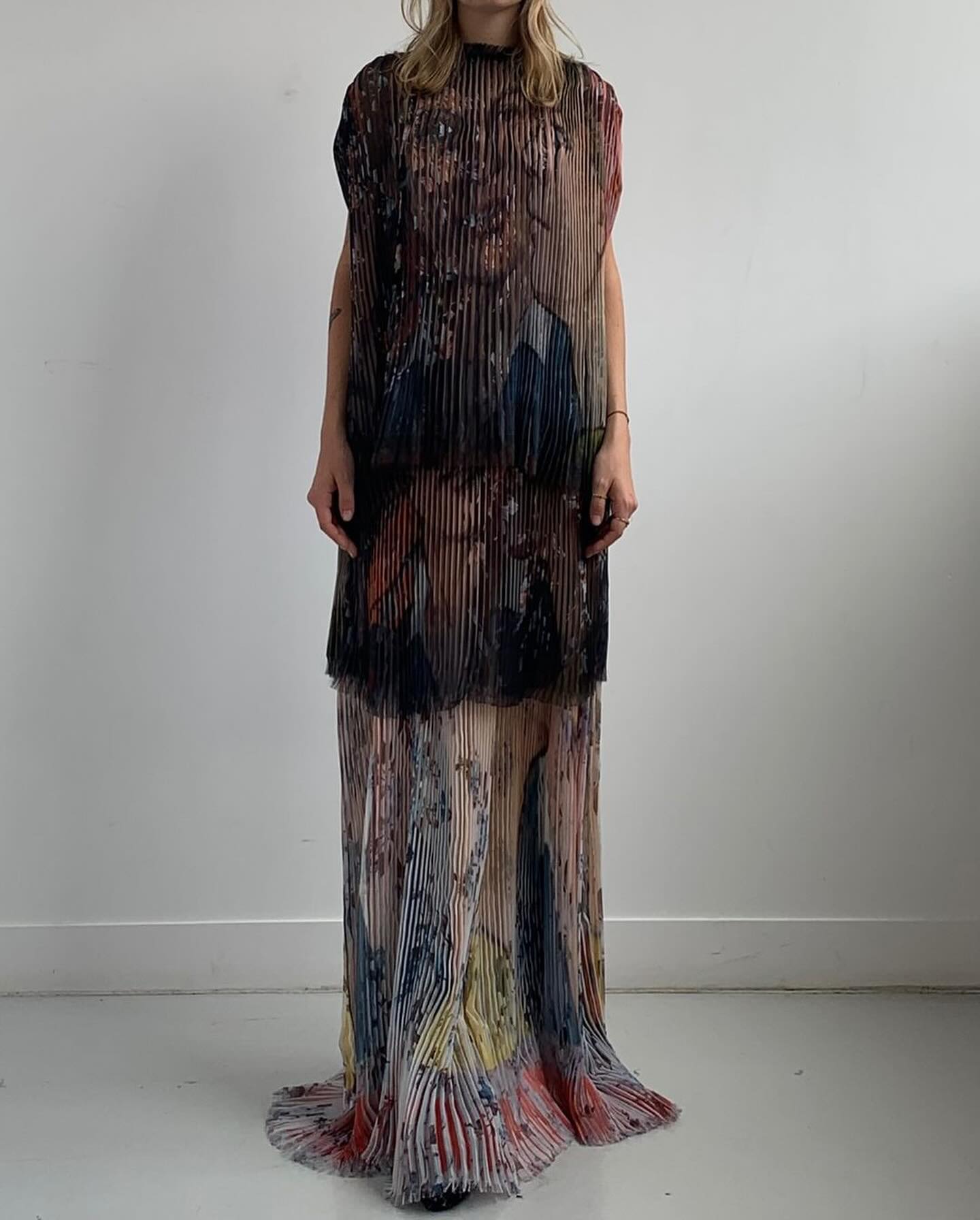
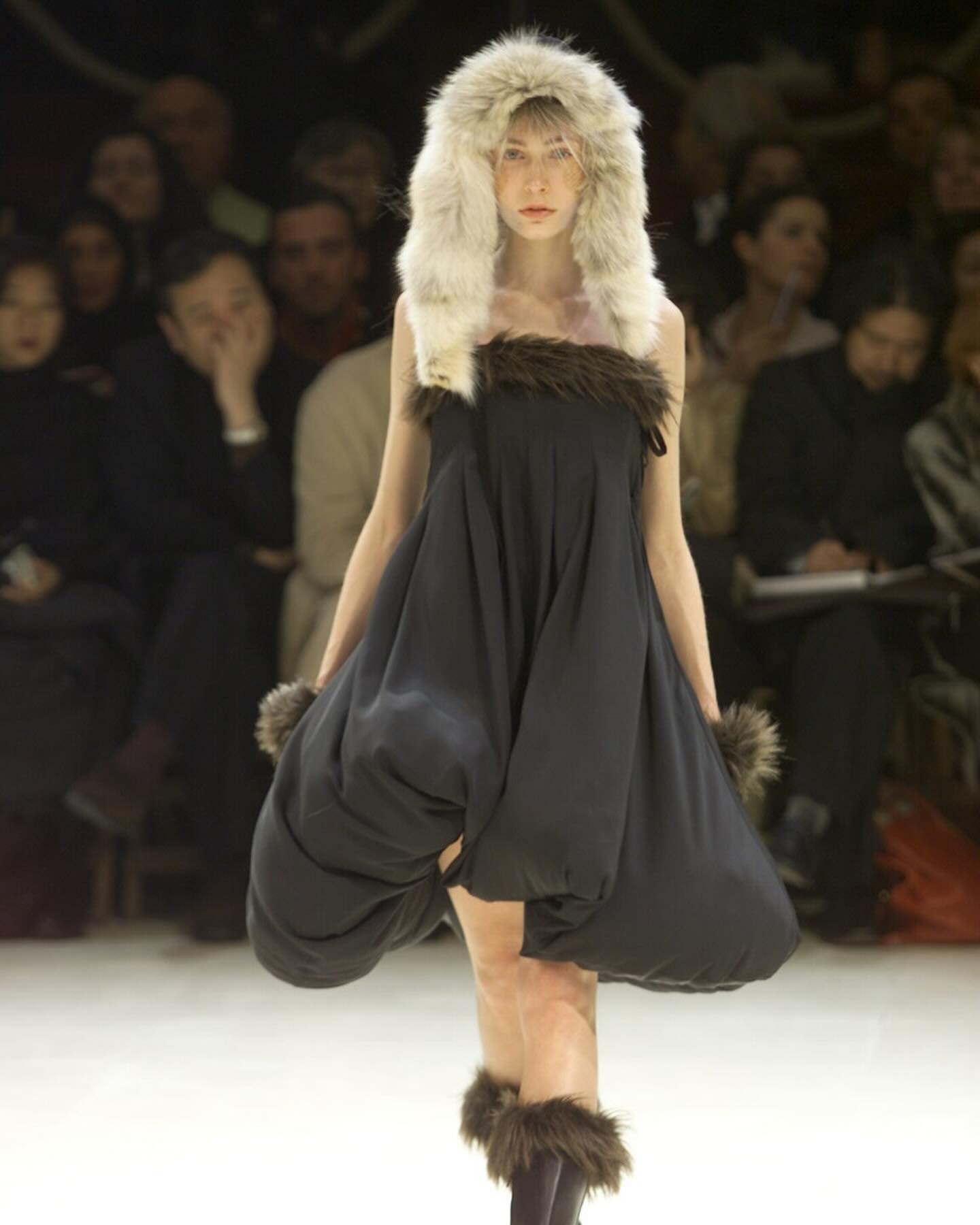
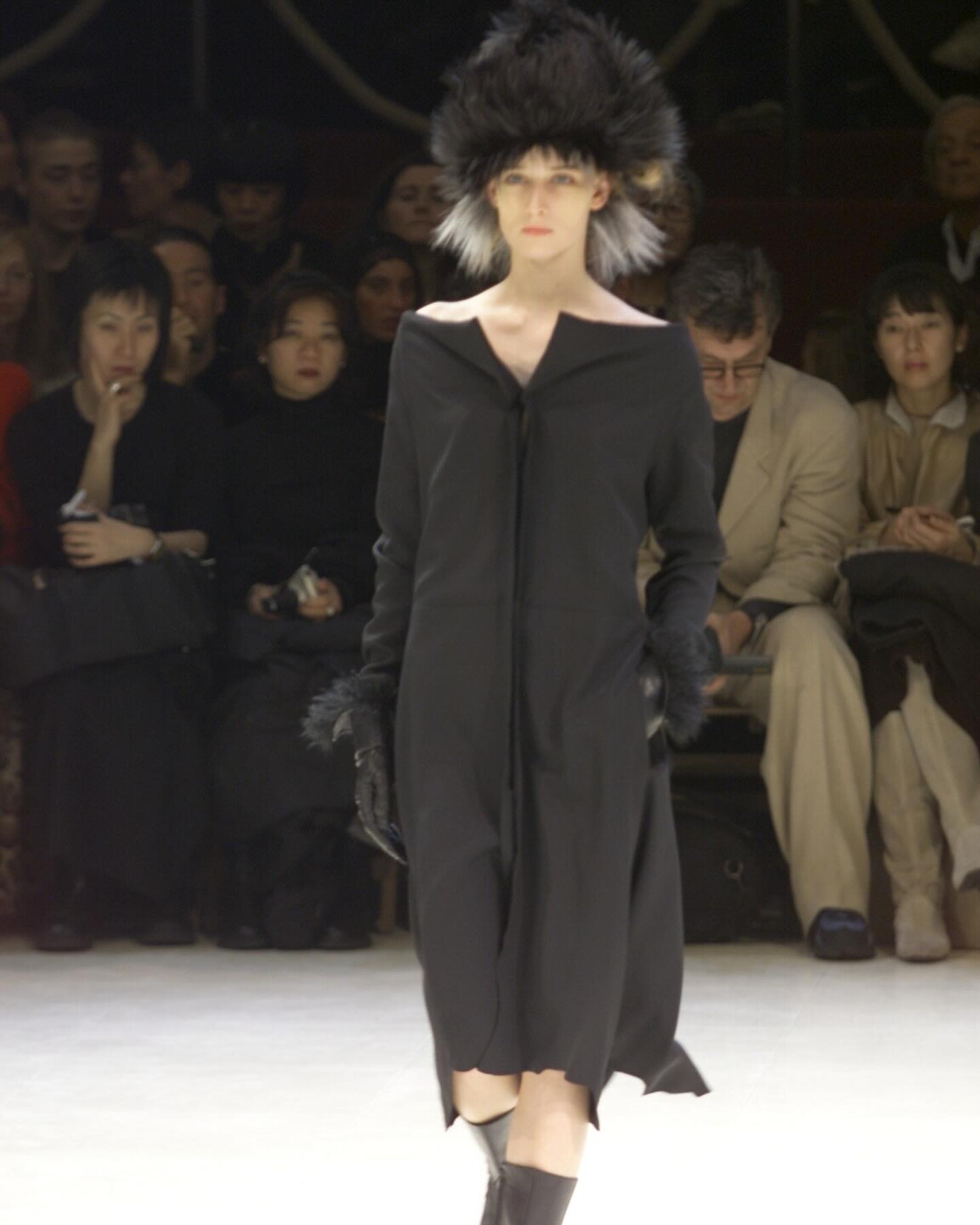
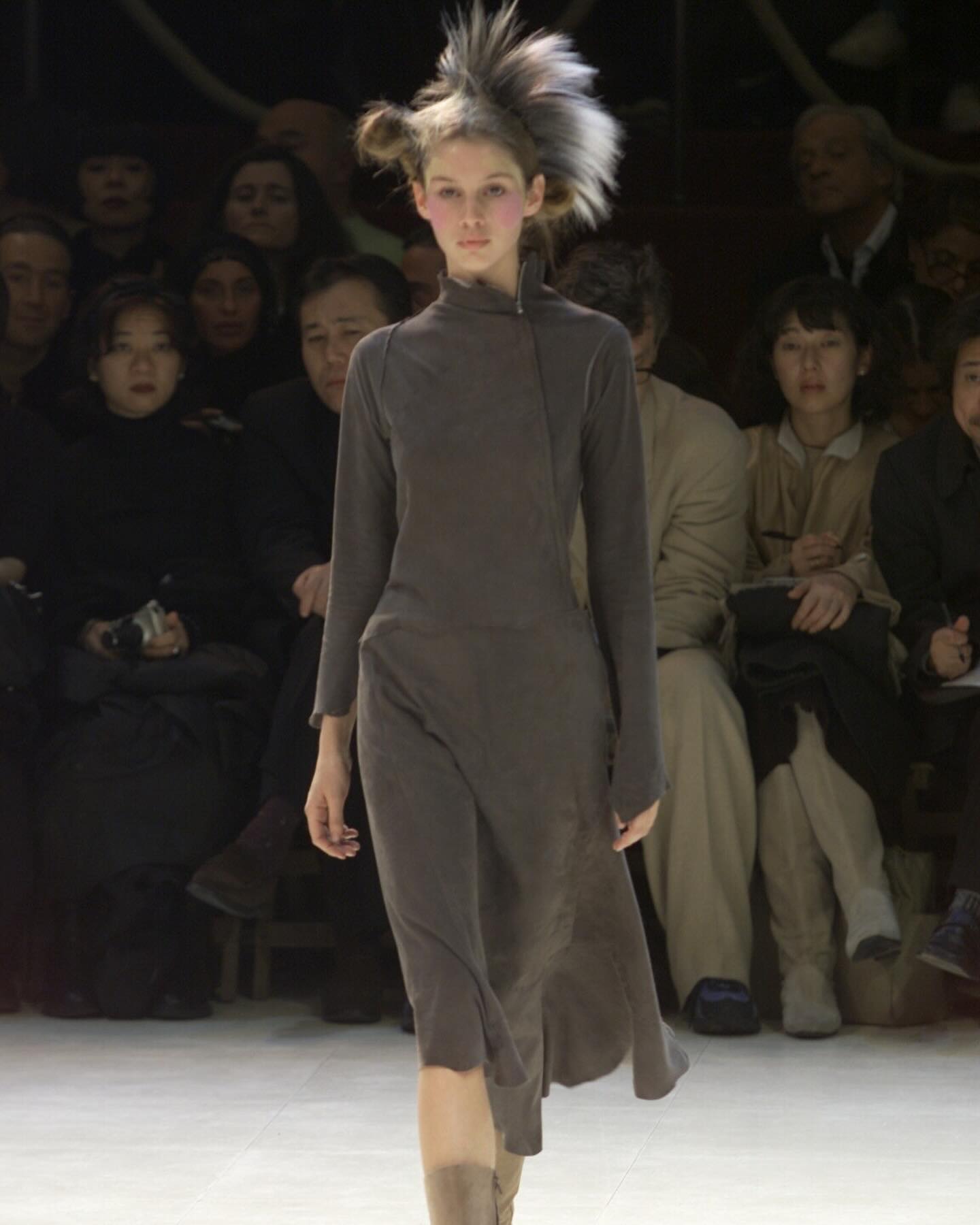
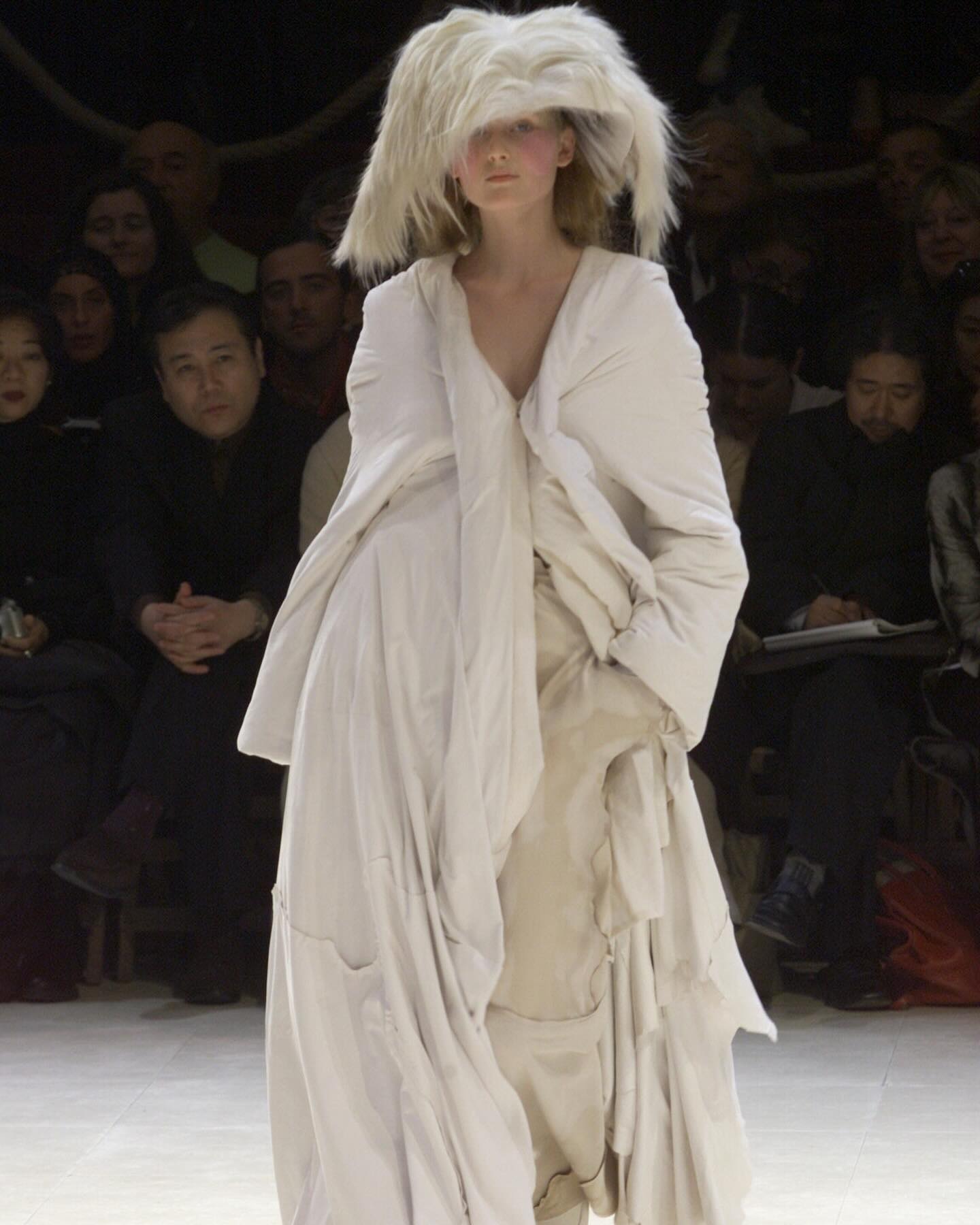
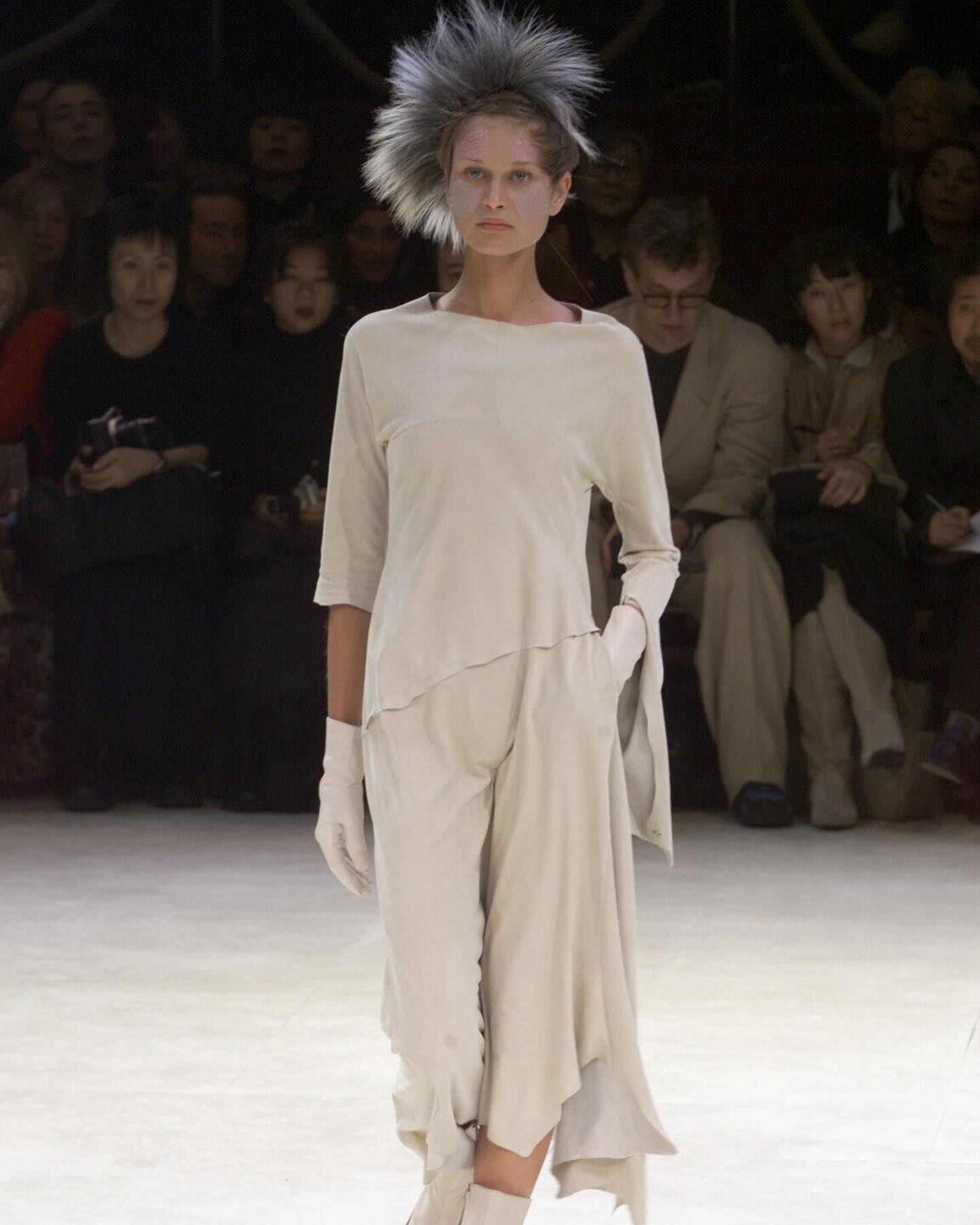
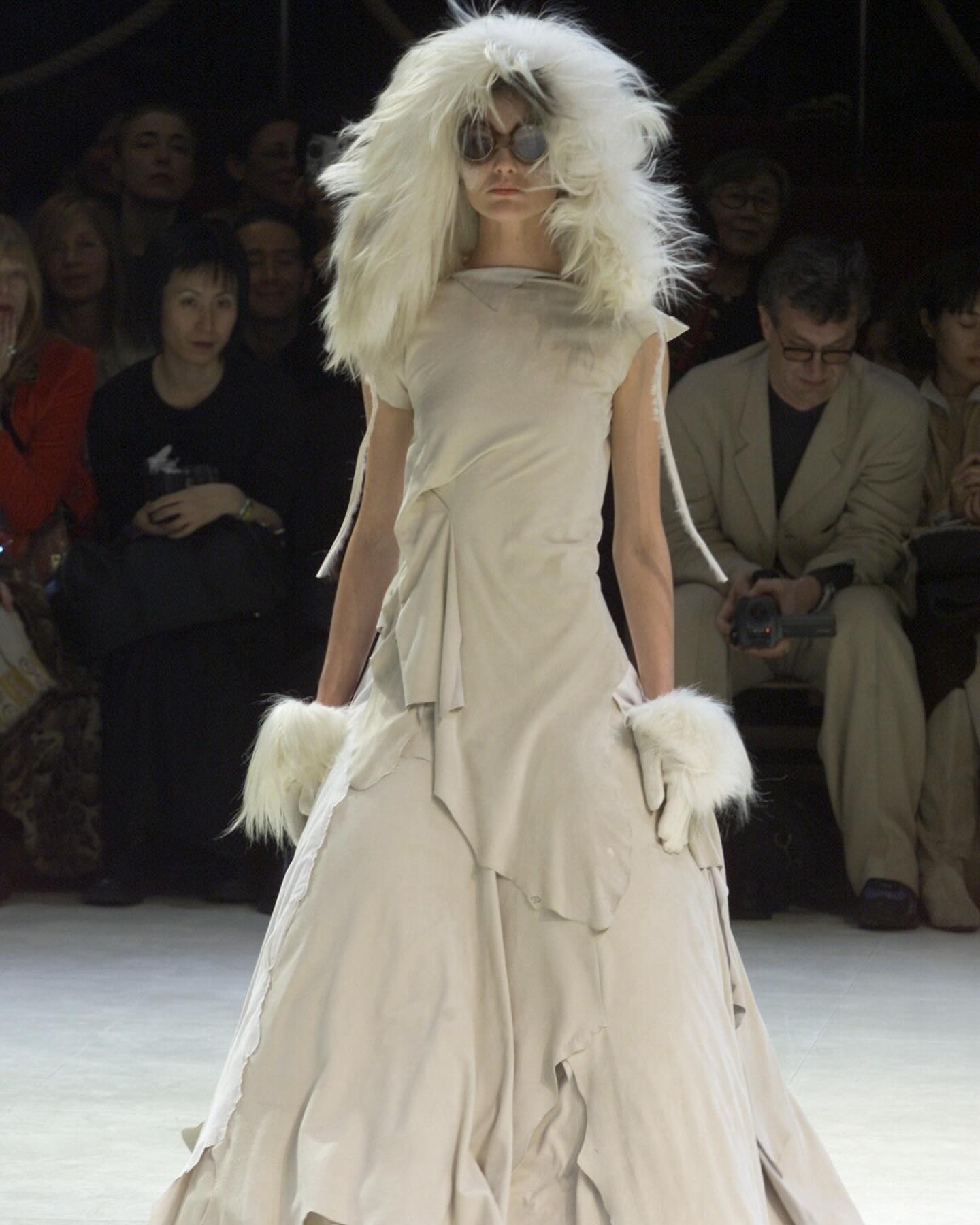
Beneath the beige-toned long coat, a layered skirt cascades with petal-like hem lines that capture attention through their fluid movement. The interplay between heavy material weight and flowing silhouette exemplifies Yamamoto's lifelong pursuit of balancing structure with deconstruction. The fusion of animal-derived materials and ethnic motifs transcends mere appropriation, embodying a design philosophy that dismantles cultural boundaries.
This collection represents a pivotal moment in the early 2000s when Yamamoto expanded beyond Japanese minimalism to reinterpret sartorial languages from diverse global traditions. The functional integrity of Eskimo parkas meets the relaxed draping methods of Japanese kimono, proposing a universal beauty that transcends gender and geography. Two decades later, these archival pieces continue to affirm fashion's capacity to serve as a platform for cross-cultural dialogue rather than mere clothing.
FAQ
What are the main design points of Yohji Yamamoto's 2000 F/W collection?
The key elements are a fox-fur hood and petal-like flowing hemlines in layered skirts. Inspired by Eskimo traditional dress, the collection harmonizes animal materials with ethnic motifs, achieving Yamamoto's signature avant-garde aesthetic through the balance of structure and deconstruction.
What design philosophy did Yohji Yamamoto present in his early-2000s collections?
Yamamoto transcended Japanese minimalism by reinterpreting traditional dress languages from around the world, pursuing design that dissolves cultural boundaries. He combined Eskimo parka functionality with Japanese kimono dressing methods to propose universal beauty transcending gender and geography.
What is the contemporary significance of Yamamoto's 2000 F/W archive collection?
Twenty years later, it still proves fashion can become a platform for cultural dialogue beyond mere clothing. Through the fusion of ethnic tradition and contemporary avant-garde, it is valued as an important case demonstrating sustainable design inspiration and cross-cultural exchange possibilities.