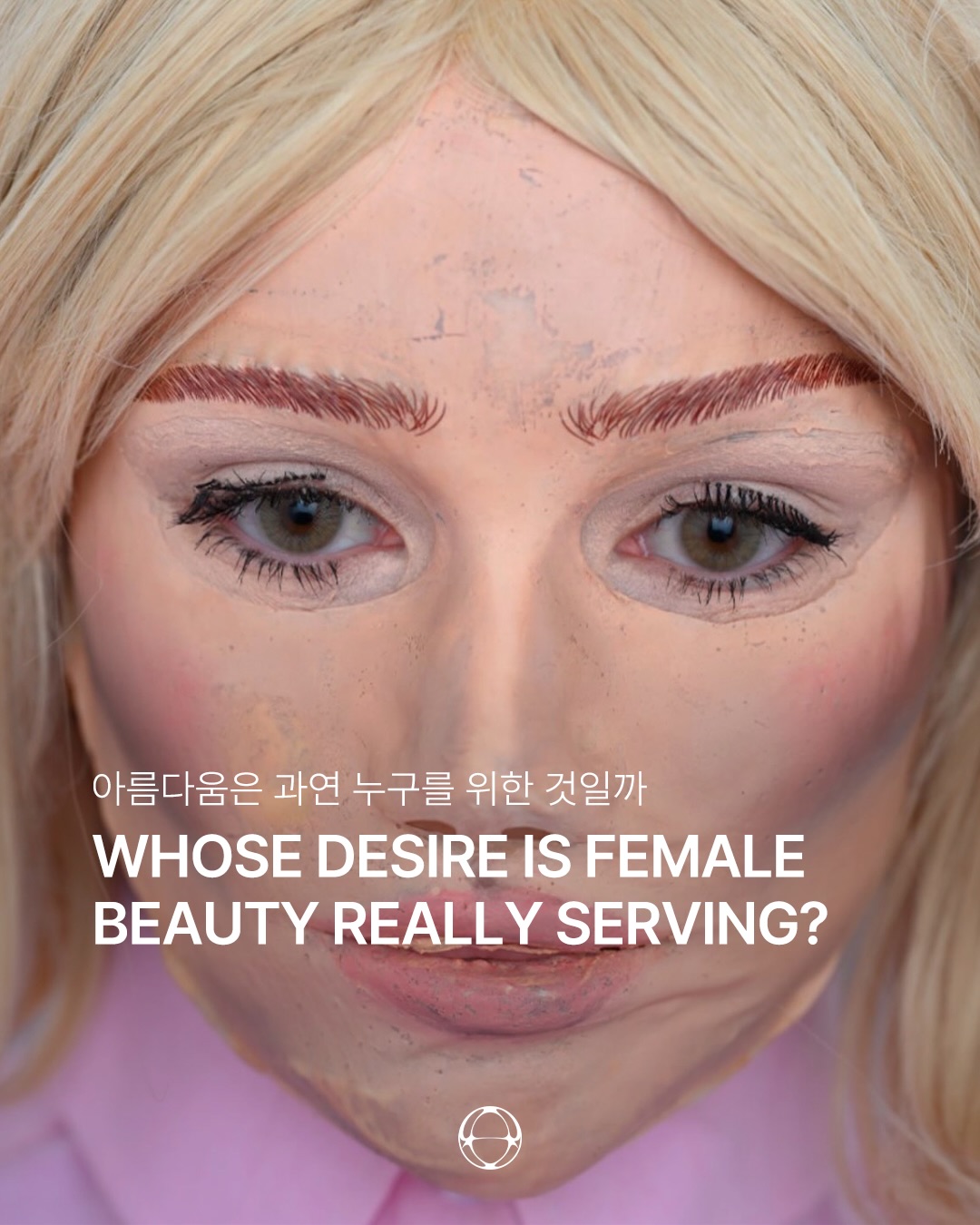
Women's bodies have long functioned as sites onto which standards of beauty are projected and imposed. It is difficult to deny that many of these standards have historically been shaped by the male gaze. French artist Naomie Ninot's work Poupée de Peau confronts this uncomfortable truth head-on.
Ninot collected descriptions of the "ideal woman" from nearly 300 men through dating apps such as Tinder and Hinge. Using latex, exaggerated makeup, doll-like skin, and sculptural facial features, her work takes the beauty standards we are so familiar with and pushes them to an extreme, transforming them into grotesque forms. It visualizes how an obsession with perfection ultimately results in unrealistic and distorted desires.
Rather than criticizing beauty itself, the work poses a sharp question: Who is female beauty really for? It is time to take a deeper look at whether the faces we aspire to are truly our own—or merely reflections of desires shaped by the gaze of others. Ninot's project compels us to ask once again: whose ideals are the beauty industry's ideals really serving?


FAQ
How was Naomi Nino's Poupée de Peau project created?
Naomi Nino collected descriptions of the 'ideal woman' from about 300 men through dating apps like Tinder and Hinge, then recreated them in grotesque forms using latex as material.
What message does Naomi Nino's work convey?
This work poses the sharp question: for whom is female beauty? It asks whether the faces we admire are truly ours, or desires shaped by others' gazes.