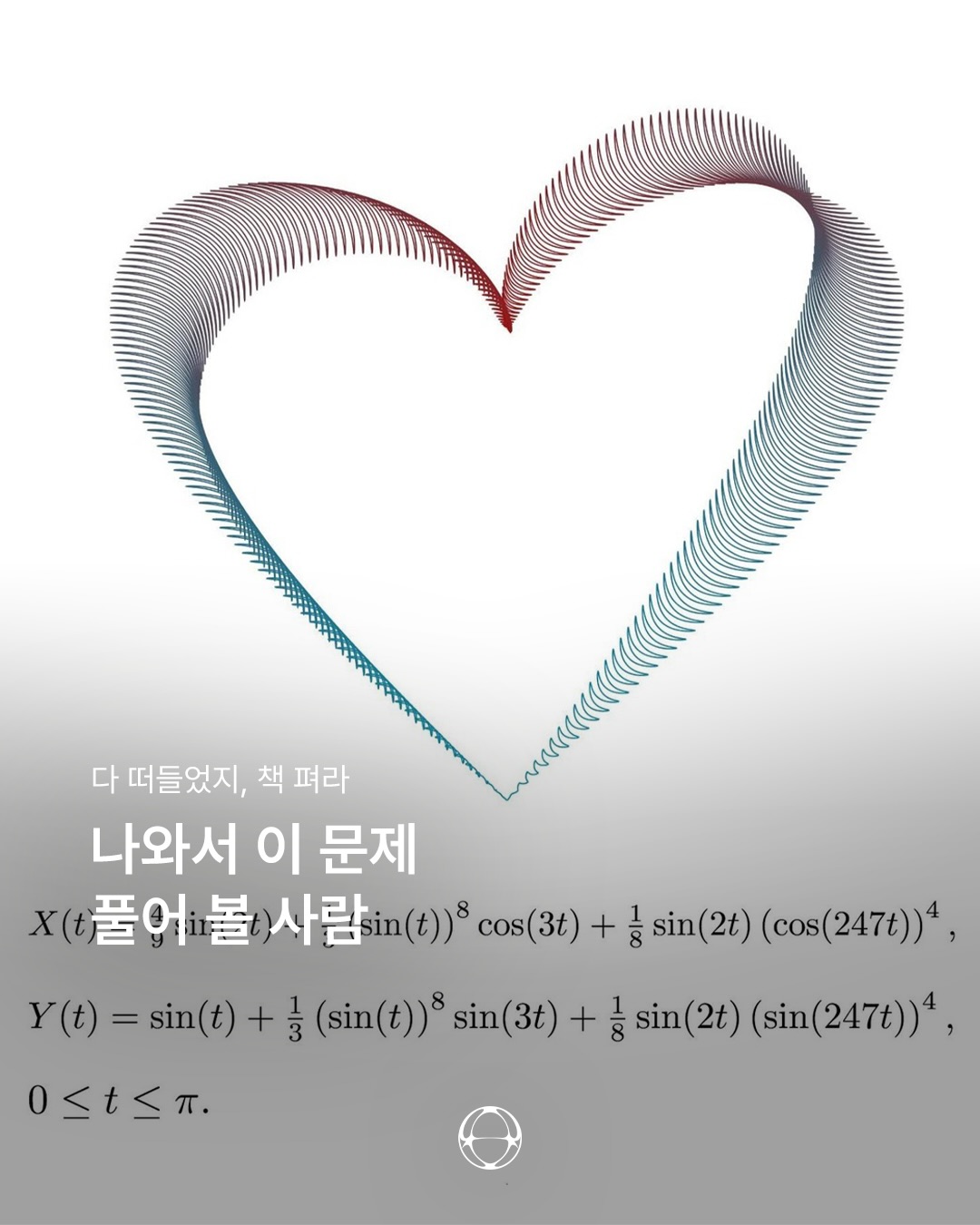
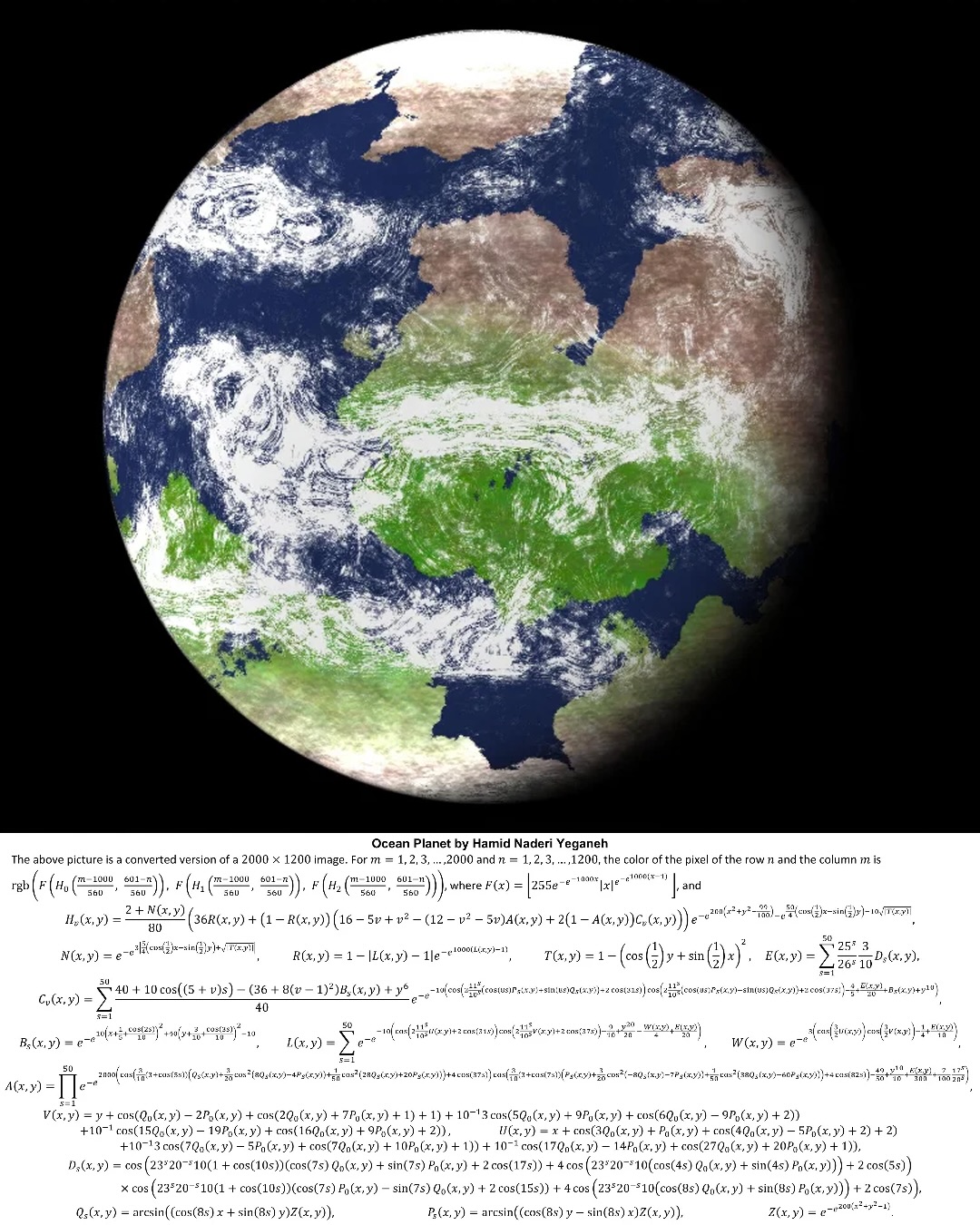
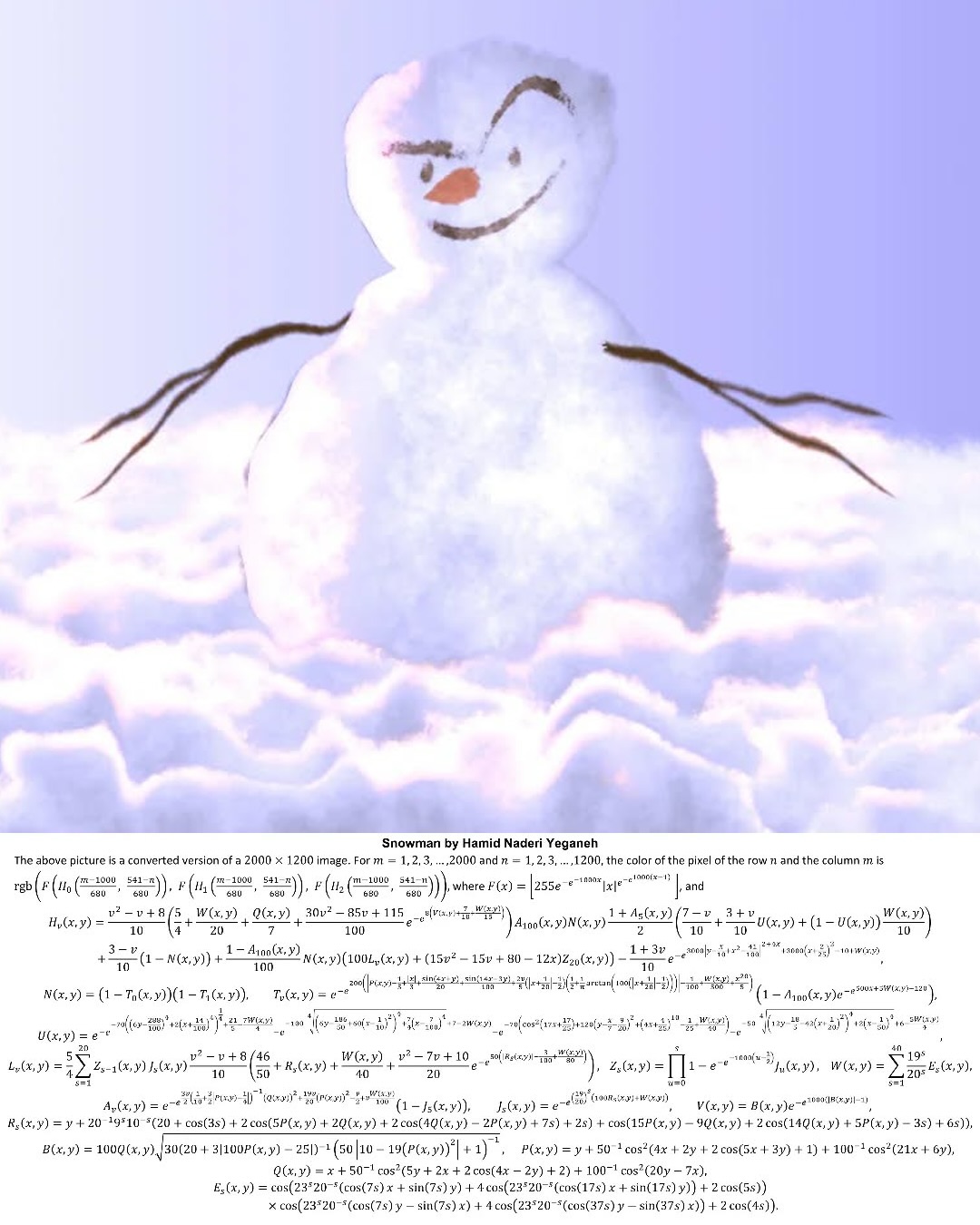
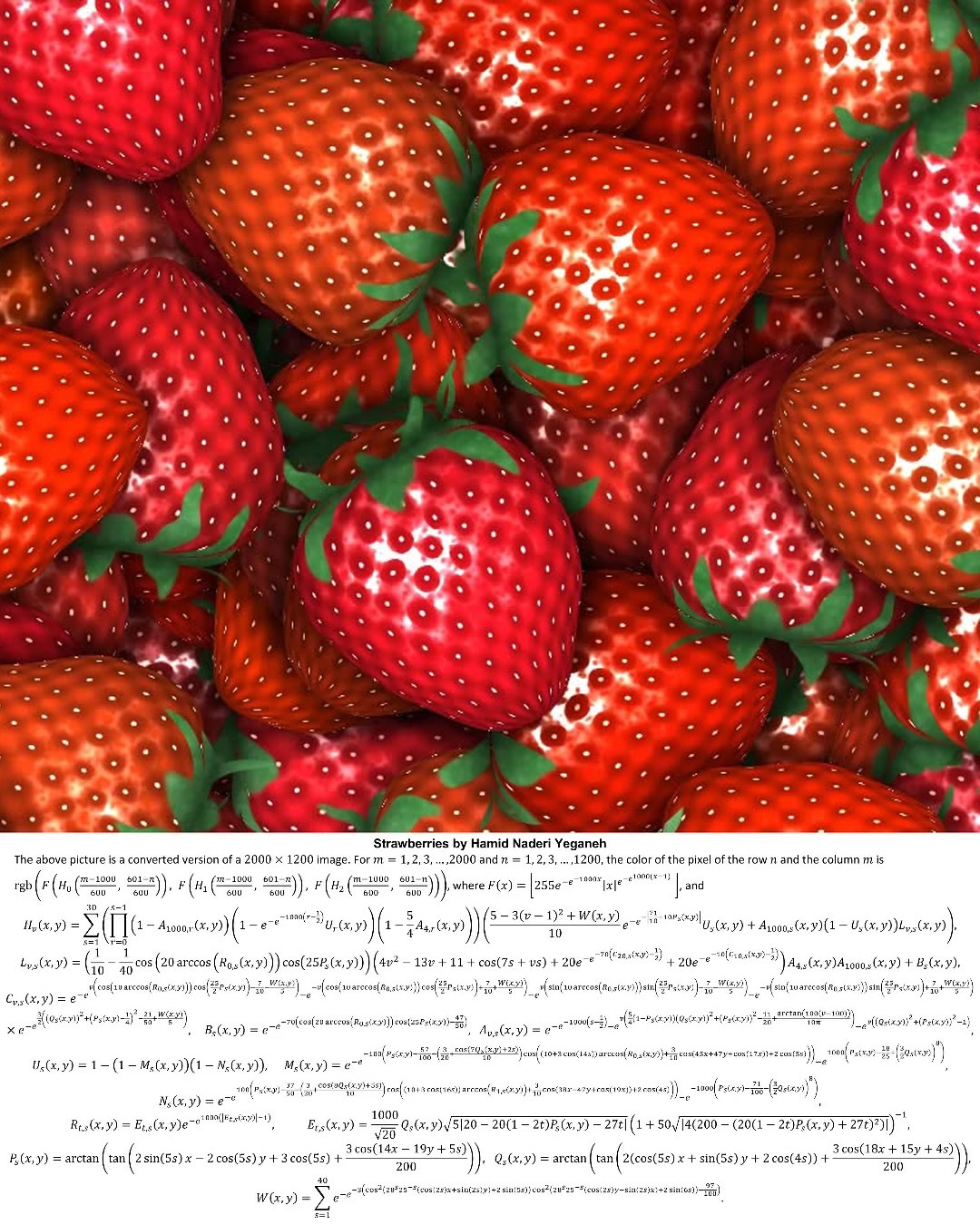
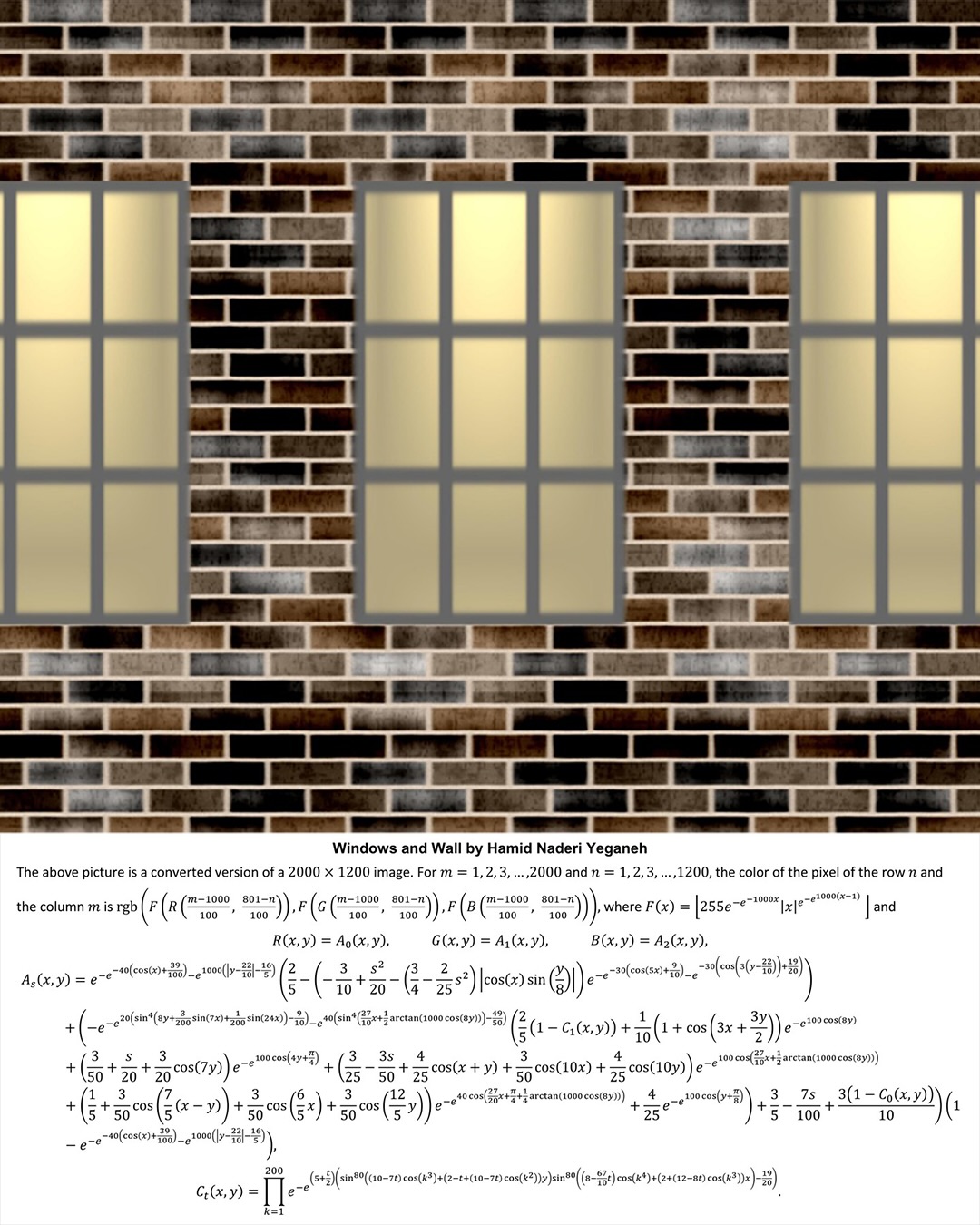
One of his works, a heart-shaped image, is constructed from intricate formulas. Two parametric equations, X(t) and Y(t), trace lines across a range from 0 to π, and these lines converge to form a heart. It's not merely a beautiful drawing—it's a visual translation of mathematical logic, where precision meets aesthetics.
Yeganeh's work proves that mathematics is not just a cold, rigid language but can become an emotional, visual landscape. His art invites viewers not only to look but to 'read' and 'solve,' offering a multi-dimensional experience for those fluent in numbers. In his world, where math and art, logic and sensation coexist, we are reminded that beauty can be defined in many ways—including through the elegance of an equation.
FAQ
How does Hamid Naderi Yeganeh create his artworks?
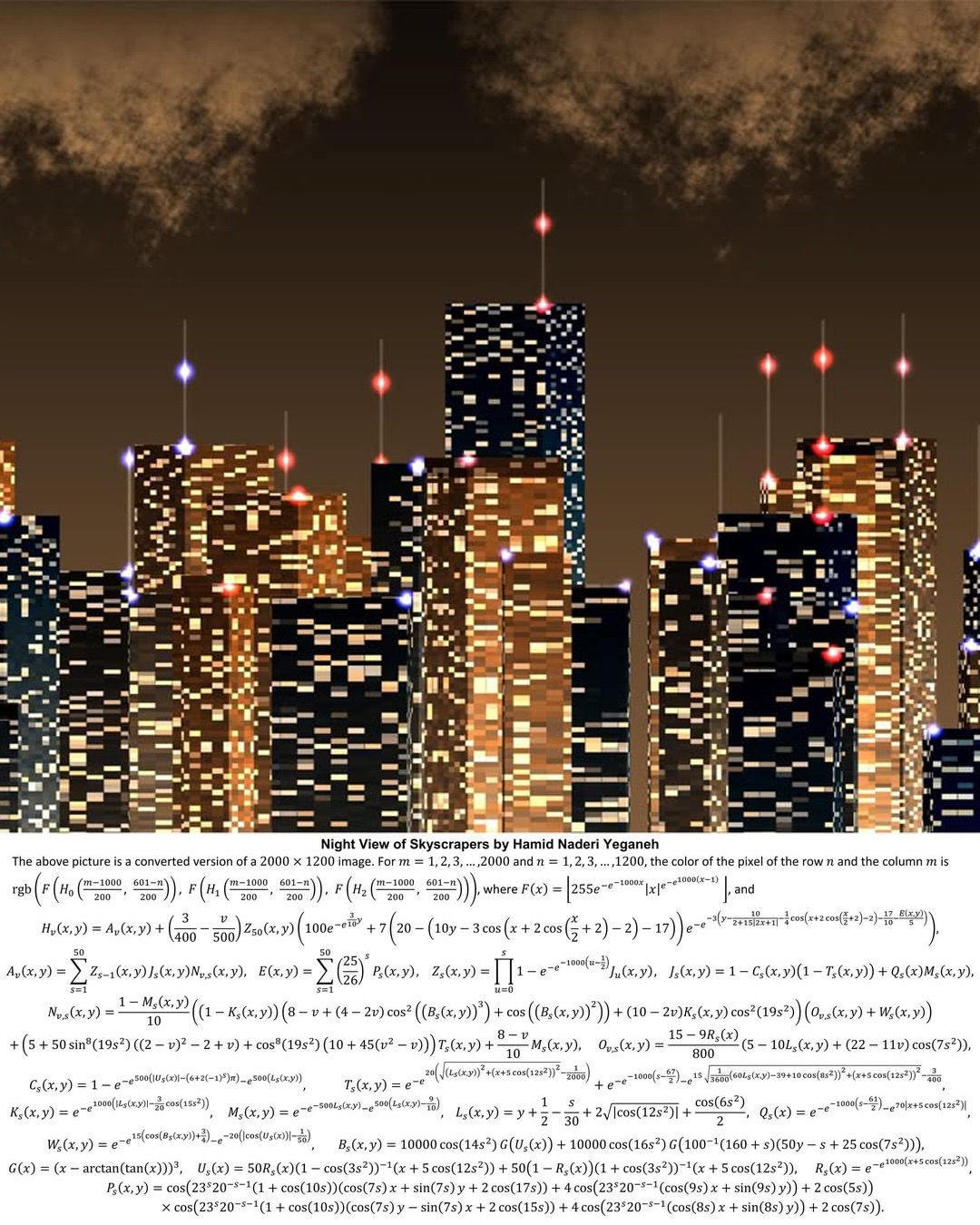
Hamid Naderi Yeganeh uses equations instead of brushes or pens to create images. He combines mathematical formulas—roots, logs, trigonometric functions—to generate curves and patterns, then translates them into visual images. His work transforms mathematical logic into artistic sensibility.
What significance does mathematically-drawn art hold?
Mathematically-drawn art dissolves boundaries between logic and emotion, science and art. Like Hamid Naderi Yeganeh's equation-generated images, it proves mathematics can become beautiful visual landscapes, not just cold, rigid language, proposing new ways of defining beauty.
What is parametric equation art?
Parametric equation art uses mathematical functions like X(t), Y(t) to draw curves and forms following variable t's changes over time or angle. Hamid Naderi Yeganeh employs this technique to create complex images like hearts purely through formulas, simultaneously expressing mathematical precision and visual beauty.