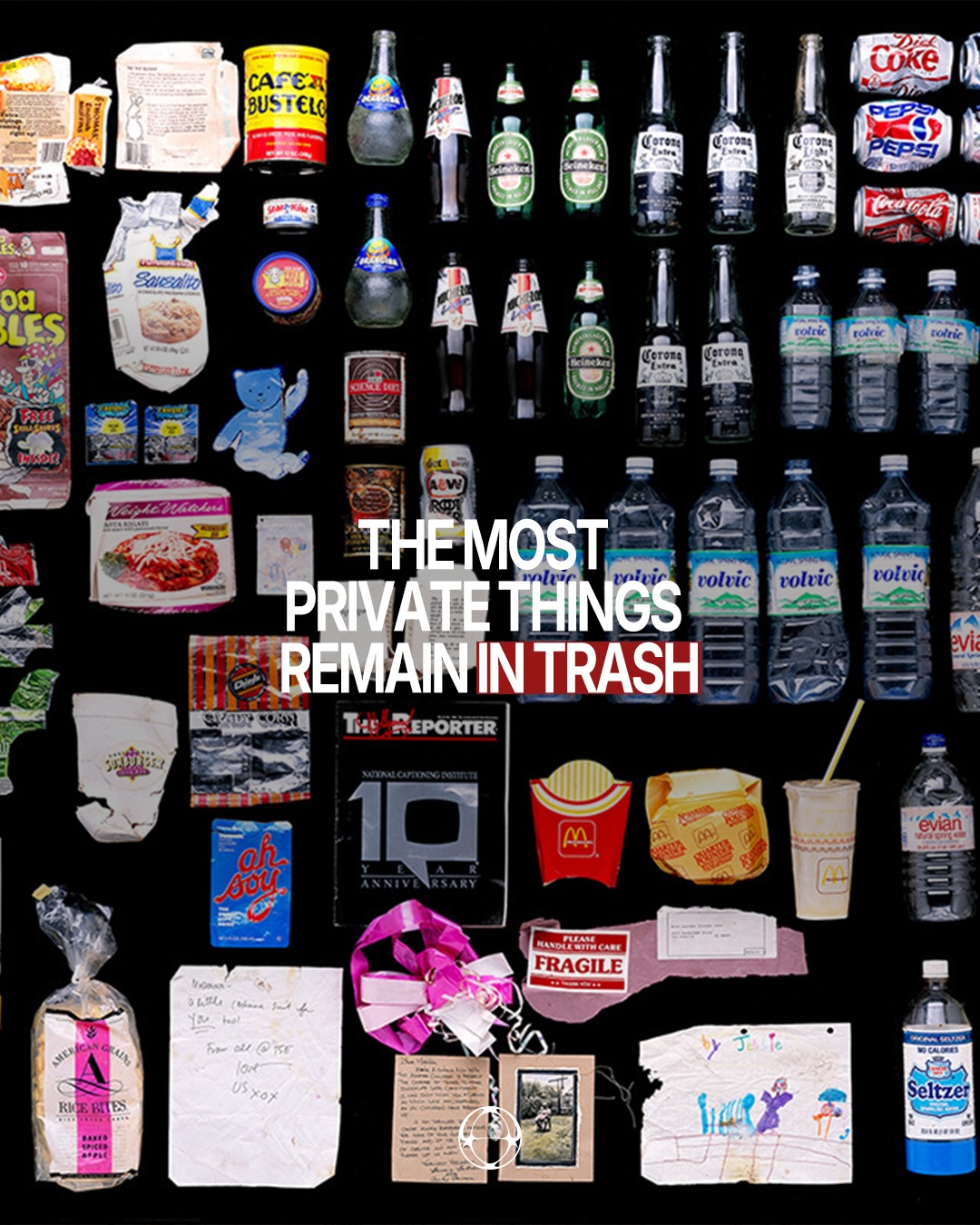
What is discarded becomes more than refuse; it transforms into the most candid record. Traces of consumption reveal personal tastes, habits, and private dimensions individuals choose to keep hidden. Flaws and desires concealed behind polished public images are exposed through the medium of trash. McDonald's fries boxes, vodka bottles, handwritten notes, prescription labels—each item bears witness to fragments of everyday life behind the spotlight.
The discomfort this work provokes is clear. It stems not from trash itself, but from what it reveals about human nature. We feel an ethical boundary when peering into others' private lives, yet cannot suppress our curiosity about what lies beneath. Mouron and Rostain's practice questions the gap between what is shown and what is hidden in an image-driven society, suggesting that the traces left by consumer culture may ultimately form the most truthful portrait.
What does trash reveal? This question may serve as a mirror not only for celebrities, but for all of us.


FAQ
Whose trash did Bruno Mouron and Pascal Rostain collect?
Bruno Mouron and Pascal Rostain collected trash from celebrities including Brigitte Bardot, Tom Cruise, Michael Jackson, Madonna, and Damien Hirst over 15 years, reconstructing it as visual archives. They tracked celebrities, pinpointed locations, retrieved trash under meticulous planning, then sorted and selected items in studios.
Why is Bruno Mouron's trash photography work unsettling?
The discomfort arises not from trash itself but from the human underbelly it reveals. Discarded objects nakedly expose personal tastes, habits, and desires hidden behind polished images, creating tension between ethical boundaries and curiosity about voyeuristically glimpsing others' private lives.
What's the significance of collecting celebrity trash as artwork?
This work questions the gap between 'what's shown' and 'what's hidden' in consumer society. Consumption traces remain as the most truthful records, testifying to everyday fragments and flaws obscured behind glamorous images, suggesting trash can ultimately become the most honest portrait.