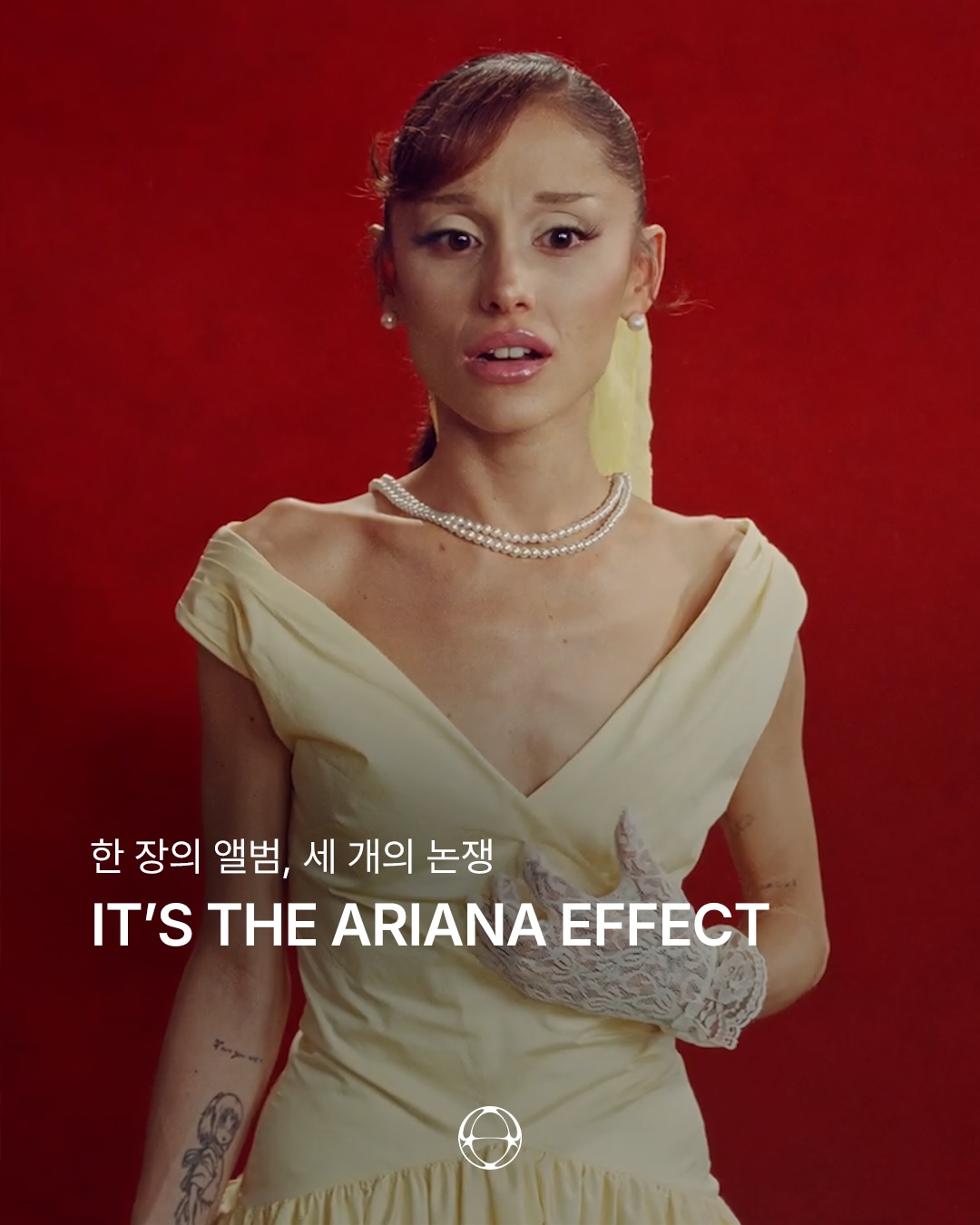
We constantly demand honesty from artists. On stage, in lyrics, in interviews — we ask them to be more transparent. But when that transparency turns into deeply personal pushback, listeners are left confused. It becomes difficult to tell whether this is artistic expression or simply a long reply she couldn't post in a comment section.
Ariana Grande has fought public scrutiny throughout her career. Her private life became headlines, her relationships turned into memes. So responding through music may feel like a natural step. But when that response overtakes the entire song, music stops being something you listen to and becomes something you have to read. Pop's language is meant to convey emotion, not explain it.
Ultimately, this debate leads to one question: Can a pop star's longest reply still function as music? Ariana Grande's new album sits right on that line.


FAQ
What controversy did Ariana Grande's new album spark?
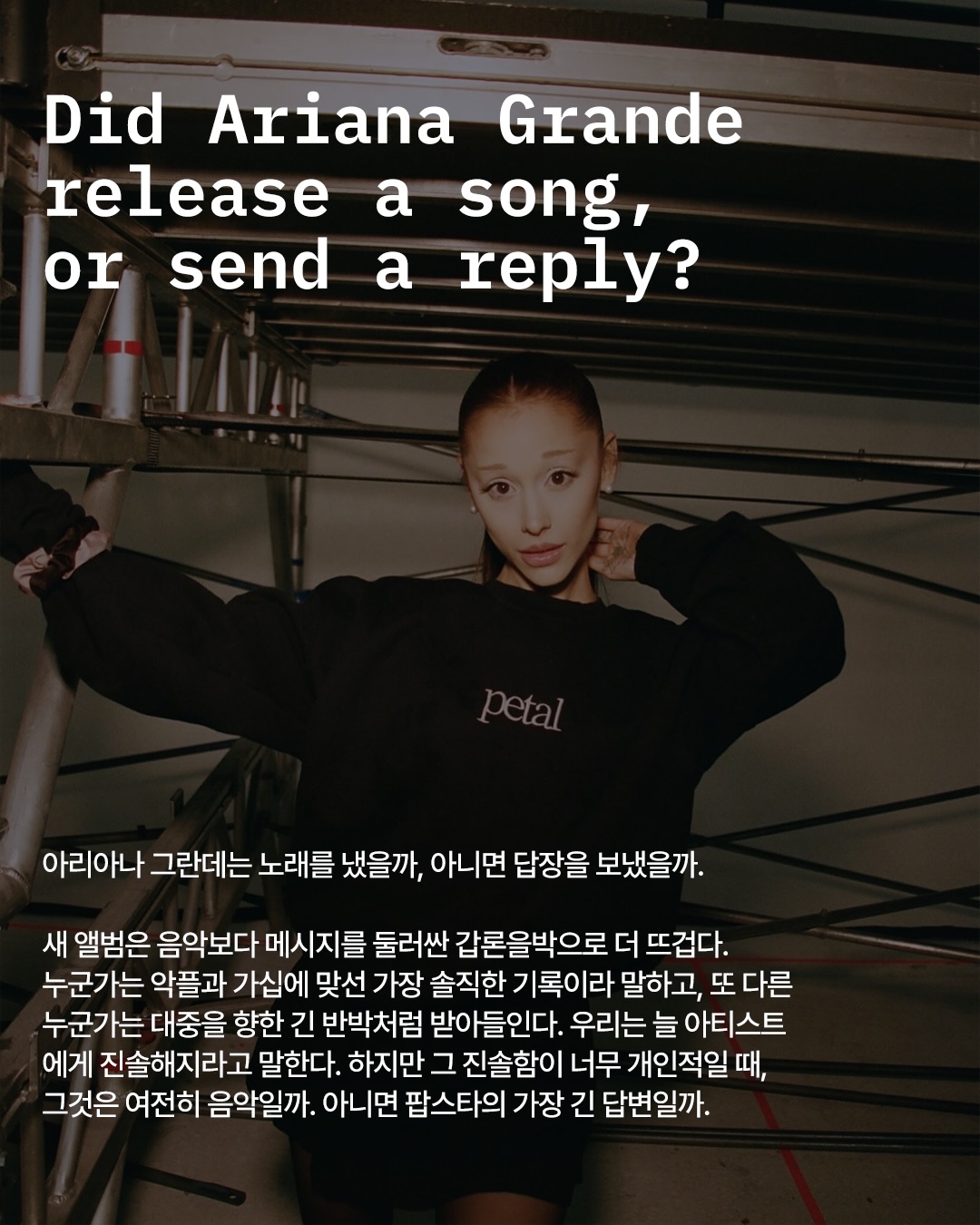
Ariana Grande's new album sparked controversy around its message and intent rather than the music itself. Some view it as honest confession confronting hate comments and gossip, while others perceive it as lengthy explanation to the public, raising questions about music and self-defense boundaries.
How do fans evaluate Ariana Grande's new release?
Fan evaluations are divided. Supporters praise it as her most honest and courageous self-confession, but critical voices feel the songs lean toward personal rebuttal rather than musical experience, questioning their function as art.
How does music change when artist honesty becomes excessive?
When artist honesty becomes overly private and explanatory, music can shift from listening experience to text requiring reading. Pop music is language conveying emotion, but when explanation and rebuttal dominate, listeners are asked to interpret rather than empathize, blurring boundaries between artistry and message.