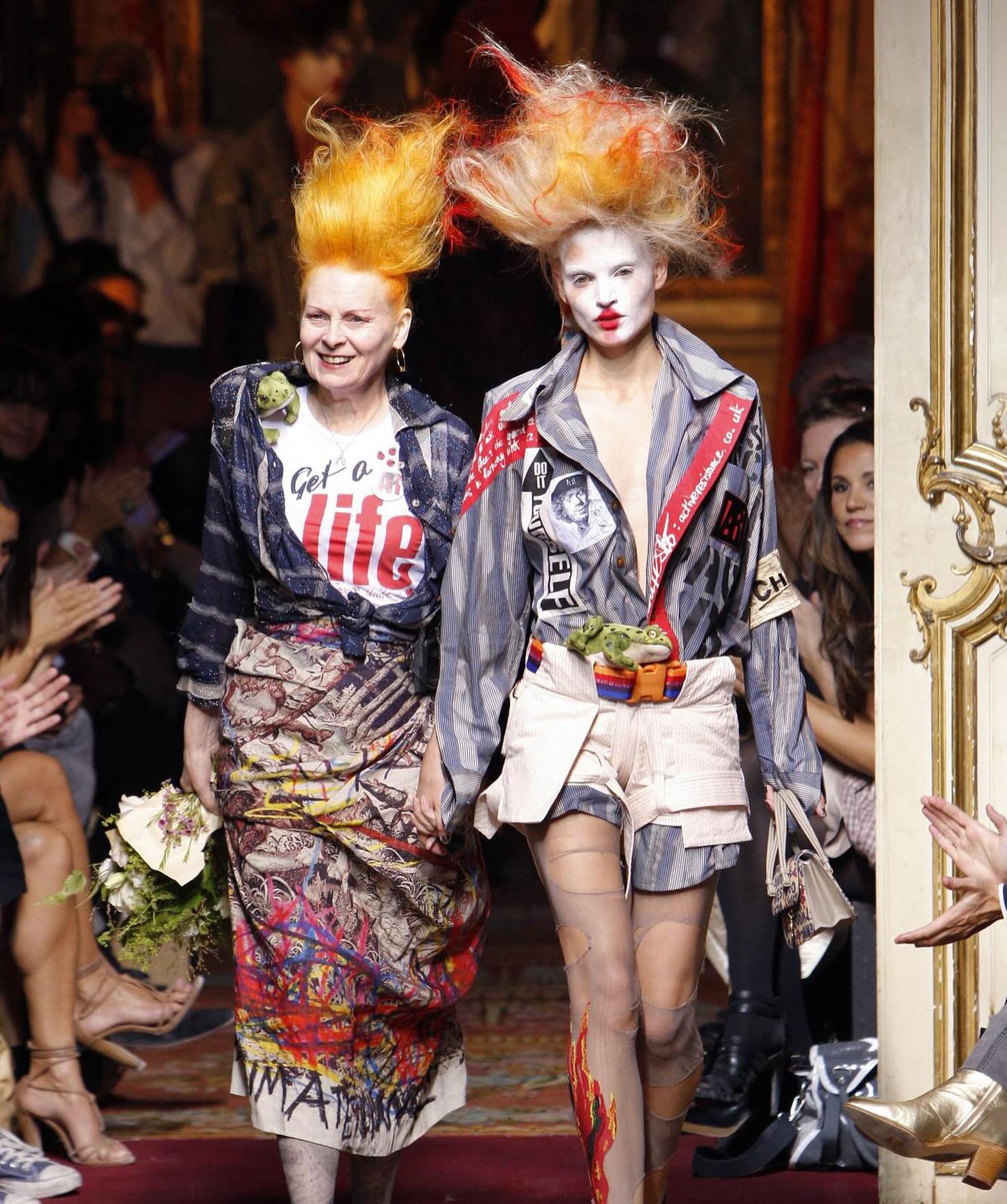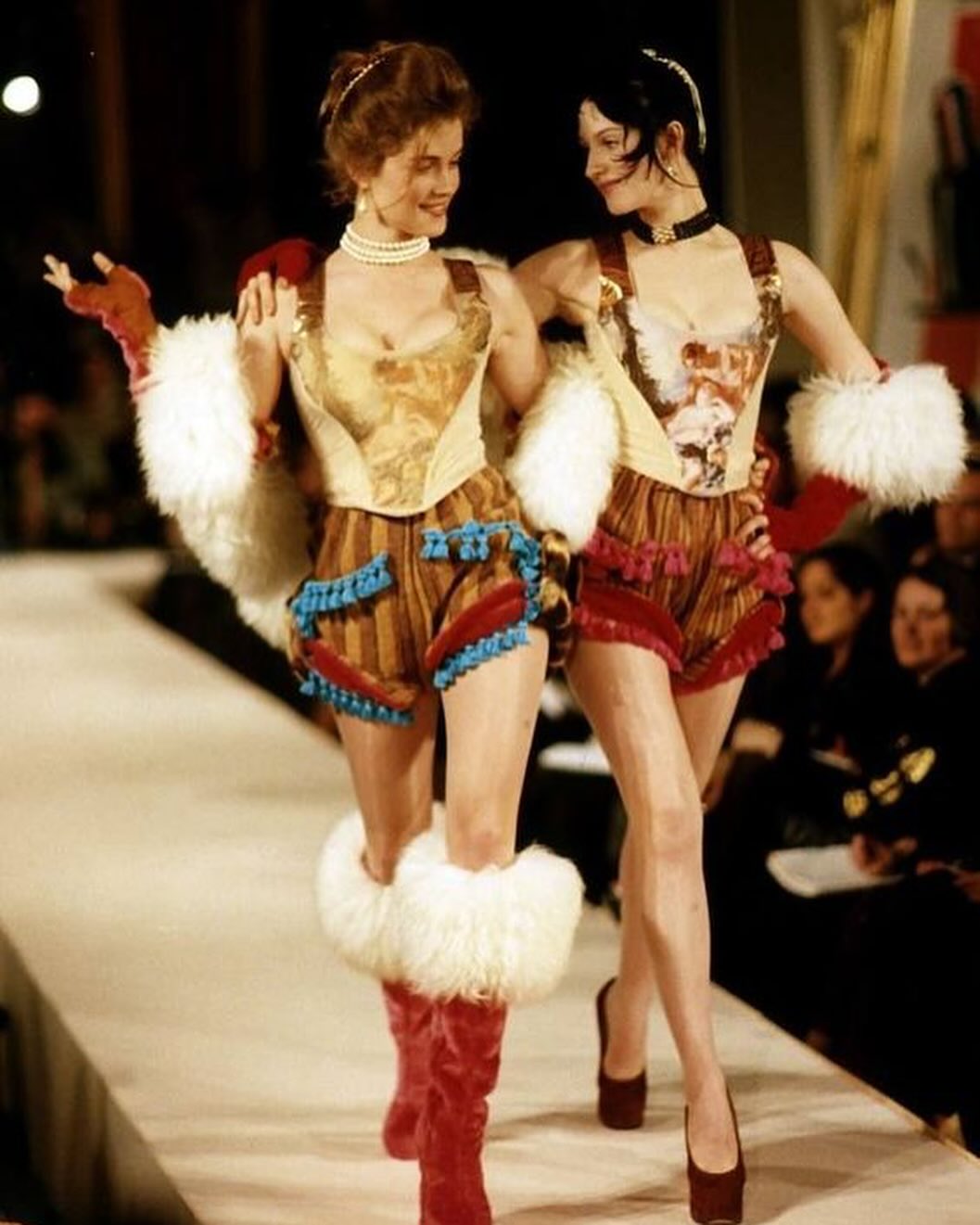
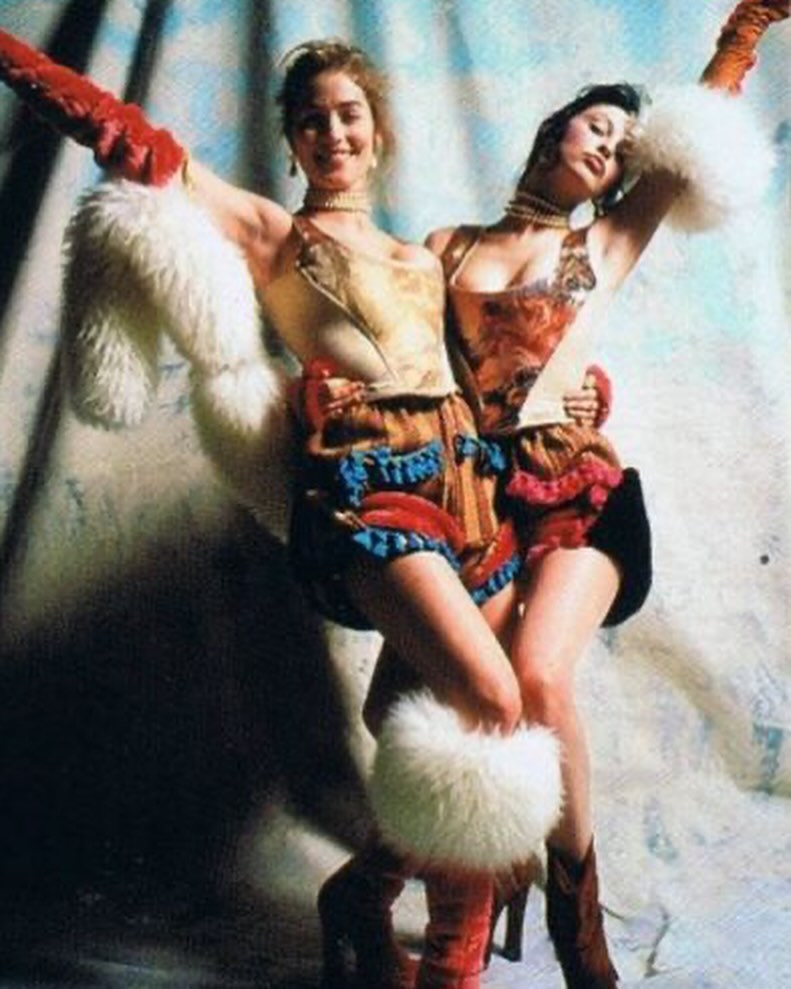
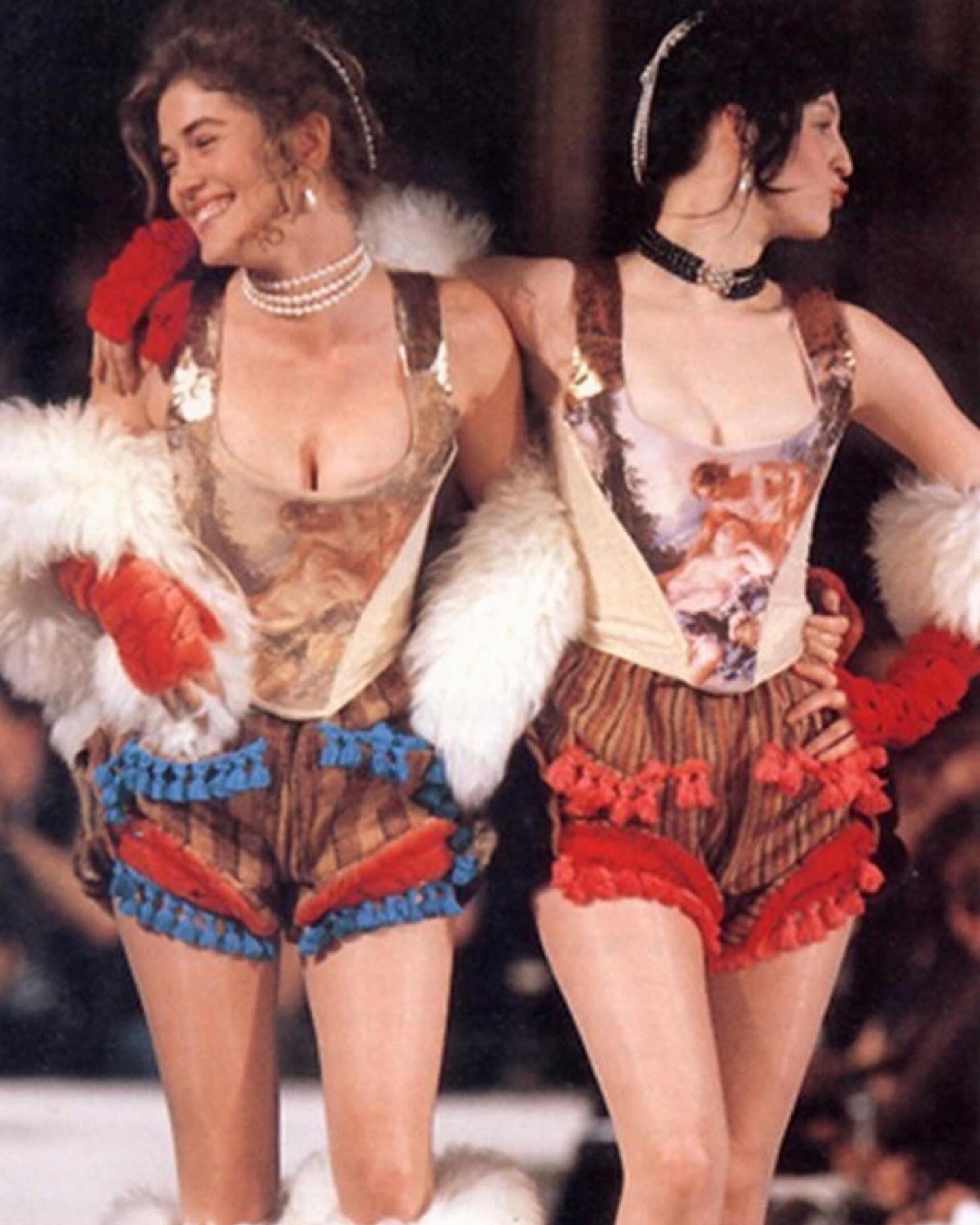
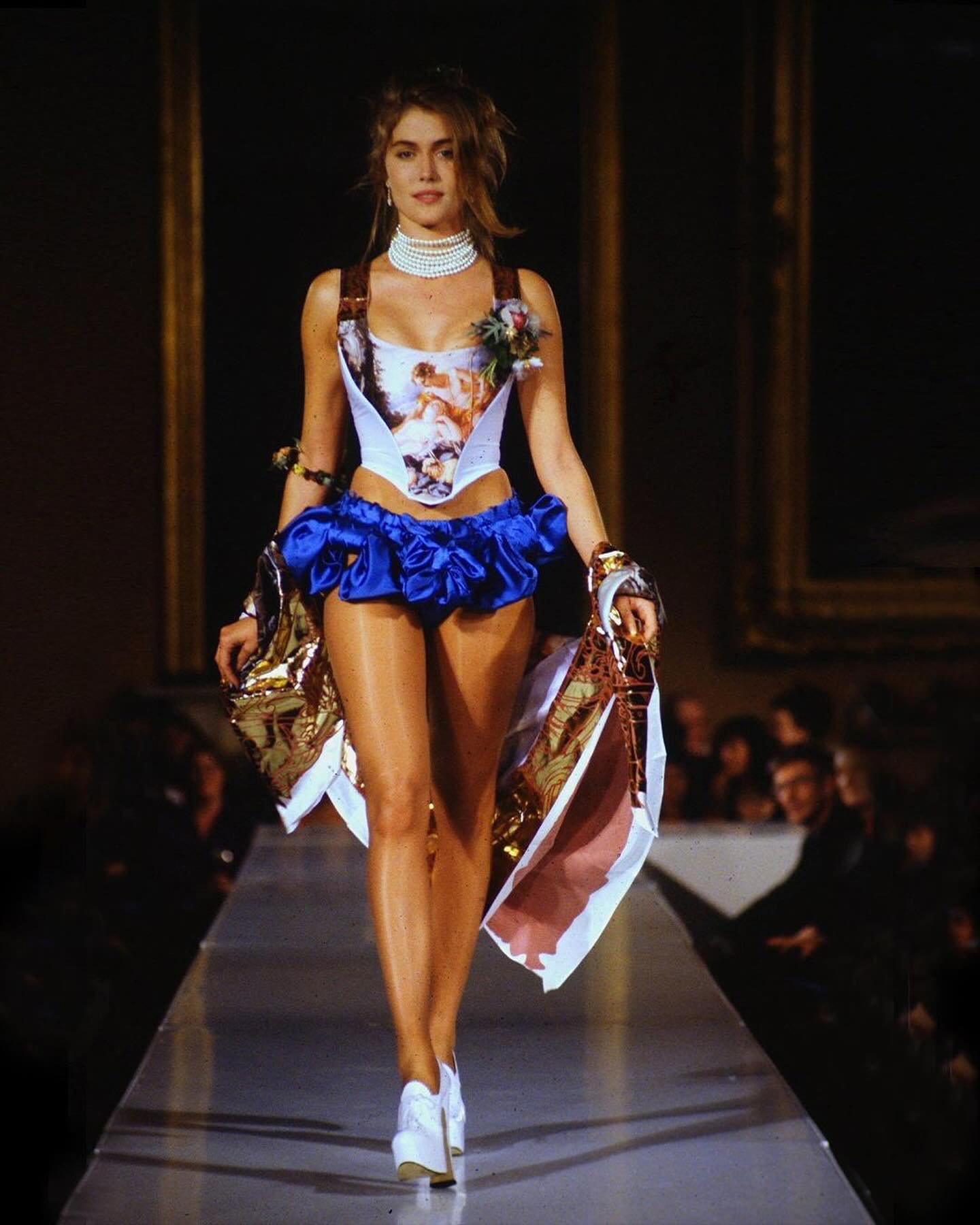
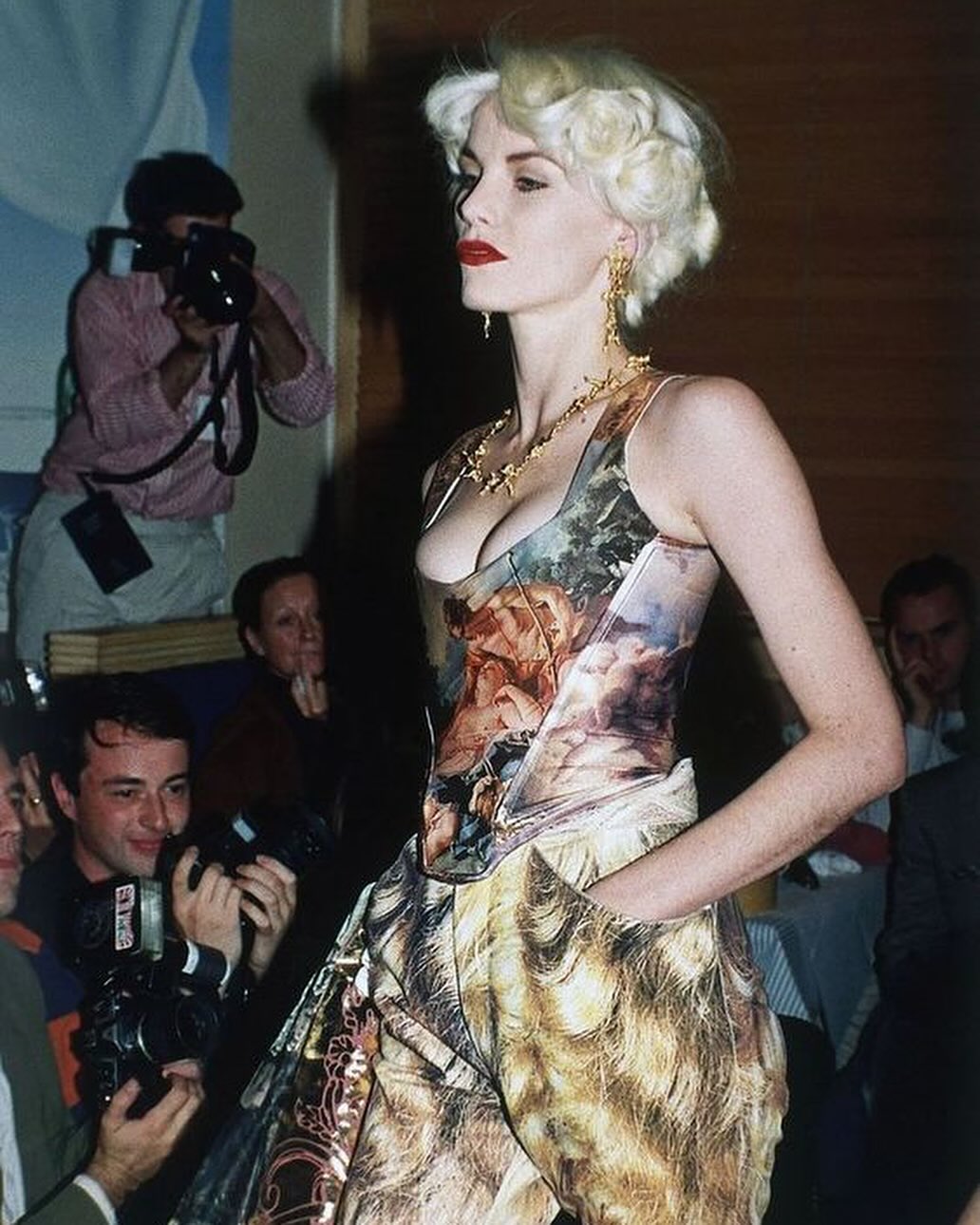
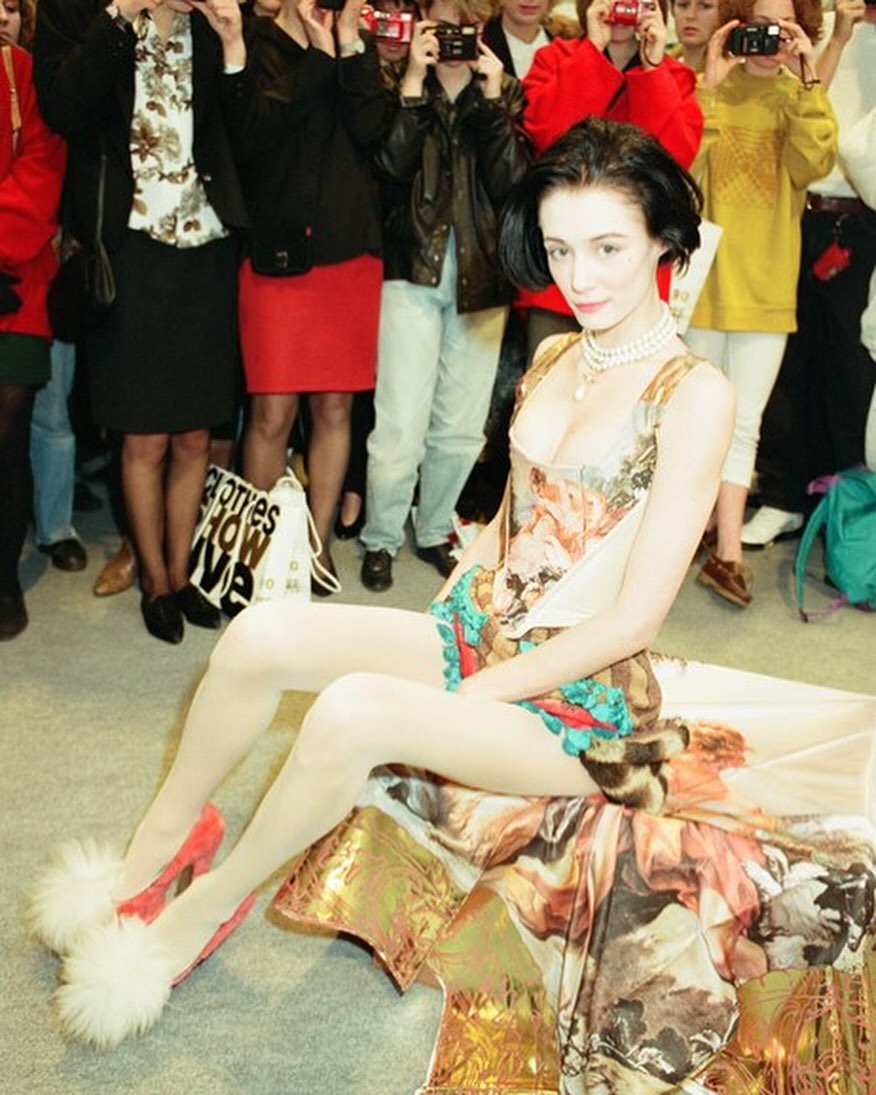
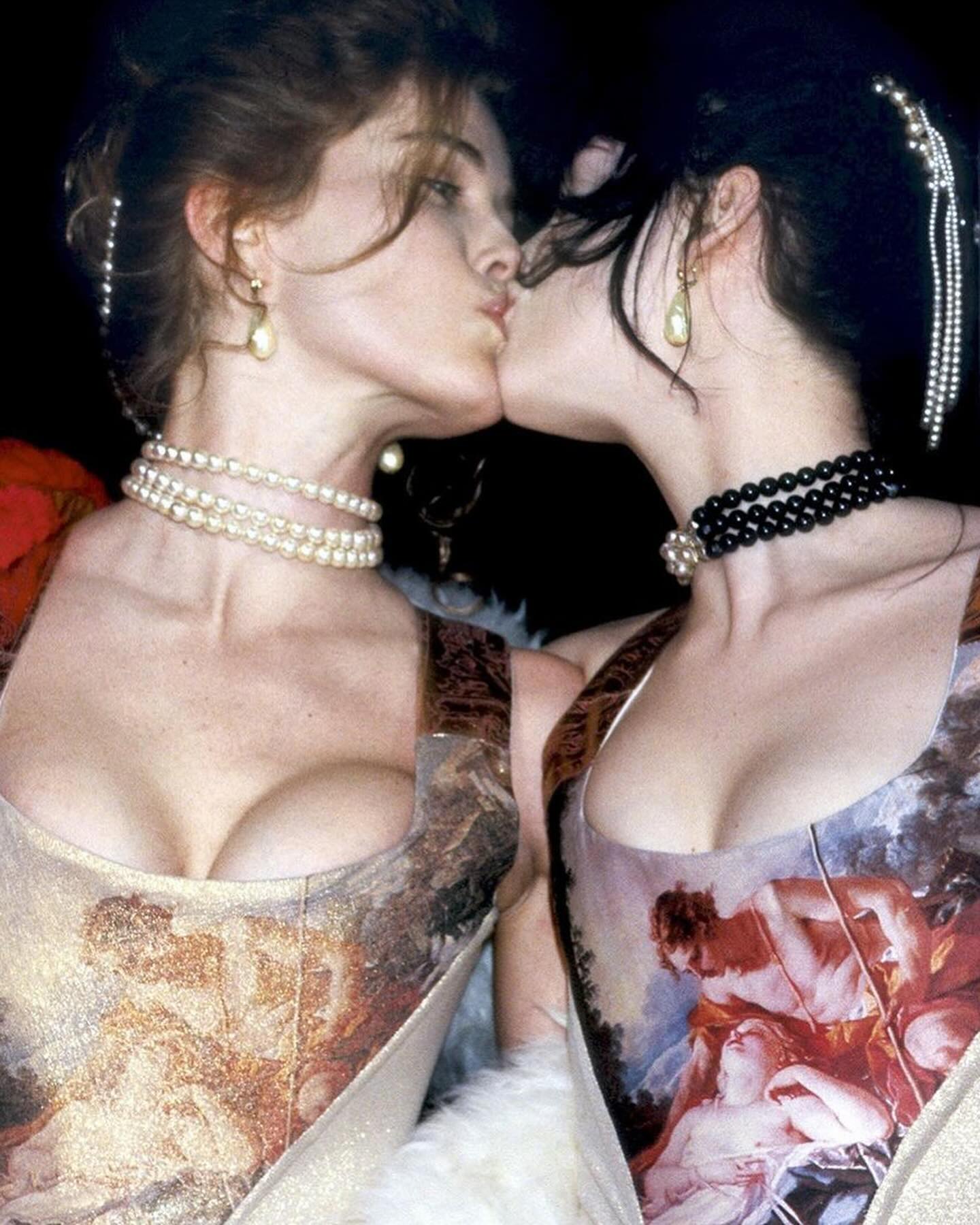
The fashion landscape of the early 1990s was marked by heightened historical consciousness, with designers increasingly drawing inspiration from past eras. Westwood embraced this trend while infusing her signature rebellious spirit—she boldly shortened the traditional lengths of Rococo-inspired garments, creating a provocative juxtaposition. The combination of corsetry, white fur trimmings, and daring color contrasts forged a unique harmony between historical reverence and punk attitude, between elegance and subversion.
The 'Portrait' collection became a pivotal moment in bringing corsetry back into mainstream fashion during the 1990s. It remains a definitive example of how Westwood's distinctive approach to historical references and contemporary rebellion could coexist in perfect tension. Three decades later, this collection continues to be celebrated among fashion archivists and historians as a legendary milestone that redefined the boundaries between costume history and contemporary design.
FAQ
What characterizes Vivienne Westwood's 1990 Portrait collection?
The Fall/Winter 1990 'Portrait' collection features corsets, painted velvet, and elaborate frills inspired by 18th-century Rococo style. Unlike traditional Rococo garments, Westwood shortened hemlines and added rebellious elements, combining historical elegance with punk spirit.
Who led the corset revival in the 90s?
Vivienne Westwood spearheaded the corset revival in contemporary fashion through her Fall/Winter 1990 'Portrait' collection. This collection became the pivotal moment reinterpreting corsets from historical costume to modern fashion item, profoundly influencing 90s fashion trends.
How did Vivienne Westwood reinterpret historical styles?
Westwood reinterprets by faithfully following historical references while adding bold transformations. In the 1990 Portrait collection, she used Rococo-style corsets and frills but shortened lengths, combining modern colors and punk elements to create a unique harmony of history and rebellion.