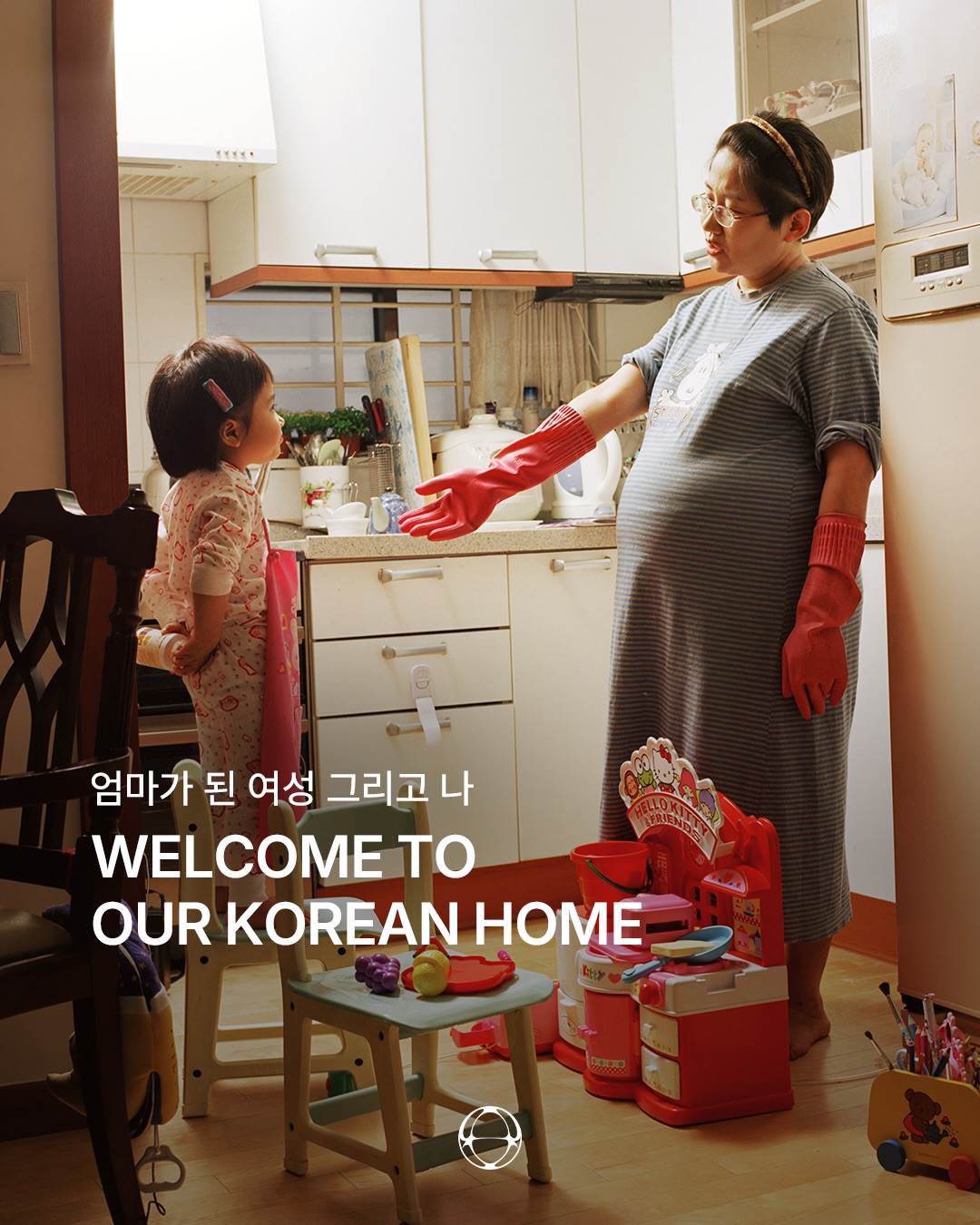
The second series expands into a more structural critique. Grandmothers, daughters-in-law, children, and fathers are arranged within the same frame, and through who sits still and who keeps moving, an invisible hierarchy becomes visible. Her photographs ask quiet but urgent questions: not about individual lives, but about the grammar of family passed down through generations, and how that grammar operates differently depending on gender.


FAQ
What is Lee Sunmin's Woman's House?
Woman's House is a photographic series documenting the daily lives and care labor of women within Korean households. Capturing young mothers with children and multi-generational family members, it quietly reveals the gender roles and invisible hierarchies repeated within families.
What does the second series of Woman's House address?
The second series frames multi-generational family members—grandmother, daughter-in-law, child, father—in one frame, structurally examining the hierarchy and gender roles within the institution of family. It visualizes invisible order by showing who sits and who moves.
What does artist Lee Sunmin convey through photography?
Lee Sunmin calmly documents gender roles and care structures in Korean society through the private space of the home. Rather than criticizing, she shows things as they are, making us see what we've overlooked through everyday repetition.