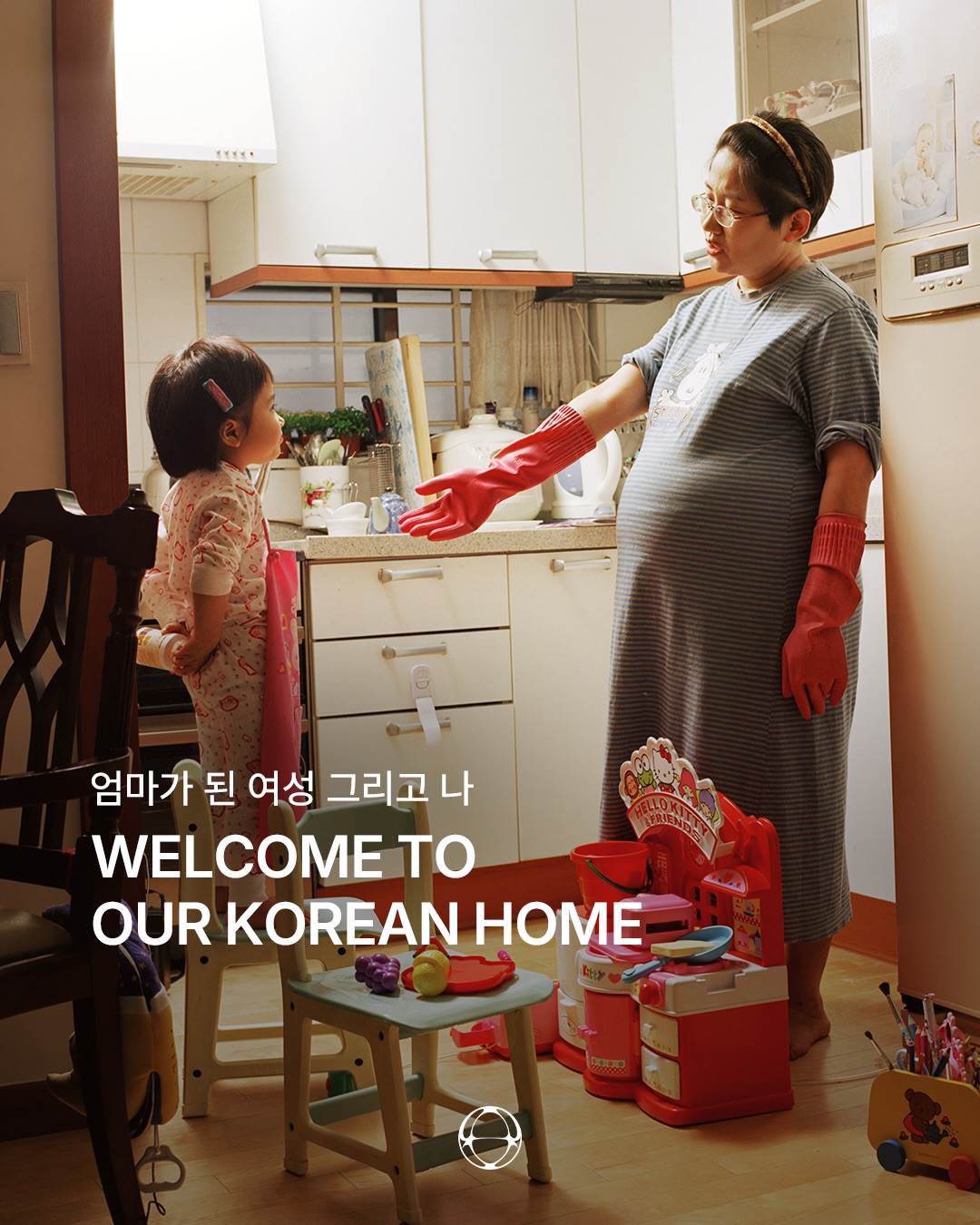
In the second series, Lee's lens shifts from individual experience to the institution of family itself. Grandmothers, daughters-in-law, children, and fathers occupy the same frame, where unseen hierarchies emerge through who sits still and who keeps moving. What she documents is not isolated individuals, but the grammar of family roles passed down through generations.
Lee's photographs never exaggerate emotion or explicitly criticize. Instead, they show how family memories accumulate through the mundane repetition of daily life. These moments, formed more through routine than through smiles, gradually become a portrait of contemporary Korean society. The work proves that the most personal landscapes ultimately reflect our collective structures.
The home always grows through her time. Sunmin Lee's


FAQ
What does Lee Sunmin's Woman's House series address?
Lee Sunmin's <Woman's House> is a photographic series documenting the care labor and familial roles assigned to women through Korean household daily life. The first series captures young women and children's routines, while the second quietly portrays family structures and hierarchies repeating across generations.
How does Lee Sunmin express Korean society?
Lee Sunmin reveals Korean society's structures through the most private domestic scenes. Simply by showing who sits and who moves, who takes on care duties, she quietly evidences invisible gender roles and family order through repeated everyday moments.
Why are kitchen scenes important in the Woman's House series?
The kitchen is where women's care labor most frequently occurs in Korean homes. In Lee Sunmin's photographs, the kitchen functions not as mere backdrop but as a symbolic site where roles naturally assigned to women and accumulated repetitive daily routines pile up.