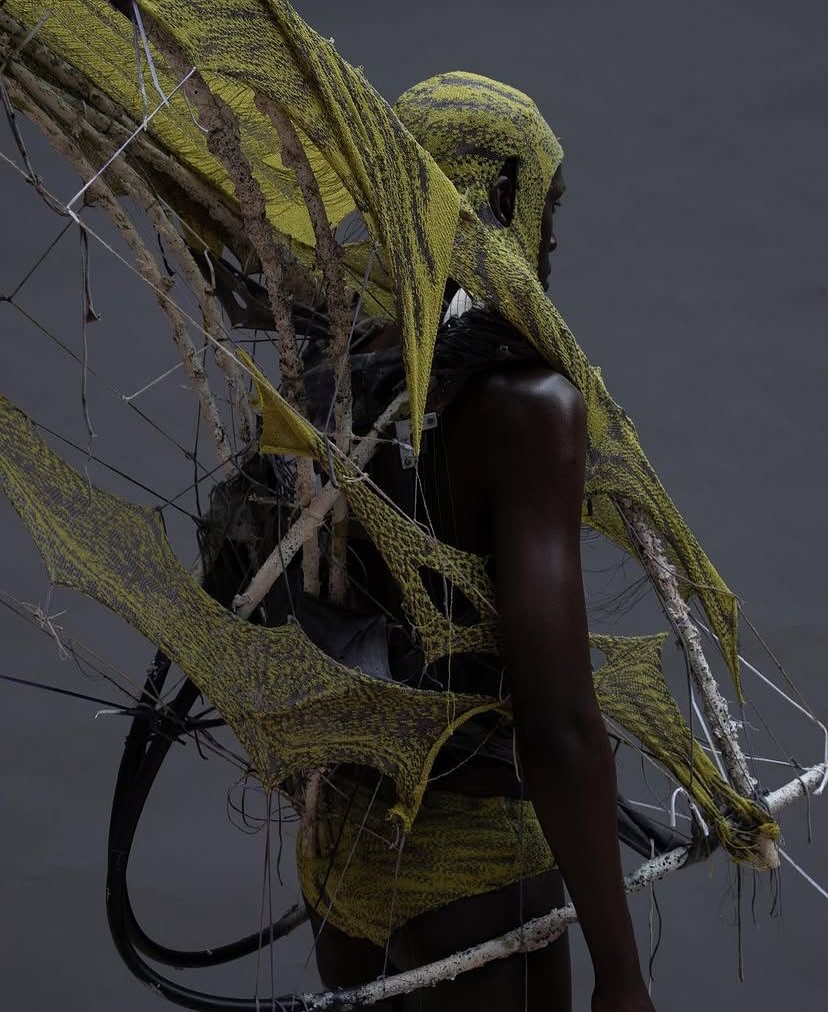
Czerwik's creative process is one of constant experimentation, deconstruction, and reconstruction. Each piece, crafted from hand-painted elements, reclaimed materials, and personal artifacts, becomes a one-of-a-kind wearable sculpture. Through unexpected textures and modular structures, his works are endlessly recombined, embodying the belief that time does not erase but rather reshapes everything into new meaning.
In the featured piece, an off-shoulder corset dress adorned with dried roses captures attention. The faded fabric, frilled details, and voluminous balloon skirt silhouette carry both the glory and decay of the past. This goes beyond mere nostalgia—it's an attitude that accepts the marks left by time and layers new narratives upon them. Czerwik's practice stands at the intersection of sustainability, artistic experimentation, and personal storytelling, demonstrating how fashion can preserve and reinterpret memory.


FAQ
What is Robert Czerwik's Apocalyptic Romanticism?
Robert Czerwik's Apocalyptic Romanticism expresses beauty that survives beyond apocalypse, embodying the philosophy that time doesn't erase everything but transforms it. This core concept permeates his practice of transforming family heirlooms and vintage materials into wearable art.
What materials does Robert Czerwik work with?
Robert Czerwik uses family heirlooms, antique furniture, recycled fabrics, and hand-painted elements as primary materials. Each carries its own history and traces of time, undergoing deconstruction and reassembly to become one-of-a-kind corsets and dresses.
How does Robert Czerwik's working process unfold?
His work follows a cyclical process of experimentation, creation, deconstruction, and reassembly. Using unexpected textures and modular structures, he continuously recombines pieces into new forms, sculpturally expressing themes of temporal change and memory preservation.