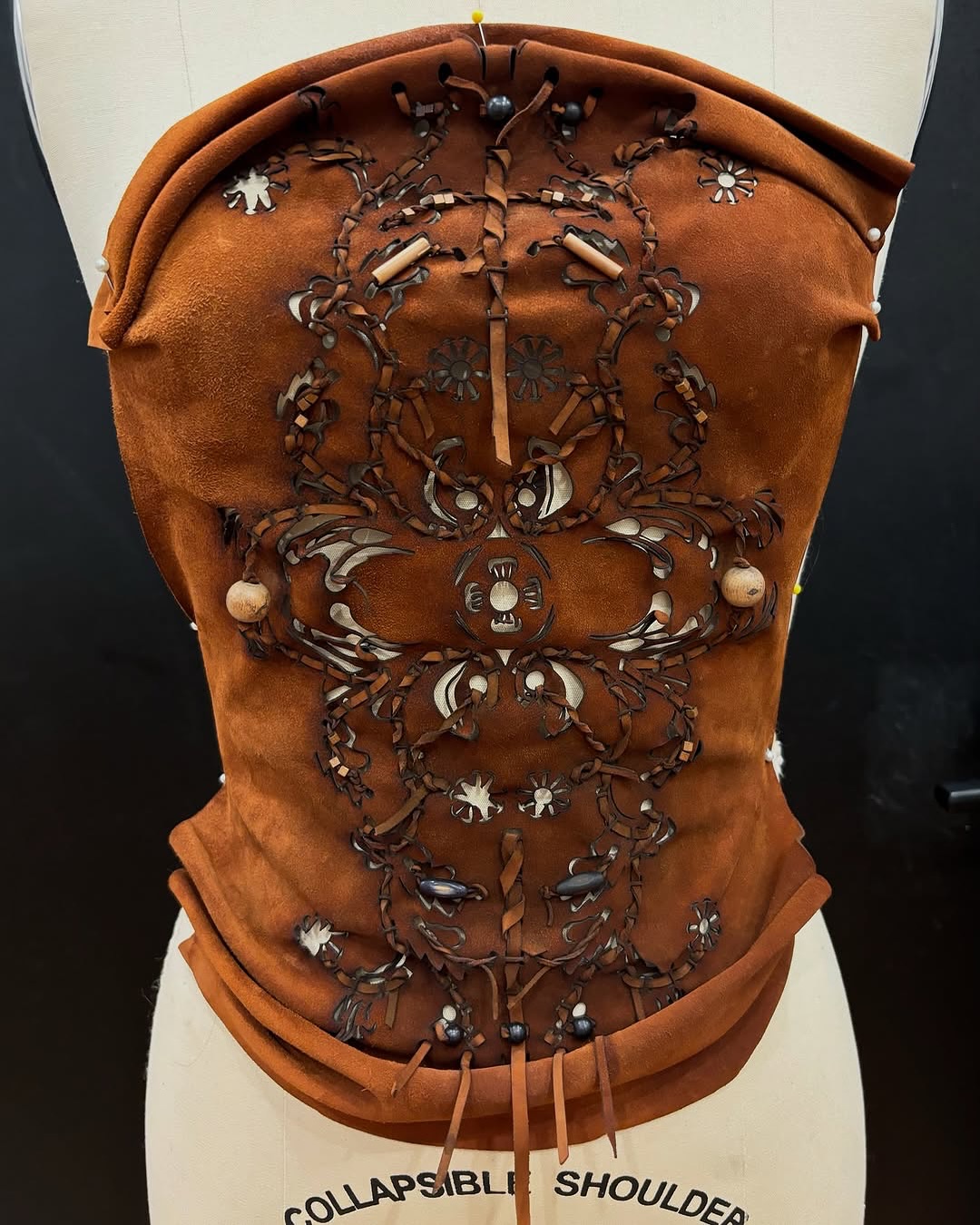
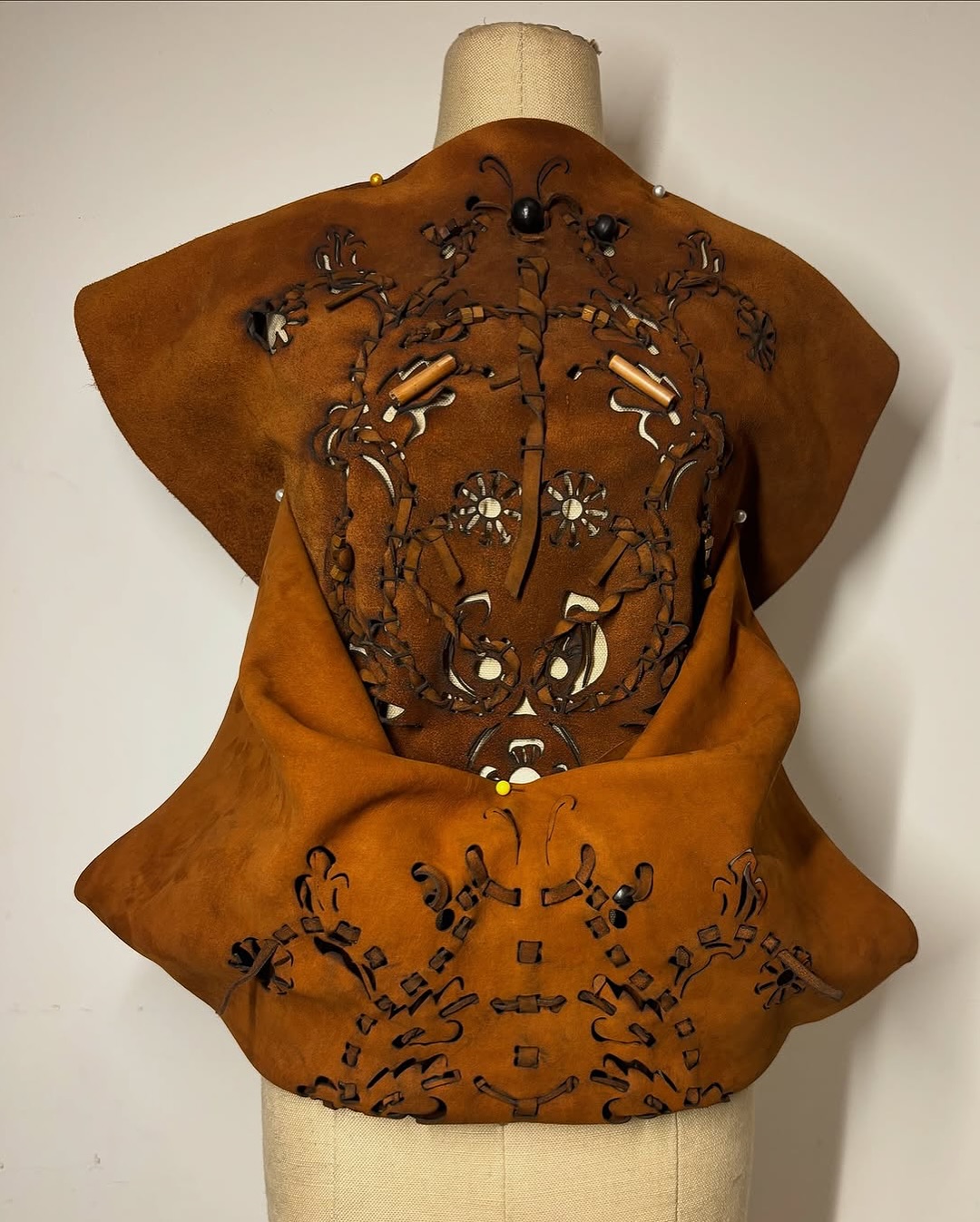
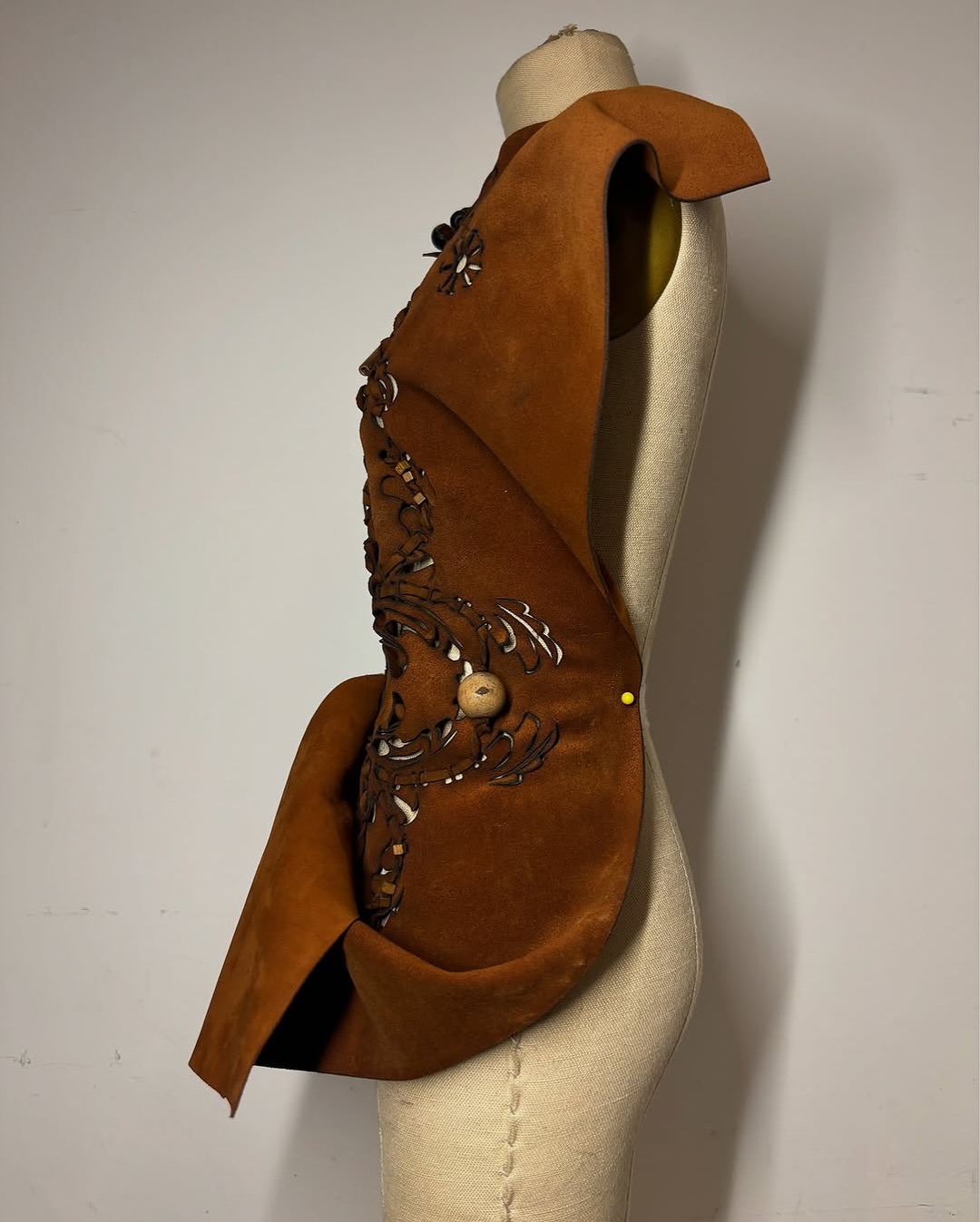
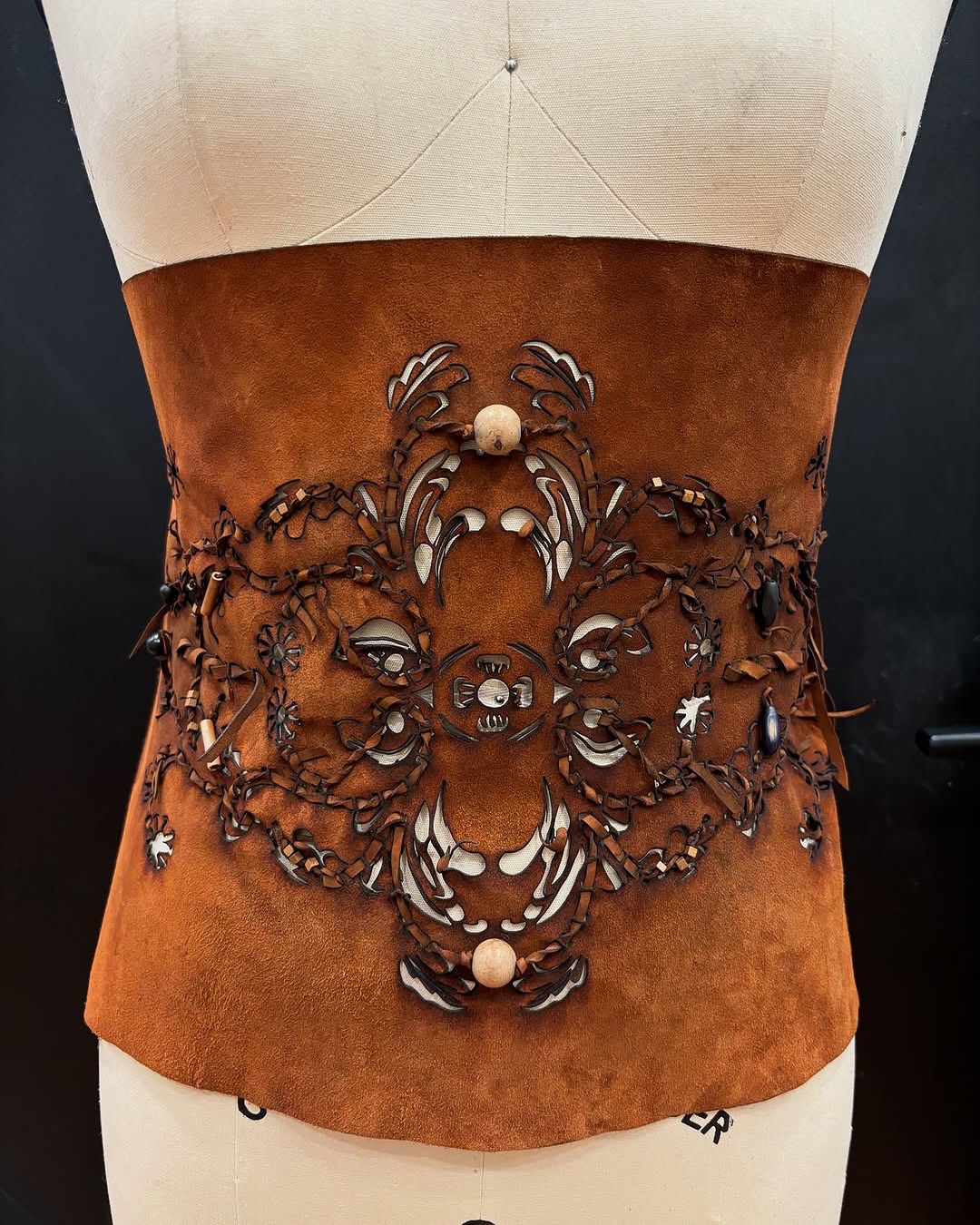
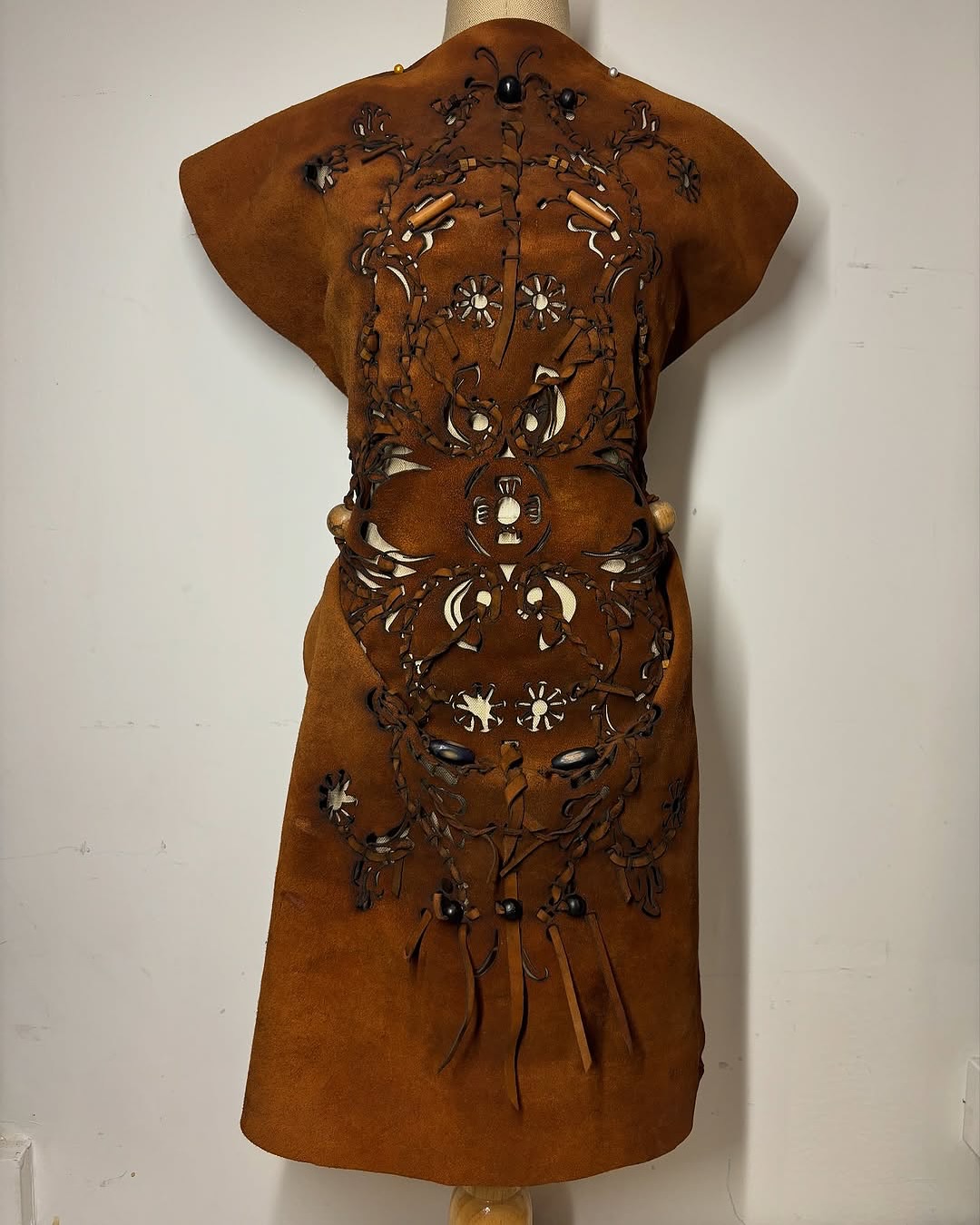
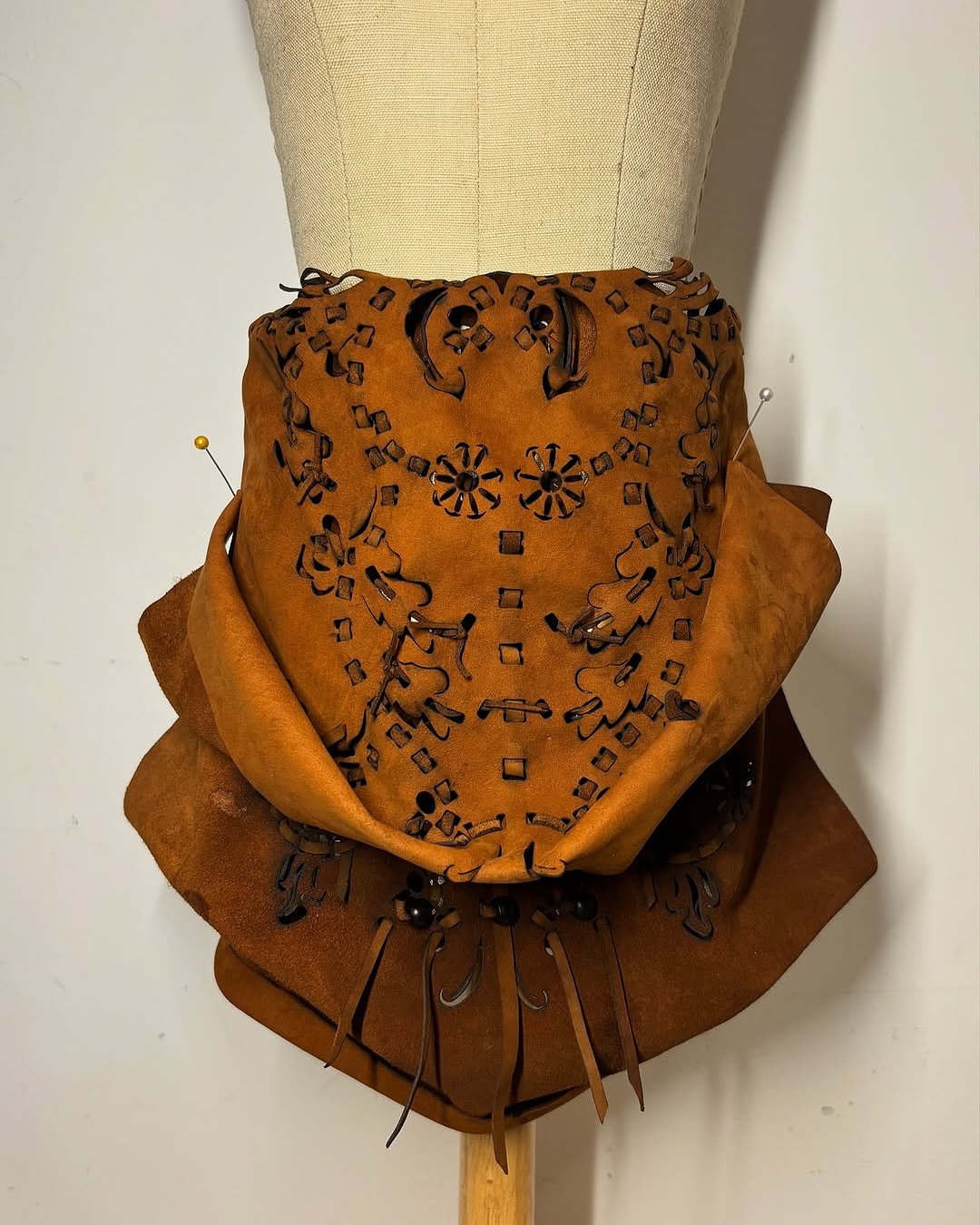
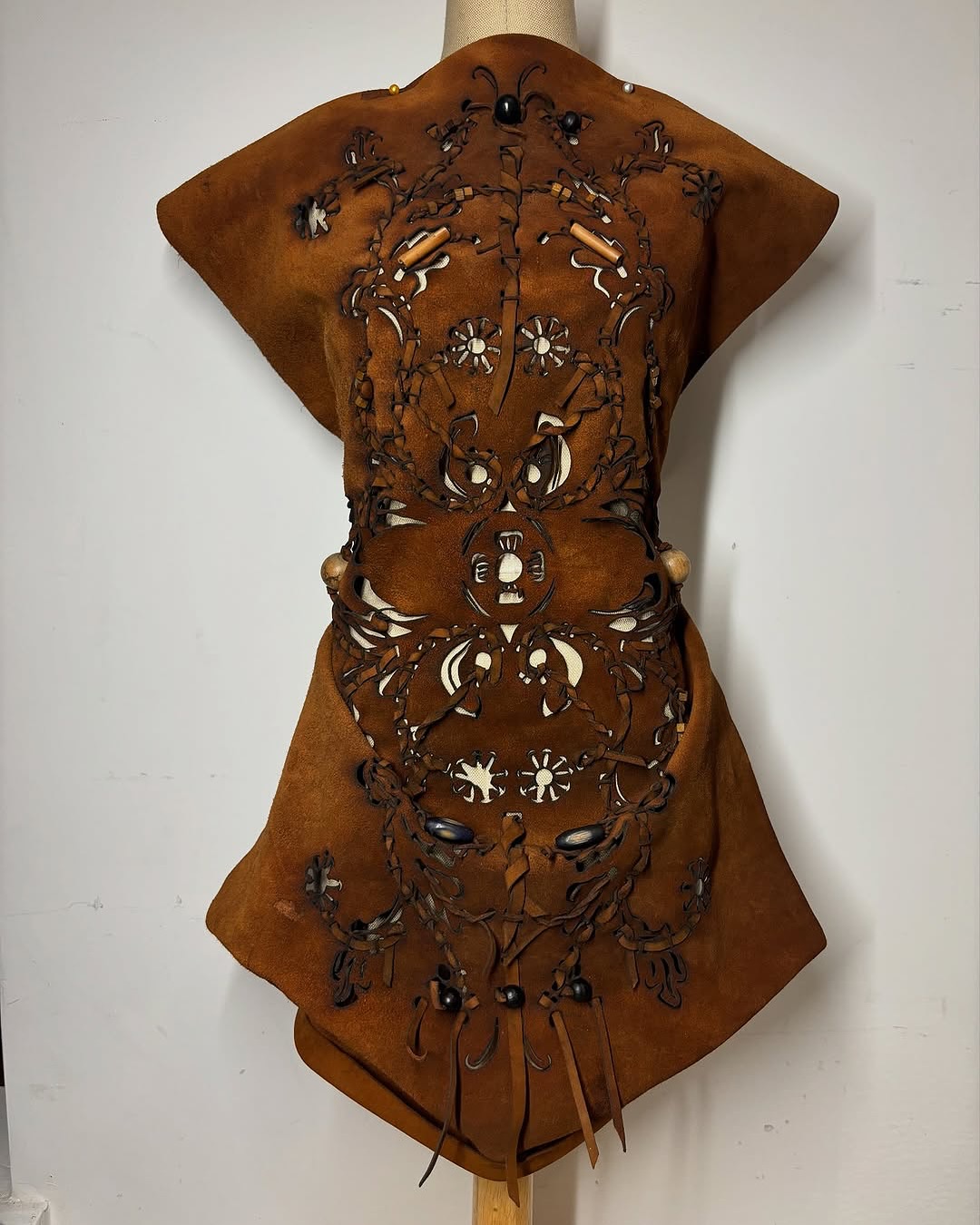
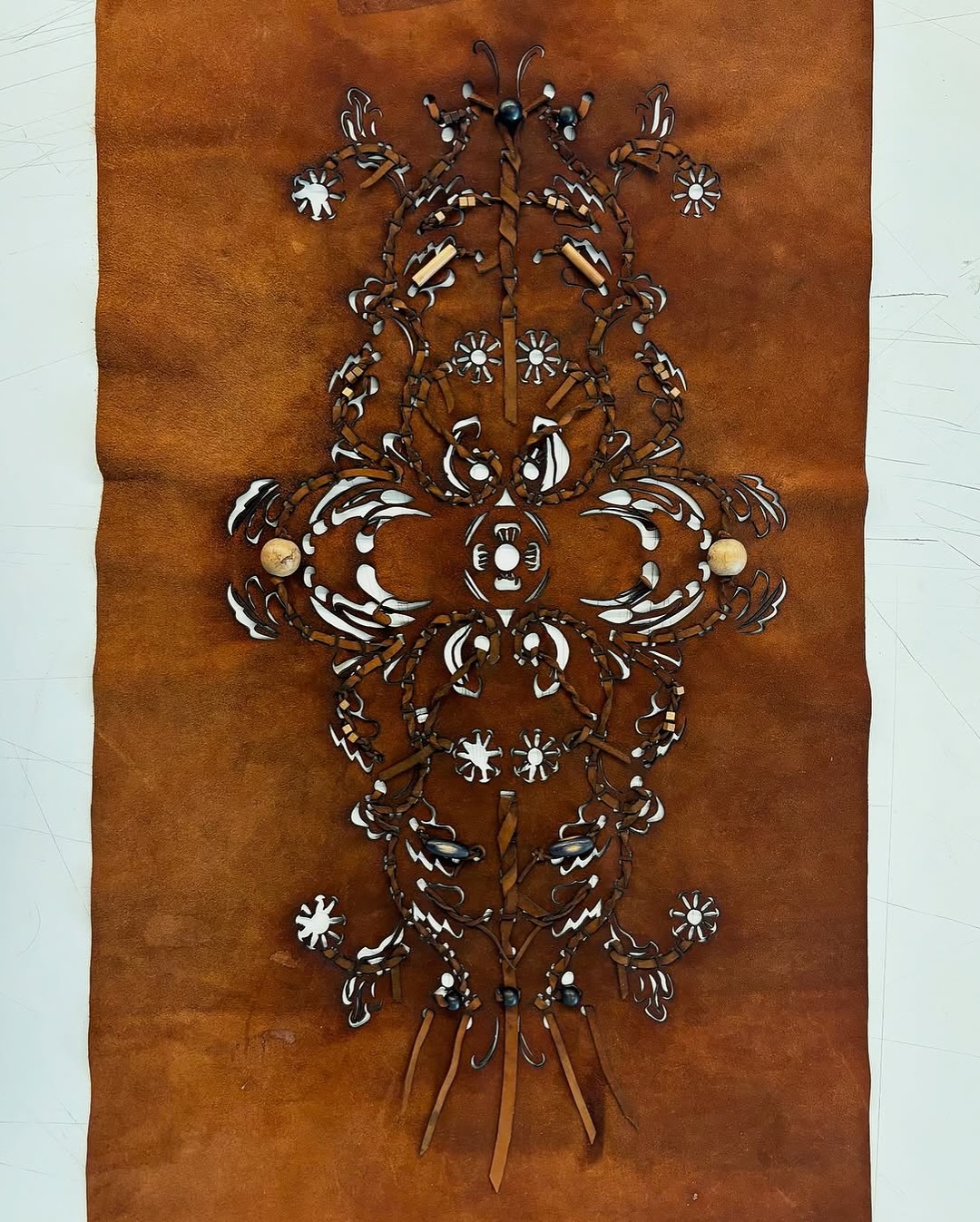
What makes this corset particularly noteworthy is its exclusive use of second-hand materials. Alexandra champions both sustainability and artistry by breathing new life into discarded suede, while the elaborate laser-cut patterns offer a modern reinterpretation of Peru's complex textile motifs. The wooden bead embellishments pay homage to Andean handicraft traditions, creating an overall aesthetic that is both warm and organic in its appeal.
This piece transcends mere garment construction—it serves as a love letter to cultural roots, memory, and craftsmanship. In an era dominated by fast fashion, Alexandra reminds us of slow fashion's intrinsic value, demonstrating how traditional techniques can merge with contemporary design to create timeless beauty. The work stands as an exemplary case study in simultaneously addressing two critical challenges: sustainable material sourcing and respectful preservation of cultural heritage.
FAQ
What materials were used for Kari Alexandra's suede corset?
This corset is made entirely from secondhand suede materials. Prioritizing sustainability, the designer added laser-cutting techniques and wooden bead embellishments to discarded materials, offering a contemporary reinterpretation of Peruvian traditional textiles.
How does this piece connect to Peruvian tradition?
The designer drew inspiration from Peruvian traditional weaving techniques and Lima household wooden furniture. Laser-cut patterns express complex motifs of Peruvian textiles, while wooden bead embellishments pay homage to Andean handicraft traditions, capturing familial heritage's warmth.
Why is upcycling important in sustainable fashion?
Upcycling grants new value to discarded materials, reducing resource waste and minimizing environmental impact. Like Kari Alexandra's work, artistically reinterpreting secondhand materials offers alternatives to fast fashion and realizes slow fashion values.