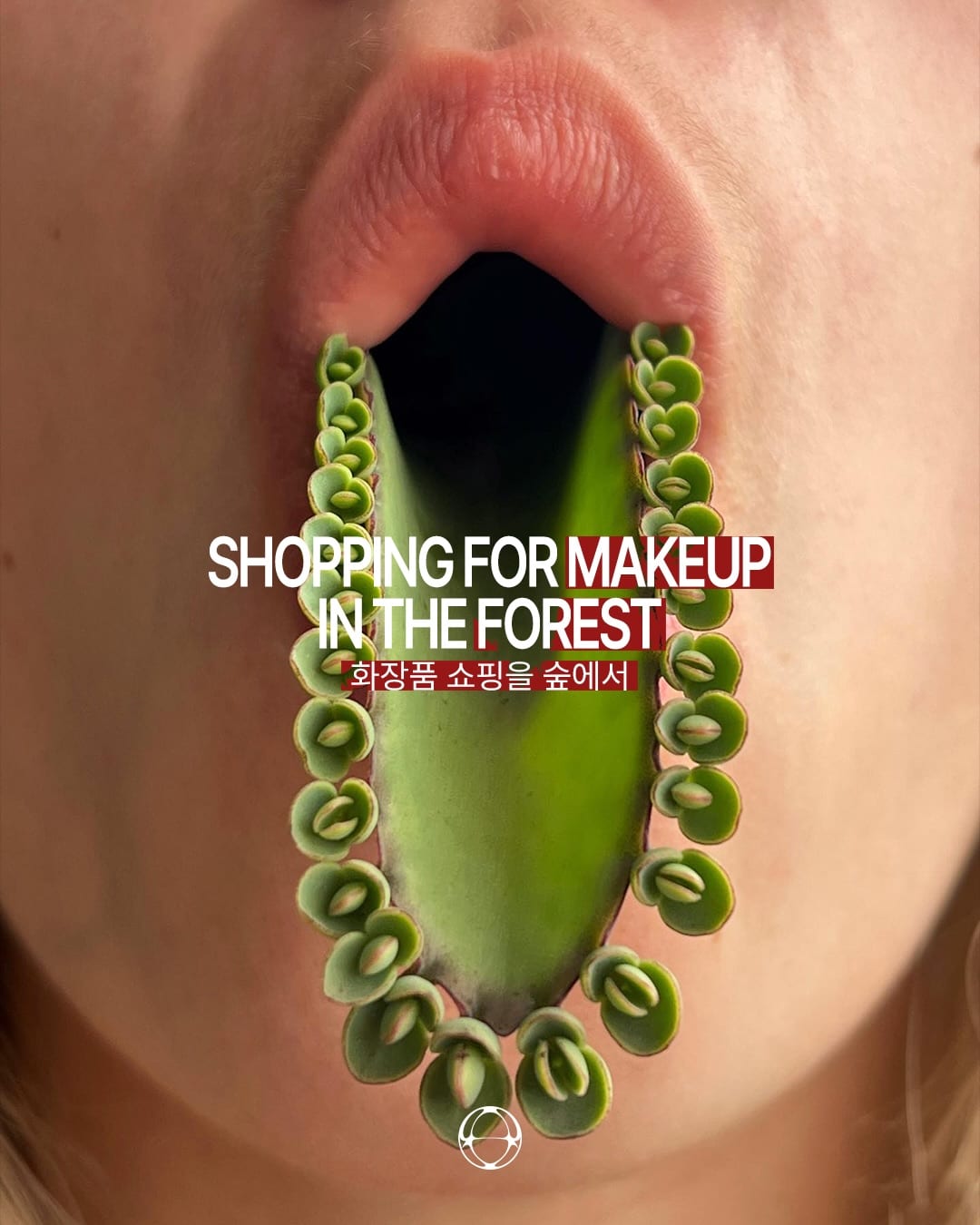
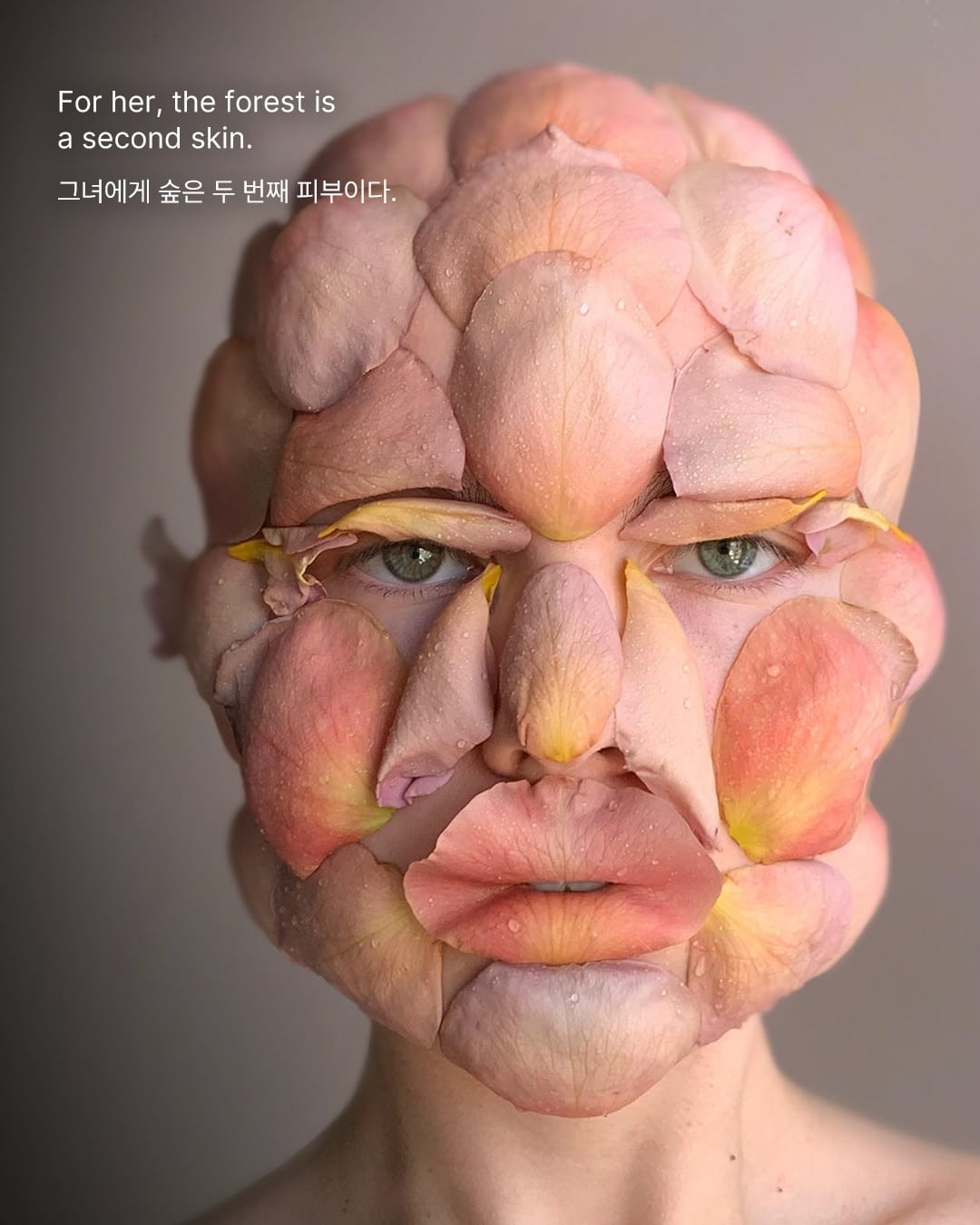
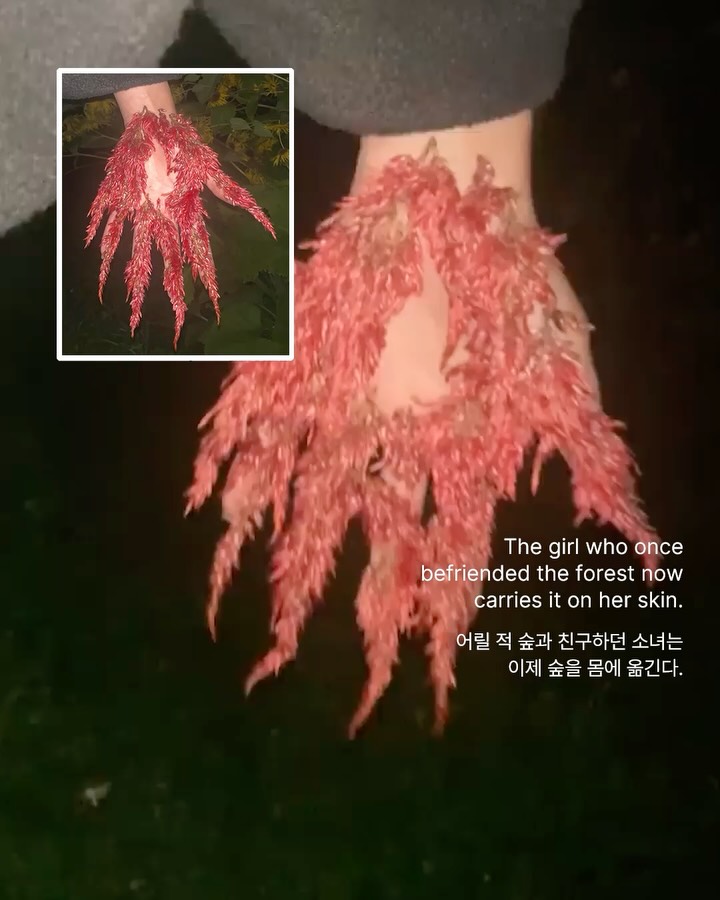
Luneva was the kind of girl who chose paths no one walked, searching for insects and lizards under trees. She later studied automotive design but felt lost there. One day, she placed the cap of a mushroom she had bought for cooking on her face. That moment became a turning point. The girl who befriended the forest now brings the forest onto her body.
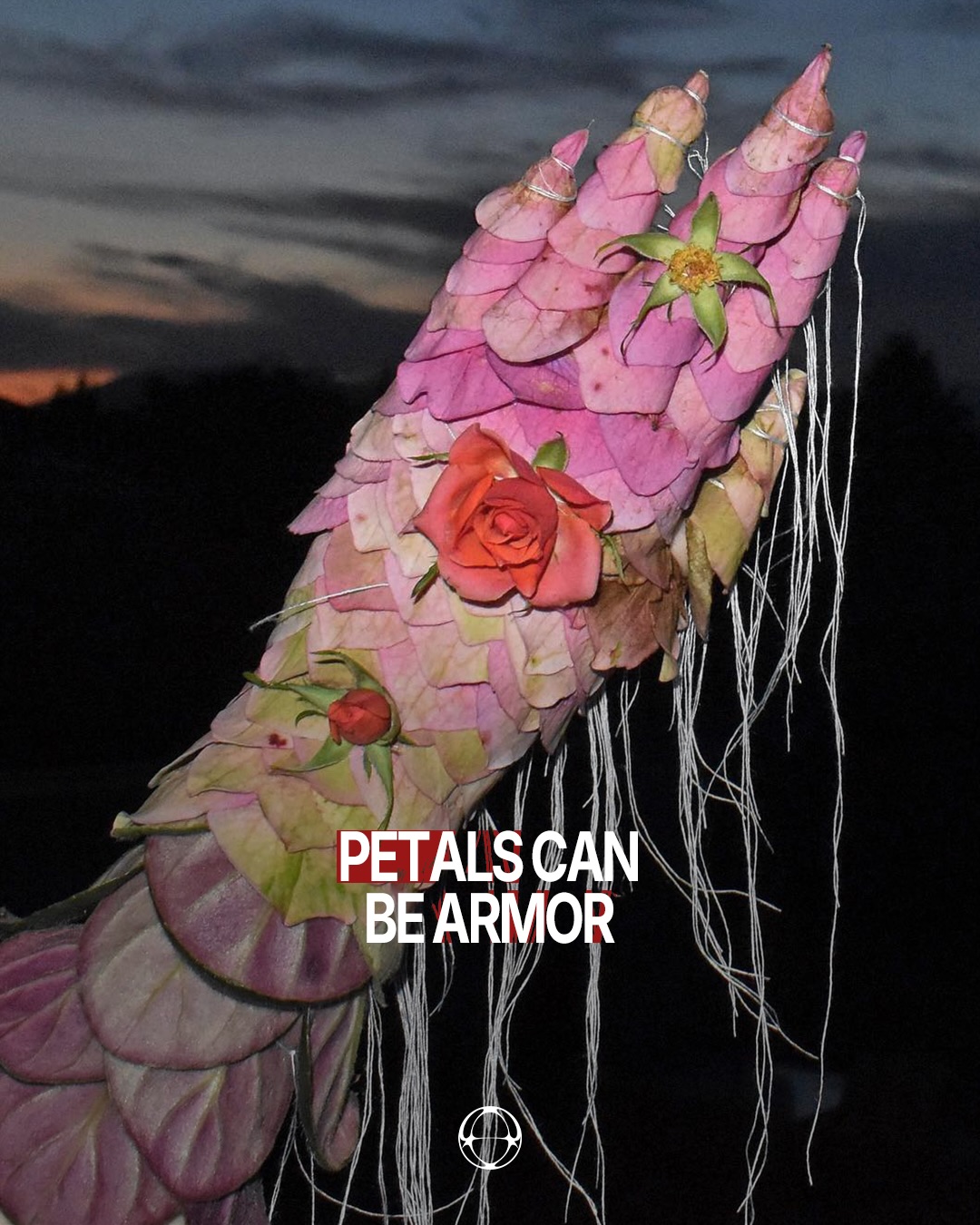
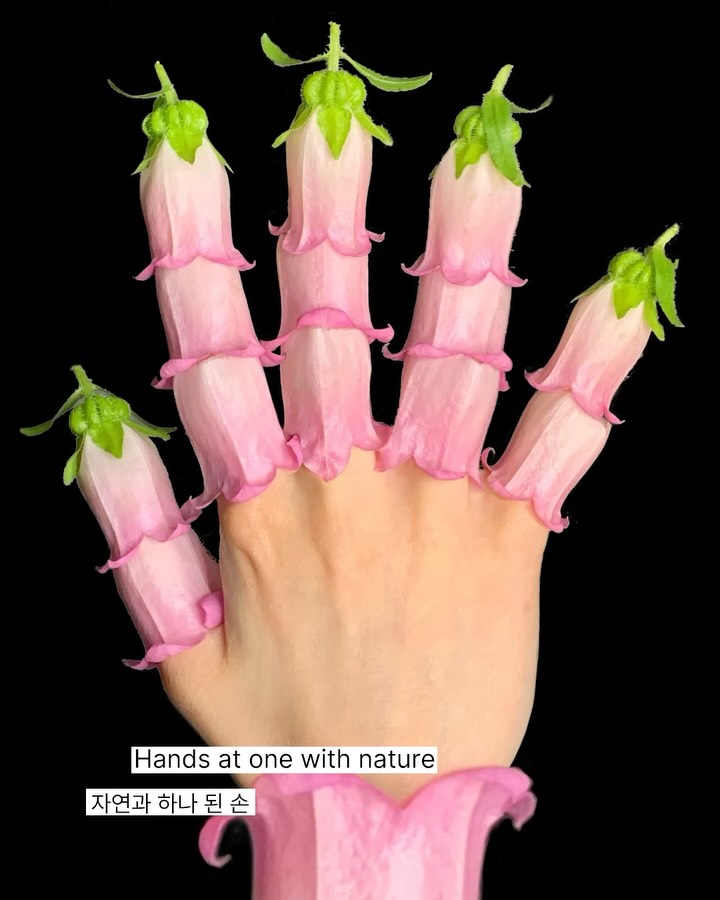
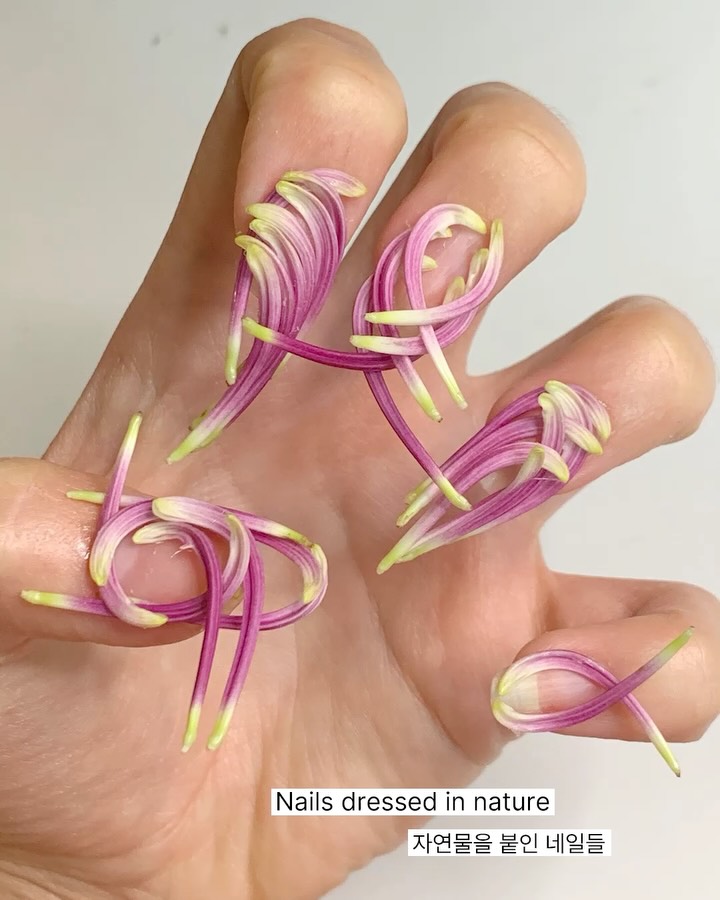
Baby pink bell-shaped petals wrap around each finger. Green sepals rise from the tips. Purple gradient stamens flow down the nails and tie into knots. Titled 'Hands at one with nature,' this work layers the structure of flowers with the form of the hand.
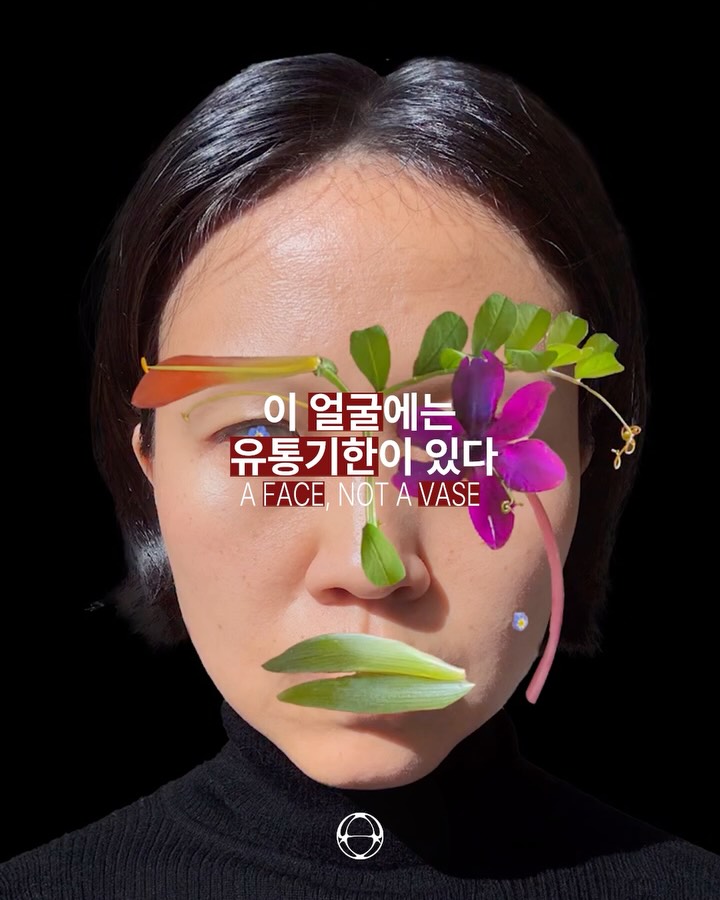
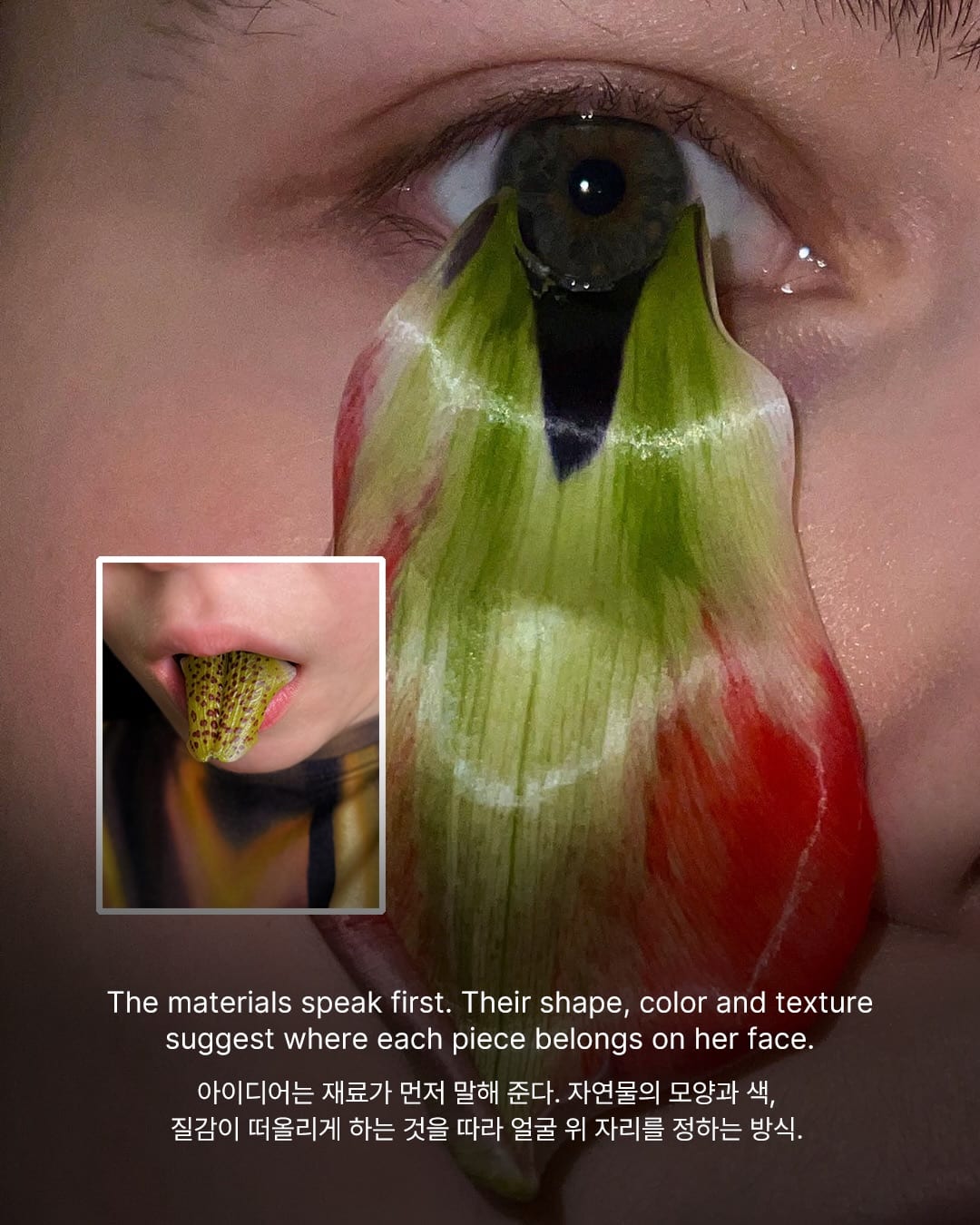
A row of green berries sits above the lips. Oval leaves follow the jawline. Round leaves cupping the nose rise three-dimensionally toward the mouth. When the forest replaces cosmetics as makeup material, the face becomes a new canvas.
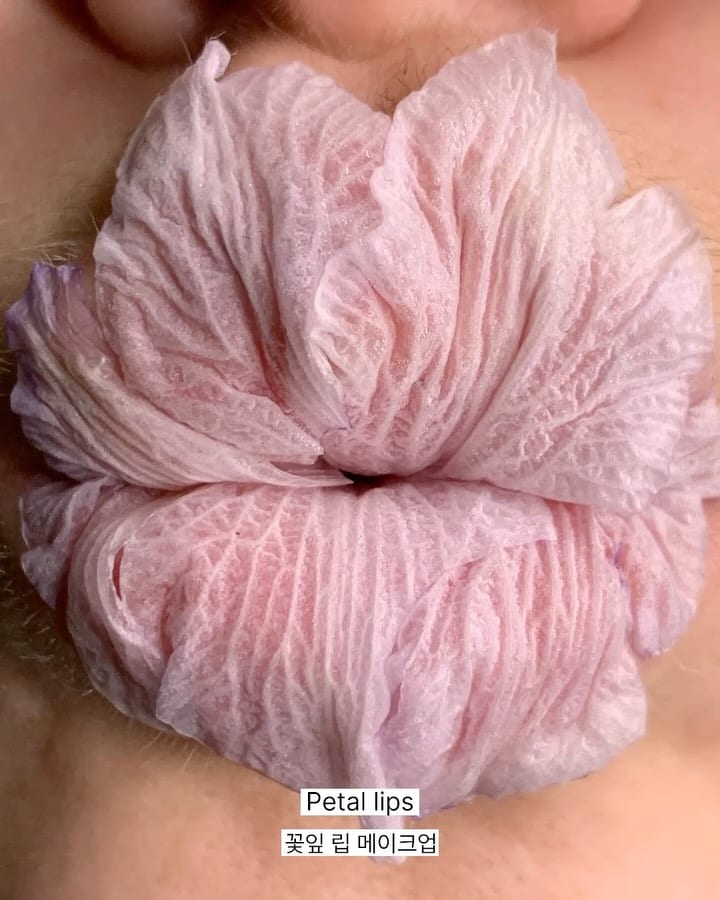
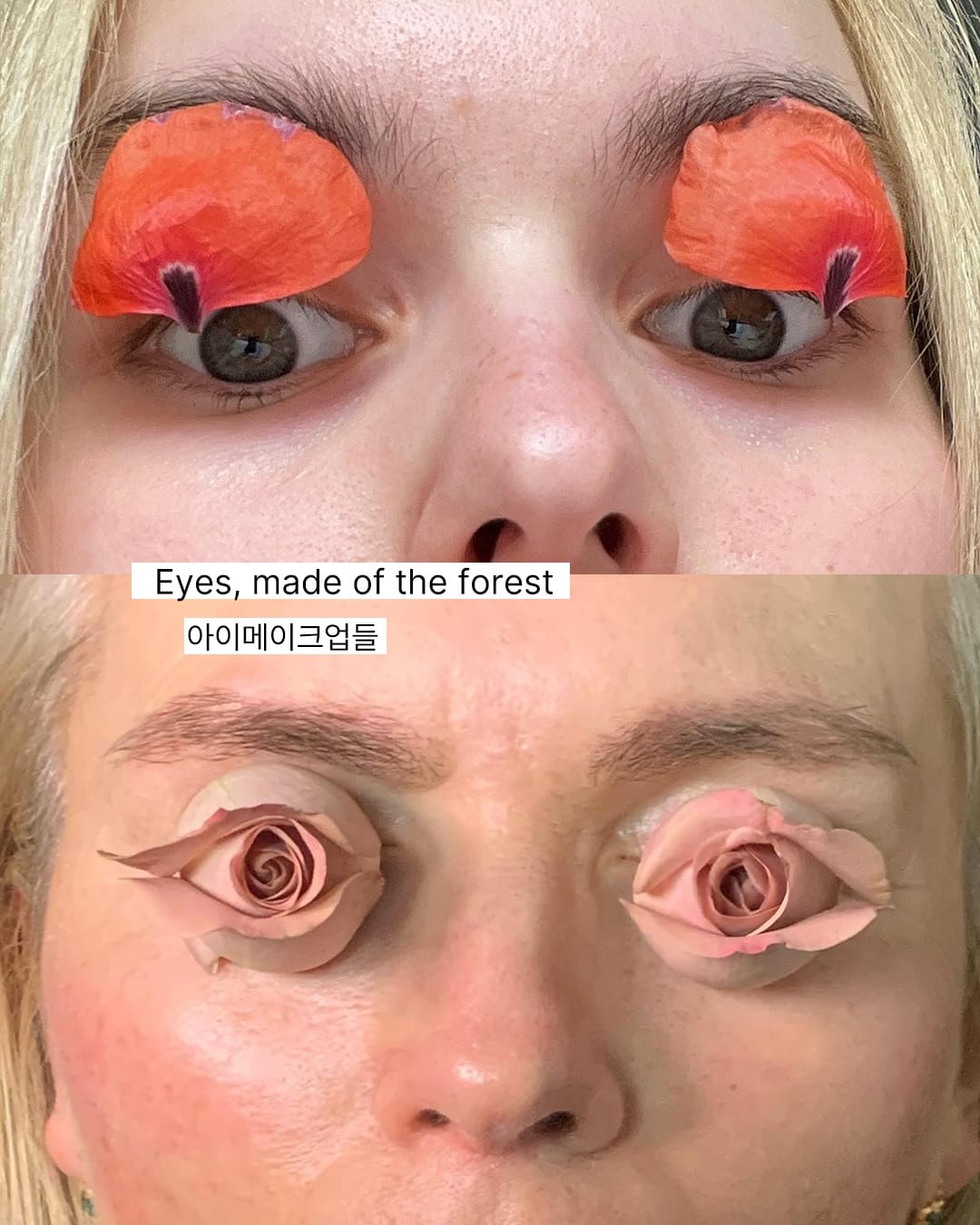
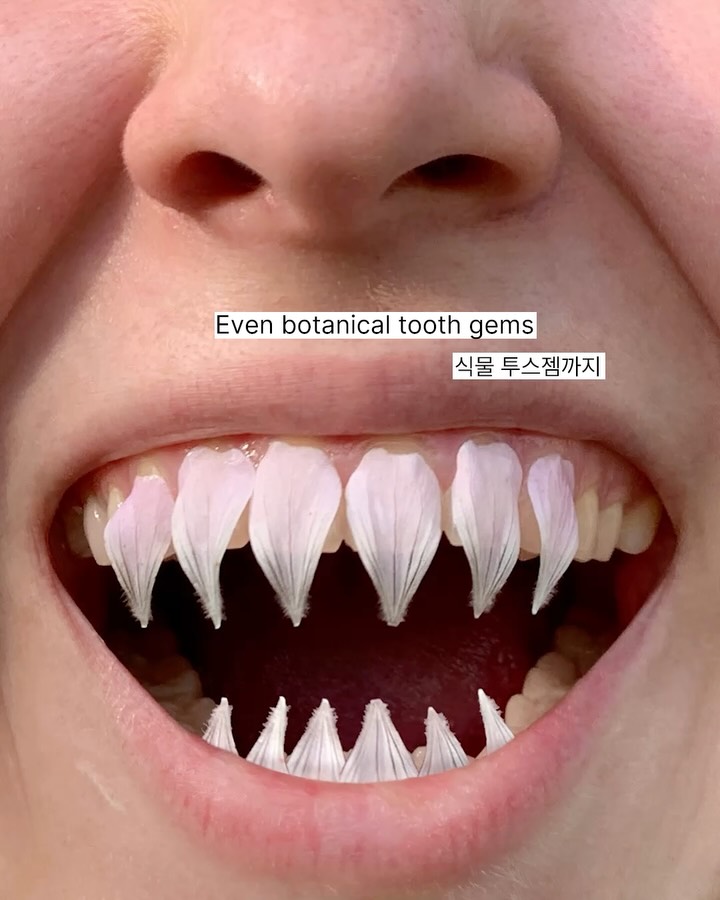
Luneva interprets and rearranges natural forms, erasing the boundary between body and nature. Her work is less makeup than sculpture. What nature could rest on your skin?
FAQ
Who is Maria Luneva?
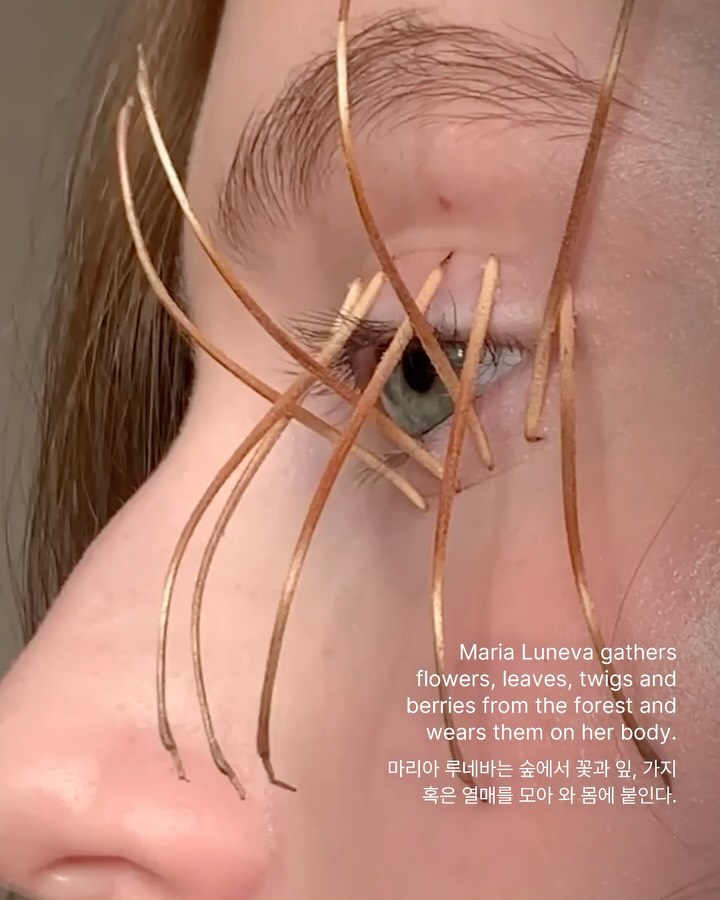
Maria Luneva is a Moscow-based artist who gathers flowers, leaves, branches, and berries from the forest and attaches them to the body. She lets natural materials speak first through their form, color, and texture, then arranges them on faces or hands accordingly. For her, the forest is a second skin, and erasing the boundary between nature and body is central to her practice.
How did Maria Luneva start her work?
As a child, Luneva walked unbeaten paths searching for insects and lizards. She studied car design but felt lost until a turning point came when she placed a mushroom cap on her face while cooking. That moment revealed how her childhood fascinations were continuing through a different path, leading her to begin transferring the forest onto the body.
What is Maria Luneva's signature work?
Her signature piece is 'Hands at one with nature.' Baby pink bell-shaped petals wrap around fingers, green sepals rise from fingertips, and purple gradient stamens flow over nails before forming knots. This work layers the structure of flowers with the form of hands, erasing the boundary between nature and body.