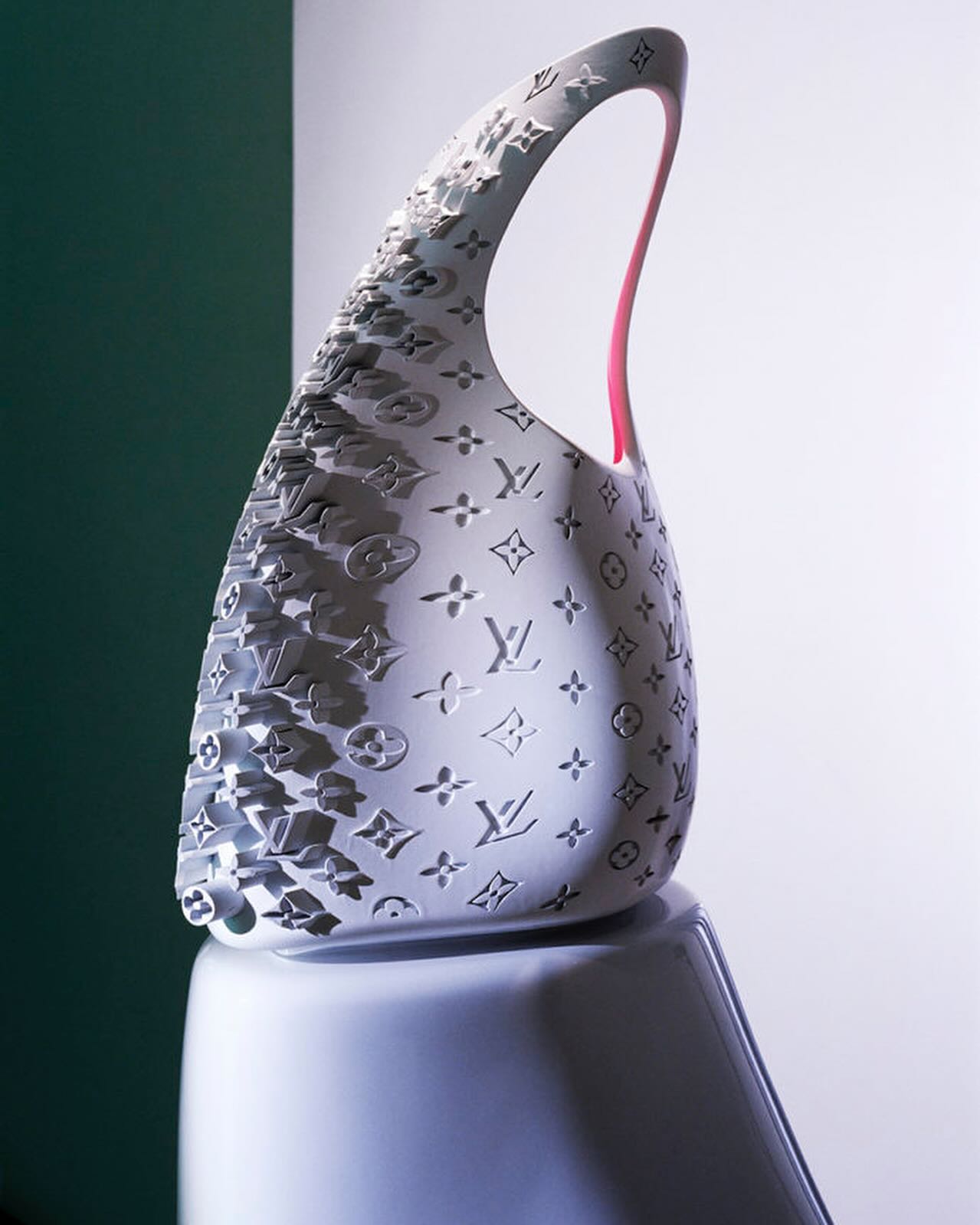
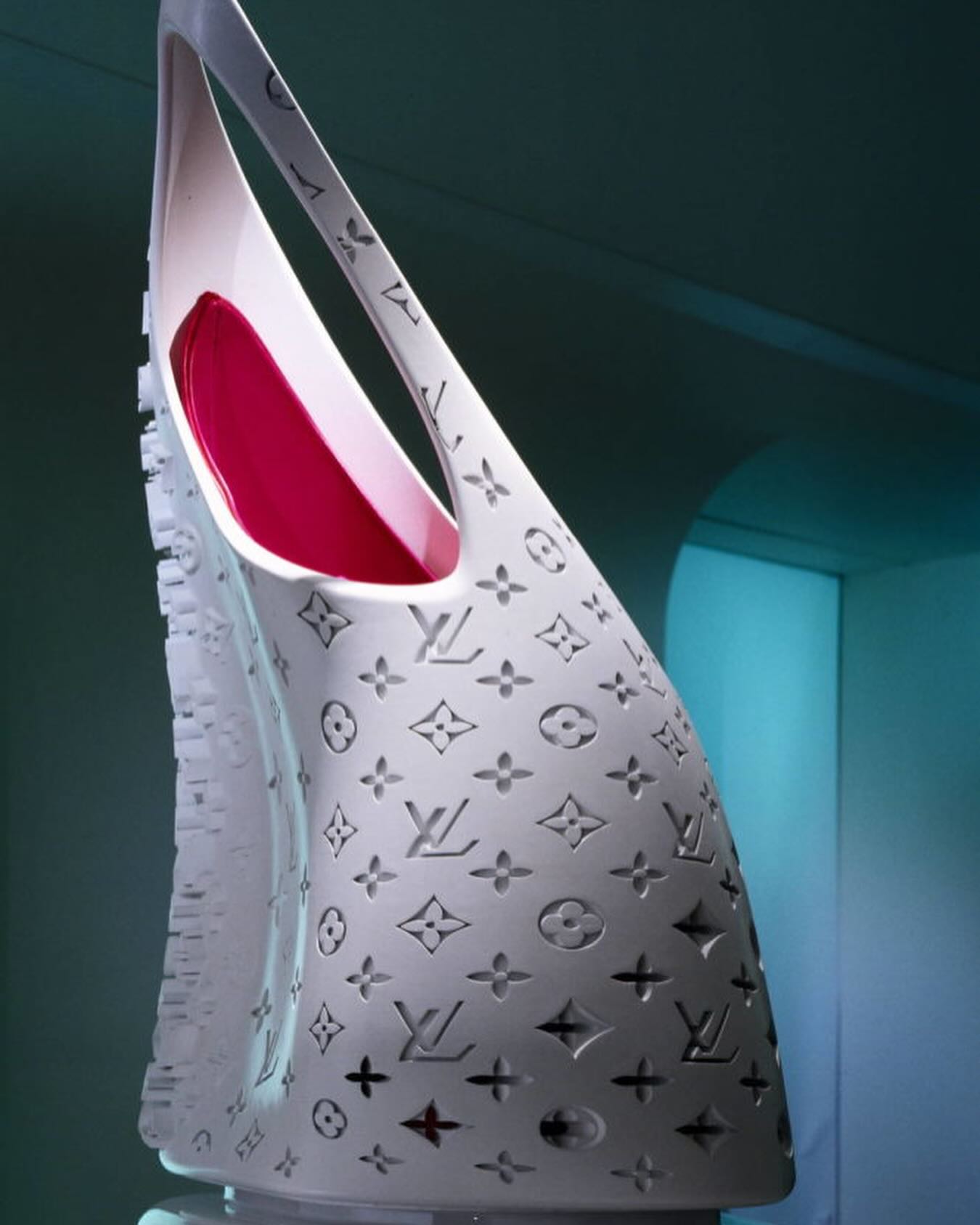
The bucket bag was created using architectural techniques—extruding, distorting, and slicing the material to achieve its final form. Zaha Hadid's signature fluid curves envelope the entire structure, while LV logos are engraved throughout the surface in intricate detail. The silver-toned metallic material gives the bag a futuristic quality while maintaining the sculptural artistry characteristic of Hadid's work. The handle's ergonomic curve, lined with a subtle pink interior, demonstrates the careful attention to both form and function.
This collaboration is recognized as a pioneering example of how fashion houses and architects can create genuinely innovative results. Hadid successfully translated her three-dimensional spatial thinking from buildings to fashion accessories, proving that architectural principles can inform wearable design. Nearly two decades later, this bucket bag remains highly coveted among archive collectors and stands as a legendary example of cross-disciplinary collaboration between fashion and architecture.
FAQ
When was the Louis Vuitton and Zaha Hadid collaboration?
The Louis Vuitton and Zaha Hadid collaboration occurred in 2006. This collaboration reimagined Louis Vuitton's classic bucket bag through Zaha Hadid's distinctive architectural language, creating an iconic design completed as a hybrid with sculptural artistry through architectural techniques of extruding, warping, and slicing materials with flowing curves.
What are the design features of Zaha Hadid's Louis Vuitton bucket bag?
Zaha Hadid's Louis Vuitton bucket bag was created using architectural techniques to extrude, warp, and slice materials. Zaha Hadid's signature flowing curves envelop the entire bag, LV logos are engraved throughout the surface, and silver-toned metallic material expresses futuristic yet sculptural artistry.
What's the significance of the Louis Vuitton x Zaha Hadid collaboration?
This collaboration is a pioneering case showing how innovative fashion house and architect meetings can be. Zaha Hadid perfectly translated architectural thinking about three-dimensional space into fashion accessories, and even 18 years later, it's highly valued among archive collectors.