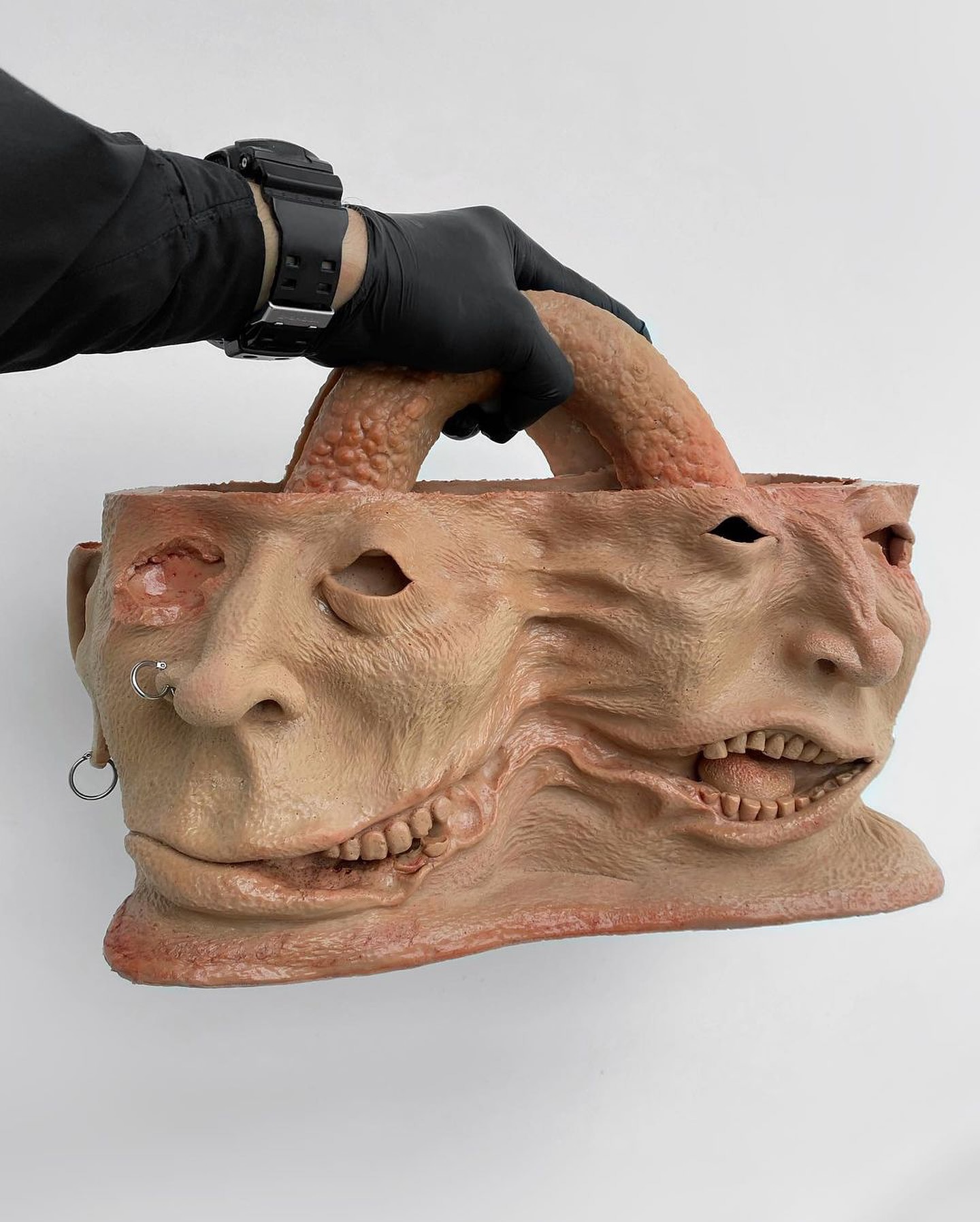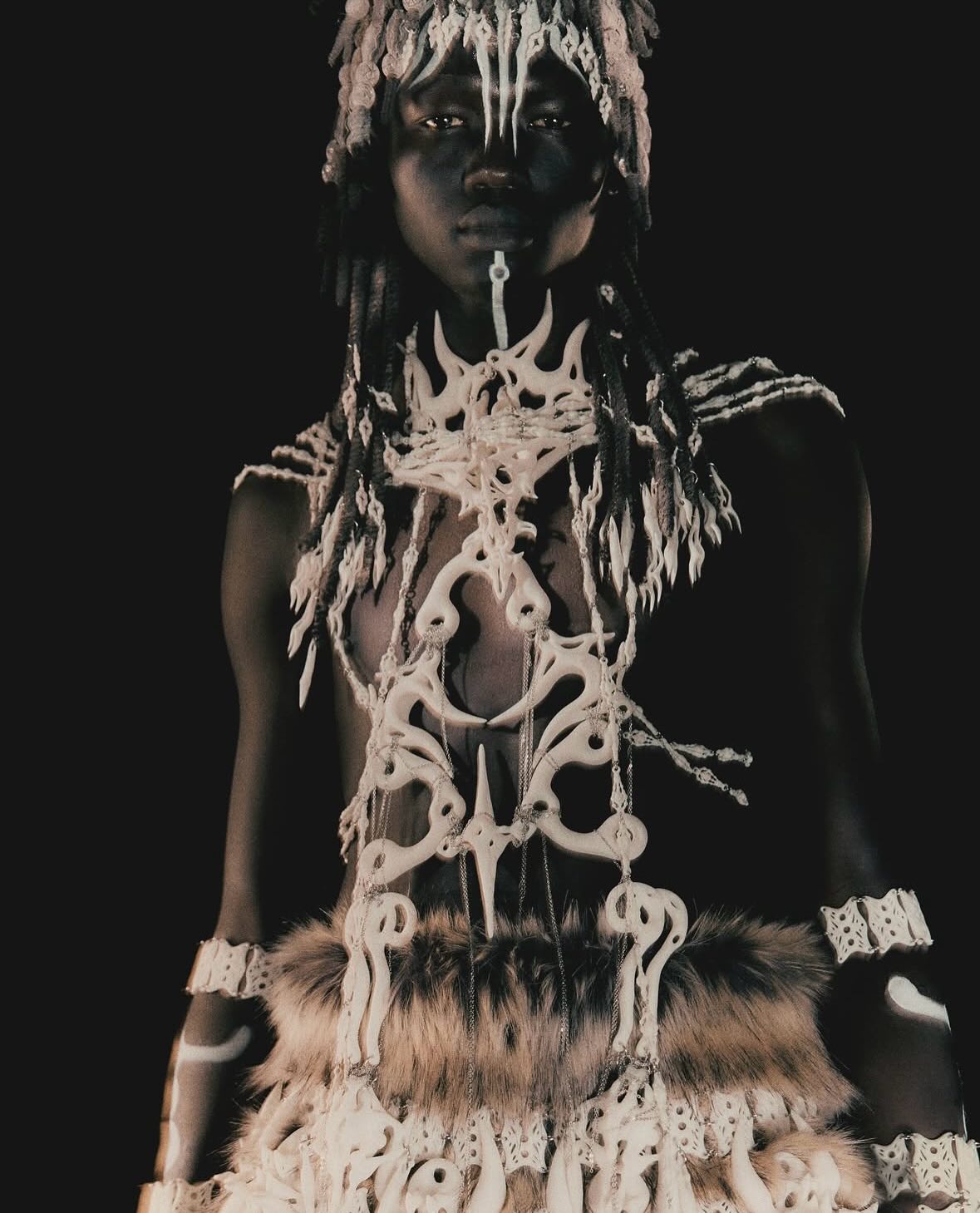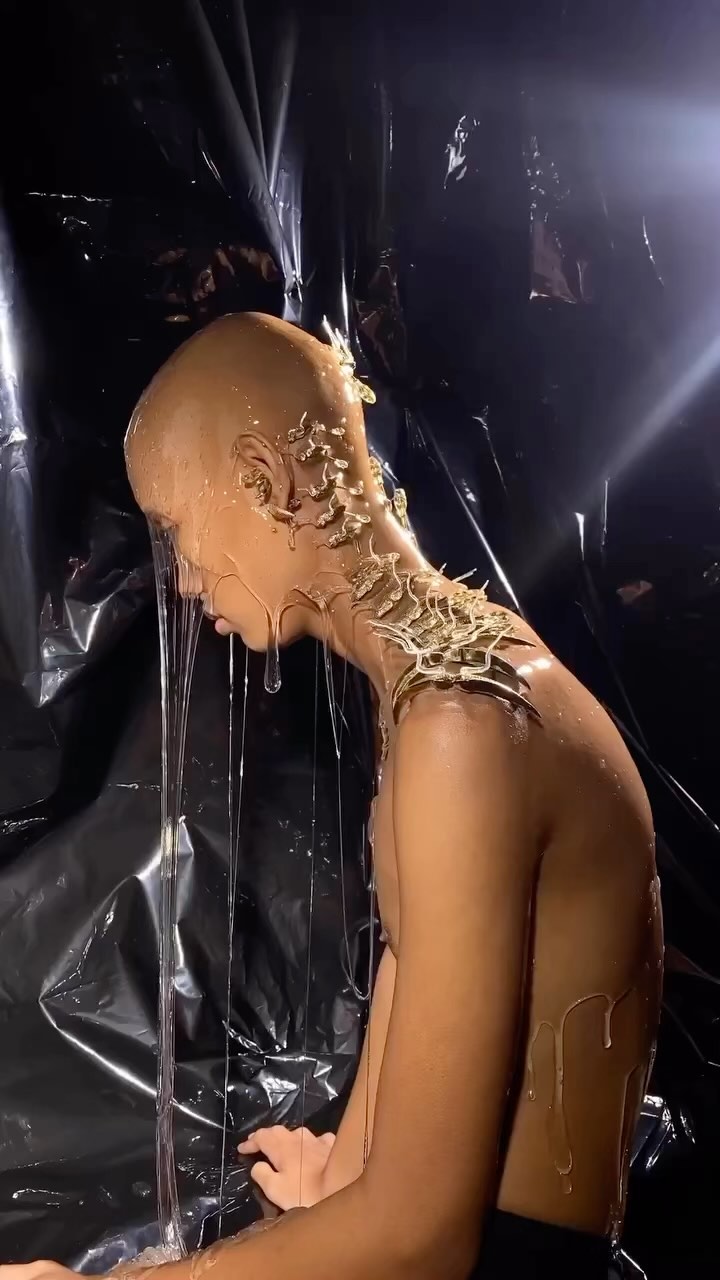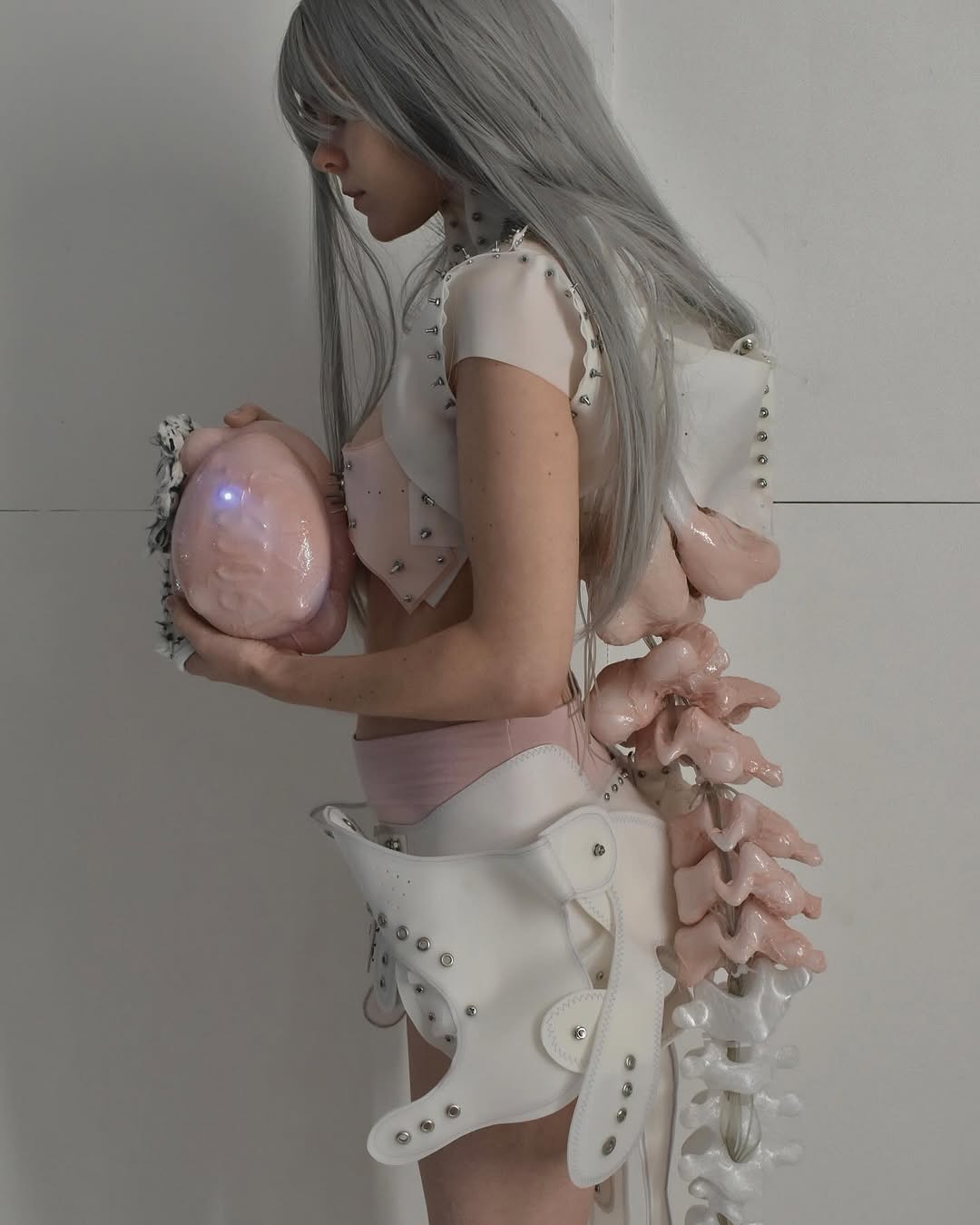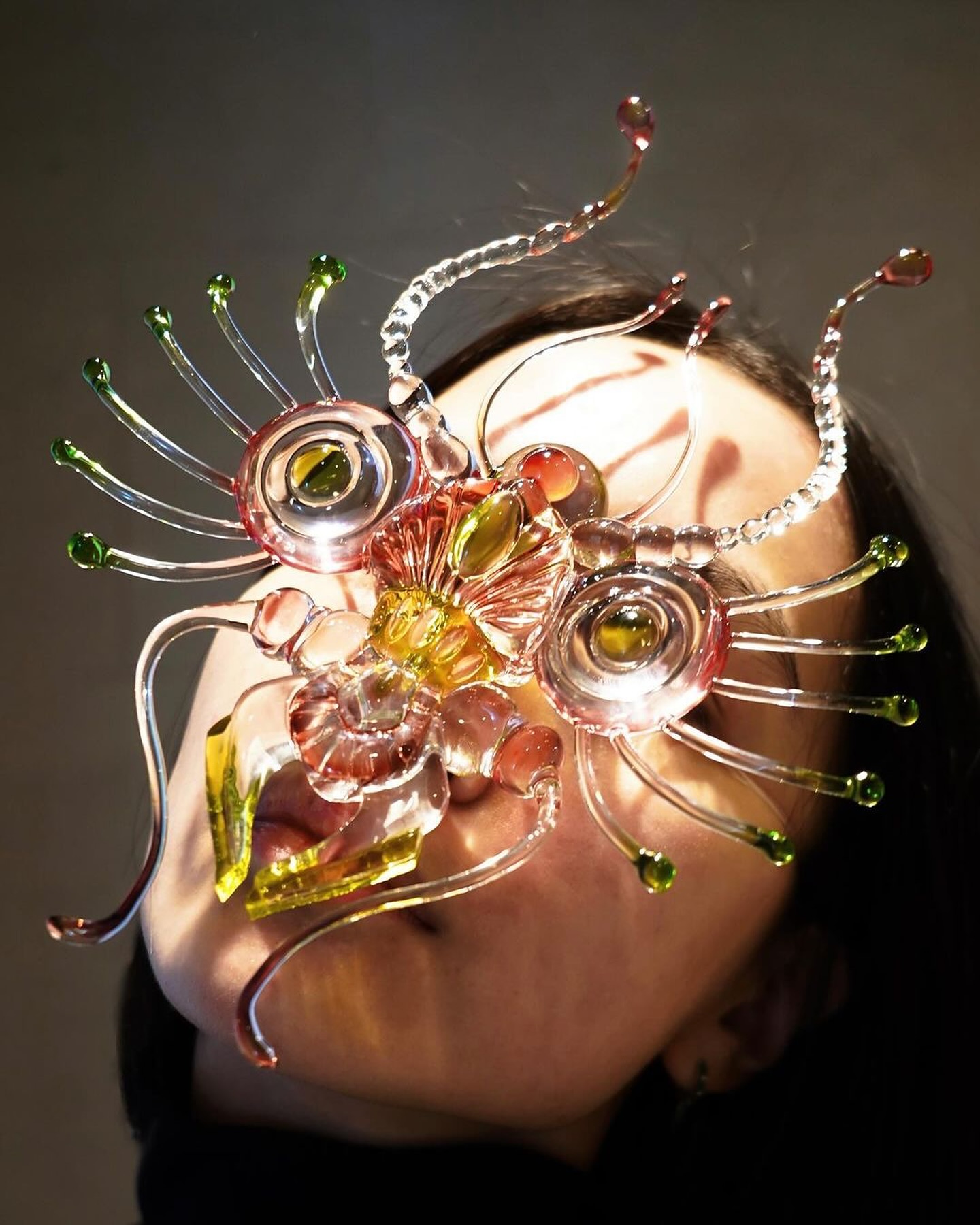
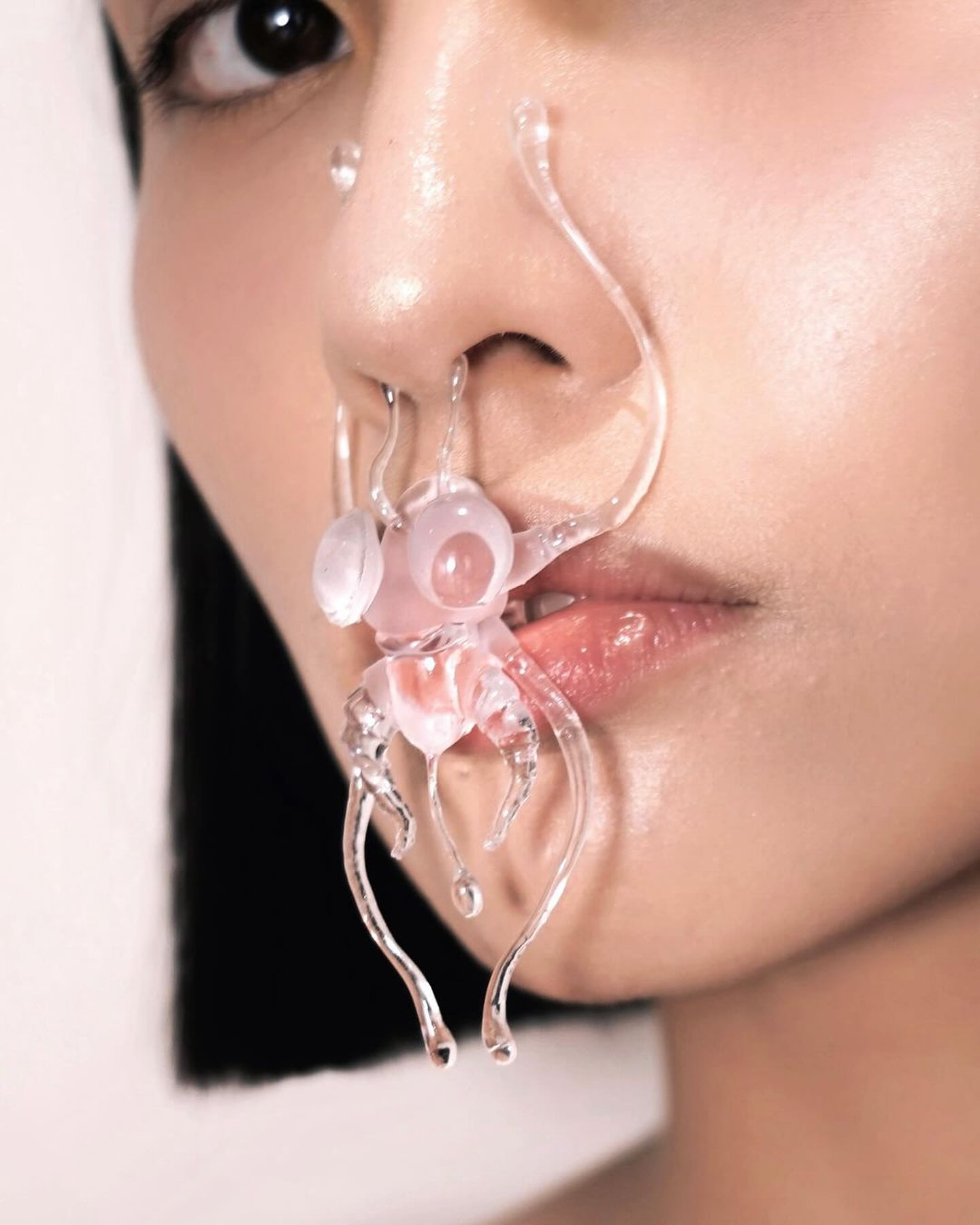
London-based jewelry designer Kyraxu has unveiled a 'Parasite Jewelry Collection' that simultaneously shocks and mesmerizes the fashion world. The collection draws inspiration from Cymothoa Exigua, a parasitic crustacean infamously known as the tongue-eating louse that devours a fish's tongue and replaces it. The designer has elevated one of nature's most grotesque creatures into an artistic objet.
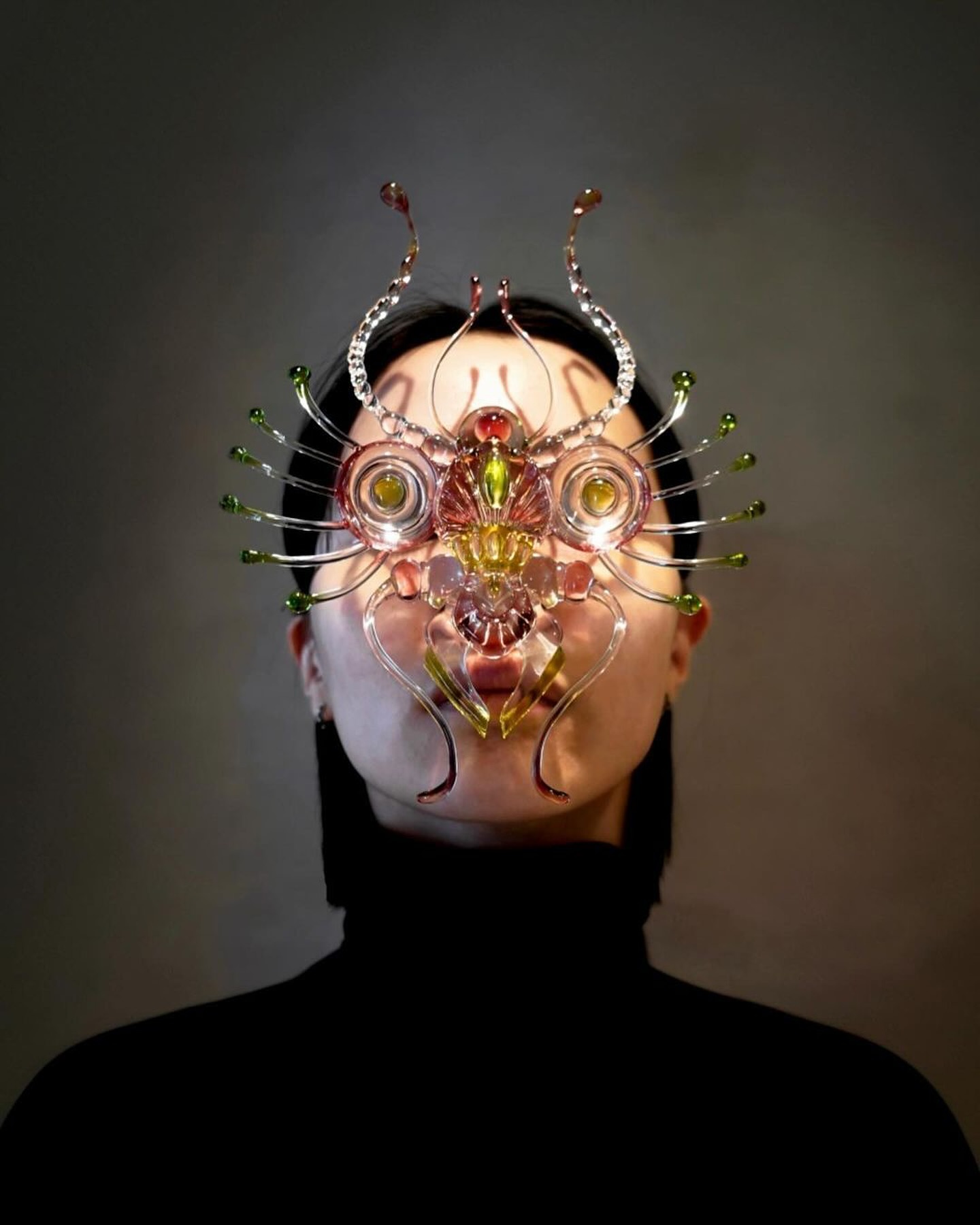
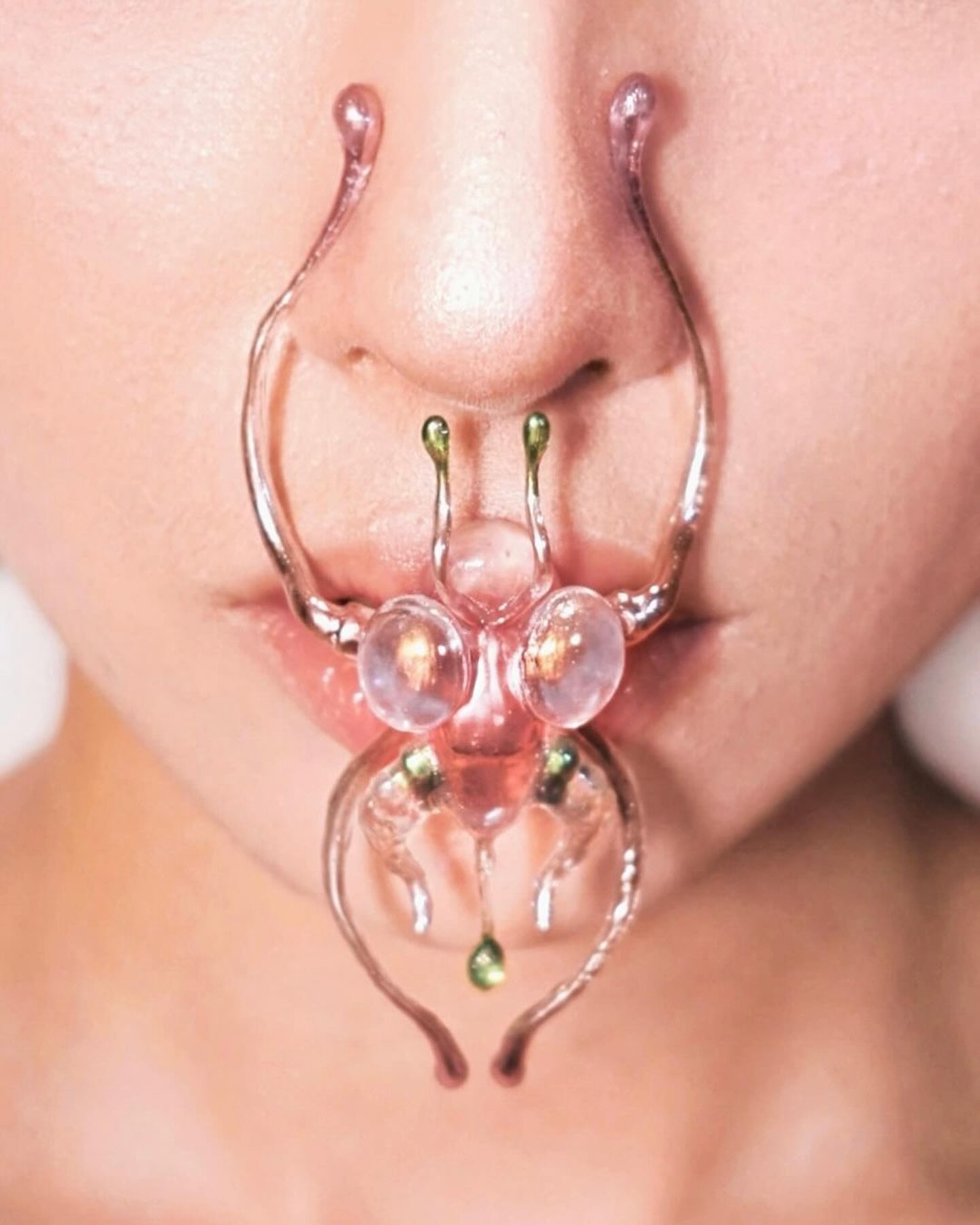
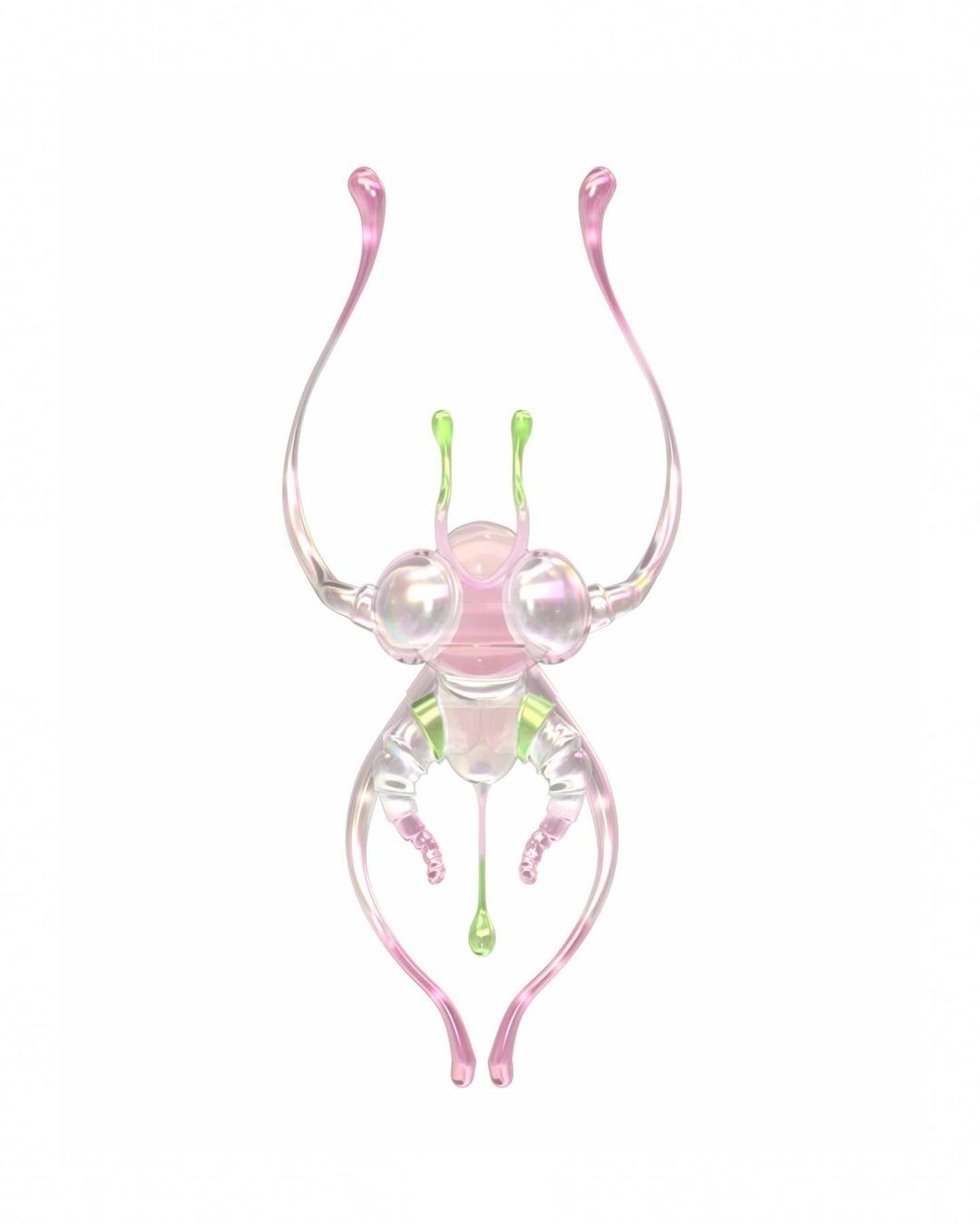
Each piece in the collection is crafted using 3D printing technology, featuring a translucent semi-matte finish. The sculptural aesthetic, modeled after rhinoceros forms, is particularly striking. While the parasite covering the face may initially appear repulsive, the subtle color gradations and intricate details create an uncanny beauty. Glass bead embellishments in yellows, greens, and pinks dissolved within the transparent material evoke internal organs, adding a surreal dimension.
This work expands the boundaries of wearable art, proving that discomfort and beauty can coexist. Kyraxu's approach—confronting nature's darker aspects while extracting artistic value—demonstrates how fashion can transcend mere decoration to become a discourse intersecting biology, philosophy, and psychology.
Born from the fusion of digital fabrication and natural-scientific imagination, this collection vividly illustrates how emerging designers are challenging conventional aesthetic standards.
Each piece in the collection is crafted using 3D printing technology, featuring a translucent semi-matte finish. The sculptural aesthetic, modeled after rhinoceros forms, is particularly striking. While the parasite covering the face may initially appear repulsive, the subtle color gradations and intricate details create an uncanny beauty. Glass bead embellishments in yellows, greens, and pinks dissolved within the transparent material evoke internal organs, adding a surreal dimension.
This work expands the boundaries of wearable art, proving that discomfort and beauty can coexist. Kyraxu's approach—confronting nature's darker aspects while extracting artistic value—demonstrates how fashion can transcend mere decoration to become a discourse intersecting biology, philosophy, and psychology.
Born from the fusion of digital fabrication and natural-scientific imagination, this collection vividly illustrates how emerging designers are challenging conventional aesthetic standards.
FAQ
What organism inspired Kyraxu's parasite jewelry?
Kyraxu's parasite jewelry collection was inspired by Cymothoa Exigua, a parasitic crustacean nicknamed 'the tongue-eating louse' known for eating and replacing a fish's tongue.
What technique was used to create the parasite jewelry?
The collection was created using 3D printing technology with translucent semi-matte finishes. Featuring rhinoceros-inspired sculptural forms, yellow, green, and pink glass beads are arranged within transparent materials, creating surreal effects reminiscent of a living organism's interior.
Who is Kyraxu?
Kyraxu is a London-based jewelry designer who transforms nature's bizarre elements into artistic objects. Combining digital fabrication with biological imagination, this emerging designer expands wearable art's boundaries while demonstrating that revulsion and beauty can coexist.