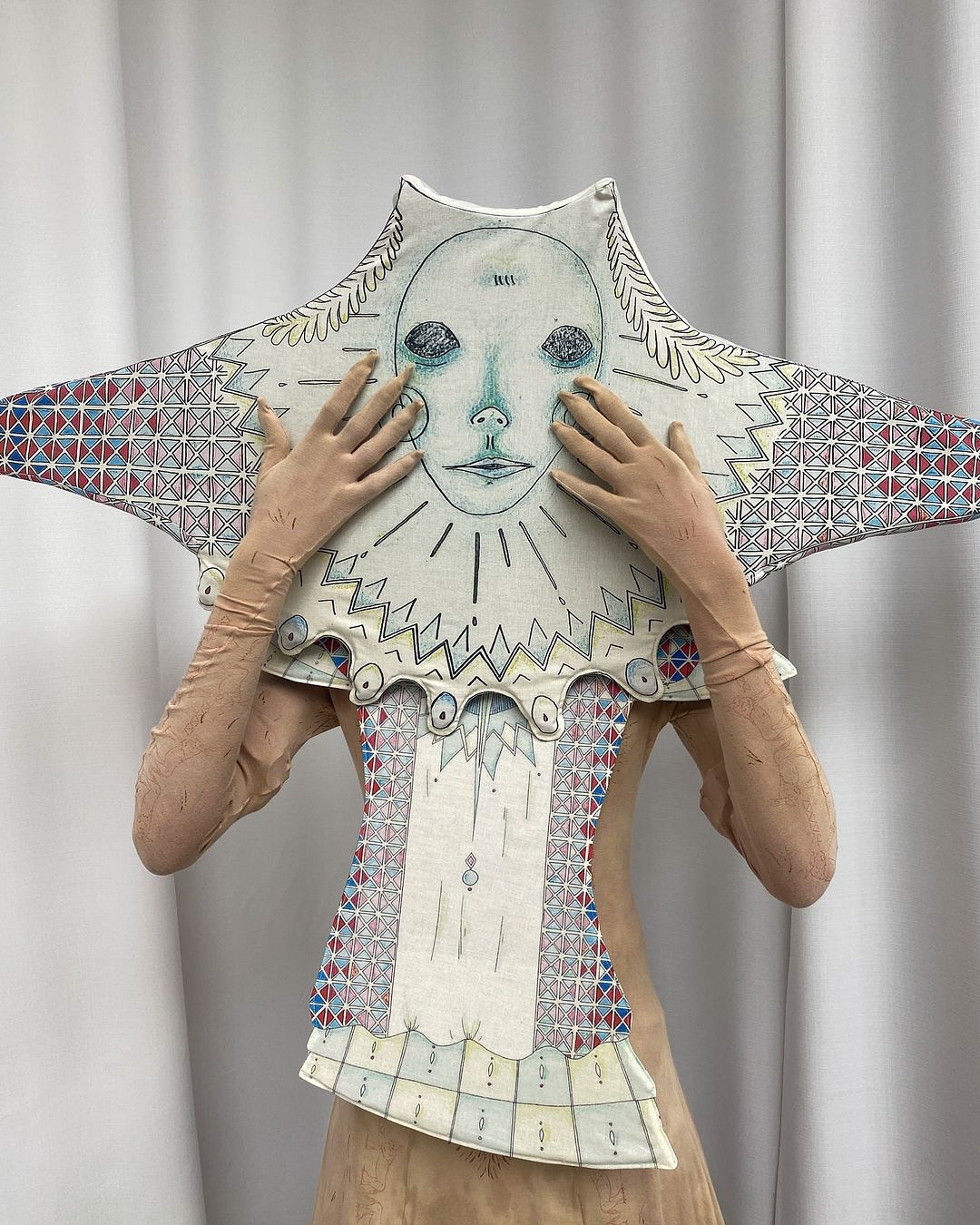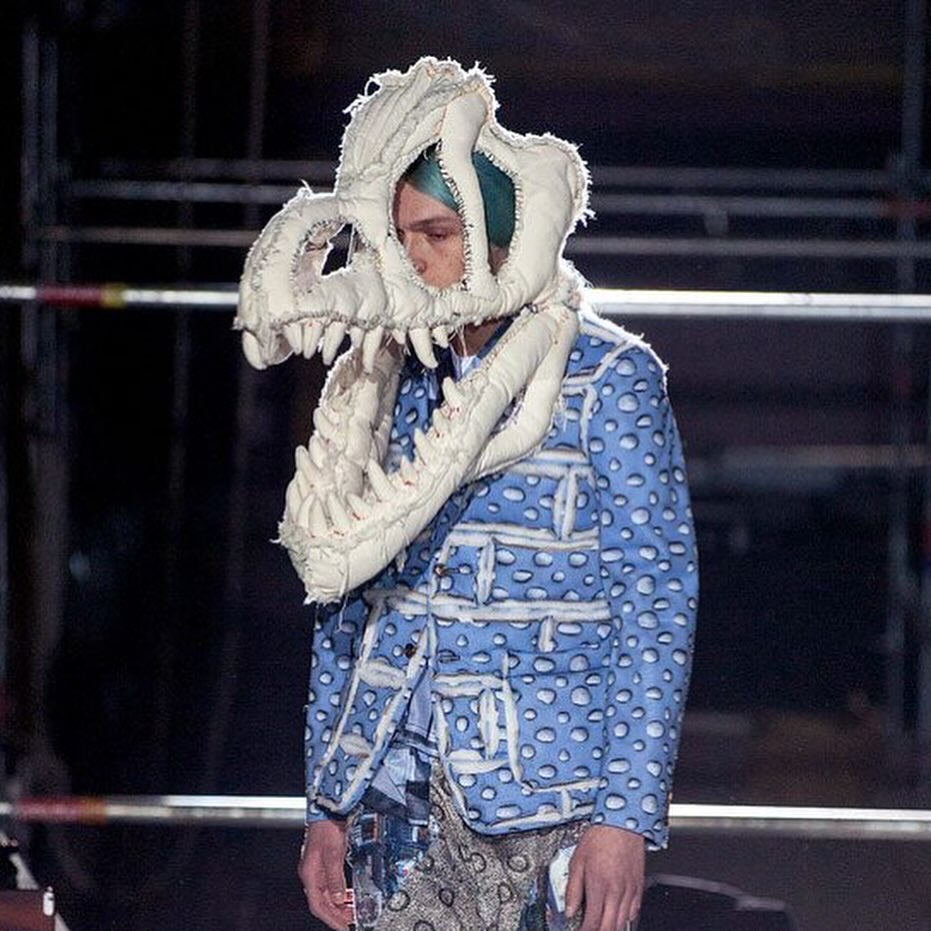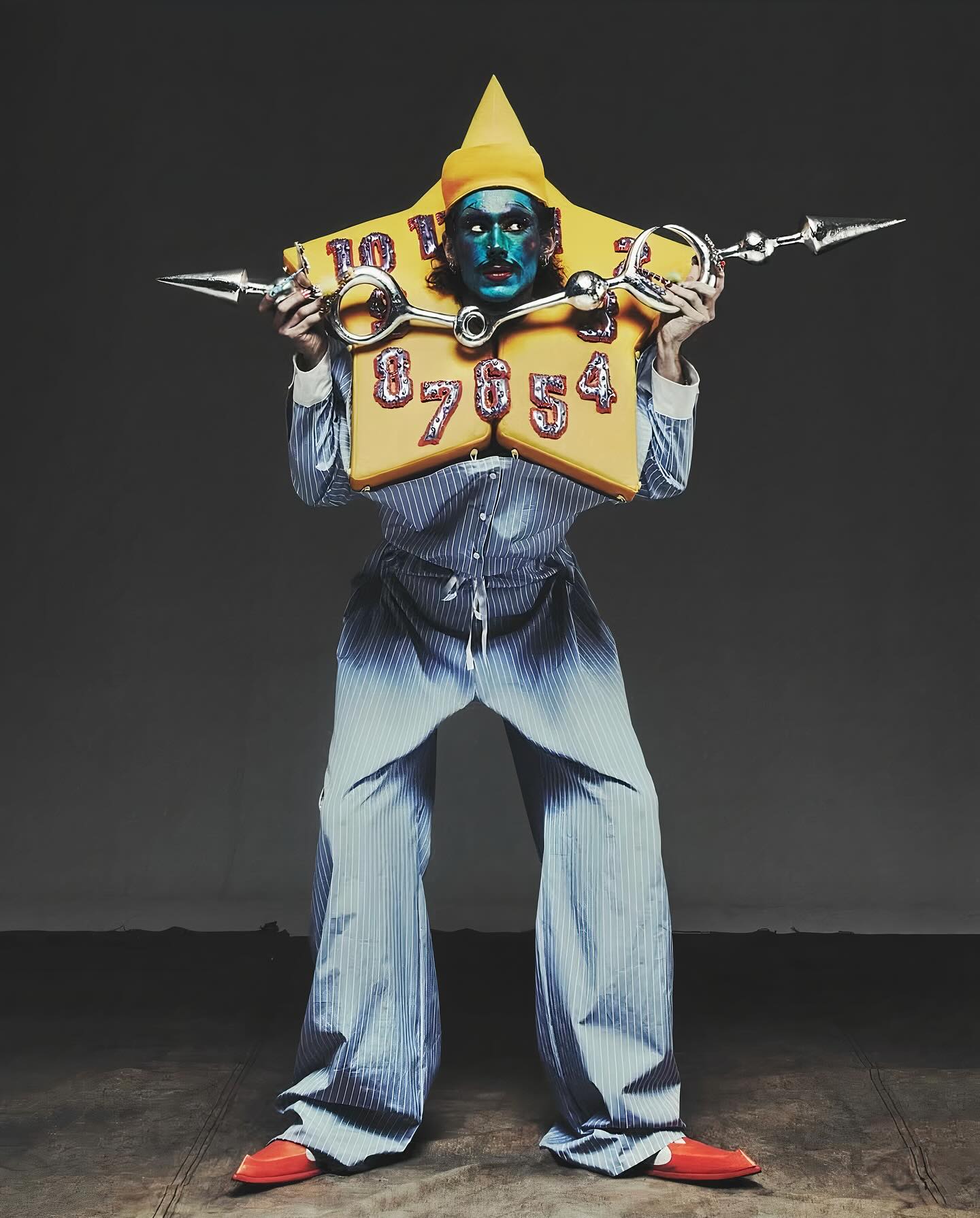
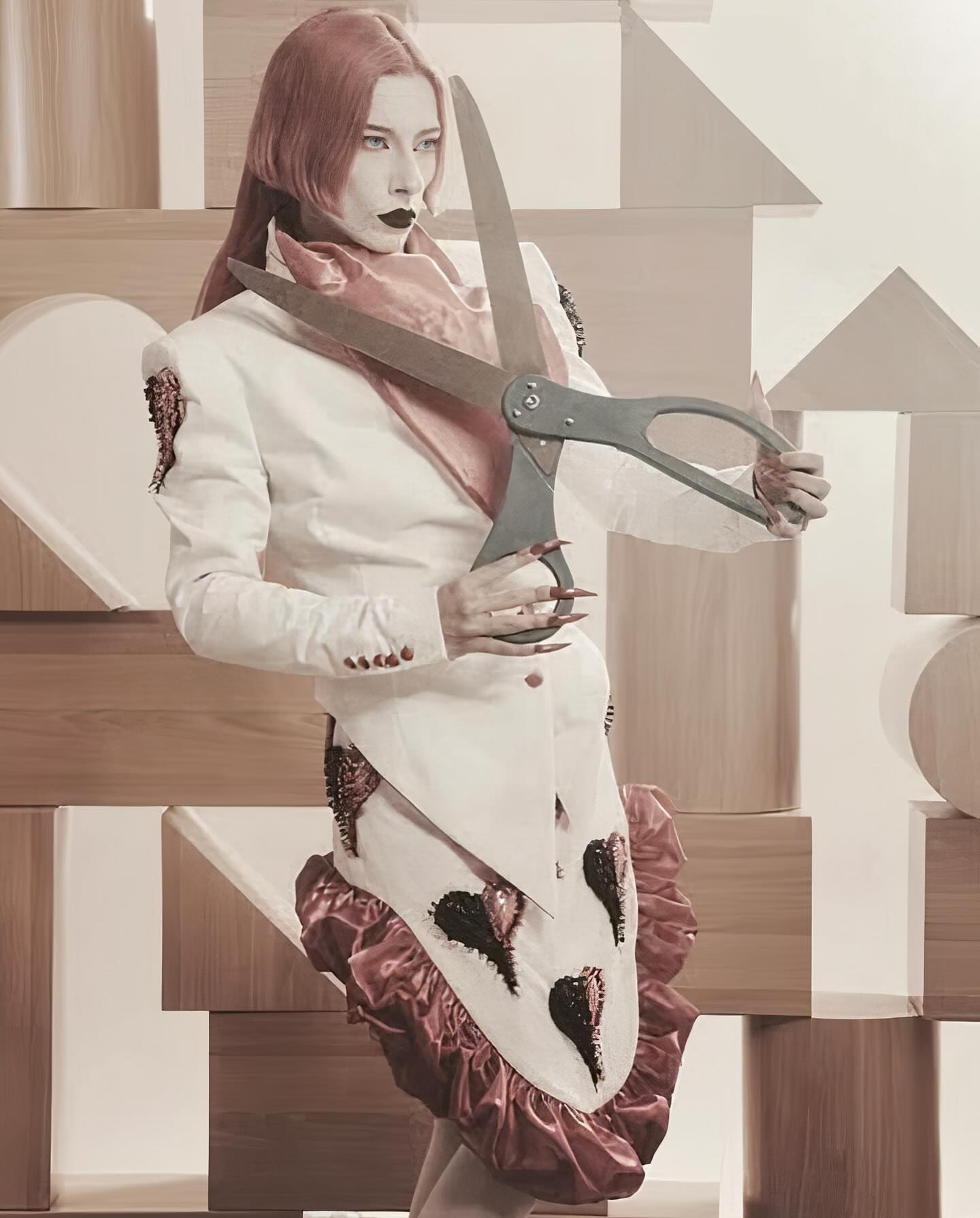
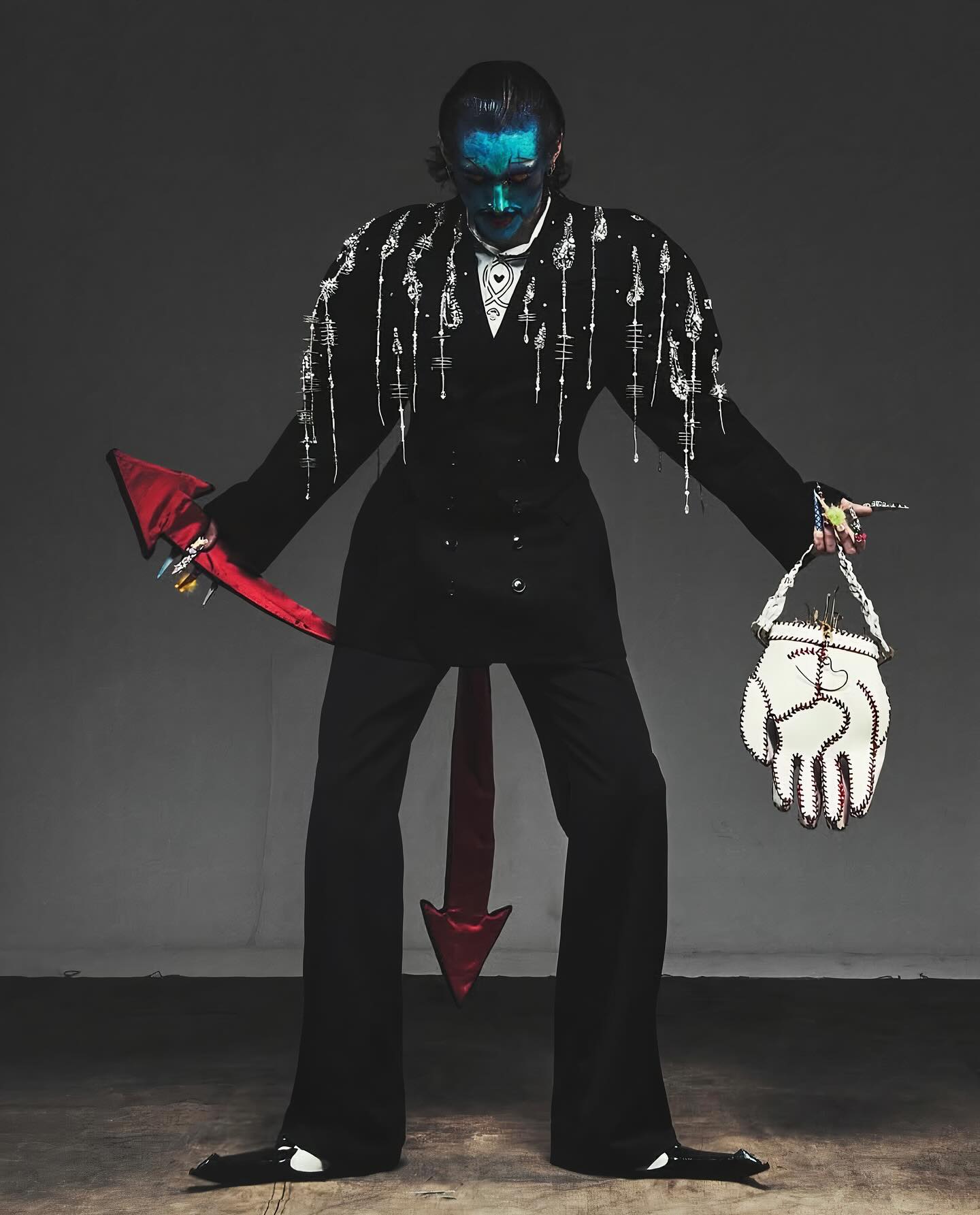
Each look strikes a delicate balance between costume-like drama and contemporary wearability through exaggerated volumes, deconstructed tailoring techniques, and bold surface treatments. The approach of layering sculptural objects over basic silhouettes—striped shirts and flared trousers—demonstrates how everyday clothing can transform into performance costume.
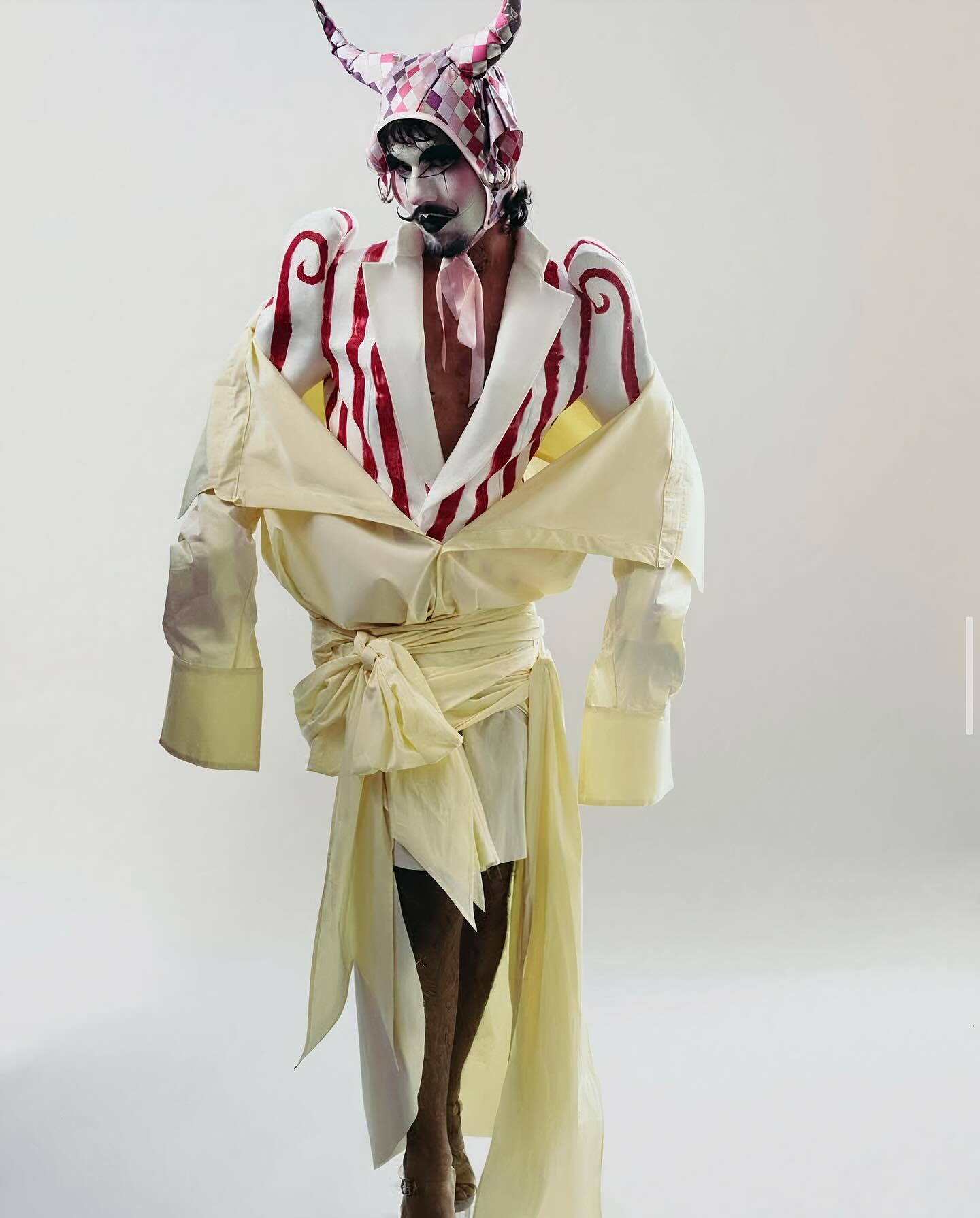
Through grotesque aesthetics and ironic symbolism, the collection challenges fashion's conventional ideals of beauty. The silhouettes feel simultaneously sculptural, playful, and provocatively elegant, mocking traditional standards of beauty. This is not mere rebellion but an intellectual attempt to expand the definition of beauty itself.
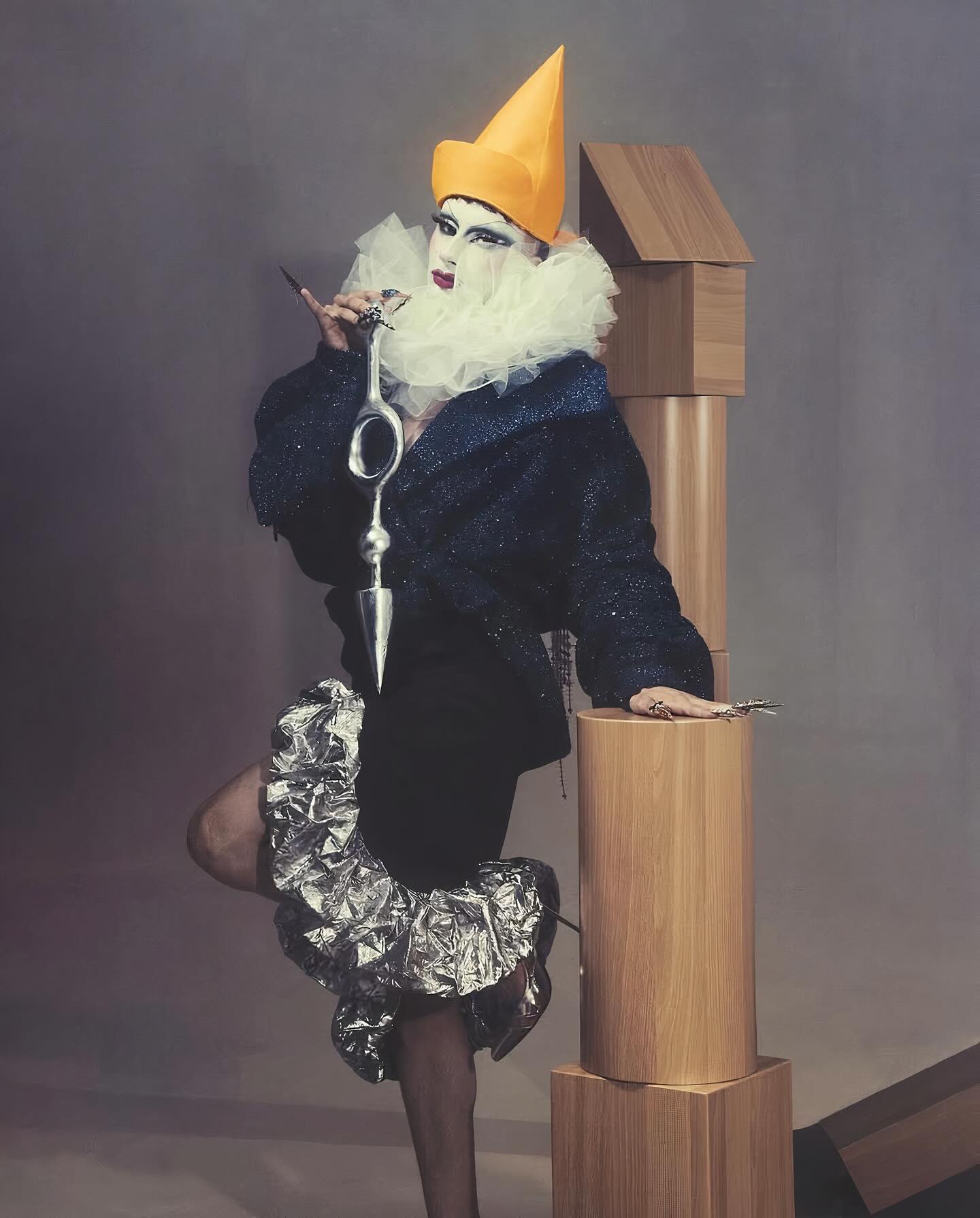
Unfolding like a dark carnival, the collection elevates absurdity into grace, with every stitch laughing back at the audience. The clown motif functions beyond a mere visual device, becoming a meta-commentary that satirizes the fashion system itself. Komkomromotyo proves that fashion can be both theater and philosophy, costume and critique.

FAQ
Which art movement inspired KOMKOMMOTYO's Mama I See Clowns collection?
The collection drew inspiration from the 1920s Dadaism movement. Challenging traditional beauty standards through absurdity, grotesqueness, and irony, it translated Dadaist spirit into contemporary fashion using exaggerated volumes and deconstructed tailoring techniques that subvert conventional aesthetics.
What are the key design features of the Mama I See Clowns collection?
Exaggerated volumes, deconstructed tailoring, and bold surface treatments define the collection. Sculptural objects merge with basic silhouettes, while dramatic makeup and costume-like presentations create impact. The designs navigate the delicate balance between wearability and theatrical expression.
Where is KOMKOMMOTYO based?
KOMKOMMOTYO is a Netherlands-based designer. Through the Mama I See Clowns collection, the brand presents avant-garde and conceptual work that satirizes the fashion system itself, pushing boundaries with provocative and thought-provoking design statements.