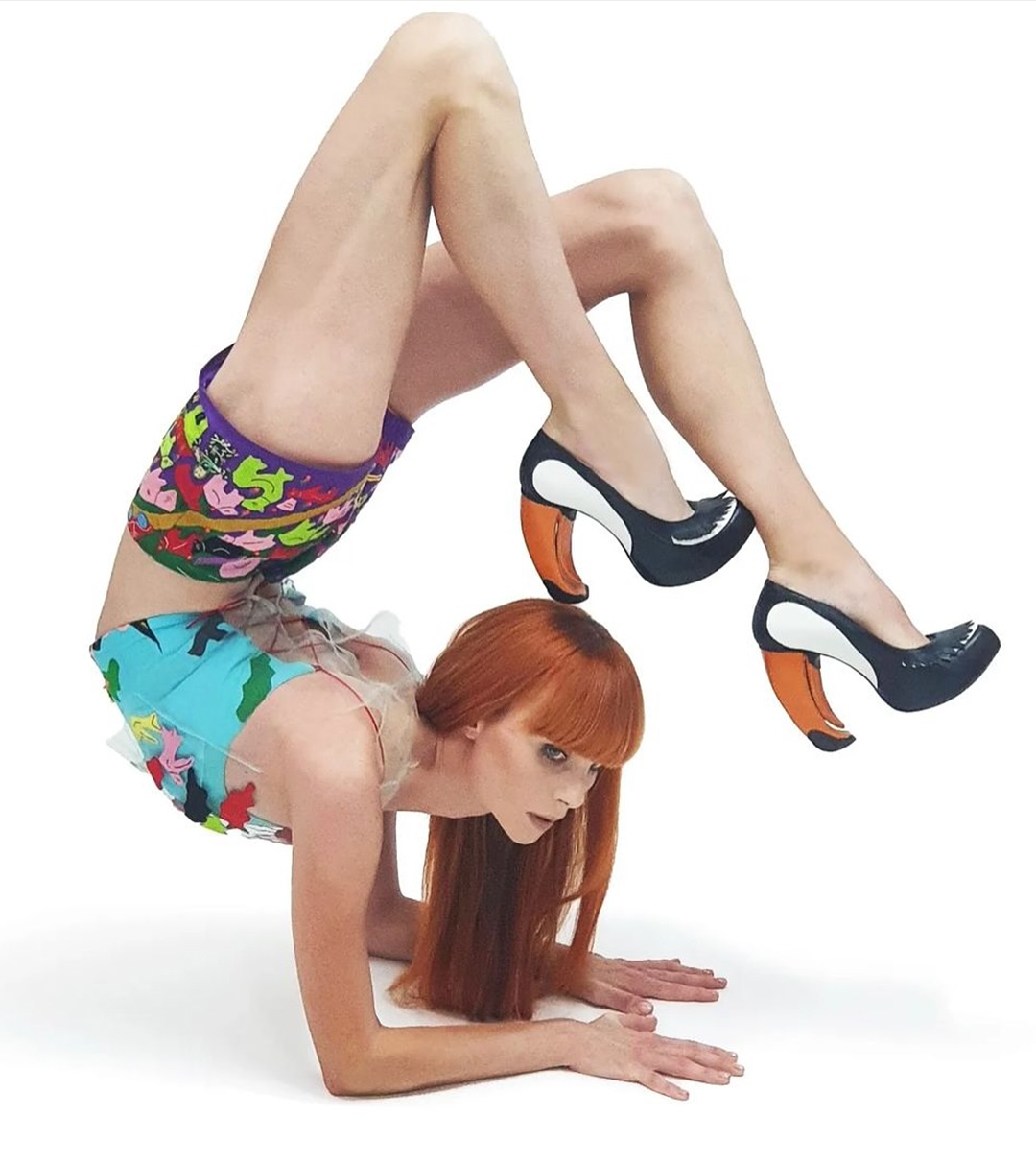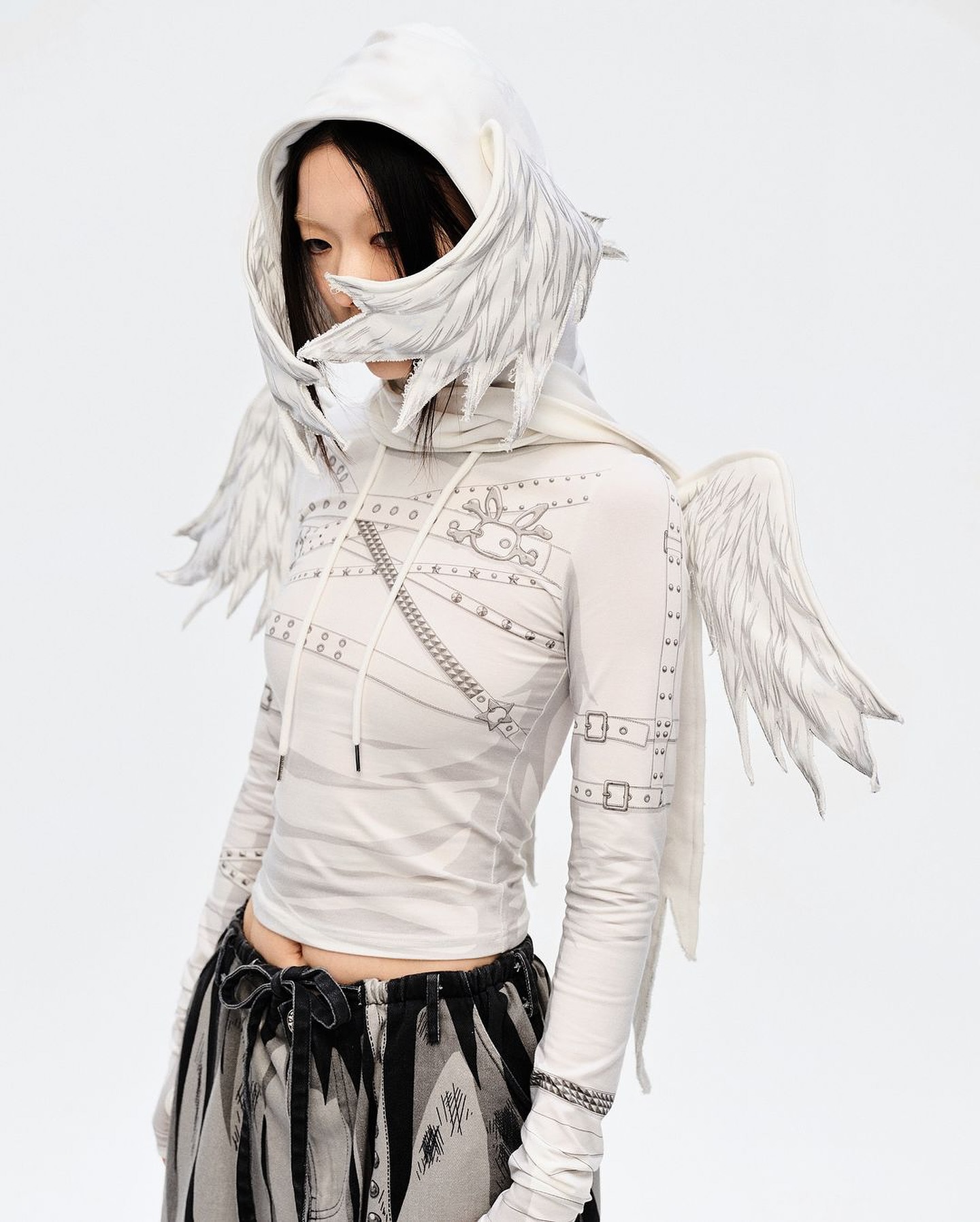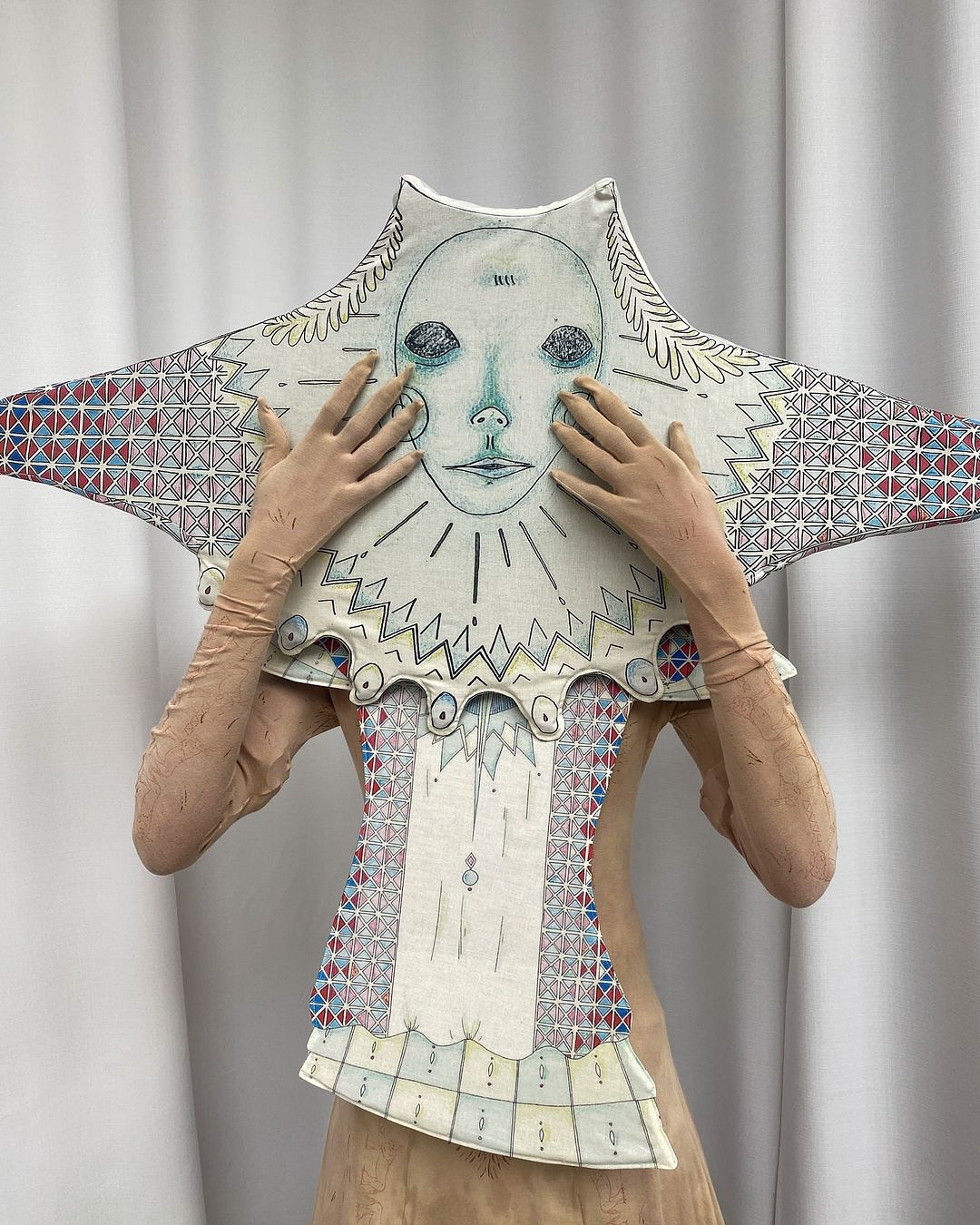
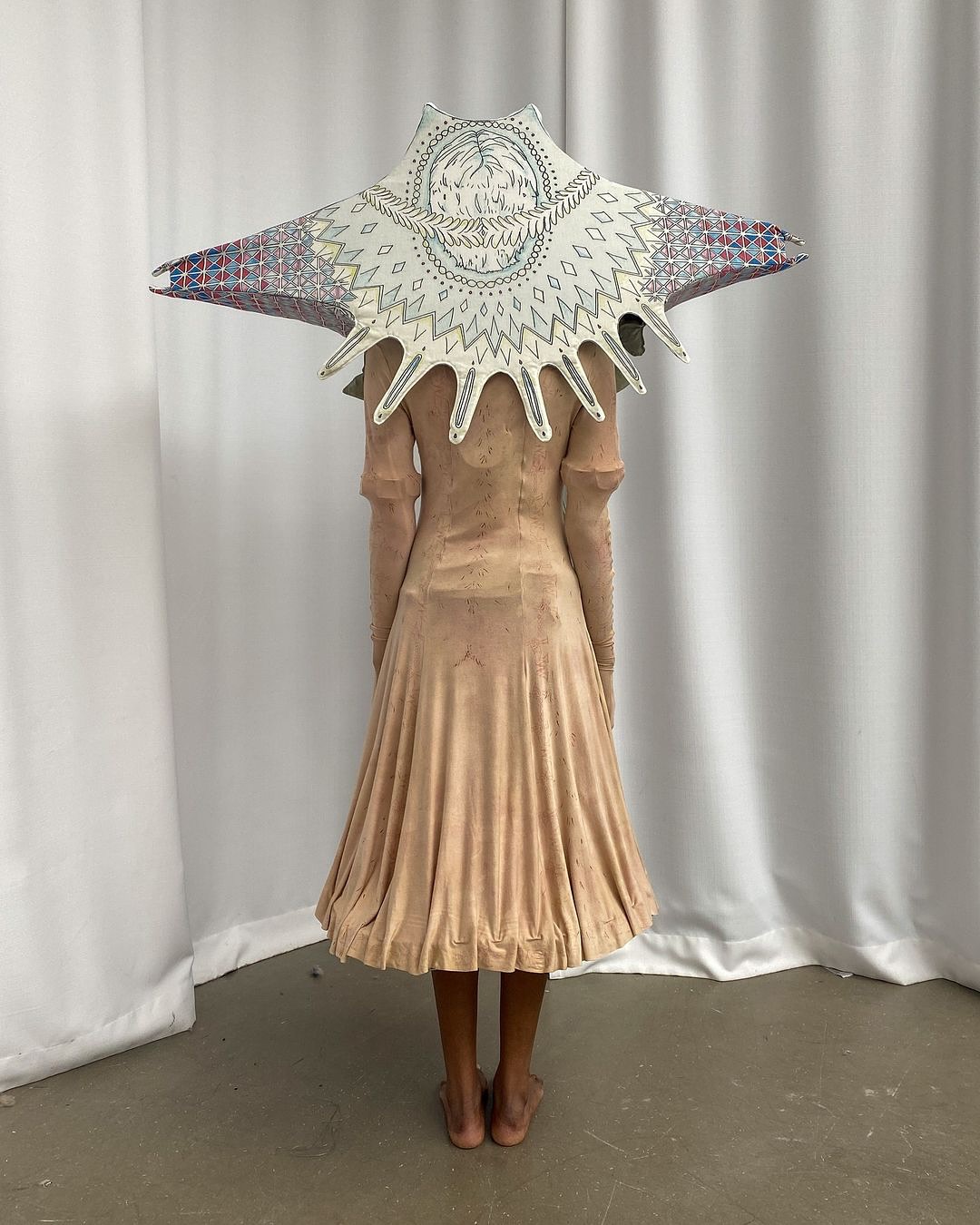
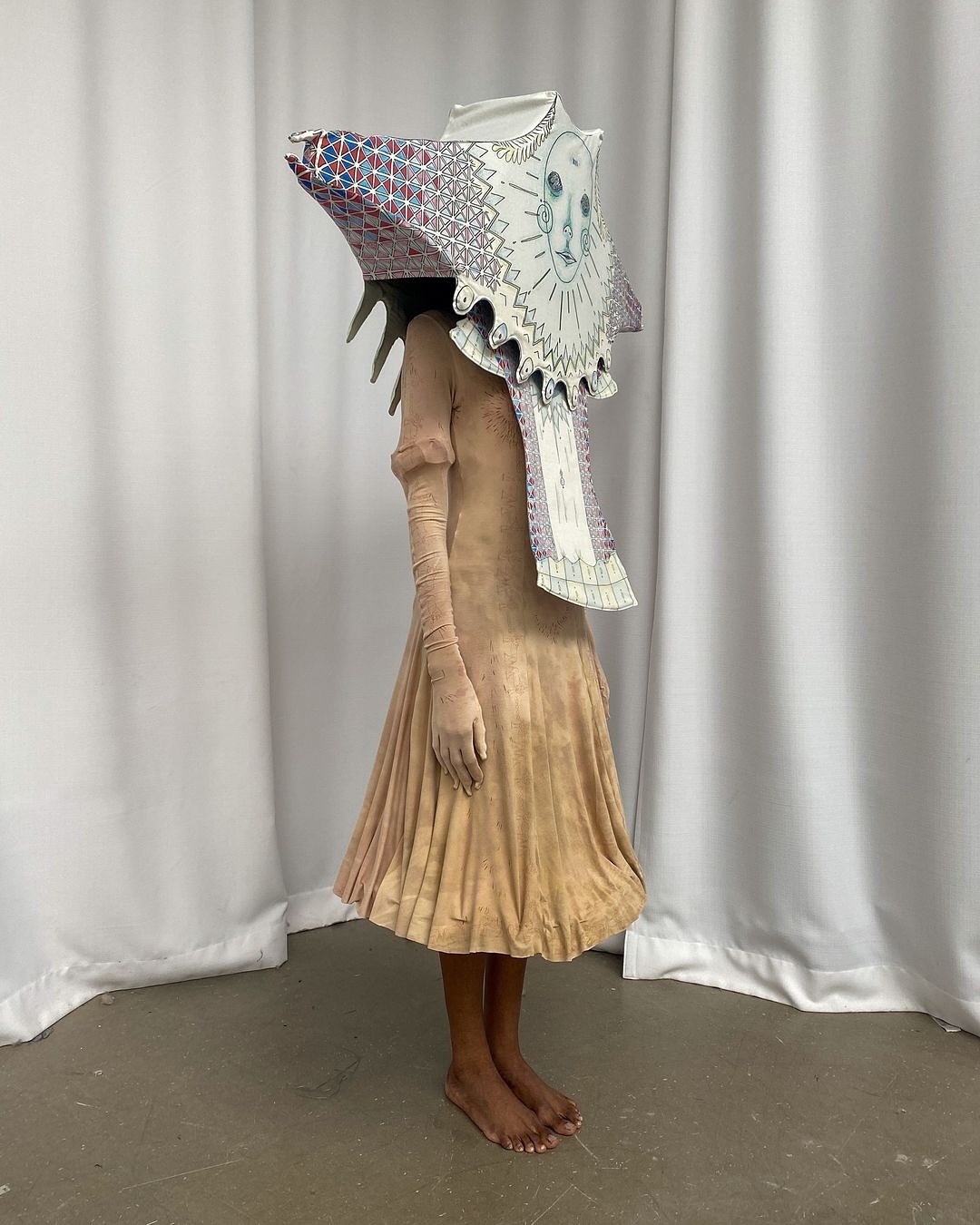
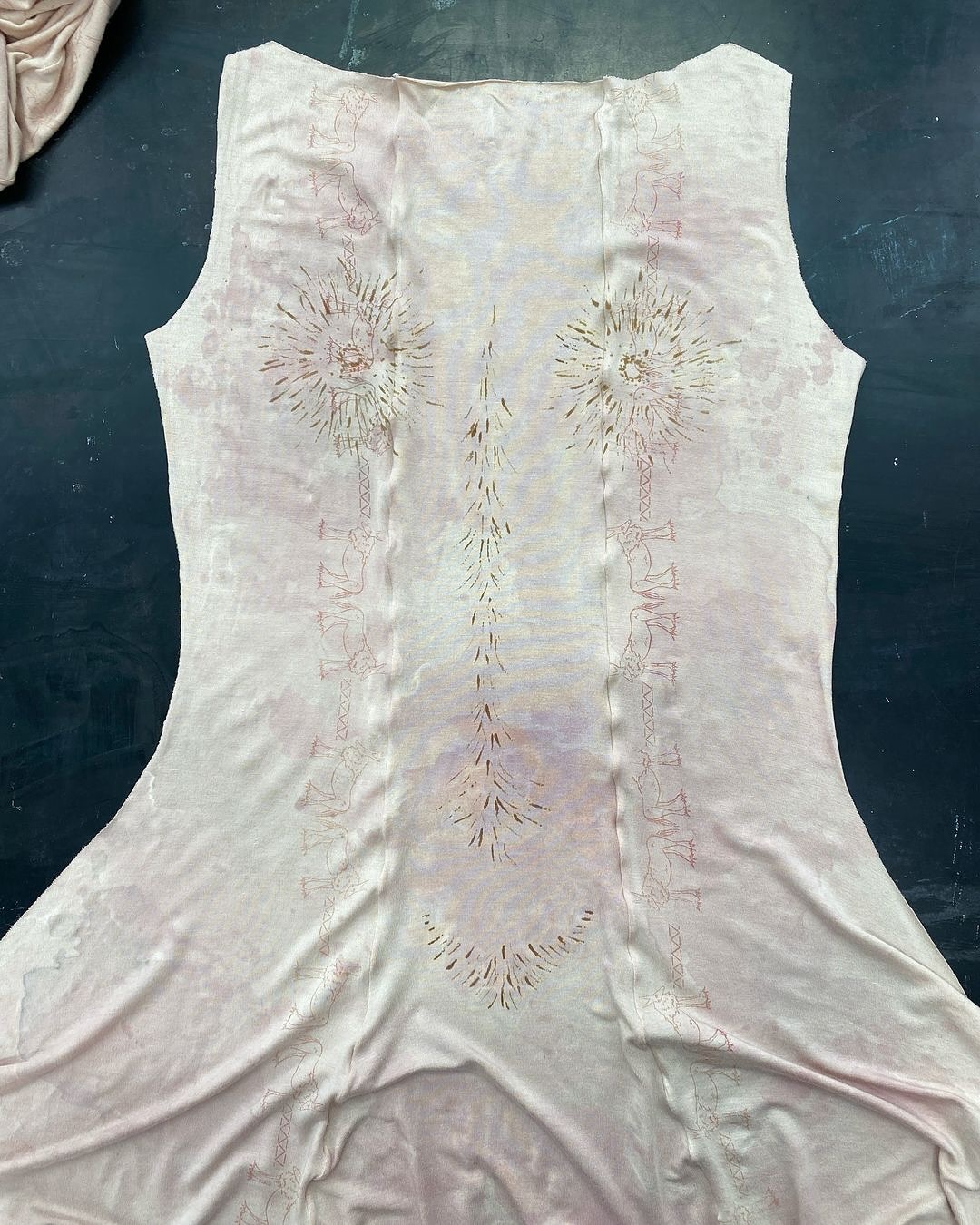
The most captivating element is the underlying "animal dress," which subtly mimics human skin texture. Screen-printed lace motifs adorn this flesh-like surface, while hand-drawn details resembling fine hairs create a tactile tension between the organic and the fabricated. This deliberate blurring of boundaries produces a raw, primal aesthetic that is simultaneously unsettling and mesmerizing.
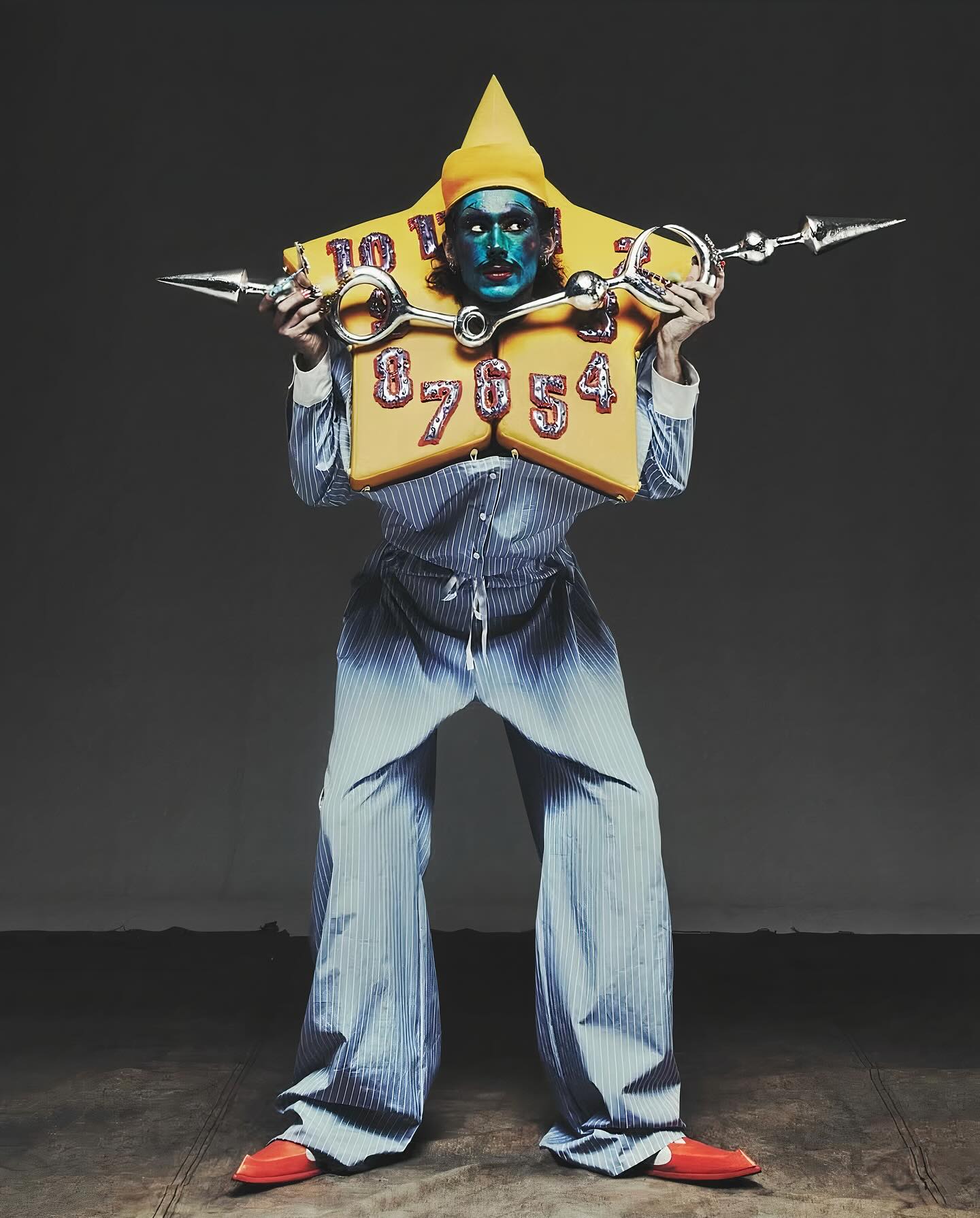
Historically, jesters have occupied liminal spaces across cultures—from medieval court fools to circus performers—embodying the ability to traverse social and symbolic boundaries. The designer channels this theatrical heritage while infusing the piece with the mystique of ancient ceremonial dress, forging a visual narrative that oscillates between playfulness and primordial gravity.
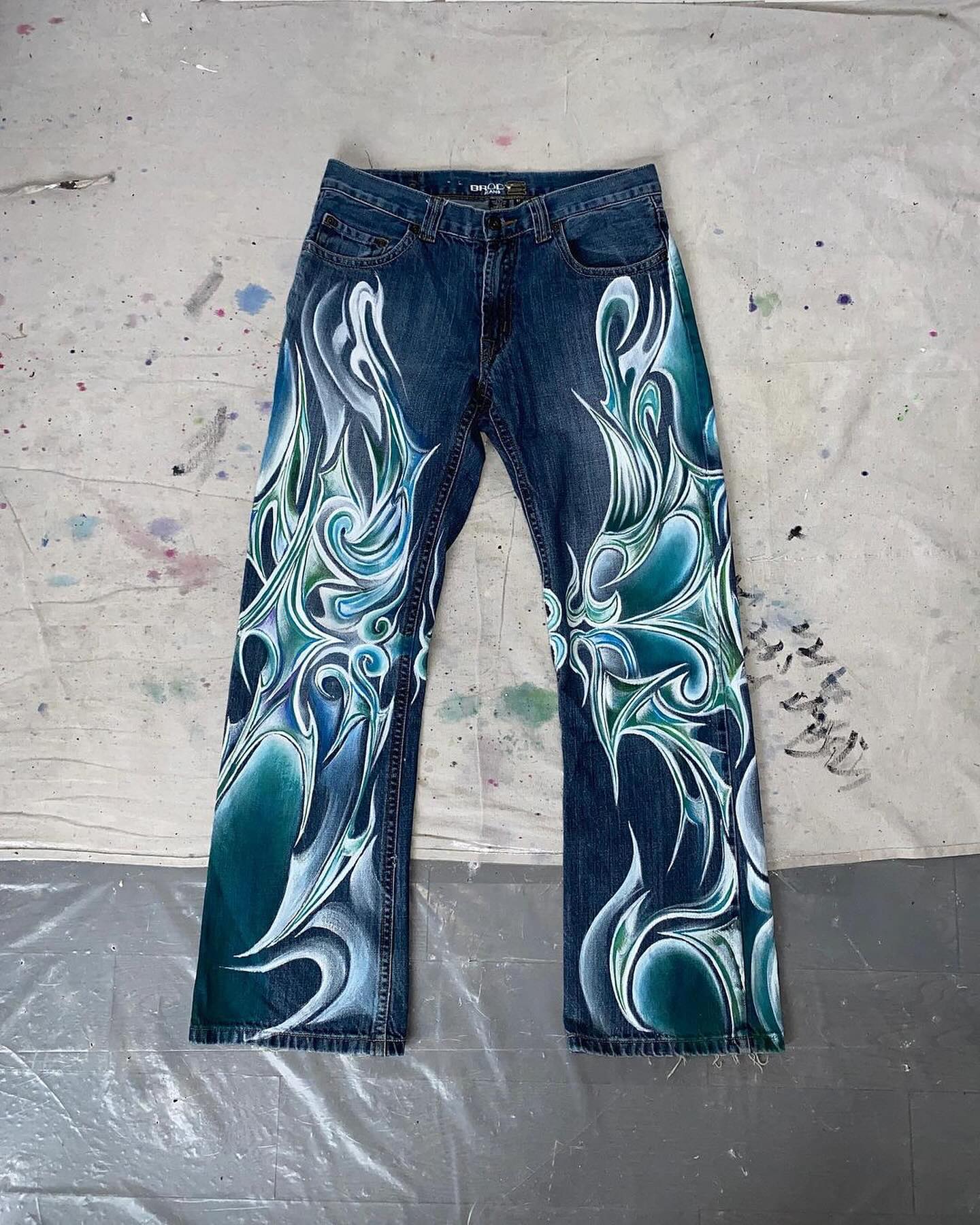
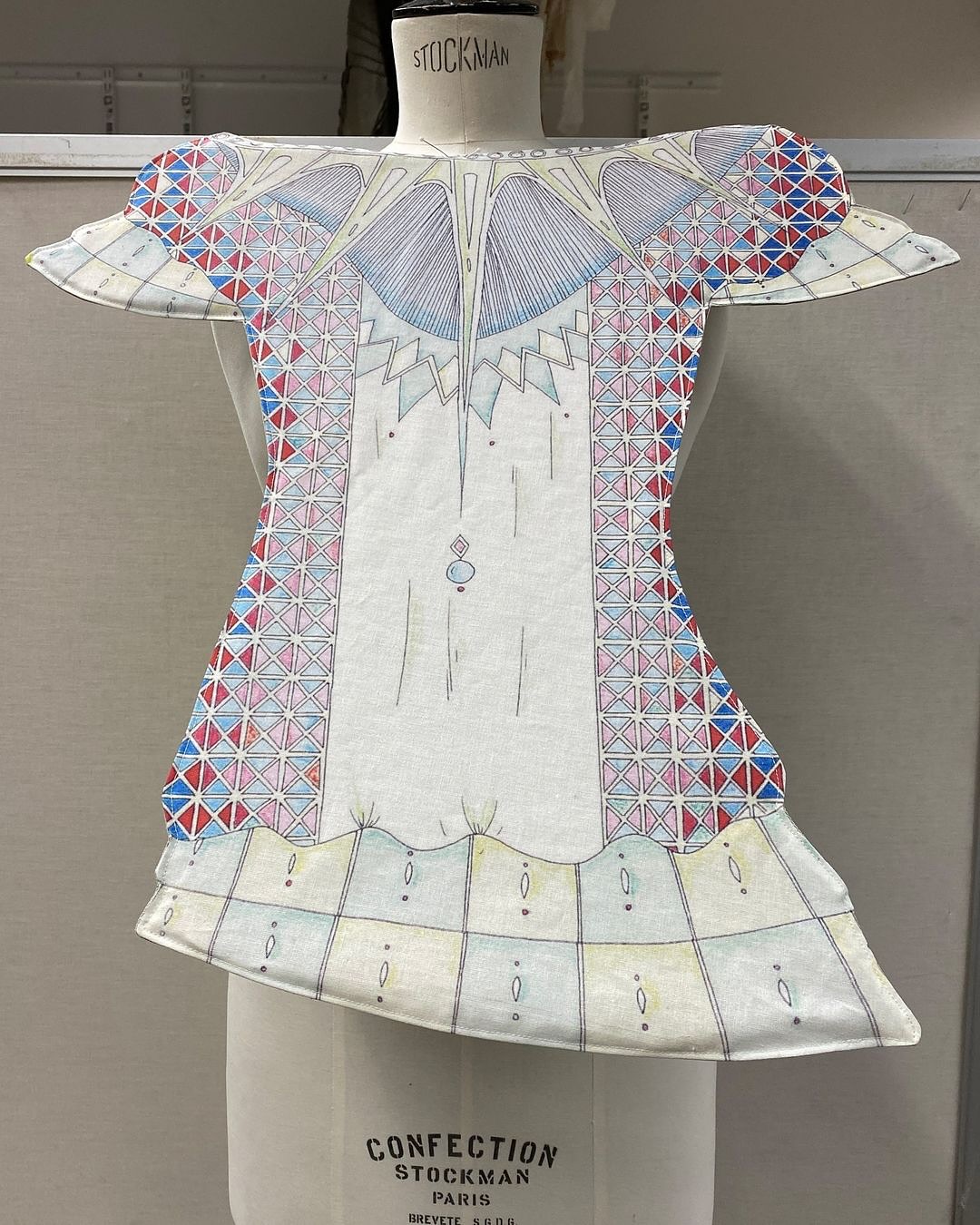
By merging hand-drawn artistry with digital fabrication and traditional screen-printing techniques, this work exemplifies fashion's capacity to transcend utility and function as a form of artistic discourse. The result is a garment that speaks to both the whimsical and the archaic, creating a powerful meditation on identity, performance, and the body as canvas.
FAQ
What techniques did the anti_mimesis designer use to create this work?
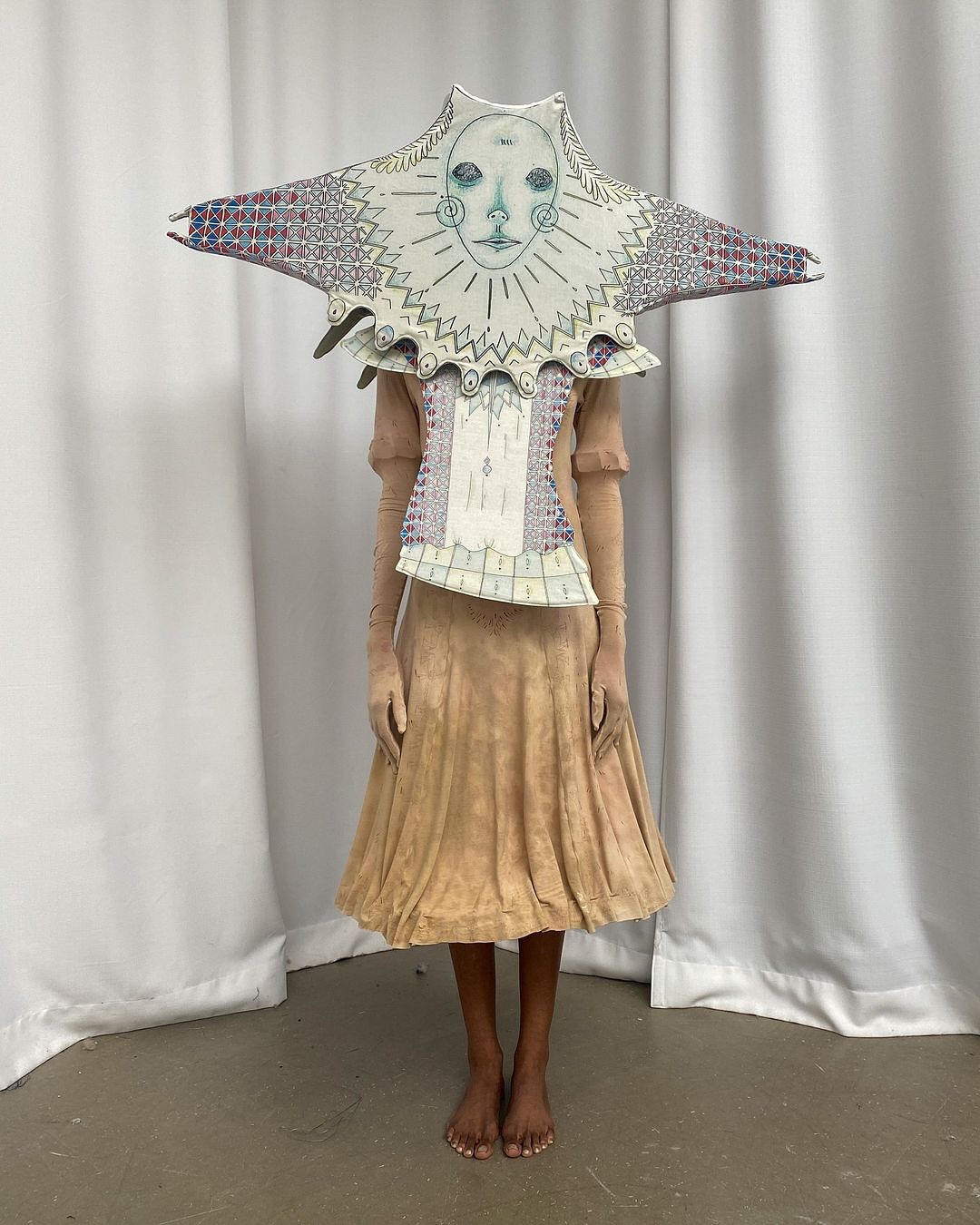
The designer converted hand-drawn originals into digitally printed masks and dresses, then combined screen printing with hand-drawing techniques on lining layers to express lace motifs and downy details. This hybrid production approach blends analog drawing, digital printing, and traditional screen methods.
What does the animal dress represent in this work?
The animal dress is a lining layer that subtly mimics human skin, featuring lace motifs and fine hand-drawn lines expressed like downy hair on skin. It blurs the boundary between primal physicality and artificial adornment, creating an uncanny yet primordial aesthetic.
Why was the clown motif used in fashion?
Historically, clowns have been considered figures that traverse social and symbolic boundaries. The designer combined the clown's theatricality with ancient ritual mysticism, constructing a powerful visual narrative that oscillates between playfulness and primitivism, elevating fashion into artistic discourse.