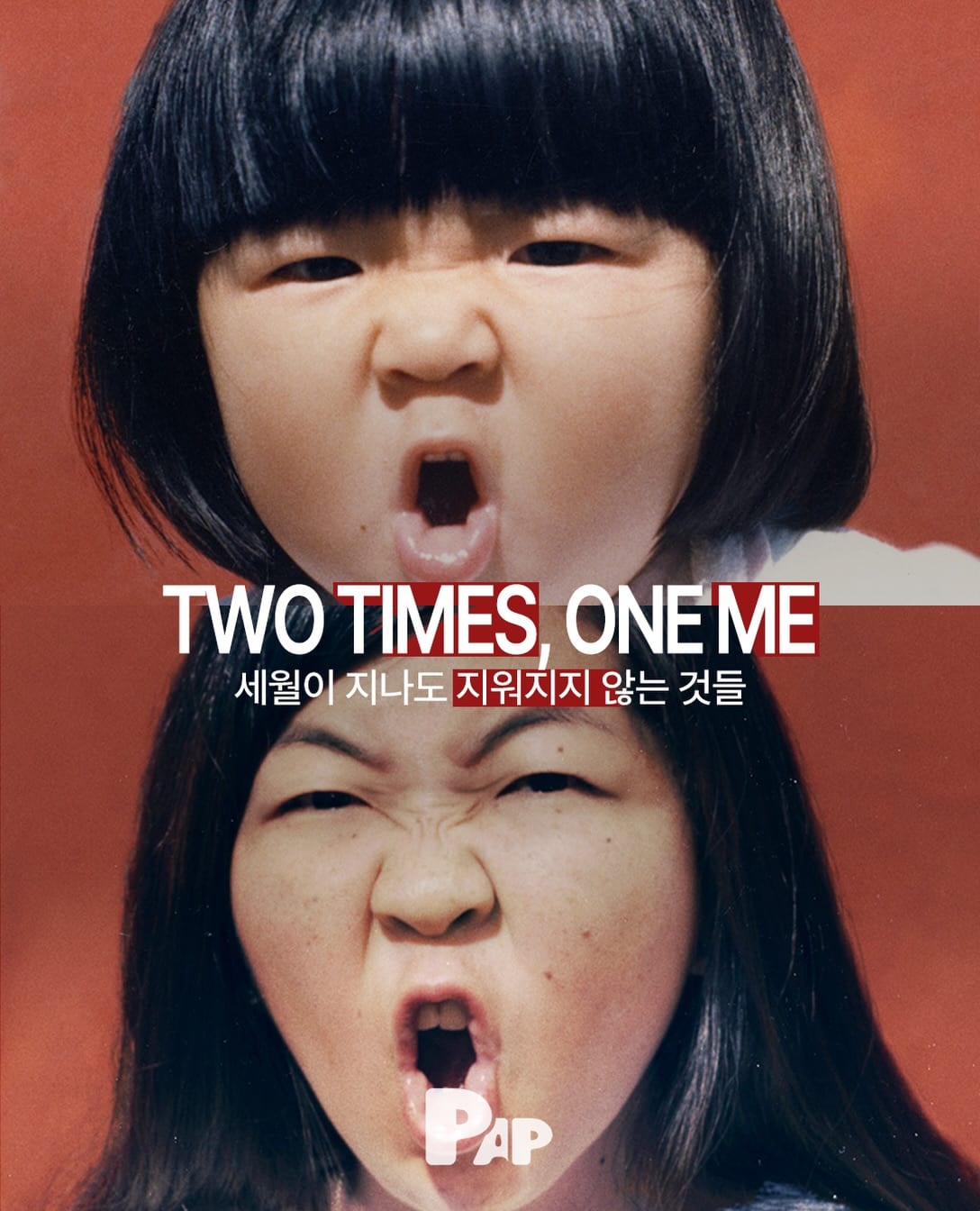
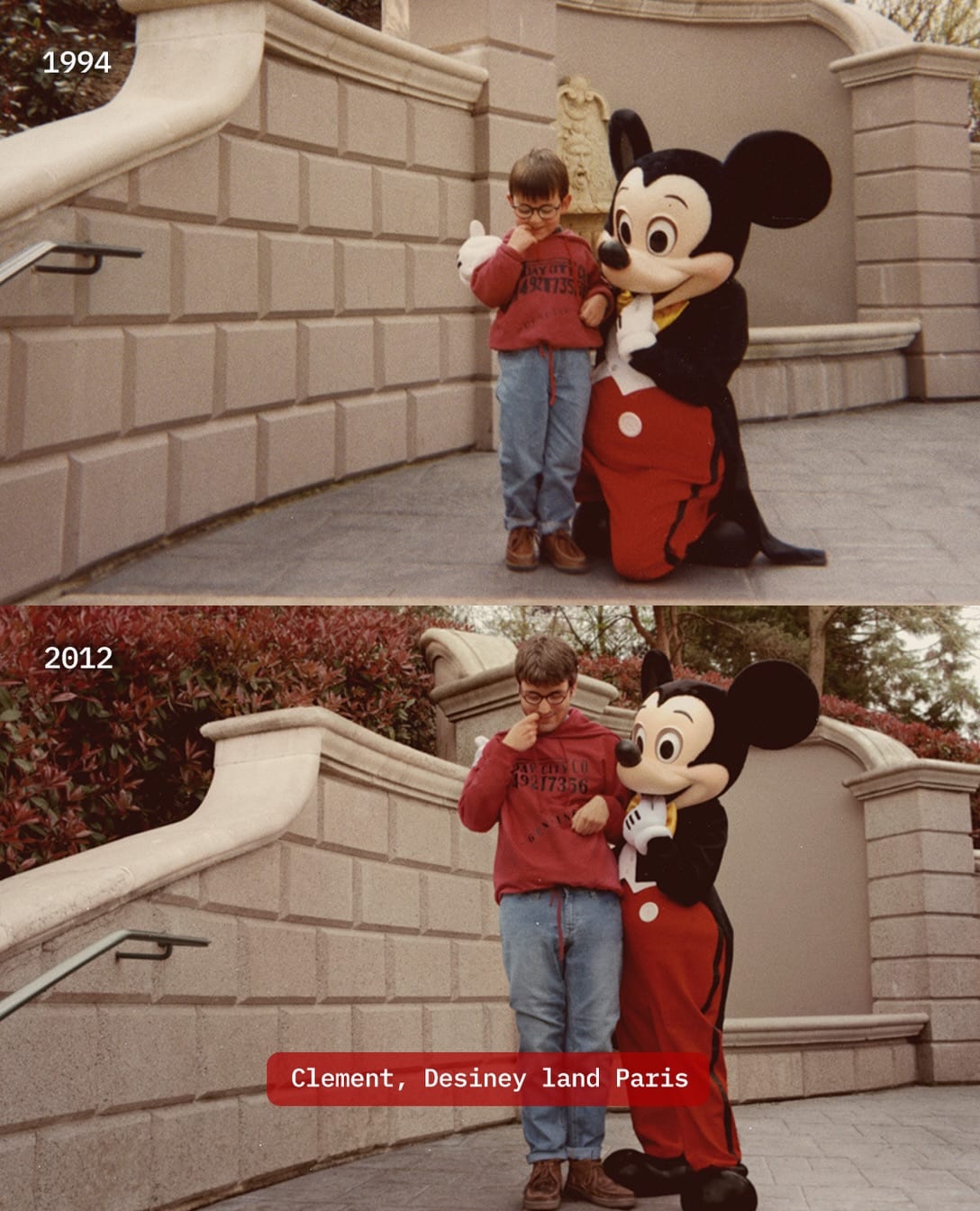
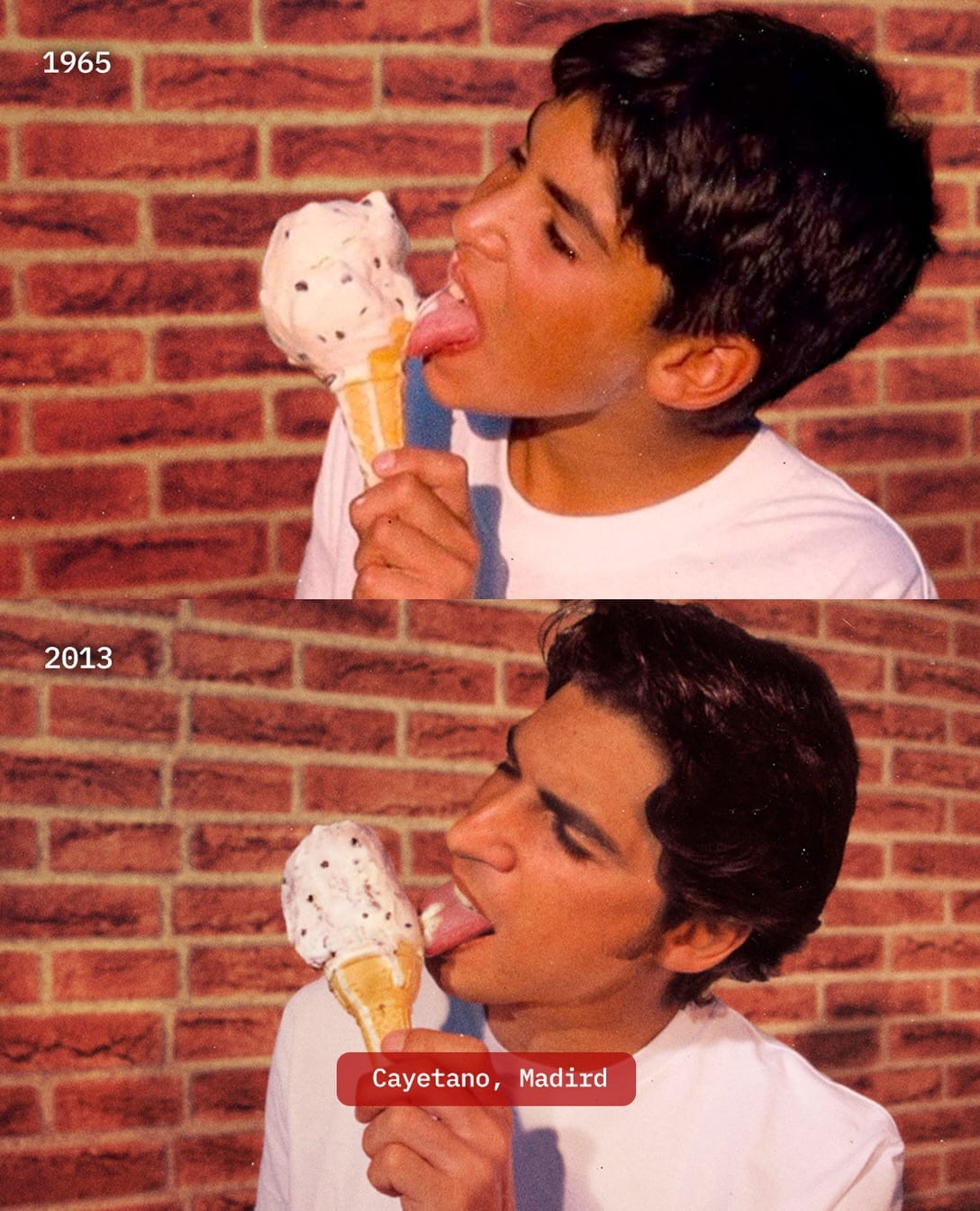
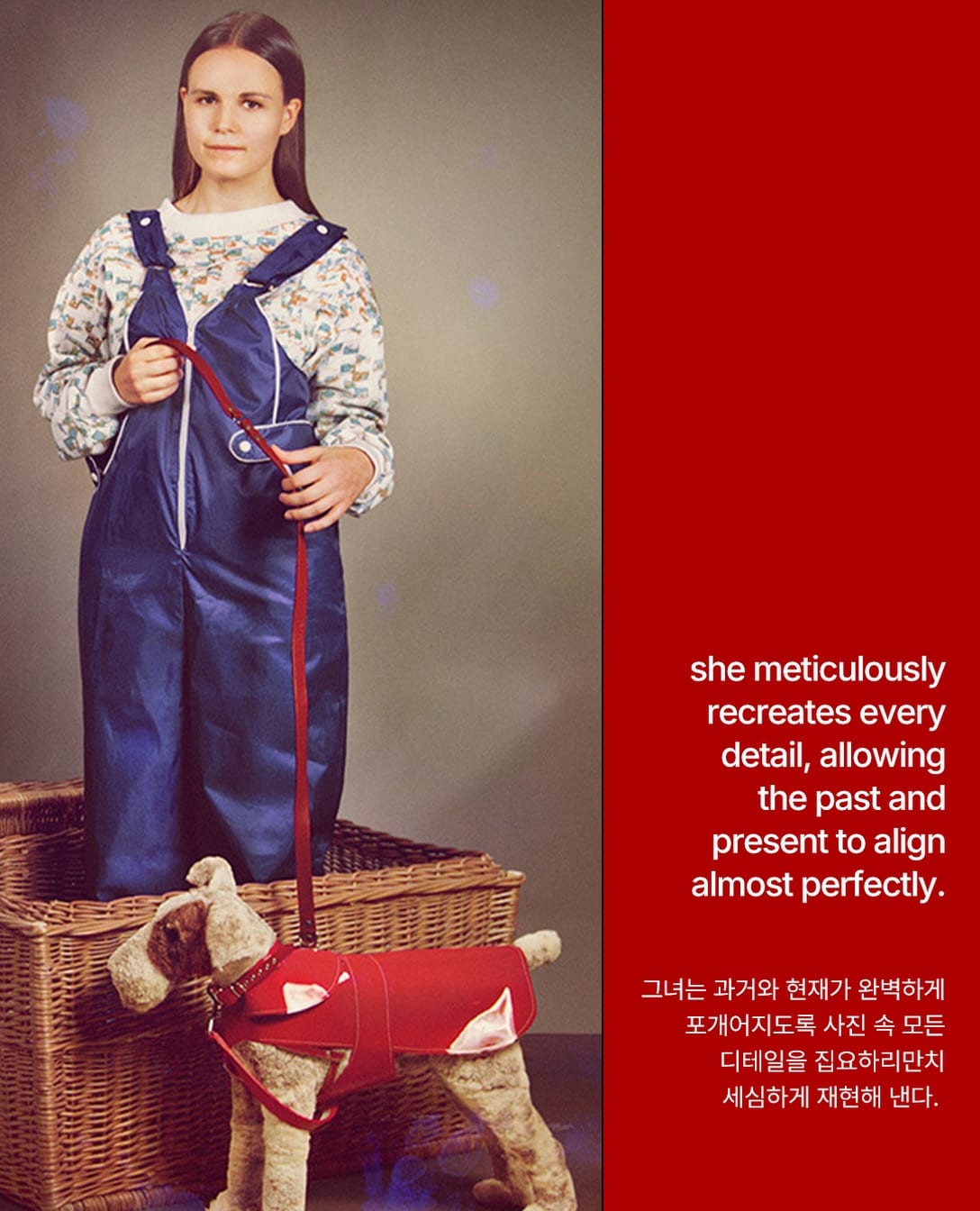
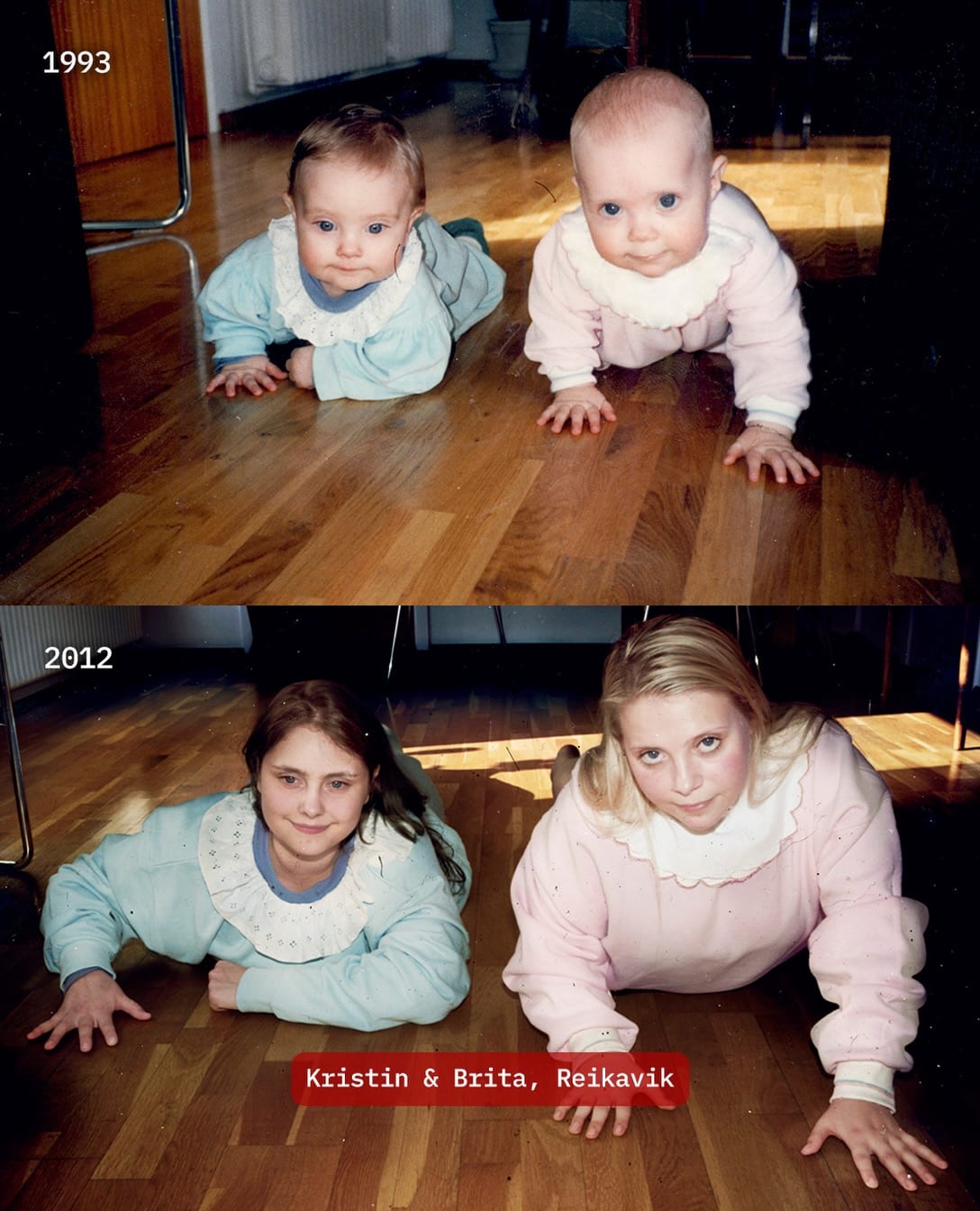
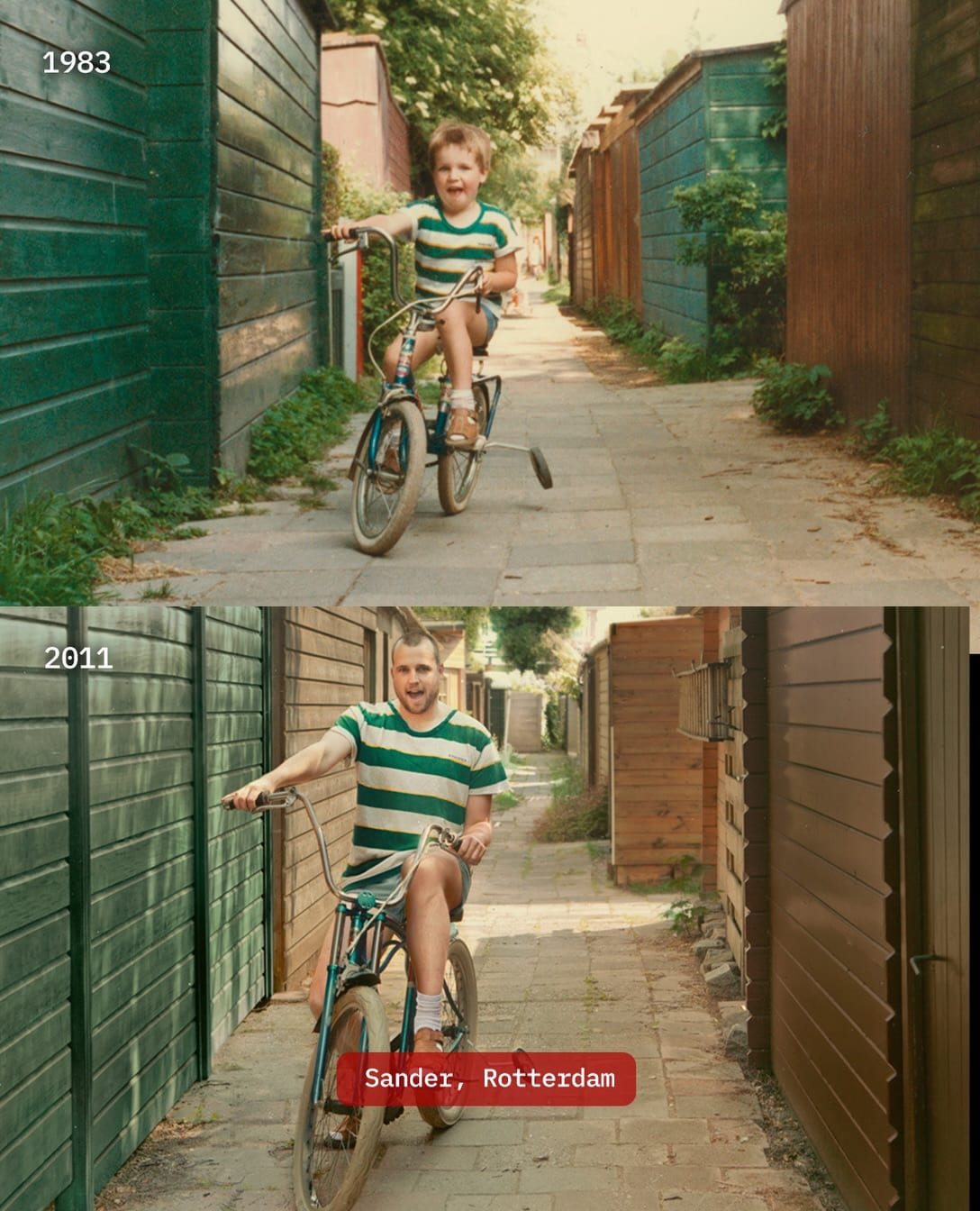
Werning has now built an archive of over 250 photographs across 32 countries. While faces age and bodies change with the passage of time, she captures the essence within us that remains untouched. Clement, who posed with Mickey Mouse at Disneyland as a child, recreated the same moment 18 years later—down to the red jacket and the hand-on-chin pose. Cayetano, licking an ice cream cone in 1965, stands before the same brick wall in 2013, holding the cone at the exact same angle.
This project goes beyond nostalgia—it touches the very nature of time. In a world that never stops changing, these tender moments allow us to rediscover a fragment of our most innocent selves, one that has somehow endured. The subjects mimic their childhood gestures down to the smallest detail, and in doing so, they revive forgotten memories and sensations.
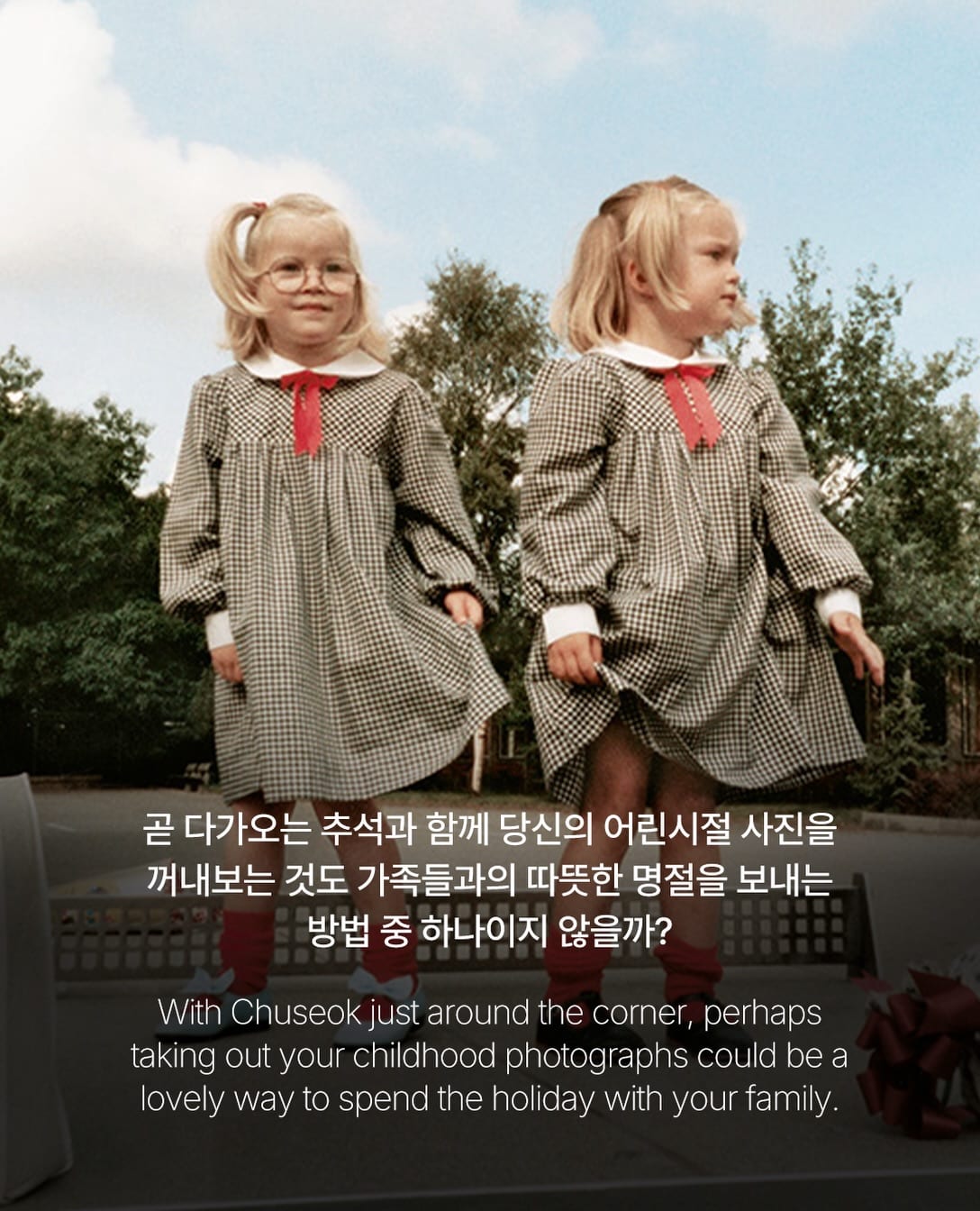
Werning's work continues to resonate with people around the world, expanding with each new story. With Chuseok just around the corner, perhaps taking out your childhood photographs could be a lovely way to spend the holiday with your family. A single photograph buried deep in a drawer might just become a bridge across time.
FAQ
What is Irina Werning's Back to the Future project?
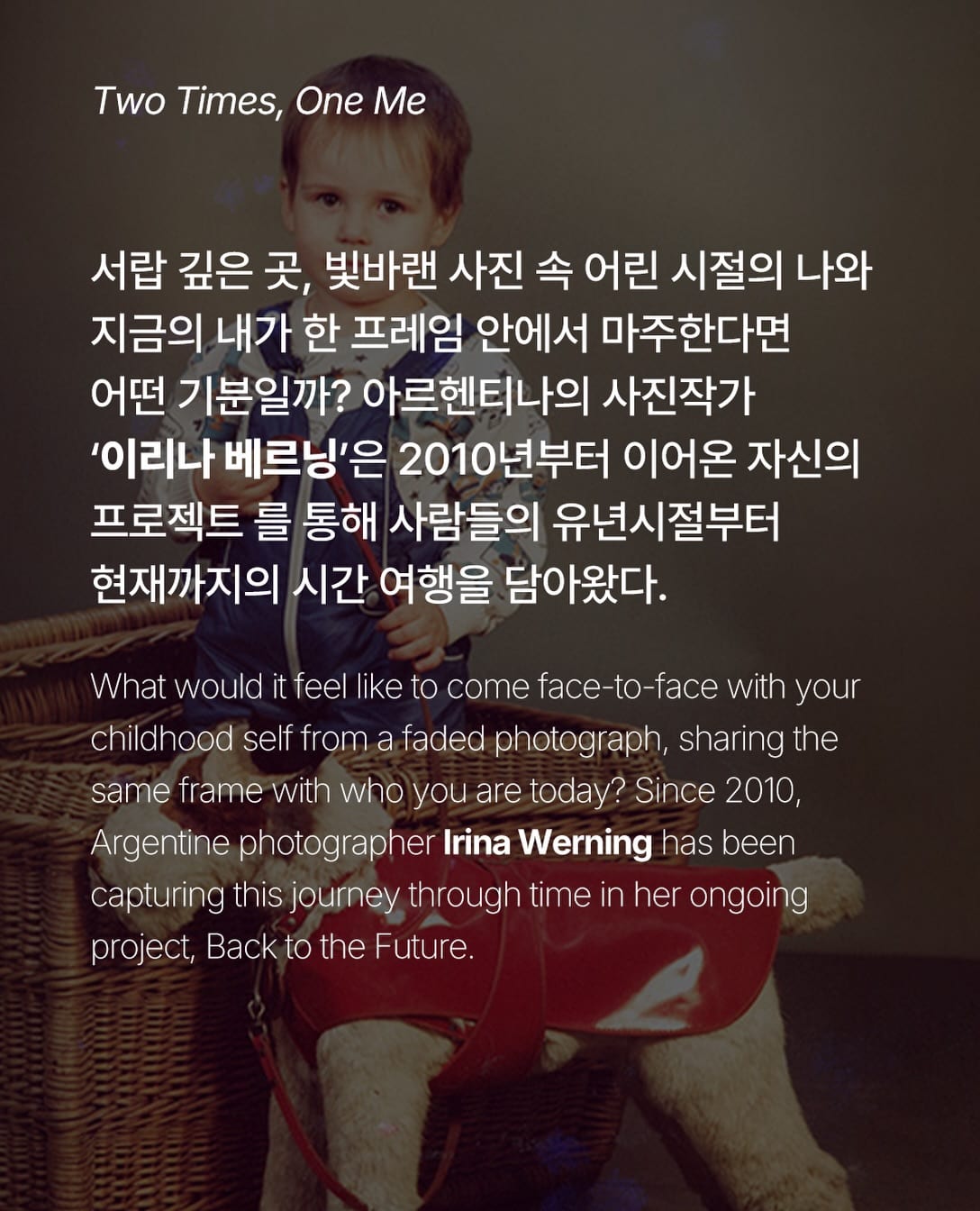
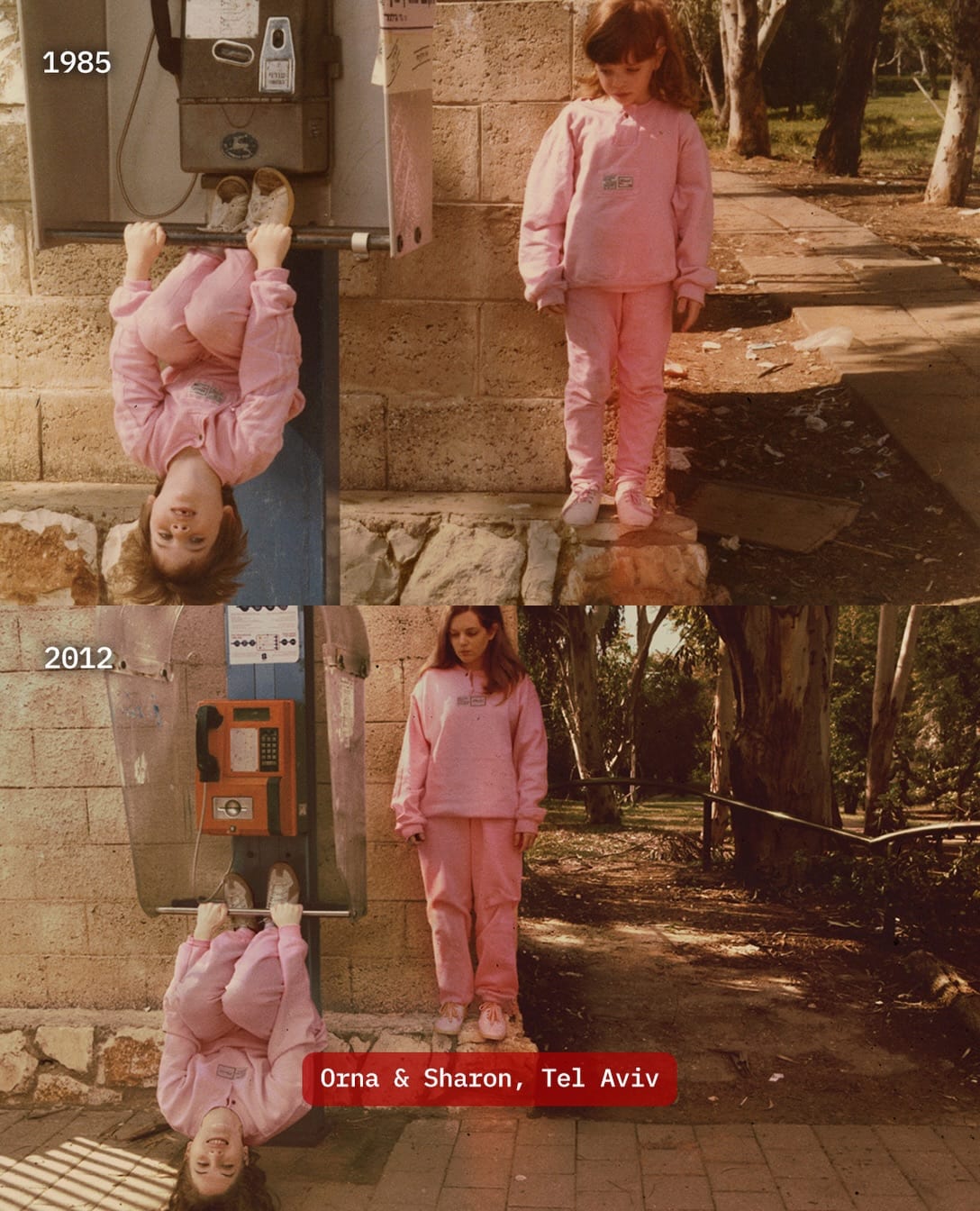
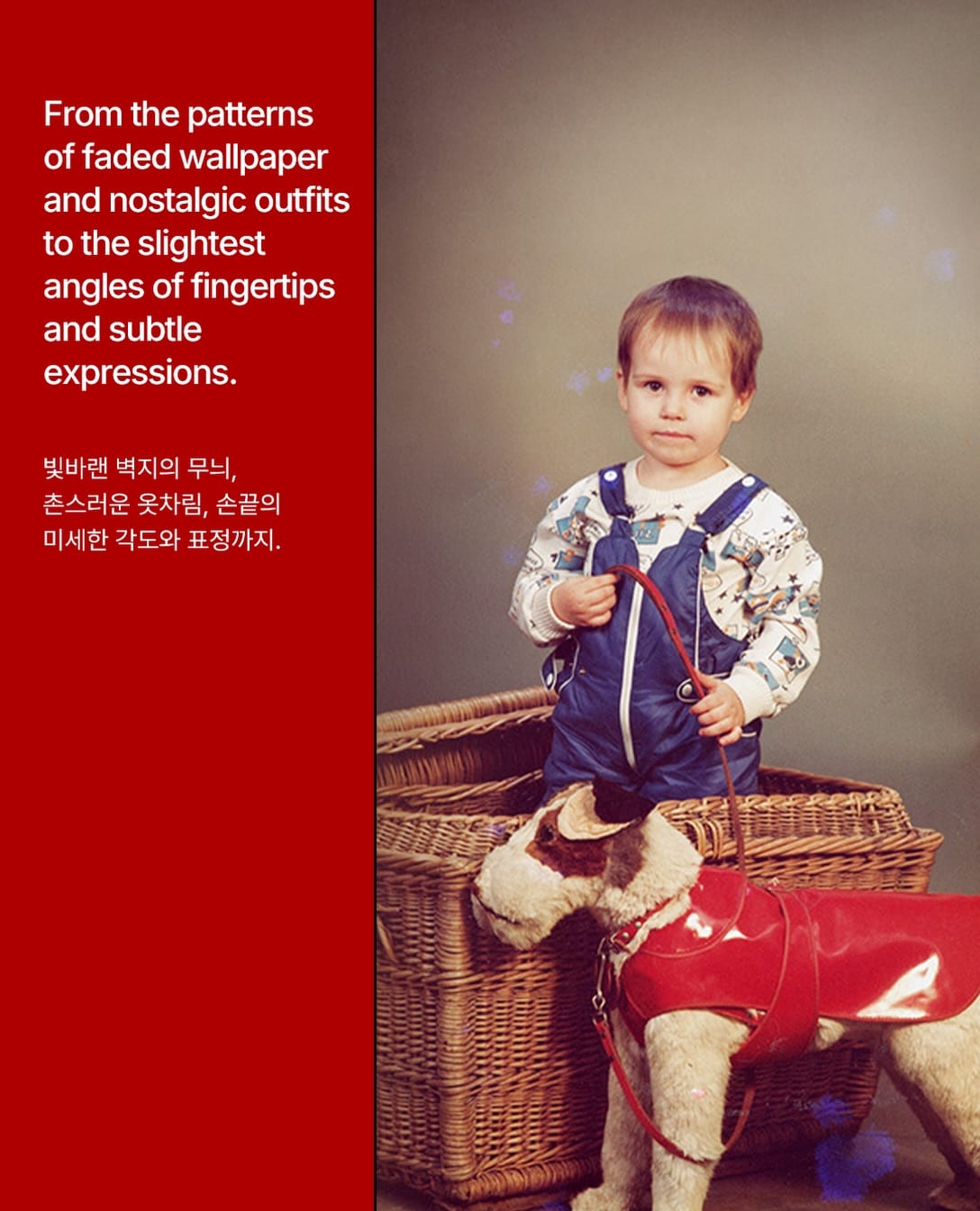
Launched in 2010 by Argentine photographer Irina Werning, the project meticulously recreates people's childhood photos in the present day, placing both images side by side in one frame. Every detail—from faded wallpaper to clothing and finger angles—is obsessively reproduced to capture the essence that remains unchanged through time.
How many photographs has Irina Werning created so far?
She has traveled across 32 countries and produced over 250 photographs to date. Each image pairs past and present, recreating the same location, pose, and props from the original childhood photo.
What defines the Back to the Future project?
Its hallmark is the obsessive recreation of every detail from the original photograph—wallpaper patterns, clothing, finger angles, and expressions are matched exactly. This visual approach reveals the human essence that remains constant despite the passage of time.