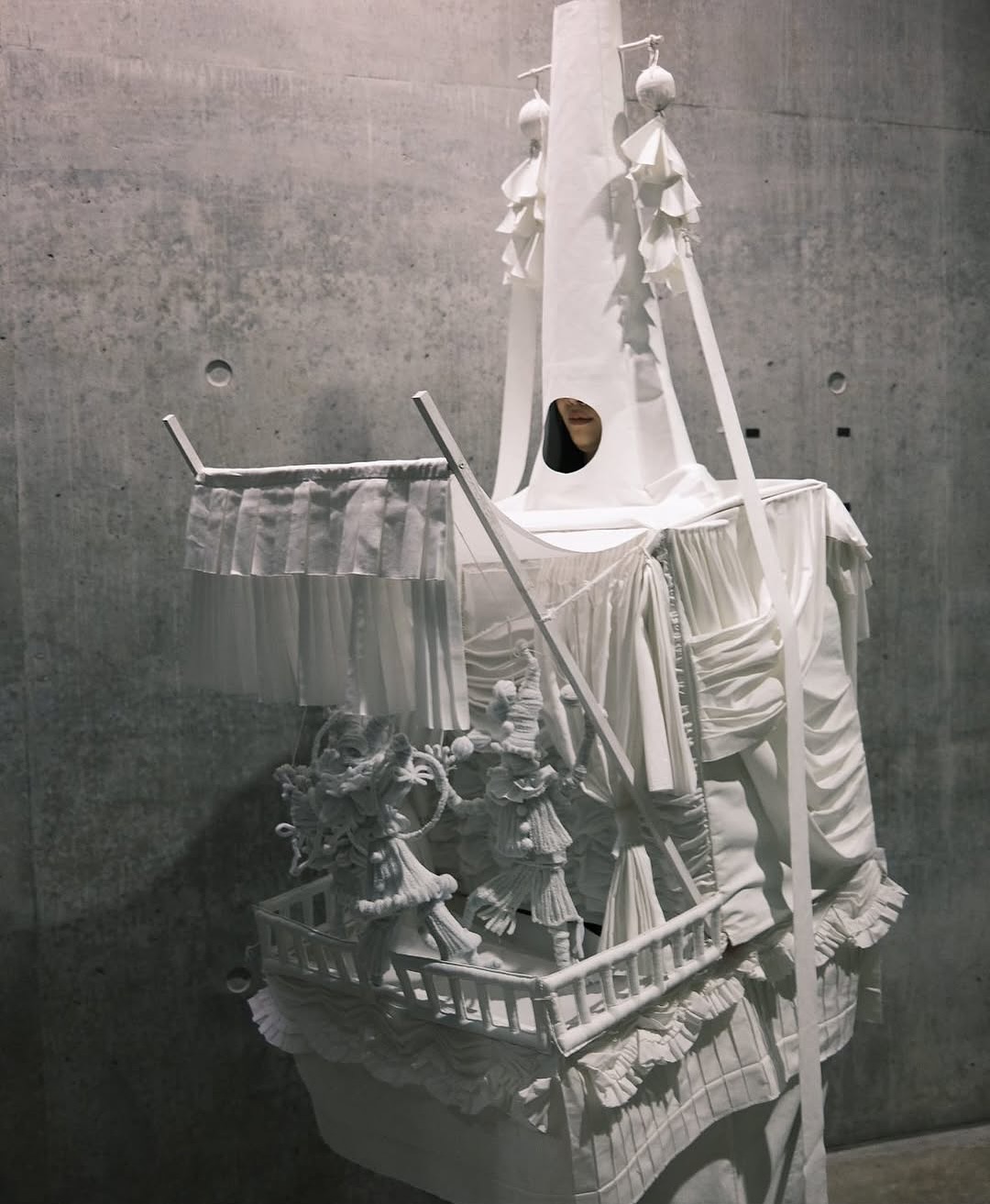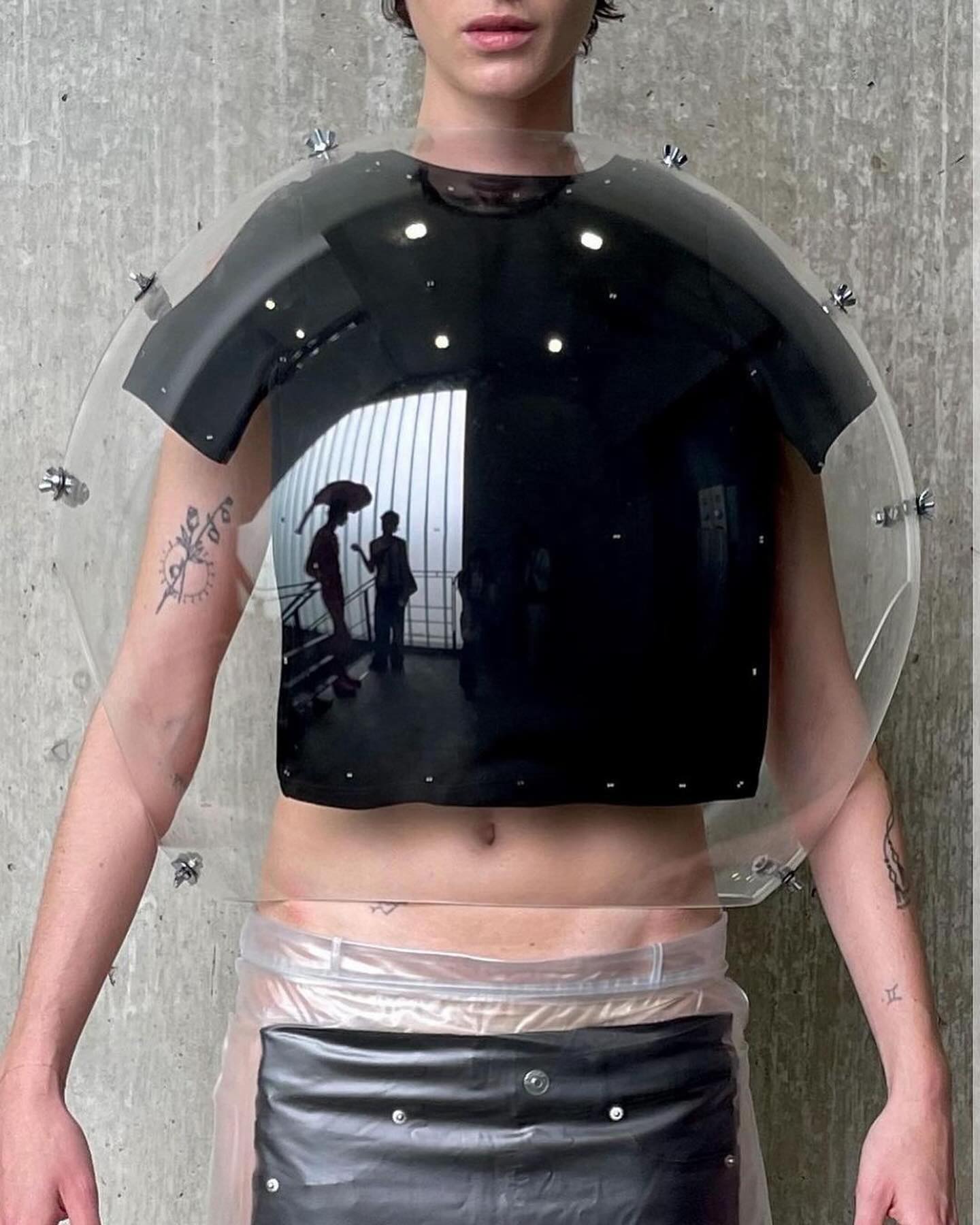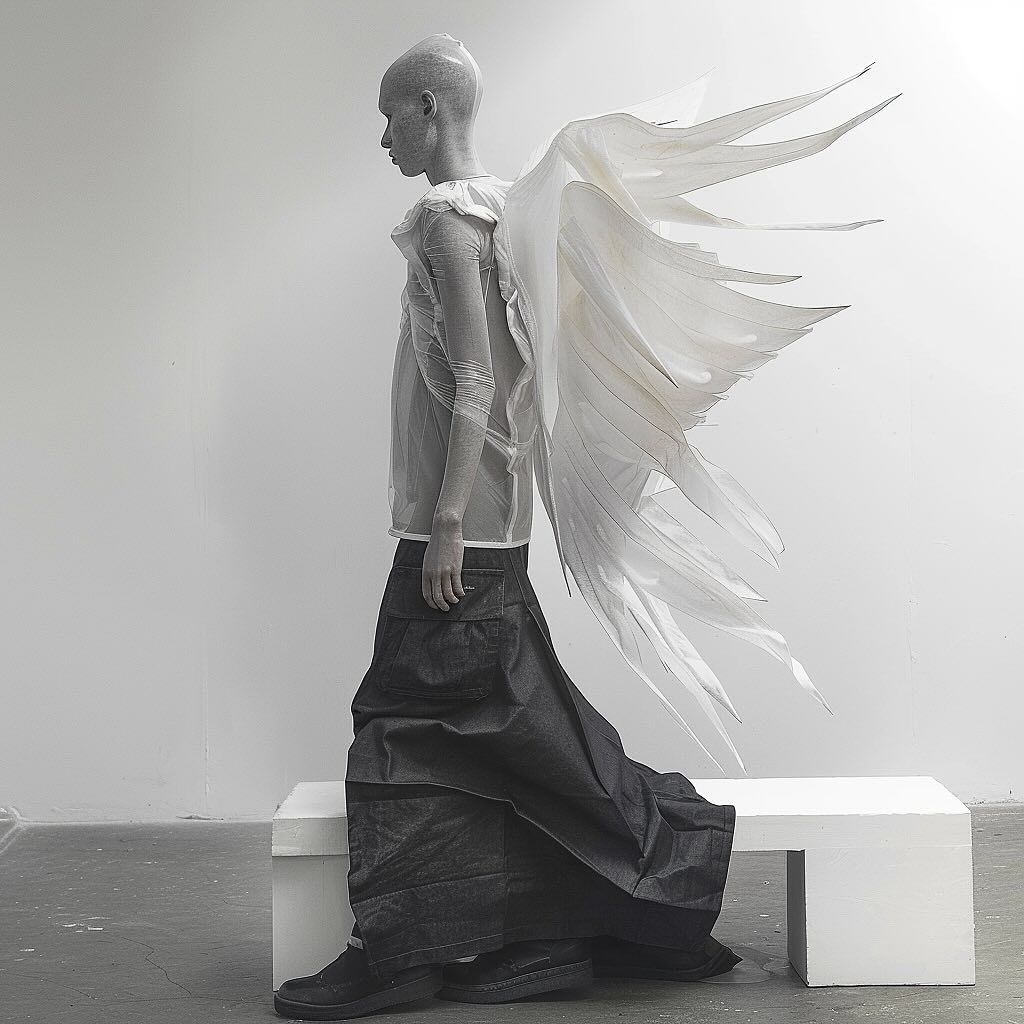
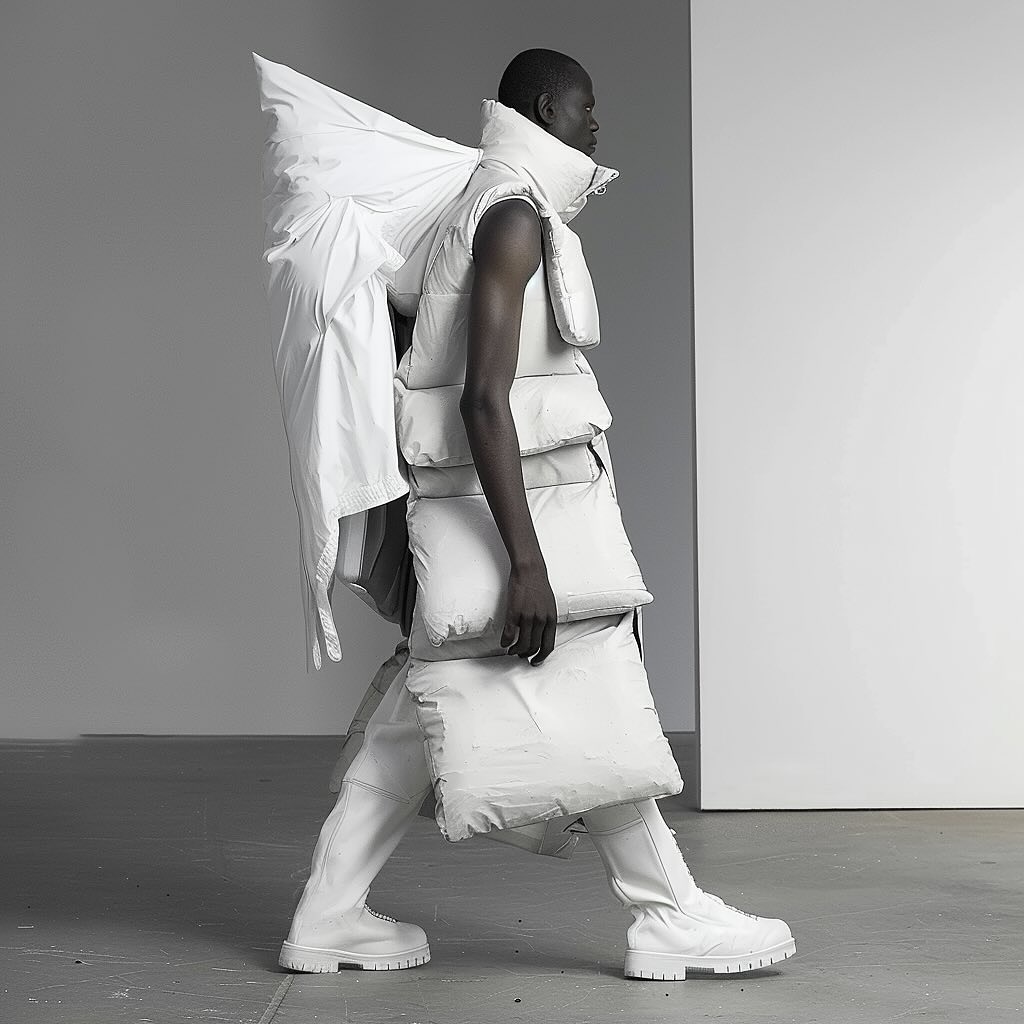
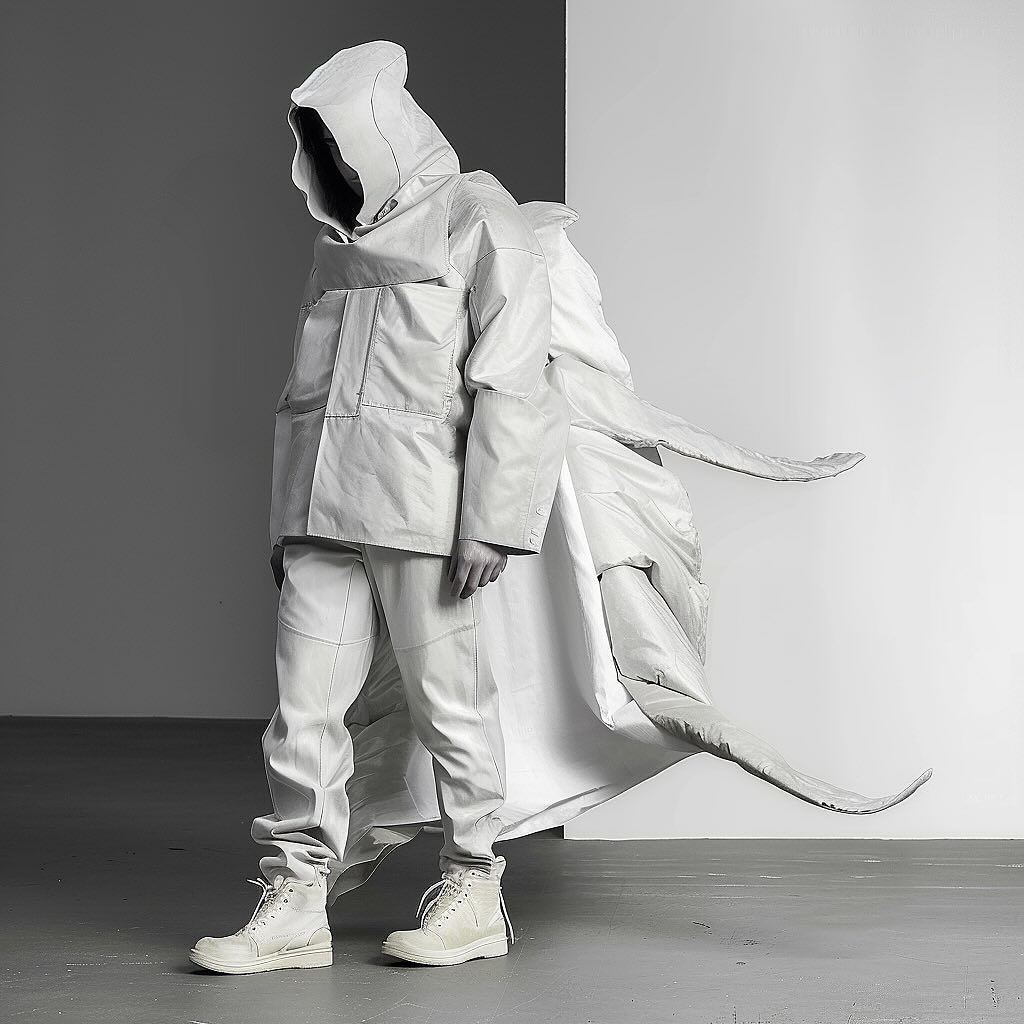
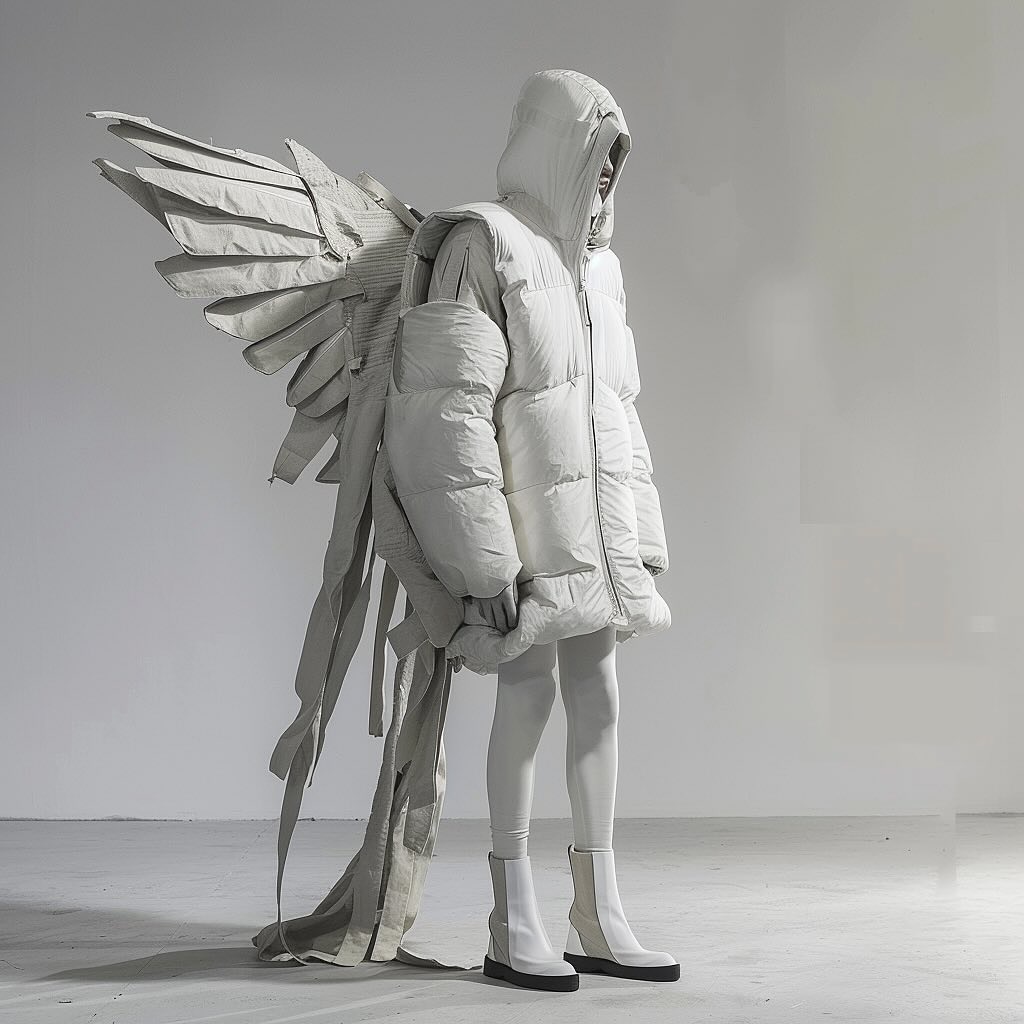
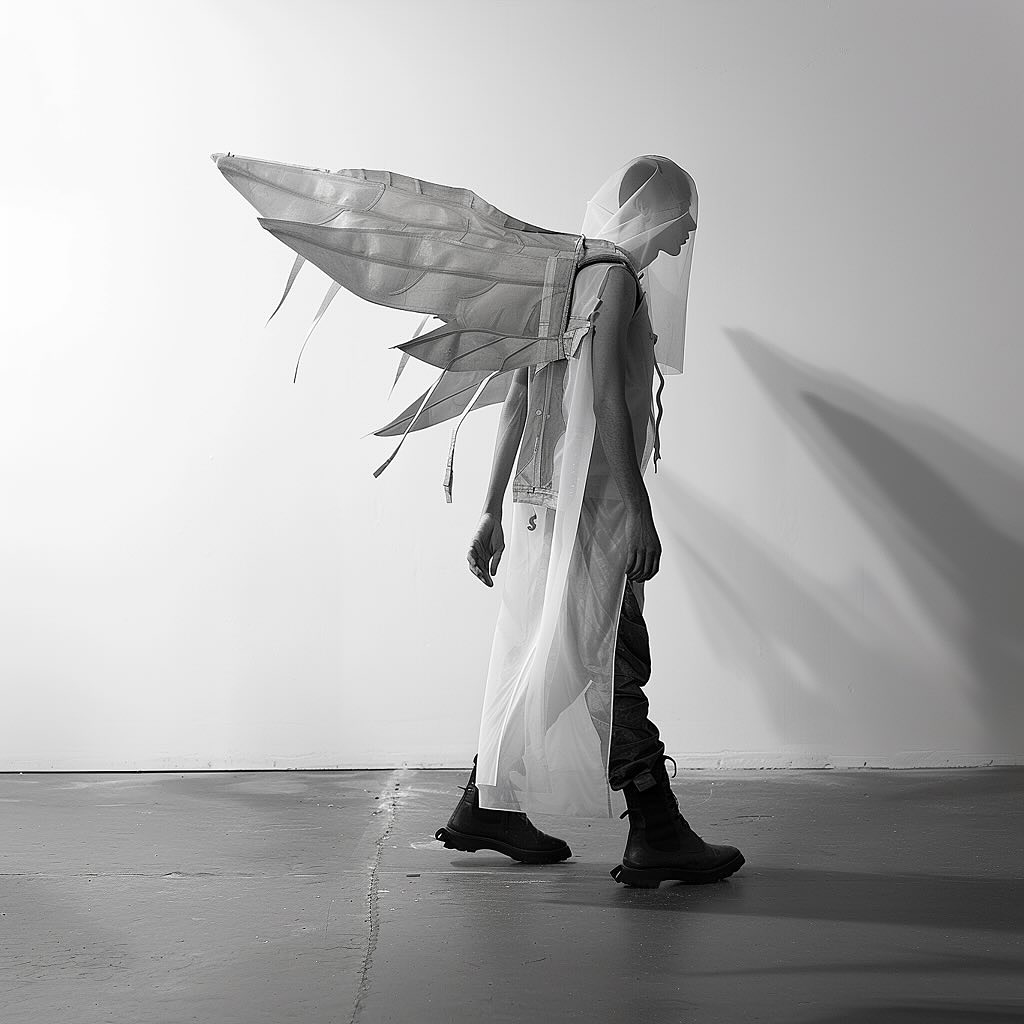
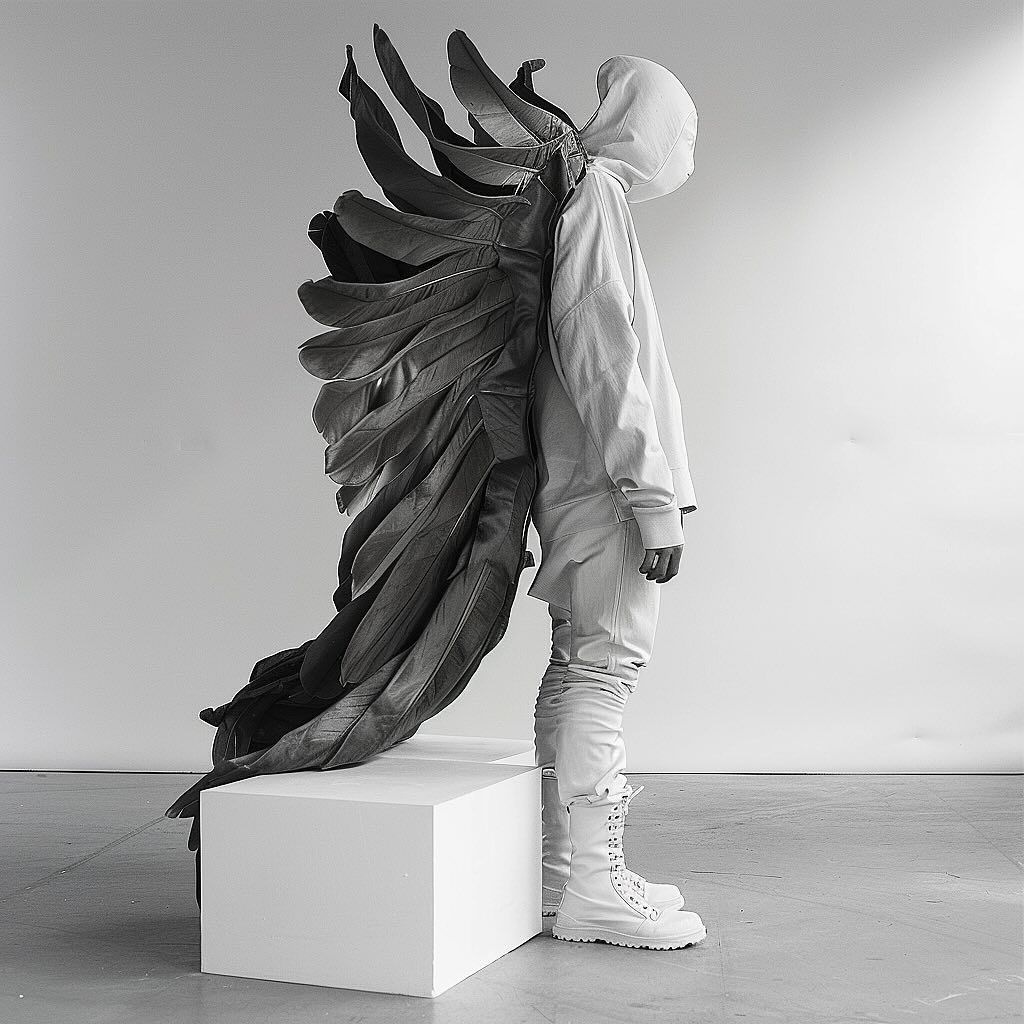
Biomimicry—the practice of emulating nature's structures and characteristics—finds a bold new expression in Shin's designs. She translates biological principles of skeletal structure, exoskeletons, and organic movement into garment architecture, using inflation technology to give static clothing an organic vitality. This goes beyond mere formal imitation; it reinterprets how living organisms modulate volume in response to their environment, translating that adaptive mechanism into fashion language.
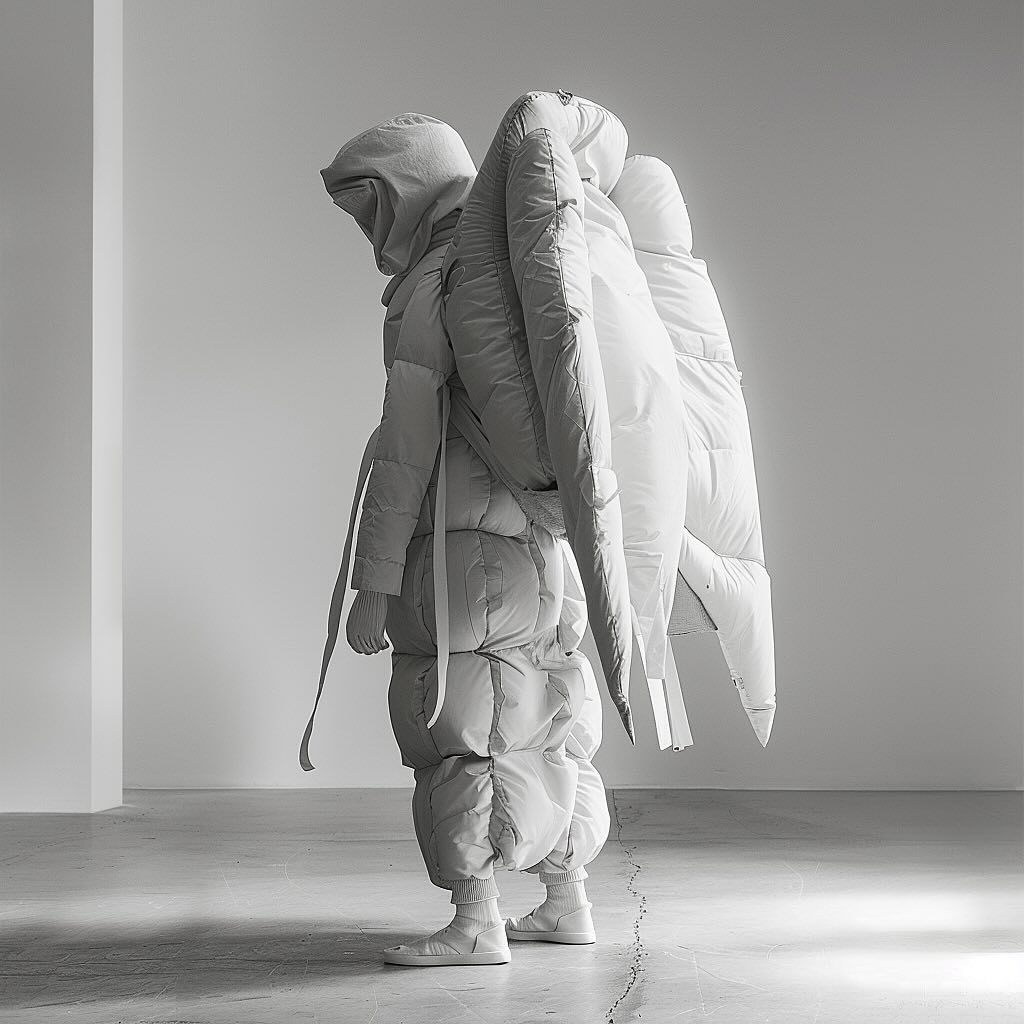
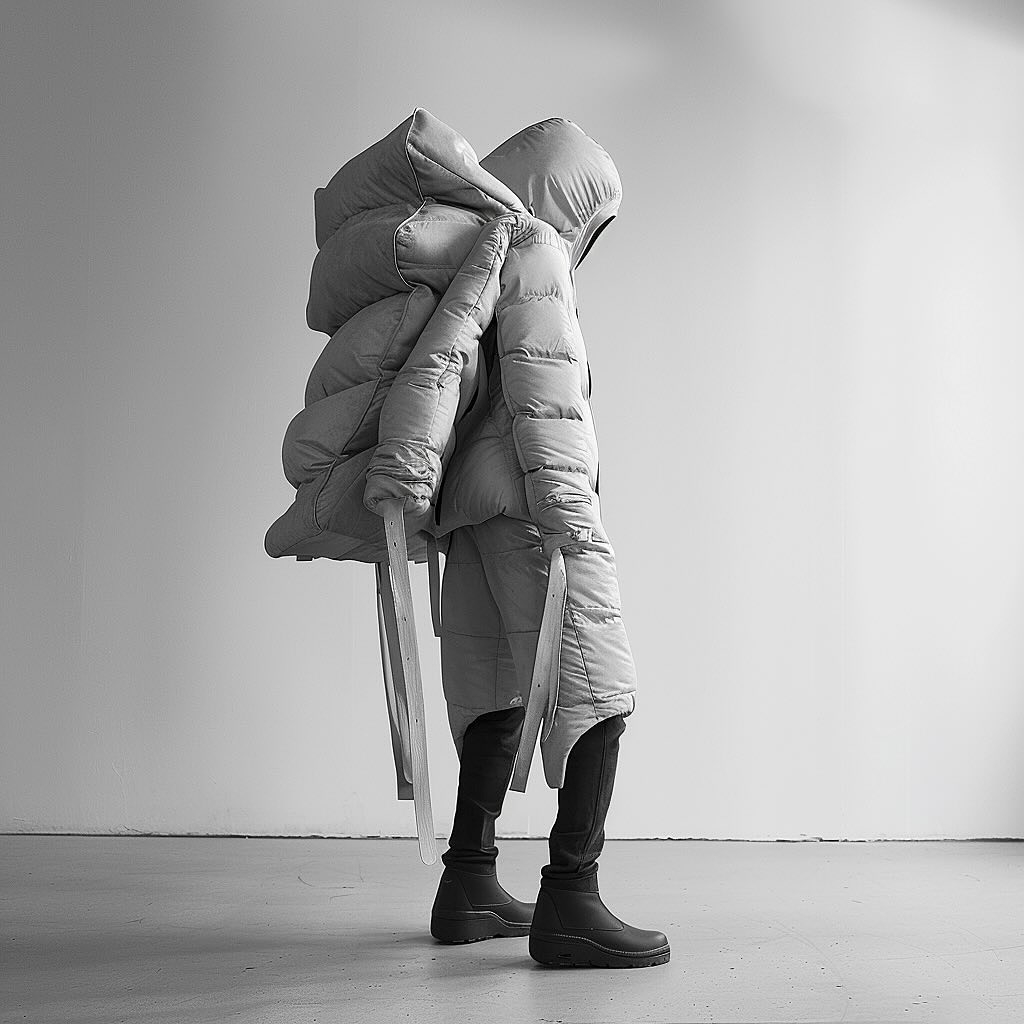
Inflatable techniques trace their lineage from 1960s spacesuit development through 1990s sportswear, now entering the experimental arena of high fashion. Shin's work inherits this technical legacy while proposing a future-facing direction that redefines garment volume and silhouette through the immateriality of air. The minimal black-and-white palette focuses attention on form itself, while translucent materials visualize the flow and pressure of air within the structure.
This concept explores fashion's potential to extend and transform the body, moving beyond mere covering. By inscribing nature's wisdom of adaptation and evolution onto clothing—our second skin—Hyejin Shin's experiments expand the boundaries of fashion design into the realms of biology and engineering, establishing her as a designer worth watching in the convergence of disciplines.
FAQ
How is designer Shin Hye-jin's inflatable biomimicry suit constructed?
Air is injected into emphasized areas like wings and padding to inflate the garment three-dimensionally. It applies biomimetic design techniques that mimic biological skeletal structures, using air pressure to give static clothing organic vitality and dimensional depth.
What is biomimicry fashion design?
A design approach integrating natural organisms' structures and characteristics into fashion. Designer Shin Hye-jin translates insect wing membranes, biological skeletons, and environmental adaptation mechanisms into garment structures, reinterpreting nature's wisdom through fashion language.
How has inflatable technique evolved in fashion?
Starting from 1960s spacesuit development through 1990s sportswear, it's now entered high fashion's experimental arena. Shin Hye-jin's work inherits this technical legacy, presenting a forward-thinking direction that redefines garment volume and silhouette through air.