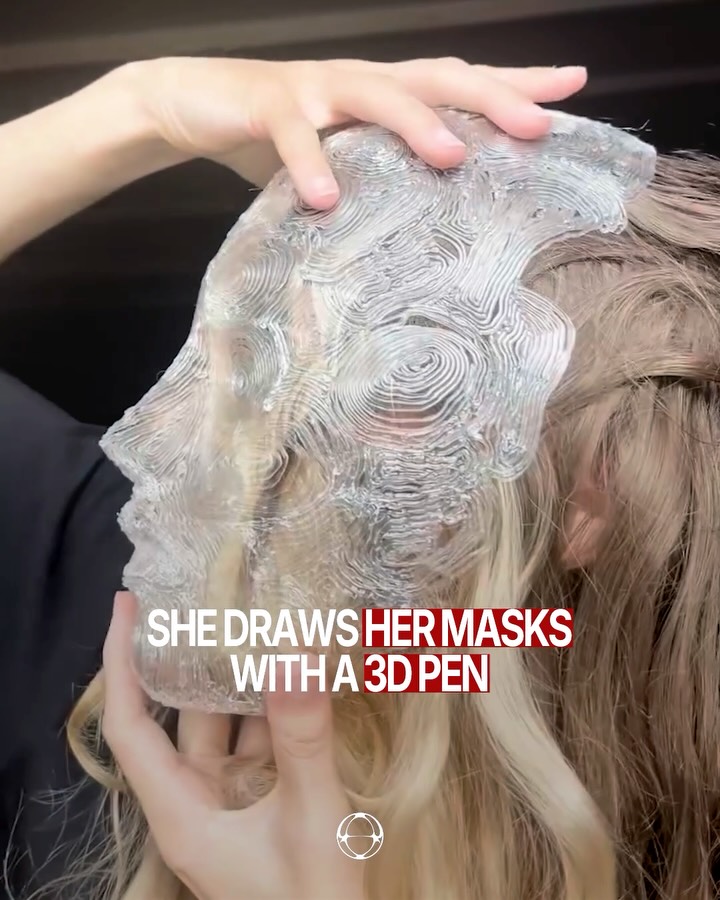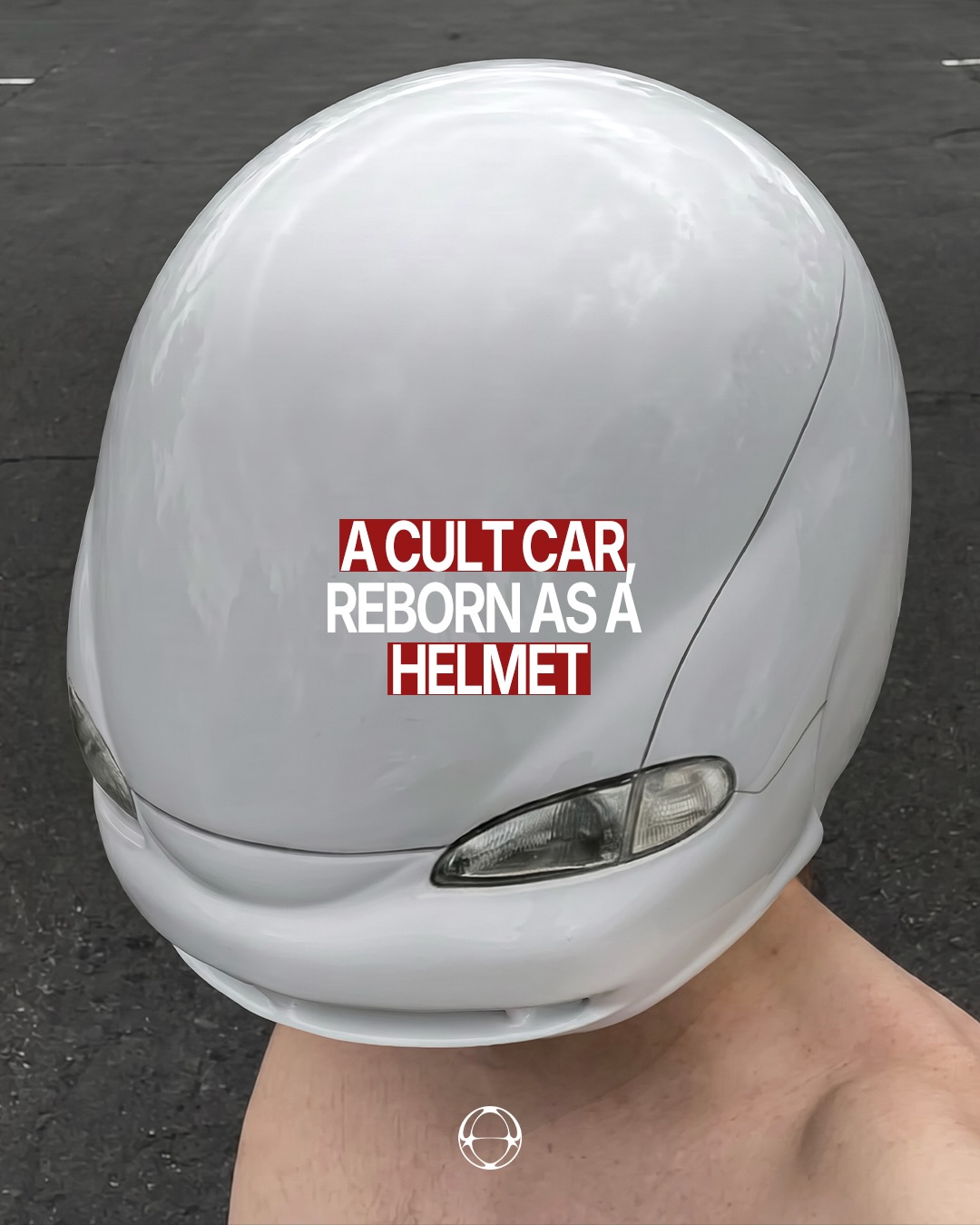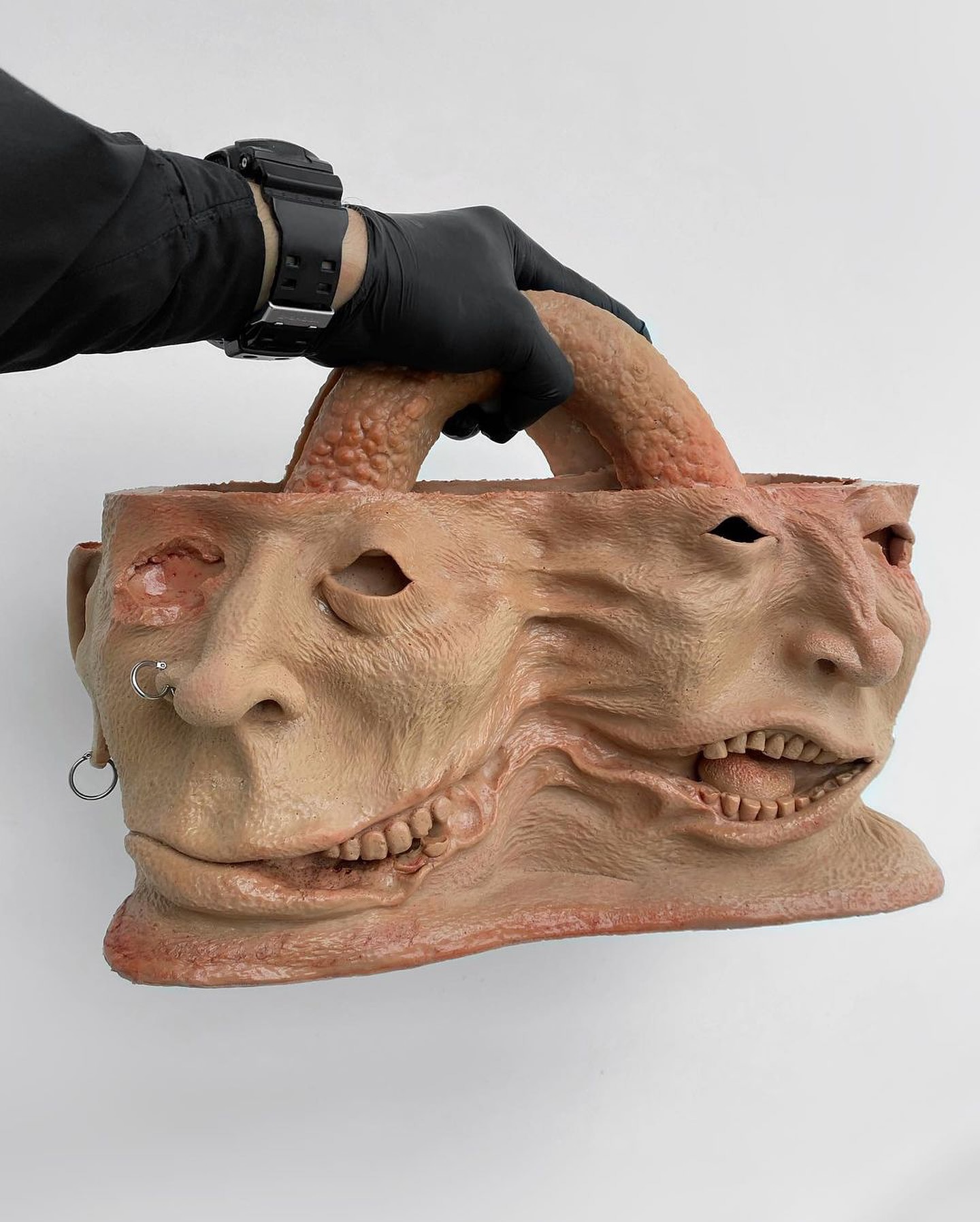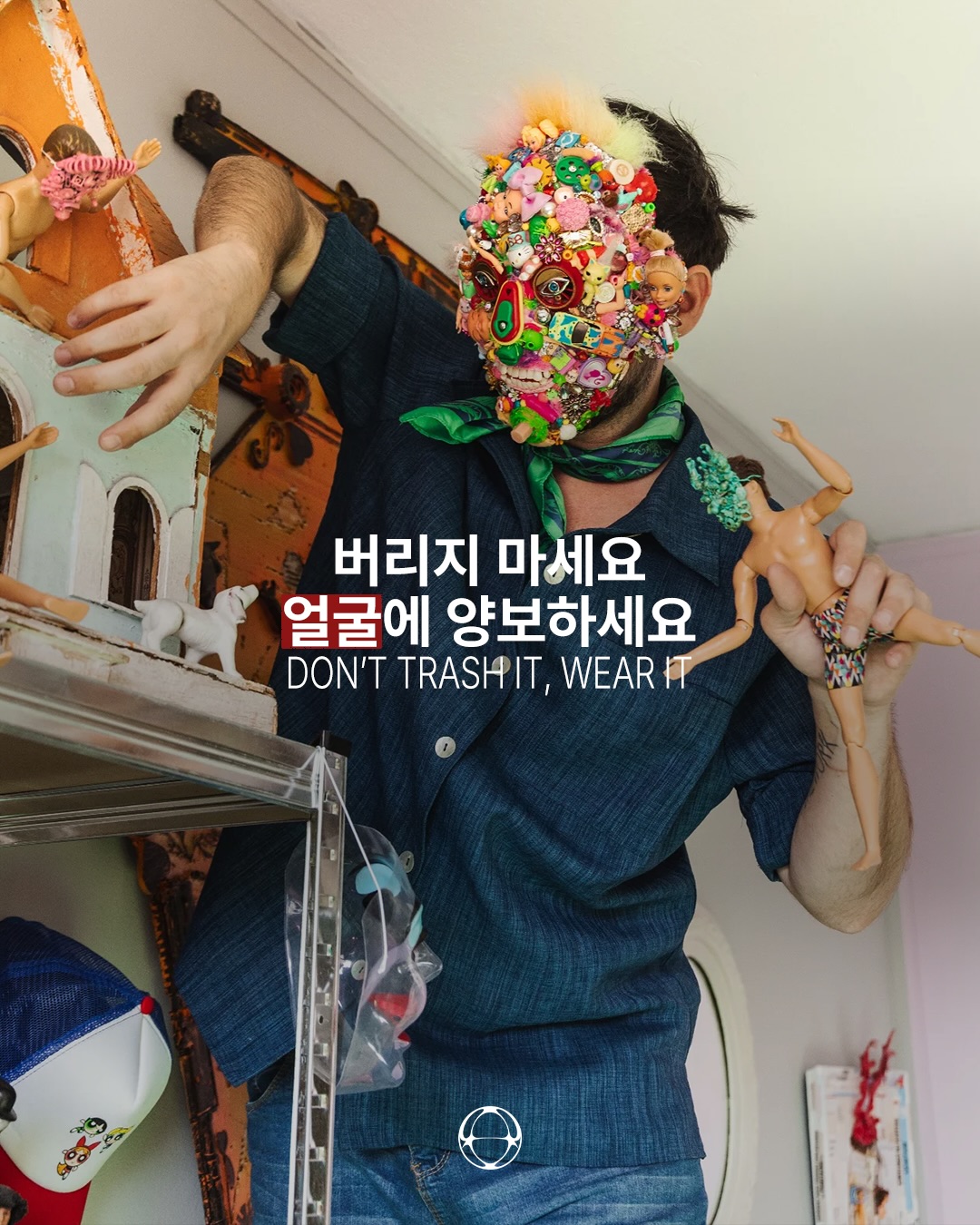
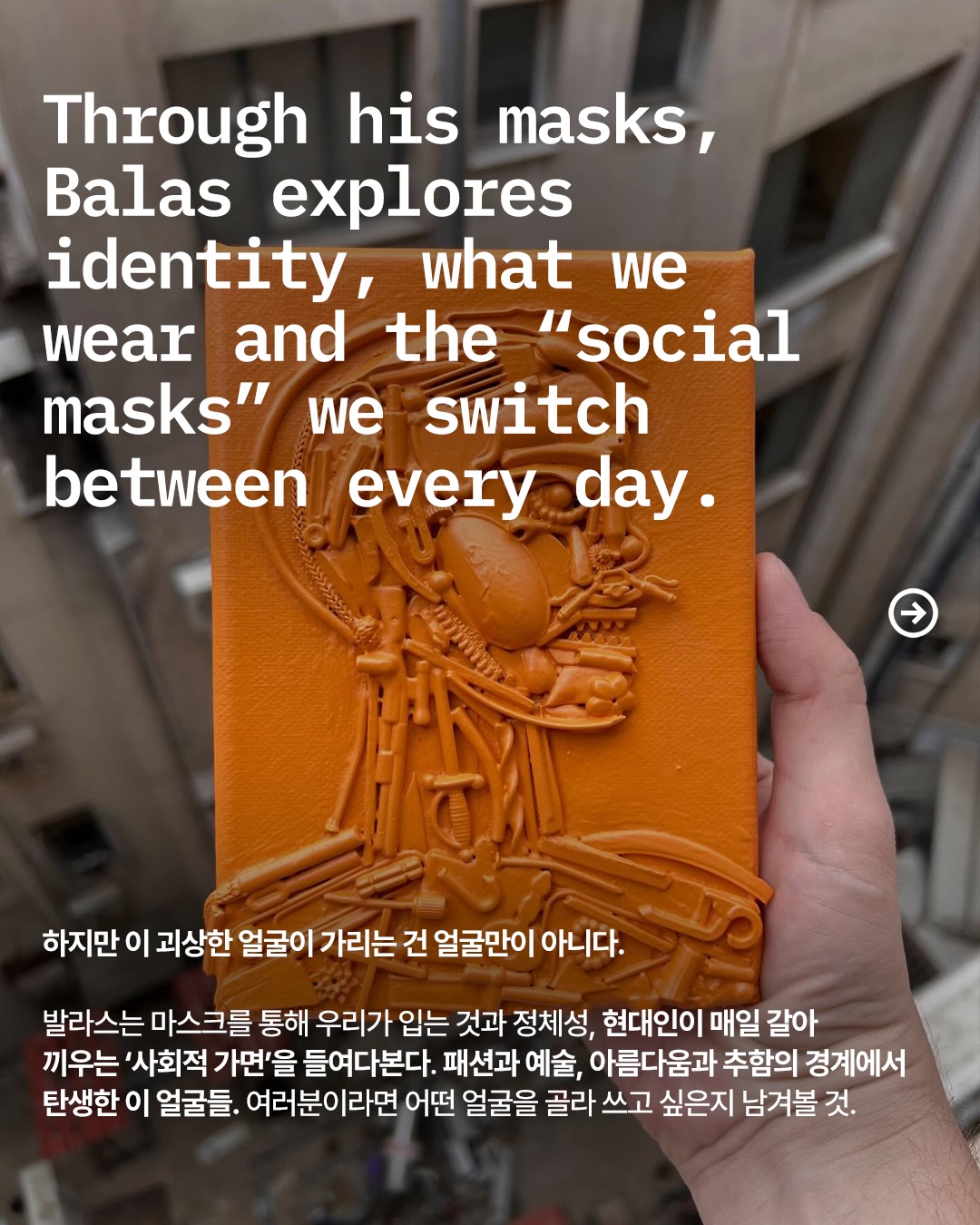
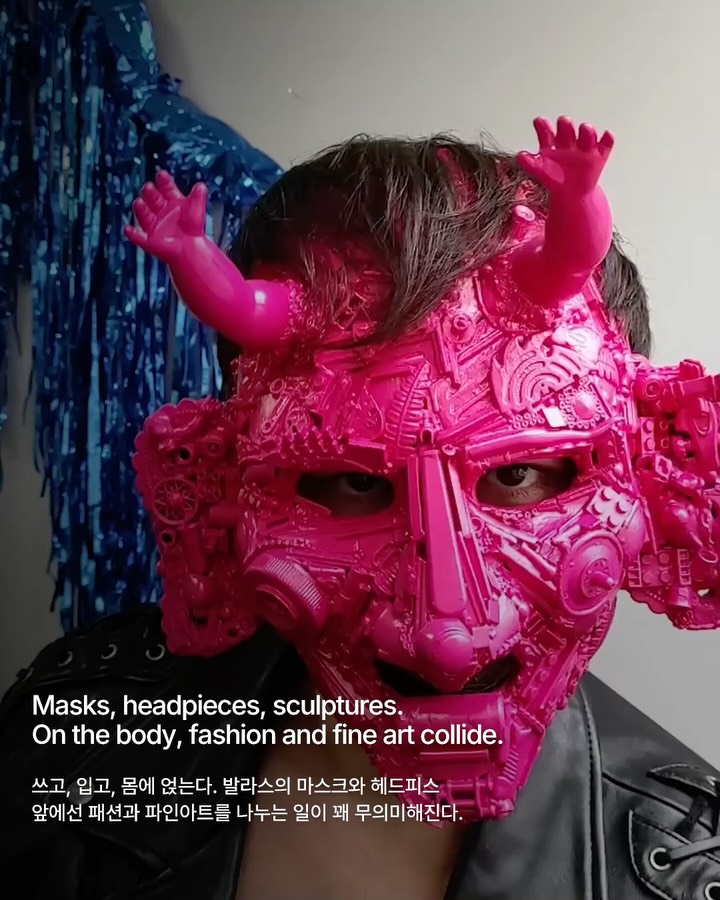
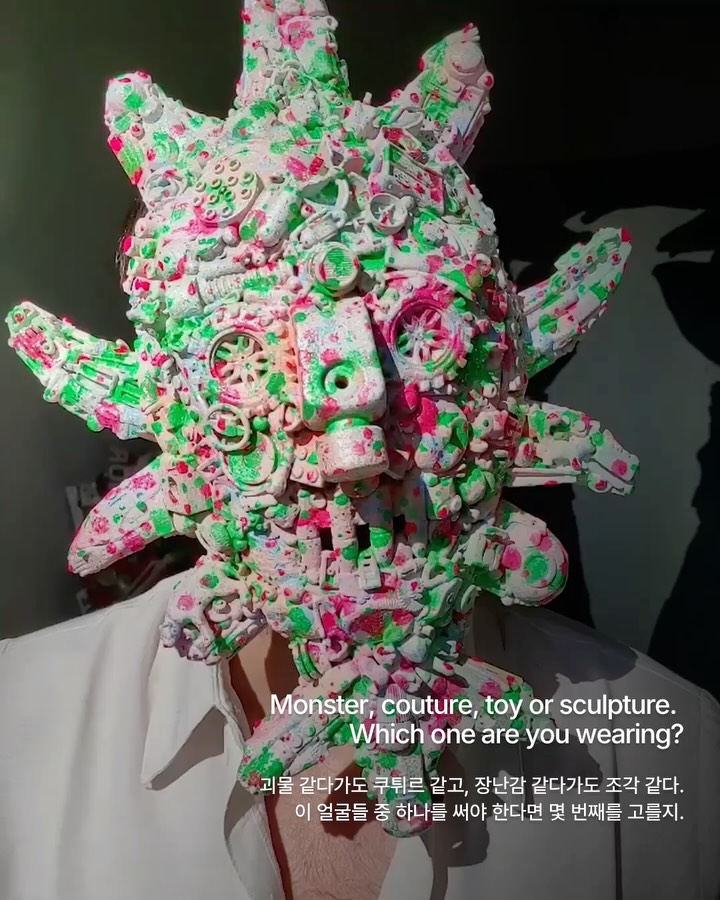
The masks cover faces, but Balas's work reveals something deeper. He explores identity, what we wear, and the "social masks" we swap out daily. The plastic pieces assembled on each face blur the line between fashion and art, beauty and the bizarre. Every mask is both an independent face and a persona chosen by the wearer.
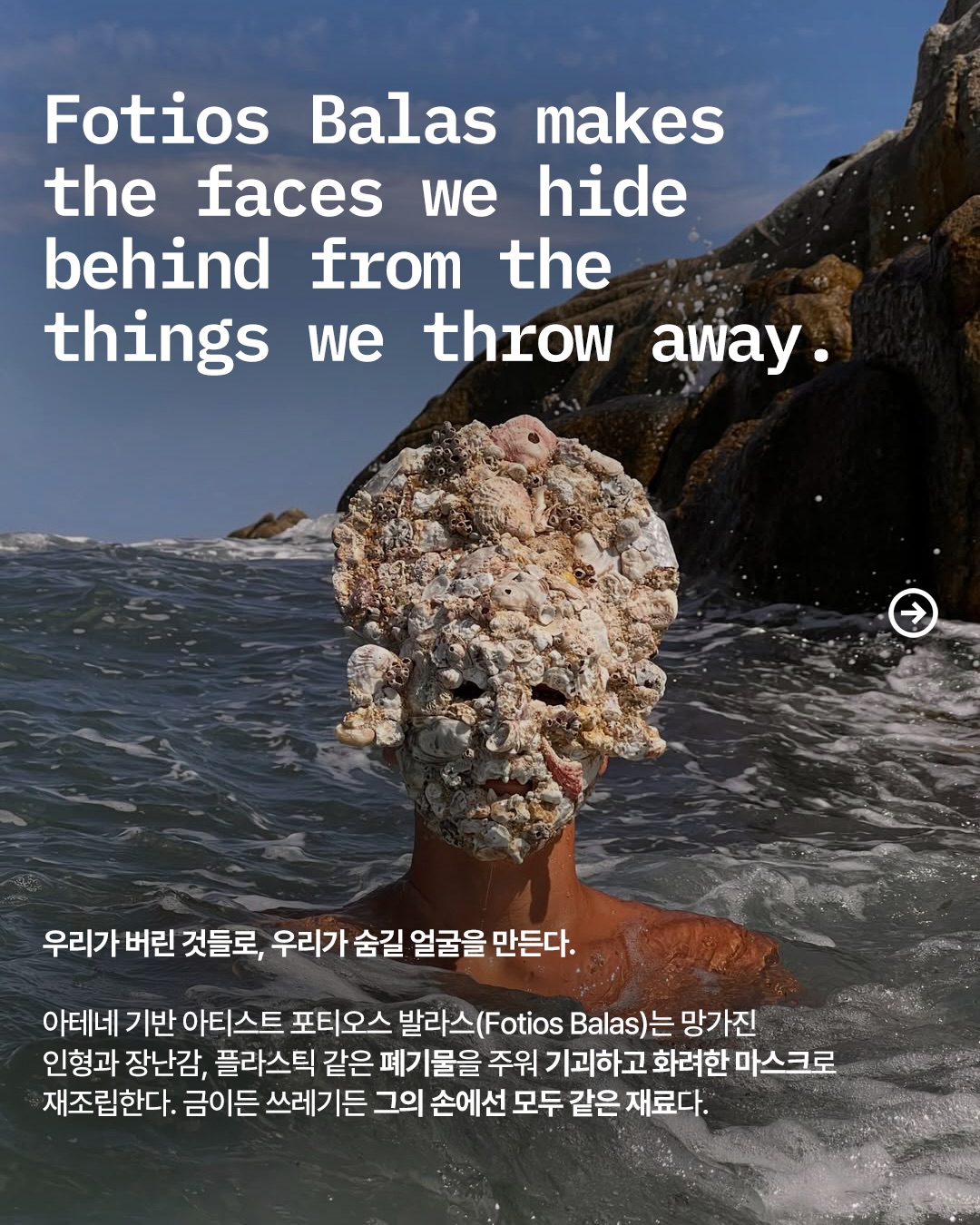
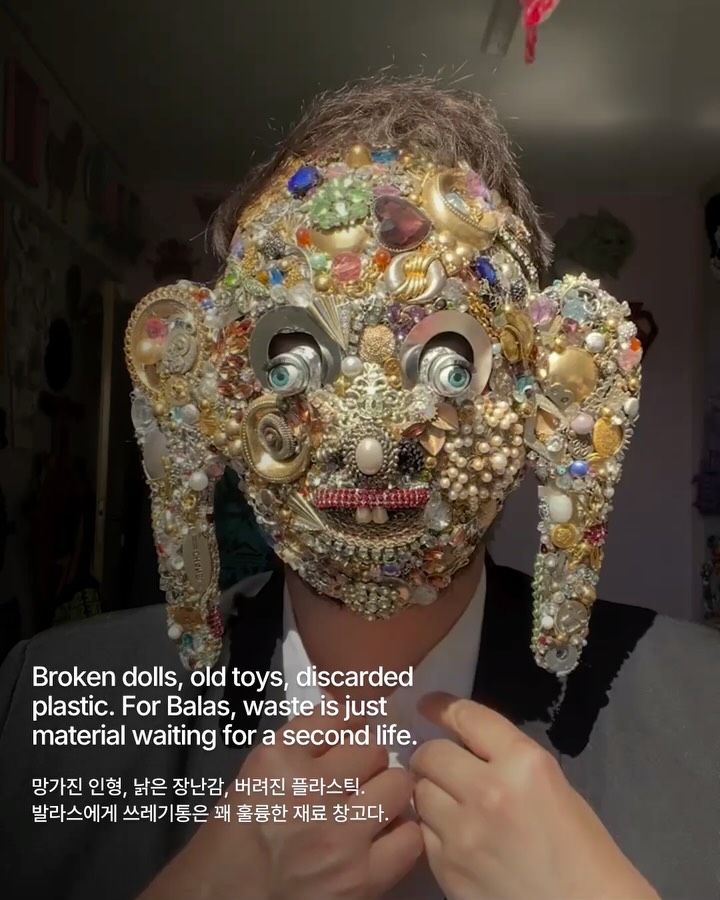
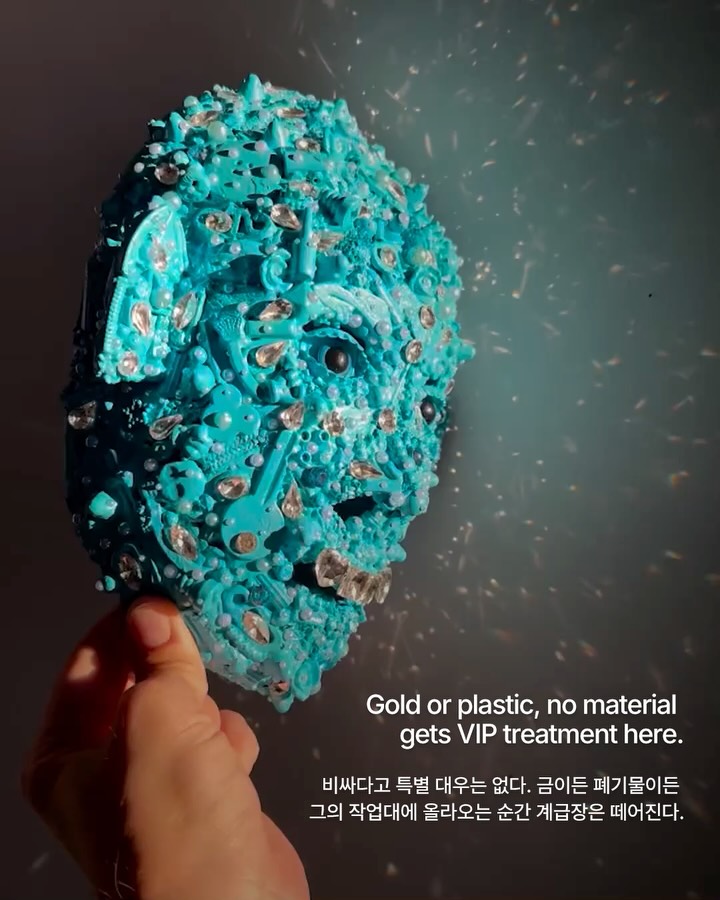
Balas's masks make no hierarchy among materials. Jewels and doll eyes, seashells and vinyl toys sit on the same plane. This egalitarian approach quietly questions the value systems built by consumer society. The distance between what we discard and what we hide is closer than we think.
Born at the intersection of fashion and art, these faces are wearable sculptures. Balas turns waste into art, trash into tools of identity. His work is not a declaration about sustainability but an experiment that redefines the relationship between material and face, mask and truth. Which face would you choose to wear?
FAQ
What materials does Fotios Valas use to make masks?
Fotios Valas collects discarded dolls, old toys, and abandoned plastic fragments to create masks. In his studio, materials hold no hierarchy—whether jewels or trash—reassembling everything equally into grotesque yet glamorous wearable sculptures.
What themes do Fotios Valas's mask works explore?
Valas's masks explore identity, the boundary between fashion and art, and the 'social masks' modern people change daily. Beyond the physical function of covering faces, his work questions the relationship between what we discard and conceal, and consumer society's value system.
Where is Fotios Valas based?
Fotios Valas is an Athens-based artist. He collects waste materials to create mask-form wearable sculptures, continuing experiments that redefine the relationship between matter and identity at the intersection of fashion and art.