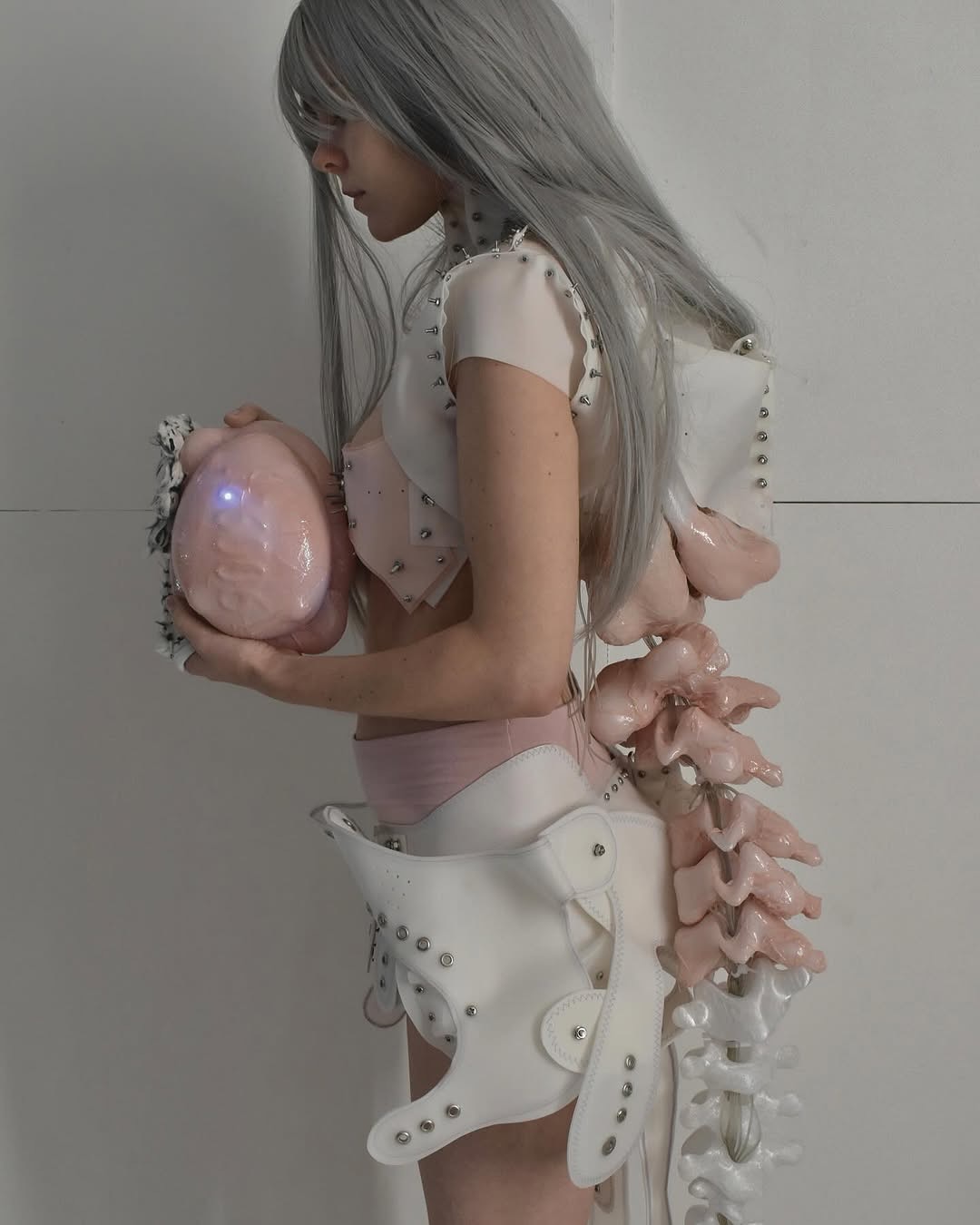
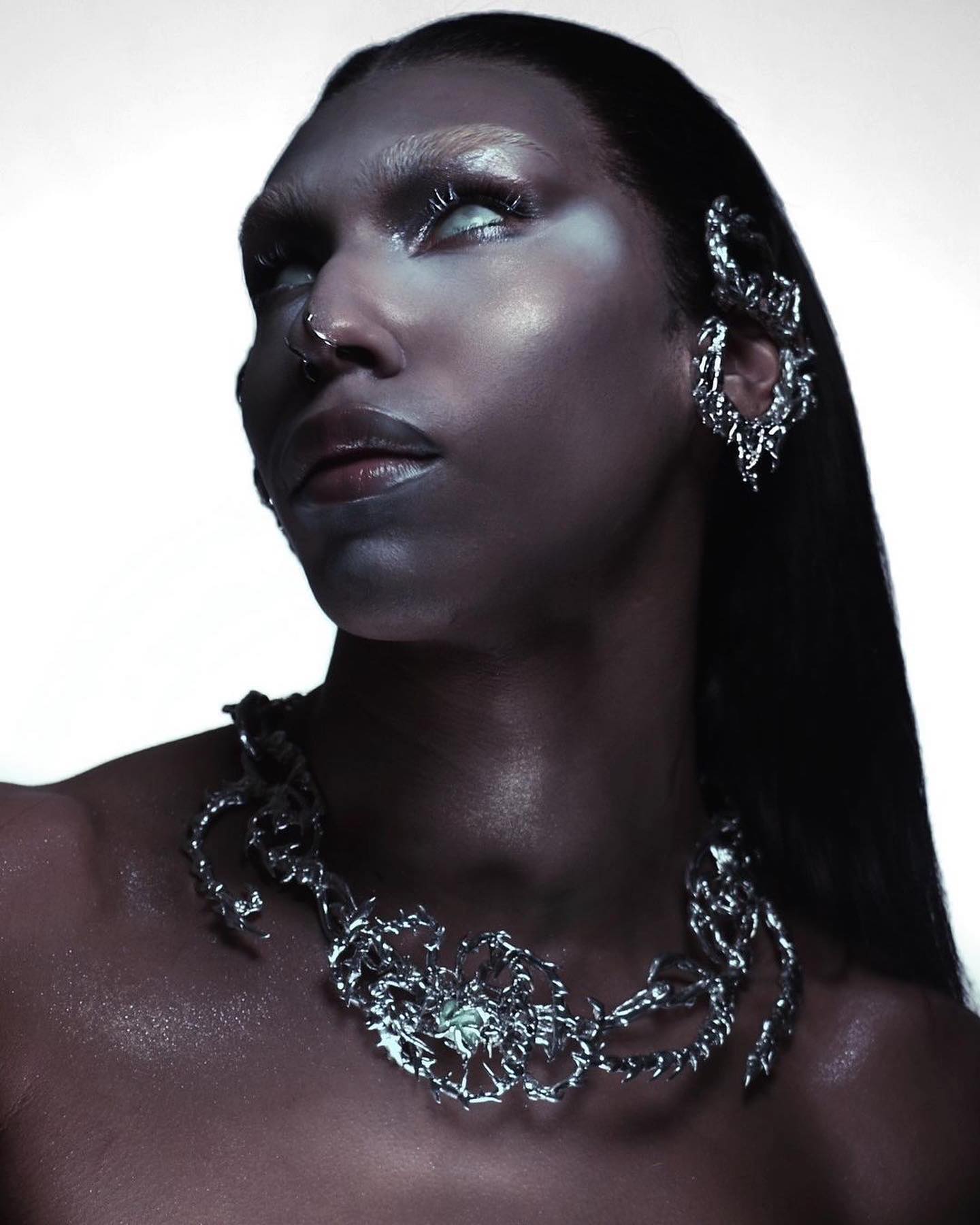
Signature lines like Verteber, which mimics the spine, and the prosthetic-inspired Prothesis collection exert such commanding presence that they dominate the organic movements of joints and skin. Each piece deconstructs and reassembles bodily structures, transforming the wearer's physique into a new mechanism. At the intersection where cold metal meets warm flesh, Ebadi creates a singular aesthetic vocabulary.
Are we truly moving of our own free will, or are we living controlled by invisible systems? DYSKINESIAA's distorted silver pieces may already hold the answer to that question. When jewelry becomes an extension of the body, we find ourselves standing at the threshold between human and machine.


FAQ
What kind of brand is DYSKINESIAA?
DYSKINESIAA is a Paris-based silver jewelry brand by designer Iliaas Ebadi, merging 16th-century anatomical drawings with Bauhaus architectural principles to mechanically reinterpret the human body. The name references dyskinesia, expressing uncontrollable bodily rhythms.
What are DYSKINESIAA's signature collections?
The brand's signature lines are 'Verteber,' inspired by the spine, and 'Prothesis,' drawn from prosthetic devices. Both collections deconstruct and reassemble anatomical structures, functioning like skeletal layers worn on the body with commanding presence over joints and skin.
Where does DYSKINESIAA's design inspiration come from?
Iliaas Ebadi combines the precision of 16th-century anatomical drawings with Bauhaus geometric principles. Viewing the human body as machinery, he explores the boundary between anatomy and mechanism, embedding philosophical questions about control and free will.